

Anchorage Assemblymen Chris Constant and Felix Rivera don’t believe in girls and women’s sports teams. They testified by letter on Monday to the Alaska School Activities Association that boys who declare they are girls should be allowed to compete against girls in school sports.
The association, which met in Valdez this week, is considering a ban or some sort of limits on what is known as “transgenders” (males who believe they are females) competing against girls. Several people testified; as with other public events of this nature, the transgender activist community dominated the conversation.
Alaska Family Council Executive Director Jim Minnery also testified, but for the rights of girls and women to have their own competitive categories.
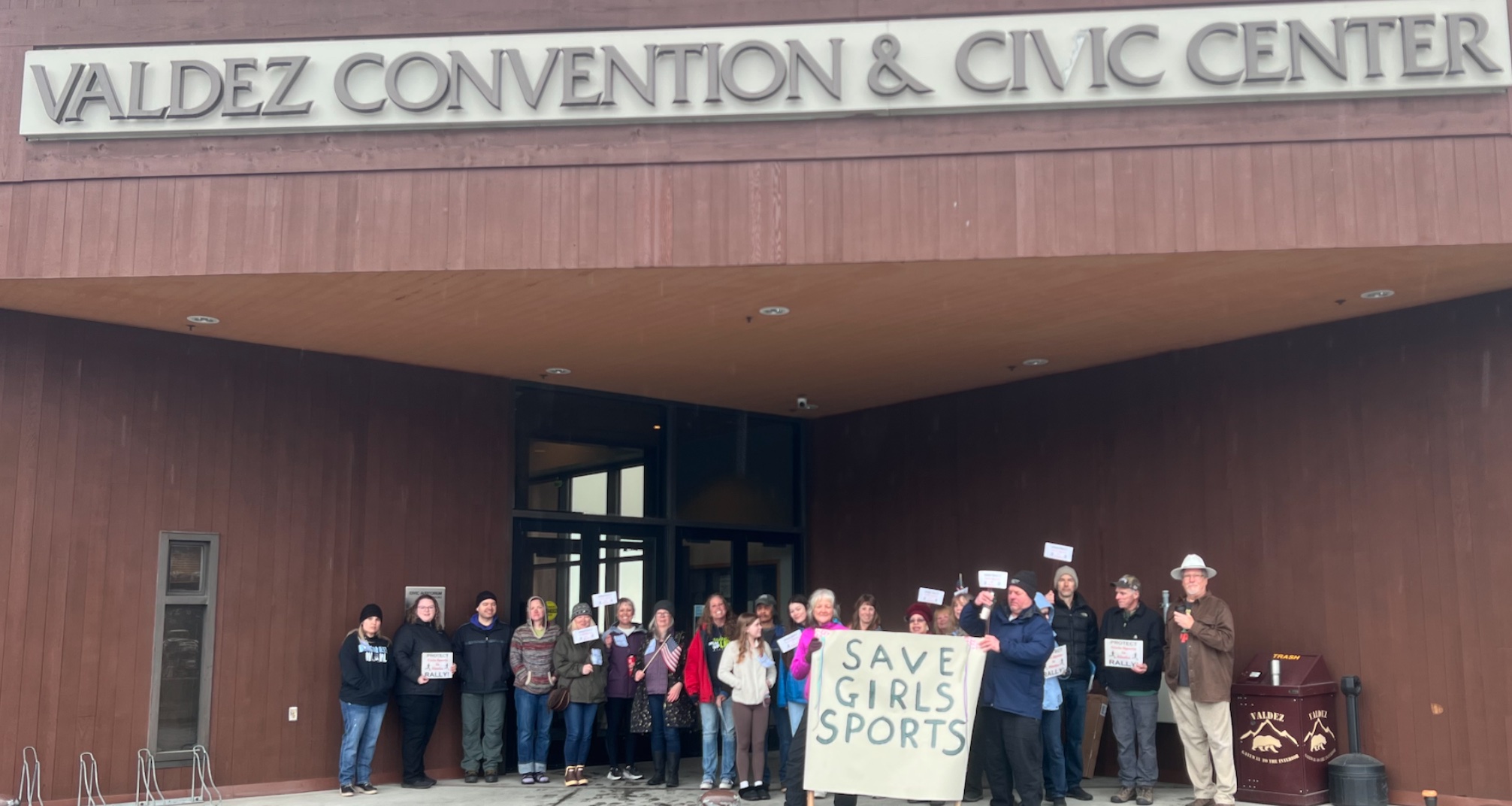
The two gay assemblymen’s letter to ASAA went the opposite way from Alaska Family Council and actually encouraged discrimination against girls, saying that such a ban on boys taking over girls’ teams would contradict Anchorage Municipal Code, specifically a part of municipal code that two men authored, which says the schools in Anchorage, as educational institutions, may not discriminate based on “sex and gender identity.”
The bylaws change that the activity association proposes would violate the rights of “trans female students,” the two wrote, using official letterhead of the Assembly. A trans female is a male with x and Y chromosomes who adapts feminine mannerisms and looks. Females have two X chromosomes.
The lawmaker men threatened that litigation would occur if the association revises its bylaws to protect girls.
“By refusing to allow trans female students to compete on a team consistent with their gender identity, while making such an allowance for trans male students. ASM’s proposed bylaw changes effectively deny them a benefit the bylaw changes confer on another group.
In addition. there is a strong argument that the mere classification based up-on gender at birth, in and of itself. will exacerbate already existing stigma associated with trans youth- In Brown v. Board of Education, the Supreme Court premised its decision striking down racially segregated education largely upon compelling evidence that, even if the services provided to every student are truly equal by every objective measure, ‘to separate them from others of similar age and qualifications solely because of their race generates a feeling of inferiority as to their status in the community that may affect their hearts and minds in a way unlikely ever to be undone.’ One can argue, quite persuasively, that the proposed classification scheme would create the same stamp of on trans youth that the Supreme Court sought to end in Brown,” the two men wrote.
“By forcing ASD to choose between violating Title 5, Equal Rights, and denying trans female students access to an ASAA sanctioned event or allowing their participation and being penalized by ASAA, these proposed bylaw changes put ASD in a legally precarious situation and open both ASD and ASAA up to serious litigation risk,” Constant and Rivera wrote.
Title 5 of Anchorage Municipal Code can be found at this link.
The two also wrote that the proposed bylaws changes would be in violation of Title IX, which is a federal law that gave girls and women equal athletic opportunity to boys and men.
“In order to remain compliant with Title IX then, ASAA would be forced to express what
substantial government interest is being advanced by these rule changes. Given that these rules are being proposed in an absence of an identified problem with the current language, ASAA would have a difficult argument to make. This is yet another example of the proposed bylaw changes putting ASAA in needless litigation risk, forcing ASD to consider leaving ASAA, and worst of all, increasing the harm to vulnerable youth who are simply attempting to participate in team sports in high school.”
The men, who are white and white-hispanic, then lectured the ASAA board for not being diverse enough.
“As an aside. we respectfully encourage ASAA to work towards a diversification of its board and staff in order to ensure adequate gender and viewpoint representation, which would assist you in making decisions that work for the entire community,” they closed.


