By Wyatt Young Nelson with an introduction by Natalie Spaulding
Introduction
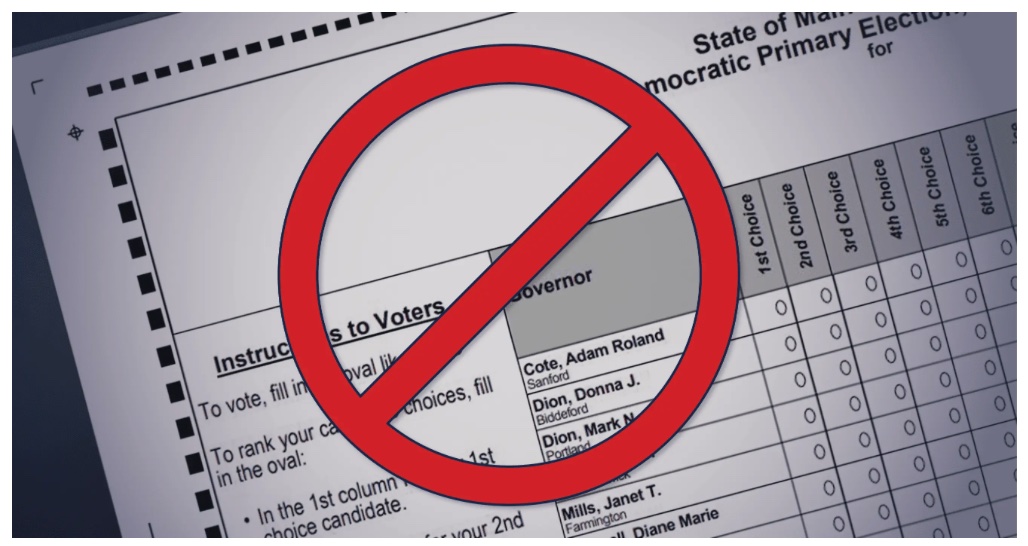
In 2020 and 2024, well-funded lobbyists tried to take Alaska’s ranked-choice voting and jungle primary model on the road, spreading it across the nation. Measure after measure were sold under false promises. In this collection of essays, Wyatt Young Nelson presents nine states who took RCV and jungle primaries to the mat— and rejected them at the ballot box. Each state’s battle was unique, and the collection provides interesting insight into how other states handled ballot measures proposing RCV and jungle primaries.
Must Read Alaska joins Wyatt Young Nelson in saying thank you to the Americans who helped their states defeat the system that has wreaked havoc on Alaska’s elections. This November, Alaskan have an opportunity to repeal RCV, jungle primaries, and certain campaign disclosure rules by voting yes on ballot measure 2.
To learn more about ballot measure 2:
Idaho
Back in 2024, there was a political battle in Idaho over the implementation of ranked-choice voting (RCV). The pro-RCV lobby pushed this controversial system through a ballot proposition known as Prop 1. Calling themselves Idahoans for Open Primaries, the Yes on Prop 1 campaign was financially backed by out-of-state PACs such as Unite America PAC, Unite America Reform Fund, Article IV Group, and Way Back PAC. These groups are essentially connected and were the same forces behind the push for ranked-choice voting in Alaska.
The campaign pitched Prop 1 as a way to open primaries to all voters, allowing them to vote for any candidate for office. Instead, Prop 1 aimed to replace the traditional primary system with a top-four jungle primary and implement ranked-choice voting in the general election for state and federal offices—a Trojan horse in disguise. Attorney General Labrador argued that the ballot language was misleading, but courts dismissed the case, citing procedural reasons. Prop 1 was allowed onto the ballot.
Prop 1’s ballot language was largely copied from Alaska’s ranked-choice voting law. The proposed bill was 18 pages long and confusing for voters, forcing a complex system on Idahoans. The Idahoans for Open Primaries group, supported by wealthy out-of-state pro-RCV donors, spent approximately $5.5 million trying to convince Idaho voters to adopt this unfair and confusing system that could disenfranchise them.
Fortunately, brave Idahoans organized opposition groups such as One Person One Vote, Secure Idaho Elections, and No Ranked Choice Voting Idaho. Together, they formed the No on Prop 1 campaign. Many learned from Alaska’s experience with ranked-choice voting and used it as a warning to prevent Idaho from adopting the same flawed system. They urged friends, neighbors, and families to vote no on Prop 1 to avoid the pitfalls Alaska has suffered under RCV.
On election night, Proposition 1 was decisively defeated. The No votes numbered 618,751 (69.62%), while Yes votes were only 269,959 (30.38%). As an Alaskan, I thank the great state of Idaho and the courageous men and women who united to reject ranked-choice voting. Their victory proves the will of the people to stand strong against the powerful pro-RCV lobby.
Arizona
Not too long ago, in 2024, a political battle unfolded in Arizona over the implementation of ranked-choice voting (RCV). The pro-RCV lobby pushed this controversial system through a ballot proposal known as Proposition 140. They presented the measure as a way to open primaries and give voters better access to choose whoever they want for office. However, the true contents of Prop 140 were hidden.
In reality, Prop 140 aimed to replace the traditional voting system with a top-four jungle primary and use ranked-choice voting in the general election. The pro-RCV lobby organized a campaign called Make Elections Fair PAC, supported by out-of-state groups like Unite America PAC from Denver, Colorado, and Open Primaries Now Inc. from New York City. These groups, backed by millionaire and billionaire donors, spent approximately $15.5 million trying to force Prop 140 onto Arizona, pushing what many viewed as a broken and unproven experiment.
The same forces behind the push for ranked-choice voting in Alaska funded the Yes on Prop 140 campaign. The proposition was modeled closely after Alaska’s RCV law, making it nearly identical.
Meanwhile, brave Arizonans from diverse political backgrounds—including from the Arizona GOP, Arizona Democratic Party, Green Party, and Libertarian Party—all joined forces to oppose Prop 140. They formed the No on Prop 140 campaign, dedicated to protecting election integrity. Co-chaired by Pinal County Sheriff Mark Lamb and former Arizona Supreme Court Justice Andrew W. Gould, the campaign warned voters about the pitfalls of ranked-choice voting, sharing Alaska’s experience as a cautionary tale.
Even former Arizona Governor Doug Ducey expressed concerns about Proposition 140, highlighting how flawed the measure was and warning it would create unfairness, disenfranchise voters, and burden taxpayers with higher costs. He encouraged voters to reject the proposal.
On election day, Proposition 140 was defeated decisively. The No votes totaled 1,823,445 (58.68%), while Yes votes were 1,284,176 (41.32%).
As an Alaskan, I am grateful to the great State of Arizona and the courageous men and women who stood against the powerful pro-RCV lobby. Their victory proves that the people have the will to defend fair elections and reject ranked-choice voting.
Missouri
In 2024, political battles over ranked-choice voting (RCV) spread across the United States. However, the State of Missouri took a different approach. Instead of a ballot measure to implement RCV, Missouri voters faced a constitutional initiative known as Amendment 7. This amendment aimed to ban ranked-choice voting from ever being used in state, local, and federal elections.
Amendment 7 was a positive development. People had learned from Alaska’s experience with ranked-choice voting and warned other states against adopting it. Missouri listened and acted to protect traditional elections by banning RCV outright.
The amendment was supported by several anti-RCV watchdog groups, including Stop RCV, Election Transparency Initiative, Honest Elections Project, and Fair Elections Fund. Two local groups, Freedom Principle MO and Liberty Alliance, led the Yes on Amendment 7 campaign to enshrine the ban in the Missouri State Constitution and shield the state from the RCV scheme.
The pro-RCV lobby opposed this move, viewing Amendment 7 as a threat to their agenda. They had been trying to push ranked-choice voting into other states for years. In Missouri, the pro-RCV lobby supported local groups like Missouri Citizens Against Amendment 7 and Preserve Local Elections to campaign against the amendment.
Back in 2022, the pro-RCV lobby attempted to place a ranked-choice voting measure on the ballot through a petition. They raised $6.83 million and backed Better Elections-Missouri, a group aiming to collect enough signatures for the 2022 midterms. However, they failed to gather the required signatures, and the petition did not qualify for the ballot.
Thankfully, the pro-RCV scheme was stopped before reaching voters. Missouri recognized that the pro-RCV lobby might try again in the future, so banning RCV with Amendment 7 was a proactive step to prevent this system from ever being established.
On election day in 2024, Amendment 7 was passed decisively, with 1,966,851 Yes votes (68.44%) and 906,861 No votes (31.56%).
As an Alaskan, I am proud and thankful to the great State of Missouri and the brave men and women who voted to pass Amendment 7. Their victory shows that the people of Missouri stood strong against the powerful pro-RCV lobby and did the right thing to protect fair elections.
Colorado
In 2024, the State of Colorado became a political battleground over the fight to implement ranked-choice voting (RCV). The pro-RCV lobby sought to radically change how people vote in elections. Their scheme came in the form of a ballot proposal known as Proposition 131.
The pro-RCV lobby promoted Prop 131 as a way to create an open primary where all candidates appear on the same ballot, giving voters more voice. They claimed ranked-choice voting would reduce political polarization. However, Prop 131 was a wolf in sheep’s clothing. It takes away voter choice by forcing people to rank multiple candidates they may not support. Many voters prefer to vote for just one candidate they believe in, without ranking others.
If a candidate does not receive enough votes in the first round, they are eliminated along with the votes of their supporters, leaving those voters effectively disenfranchised. Prop 131 aimed to replace traditional primaries with a top-four jungle primary and use ranked-choice voting in the general election.
The pro-RCV lobby organized a campaign called Colorado Voters Choice to support the measure. They were financed by out-of-state pro-RCV groups and wealthy donors, including Unite America—the same group behind the push for ranked-choice voting in Alaska. They spent around $19 million trying to get Colorado to adopt this unfair system.
Meanwhile, brave Coloradans formed groups like First Choice Counts and Colorado Voter Rights. They led the No on Prop 131 campaign to protect voting integrity and fair elections. Many voters were aware of Alaska’s experience with ranked-choice voting and used it as a warning to reject RCV.
On election day, Proposition 131 was defeated with 1,595,256 No votes (53.53%) to 1,385,060 Yes votes (46.47%).
As an Alaskan, I thank the great State of Colorado and the brave men and women who united to oppose Prop 131. Their victory proves that the people have the will to stand against the powerful pro-RCV lobby.
Not too long after, in 2025, Denver’s city council narrowly rejected a proposal to implement ranked-choice voting for city elections, with a close vote of 7-6.
Nevada
Not too long ago, in 2024, the State of Nevada became a political battleground over the issue of implementing ranked-choice voting (RCV). The pro-RCV lobby sought to turn Nevada into another Alaska by pushing their agenda through a ballot initiative known as Question 3.
The campaign advertised Question 3 as a way to open primaries, allowing voters to choose any candidate regardless of party affiliation. However, this was misleading. Question 3 was really about changing the traditional voting system by establishing a top-five jungle primary and using ranked-choice voting in the general election.
The pro-RCV lobby organized the Yes on 3 campaign to promote the initiative. This campaign was financed by out-of-state special interest groups, including Unite America based in Denver, Colorado, and Article IV based in Arlington, Virginia, along with billionaire and millionaire donors—many of whom were the same people behind the push for ranked-choice voting in Alaska. They spent approximately $42.8 million trying to trap Nevada in a confusing and unfair voting system.
Meanwhile, local Nevadans formed the Stop RCV Nevada campaign to oppose Question 3. This group was made up of people from various political parties united in a nonpartisan cause to defend traditional voting and elections. They had learned from Alaska’s experience with ranked-choice voting and used it as a warning to other states.
The Stop RCV Nevada campaign warned voters about the pitfalls of ranked-choice voting and urged them to vote no on Question 3 to avoid suffering the same fate as Alaska.
On election day, Question 3 was defeated with 747,719 No votes (52.96%) and 664,011 Yes votes (47.04%).
As an Alaskan, I am proud and thankful to the great State of Nevada and the brave men and women who stood against the powerful pro-RCV lobby. Their victory shows that the people of Nevada have the will to protect fair elections and reject ranked-choice voting.
Massachusetts
Years ago, in 2020, the Commonwealth of Massachusetts faced a political battle over ranked-choice voting (RCV). The pro-RCV lobby sought to radically change the political landscape of the United States by transforming how states hold elections and how people vote. This effort took the form of a ballot measure called Question 2.
The measure was pitched as a way to open primaries and give voters more choices. Question 2 would have installed ranked-choice voting in primaries and generals for many state and federal offices. The pro-RCV lobby organized a group named Voter Choice Massachusetts, which led the “Yes on Question 2” campaign.
This campaign was financed by out-of-state special interest groups and wealthy donors, such as Action Now Initiative from Houston, Texas, and Unite America from Denver, Colorado. These groups were the same ones behind the push for ranked-choice voting in Alaska during the same year.
The pro-RCV side spent approximately $10.1 million trying to get Massachusetts to adopt the system. Meanwhile, local citizens formed the “No Ranked Choice Voting-MA” campaign (also known as “No 2 Ranked Choice Voting-MA”) to oppose the measure and protect traditional elections.
Massachusetts Governor Charlie Baker and Lieutenant Governor Karyn Polito expressed concerns that ranked-choice voting was confusing, complex, and unfair. They warned that it could create uncertainty in elections and urged voters to reject Question 2.
On election day, Question 2 was defeated, with 1,877,447 “No” votes (54.78%) compared to 1,549,919 “Yes” votes (45.22%).
From an Alaskan perspective, we thank the Commonwealth of Massachusetts for rejecting ranked-choice voting and avoiding the same fate Alaska faced. The brave men and women who voted down Question 2 showed that the people still have the will to stand against powerful pro-RCV interests.
Oregon
The year was 2024 when the State of Oregon faced a political battle over the push for ranked-choice voting (RCV). The pro-RCV lobby aimed to change the political landscape, altering how people vote and how politicians are elected to public office. This effort came in the form of a ballot proposition known as Measure 117.
Measure 117 was presented as a way to amplify voters’ voices and provide more choices in selecting candidates. However, it was essentially a wolf in sheep’s clothing, seeking to establish ranked-choice voting for state and federal elections, replacing traditional primaries and the standard voting process.
The pro-RCV lobby organized a campaign called Oregon Ranked Choice Voting Advocates, leading the “Yes on 117” effort. This campaign was financed by out-of-state special interest groups and wealthy donors, including Unite America from Denver, Colorado; Article IV from Arlington, Virginia, and Washington, D.C.; and Our American Future, also based in Washington, D.C. They spent approximately $7.5 million trying to impose this confusing and unfair system on Oregon voters.
Meanwhile, many county clerk officials raised concerns about the high costs of implementing the new system, including expenses for new equipment that could run into millions of dollars for taxpayers. Local citizens feared their votes would be disenfranchised.
In response, county clerks and grassroots activists formed the “No Ranked Voting-Oregon” campaign, leading the opposition to Measure 117. Having witnessed Alaska’s experience with ranked-choice voting, they urged Oregon voters to reject the measure and avoid suffering the same consequences.
On election day, Measure 117 was decisively defeated, with 1,219,013 “No” votes (57.70%) compared to 893,668 “Yes” votes (42.30%).
From my home state of Alaska, we thank the great State of Oregon for rejecting ranked-choice voting. We commend the brave men, women, and grassroots activists who stood against Measure 117. Their victory proves that people have the will to stand up to powerful, out-of-state pro-RCV interests—the very same forces behind the push for ranked-choice voting in Alaska.
Montana
In 2024, Montana faced a significant political battle over the implementation of ranked-choice voting (RCV) and election reforms. The pro-RCV lobby sought to radically change the way Montanans vote by introducing a ballot constitutional amendment known as CI-126. This initiative aimed to replace traditional primaries with a top-four jungle primary system and establish ranked-choice voting for general elections for state and federal offices.
Alongside CI-126, there was CI-127, which proposed changing the winning threshold in elections to require a candidate to receive 50 percent of the vote, rather than just a plurality. CI-127 also mandated that the Montana state legislature pass a law to determine how this majority requirement would be implemented—either through ranked-choice voting or a runoff election.
The pro-RCV campaign, known as Yes on 126 or Montanans for Election Reform and Open Primaries for Montana, led the push for these changes. This campaign was financially backed by out-of-state special interest groups and wealthy donors, including Unite America PAC (Denver, Colorado), Action Now Initiative (Houston, Texas), Article IV (Arlington, Virginia), and the Sixteen Thirty Fund (Washington, D.C.). Notably, these are the same groups that supported the push for ranked-choice voting in my home state of Alaska, spending around $5 million to influence Montana’s election laws.
However, many Montanans recognized the dangers of these amendments. A group called Montanans for Fair Elections formed to oppose CI-126 and CI-127, warning that these initiatives would lead to unfair, confusing elections and open the door to disaster. They urged voters to reject the proposals in defense of free and fair elections.
On election day, Constitutional Initiative 126 was narrowly defeated. The “No” votes totaled 300,664 (51.09%), while the “Yes” votes were 287,837 (48.91%). This outcome is a victory not only for Montana but also for Alaska, which has experienced challenges with ranked-choice voting.
Alaska thanks Montana for standing firm against ranked-choice voting and jungle primaries. The brave Montanans who united to vote “No” demonstrated the people’s will to resist powerful, out-of-state lobbying groups backed by wealthy interests. Their success serves as a reminder of the importance of protecting traditional election systems that uphold clarity and fairness.
South Dakota
The year was 2024. The State of South Dakota had a political battle that was a fight over jungle primaries. Out-of-state special interest groups were looking to change the political landscape, influence and buy elections, and back candidates aligned with them to help them be elected to state and federal office. These groups had their agenda in the form of a ballot measure to the state constitution known as Amendment H. They pitched that it was about having an open primary where all the candidates appear on the same ballot and all voters can vote for who they want to run for office. When in fact, Amendment H was about replacing traditional primaries with a top-two jungle primary.
These groups organized a campaign and called themselves South Dakota Open Primaries. They led the Yes on Amendment H side in support of the measure. The South Dakota Open Primaries campaign was being backed and financed by out-of-state special interest groups and wealthy donors, including Article IV, based in Arlington, Virginia. They happen to be the same people behind the push for jungle primaries and ranked-choice voting in other states, including my home state of Alaska back in 2020. They spent like $1.6 million trying to get Amendment H adopted into law.
Meanwhile, a group of brave South Dakota citizens organized a group and called themselves Vote No on Amendment H, also known as Vote No on H. They led the campaign to oppose the proposed initiative, protect free and fair elections from being taken over by outsiders, defend traditional primaries, and urge voters to vote no on Amendment H.
On election day, Constitutional Amendment H was vanquished by No votes of 270,048 (65.61%), while the Yes side only got 141,570 votes (34.39%).
My home state of Alaska thanks the great State of South Dakota for rejecting jungle primaries and thanks the brave men and women who took part in the campaign to oppose Amendment H and voted it down, proving that the people of South Dakota have the will to take on out-of-state left-wing-leaning special interest groups who are funded by dark money.
A few years ago, back in 2023, South Dakota’s state legislature passed a bill that banned the use of ranked-choice voting from ever being implemented or used in elections, and South Dakota Governor Kristi Noem signed the bill into law. South Dakota learned about Alaska’s experience with ranked-choice voting in 2022 and how disastrous it was and didn’t want to end up with the same fate.
Washington, D.C. (honorable mention)
In 2024, there was a political battle over a ballot measure in the capital city of the United States of America, known as Washington, D.C. The measure was known as Initiative 83, which was aimed at establishing ranked-choice voting in D.C.
The support campaign was known as Make All Votes Count DC, which supported the measure. The Yes on Initiative 83 campaign was heavily backed by nongovernment groups and special-interest donors like Unite America, based in Denver, Colorado, which raised and gave $555,000.00. There is All One God Faith Inc., based in Vista, California, which gave a contribution of $363,065.30. There is FairVote Action, based in Takoma Park, Maryland, and they gave a contribution of $156,011.54. There is Filiblaster LLC, based in Washington, D.C., which gave a contribution of $45,627.22. There is the Final Five Fund, based in Chicago, Illinois, and they gave a contribution of $25,000.00. Make All Votes Count DC raised $1,283,750.21.
The local opposition campaign was known as Vote No on Initiative 83, which was entirely grassroots. Both the D.C. Republican Party and the D.C. Democratic Party came out and opposed Initiative 83. The No on Initiative 83 campaign only raised $5,723.29.
The Yes on Initiative 83 side stated that the proposal would stop voter suppression, when in fact ranked-choice voting is voter suppression. The opposition side did their best to convince voters to reject this measure from falling into a trap of having so-called open primaries.
When it came to election day, the votes were Yes votes of 212,332 (72.89%) and No votes of 78,961 (27.11%). Initiative 83 was passed into law, and the opposition did their best despite being outspent.
Sources
Idaho: Idaho Capital Sun; Wikipedia, 2024 Idaho Proposition 1; Idaho Statesman; Ballotpedia
Arizona: Ballotpedia; Wikipedia; Votebeat; Goldwater Institute; KJZZ
Missouri: KCUR; Wikipedia; Ballotpedia; KSDK
Colorado: Colorado Sun; Axios Denver; Ballotpedia; Denver Post (2025 council vote)
Nevada: Ballotpedia; Guinn Center; Nevada Current; KNPR
Massachusetts: Wikipedia; Ballotpedia; WGBH; Boston.com
Oregon: Ballotpedia; Oregon Capital Chronicle; OPB
Montana: Ballotpedia (CI-126 and CI-127); Montana Free Press; YPR
South Dakota: Wikipedia; Ballotpedia; Argus Leader; Dakota News Now
Washington, D.C.: Ballotpedia; Wikipedia; Hill Rag; WUSA9; DC Democratic Party