
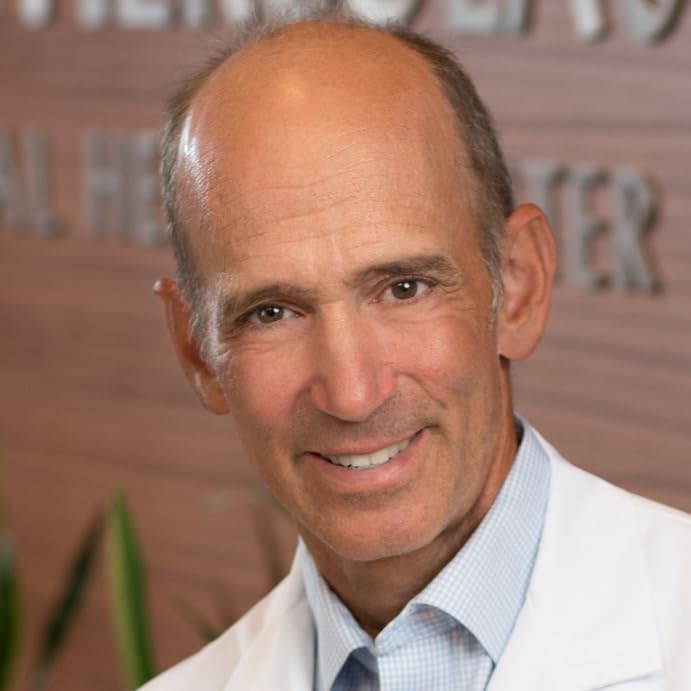
JPMorgan Chase has canceled the business and personal accounts of renowned medical doctor and vaccine skeptic Dr. Joseph Mercola and his Florida-based health business, Mercola Market, according to a letter that Mercola shared. JPMorgan Chase is the largest bank in America, with $3.26 trillion in assets.
At the same time it notified Mercola that his business is not welcome, the personal accounts of the company’s CEO, Steven A. Rye, his wife, and the company CFO, Amy Legaspi, were also closed by the bank.
Mercola is the author of a best-selling book, “The Truth About COVID-19: Exposing The Great Reset, Lockdowns, Vaccine Passports, and the New Normal.”
In the forward of his book, presidential candidate and vaccine skeptic Robert F. Kennedy writes, “An eloquent, charismatic, and knowledgeable [critique] of a corrupt system.”
The bank’s decision, without a specific reason, was detailed in letters and materials shared with Must Read Alaska.
Sent on July 13 to Dr. Mercola at his Mercola Market, JP Ogan Chase notified the company of the account closures with a deadline of Sept. 10 for Dr. Mercola to pull all of his funds out. CEO Steven A. Rye, CFO Amy Legaspi, and their respective spouses received notifications to close their personal accounts by Aug. 11.
The lack of a clear explanation from Chase for this action has increased suspicion about the weaponization of financial institutions in America during the Biden Administration.
The bank cited “unexpected activity on this or another Chase account” as the reason but failed to provide further details.
The lack of transparency has fueled speculation of the bank targeting Dr. Mercola, who was an early vocal critic of the federal government’s efforts to tamp down the Covid-19 pandemic, including the use of experimental, briefly tested vaccines. Mercola sells supplements online and is an advocate for natural health approaches to Covid.
Mercola, in a public response to the letter he received, says that his challenge of the official narrative of the government health bureaucracy is the probable reason, and he compares it to the social credit system used by authoritarian regimes such as China.
His concerns are supported by other recent bank actions of Chase, and he specifically points to the bank holding the accounts of sex offender Jeffrey Epstein, even after Epstein was convicted.
Earlier this year, the powerful bank agreed to pay a $290 million to settle a lawsuit tied to its association with Epstein, who ran a now-notorious sex resort that marketed young girls to older, powerful men, on his private island. Former President Bill Clinton and others were guests at Little St. James, where Epstein enslaved girls as young as 12, allowing the richest and most powerful men in the world to have their way with them, shielded from the eyes of paparazzi.
Chase announced in 2020 that it would no longer lend to oil companies exploring or doing business in the Arctic because of climate change.
Chase is also the subject of complaint by a coalition of attorneys general, including Alaska’s Treg Taylor, for discriminating against Christian groups by shutting down or refusing to open their accounts.
Weaponizing financial services is showing up with greater frequency. In Canada, banks shut down the accounts of companies and individuals who supported the truckers anti-mandate protest in 2022, at the same time Prime Minister Justin Trudeau suspended civil liberties.
What makes this even more draconian for Mercola is that the closure of the accounts extends to some employees, their families, and people with no connection to Mercola’s opinions on health.
A new law signed by Florida Gov. Ron DeSantis on May 2 explicitly prohibits financial institutions from denying or canceling services based on political or religious beliefs. While this law could potentially protect individuals like Mercola and his employees, its effectiveness is untested, and no established procedures are in place to enforce it the law. Mercola said he is hoping the state’s attorney general will take up the case against Chase.
Mercola is a board certified family physician and author who has treated 25,000 patients from around the world. He encourages and educates people about safe and inexpensive nutritional, lifestyle and exercise options to radically reduce their risk of dying prematurely from dangerous drugs and surgeries.
He is also the founder of Mercola.com which has been the most visited natural health site on the internet for the last 10 years with over 15 million unique visitors every month, he says in his bio. He is the author of several other books, including, “Fat for Fuel: A Revolutionary Diet to Combat Cancer, Boost Brain Power, and Increase Your Energy,” “Effortless Healing,” and others that encourage people to take control of their health through natural means.
The New York Times and other regime media have written critically of him, most recently in February of 2022:
“The article that appeared online on Feb. 9 began with a seemingly innocuous question about the legal definition of vaccines. Then over its next 3,400 words, it declared coronavirus vaccines were ‘a medical fraud’and said the injections did not prevent infections, provide immunity or stop transmission of the disease,” The New York Times wrote.
“Instead, the article claimed, the shots ‘alter your genetic coding, turning you into a viral protein factory that has no off-switch.’
“Its assertions were easily disprovable. No matter. Over the next few hours, the article was translated from English into Spanish and Polish. It appeared on dozens of blogs and was picked up by anti-vaccination activists, who repeated the false claims online. The article also made its way to Facebook, where it reached 400,000 people, according to data from CrowdTangle, a Facebook-owned tool.”
“The entire effort traced back to one person: Joseph Mercola.
“Dr. Mercola, 67, an osteopathic physician in Cape Coral, Fla., has long been a subject of criticism and government regulatory actions for his promotion of unproven or unapproved treatments. But most recently, he has become the chief spreader of coronavirus misinformation online, according to researchers,” The New York Times wrote, authoritatively in 2022.


