
By WAYNE HEIMER
The federal government owns lots of Alaska land. It is in Federal Conservation System Units, also known as FCU lands. Management of these FCU lands is vested in U. S. Department of the Interior agencies, specifically the National Park Service, U.S. Fish and Wildlife Service, U.S. Forest Service and Bureau of Land Management.
The Department of Interior is so crazy-zealous about protecting these lands, it has argued that navigable water, which is owned and managed by the State of Alaska but flowing between FCU lands, is actually federal public land.
The United States Supreme Court has twice ruled – unanimously — that Alaska’s owned navigable water is not federal public land. Still, the feds claim expansive administrative rights that are not provided for in law.
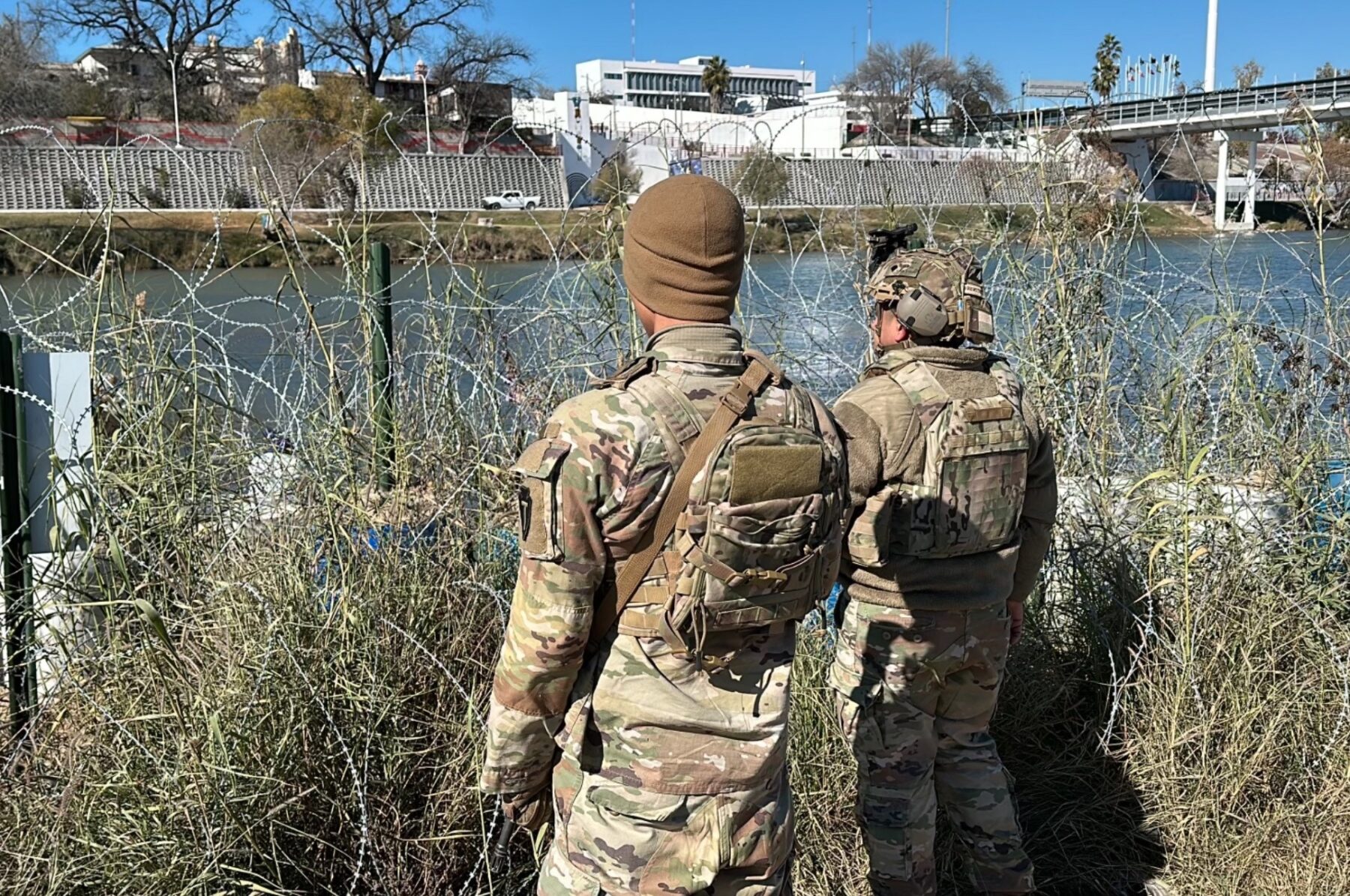
In Texas, the City of Eagle Pass owns a city park called Shelby Park. Perhaps you’ve heard of it. Shelby Park is located along the Rio Grande River and is a common crossing point for undocumented wading/swimming immigrants.

The State of Texas and the City of Eagle Pass argue that non-credentialed immigrants (those without passports or entry visas) and those federal employees “processing them” should not use Eagle Pass’s Shelby Park as a staging area for undocumented immigrants before turning them to go anywhere in the USA.
The Dity of Eagle Pass, with support from the State of Texas, asserted its ownership/management rights to Shelby Park by moving to stop (via physical barriers) what it considers inappropriate use of the park by undocumented immigrants. It also moved to disincentivize undocumented immigrant use of its park by banning those Executive Branch officials “processing” undocumented immigrants from its park.
In response, the U. S. government took Texas directly to the U.S. Supreme Court over Texas’s (Eagle Pass’s) allegation of a “sovereign ownership right” to manage use of Shelby Park. The results of the feds “direct action” are confusing for everyone because sovereignty issues (a gray area between states and the feds) frame the basis of the case. So far, the Supreme Court has granted the feds a temporary restraining order “restraining” Texas (the City of Eagle Pass) from “restraining” immigrant use, and also “restraining” federal agent “immigrant processing” use of Shelby Park.
State v. federal sovereignty issues are legally very sexy and complex because the Constitution is not crystal clear about boundary protection, jurisdiction, and responsibility. Lawyers love this sort of thing.
However, the more precipitating action or “root cause” with Shelby Park (and here in Alaska) is that the executive branch is using executive orders to go beyond the enumerated powers of Congress. Abuse of executive power should be the larger issue.
If the enumerated powers of Congress are restrictive (as I assume they are), there’s only so much Congress can do. Telling the City of Eagle Pass how to manage access to and use of Shelby Park isn’t one of the “enumerated powers” of Congress.
So, I wonder, “How can the executive branch do stuff by executive order that Congress can’t do (and hasn’t done) by passing federal law?”
Alaska’s long-standing disagreement with the executive branch over wildlife management is strikingly similar. The executive branch (where the Interior Department lives) has moved beyond what Congress did (or even could do) in taking over management of subsistence use/allocation of wildlife on FCU (public) lands in Alaska. Interior has accomplished this by selecting some vaguely idealistic Alaska National Interest Lands Conservation Act (ANILCA) intent language reflexively passed 45 years ago.
In Eagle Pass, the feds claim they can tell the city what it must do with its city park. In Alaska, the executive branch tells us what we must not do in management/allocation of Alaska’s, owned wildlife resources.
Granted, there are some “incentives” in ANILCA to get Alaska to discriminate between Alaskans in use of Alaskan resources. They do not, however, include federal takeover. Alaska tried to satisfy the feds insistence on discrimination with our Alaskan subsistence law. Remember, ANILCA contains no language about federal management takeover. That was just an administrative threat, and should be recognized as the bluff it was because it remains outside of Congress’s “enumerated powers.”
In summary, the Eagle Pass situation is homologous to Alaska’s differences with the feds. The only difference is, the executive branch is telling Eagle Pass/Texas what it must do while telling Alaska what it must not do. Both are overreaches beyond federal law by executive branch minions.
It will be a shame if an “unsupervised” executive branch (because Congress pays little attention to monitoring the executive Bbranch) gains more power-through-precedent in Texas. The issue cries for definition/restriction of executive power on a larger stage. That’s in Alaska.
Wayne E. Heimer has been involved in state/federal relations ever since ANILCA got misinterpreted by the feds before it was even passed. It still makes his head hurt.



