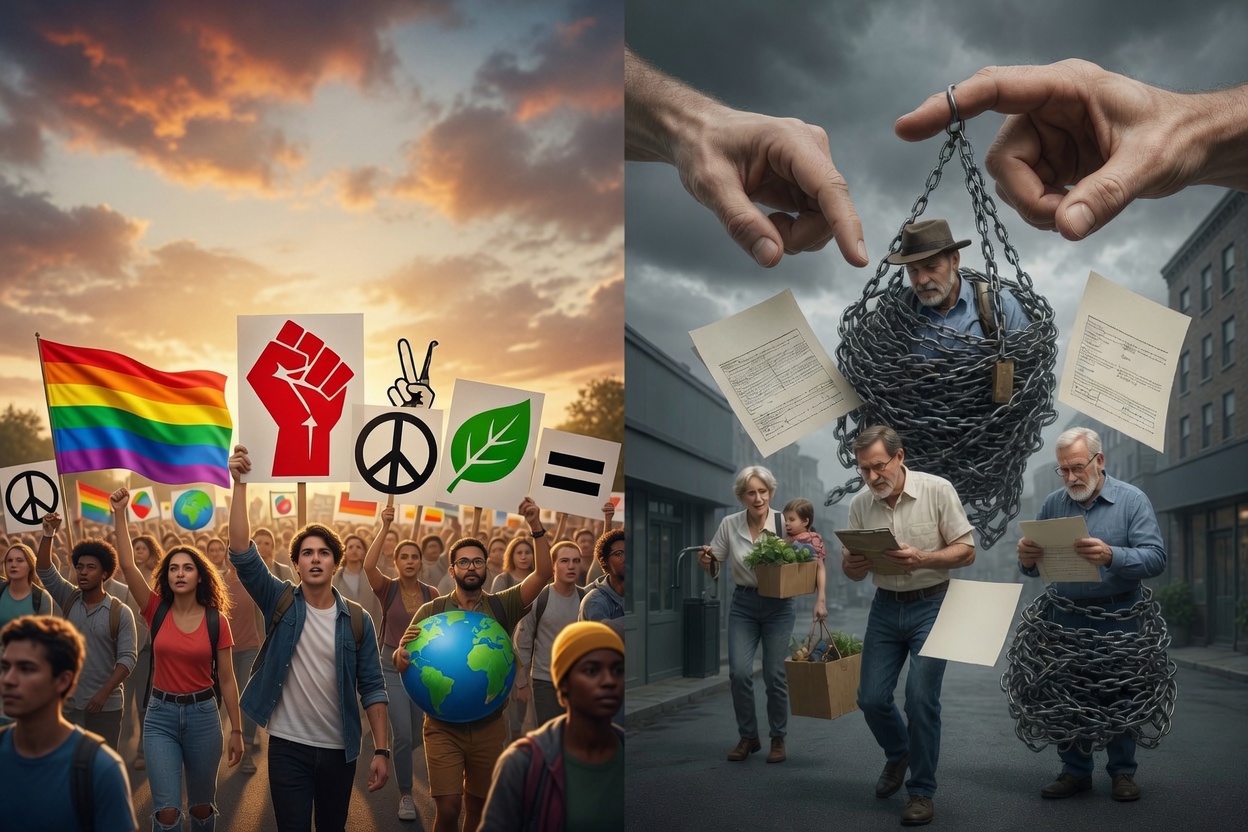
By Paul A Bauer Jr.
Are you tired of hearing the word “privilege” used as a weapon against every person who works, pays taxes, accepts responsibility, and refuses to apologize for being productive?
Privilege is not determined by skin color alone. Real privilege is receiving the benefits of a society while condemning the very people whose labor, taxes, businesses, and sacrifices help sustain it.
There is nothing wrong with assisting people who are elderly, disabled, ill, temporarily unemployed, or genuinely struggling. A responsible society should provide a safety net. But a safety net must never become a permanent lifestyle, a political identity, or an excuse to avoid personal responsibility.
Privilege is demanding expensive consumer products while claiming that society has provided no opportunity. It is enjoying subsidized housing, food assistance, healthcare, communications, and other public benefits while treating taxpayers as enemies. It is freedom to protest throughout the day because someone else is working throughout the day to finance the system supporting you.

Privilege is repeatedly making irresponsible decisions and expecting to be rescued without consequence, while people who work, save, build businesses, raise families, and follow the rules are taxed, regulated, and blamed for society’s problems.
That is the contradiction no one wants to confront.
This is not an argument about race, poverty, or denying help to people in need. It is an argument about accountability. It is about a culture that increasingly rewards grievance, excuses failure, and treats personal responsibility as oppression.
Meanwhile, the people holding society together are expected to remain silent. Workers see more of their earnings taken. Small businesses face expanding regulations and costs. Families who sacrifice and plan for the future are told they are privileged merely because their effort produced results.
A healthy society must recognize both compassion and obligation. Assistance should provide a path toward stability, independence, employment, treatment, education, or recovery, not permanent dependency without expectations.
We should stop demonizing achievement and stop romanticizing victimhood. We should honor work, discipline, service, sacrifice, family responsibility, and the courage to carry one’s own weight whenever physically and mentally capable.
Real privilege is not simply having more than someone else. Real privilege is expecting the benefits of citizenship without accepting any of its responsibilities.
For decades, our culture has weakened the values of strength, discipline, accountability, fatherhood, service, and self-reliance. That did not happen by accident, and the consequences are now visible throughout our institutions and communities.
Compassion without accountability becomes dependency. Assistance without expectations becomes entitlement. Rights without responsibilities eventually become unsustainable.
It is time to restore balance.
Paul A. Bauer Jr. is a public policy and community advocate, public integrity researcher and investigator, and the Founder and Principal of Protec Services and Solutions.