
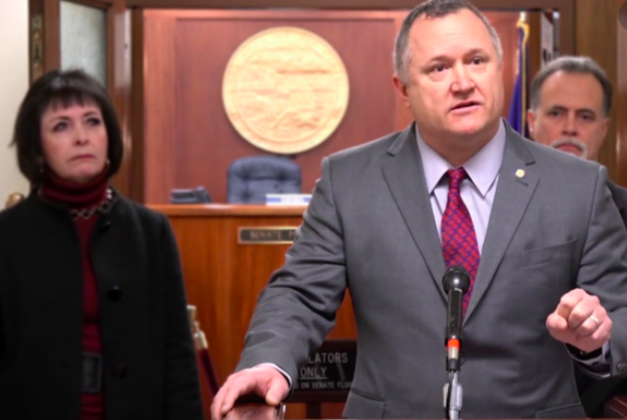
Sen. Mike Shower of Wasilla offered two bills on Wednesday, both which would end the binding caucus system in the Legislature.
Shower, who along with other conservative senators was stripped of his committee and staff by his fellow Republicans because of their votes on certain caucus priorities in 2019, has offered Senate Joint Resolution 17 and SB 187.
SJR 17 would prohibit a political caucus in the Legislature from compelling its members to vote for or against a bill, appointment, veto, or other measure. It would be a constitutional amendment to be voted on by Alaskans at the next general election. It was referred to three committees – State Affairs, Judiciary, and Finance.
SB 187 would put the same language into statute. The bill was referred to State Affairs and Judiciary. The bill was referred to State Affairs and Judiciary committees.
[Read: Sen. Shower stripped of staff by Senate leadership]
WHAT IS A BINDING CAUCUS?
The party caucus is a voting bloc called together by party leaders to discuss strategy and positions. Decisions made by caucuses can be binding or nonbinding on members. The party caucuses are not open to the public, and no formal record is kept of their proceedings. They are considered deliberative strategy sessions. Members of the majority caucus are rewarded with larger offices and better positions on committees.
For many years in the Alaska Legislature, the Republican caucus has had a rule that binds members to voting on the budget as a group, regardless of their individual differences on the budget.
Shower cited the Air Force Honor Code and a Colorado constitutional amendment that prohibited the long-standing binding caucus in that state. He said that the caucus rules may not be actual bribery but have the same coercive effect.


