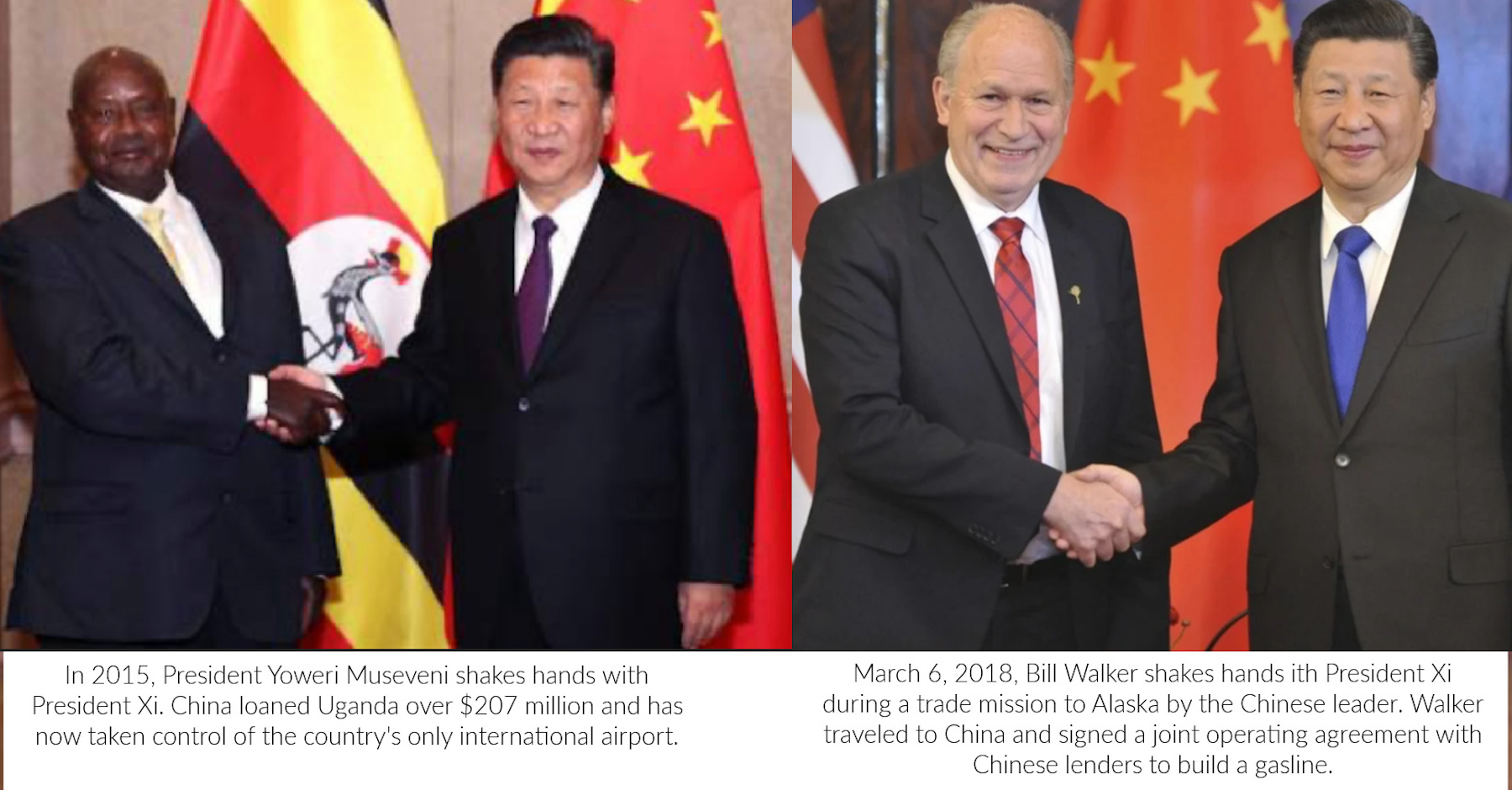
According to several media outlets across Africa, Uganda has lost possession of the Ugandan Entebbe International Airport, along with other strategic assets, because the country has not been able to repay a loan to the Export-Import Bank of China.
The Sahara Reporters wrote that President Yoweri Museveni had sent a delegation to renegotiate with the Chinese government over “toxic clauses that exposed the East African country.” It was to no avail.
The Ugandan Entebbe International Airport is about 40 miles from Kampala, the capital, and is the country’s only international airport. It would be used by ConocoPhillips, Exxon, and Eni, all companies doing business in Alaska.
The Museveni-led Ugandan government had, on Nov. 17, 2015, signed an agreement with Exim Bank to borrow $207 million at two per cent upon disbursement, according to the Sahara Reporter. The loan was to mature in 20 years, and had a seven-year grace period. But as part of the deal, there were conditions requiring the Ugandan government to surrender the airport to the Chinese lenders, which are owned by the Communist Chinese government.
According to the Daily Monitor, the Ugandan government waived international immunity in the agreement it signed to secure the loans, exposing airport to take over without international protection.
The relinquishment of a major portion of the country’s infrastructure is reminiscent of the discomfort many Alaskans expressed after former Alaska Gov. Bill Walker signed an agreement with China to finance the design and construction of the now-mythical Alaska LNG project from the North Slope to Nikiski.
Walker and former Alaska Gasline Development Corporation President Keith Meyer signed a joint development agreement was signed with three major Chinese entities, all controlled by the communist government:
- Sinopec, one of the largest oil and gas companies in the world, generates $456 billion in annual revenue.
- Bank of China is one of the five largest banks, with clients in more than 50 countries and regions.
- With an estimated $813.5 billion, China Investment Corporation is the world’s third largest sovereign wealth fund.
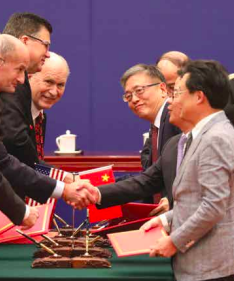
“This is a big project with big players and big benefits,” Walker noted at the time. “There are more steps before a final investment decision is reached, but having the largest LNG buyer in the world participating in this project means the Alaska LNG project has favorable market engagement at the highest level. This project will finally allow Alaska to reach its full potential as a state. As we move from having one of the highest unemployment rates in the country to the lowest, we will build a stronger Alaska.”
That year, a cybersecurity firm said a Chinese university probed the computer networks of Alaska state departments, especially the Department of Natural Resources, and also private businesses during Walker’s trade mission “in an apparent attempt to ascertain vulnerabilities and gain illegitimate access.”
The firm, Recorded Future, published a report that said the attack originated from computer infrastructure at Tsinghua University.
The report said Alaska was not alone as the target of “cyberespionage” from Tsinghua infrastructure, called an elite Chinese university by Recorded Future, according to the publication Government Technology.
While Walker was courting China, this lending arrangement didn’t work out so well for the Ugandans, and by 2018, Walker was out of office and the new administration pulled the plug on the arrangement.
Several commentators at the time warned that Alaska should be careful about getting into bed with the People’s Republic of China, pointing to the many assets across the African continent that were already under the ownership of China.
Background: In February of 2015, South Korea, through the Korea International Cooperation Agency, gave the government of Uganda a grant of $27 billion Ugandan dollars towards modernization of the airport.
The Ugandan government began the three-phase upgrade and expansion in a project that was scheduled to stretch until 2035 and cost $586 million in U.S. dollars. With the South Korean grant and the China loan, not all of the costs were covered. Financing wasn’t secured to complete the project.
“In desperation, Uganda in March 2021 sent a delegation to Beijing hoping to renegotiate the toxic clauses of the deal but the officials came back empty-handed as China would not allow the terms of the original deal to be varied,” the Sahara Reporter wrote.
“Last week, Uganda’s Finance Minister, Matia Kasaija, apologised to parliament for the “mishandling of the $207 million loan” from the China Exim Bank to expand Entebbe International Airport,” the news agency said.
The airport, built in 1972 and used by the Uganda military, has over 1.9 million passengers per year, and the renovation is said to be 75.2 percent complete.
China controlling the airport will create a political challenge for Musenvi, “who came to power on the back of an armed uprising in 1986, and expose him to election defeat,” the news organization said.
Although Alaska escaped a fate like Uganda is suffering, in 2020, Gov. Walker and Keith Meyer put together a new corporation to try to take over the Alaska Gasline project from AGDC and move it forward, presumably with Chinese financing. By then, AGDC was under new leadership and was not interested.
Now Walker is running for governor again.