
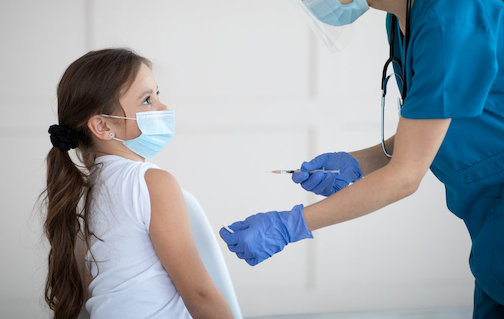
The decreasing trust in agencies and institutions in America has a new twist: With the growing wariness of public health authorities and the various disputes over the benefits of the Covid-19 vaccines, the public is now more hesitant about childhood vaccination schedules in general: More than four in 10 Republicans and Republican-leaning voters now say that they oppose school districts requiring that children get some historically given childhood vaccines, such as for measles, mumps, and rubella.
The study by Kaiser Family Foundation shows that nearly 3 in 10 parents now oppose the general vaccination requirements.
The report comes after over 80 children in Ohio have been diagnosed with measles. In 2021, only 49 cases of measles were reported across five jurisdictions in America; so far this year, the number has reached 117, according to the Centers for Disease Control and Prevention.
“Overall, nearly three in ten adults (28%) nationally now say that parents should be able to decide not to vaccinate their children for measles, mumps, and rubella rather than those vaccinations being required to attend public schools, up from 16% in a 2019 Pew Research Center poll conducted before the COVID-19 pandemic. Among parents, opposition to requiring those childhood vaccines now stands at 35%, up from 23% in 2019,” Kaiser Family Foundation says.
The KFF COVID-19 Vaccine Monitor survey reveals that parents’ opposition to requiring those childhood vaccines stands at 35%, up from 23% in 2019.
Most of the public is still on board with vaccinations for these dangerous childhood diseases, but the number supporting mandatory vaccinations for children is down to 71%, from 82% in 2019, before the Covid pandemic and the vaccines that came on its heels.
“The growing opposition stems largely from shifts among people who identify as Republican or lean Republican, with 44% now saying parents should be able to opt out of those childhood vaccines, up from 20% in 2019. In contrast, the vast majority of Democrats and those who lean Democratic support requiring the vaccines for public school students (88%), little changed from 2019 (86%,” Kaiser said.
Also from the KFF report:
“Currently, all states and the District of Columbia require children to be vaccinated against certain diseases, including measles and rubella, in order to attend public schools, though exemptions are allowed in certain circumstances.
“Despite growing opposition to requiring childhood vaccines, the new survey captures modest shifts in the public’s view of their value. Today 85% of the public and 80% of parents say the benefits of the measles, mumps and rubella vaccines outweigh their risks, little changed from 2019, when 88% of the public and 83% of parents felt that way.
“Even among people who have not gotten a Covid-19 vaccine, a large majority (70%) say the benefits of these childhood vaccines outweigh the risks, though one in four (26%) say the risks outweigh the benefits.
“The new survey also finds that about four in ten adults report that they either have already gotten the recommended bivalent booster shot (22%) or say they will get it as soon as they can (16%). The bivalent booster targets both the original and omicron Covid-19 strains and has been available since September.
“Among adults ages 65 and older, who face higher risks from COVID-19, about four in ten (39%) say they have already gotten the bivalent booster, and another 16% say they intend to do so as soon as possible. Still, this currently leaves more than half of older adults without the protection of the bivalent booster.
“Democrats (38%) are much more likely than independents (18%) or Republicans (12%) to say that they’ve gotten the new booster.
Vaccinated adults who have not gotten a bivalent booster are largely skeptical about its value. Among this group, more than four in ten (44%) say they don’t think they need the new booster, and more than a third (37%) say that they don’t think its benefits are worth it. A similar share (36%) say they are too busy and haven’t had time to get it.
“Fewer cite other reasons such as bad side effects from earlier Covid-19 vaccines (23%), waiting to see if cases increase in their area (17%), or waiting until they travel or see vulnerable family and friends (12%).
“Among those ages 65 and older who are vaccinated but have not gotten the updated booster, about a third say that they don’t think they need it (36%) and that they don’t think the benefit of the updated booster is worth it (36%). About one in four (23%) say they have been too busy or have not had time to get the new booster yet.
“Most vaccinated Republicans or Republican-leaning independents who haven’t gotten the new booster say that they don’t think they need it (64%) or that its benefits are not worth it (61%). Among vaccinated Democrats and Democratic-leaning independents who have not gotten the updated booster, the top reason is being too busy (51%).”
Parents of children ages 12-17 said just 16% of their children had received a Covid booster shot. Only 14% of children ages 5-11 have been boosted. Over half of the parents surveyed said they would not get their children vaccinated or boosted for Covid.
This survey showed that parents are now more worried their children will get sick from RSV (56%) or the flu (51%). About 47% of parents were worried about their children getting Covid.
Designed and analyzed by public opinion researchers at KFF, the Vaccine Monitor survey was conducted from Nov. 29 – Dec. 8, 2022, online and by telephone among a nationally representative sample of 1,259 adults, in English and in Spanish., the foundation reported. The margin of sampling error is plus or minus 4 percentage points for the full sample. For results based on other subgroups, the margin of sampling error may be higher.
Read more at the KFF Covid-19 Vaccine Monitor website at this link.


