
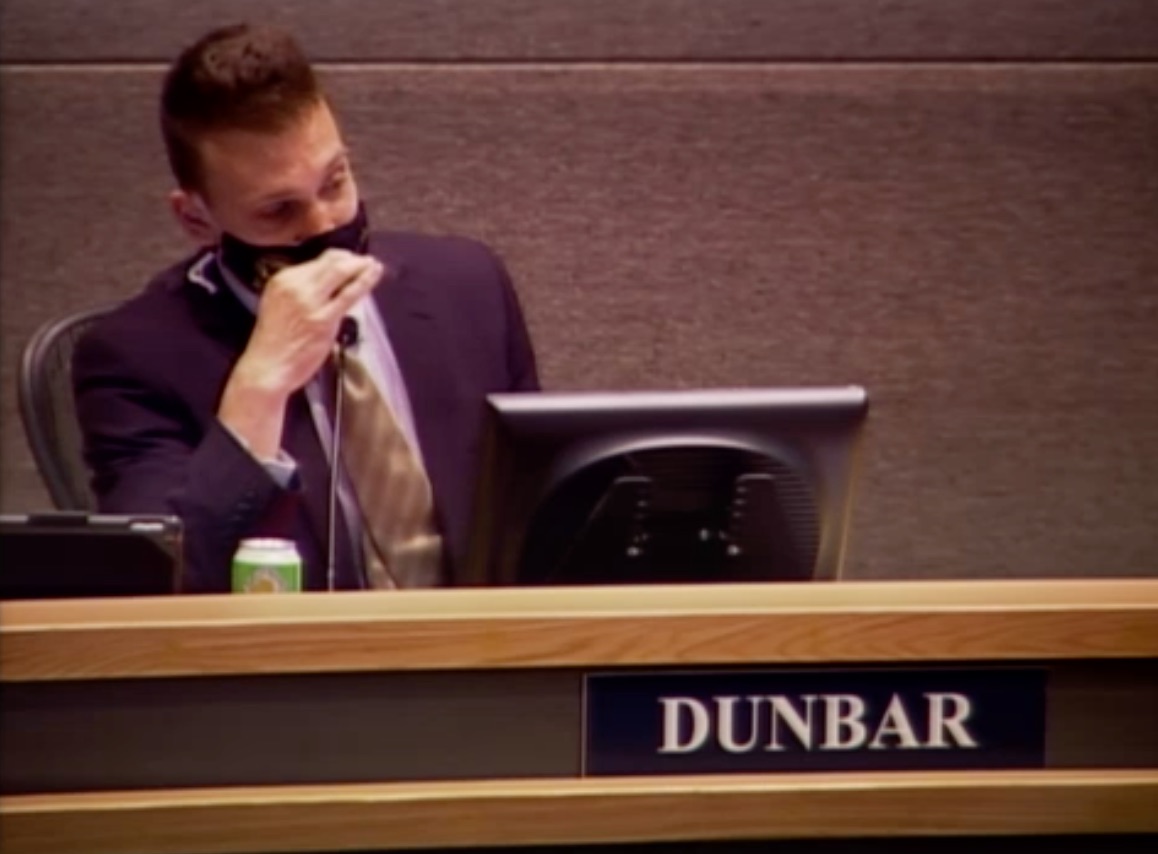
An email thread between two progressive Assemblymen in Anchorage indicate that they were coordinating with each other to coerce pastors into supporting a massive, controversial, and costly homeless services plan last summer.
The emails came to light as part of a public records request. The two men, using their personal emails but using the municipality’s server, carried on an exchange during which Assemblyman Forrest Dunbar congratulated himself and Assemblyman Chris Constant because “our shame/prodding campaign worked!”
Dunbar is running for mayor of Anchorage.
Constant wrote that some of the pastors were unhappy with the pressure, and “they came at me hard pissed telling me they were going to comment already (When?) and that I was the bad one. Haha. Whatever it takes to make you do your part.”
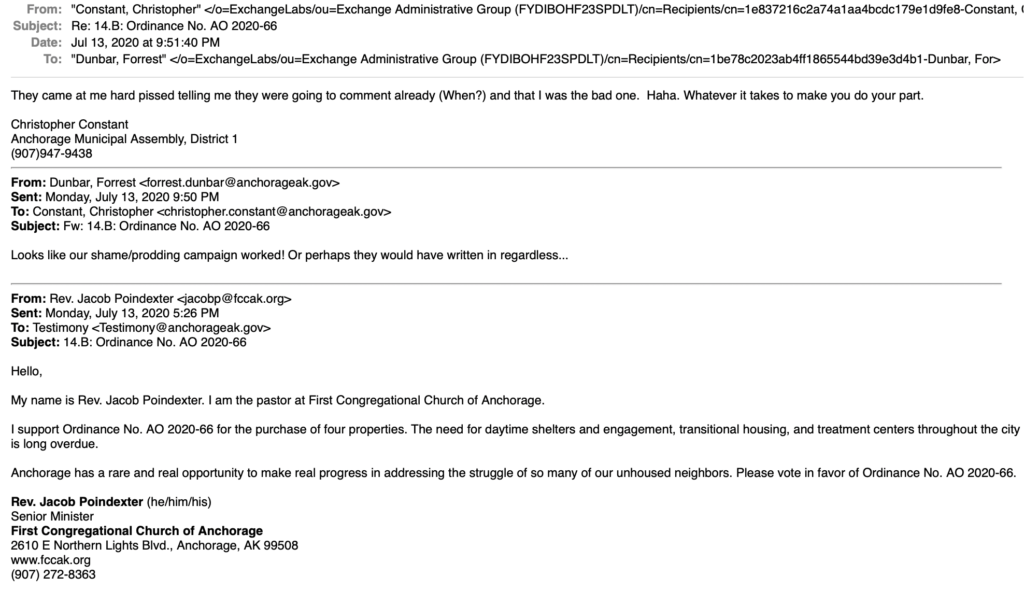
Alaska Statute forbids such coercion by people in positions of government power. Title 11.41.530 addresses it:
“A person commits the crime of coercion if the person compels another to engage in conduct from which there is a legal right to abstain or abstain from conduct in which there is a legal right to engage, by means of instilling in the person who is compelled a fear that, if the demand is not complied with, the person who makes the demand or another may
(4) take or withhold action as a public servant or cause a public servant to take or withhold action;
Coercion is a Class C felony. In this case, churches were under the threat of being shut down again by the mayor. A couple of weeks later, they were ordered shut down by Emergency Order 15, which was in effect Aug. 3-30. The shutdown had followed other emergency orders that had closed or greatly limited church gatherings.
Some churches did not comply, while others did. Anecdotally, pastors who spoke with Must Read Alaska say they know of many churches in Anchorage that will never reopen because of the financial crisis caused by the Emergency Order.
Both Constant and Dunbar repeatedly voted on the various powers granted to the mayor to shut down the churches, bingo halls, bars, restaurants, and other establishments.
In another era, the public might expect the ACLU-Alaska to take up the cause of the rights of individuals and the COVID-19 constitutional infringements, or to defend churches who were “shamed” and “prodded” by public officials into writing letters in support of legislation, knowing that the officials could make their churches pay a heavy price if they did not comply. But in this era, the ACLU has remained silent.
The only organization in Alaska that would investigate this as public corruption would likely be the Department of Law’s civil division, which also handles matters of public corruption.


