Wednesday, May 6, 2026
Home Blog Page 988

Biden’s war on Alaska will benefit Russia

AFTER CEDING AFGHANISTAN TO CHINA, WILL JOE CEDE ALASKA’S ENERGY RICHES TO RUSSIA?

By DUGGAN FLANAKIN

Joe Biden’s war on fossil fuels has taken perhaps its heaviest toll on the 49th State. Oil and gas account for roughly half of Alaska’s economy and a quarter of its jobs. There would be lots more oil and gas jobs in Alaska but for Biden, who unilaterally suspended all oil and gas leases in the Arctic National Wildlife Refuge that President Trump had earlier approved. Now that action is being challenged in court.

The ANWR suspensions came on the heels of the weak defense of ConocoPhillips’ Willow Master Development Plan. In October, the Biden Justice Department opted not to continue its defense of the project after the Alaska federal district court ruled against what would have been the largest oil and gas drilling project in the Alaskan Arctic.

Adding insult to injury, just as he did by vacating sanctions that had blocked construction by Russia of the Nord Stream 2 pipeline, President Joe opted to abandon the Arctic and the people of Alaska. In turn, he opened an even wider door for Russia to overtake the U.S. as an oil and gas producer. Lest anyone forget, the Nord Stream deal was announced weeks after Biden killed the Keystone Pipeline, also by Executive Order.

Thanks to Biden policies, Russia has become America’s No. 2 foreign oil supplier. Russia has more than doubled its oil sales to the U.S. since Biden took office; Russian oil now doubles Alaskan oil’s contribution to U.S. consumption. While Alaska’s oil and gas production has fallen by 75 percent since 1988, seriously impacting state revenues, Biden has enabled Putin’s Russia to gain U.S. market share equal to Alaska’s entire current output.

The Alaska Industrial Development and Export Authority (AIDEA) has sued President Biden, Interior Secretary Deb Haaland, and others in the Biden Administration, stating that their actions to obstruct and delay the development of valid oil and gas leases in the non-wilderness Coastal Plain of the Arctic National Wildlife Refuge are unlawful.

In the 32-page filing, before the U.S. District Court for Alaska, the plaintiff explained that AIDEA had won the right to bid on leases to pursue drilling in ANWR when a federal judge denied any injunctive efforts to stop the oil and gas sale.

Biden disregarded this order on his first day of office by placing a “temporary” moratorium on ANWR development. He followed up in June by halting exploration and development on those leases, claiming that legal deficiencies in the oil and gas leasing program necessitated a new environmental review. In August, Haaland announced that Interior would still need more than a year to complete its “review.” Any bets on the outcome?

AIDEA argued that these actions violated the Tax Cuts and Jobs Act of 2017 that opened the door for the January 2021 lease sale. AIDEA had won seven 10-year leases in that sale to pursue development on tracts totaling about 370,000 acres in the 19-million-acre refuge.

AIDEA contends that “defendants have defied a direct congressional mandate[emphasis added] to facilitate development of oil and gas resources on the coastal plain of Alaska. Rather than follow the law and the science, defendants have engaged in a politically driven, systematic campaign to prevent any Coastal Plain development.”

AIDEA is seeking a declaratory judgment holding that the Biden ANWR moratorium violates the Administrative Procedures Act. The plea also asks for declaratory judgments that the Biden moratorium and Interior’s actions violate the 2017 Tax Act and constitute unlawful withholding and unreasonable delay of agency action – and are also arbitrary and capricious.

AIDEA also seeks permanent injunctions against the federal defendants and an order compelling the government to proceed with leasing and development. They are going for the grand slam homer while down by three in the bottom of the ninth. America needs Alaska’s oil and gas. But Biden would rather buy it from Russia. And OPEC (whom he is begging!). And Venezuela. [Alas, China has none to spare.]

Biden’s war on Alaska would be bad enough, but Russia is also engaged in polar geopolitics and has been investing heavily in the Arctic. According to Heritage Foundation scholars, Russia is spending nearly a billion dollars by 2026 to complete building a fiber optic cable (the Polar Express) spanning nearly 8,000 miles from the northern village of Teriberka to Vladivostok.

The state-funded project was authorized under Russia’s 2018 Northern Sea Route Development Plan, which calls for significant increases in Arctic development by 2035. Putin’s Russia is also expanding Arctic oil and gas drilling, including a new project in the Laptev Sea. Russia has even stepped up its Arctic military presence, with new patrol vessels and new marine bases.

The once-dubbed “evil empire” also aims to test its Poseidon nuclear-powered, nuclear-armed torpedo in the Arctic from newly refitted nuclear submarines. And Russia has over 40 ice-breaking ships, compared to America’s two, one of which is over 30 years old; neither can travel in U.S. waters above the Arctic Circle.

Biden has, you may have noticed, brought expanded oil and gas and coal operations to countries around the world while depriving Americans of hundreds of thousands of direct jobs and leaving millions unwilling to work at all. The latest polls show him 2 points behind the much-maligned and twice-impeached Donald Trump.

Biden’s anti-development policies play well with well-heeled environmental groups who oppose any use of fossil fuels in the West and by Africans (but not by Russians, Chinese, Indians, Iranians, or OPEC members). He has plowed on despite falling polls and rising prices for gasoline, home heating, groceries, and just about everything else.

He knows he is not running again and has nothing to lose. He is effectively President for Life (at least his political life) only if he continues to please the far left. Expect no course corrections.

Duggan Flanakin is Director of Policy Research for the Committee for a Constructive Tomorrow. The column first appeared in Real Clear Energy.

Art Chance: A Civil War Thanksgiving and the faint glimmer of better days

By ART CHANCE

Perhaps the darkest days the United States have ever seen were the fall of 1863. The war between the United States and the Confederate States that was supposed to have been over with a Northern victory in at most a few weeks was inexorably moving into its third bloody year.   

In the east, where all the political and media attention was concentrated, the war had been a series of unrelenting failures for Union armies punctuated by a couple of outright catastrophes. Antietam/Sharpsburg in September of 1862 was at most a tactical draw, but for the first time in the war, the Union held the field as Lee’s “wolf-like” men backed away to Virginia.   

President Abraham Lincoln seized on that cold comfort to celebrate a Union “victory” by announcing the Emancipation Proclamation. Antietam remains the single bloodiest day in American history.

1862 ended and 1863 began in plodding, muddy stasis between the armies staring at each other across the Rapidan and Rappahannock Rivers. That stasis was punctuated by a stunning Union defeat at Fredericksburg in mid-December of 1862.

Lincoln chose yet another ill-starred general to command the Army of the Potomac and prod it into action against “Bobby Lee.”  The Union pushed across the Rappahannock near Chancellorsville, Virginia in May. Lee met them with barely half his army, the bulk of Longstreet’s Wing was on a foraging mission in Southern Virginia. Lee divided his already divided and outnumbered army and sent “Stonewall” Jackson on a swinging “flank attack” against the Union right. Jackson rolled up the Union right in a battle that is studied yet today in military academies along with Hannibal’s flank attack at Cannae and Julius Caesar’s at Alesia.   

It was another stunning Confederate victory. It was also the second bloodiest day in US history, and it cost Lee his “right arm,” T.J. Jackson. As an aside, a couple of my ancestors were in the unit that formed the hinge that Jackson’s flank attack was swung on. I have my great-great grandfather’s letter home after the battle; the excitement is palpable even after almost 160 years.

Lee re-united and re-organized his army and stole a march on a new union general to next appear at a sleepy Pennsylvania town named Gettysburg. Gettysburg was and remains the largest and bloodiest battle fought on American soil. Somewhere around 50,000 men were killed or wounded in those three days. About 8-10 thousand were killed. It would be easy to write 5-10 thousand words about what happened and why in those three days, but the real result is that it was a tactical draw, much like Antietam/Sharpsburg, and Lee pulled back to Virginia. The other result was that the formerly indomitable Army of Northern Virginia ceased to exist. The casualties among ANV officers make the Army unrecognizable after Gettysburg.

After Gettysburg, the Union licked its wounds north of the Rappahannock and the action in the War moved south to Chattanooga, Tennessee. Lee detached part of Longstreet’s Corps to reinforce Gen. Braxton’s Bragg’s Army of Tennessee. The Battle of Chickamauga was a confused and desperate battle fought Sept. 18-20, 1863. It is generally credited as a Confederate victory, but it, too, was at best a draw, and it was the second bloodiest battle of the War. 

Those scenes in the railroad yard in Atlanta in “Gone With the Wind” are casualties from Chickamauga. A very popular song in both the North and the South was “The Vacant Chair,” published in 1862 to commemorate the death of a Union soldier. The family laments the vacant chair at their Thanksgiving dinner table left by his death. By the Winter Solstice of 1863, there would be a lot of vacant chairs in both the North and the South.

Against this grim background, on Oct. 3, 1863, President Lincoln proclaimed the fourth Thursday of the coming November as a National day of Thanksgiving.  

The proclamation was written by Secretary of State Seward and makes little mention of the war. Seward asks the people to look to and be thankful for the bountiful harvests and general prosperity of the country despite the war. He only uses a couple of lines to ask for remembrance of those at war or who have suffered loss due to the war. He also makes no reference to the history of the holiday. It had never been a standing holiday and was subject to each President’s proclamation. Thomas Jefferson did not observe it at all. It has always been an observed holiday since Lincoln’s proclamation and under President Grant it became a standing federal holiday.

Federal holidays really weren’t regularized until the 20th Century and aren’t all that uniformly observed by the states even today. Thanksgiving was little noted in the South even as late as my youth in the 1960s.  Some posit that Thanksgiving, a Yankee holiday, only became accepted in the South as so many football games came to be played on or around Thanksgiving; I can’t say it doesn’t have a ring of truth.   

Around the country, the holiday was celebrated differently or not at all depending on the locale. Only in the mass media era with Macy’s Parade and nationally broadcast football games did observation become somewhat consistent.

There was really only a brief, shining moment of the Norman Rockwell-style happy family Thanksgiving. It didn’t take long for professors and later even school teachers to start sending kids home for Thanksgiving with instructions about how to provoke their unenlightened parents and older relatives about genocide, cultural appropriation, and the like. Even without the poisonous influence of the “education” system, the demographics of the country have made Thanksgiving Dinner a difficult proposition; where do you have it? Less than half of the domiciles in the Country are occupied by a biological family. To whose house do we go “over the river and through the woods” to visit?

We can avoid a lot of that by not going back to the days of pilgrims and Wampanoag Indians, about which we know little authoritatively. We need to go back only to the traditions of the modern holiday established in the darkest days of the Civil War.  The writer of the proclamation, Secretary Seward, was no lover of the South, but the proclamation is not condemnatory, and asks only for God to restore the Nation.   It is an expression of good will and thankfulness for good fortune even in an unfortunate time.   

We should observe Thanksgiving in the same spirit.   As Lincoln did, if we look hard enough, we too can find that faint first glimmer of something better coming.


Art Chance is a retired Director of Labor Relations for the State of Alaska, formerly of Juneau and now living in Anchorage. He is the author of the book, “Red on Blue, Establishing a Republican Governance,” available at Amazon. 


Jamie Allard: 400 years since the first Thanksgiving, a time to reflect on community coming together to thrive

By JAMIE ALLARD

A lot has changed since that first Thanksgiving. At that time, I doubt the people knew the historical weight of their actions, or that their feast would be commemorated 400 years later.

They were just regular people doing their best to survive. They were moms, dads, children, strangers, new friends, helping each other through the dark times after surviving a voyage across an enormous ocean to an unknown place, where they hoped to worship in peace.

But survival wasn’t enough for them. They wanted to thrive. I can imagine their exhaustion, grief, and fortitude as they came together in community to make peace, and give thanks. It is only with true gratitude in our hearts that we can overcome our differences, our challenges, and our circumstances to move from surviving to thriving. 

The past two years of pandemic panic have felt like survival mode. That spirit of the early European settlers and the Native Americans who aided them has been challenged, threatened, and canceled across our nation. But history teaches us that the pressure of tough times is what builds community. In our struggles, we relearn that we need each other. We dig deep, find thankfulness for what we have, and give to our neighbors. 

This Thanksgiving, I invite you to pause and look beyond the food, the day off, the football, and the shopping to remember the spirit of that first Thanksgiving. Imagine the grief at the depth of their loss, the strength of their bonds forged in overcoming death, and their overwhelming gratitude for unlikely friends.

Like them, we are not defeated. Because of them, we live in this great nation. As a hispanic American, with deep Chilean roots, I am forever thankful for our American freedom, our family, the grace of God, and those who went before us. Look around and beyond our differences to find true thanks that will move us forward as a country, just as it did 400 years ago. 

I have faith that if we can hold that thanks in our hearts, we can move from surviving to thriving once more.

Jamie Allard is an Anchorage Assembly representative from Chugiak/Eagle River.

Assembly chairwoman has security remove citizens from Tuesday meeting

Another Tuesday, another night of civil disobedience at the Anchorage Assembly meeting. Chairwoman Suzanne LaFrance had security remove two members of the public for the offense of having verbally expressed their discontent and protest that public testimony was engineered to keep those who didn’t sign up in advance from being able to express their opinion at the podium.

In short, the Assembly ran out the clock so that only one person was able to testify during “initial public participation” before the Assembly got into its normal meeting business that included the budget.

That person was Assembly critic Dustin Darden and he played a song whose lyrics included, “Revolution,” and “We will not comply.” He spoke about a maintenance worker whose job had been cut in the budget and asked the Assembly to consider adding it back.

But there was a line of 8-10 people behind Darden, and none of them was allowed to give their 3-minute remarks. Assemblywoman Crystal Kennedy tried twice to make a motion to extend the public hearing time but she was not acknowledged by Chairwoman LaFrance.

Although LaFrance had warned members of the public that they must wear masks while in the meeting, several chose to ignore that admonishment.

One person who was hauled out by security ended up in an Anchorage Police Department cruiser for yelling at the Assembly for not allowing people to speak.

Assemblywoman Kennedy finally broke through and said that there were many people in line to speak, and they had stood for a long time to do so. She asked for a vote to give them another 15 minutes of time. The vote was 6-5 against allowing the audience the time they believed was theirs.

The Assembly then spent 10 minutes on a resolution to recognize Prostate Cancer Awareness Month. The resolution was held up by debate about whether races of men should be included in the “Whereas” portion of the resolution, since African-American men have a higher risk of prostate cancer than others.

The Assembly also passed a resolution recognizing community activist Eugene Haberman, who died in October. He had not missed an Assembly meeting in years and would frequently comment on the public process and scold the Assembly for not being inclusive or transparent.

Several members of the public testified about how much impact Haberman had on the public process in Anchorage, and for a brief moment, everyone in the room seemed to be on the same page, mourning the loss of a person who never passed up an opportunity to testify.

The meeting is underway, with the budget being the main menu item. Stories will follow.

Power grab: Assembly set to grant more authority to chairwoman and crack down on dissent from public who attend meetings

The Anchorage Assembly tonight will likely take up a proposed ordinance intended to crack down on all dissent from any of its members and from the public, and give vast authority to the Assembly chair to control the outcome of meetings.

The proposed ordinance makes severe changes to how the meetings of the Assembly will be conducted:

Establishment of a seating chart, arrangement of chambers. The chair shall have the authority to establish a seating chart for individuals participating in an Assembly meeting, and to prescribe how the physical space of a premise used for an assembly meeting may be used.

The liberal Assembly has recently attempted to move the mayor and his staff to a lower position in the Assembly room, which is a symbolic move that exposes the mayor to safety issues.

Prohibited items. The chair shall have the authority to prohibit members of the public from bringing dangerous or distracting items to Assembly premises, or to reguire an item to be removed from Assembly premises if it is being used to create an actual disturbance.

Recently, members of the public have brought in small American flags and waved them.

Removal for actual disturbance. The chair shall have the right to order a person to be removed from a meeting for creating an actual disturbance to the meeting.

Direction to security. The chair shall have the right to direct security guards at Assembly chambers, in furtherance of Assembly meeting purposes.

The security guards are now under the authority of the mayor.

Signage. The chair shall authorize signage posted at Assembly meetings, related to the Assembly meeting.

Safety rules. The chair may adopt rules to promote the safety of members and attendees of assembly meetings.

Dilatory motions, points of order, and reguests for information. The chair shall rule out of order motions, points of order, and reguests for information that are dilatory.

In recent meetings, Assemblywoman Jamie Allard has asked a lot of questions of testifying members of the public. This has made the liberal majority angry.

Non-germane reguests for information. The chair shall rule that a request for information is out of order if it is not germane to the pending motion or public hearing.

Recess. The chair may temporarily recess a meeting for convenience to restore order or to resolve a technical issue.

Committee assignments. The chair shall appoint assembly members to subcommittees of the assembly, and appoint a member to chair or members to co-chair each subcommittee.

Office assignments. The chair shall assign members office space.

Direction to municipal clerk. The chair shall provide direction to the municipal clerk.

The new rules also state that an individual who is testifying “may use a portion of their allocated time to engage in silent protest, but while doing so, must not prevent the assembly from receiving other testimony while the individual’s silent protest continues.”

Recently, some members of the public have used their three minutes to stage silent protest.

“Questions posed by assembly members should be to provide clarification or additional information on testimony provided. Members shall not engage in debate with members of the public. Questions should not be used as an attempt to lengthen or expand the testimony of an individual. Assembly members shall use restraint and be considerate of the meeting time of the Assembly in exercising the option to pose questions. The chair may intervene if a member is violating the spirit of this subsection, or if questions become so numerous as to impair expeditious conduct of the public hearing.”

Other authorities to be granted to the mayor are in the document below. The meeting starts at 5 pm at the Loussac Library ground floor on Nov. 23:

Downer: Anchorage gets downgraded bond ratings after years of big-spending Berkowitz

9

Standard and Poor’s Global Ratings downgraded the Anchorage Municipality general obligation and certificate of participation bonds from a “AAA” rating to a “AA+” rating. 

S&P also lowered its outlook on all general obligation bond ratings for the Municipality of Anchorage from “stable” to “negative”.

The downgrades reflect a material decline in the municipality’s available reserves, which is expected to worsen in Fiscal Year 2021. S&P Global Ratings stated that “If the municipality is unable to restore reserves to their fund balance targets in 2022 and 2023, we could lower the rating.”

If the municipality is unable to restore reserves to their fund balance targets in 2022 and 2023, we could lower the rating.

S&P Global Ratings

S&P Global Ratings view of the municipality’s general creditworthiness is due to appropriation risk.

“Capital expenditures from the 2018 earthquake, revenue declines from COVID-19, and the cost and labor shortages associated with construction in Alaska, and delayed Federal Emergency Management Agency (FEMA) reimbursements have forced the municipality to draw down its reserves. Officials hope to increase fund balances in 2022 and 2023, but they face numerous challenges to restore reserves,” S&P Global Ratings said.

Fitch Ratings of a ‘AA+’ rating to the Municipality of Anchorage’s general obligation bonds came with a warning based on expenditures that have been incurred beyond the federal assistance during the pandemic. 

These additional costs resulted in a negative $40 million year end 2020 fund balance for the Municipality as a whole.

“Additional upfront costs to address the disasters were incurred in fiscal year 2021, which will diminish the municipality’s financial cushion and heighten fiscal risk. Fitch expects the municipality to take all necessary steps for FEMA reimbursements, but delays or inability to be reimbursed could prolong a diminished financial cushion and could result in negative pressure on the rating,” Fitch stated.

A downgrade in the rating of the Municipality’s General Obligation Bonds would trigger a material increase in interest expense costs associated with borrowing in the Capital Marketplace.

This could make it more expensive for the Municipality of Anchorage to borrow in the future with the increased costs directly impacting taxpayers.

From 2016 to 2020, government spending has increased in the MOA by approximately 20%.

The MOA Unassigned Fund Balance went from a surplus of $11.2 in 2016 to a deficit of $40 million in 2020, all attributed to the Berkowitz Administration and leftist Assembly.

During the same period the Municipality of Anchorage’s population has decreased from 299,330 to 285,400 residents.

“I believe that government should begin right-sizing unsustainable spending to reflect the decreases in population that have occurred in the MOA over the past several years,” Mayor Dave Bronson said.  “Now is the time to act, to eliminate the level of uncertainty Anchorage residents and taxpayers have felt for years. That’s why this proposed budget is a call to action for us. I will continue to seek a decrease in government spending and seek to take the burden off the tax cap for all people of Anchorage.  We don’t want our children and grandchildren to have to pay the debts incurred today.”

S&P Global Ratings report stated that the Municipality of Anchorage can return to a stable scenario if it restores reserves through a combination of FEMA reimbursements or reducing expenditures, and they could revise the outlook to stable.

The Fitch Ratings report states that budget management in times of economic recovery historically has been strong, with prompt rebuilding of the municipality’s reserve safety margin. And that sound budgeting practices include things like “frequent course corrections to restore long-term structural budget balance.”

When former Mayor Dan Sullivan retired after six years, he left substantial fund balances, which were drained under the six years of Ethan Berkowitz and acting mayor Austin Quinn-Davidson.

The bad news for Anchorage comes just hours before the Assembly is set to meet to add back over $4.2 million to Mayor Bronson’s trimmed back budget for the coming fiscal year.

Anchorage Assembly wants a lot more added back to budget, busting tax cap

The Anchorage Assembly liberal majority doesn’t plan to let Mayor Dave Bronson cut the municipal budget as he has proposed. Bronson had to make $7.5 million in cuts in order to get the budget under the tax cap, after an Assembly and mayoral spending spree over the past six years created an unsustainable budget.

The Assembly is trying to claw back over $4 million of his cuts, with over half of its clawbacks showing no funding source at all, while other items raid the money that comes from utilities, which is obligated already.

That means busting through the tax cap, and paying for operations with bonds. The Assembly leadership, however, said in a press release that its add-backs won’t break the tax cap.

Some of the add-backs include:

$128,873 – Assembly members Forrest Dunbar, Austin Quinn-Davidson and Met Zaletel request to restore community grants

$125,000 – Assembly members Suzanne LaFrance and John Weddleton request to restore a partial budget cut to Girdwood EMS

$634,737 – Assembly members Chris Constant, Dunbar and Quinn-Davidson want to restore four positions set for elimination in Building Services

$20,000 – Assemblywoman LaFrance wants an audit increase for the Municipal Clerk.

$20,000 – LaFrance wants more for legal fees for interpreting cost increase.

$10,000 – LaFrance wants an increase for closed captioning services for the Assembly

$90,300 – LaFrance wants more adverting and printing/binding funds for the Elections division

$100,000 – LaFrance wants another administrative assistant for the Assembly. One was already added earlier this year.

$1.321 million – Dunbar and Quinn Davison want multiple positions in the health department to be paid for by alcohol taxes

$1 million – Perez-Verdia, Quinn-Davidson, and Zaletel want early education grants

The mayor has asked the Anchorage School District, which is awash in money, to pick up some of the cost of school resource officers. The Assembly liberal majority wants to put that back in the municipal budget.

The utility and enterprise funds that generate revenue are also compromised by the claw-backs. The Assembly majority proposes adding back spending to the Anchorage Economic Development Corporation, but uses utility spending for that. That would mean there would be less available to spend for the obligations in the operating budget, something evidently not understood by the Assembly.

The mayor, who cut $7.5 million just to reach the tax cap, has a budget that comes in $149,000 under that cap.

The budget is on the agenda at the Nov. 23 meeting of the Anchorage Assembly. The meeting starts at 5 pm. The agenda is at this link.

You can watch the Assembly meeting at this link.


https://mustreadalaska.com/anchorage-budget-will-reduce-spending-by-7-5-million-and-stays-below-tax-cap/

Anchorage Assembly drafts timeline for redrawing political boundaries in city

5

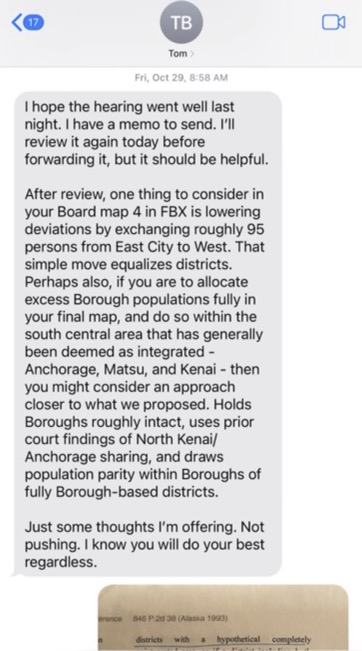
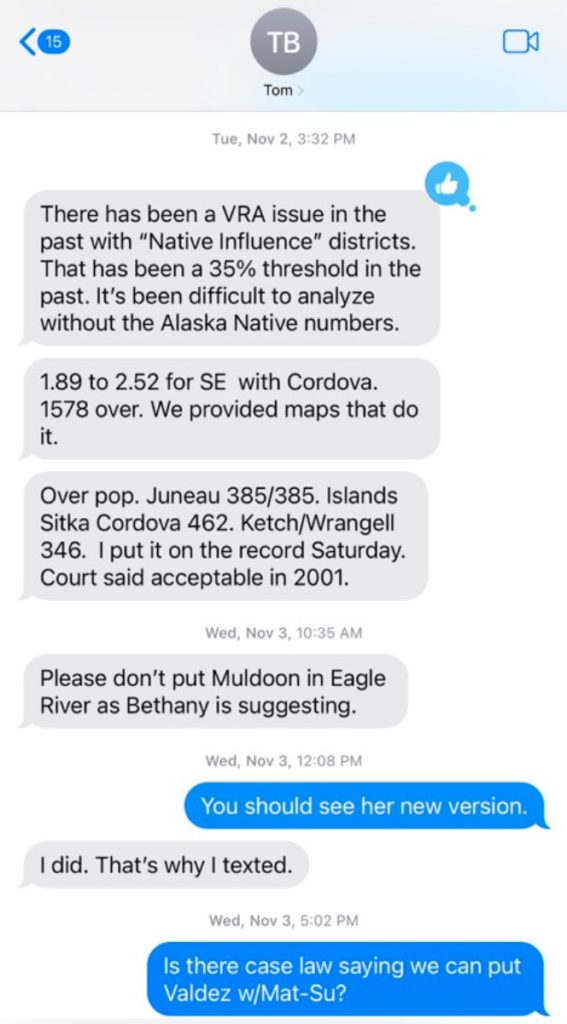
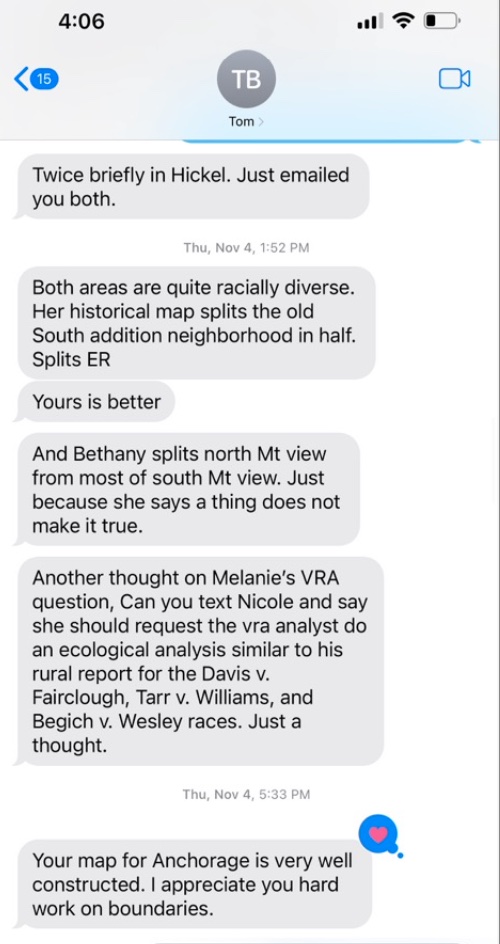
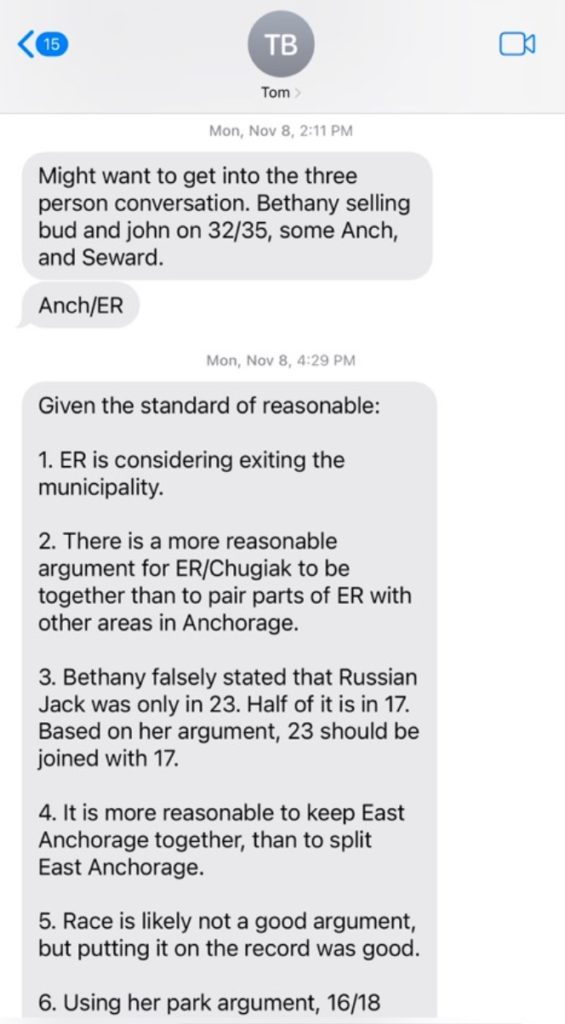
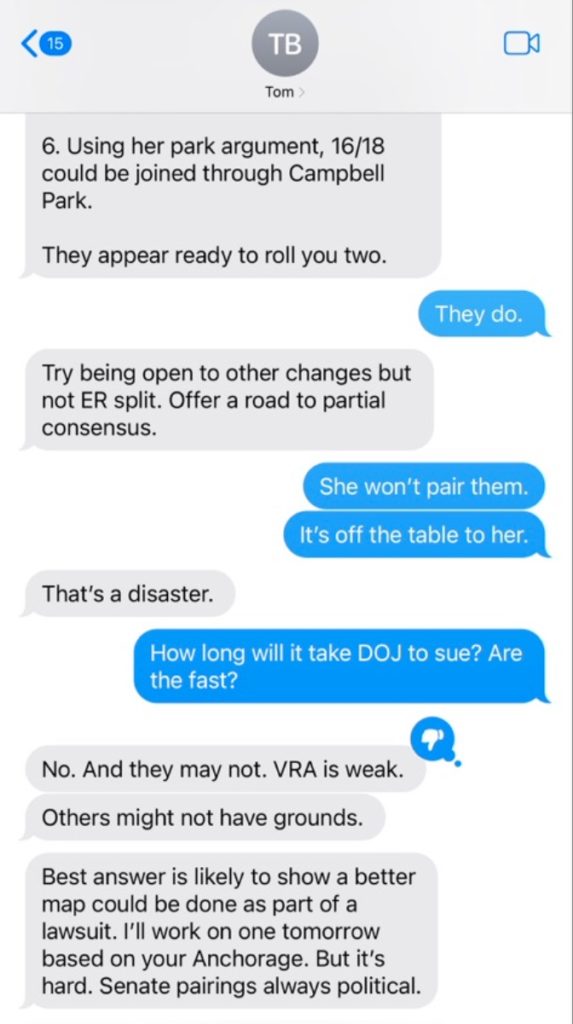
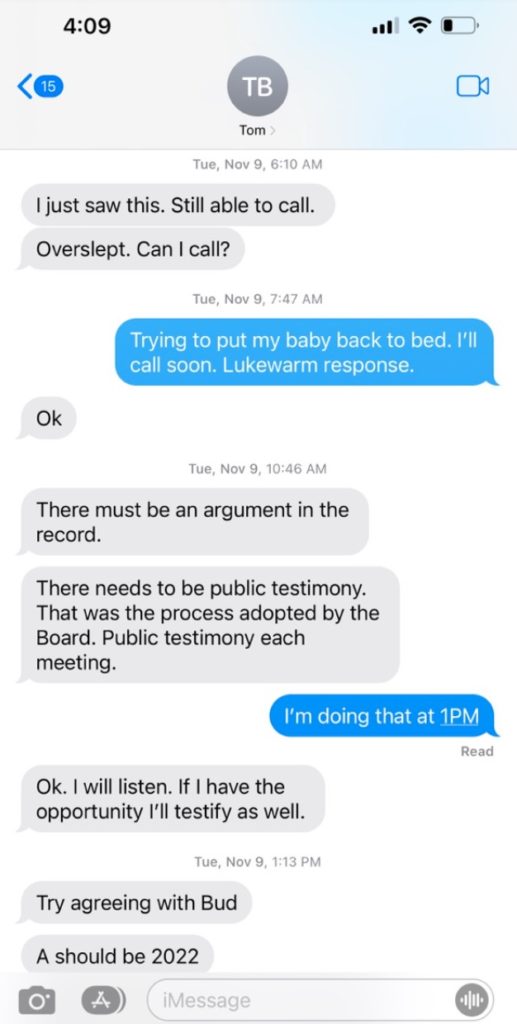
The Anchorage Assembly Reapportionment Committee has published a draft timeline for redrawing political boundaries in Anchorage, which will ultimately affect which Assembly members represent which citizens.

The voters passed a ballot measure this year adding a 12th seat on the Assembly that will represent the urban core of Anchorage, the most liberal area of town. That, plus the specific population data from the U.S. Census will require the redrawing of the boundaries.

The timeline:

Nov. 23 – Committee meeting

Nov. 23 – Assembly meeting declaration of malapportionment

Dec. 9 – Committee meeting review of initial plan, if available

Jan. 6 – Committee meeting of initial plan and prepare for town hall

Jan. 12 – Town hall meeting

Jan. 13 – Committee meeting review of town hall feedback

Jan. 20 – Committee meeting finalize plan for Assembly introduction

Jan. 21 – Agenda deadline to submit for introduction at Feb. 1 meeting of Assembly

Feb. 1 – Assembly meeting, introduction of final plan

Feb. 11 – Work session

Feb. 15 Assembly meeting, first public hearing

March 1 – Assembly meeting, second public hearing and vote on adoption

The Assembly has agreed in a committee today there will be no election for the District 12 seat this March-April because the timing is too tight. There will likely be a special election for that 12th seat later next year, but before 2023.

The next regular municipal election will be on Tuesday, April 5, 2022. The last day to file for office for the four expiring municipal Assembly seats (Perez-Verdia, Kennedy, Dunbar, Zaletel) is Jan. 28 at 5 pm. Ballots are mailed by March 15 and must be returned or postmarked by April 5. The final date to register to vote for the election is March 6.

Sen. Dan Sullivan calls Biden release of oil from Petroleum Reserve ‘incompetent’

Alaska Senator Dan Sullivan issued a statement regarding President Joe Biden’s decision to release 50 million barrels of oil from the Strategic Petroleum Reserve in an attempt to tame skyrocketing gas prices:

“The Biden administration’s incompetent and schizophrenic energy policies continue, and America’s working families are paying the price. Since Day 1, this administration has purposely sought to raise energy prices, by limiting the production of American energy, killing energy infrastructure like pipelines, and strong-arming American financial institutions to not invest in American energy projects, particularly in Alaska, all the while begging OPEC and our adversaries like Russia to produce more energy.” Sullivan said.

Tapping our nation’s Strategic Petroleum Reserve is political window dressing that will do little to counteract the Biden administration’s own destructive Green New Deal policies,” he said.

“Mr. President, I have a better idea. Get the boot of the federal government off the neck of energy producers in Alaska and other energy states and let them do what they do best—produce American energy for America with American workers and the highest environmental standards in the world! Don’t tap the Strategic Petroleum Reserve, tap into the National Petroleum Reserve of Alaska (NPRA)—where billions of barrels of oil are just waiting to be produced.”