Friday, June 19, 2026
Home Blog Page 953

Judge says Senate redistricting map needs do-over, and that Skagway-Juneau House seat needs another look

3

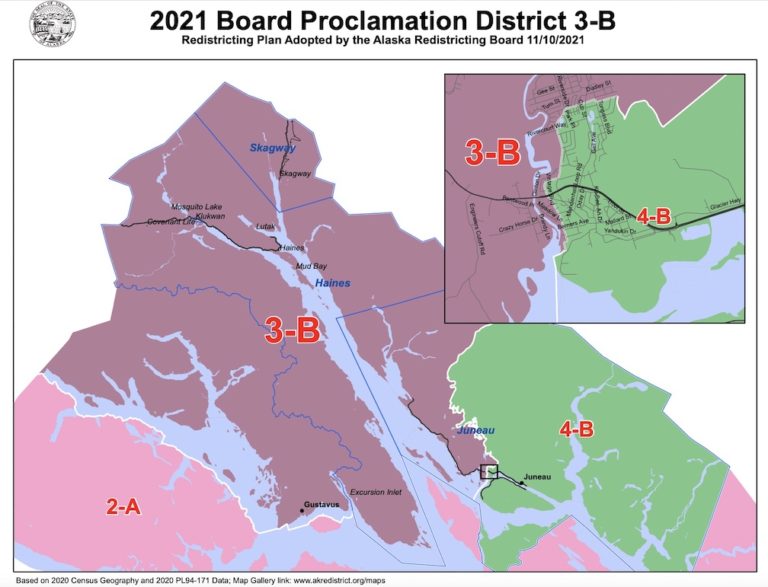
Anchorage Superior Court Judge Thomas Matthews says the new political map for Alaska is imperfect, and some of the process for drawing it was also flawed, violating the Alaska Open Meetings Act by going into executive sessions. He said in his late Tuesday night ruling that the Senate map needs to be redone and one House district involving Skagway and Juneau also needs different lines.

His decision will most certainly be appealed to the Alaska Supreme Court. Matthews based much of his reasoning on the misuse of executive sessions by the Alaska Redistricting Board.

Five various lawsuits were brought against the board by interests ranging from the City of Skagway to the Doyon Native corporation and Tanana Chiefs Conference. Most were not mentioned in the judge’s decision, but he focused on the Skagway-Juneau and Eagle River-Muldoon areas.

“This Court finds that the Board’s refusal to consider and make a good-faith effort to incorporate public feedback relating to the placement of Skagway and the dividing line in Juneau was arbitrary and capricious, and thus unreasonable. The same holds true for the East Anchorage senate pairings. if the Board could simply ignore the preponderance of public testimony and make decisions based on a single Member’s personal views, then Section 10 would be rendered superfluous.

“This Court therefore orders a remand of the final plan to the Board with instructions to take a “hard look” at House Districts 3 and 4 and Senate Districts K in light of public testimony. On remand, the Board must either redraw these districts to incorporate the reasonable requests supported by the clear weight of public testimony, or the Board must offer an explanation as to why it believes the constitution, federal law, or other traditional redistricting criteria make it impossible to achieve those results,” Matthews wrote.

Skagway didn’t want to be paired with the Mendenhall Valley and Auke Bay, but wanted to jump over those more contiguous neighbors and be paired with the very liberal downtown Juneau. Others in that area — Haines and Gustavus — didn’t object to being paired with the area where a large majority of Juneau lives, north of Juneau, where the transportation access to their communities is.

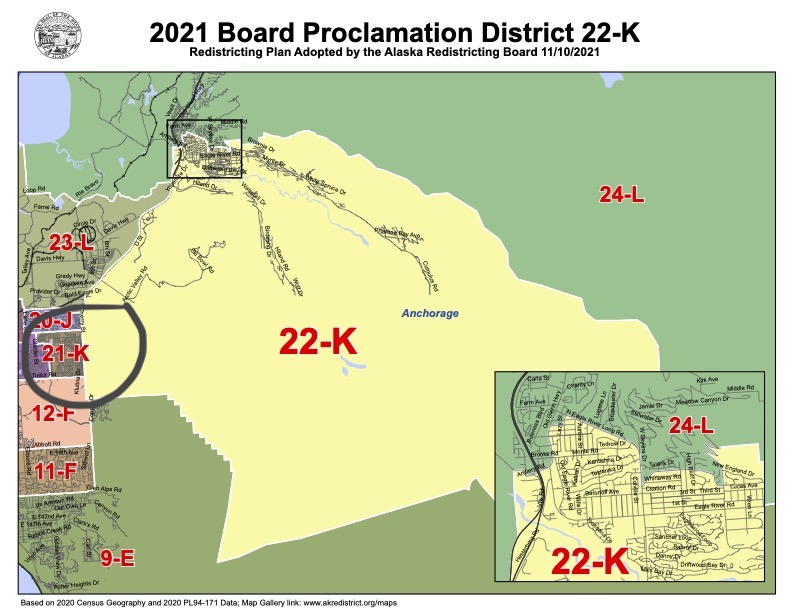
Regarding East Anchorage being paired with Eagle River in Senate Seat K, Matthews said “For East Anchorage, the Board obviously violated the ‘hard look’ standard by ignoring public comment on the senate pairings. The Board left itself almost no time for comment devoted to senate pairings. Despite that abbreviated time period, the support for keeping Muldoon and Eagle River separate was loud and clear. And yet the Board ignored it to accommodate the wishes of a single Member, even though it was constitutionally possible to keep those communities together. Having fgailed to take an appropriate “hard look” at the Senate pairings, the Board violated the constitutional rights of East Anchorage Plaintiffs under Article l,& 7 of the Alaska Constitution.”

The inclusion of Muldoon with Eagle River has raised the ire of Democrats in Anchorage.
The redrawing of political boundaries is an exercise that takes place every 10 years after the national census, as a method to even out the populations between districts and ensure equal representation in the Legislature, and in other states, congressional seat boundaries. Members of the Alaska Redistricting Board are politically appointed by the governor, Senate president, House speaker, and Chief Justice of the Alaska Supreme Court. This board’s bios are at this link.

The entire decision can be found at this link.
Sen. Natasha von Imhof bows out of 2022 races

Sen. Natasha von Imhof said on Twitter Tuesday that she will not run for her Senate seat, nor any other political office in 2022. She will complete her term as senator for Southwest Anchorage, formerly known as Senate Seat L. Redistricting had pushed von Imhof and Sen. Mia Costello into the same district; both are Republicans, and a race between them would have been difficult.

On Twitter, von Imhof wrote, “Due to family circumstances, I will not be seeking reelection or participating in the ’22 election. I will serve out my term and then step away from politics to focus on my family. Thank you to my constituents and supporters for allowing me to serve our great state.”

Von Imhof has been rumored to be interested in running for governor, but with the recent passing of her father, Ed Rasmuson, she may now be planning to take a greater role in the family foundation, the Rasmuson Foundation.

Anchorage Young Republicans endorse Nick Begich III, criticize Don Young

The Anchorage Young Republicans club has awarded its endorsement to Republican Nick Begich III for Congress.

In announcing the vote, the Anchorage Young Republicans said, “Nick Begich does not share the same political views as his [Begich Democrats] family; he is an actual conservative and aware of all the major issues facing our state and country. We strongly encourage you to make it to one of his events and question him to confirm this for yourself.”

The group’s decision was influenced by recent actions from Congressman Don Young, including:

  1. – Rep. Young’s decision to introduce and endorse Deb Haaland, a radical leftist environmentalist, to the U.S. Senate during her confirmation hearing for Secretary of the Interior: “She has been as predictably bad for Alaska resource development as her record indicated she would be,” the YRs said.
  2. – Rep. Young’s vaccine mandate for his official office and revelations that he fired a young woman on his staff who chose not to get vaccinated for Covid.
  3. – Rep. Young’s “yes” vote on the PRO Act: “This was an anti-small business & pro-union bill that was (luckily) shot down in the Senate.”
  4. – Rep. Young’s attendance record. A recent article in Roll Call reported that the congressman was absent from attending committee markup sessions for more than 19 months. “When Speaker Pelosi instituted proxy voting during the pandemic, Congressman Young signed onto the Republican lawsuit calling proxy voting unconstitutional. However, he is one of the most prolific and regular Republican users of proxy voting,” the group stated. “Nick Begich represents a new generation of leadership for our state. His views on policy more closely align with ours and he has the energy to show up for work. While we continue to respect Don Young and those who still support him, we can no longer do so in good conscience. We are proud to endorse Nick Begich and hope you will consider supporting him as well,” the group wrote.

Congressman Young has served as Alaska’s sole member of Congress since 1973, after Nick’s grandfather, who was Alaska’s congressman, disappeared in what is believed to be a plane crash over Prince Williams Sound.

Begich also gained more endorsements from elected officials. He now has 11 Republican members of the Alaska House and Senate supporting him, including two Senate members and nine House members. New endorsements have come daily, with former Alaska Republican Party Vice Chairman Frank McQueary, State Rep. Ben Carpenter, and Kenai Republican activist Jill Schaefer, Anchorage activists Monte Dyson and Jeff Garness, Karen Lasseter of Sterling, JocQuis Scoiners of Anchorage, Kathy McCollum of Wasilla, and John Wisel of Fairbanks announcing recently that they are with Nick.

On National Flag Day in Canada, Ottawa police chief resigns, Trudeau threatens to seize truckers’ accounts

40

Canada celebrated its Flag Day on Tuesday with continued unrest and threats from the government against protesters.

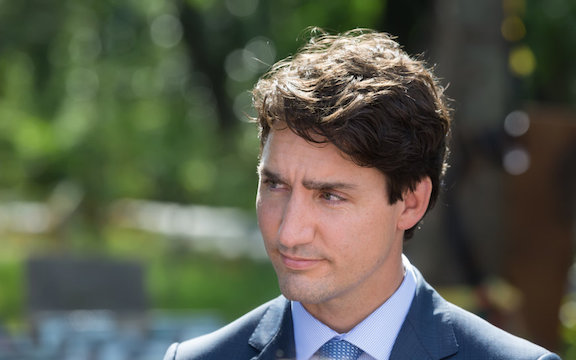
Ottawa’s police chief resigned, a new chief was named, and trucks continued to jam the Canadian capital on Tuesday, after Prime Minister Justin Trudeau had implemented the Emergencies Act a day earlier.

The Emergencies Act, never before enacted, is a sweeping set of autocratic powers that is in effect for 30 days, as the federal government continues to resist the demands of the truckers’ Freedom Convoy workers strike.

“If your truck is used in these blockades, your corporate accounts will be frozen. The insurance on your vehicle will be suspended. Send your rigs home,” Canadian Deputy Prime Minister Chrystia Freeland announced on Monday, on behalf of Trudeau.

The threat could be expanded under the Emergencies Act to include the freezing of bank accounts of all who are remotely associated with the Freedom Convoy, without a court order. Freeland said the government will enact Canada’s Terrorist Financing laws against the protesters, including crowdfunding sites like GiveSendGo and cryptocurrencies.

Protest organizer Tamara Lich was resolute: “There are no threats that will frighten us. We will hold the line,” she said, according to reports.

Truckers are trying to force Prime Minister Trudeau to end the vaccine mandate for cross-border drivers. Although most are vaccinated, they believe the mandates are a violation of Canadian civil liberties.

Some Canadian provinces are beginning to loosen their Covid restrictions. In Ontario, Premier Doug Ford announced that starting March 1, residents will no longer need to show their vaccine passports to enter restaurants, bars, and gyms. He said the decision was not made because of the truckers’ strike, but ‘despite it.”

Alberta ended its mask requirements for school children and Saskatchewan is ending its proof-of-vaccination or negative Covid test requirements to enter businesses, Premier Scott Moe said. Mask mandates in public spaces will end Feb. 28, he said.

According to the National Post of Canada, the federal government will roll back some of Canada’s entry rules beginning Feb. 28 at 12:01 am.

“Today’s announcement is an important step on our pathway to a safe and prudent reopening,” said Tourism Minister Randy Boissonnault at a press conference in Ottawa, according to the Post. “This is a gradual process that puts science and evidence at the centre of our decision-making.”

Also on Tuesday, truckers at the Coutta border crossing in Alberta unblocked the border after Royal Canadian Mounted Police arrested 11 protesters. Police showed the media a cache of weapons supposedly seized from the truckers, but other claimed the cache was planted by authorities to turn peace-loving Canadians against the protesters.

The Ambassador Bridge in Windsor had been cleared on Sunday after days of being blocked, with 20 arrested and several vehicles seized by police.

With Democrats in charge, Anchorage Assembly narrows redistricting to three main maps, maybe four

13

The Democrats in charge of redistricting Anchorage Assembly boundaries are taking pains to protect themselves. The Anchorage Reapportionment Committee is comprised of an Assembly committee led by hard-partisan Chris Constant. The group has narrowed its focus to three draft maps, changing the boundaries for Assembly seats so that they are roughly equal in population.

Maps 6,7, and 11 are under consideration at this point. There’s a fourth map that may be considered, but it’s unlikely.

The maps will be introduced at the Tuesday, Feb. 15 meeting of the Anchorage Assembly, which begins at 5 pm. Public testimony occurs before 6 pm usually, and a public hearing on the maps will be held on Feb. 24. View schedule here.

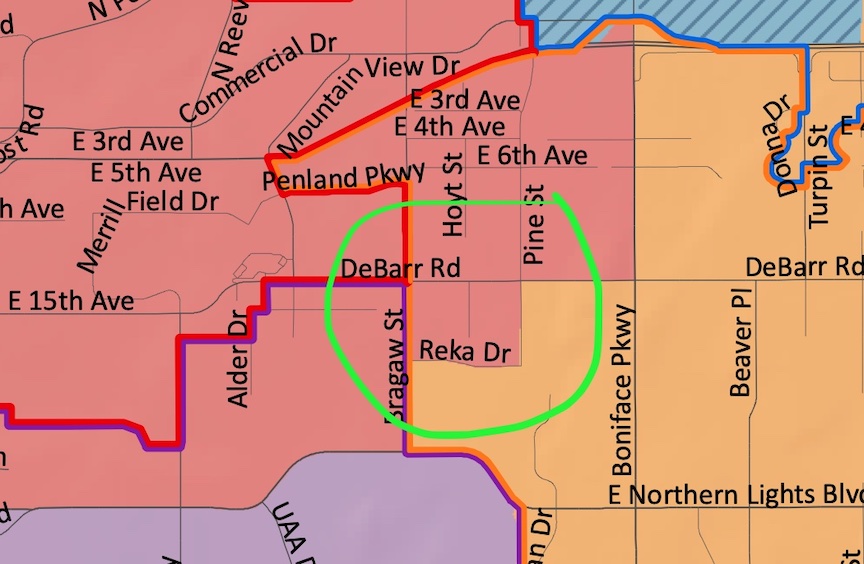
Map 6 is offered by a hard-left group called Anchorage Action, which says it is nonpartisan. The group’s social media feeds tell a different story. In the Map 6, Version 2 map now being considered, Anchorage Assemblyman Forrest Dunbar’s home has a line drawn around it so that he will be in District 1. If he loses his current race to Stephanie Taylor, which seems likely, he can run for a District 1 seat. If he wins reelection, this would still be his last term, but he would be able to run again in the new district.

See entire Anchorage Action Map 6, version 2 at this link.

Submit a comment to the Anchorage Reapportionment Committee here.

Anchorage Action’s map carves out Reka Drive, where Assemblyman Forrest Dunbar lives in the 400 block.

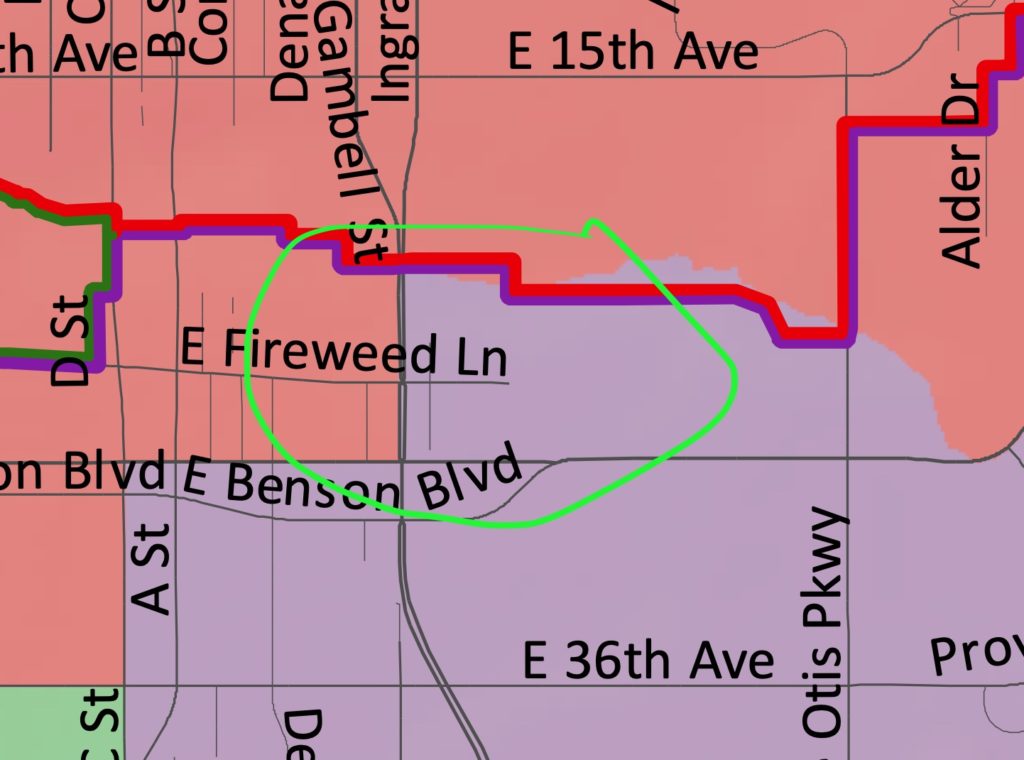
Map 7 is offered by Robert Hockema, a Democrat affiliated with Assemblywoman Meg Zalatel’s reelection campaign. The Hockema map has maintains what is basically the existing boundary near Zaletel’s home address. She is, along with Dunbar, a member of the “Marxist Nine.” Both Zaletel and Dunbar are at the bright edges of their proposed districts, the result of careful planning by the mapmakers.

See the entire Hockema-Zaletel Map 7, version 2 at this link.

Submit a comment to the Anchorage Reapportionment Committee here.

Assemblywoman Meg Zaletel lives on boundary of her district in Map 7, designed by her surrogate.

Map 11 is offered by Assemblyman John Weddleton of South Anchorage. Of the three to be presented on Tuesday, it appears to be the least gerrymandered. It cuts up Spenard and downtown Anchorage in a messy way, and it keeps Dunbar and Zaletel in their districts.

See the entire Weddleton map at this link.

Submit a comment to the Anchorage Reapportionment Committee here.

Map 12 isn’t yet under consideration by the Assembly, because Assemblyman Constant refused to accept it at first, and later did accept it as a draft. It is being offered by Jamie Allard, Assemblywoman from Eagle River, and Mayor Bronson’s Administration. It follows natural boundaries better than any of the other maps, does not create special carve-outs, and also protects the conservative stronghold of Eagle River, while Maps 6 and 7 weaken Eagle River’s already marginal influence. It is also being labeled by the Assembly as Map 11b.

See the entire Map 12 at this link.

Submit a comment to the Anchorage Reapportionment Committee here.

Breaking: New York Times wins as jury goes against Palin

17

Former Alaska Gov. Sarah Palin, in Manhattan for her defamation lawsuit against the New York Times, took a loss Tuesday, when a federal jury said the New York Times was not liable for defaming her in an editorial in 2017.

Palin’s attorneys had argued that the Times editorial had recklessly linked her to a mass shooting that happened in 2011 in Arizona, and had done so with malice against her, a Second Amendment-defending conservative.

The verdict was unanimous a day after federal Judge Jed Rakoff said he would be throwing out the case if the jury voted in favor of Palin because he did not believe there was malice.

Les Gara picks former teachers’ union official as his Democrat running mate

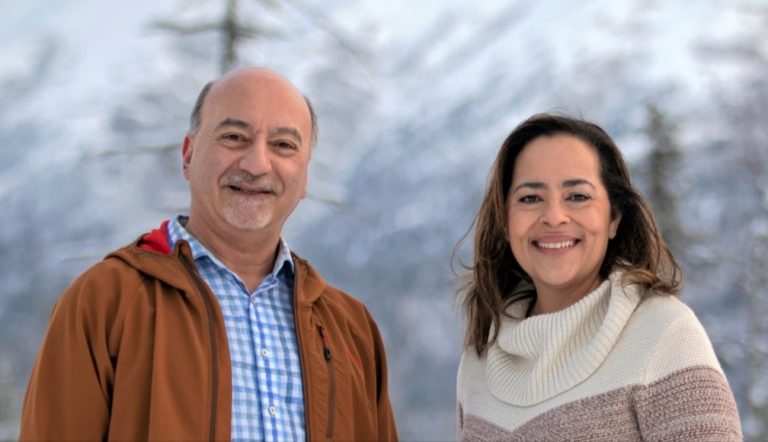
Democrat gubernatorial candidate Les Gara announced Monday in Anchorage that a former vice president of the Anchorage Education Association and the Alaska chapter of the National Education Association is his lieutenant governor running mate.

The news release naming Jessica Cook took pains to avoid mentioning her longtime association with NEA, which is considered one of the more radical leftist unions in America.

Cook is a lifelong Alaskan who lives in Palmer and teaches Eagle River students. She is married to an Air Force veteran. She will not campaign until the end of the school year, the two politicos said.

Cook said, “I’m running because I want a better future, with good jobs and good schools, so our children and grandchildren can stay here.” 

She also said, “People are leaving [the state] because they see no commitment to public education. They see an economy that’s lost jobs since before the pandemic.”

In fact, Alaska spends more on education per student than nearly all states, $17,984 per pupil for a total of $2.36 billion annually.

Like Gara, Cook grew up with hardship. While Gara grew up in foster homes, Cook was raised by an adoptive home and by her grandparents after her mother died. Like Gara, her early childhood trauma shapes her perspective on equity, saying everyone has a right to a good-paying job, regardless of their effort, education, or interest: “People have a right to a good education, and a good-paying job with a living wage, regardless of their background, hardship, or whether they’re born rich or poor.”

Cook has three children, five grandchildren, and has two master’s degrees in education.

“Jessica brings energy, intelligence, and a needed perspective to a state where people see little commitment to public education,” said Gara, who has known Cook for more than 10 years.

“Alaskans are losing jobs and educational opportunities because of a lack of leadership. Giving away $1.3 billion in oil company ‘tax credit’ subsidies makes us poor. That prevents us from building the future of good schools, good jobs, and funding a stronger dividend than we’ve seen under this Governor. It’s wrong to give away the value of Alaska’s resources and then pit Alaskans against each other to fight between schools, a strong University, police in dozens of communities that have none, a PFD, and the things that can build a stronger state,” said Gara.

The two are the candidates running for the Executive Branch under the Democratic Party banner, with former Gov. Bill Walker still declaring himself to be undeclared as a candidate, and his running mate Heidi Drygas, a union lawyer, by his side. The Gara-Cook campaign and the Walker-Drygas campaign are treating each other with kid gloves as they head toward the ranked choice general election ballot, hoping to share voters in the number 1 and number 2 places.

According to EducationData.org:

Alaska spends the most on K-12 education in terms of percentage of taxpayer income and ranks 7th overall in the most spending per pupil. Alaska’s schools rank 6th in funding and are the most dependent schools in the nation on federal funding.

  • Alaskan K-12 public schools spend $17,984 per pupil for a total of $2.36 billion annually.
  • Expenditures are equivalent to 5.09% of taxpayer income.
  • Alaska K-12 schools receive $401.2 million, or $3,064 per pupil, from the federal government.
  • State funding totals $1.58 billion or $12,061 per pupil.
  • Local funding totals $548.8 million or $4,191 per pupil.
  • State and local funding is equivalent to 4.60% of Alaska’s taxpayer income.
  • Alaska’s federal education funding is equivalent to 0.87% of the state’s taxpayer income.
  • Funding for K-12 education in Alaska totals $2.53 billion or $19,315 per pupil.
  • The difference between spending and funding is $174.3 million or $1,079 per pupil.
  • At the postsecondary level, colleges and universities spend $32,630 per pupil, 31.10% of which goes toward instruction.
  • Federal funding for postsecondary education averages $4,980 per student.
  • State funding and local funding average $13,197 per student and $567 per student, respectively.
  • Tuition accounts for 15.80% of all funding.
  • 4.59% of all postsecondary funding in Alaska comes from sales and services of auxiliary enterprises.

Stranger stabbing at library sends woman to hospital

49

Pornography for teens is a bad look for libraries, and so are people shooting up drugs and overdosing in the elevators. Now, you may want to be armed — at least with a taser — if you go to the Anchorage Loussac Library.

According to Anchorage police, 32-year-old Corey L. Ahkivgak, was sitting at a table in the lobby on Sunday afternoon, when he stood up and ran toward a man and woman who were returning books. Ahkivgak stabbed the woman in the back and fled the building on foot. The woman was taken to the hospital by ambulance and is expected to survive.

Ahkivgak had been in the area for two or three hours, when the woman and man approached the book return kiosk to handle their library business. That’s when the attacker suddenly ran over and stabbed the woman.

It’s the kind of thing that happens on buses in Anchorage — a stabbing happened on a city bus about six weeks ago — and in other places where homeless mentally ill gather.

Listen as Assemblyman John Weddleton defends the rights of vagrants to occupy the library.

A description of Ahkivgak was aired over the police radio, and officers formed a perimeter near the library. They brought in a K-9, but did not track down the suspect immediately. Just before 5 pm, a swing shift officer saw a man matching Ahkivgak’s description walking near 36th Avenue and Cottonwood Street (Locarno Drive), and took the man into custody. He was identified as Ahkivgak.

The knife was said to be a small knife, like a Swiss Army knife, according to Must Read Alaska sources.

Then, while being transported to the police department for questioning, Ahkivgak slipped his handcuffs, from the back of his body.

The officer pulled his vehicle over, removed Ahkivgak, re-cuffed his hands behind him, and then placed hobbles onto Ahkivgak’s legs to keep him from slipping the cuffs again.

While Ahkivgak was sitting in the interview room at APD Headquarters, he flipped over the table, causing it to break. At the conclusion of the interview, Ahkivgak was remanded at the Anchorage Jail on the charges of Assault III, Violate Conditions of Release, Criminal Mischief IV (for the damage to the interview room), and Assault I.

Police said this was a random attack, as there was no indication that Ahkivgak and the victim knew one another. The motive for the attack is still under investigation.

In 2018, Ahkivgak was charged with felony assault for beating his mother with a frying pan after she told him to leave her house.

The current policies put in place by the most recent librarian for the Anchorage Library led to the unsafe conditions in the library, where the library has become a day shelter for seriously mentally ill people, drug addicts, and porn addicts. Under the past library leadership, it has become a social service agency, and day camp for homeless people. The past policies created Drag Queen Story Hour, and social services provided.

Although Mayor Dave Bronson has made it a priority to make the library safer, the leftist Assembly has bucked him at every turn in terms of putting safety first.

Amy Demboski, the municipal manager, said she is considering doing a safety stand-down to train staff in situational awareness and deescalation techniques with an expert. Demboski is currently in charge of the libraries, with Judy Eledge as her deputy library director, since the Anchorage Assembly refused to confirm either of Mayor Bronson’s library director choices. The Mayor’s Office is in the process of interviewing candidates for the position.

Breaking: Trudeau suspends civil liberties in Canada to end truckers protest

Canadian Prime Minister Justin Trudeau suspended civil liberties in his country on Monday in order to end the trucker convoy and occupation of that nation’s capital, which is now in its third week. He said truckers have no right to blockade borders or prevent people from living their lives in peace, apparently unaware of the irony that his government has shut down the Canadian economy and oppressed Canadians for two years.

Trudeau’s emergency order means the government may use any means necessary, without approval from Parliament, to unblock the streets of the capital, where hundreds of trucks are parked in protest of his universal vaccine mandate that requires all truckers to provide proof of a Covid vaccine to re-enter their own nation from the United States. However, Trudeau said he will not call in the military, but his Emergencies Act will grant more power to police.

The Emergencies Act, which is Canada’s version of martial law, is effective for 30 days and allows Trudeau’s government to ban public assembly, ban travel, and outlaw the use of certain property, such as trucks.

“We cannot and will not allow illegal, dangerous activities to continue,” Trudeau said. “The police will be given more tools to restore order in places where public assemblies can constitute illegal and dangerous activities, such as blockades and occupations as seen in Ottawa, the Ambassador Bridge and elsewhere. These tools include strengthening their ability to impose fines or imprisonment.”

Trudeau’s father, former Prime Minister Pierre Trudeau, invoked a similar measure when he used the War Measures Act for the first time in Canadian history. In what was called the “October Crisis,” which started when members of the Front de libération du Québec kidnapped the provincial Deputy Premier Pierre Laporte and British diplomat James Cross.