Women continue to be dehumanized by the federal government, which under the Biden Administration is making efforts to normalize transgenderism at the expense of acknowledging women’s unique biology. It’s part of an anti-scientific movement pushed by the new gender ideology of the Left.
The Centers for Disease Control and Prevention has this year changed its guidance on flu vaccines for women of childbearing age. No longer does the agency use the term “woman,” or “women” when referring to flu vaccines during pregnancy; the new term is “pregnant people.”
The change was revealed by reporters at The Daily Mail, who found all gender-specific terms such as “she,” “her,” and “mother,” have been scrubbed from the CDC website during its August update. Must Read Alaska has corroborated that finding.
“It is the latest example of CDC medical advice being de-sexed in an attempt to be more inclusive to trans people,” the Daily Mail reported. Last month, the term “woman” was also removed from the monkeypox guidelines at the agency.
Photo above: Rep. Kevin McCabe and Sen. Mike Shower’s Trunk or Treat entry in Big Lake on Halloween night for the kids. It’s an annual tradition, so kids can go trick-or-treating. The event was held at Big Lake Lions Club.
Kenai special election: The Kenai Peninsula Borough has set Valentine’s Day — Feb. 14 — as the date for the special election for the borough mayor. The vacancy came to pass when former Mayor Charlie Pierce resigned as of Sept. 30. The person who wins will fill out the remainder of Pierce’s term, which ends next October. On good authority we hear Sen. Peter Micciche may file.
Declarations of Candidacy may be filed with the Borough Clerk’s Office, 144 N. Binkley, Soldotna, from 8:00 a.m., November 14, 2022 through November 29, 2022 at 5:00 p.m., for the office of Borough Mayor. Declaration of Candidacy packets may be obtained at the Borough Clerk’s Office, 144 N. Binkley, Soldotna or the Borough Annex Offices in Homer and Seward. Forms are also available by mail, fax, or at the website listed below. The first day to file declaration of candidacy forms for the February 14, 2023 special election is Monday, November 14, 2022, filing closes at 4:30 p.m. on Wednesday, November 30, 2022.
Lastest Dittman polling numbers for the governor’s race:
Dunleavy: 47
Gara: 25
Walker: 23
Pierce: 5
3% marginof error
Begich video sets up policy contrast with Peltola: In a video posted to the Facebook page of congressional candidate Nick Begich, he’s pulled clips of the thumbs-up, thumbs-down questions and how he and Mary Peltola have answered them at a recent candidate forum. It’s pretty clear that Peltola is far, far left, and that Begich is not afraid to tackle the seemingly teflon Peltola. Here are the questions they answered with thumbs up and thumbs down:
Do you support the Build Back Better bill as currently drafted? Peltola was a thumbs up, Begich was a thumbs down.
Do you support adding justices to the Supreme Court (court packing)? Peltola was a thumbs up, Begich was a thumbs down.
Do you support Election Day being a national holiday? Peltola was a thumbs up, Begich was a thumbs down.
Do you support term limits for Congress? Peltola was a thumbs down, Begich was a thumbs up.
Endorsements:
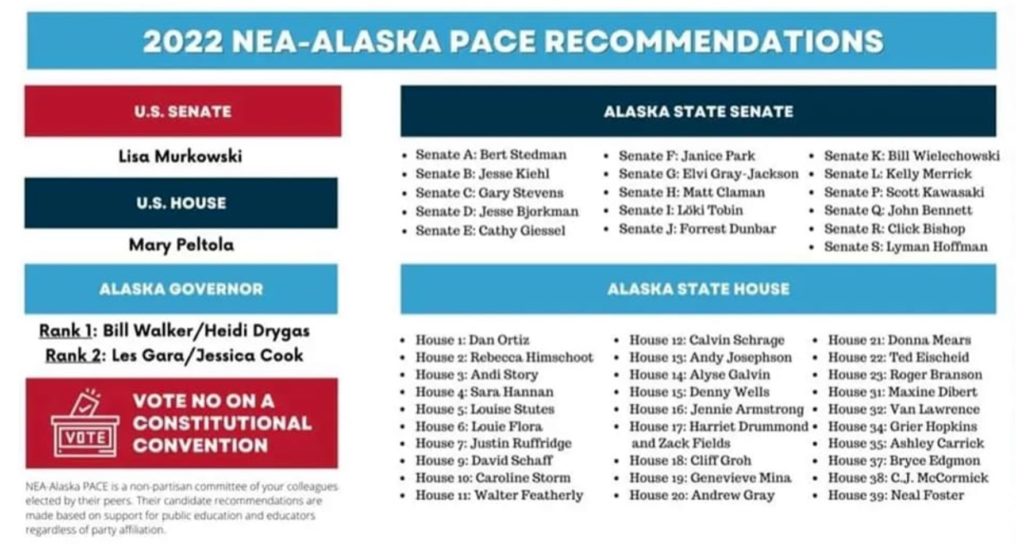
There are no real surprises in the NEA endorsements, except that in House District 23, Eagle River, the leftist educators are endorsing Roger Branson, who has a list of violent priors on CourtView that is well known at this point, although the mainstream media has ignored it.
Some of these other NEA endorsements are awkward, as well, such as the fact that state educators are endorsing Bill Walker and Heidi Drygas over Les Gara and Jessica Cook for governor, when Cook was the vice president/secretary-treasurer of NEA before she got into the race?
The Democrat and Republican duo: Rep. Mary Peltola and Sen. Lisa Murkowski were both in Dillingham over the weekend, but it was purely coincidental, we’re told. They are appearing on flyers together, too, in mailboxes — definitely not a coincidence.
Mary Peltola is fighting MAGA: Peltola’s latest text message plea for donation says she’s going to stop Make America Great Again: “We can’t let this seat be bought by special interests and MAGA donors, and with us being so close to the end, it’s critical that we keep this momentum going.” Another text says, “Extremist MAGA Super PACs are ramping up their support for my opponent as we get closer to Election Day. If we can’t keep firing on all cylinders, I’m worried we won’t secure the votes we need. Can I count on you to rush a $25 donation right now? Here’s your personalized link.”
Those MAGA references are sideswipes at Republicans, who in Alaska dominate the ballot box. They’re also a sly swipe at Sarah Palin, who is the Trump-supported candidate.
Andrew Gray: “Be more like Jamie Allard”: This video clip of the usually overly dramatic Andrew Gray, who is running for House District 20, appeared on candidate Jamie Allard’s Facebook page, capturing that prized moment when Gray gave Allard high praise and implored the rest of the Anchorage Assembly to “Be more like Jamie Allard.”
It’s not exactly an endorsement, but is funny, considering how polar opposite these two are on the issues. They might work well together in Juneau, since they call each other back.
Oral arguments in two cases concerning affirmative action admission practices at colleges and universities were heard at the U.S. Supreme Court on Monday, and some justices on the court appear open to the idea of retiring these race-based admission policies.
Universities began adopting race-based affirmative action policies in the mid 1960s after President Lyndon Johnson signed Executive Order 11246, which was later amended by Executive Order 11375, also by Johnson.
Harvard University and the University of North Carolina at Chapel Hill’s admissions policies, which discriminate against Asian applicants, were challenged by Students for Fair Admissions, which has a separate case against the University of Texas Austin.
“Our mission is to support and participate in litigation that will restore the original principles of our nation’s civil rights movement: A student’s race and ethnicity should not be factors that either harm or help that student to gain admission to a competitive university,” the student group writes on its website.
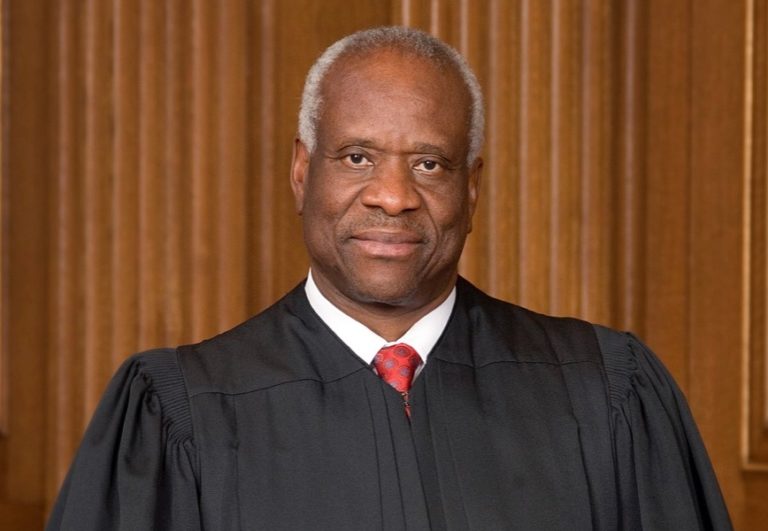
In Students for Fair Admissions v. UNC, Justice Clarence Thomas on Monday told the attorney for North Carolina to give the court a “clear idea of what the education benefits of diversity at the University of North Carolina would be. I’ve heard the word ‘diversity’ quite a few times, and I don’t have a clue what it means. It seems to mean, ‘everything for everyone. I’d like you to give us a specific definition of diversity in the context of the University of North Carolina.”
“We define diversity the way this court has and this court’s precedents, which means a broadly diverse set of criteria that expands to all different backgrounds and perspectives and not solely limited to race,” responded North Carolina Solicitor General Ryan Park, who is defending the race-based quota. Park said there are many different diversity factors that are considered as a greater factor in the school’s admissions process than race.
Justice Thomas responded: “I didn’t go to racially diverse schools, but there were educational benefits, and I’d like you to tell me expressly when a parent sends a kid to college that they don’t necessarily send them there to have fun or feel good or anything like that. They send them there to learn physics or chemistry or whatever their study. So tell me what the educational benefits are.”
Park described the “truth-seeking function of learning in a diverse environment” and said students in racially diverse schools perform better. He said that the program reduces bias.
“I don’t put much stock in that because I’ve heard similar arguments in favor of segregation, too,” Justice Thomas responded.
The lawyer for Students for Fair Admissions pointed out that in the current affirmative action program, some races get preferred treatment, while others, such as Asians, are discriminated against.
“Some races get a benefit,” he said. “Some races do not get a benefit.”
Chief Justice John Roberts asked the lawyer for Harvard, Seth Waxman, if the university uses race as a determining factor in admissions. Waxman said race was considered in the same fashion that “being an oboe player in a year in which the Harvard Radcliffe Orchestra needs an oboe player will be the tip.”
Roberts responded to Waxman: “We did not fight a civil war about oboe players. We did fight a civil war to eliminate racial discrimination and that’s why it’s a matter of considerable concern. I think it’s important for you to establish whether or not granting a credit based solely on skin color is based on a stereotype, when you say this brings diversity of viewpoint.”
Students for Fair Admissions argued that Harvard violates Title VI of the Civil Rights Act, because it discriminates on race. Asian American students are less likely to be admitted than white, black, or hispanic applicants. The University of North Carolina violates the 14th Amendment equal protection rights, barring racial discrimination by any government entity, the student group argued. As a state university, UNC is a government entity.
Students for Fair Admissions is led by its president Edward Blum and is representing over 20,000 students and parents who are mostly Asian Americans and Pacific Islanders saying they have been discriminated against by university admissions practices. The group is trying to get the landmark case Grutter v. Bollinger, which permits universities to use race-based admission policies to create more campus diversity.
Appeals courts in Boston and North Carolina have ruled against Students for Fair Admissions, which then appealed their case to the Supreme Court.
Even some liberal skeptics of the affirmative action admissions programs point to the inconsistency it has with liberal values.
“In most public discussions, ‘affirmative action’ in higher education is treated as one of the core issues that divides liberals from conservatives. It is rare in public life to hear a Democratic leader criticize the use of racial preferences in college admissions, and it is equally rare to hear a Republican support them. Supreme Court opinions on the use of preferences have typically broken down as splits between ‘liberal’ supporters and ‘conservative’ critics, and many journalists have opined that such preferences are now in great danger because of the six-to-three conservative majority on the Court,” wrote Richard Sander at the James G. Martin Center for Academic Renewal.
“The ideological divide on this issue has always mystified me because, as a lifelong liberal who tries to do objective empirical research on social issues, current admissions practices at colleges and universities strike me as both inconsistent with liberal values and ineffective in achieving liberal goals,” wrote Sander, who is an economics professor at UCLA.
Learn more about the students and their fight for equity, and arguments that the affirmative action admissions programs are “Trojan horses for discrimination.”
Did you know that Sen. Mike Shower of Wasilla was the point man on repealing Senate Bill 91?
SB 91 was the ill-advised, catch-and-release, soft-on-crime bill that caused a huge spike in crime. SB 91 was so famous in Alaska that it became a household name, even among criminals, who loved it. Shower saw the problem with it and acted with conviction to reverse the damage.
Sen. Shower led the heavy lift in committee and then led the conference committee that made no concessions to the soft-on-crime legislators who opposed the repeal.
Shower has also authored more conservative bills than any other legislator. He takes on the hardest issues. Thanks to certain Republican House coalition members, however, any Republican legislation has to be a compromise to survive in the House.
In Sen. Mike Shower’s election integrity bill, Senate Bill 39, Shower used the policy metric of “making it easy to vote and hard to cheat.” Notwithstanding Shower’s conservative credentials, he is a very effective negotiator, and knows how to work with those with diverse views.
Shower’s election reform bill would have gotten rid of of Dominion machines. SB 39 would have fixed Alaska’s loose ballot chain-of-custody protocols. It incorporated best-practice protocols for cleaning up Alaska’s over-inflated voter rolls, and removed Alaska from the ERIC system, a George Soros-funded private election entity with no oversight from the Legislature.
SB 39 required open-source software for any voter machines, and required them to be “air gapped,” so they are transparent and not connected in any way to the internet or cell towers. Hello, election transparency.
The bill was a work in progress and some last-minute amendments were added that Sen Shower did not agree with, so after two years of work, he actually killed his own bill in the final minutes of the session. Shower did great for hanging tough and not compromising core election integrity values.
Shower also successfully challenged the “binding caucus,” a quid pro quo system of political favors doled out by leadership to control critical votes of legislators. For the first time in decades there was no binding caucus in the senate. Do you think it’s a coincidence it’s also the first time a full statutory PFD passed in that body in seven years? Shower did that. His amendment realized the largest PFD in Alaska history because he simply followed the law. What a concept!
Sen. Shower has been conservatively consistent with his legislation to break the liberal Alaska Bar control of who serves on the bench.
The bottom line, is Sen. Shower is Alaska’s most conservative and effective State Senator.
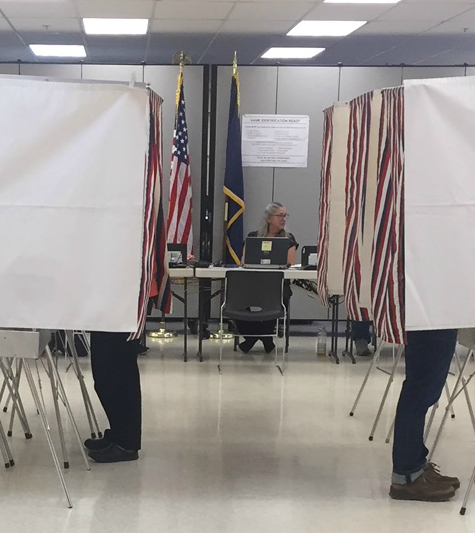
Saturday was a slow day for early and absentee voting, with only 609 new absentees returned, and 1,098 people voting early.
A sampling of high-voting districts:
District 3 North Juneau-Haines-Skagway: 1,290 early and absentee votes in so far.
District 4 Downtown Juneau: 1,111 early and absentee ballots in.
District 6 Seldovia-Homer-Kasilof: 1,354 early and absentee votes cast.
District 9 South Anchorage (old 28): 1,524 ballots received so far. D-9 is typically the highest turnout in the state. While the lines may have changed, the record is intact.
51,876 absentee ballots have been requested, possibly the highest number ever other than 2020 (Covid year, which was an outlier). The deadline for requesting an absentee ballot was Oct. 29.
Historically, voters may want to reflect on Murkowski’s actions and not the words of her current or earlier campaign rhetoric. Let’s review her history of what she said, and then what she did, leading up to her vote to not repeal Obamacare, the Affordable Care Act.
During the 2010 U.S. Senate race, Sen. Lisa Murkowski declared publicly to Republican voters that she would support the winner of the Republican Primary. After she was defeated in the primary, she instead maliciously attacked the winner of the Republican primary through an unprecedented write-in campaign.
Up until the 2022 elections, this campaign supported by some Alaska Republican Party leadership was one of the most distasteful and egregious campaigns in Alaska history.
ARP leadership’s decision to support Murkowski has led to the deterioration of the Alaska primary election process. It also is having dire consequences for Alaska, for the nation, and for the Alaska Republican Party, especially with the Murkowski-supported Ballot Measure 2.
Ranked choice voting (Ballot Measure 2), supported by Murkowski, was a blatant deception to fool Alaska voters into thinking their vote was limiting or stopping the flow of outside “dark money” and its influences upon Alaska.
Instead, it opened the door to “dark money” influence and eliminated the previous primary voting system in Alaska.
With the election of Donald J. Trump as President, Alaskans and America saw the door open for the limiting of federal control over America’s health care system, America’s banking and mortgage system, and a change in America’s judicial system. Alaska saw a potential advent of development and pro-growth policies never before seen since the pipeline era.
Regarding America’s health care system, the Affordable Care Act has proven to be a financial and administrative train wreck to Alaska and the nation, increasing health care costs, reducing health care quality, and expanding the federal bureaucracy’s power and control over one of the largest sectors of the US economy.
With the Trump presidency, for the first time since March 23, 2010 (the date Obamacare was signed into law), we all saw the potential for reducing health care costs and returning decision making back to the states and their political subdivisions.
In Murkowski’s Sept. 30, 2014, op-ed, she states, “The key reason I opposed the health care law when it was proposed and jammed through Congress? Not politics; just simple math. The basic economics of being a high-cost rural state with limited providers has resulted in the costly outcomes we are seeing today.”
She went on to cite, in Alaska, Premera Blue Cross insurance rates will increase between 35 and 40 percent and MODA’s rates would increase 22 to 28.8%. With this she reminded her readers that the Alaska Division of Insurance “also announced that even with these cost increases, the health insurers were still going to be losing millions of dollars.”.
In her Dec. 3, 2015 press release, titled, “Murkowski on Senate Floor: “For Whom is the Affordable Care Act Affordable?”, subtitled, “Senator Details Harmful Effects of ACA on Alaskans, Announces Support for Repeal Bill”, Murkowski stated: “Senator Murkowski has long been an opponent of the Affordable Care Act, recognizing from day one that the one-size-fits-all bill would never work in a rural, sparsely populated state such as Alaska.”
Murkowski ran in her 2016 election and received support from the Republican Party and from Republican voters in her 2016 election by campaigning to repeal Obamacare.
It is noteworthy to ask that of the reported 70 attempts Congress voted to repeal Obamacare, how many times had Murkowski surreptitiously voted to repeal it with the clear knowledge that Obama would veto any bill repealing any part of Obamacare sent to his desk?
At the 2016 Alaska U.S. Senate debate, Murkowski stated, “I voted against Obamacare, largely because it puts government in control of choosing what care is covered. Access, as we know it, is a critical issue here in this state. The ACA (Affordable Care Act, Obamacare), quite honestly, is collapsing because of federal mandate and lack of flexibility. What states need is more flexibility, more choice, not less.”
In 2017, when the vote to repeal Obamacare did finally come before the Republican-controlled Congress and knowing that Trump would sign the repeal the moment it hit his desk, Murkowski betrayed the voters who elected her, the Republicans who supported her election, and the Alaska Republican Party by siding with Democrats against her Republican colleagues and against the principles of the Alaska Republican Party, by voting with the Democrats against the Senate vote to repeal Obamacare.
Her single vote doomed any chance of repealing Obamacare.
Murkowski’s July 28, 2017, press release stated, “I voted no on the healthcare proposal last night because both sides must do better on process and substance. The Affordable Care Act remains a flawed law that I am committed to reforming with a structure that works better for all Americans. But to do that, the Senate must fully devote itself to an effort to improve the healthcare system in this country, reduce costs, increase access, and deliver the quality of care that our families want and deserve.”
Thus because of Alaska’s senior Senator’s single vote, Murkowski kept Alaska and American under the tyranny of federally controlled centralized health care, the capricious costs of which are inestimable to financial and health care solvency.
Murkowski is a fair-weather politician who changes her tune the moment the political winds change. It is time to fire her. On November 8, 2022, reject Lisa Murkowski.
Michael Tavoliero is a realtor in Eagle River, is active in the Alaska Republican Party and chaired Eaglexit.
The Must Read Alaska comment section is a gritty, entertaining, and wild-west forum for discussing issues of the day, and it is growing in popularity. You don’t have to be a Jack-London-level writer to comment here at Must Read Alaska. But there are a few things that can help everyone have a great reading experience.
Recently, the story about the attack on Paul Pelosi at his home in San Francisco has had 165 reader comments approved in just four days (as of this writing), with about five sent to the trash for the sin of being tedious or trashy. There are a few more waiting to be posted on that story, so I expect the conversation about the Paul Pelosi hammer attack will continue for days to come.
It’s terrific to see so many new visitors in the comment section of stories in recent months. Over 95% of comments are accepted for posting. Every comment is skimmed by a human — me — and most get the OK for posting, typos and all, because “skimmed” is the operative word. Sometimes they get skimmed after a long, long day, and I accidentally let a truly offensive comment go through. I apologize for that. A few comments go in the trash when they are not contributing to a healthy dialogue, or when they are too clumsy with their thumbs, thus having too many glaring errors. In the history of Must Read Alaska, 855 comments went to the trash, and nearly 200,000 have been approved.
What I’d like to see: I’d like to see the name-calling kept to a low roar or not at all. Also, when you spell a political leader’s or candidate’s name, please refrain from spelling it “Dumbleavy” or “Sleeza” or “Peltolosi.” Please spell people’s names with proper spelling, regardless of how much you don’t like them. Same goes for when you are responding to other commenters in the comment section — don’t butcher their handles on purpose to demean them. It’s the little things that make a difference in my workload and sometimes when I see those intentional misspellings, I just put that comment in the trash.
Also, it helps the forum become more enjoyable — and makes my life a lot easier — when people give their sentences one last read before sending in. I have no copy editor here at Must Read Alaska, and plenty of typos of my own to chase down. There are not nearly enough hours in the day to fix punctuation and spelling of 500-600 comments that arrive daily.
I ask for your patience. With all the great feedback from readers, I get to them as quickly as I can. Sometimes as much as five hours will go by without me being able to get to the comment “pending” bucket and get it cleared. Those five hours will be when I take time for family or am writing stories … or am stuck on a plane that doesn’t have working wi-fi.
Approval of comments is an imperfect and subjective process, but mostly it’s just a very fast process once I get to the task, which is several times a day.
Must Read Alaska got its start because the Anchorage Daily News was not publishing the comments from conservatives. Thus, this has become the home of conservative commentary, which comes in all varieties.
Mostly, I just want to say thank you to everyone who posts their comments at Must Read Alaska. I really do love hearing from readers, even the critics who fly under those clever secret identities. Keep the comments civil, and keep them coming. Thank you to all readers of Must Read Alaska.
A Bremerton, Washington high school football coach who lost his job in 2015 for praying on the field, will be reinstated in his same position no later than March 15, 2023, according to a Western District of Washington judge.
In June the U.S. Supreme Court ruled in a 6-3 vote in Joseph Kennedy’s favor, saying his public prayer was protected by the U.S. Constitution. Kennedy has a habit of kneeling and praying at the 50-yard line after games, and often some of his players join him on the field.
“But it’s not just a victory for one coach. The Court struck down a bad precedent, Lemon v. Kurtzman, and set a new one. For five decades, Lemon was a thorn in the side of religious freedom. The legal test it established caused many school officials to suppress any religious observances, leading them to violate the rights of teachers and students,” wrote the First Liberty Institute, which took on the case.
“Because of the Kennedy victory, that’s no longer the case. The Court makes clear that government cannot censor private expression simply because it is religious. This will have a nationwide impact on public-school teachers, employees and coaches, who can now freely live out their faith in public,” the legal nonprofit group wrote.
The details are not final, but Judge Robert S. Lasnik announced Kennedy must be reinstated to his previous position as assistant coach of the Bremerton High School football team. The proposals for the wording of the final order for the case are due by Nov. 8.
“Bremerton School District shall not interfere with or prohibit Kennedy from offering a prayer consistent with the U.S. Supreme Court’s opinion,” the attorneys wrote in the filing.
First Liberty Institute has also been awarded legal fees to be paid by the Bremerton School District.
This summer, some Alaskans may have met Kennedy, as he came Alaska with Franklin Graham and former Vice President Mike Pence to greet and pray with veterans at Samaritan’s Lodge on Lake Clark, where Samaritan’s Purse has a retreat program for military veterans and their spouses.
The State of Alaska filed a petition last week asking the U.S. Supreme Court to review a Ninth Circuit Court decision that upheld a Department of Interior action that oversteps state laws that pertain to the method and means of hunting on federal refuges.
“The Ninth Circuit brushed over the cooperative nature of ANILCA (Alaska National Interest Lands Conservation Act) and invited the federal management agencies to preempt state law at their will,” the brief states, in reference to the case of In Safari Club International v. Haaland.
Beginning in 2015, the U.S. Department of Interior issued three regulations preventing brown bear baiting, overriding state-authorized hunting on park preserves and national wildlife refuges.
The State of Alaska and Safari Club International sued. After the lawsuit was filed, Congress invalidated the broadest regulation—the one banning brown bear baiting, among other methods of hunting, statewide in all national wildlife refuges in Alaska.
Contrary to Congress’s action, the Department of Interior continues to ban this method of hunting in the Kenai National Wildlife Refuge.
The lawsuit is about Alaska’s traditional authority, which was granted at statehood, to manage the methods and means of hunting throughout Alaska.
The petition asserts that, through ANILCA, “Congress did not divest Alaska of its traditional authority. Congress preserved it.” The Ninth Circuit ruling undermines ANILCA, and gives authority to federal agencies to override state law and ignore the will of Alaskans.
“Congress did not intend for federal agencies to have unlimited authority over how we access our wildlife,” said Gov. Mike Dunleavy. “We will continue to fight to ensure that Alaskans manage how we use our own resources.”
“Soon after statehood, Alaska implemented a comprehensive management program to ensure we could responsibly manage our resources based on sustained yield principles in a manner that incorporates public interests. Today, the federal government is trying to circumvent our hard-fought statehood rights to manage our resources and replace it with theirs, including a new claim that they have a property right to our fish and game resources. This is federal overreach, unchecked by the Ninth Circuit Court,” said Alaska Department of Fish and Game Commissioner Doug Vincent-Lang.
“We have State biologists managing wildlife populations at all times,” said Alaska Attorney General Treg Taylor. “We manage our wildlife resources responsibly to guarantee future Alaskans can enjoy harvests as well. These Federal regulations wrongfully obstruct Alaska’s right to do so.”