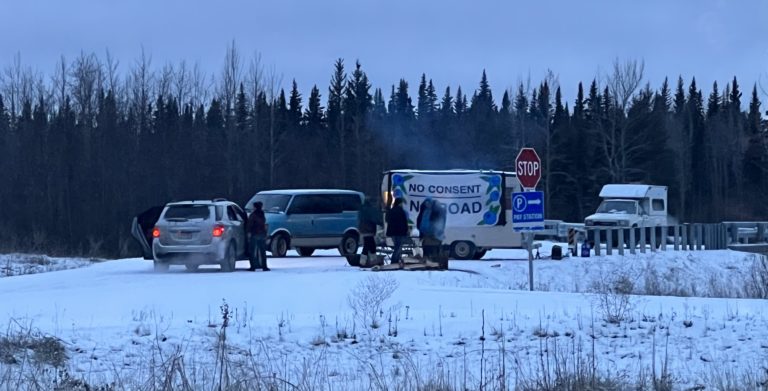
The Nenana Tribe and the radical Native Movement out of Fairbanks have blocked a bridge to the new agricultural district outside of the City of Nenana, where 26 of 27 state parcels have been sold to private entities for the purpose of growing food for Alaska. The tribe and Native Movement say that the bridge to the area belongs to the tribe.
Last week, Natives in Kipnuk, on the coast of Alaska, occupied a school and ended up chasing the principal and the entire teaching staff out of the village.
Now, Natives in the Interior are opposed to small-tract farming. Thus the bridge blockade.
In Nenana, which is south of Fairbanks, the argument the tribe and Native Movement is making is that they own the bridge and right of way to the parcels, and they have the right to block the access. It is illegal to block a historic trail or public right of way.
On the other side of the bridge is city-owned land, private land, state forestry land, university land, and many cabins.
The tribe says that a site agreement, which expired at the end of the project, granted them ownership of the bridge and right of way. The mayor of Nenana, Joshuah Verhagen, says that is a mistaken interpretation of the agreement, and that the site agreement was only until the project was complete.
The bridge was built with a $6 million City of Nenana general obligation bond, and a $9 million federal grant to the tribe to finish the project, which had remained unfinished due to lack of funds, but the funding all comes from American taxpayers, and the City of Nenana has been providing plowing, and is engaged with discussions with the Department of Transportation for a maintenance agreement.
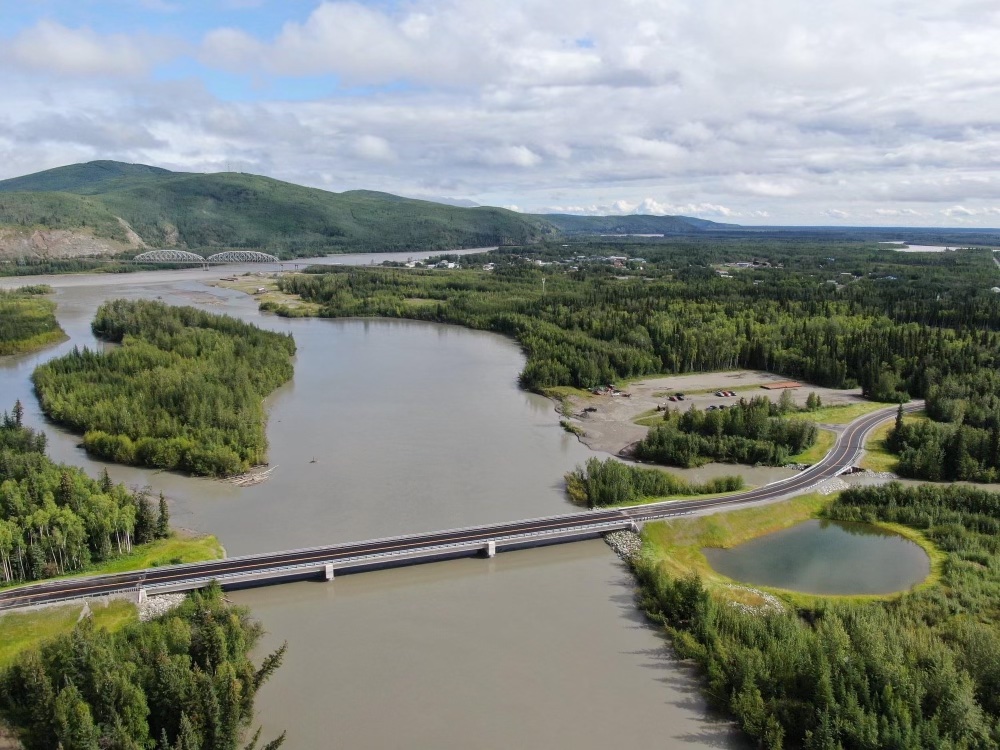
Drone footage of the completed bridge to the agricultural area near Nenana. The George Parks Highway Bridge over the Tanana River is in the background.
The Nenana Tribe and Native Movement made no protest during the ribbon cutting ceremony two years ago or this past June when Gov. Mike Dunleavy and the Division of Agricultural were present for the start of the agriculture parcel sales.
But the tribe is under new leadership and has become radicalized with its relationship with Native Movement, which has staged other “occupy” events in the past, as well as drag queen story hour for children. During the 2020 campaign season, Native Movement activists brought a bloody caribou heart to a campaign rally for Dan Sullivan and tried to throw it at him.
July 2020 file photo of the caribou heart attempted throwing at Sen. Dan and Julie Sullivan.
The agricultural area is intended to help food sustainability in Alaska and is part of Gov. Mike Dunleavy’s concern about creating a more self-sustaining Alaska food system, which would include farmed food.
The ringleaders behind the protest are hard-line activists who object to the agricultural project because it represents colonialism.
Read the Native Movement interpretation of their actions at their website, at this link.
Alaskans, I respectfully implore you to recognize that the flood of paid advertisements you’ve been hearing about a state constitutional convention may not be telling you the whole story – and dare I say is “spinning” the story to protect the power and wealth of some who believe they would benefit more from your “no” vote.
We are at a crossroads. We all have an important decision to make, and these are the questions we need to answer. Consider each.
Are we going to realize before we vote that more than 230 state constitutional conventions have been held in our nation successfully, peacefully, without upending state government and industry, without disrupting state economies, and without constitutions being thrown out and rewritten, without extreme amendments passing voters?
Are we going to believe that the gridlocked legislature will fix our problems? Do we really believe enough legislators will want to restrict their own power and vote to support putting fiscal plan amendments before the voters, amendments to settle the PFD and institute a reasonable spending cap, when they’ve refused to do so the past 7 legislative sessions?
Are we aware that the legislature has reached simple majority support for these fiscal plan items but has failed to reach the required 2/3 vote threshold? That delegates – who don’t have the same conflict of interest and won’t hesitate restricting the legislature’s power – only need to reach a simple majority vote to put these items on the ballot before the voters?
Do we understand how the gridlock in Juneau over the PFD has hurt us all? Have we come to grips with the fact that multiple cohorts of children in our schools lost out on the “Read by 9” policy to help them be successful because of the gridlock? That rapists have run rampant because the high rates of sexual assault weren’t a top legislative priority because of the gridlock? That bills to reduce the cost of healthcare have died in legislative committees because of gridlock?
Are we aware that every single year (for multiple decades) that our state fiscal house has not been in order that we’ve lost out on $.5+ billion in private capital investment that would have strengthened our economy and created jobs? Do we understand that putting our fiscal house in order will help all of us – even those who are now a “no” and are frightened their wealth could be jeopardized if we hold a convention? A rising tide lifts all boats.
Do we realize that the voters elect the delegates by district and therefore the delegates will reflect the values of Alaskans statewide?
Are we aware that the delegates would only propose amendments and the voters would have the final say whether to accept or reject the amendments?
Have we considered that the legislature has had the entire constitution on the table for 63 years to change and a state constitutional convention would be for a mere 75 days?
Are we cognizant of the fact that even in polarized, emotional, divisive times, state conventions have been conducted civilly without extremist results? That 19 state conventions were held during an 18-year period (1968-1986) that cooled the political climate in those states? That this time period included Vietnam war protests, the Civil Rights movement, the assassination of Martin Luther King, Jr., the hippie free love movement, the Women’s Liberation movement, two oil crises (that involved cars lining up at gas stations due to the shortage), the Iran hostage crisis – need I go on?
Are we aware that in the more than 230 state conventions that have been held in our nation that Pandora’s box was not opened, that not a single worm escaped a can? That only sane and reasonable amendments were adopted?
Have we considered that even a $17 million price tag for a convention is a bargain? That every time a regular legislative session is extended 30-days, or a 30-day special session is held, it is $ 1 million a pop? That the regular session has been extended in 6 of the last 7 years? And that 15 special sessions have been called in the last 7 years? Have we thought about the fact that the state spends $30 million per day, every day of the year for operations? And that $17 million for a convention for 75 days and 90-days of pre and post work is only .16% of the annual budget?
Are we going to succumb to fear mongering and dark, outside millions from ultra-liberal organizations telling us not to hold a state constitutional convention?
Are we going to believe the ridiculous lies that we could lose our gun rights, our hunting rights, our access to public lands?
Have we picked up on the fact that the opposition’s recent mailer included another lie – that the Alaska Independence Party (of which I am not a member) wanted to secede from the Union? Utter poppycock.
Do we really want to leave the fiscal and cultural hot button issues to the gridlocked legislature and to the courts? Or should the people weigh in and debate and decide whether or not changes are to be made?
Have we processed the fact that the yes side only has donations from regular, individual Alaskans, not the millions from outside wealthy donors attempting to protect the power of elites? And that the no side is outspending the yes side by 100:1? That this is a David vs Goliath battle?
Alaskans, we are at a crossroads. Use logic and reason. Consider history. Recognize the safeguards. Understand that the framers put the state convention option in our constitution for a reason. The reason is now. Don’t be fear mongered. Don’t bend to outside groups. Stand for Alaska. Be “yes” for a better, stronger, more vibrant, economically-sound Alaska in the near future and for our children and grandchildren. Much is at stake. Root for David not Goliath; vote yes.
Shelley Hughes (Palmer-R), Senate Majority Leader, has served before and during the legislative gridlock: 4 years in the House and 6 years in the Senate.
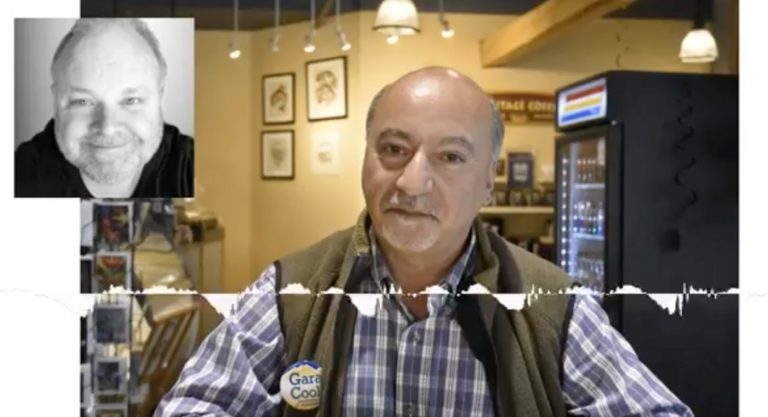
On the Dan Fagan Show on Wednesday (650 KENI), gubernatorial candidate Les Gara, a Democrat, claimed he does not know what puberty-blocker drugs are.
For those who haven’t heard of them, they are the increasingly prescribed medications that some children are being given to delay the onset of puberty, so that they can undergo “gender affirming” transition surgery. Boys who are given puberty blockers will not develop lower voices; later, when they have their penises cut off and breast implants installed, they can sound more feminine. These drugs were previously given to sex offenders as a form of chemical castration, but are now being given to children who are confused because society is giving them a choice about what gender to be.
When explained by host Dan Fagan what the drug does to children, Gara responded, “Look it, I’m a pro-privacy person. I’m not going to tell somebody what to do. Here’s what I will say about our trans kids, is roughly 40% of them think about committing suicide at some point in their life. I’m not going to try to get a single vote off those kids. Those kids are equal neighbors. They’re people that we should love. It’s not my business who you love. It’s not my business what you do with your body.” Listen to the rest of his statement here:
Gara, who is an attorney, tried to convince listeners that he had never heard of the chemical castration drug, although he had a lot to say about trans children. Puberty blockers and other gender hormone treatments are being given out by groups like Planned Parenthood, which has endorsed Gara for governor.
Gara said it’s up to parents, kids, and doctors, and he has no opinion on the matter.
Read more about the rise of the use of puberty blockers for children at City Journal.
Gara, when pressed, said a 13-year-old child should not be able to smoke pot, but said he will not make medical decisions for families on gender transition chemicals for children.
“I don’t believe in telling other people how to live their lives,” he said.
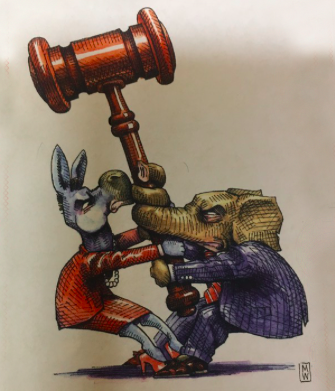
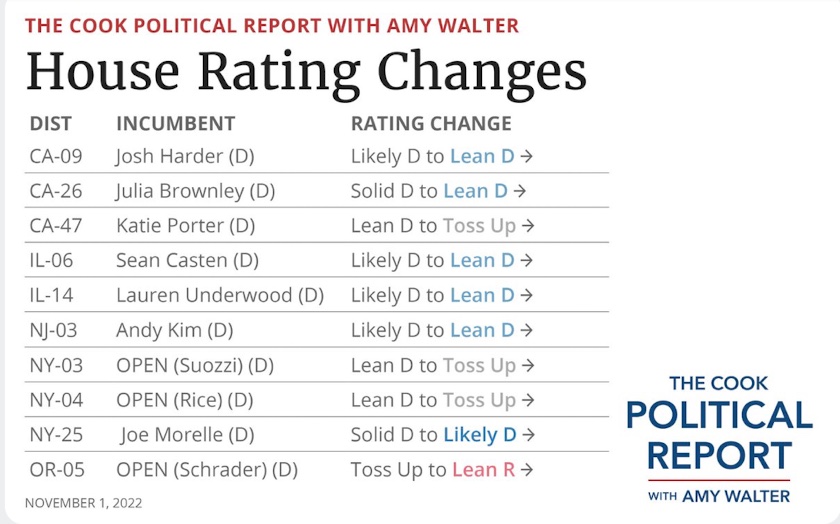
Come Nov. 8, Republicans have a good chance to take control of the U.S. House of Representatives, retiring Nancy Pelosi as Speaker. The election forecaster Cook Political Reportsays 212 seats lean Republican and 188 seats lean Democrat, with 35 in the toss-up lane. The political forecaster says Republicans could gain between 12-25 seats.
“The scariest Halloween reality for House Democrats is the number of seats President Biden carried comfortably in 2020 that are at genuine risk a week out. And if you’re looking for House upsets, the best places to watch might be blue states where there’s no competitive statewide races driving turnout, Democratic governors are underperforming and GOP candidates have been able to seize on high crime and inflation,” writes David Wasserman for Cook Political Report.
“I’ve never seen an election where the signs are this divergent and…lumpy,” Wasserman quoted one veteran Democratic strategist familiar with polling in a wide array of races. “It’s less nationalized than we’re accustomed to, and there’s more weakness in the blue end of the battlefield,” including “late-emerging problems in California and New York districts that Donald Trump lost by between 14 and 20 points.”
Cook Political moved 10 seats in the GOP’s direction – “all in very blue states and all in districts Biden carried by between eight and 20 points in 2020. Three are open seats where the lack of an incumbent has allowed the GOP to remain.”
Alaska could be an outlier, with the Alaska Republican Party risking losing the House of Representatives seat to a Democrat, incumbent Rep. Mary Peltola. The two Republicans in the race, thanks to ranked choice voting, have created a conundrum for conservative voters who don’t like participating in what they see as a faulty election system brought to them by the loyalists of Sen. Lisa Murkowski. It’s unclear if the “rank the red” message to conservative voters is having enough of an effect to convince them to rank both Nick Begich and Sarah Palin on their ballot. Also, Libertarian Chris Bye is on the ballot, and his voters may or may not rank a Republican after they rank him.
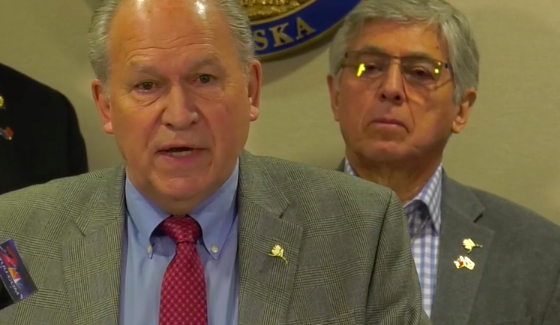
It’s been a transformational journey for Bill Walker, Alaska’s former governor who hopes to be governor once more. On abortion, Walker has been a shapeshifter, making a 180-degree pivot on the issue.
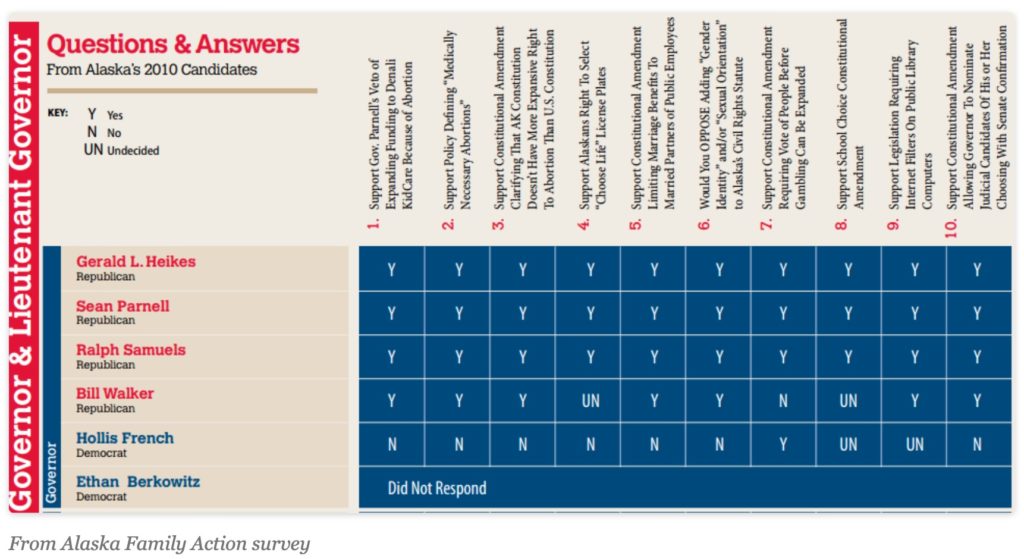
In 2010, Bill Walker answered questions for Alaska Right to Life. He was firmly against abortion, he said.
He also answered questions from Alaska Family Action, and he promised he would promote laws to limit abortion and Medicaid funding of abortion.
Amanda Coyne, who ran the popular AmandaCoyne.com blog back in 2014, had already spotted the evolution of the Walker abortion stance.
“Bill Walker told us everything we wanted to hear,” then-Alaska Right to Live Executive Director Chris Kurka told Coyne, in a story published in her blog in 2014.
The first time he ran for governor in 2010, Walker also said he supported a constitutional amendment that would make it clear that abortion was not a fundamental right. He also said he supported a constitutional amendment to change the way that judges are selected.
This year, he opposes a constitutional convention that could actually tackle those issues.
Although he lost in 2010, Walker ran as a no-party candidate in 2014 and was still pro-life. But by that time, he said that he would not push the abortion agenda and that social issues were not his focus.
Eight years later, Walker is a completely different man. He filled out the Juneau Pro-Choice Coalition questionnaire and stated, emphatically, that he is solidly pro-abortion.
Even on the question of whether or not parents should know that their daughters are having an abortion, Walker was a big “no”:
“I FAVOR NO RESTRICTIONS. The Alaska Supreme Court ruled that parental notification is a violation of privacy rights and equal protection guarantees made in the Alaska Constitution. We will always defend and uphold our Constitution,” he answered.
The pro-abortion group asked Walker if, as an elected official, he will publicly support Planned Parenthood, an organization that provides abortion and pushes gender ideology at all of its locations, including providing gender transitioning hormones for those who want to appear to be a different gender. Walker said, yes, he will publicly support Planned Parenthood.
Unlike his opponents Gov. Mike Dunleavy and Les Gara, Walker has switched his views on abortion completely. Dunleavy has been consistently pro-life, and Gara has been consistently pro-abortion, but Walker has morphed from pro-life to pro-abortion.
Walker is following a pattern of walking back his position. He was in favor of income taxes, and now he is against them. He was all-in on making Alaska a debt trap for China, with his gasline deals with the communists, and now he says he would not do that again. He favored and signed the soft-on-crime bill, SB-91, but he’s since had second thoughts.
And with abortion, as with so many other positions, he has has now embraced the platform of the Democrats — at least on paper.
The election for governor is Nov. 8. Walker is polling at about 23%, according to the latest Dittman Research numbers available from this week. He has teamed up with Democrat Les Gara in his campaigning, hoping that one of them will beat Gov. Mike Dunleavy.
The newest news organization in Alaska that fakes its neutrality, the Alaska Beacon, has just launched a podcast dedicated solely to the topic of saving abortion rights as they exist today in Alaska. It’s called “Private Right,” and it has a point of view that is decidedly Left.
The first episode focuses on the dangers of a constitutional convention, which the podcast host, Lisa Phu, suggests could be used to curb the current abortion law, which has no real boundaries. Alaska’s Supreme Court has interpreted the Alaska Constitution’s right to privacy to extend to women, but not unborn children, all the way up to the moment of birth. In Alaska, it’s “anything goes” for any stage of gestation.
“Alaska Beacon is an independent, nonpartisan news organization focused on connecting Alaskans to their state government,” Alaska Beacon describes itself. It launched in the spring, funded by the same funders who pay for many of the liberal and progressive campaigns in Alaska, such as ranked choice voting, Forrest Dunbar for mayor, and numerous current Democrat candidates.
The Alaska Beacon is part of the States Newsroom, which is a fake neutral political organization that is ideologically driven and backed by some of the biggest names in dark money in politics, including the Arabella Advisors, the Hopewell Fund, and others who have given to the nonprofit.
Nearly all mainstream media now use Alaska Beacon reports as a staple of their news product, and that includes public broadcasting stations, AM and FM radio, and newspapers around Alaska. The Alaska Beacon has become a news service that shapes the narrative and delivers — for free — content to struggling media operators who can no longer afford their own staff.
One of the States Newsroom’s pillar projects is called “The Big Lie,” documenting a political belief that divides many Americans — whether or not Joe Biden legitimately won the 2022 election.
The mothership of the Alaska Beacon considers it a lie that Biden did not win the election and seeks to document questions about the election in the framework of “baseless conspiracy theories without evidence.”
In a move that many conservative analysts interpret as politically timed for the Nov. 8 election, Nov. 1 is the first day in 976 days that Washington State Gov. Jay Inslee doesn’t have vast and self-proclaimed emergency governing powers.
Inslee declared a statewide emergency on Feb. 29, 2020 in response to the Covid pandemic, which was an emerging crisis that started in China, moved to Washington state and other states, and ultimately spread across the country.
The emergency declaration gave Inslee nearly absolute power, and he issued dozens of additional proclamations, including mask mandates, vaccine mandates, various moratoriums, and shelter-in-place orders.
In October, Inslee announced Oct. 31 would be the last of day of his emergency declaration.
The statewide Face Covering Order issued by the state Washington Department of Health remains in place for health-care and long-term care settings and correctional facilities under certain circumstances after the state of emergency ended.
The progressive governor, who has had numerous state employees fired for not getting the Covid vaccine, is also looking at options to ensure there are protections for workers who choose to wear a mask in their workplace. Some of the more liberal counties in Washington are keeping their emergency powers.
Washington’s Covid vaccination requirements for health care and education workers ended Oct. 31. Employers may, however, require vaccinations as a condition of employment and Inslee has already announced that Covid vaccinations are still a condition of employment for most state agencies.
The end of the governor’s emergency comes after Inslee had essentially one-man rule for 975 days, said Centralia State Senate Republican leader John Braun, R-Centralia, who serves in the minority party.
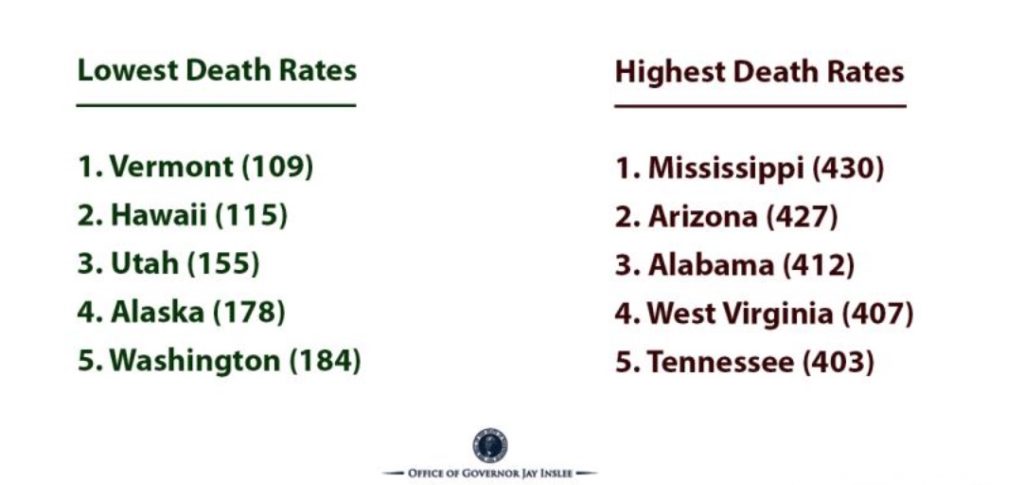
Inslee bragged that Washington has one of the lowest Covid death rates in the nation, and said that other states should have created the mandates he ordered, which he said would have saved lives nationally.
In fact, Alaska, under Gov. Mike Dunleavy, had a lower death rate than Washington. And Mississippi, which had the highest death rate, has some of the highest rates of health factors that made the residents vulnerable to Covid. Those include obesity, hypertension, diabetes, cardiovascular disease, renal diseases, lung diseases, and compromised immune systems.
Washington, on the other hand, has the eighth youngest population in America. The youngest states are Utah, Alaska, Texas, Georgia, Colorado, California, North Dakota, and then Washington.
All kinds of factors lead to who succumbs to the Covid virus, but age and co-morbidities are known contributors to how people are impacted by the virus.
Number of Covid deaths per 100,000 people.
“Ending the state of emergency is long overdue,” Braun said in a published statement. “With this finally behind us, I hope the majority party will be willing to discuss legitimate bipartisan reform of the governor’s emergency powers.”
The end of Inslee’s emergency powers comes exactly one week before midterm elections. Inslee, a hardline Democrat, is not up for reelection this year, but several key races are polling within the margin of error between Democrat and Republican candidates, and it appears Inslee is working to improve his party’s odds of remaining firmly in power in Washington.
Alaska State Troopers traveled to Kipnuk on Oct. 29, where the school principal, LaDorothy Lightfoot, had locked herself into her office at Chief Paul Memorial School after the Kipnuk Tribal Police had attempted to take her into custody and serve a “banishment order for unknown reasons,” according to the trooper dispatch report.
The incident began Oct. 28, but troopers were not able to get to Kipnuk until the next day due to lack of an available aircraft, and meanwhile, Lightfoot was able to escape to her residence, where she spent the night.
Lightfoot and other staff members were eventually able to flee the village, but not until troopers were able to get through the tribal officers’ blockade that they established on the boardwalk. From the report posted at Department of Public Safety, the tribal officers were conducting a standoff with troopers; it appears that the Kipnuk Tribal Police were declaring tribal sovereignty as they practiced “banishment,” which tribes in Alaska have been permitted to do. It’s legally unclear in Alaska if tribes are permitted to practice banishment against non-tribal members, and the extent of a village’s sovereign powers is a gray area of the law. The Kipnuk Traditional Council is the federally recognized government in Kipnuk.
The incident follows one earlier in the month, when the traditional council told parents to not send their children to school until further notice, as reported by KYUK public radio. In mid-October the council met with more than 30 parents to discuss concerns they had over various school issues, including safety at the school, which has about 205 students from elementary through high school grades.
In that resolution, there was an exception made for children who participate in athletic programs — they could still attend regular classes, according to KYUK reporting of the situation.
Things appeared to have escalated since Oct. 14, however, and came to a head on Oct. 28, when the village police tried to take Lightfoot into custody. Classes were canceled Oct. 31 and Nov. 1.
Update: KYUK reports that the school has now shut down for in-person learning due to lack of staff. Students will be studying remotely.
Starting Nov. 2, they will shift to remote learning following an apparent dispute between the school district and the Kipnuk Traditional Council.
“Two weeks ago, the council sent a letter to all Kipnuk households prohibiting children in the village of around 700 people from attending school, citing concerns for the physical safety of students,” according to KYUK.
“On Oct. 31, the Lower Kuskokwim School District (LKSD) released a statement announcing the school’s closure. It also cited concerns for the safety of students and staff. Kipnuk’s Traditional Council has not agreed to comment,” the station reported.
Mural in the entryway to Chief Paul Memorial School in Kipnuk.
“On October 29, 2022, at 1:15 pm, Alaska State Troopers arrived in Kipnuk. Upon arrival Kipnuk Tribal representatives and Tribal Police Officers had blocked the boardwalk from the airport to the village. Troopers were advised the Tribe was not allowing access to the village. Alaska State Troopers were able to deescalate the situation and travel to the school. Troopers met with the principal and school staff to determine what was happening. Troopers were able to determine that no crimes had been committed and worked with the school district to facilitate assisting those that wanted to leave the village in doing so. The principal along with other school staff chose to leave and were flown out of the village on two aircraft chartered by the school district. No threats were made towards Troopers or school district staff. The District Attorney’s Office has been notified of the events; no criminal charges have been filed at this time,” the report from the Department of Public Safety says.
According to the troopers’ report, the Kipnuk Tribal Police, while attempting to take Lightfoot into custody, never contacted the Alaska State Troopers during the incident. While troopers were in contact with the school principal, the tribal officers refused to take calls from state troopers and tribal leadership also did not respond to trooper calls.
“Alaska State Troopers attempted to contact Kipnuk Tribal Police and Tribal leadership by telephone without success. The Kipnuk Tribal Police Department did not contact AST at any point. Troopers were unable to respond due to the lack of availability of aircraft. Troopers and the school district were in contact with the school principal who was able to return to her residence, where she remained for the night,” the report says.
The superintendent for the Lower Kuskokwim School District had been in Kipnuk for a site visit on Oct. 14, and was also scheduled to be in the village for another site visit Oct. 25-26.
Kipnuk is located near the Kugkaktlik River on the coast in the Bethel Census Area. Its residents are mostly Yup’ik-speaking Eskimos. Tristan Carl is listed with the federal Bureau of Indian Affairs as the president of the Village and Clarence Daniel is the school board president.
“Our community lives according to the traditions and rhythms of its native Yup’ik heritage. Residents practice subsistence hunting, fishing, and gathering. According to the 2014 census, our population was 626,” the school reports on its website.
The school of approximately 205 students “is served by two highly qualified certified administrators, 15 certified teachers, three associate teachers of Yugtun, 12 instructional aides, and 15 classified employees. From our 100% graduation rate, to our high-flying Falcons basketball team, we celebrate student achievement both inside and outside the classroom.”
“The staff and administration of Chief Paul Memorial School dedicate themselves to providing Kipnuk with a safe and nurturing learning environment in which committed faculty and staff educate the ‘whole child.’ Our work at Chief Paul Memorial School promotes instruction in the native Yup’ik language of Yugtun, adherence to traditional Yup’ik values, and prepares students to take their places as leaders of the 21st century,” the website states.
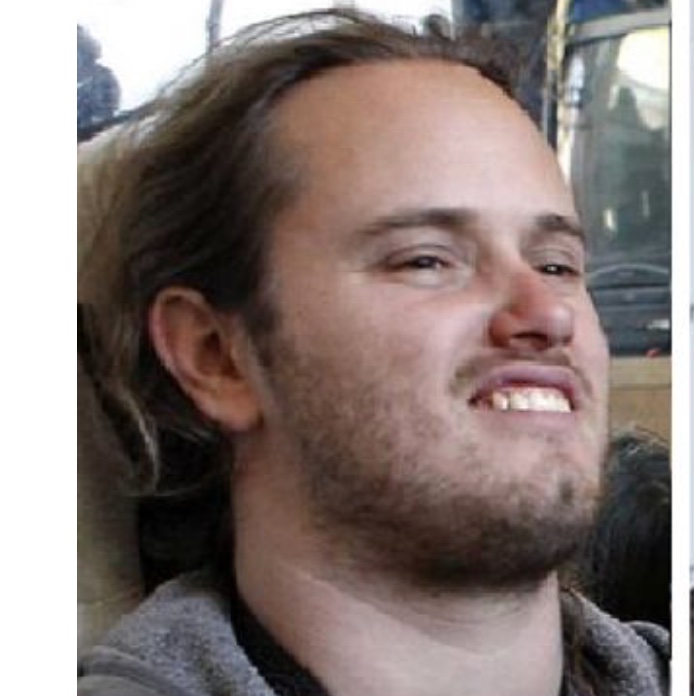
David DePape, the man accused of taking a hammer to the head of Paul Pelosi, was looking for House Speaker Nancy Pelosi when he broke into the couple’s Pacific Heights mansion on Oct. 28. DePape had zip ties with him, as well as tape and rope, with which he intended to tie up the House Speaker and break her kneecaps if she didn’t tell the truth, the complaint from federal district court for Northern California reads. DePape owned the hammer that was used in the assault of Paul Pelosi.
DePape told detectives that after breaking into the home, he went upstairs to the bedroom, where he found Paul Pelosi asleep. DePape said he wanted to talk with Nancy Pelosi, and Paul said that she wasn’t there. DePape said he would wait for her, but Pau explained she would not be home for several days. Paul was able to go the bathroom, where he called 911.
When police arrived, the two were struggling over the hammer, but Paul pulled the hammer away from DePape, who then turned it on Paul, as punishment, the transcript indicates.
In an interview with authorities on Oct. 28, DePape said he had planned to hold Nancy Pelosi hostage and get her to tell the truth, and if she lied, he would break her kneecaps. He didn’t leave the house after Paul called 911 because he viewed himself much like the Founding Fathers, fighting tyranny. He sees Nancy Pelosi as the leader of a pack of liars — the Democrats.
Paul Pelosi is said to be making good progress in his recovery; he had surgery for a skull fracture he sustained in the incident.
Authorities have also located the place where DePape lives, which was not at the Victorian house that has been shared widely around social media. He lived in a modest garage apartment on Shasta Street in Richmond, Calif., where he has resided for about two years. Neighbors described him as a quiet right-winger. DePape is set to be arraigned Tuesday.