Wednesday, August 19, 2026
Home Blog Page 612

Anchorage’s IT director forced out

33

The director of information technology for Anchorage’s municipality has resigned. He was forced out by Mayor Dave Bronson, who asked for his resignation recently, as the mayor comes under pressure from a pending investigation.

Marc Dahl is accused by leftists of having acted improperly during the recent Anchorage Municipal election, by tightening up procedures that were causing concern about the security of Anchorage elections.

In fact, there is very little to indicate Dahl did anything other than make sure that thumb drives being inserted into election computers had been swept for data beforehand.

But Ombudsman Darrel Hess has forwarded his report to the state Department of Law, in which he essentially accuses Dahl of conspiring with an election observer, Sami Graham. Graham was Mayor Bronson’s first chief of staff, and was a citizen observer during the ballot sorting and counting after the April 4 election.

Dahl’s actions to tighten election procedures came at a time when the public is increasingly wary about the mail-in elections that Anchorage conducts, and the security of elections in general. But leftists point out that after the security policy was tightened, Graham used that information to challenge some of the vote tallying activity, because the computers were not secure. They say this is evidence that the two were coordinating. Dahl has been on administrative leave for several weeks.

The Anchorage ombudsman works on behalf of the Assembly and is a known partisan leftist.

Little Red Classroom: House Republicans investigate school program with ties to communist China

By CASEY HARPER | THE CENTER SQUARE

House lawmakers held a hearing to investigate the Chinese Communist Party’s alleged efforts to influence American classrooms.

The Early Childhood, Elementary, and Secondary Education Subcommittee held the hearing, led by Chair Rep. Aaron Bean, R-Fla.

Lawmakers brought scrutiny against Confucius Classrooms, a program with ties to the CCP, which promote teaching things like the Chinese language and culture, among other things, in hundreds of classrooms around the country.

In Alaska, Scenic Park Elementary School was listed during the Gov. Bill Walker Administration as the state’s first Confucius Classroom, as reported by the Asia Society. Scenic Park Elementary has a Chinese immersion program. The grant that paid for Confucius Classroom, however, was stopped during the Trump Administration.

The nonprofit education group, Parents Defending Education, released a report earlier this year which found the Confucius Classroom program has received over $17 million in government funding of some kind since 2009 and has been present in 143 school districts covering 34 states and the District of Columbia.

Currently, the school districts still linked to the Confucius Classroom, according to Parents Defending Education’s “Little Red Classroom” report, are:

  • Cloverport Independent School District, KY 
  • Minnetonka Public Schools, MN
  • St. Cloud Area School District, MN
  • Tulsa Public Schools, OK
  • Sisters School District, OR
  • Highland Park Independent School District, TX
  • Seattle Public Schools, WA

Ryan Walters, State Superintendent of Public Instruction at the Oklahoma State Department of Education, had one of his schools mentioned in the report and testified at the hearing.

“Following the discovery that one of our school districts in Oklahoma, Tulsa Public Schools, was named in that report, my staff diligently conducted a further investigation into the issue and discovered a disturbing connection between the CCP and that school district,” Walters said in his testimony. “Through a series of non-profits, that school district maintains an active connection with the CCP through a program called Confucius Classrooms, even after the federal government cracked down on similar programs in 2020.”

Walters advocated for banning this kind of funding.

“With whatever common sense remains, I urge that Congress pass a law to ban schools from accepting money from hostile foreign governments and prohibit data sharing agreements with hostile foreign governments,” he said in his testimony. “At the state level, state education agencies should require districts to report foreign money they accept and non-profit money they accept.”

Bean argued the program poses a national security threat, making note that in 20 instances the classes are near military bases.

“The risk posed by the proliferation of Confucius Classrooms is threefold, threatening America’s national, geopolitical, and academic interests.”

Lawmakers also warned of ideological influence on American students, particularly regarding things like Chinese history.

“I think we all know how the CCP views education. They view education as being entirely subordinate to the party, to the message of socialism and communism,” Rep. Brandon Williams, R-N.Y., testified at the hearing

Gisela Perez Kusakawa, Executive Director, Asian American Scholar Forum, testified at the hearing, pushing back on some of the sentiment of other witnesses by raising concerns about using national security concerns to make Asian Americans feel like “perpetual foreigners.”

“We need to do better for the Asian American community and our youth, and address the underlying issues of these inherent biases against and scapegoating of Asian Americans,” she testified. “We must be prepared to be critical of economic or national security pretexts that can be used to perpetuate racial bias, profiling, and hate against Asian Americans.”

Rep. Virginia Foxx, R-N.C., said this issue is beyond normal partisan lines.

“Someone listening to this hearing might come away thinking this is a partisan issue, but I actually suspect that parents on both sides of the aisle do not want foreign governments—especially communist powers—indoctrinating their children,” she testified.

Quintillion repairs are complete on ocean floor fiber optic cable

3

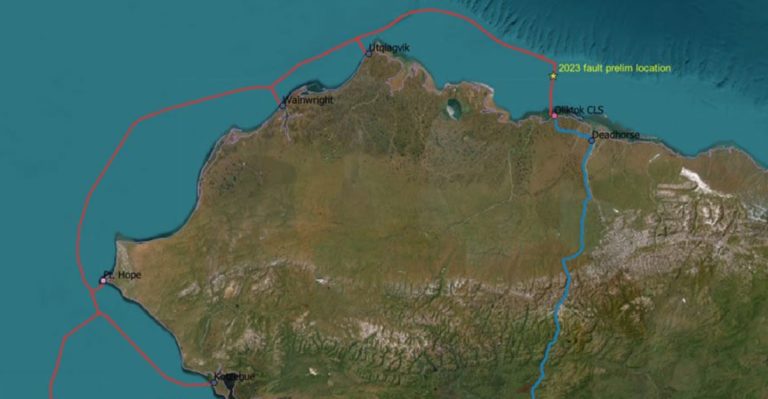
Quintillion announced Tuesday that the repair work on its submarine cable, cut by ice north of Oliktok Point, is complete and service to customers has been fully restored.

A 42-member repair crew aboard the vessel IT Integrity spent the last few weeks working on the repair and restoration of the Quintillion subsea fiber optic cable, severed by ice movement in mid-June.

Despite lingering ice coverage that precluded the ship reaching the cable for a month and then lack of visibility under water, strong winds, and rough waters slowing progress, the team ultimately endured and succeeded. 
 
“Quintillion is very grateful to the crew and leadership aboard the Integrity and proud of the many employees and contractors who have worked around the clock, since June, safely expediting the process to restore internet service to thousands of Alaskans,” said Quintillion President Michael “Mac” McHale.

“The past few months have undoubtedly been challenging for families, schools, and businesses affected by the outage. Restoring the service, and keeping our workers safe while doing so, has been the number one priority for all of us here at Quintillion. For the next week or two, our focus is now on adding resiliency and sustainability to the Quintillion network and we look forward to discussing this at a future time. We thank our customers and communities for their trust and confidence during this time period.” 
 
Quintillion is a private global communications corporation located in Anchorage that builds, m owns and operates subsea and terrestrial high-speed fiber optic network that spans the Alaskan Arctic and connects to the Lower 48. The planned three-phase Quintillion subsea cable system will ultimately connect Asia to the American Pacific Northwest, and to western Europe via the Northwest Passage and through the Alaskan and Canadian Arctic. 

Tim Barto: Parents turn out full force at Anchorage School Board meeting

By TIM BARTO

Parents across the country are showing up at their local school board meetings to reclaim their parent advocacy rights, and last night Alaska joined the crowd by turning out en masse at a meeting of the Anchorage School Board. Bolstered by common frustrations that public schools are going too far by advocating policies that exclude parents and common sense, over 50 people attended the meeting, the vast majority of whom were there to support parental rights.

Prior to the meeting, about two dozen supporters stood outside the ASD headquarters, holding sign that read “We Do Not Co-Parent With The Government” and “Parental Rights Are Essential.”

Alaska Family Council spearheaded the call to action, and President Jim Minnery was pleased with the turnout, as well as the civility and articulate testimonies of those who chose to voice their opinions directly to the Board during the public presentation period.

Student testimony, which Minnery expected to be high, resulted in only two speakers, one of whom was the sibling of a transgender student and appeared via telephone, and one well-spoken and courageous transgender student who appeared in person. Both students spoke about the difficulties transgender students face in public schools and the need for understanding.

The student testimony was followed by 22 public speakers who were given three minutes to make their case. Seventeen of them spoke out strongly in favor of parental rights, two expressed sympathies with transgender and queer students, one spoke of overcrowding at Eagle Academy, one spoke of the need for the strong family units he saw while working overseas, and Dustin Darden discussed his great dislike of Pfizer vaccines.

The comments geared toward parental rights centered around the district’s policy that secondary students’ parents need not be notified of their child’s desire to live life at school as a member of the opposite sex.

Near the end of the meeting, Board member Andy Holleman pointed out that this is a difficult and rare situation, something he didn’t have to deal with as a teacher back in the 1990s. He questioned what would happen if a parent called a school asking if their child was being allowed to use a name or pronouns inconsistent with their sex, admitting he did not know the answer and further stating that is an issue that needed to be clarified by the counseling staff.

Minnery read a proposed resolution he would like to see implemented by the district. It requires that a parent or guardian be notified within three school days if their child requests to:

  • Be identified as a gender other than their biological sex or gender, 
  • Use a name that differs from the child’s legal name or use pronouns that to not align with their biological sex or gender, 
  • Access to sex-segregated school programs and activities, bathrooms, or changing facilities that do not align with their biological sex or gender. 

Seems pretty common sense to let a parent know those kinds of things.

The crux of the matter is that government institutions, which include public schools, do not have the right to keep information about a child from that child’s parents.  A government that intervenes in the moral upbringing of a child by asserting or even encouraging values that are contradictory to those of the parents is putting the government above, and in place of, the family – the most important structure in any society. 

When tyrannical governments want to subjugate a population, they drive wedges between children and their families. In the Soviet Union and Nazi Germany, children were encouraged to report family members, including their parents, if those family members’ beliefs went against Marxist or fascist ideologies.  

There’s a very telling scene if the movie The Killing Fields, which shows the brutal oppression of Cambodian citizens by the communist Khmer Rouge. The scene takes place in a re-education camp, where a child is called to a blackboard where there’s a drawing of a stick figure family – father, mother, and three children all holding hands in a line. The student who was called up to the board draws an X through the parental figures and erases the holding hands linking the parents and children. The symbolism is obvious:  State and party ideology have authority over the family.

These oppressive governments wanted – above all else – to have universal, unquestioned allegiance to their ideologies, and the key was in indoctrinating their youth.  They were convinced they knew what was best for the greater good and they, not parents or families, would be the enforcers of morality for the collective.

And this is what is happening when the Anchorage School District excludes parents from knowing what is going on with their children.  It is a gross usurpation of parental rights.  

Children belong to their families, not the school district or individual teachers.  Parents, in a free society, make the rules and set the moral standards for their families.  It is certainly not the job of the schools to impose sexual morals on students, and it is never proper for public schools to keep important information about a student’s mental/emotional behavior from parents.  

It is fully understandable to have a confidential conversation with a child when there is obvious reason to believe that physical or sexual abuse is occurring in the home, but the fear that a parent might not agree with a child’s decision to identify as a member of the opposite sex is not a valid reason. It is not abuse for parents to expect their sons to act like  boys or their daughters to act like a girls, and it is no business of a teacher, school counselor, administrator, superintendent, or board to claim that it is. 

Tim Barto is Vice President of Alaska Family Council and attended and provided testimony at the board meeting.


Sullivan convenes a judicial council to make federal judge recommendations

13

U.S. Sen. Dan Sullivan announced a new nine-member Alaska Federal Judiciary Council he convened to make recommendations for nominations to Alaska’s open federal judiciary seats.

The chair of the council will be former Gov. Sean Parnell, who is the University of Alaska Anchorage chancellor.

Traditionally the recommendations coming from senators are given significant weight when the White House makes nominations to the federal judiciary, based on long-standing senatorial courtesy where a list of candidates is advanced by a state’s U.S. Senate delegation, the Senate’s “blue slip” practice, and the Senate’s “advice and consent” role in the U.S. Constitution, the senator’s office explained.

Sen. Sullivan has crafted this inclusive council based on the model of Alaska’s state Judicial Council, which seeks input from a broad, diverse cross-section of Alaskan professionals to recommend candidates for state judicial vacancies.

Additionally, senators in at least 25 other states, including Hawaii, Texas, and Illinois, have used a council, similar to the one created by Sen. Sullivan, to vet federal judicial candidates prior to making recommendations.

“Pursuant to the U.S. Constitution, federal judges receive lifetime appointments to the bench and render decisions with far-reaching implications for our economy, land and resources, and public safety,” Sullivan said. “The gravity of a federal judge’s responsibilities warrants a thorough search for candidates, a serious examination of their records, and the input of those who will be most impacted by their rulings—Alaskans. With this inclusive and diverse council, we’ve convened not only some of Alaska’s sharpest legal minds, but also those with detailed knowledge of many critical facets of Alaska, including crime victims, law enforcement, resource development, and Alaska Native communities. Through this process, we intend to identify federal judiciary candidates of character, experience, and an unflinching commitment to the rule of law. That commitment will also demand a deep understanding of the numerous federal laws that uniquely impact Alaska, like the Alaska National Interest Lands Conservation Act (ANILCA), the Alaska Native Claims Settlement Act (ANCSA), and the Alaska Statehood Act, and the Supreme Court case law related to such critically-important statutes. I want to thank each of our council members for dedicating their time and expertise to facilitating a process that will serve Alaskans well.” 

Below are the nine appointees to the Alaska Federal Judiciary Council: 

  • Sean Parnell, who will serve as Council Chair, is Chancellor of the University of Alaska Anchorage. Prior to becoming chancellor, Parnell was an attorney practicing law in Alaska for twenty-five years. He served as the 10th governor of Alaska from 2009-2014. He previously served in the Alaska Legislature, in both the House and later in the Alaska Senate, where he was co-chair of the Senate Finance Committee. Parnell was elected lieutenant governor in 2006 and became governor of Alaska in 2009. He holds a bachelor’s degree in business administration from Pacific Lutheran University, and a juris doctor degree from the Seattle University School of Law.
  • Stephen Cox is senior vice president, general counsel, and chief strategy officer at Bristol Bay Industrial. Previously, Cox served as the U.S. attorney for the Eastern District of Texas and as a deputy associate attorney general for the Department of Justice in Washington, D.C. Before his service at the Justice Department, Cox spent several years as counsel for Apache Corporation and as a senior associate at WilmerHale. He also served as a senior aide to the director of U.S. Immigration and Customs Enforcement. Cox clerked for the Hon. J.L. Edmondson on the U.S. Court of Appeals for the Eleventh Circuit, and he is a graduate of Texas A&M University and the University of Houston Law Center, where he graduated summa cum laude.
  • Matt Findley is a partner at the Anchorage firm of Ashburn & Mason, P.C., where he practices appellate and commercial litigation and represents a wide array of clients in Alaska and across the United States. Findley regularly appears in both state and federal court, and has had the privilege of arguing twice at the United States Supreme Court in the critically important Sturgeon I and II cases. Findley is co-chair of the appellate section of the Alaska Bar and has received awards for pro bono services from both Alaska Legal Services and the Alaska Immigration Justice Project. Findley is a graduate of the University of Michigan Law School and clerked for the Alaska Supreme Court and Judge Andrew J. Kleinfeld of the United States Court of Appeals for the Ninth Circuit. Findley and his wife, Marjorie Allard, have lived in Alaska for over 20 years and have family members who are on the autism spectrum, and a family member with severe hemophilia. Findley currently serves on the board of directors of the Alaska Hemophilia Association and the All Alaska Pediatric Partnership, and he is an active musician having played trumpet with the Anchorage Civic Orchestra, Anchorage Symphony, and Anchorage Concert Chorus Orchestra.
  • Jessica Graham is the general counsel and chief risk officer of Global Federal Credit Union. She has more than 20 years of in-house legal experience, including previously working as the general counsel for two Alaska Native Corporations, and also spent time in private practice with Perkins Coie and Kirkland & Ellis. Graham clerked for the former chief justice of the U.S. Court of Appeals for the Ninth Circuit and graduated in 1997 from the Duke University School of Law. Graham recently served a term on the Alaska Bar Association Board of Governors, including as president from 2021-2022. Graham is a current board member of the Alaska Community Foundation and a former board member of the Girl Scouts of Alaska and the Anchorage Association of Women Lawyers.
  • Jon Katchen is a partner at Holland & Hart in Anchorage, where his practice focuses on project development, environmental law, and commercial litigation. After graduating from the University of California College of the Law, San Francisco in 2004, Katchen clerked on the U.S. Court of Appeals for the Third Circuit. He then returned to Anchorage to work in private practice before joining the Alaska Attorney General’s Office as an assistant attorney general in the Oil, Gas, and Mining Section and then serving as a special assistant to the attorney general. Katchen continued in his state service as special assistant at the Alaska Department of Natural Resources. Katchen left state service in 2012 to return to private practice.
  • Jo A. Kuchle is of counsel to the Fairbanks law firm of CSG, Inc. She graduated from the University of the Pacific – McGeorge School of Law with her J.D. in 1986 and with her LL.M. in taxation in 1987. Kuchle’s practice areas are estate planning, real estate, commercial law, corporations, and probate. She is a member of the American, Alaska and Tanana Valley Bar Associations. Kuchle is a frequent speaker on estate planning and business formation topics. She is active in many Fairbanks non-profits and civic organizations.
  • Loren Leman is a civil/environmental engineer, fisherman and former public official. During his 50 years of engineering, Leman worked for CH2M Hill, MLFA, and in his own practice. Leman served in elected office in Alaska for 18 years in the House, Senate and as Lieutenant Governor, receiving state and national recognitions for his service, which included active participation in four amendments to Alaska’s Constitution. Leman serves on boards and commissions for local, state and federal governments, as well as other political, professional, educational and social service organizations. Leman was raised in Ninilchik, where he still operates a family fishing business, has a B.S. degree in civil engineering from Oregon State University and an M.S. degree in civil/environmental engineering from Stanford University, and studied Arctic engineering at the University of Alaska Anchorage.
  • Christine McLeod Pate has been working with victims of gender-based violence for over thirty years. She is currently the Legal Program director for the Alaska Network on Domestic Violence and Sexual Assault, where she developed the first statewide civil legal program specifically for victims of gender-based violence. As legal program director, Pate oversees ANDVSA’s direct services program, as well as supervises training and technical assistance to attorneys and advocates working with survivors. She also provides national training for civil legal attorneys on working with victims of gender-based violence. Pate graduated from NYU School of Law with honors and flew west in 1993 to work for Alaska Legal Services Corporation in Juneau and then Fairbanks, serving many of the rural villages in Interior Alaska. Pate moved to Sitka to run a local domestic violence / sexual assault community-based program before starting at ANDVSA almost 25 years ago. Pate is a 2003 recipient of the Alaska Bar Association Hickerson Award, a 2020 recipient of the Jay Rabinowitz Award for Public Service, and an adopted member of the Sik’nax.ádi Clan, Eagle moiety of the Tlingit Tribe, and lives in Sitka and Juneau with her husband, Jude. 
  • Kim Reitmeier is president of the ANCSA Regional Association (ARA). Reitmeier is Sugpiaq, a Koniag, Inc. and Ouzinkie Native Corporation shareholder, and a Sun’aq Tribe of Kodiak member. Prior to joining ARA in 2011, Reitmeier served as Chief of Staff to the President of Alyeska Pipeline Service Company and Director of Alaska Heritage Tours, where she oversaw tour package operations for CIRI Alaska Tourism. A University of Alaska Anchorage graduate, Reitmeier is deeply involved in her community at every level. She received the Alaska Journal of Commerce’s Top 40 Under 40 Award, was inducted into the Anchorage ATHENA Society, and was honored as a YWCA Woman of Achievement in 2021. Currently, Reitmeier serves on the boards of the Alaska Community Foundation, Alaska Chamber, and the Alaska Business Week, and is a past advisory board member of the UAA Alaska Native Organizational Management program. Reitmeier has made education, advocacy, and collaboration cornerstones of ARA’s work. From leading a broad coalition to the U.S. Supreme Court to secure recognition of Alaska Native Corporations to educating local, state, and federal policymakers about the unique features of ANCSA, Reitmeier is passionate about and dedicated to empowering Alaska Native people everywhere.

One of Alaska’s three federal district court judgeships is currently vacant and awaiting a nomination. The council will begin soliciting applications for this judicial vacancy soon. 

Studded tire season is here in Southcentral and Interior — but not yet in Anchorage

66

Studded tires are now allowed on roads north of Seward and Cordova. But drivers should be aware that the Municipality of Anchorage adopted a new ordinance in 2019 that prohibits studded tire within Anchorage City Limits until Oct. 1.

State law allows drivers north of Latitude 60 to put their studded tires on their vehicles on Sept. 16.

Anchorage police have the authority to ticket motorists with studded tires if they are within the city limits, even if they are on state roads. Numerous roads in Anchorage are actually state roads, including Minnesota Blvd., Dimond Blvd, and New Seward Highway being the most well-known, but there are dozens of other state roads throughout the municipality. The traffic laws inside Anchorage apply to these roads, which means is someone is traveling from Fairbanks through Anchorage before Oct. 1 with studded tires, they can be pulled over. The median day for the first snow in Fairbanks is Oct. 9, but snowfall can vary with elevation and other environmental factors.

Biden impeachment committee proceedings to start Sept. 28

By CASEY HARPER | THE CENTER SQUARE

The Republican-led House Oversight Committee announced its first impeachment inquiry into President Joe Biden is scheduled for Sept. 28, next Thursday.

The impeachment inquiry committee will have power to subpoena records and communications to dig up evidence and will likely be a thorn in Biden’s side heading into the 2024 election year.

House Speaker Kevin McCarthy, R-Calif., last week directed three House Committees to lead the inquiry, pointing to evidence that the president’s son, Hunter Biden, and his associates allegedly received millions of dollars from foreign entities and that the president knew about it.

Biden’s supporters immediately pushed back, arguing there was no evidence for the inquiry. McCarthy responded, saying the inquiry is to find the facts and that there is plenty of evidence. He pointed to about 150 U.S. Treasury Department suspicious activities reports filed by the agency around Hunter Biden’s dealings as well as bank records and testimony from IRS whistleblowers who said the Biden family and associates received around $20 million from entities in adversarial nations.

“The Treasury Department alone has more than 150 transactions involving the Biden family and other business associates that were flagged as suspicious activity by U.S. banks,” McCarthy said in his announcement. “Even a trusted FBI informant has alleged a bribe to the Biden family. Biden used his official office to coordinate with Hunter Biden’s business partners about Hunter’s role in Burisma, a Ukrainian energy company.”

Biden has repeatedly dismissed questions about his involvement in any kind of overseas payment scheme. He brushed aside the impeachment inquiry, but his campaign released a more aggressive statement in response.

“As Donald Trump ramped up his demands for a baseless impeachment inquiry, Kevin McCarthy cemented his role as the Trump campaign’s super-surrogate by turning the House of Representatives into an arm of his presidential campaign,” Ammar Moussa, spokesperson Biden’s presidential campaign, said in a statement, adding that “…McCarthy unequivocally said he would not move forward with an impeachment inquiry without holding a vote on the House floor. What has changed since then?

“Several members of the Speaker’s own conference have come out and publicly panned impeachment as a political stunt, pointing out there is no evidence of wrongdoing by President Biden as Republicans litigate the same debunked conspiracy theories they’ve investigated for over four years,” Moussa added.

The impeachment inquiry will be led by House Oversight Chair Rep. James Comer, R-Ky., as well as Rep. Jim Jordan, R-Ohio, of the Judiciary Committee as well as Rep. Jason Smith, R-Mo., who leads the Ways and Means Committee.

FBI investigating multiple bomb threats to Alaska schools

20

Several school districts reported today that bomb threats were made against them. Some schools closed out of abundance of caution, including those in Dillingham and Metlakatla.

The threats were of a similar nature, and local, state, and FBI investigators have been brought in to look into the matter.

Anchorage School District reported, “Today, multiple school districts across Alaska received a bomb threat via email including the Anchorage School District. This email has been reported to local, state, and federal law enforcement agencies. At this time, the threat is broad in nature and lacks specific information. Regardless, we are taking this threat seriously. Our schools remain open and there is no change to the school day schedule. If you have any questions or concerns, please contact your school. As always, if you see something, say something. We will share more information as it becomes available.”

The Annette Island School District, which oversees Metlakatla schools, told parents on Facebook that “Twenty-five school districts in Alaska have received a bomb threat. Alaska State Troopers and MPD have been made aware of this incident. We DO NOT believe this is a credible threat, but we have chosen to evacuate all AISD buildings and will have MPD do a sweep of all buildings. Parents are able to pick up their students at Wil la mootk immediately.”

Dillingham wrote, “This morning, many school districts in the state of Alaska, including Dillingham City School District, received an identical threat to their buildings. Local law enforcement responded immediately to our school. Out of an abundance of caution and to protect student and staff safety, school was closed for the day and students and staff were released. Because this was a statewide threat, local, statewide and National law enforcement will be investigating. Unless otherwise informed, school will be open tomorrow as usual.”

Judge Nesbett named to Anchorage Superior Court, and Judge Haas is new Alaska Public Defender

4

Gov. Mike Dunleavy announced the appointment of Judge David Nesbett to the Anchorage Superior Court, and has named Judge Terrence Haas the new Alaska Public Defender.

Judge Nesbett was previously appointed to the Anchorage District Court in 2019. He is a lifelong Alaskan who has lived in Anchorage his entire life, earned a bachelor’s degree at Wesleyan University, College of Letters, and a J.D. at University of the Pacific, McGeorge School of Law.

Nesbett was a shareholder at Nesbett & Nesbett, from 2011-2019, and was an associate at
Dorsey & Whitney, and Jermain Dunnagan & Owens from 2007-2010. From 2004-2007 he was special assistant U.S. attorney and assistant district attorney, and had been an assistant municipal prosecutor in Anchorage from 2001-2004. He was a law clerk for U.S. District Judge H. Russel Holland.

The state courthouse in Anchorage is named for Nesbett’s grandfather, Buell Nesbett, the first Supreme Court Chief Justice when Alaska became a state; Justice Nesbett was appointed by Gov. Bill Egan, Alaska’s first governor.

Judge Haas was previously appointed to the Bethel Superior Court in 2018 and was the presiding judge of the Fourth Judicial District. Apparently he is done with being a judge and wants to go back to public defender work. Judge Haas worked for the Alaska Public Defender Agency in Bethel for more than a decade prior to his appointment to the bench.

Of 10 applicants for the job, Judge Haas and assistant Anchorage Public Defender Gary Soberay were nominated by the Alaska Judicial Council to replace Samantha Cherot, whose four-year term as head of the Public Defender Agency expires this month.

Both appointments were chosen from a list of applicants vetted by the Alaska Judicial Council, which forwarded the top candidates on to the governor.