Home Blog Page 585

Oil wins one: Judge tells eco-lawyers that Willow project can proceed with winter construction

BUT DEPARTMENT OF INTERIOR MAY STILL BLOCK SEISMIC WORK; COMMENT PERIOD ENDS DEC. 8

It was a bad Friday for Earthjustice, one of the leading litigating groups trying to stop the North Slope Willow project from its winter construction season.

U.S. District Court Judge Sharon Gleason rejected the request for an injunction from the groups trying to stop progress this winter, while their legal fight against the approved project continues at the Ninth Circuit Court of Appeals.

On Nov. 9, Gleason had declined to halt the project that had been approved by the Biden Administration. Earthjustice claims that Willow will be “catastrophic for the climate, and we will not drop our challenge.”

But for now, with Friday’s ruling, ConocoPhillips can continue its winter construction, while the appeal is pending.

Back in 2021, the Ninth Circuit sided with environmentalists who were challenging the Trump Administration’s approval of the project, which was then put on hold under President Joe Biden until the Biden Administration realized it would end up losing in court if it walked back the approval.

As written about earlier in Must Read Alaska, one of the groups litigating against the project is a phantom that has no actual legal standing, but is a type of ghost group that popped up to sue. Sovereign Inupiat for a Living Arctic has no taxpayer identification number and is not a legal entity, but for some reason has been allowed to sue.

Other litigants against the project are the Center for Biological Diversity and the Natural Resources Defense Council.

Willow could produce up to 180,000 barrels of oil per day at its peak, according to ConocoPhillips. As many as 2,500 construction jobs and some 300 permanent jobs are projected to be created by Willow, which is located on the plain of the North Slope of Alaska, within the National Petroleum Reserve-Alaska, in an area called the Bear Tooth Unit West of Alpine.

The environmentalists are not out of options, because permits still need to be granted for some of the important seismic work that can only be conducted in the winter.

Dec. 8 is the Department of Interior’s deadline for public comment on seismic exploration at the Willow site this winter. ConocoPhillips Alaska, Inc. has requested authorization from the Bureau of Land Management to conduct a three-dimensional geophysical winter seismic survey within the Willow Development area of the National Petroleum Reserve in Alaska for the 2023-2024 winter season on lands managed by the BLM Arctic District and the Kuukpik Native Corporation. The seismic survey would be conducted entirely on BLM managed lands. 

Environmental groups are urging their supporters to submit comments opposing the winter work. The comment link at the Department of Interior can be found here.

Texas attorney general sues Pfizer for misrepresenting Covid vaccine efficacy

21

Texas Attorney General Ken Paxton has sued Pfizer, Inc. for unlawfully misrepresenting the effectiveness of the company’s Covid-19 vaccine and attempting to censor public discussion of the product.

Pfizer engaged in false, deceptive, and misleading acts and practices by making unsupported claims regarding the company’s Covid-19 vaccine in violation of the Texas Deceptive Trade Practices Act.

The pharmaceutical company’s widespread representation that its vaccine possessed 95% efficacy against infection was highly misleading.

That metric represented a calculation of the so-called “relative risk reduction” for vaccinated individuals in Pfizer’s initial, two-month clinical trial results. FDA publications indicate “relative risk reduction” is a misleading statistic that “unduly influence[s]” consumer choice.

Pfizer was also put on notice at that time that vaccine protection could not accurately be predicted beyond two months. An yet, Pfizer fostered a misleading impression that vaccine protection was durable and withheld from the public information that undermined its claims about the duration of protection. And, despite the fact that its clinical trial failed to measure whether the vaccine protects against transmission, Pfizer embarked on a campaign to intimidate the public into getting the vaccine as a necessary measure to protect their loved ones, Paxton said in a statement.

In fact, Pfizer’s product failed to live up to the company’s representations. Covid-19 cases increased after widespread vaccine administration, and some areas saw a greater percentage of deaths from Covid-19 among the vaccinated population than the unvaccinated. When the failure of its product became apparent, Pfizer then pivoted to silencing truth-tellers.

The lawsuit says: “How did Pfizer respond when it became apparent that its vaccine was failing and the viability of its cash cow was threatened? By intimidating those spreading the truth, and by conspiring to censor its critics. Pfizer labeled as ‘criminals’ those who spread facts about the vaccine. It accused them of spreading ‘misinformation.’ And it coerced social media platforms to silence prominent truth-tellers.”

“We are pursuing justice for the people of Texas, many of whom were coerced by tyrannical vaccine mandates to take a defective product sold by lies,” said Attorney General Paxton. “The facts are clear. Pfizer did not tell the truth about their COVID-19 vaccines. Whereas the Biden Administration weaponized the pandemic to force illegal public health decrees on the public and enrich pharmaceutical companies, I will use every tool I have to protect our citizens who were misled and harmed by Pfizer’s actions.”

The lawsuit follows Attorney General Paxton’s investigation into Pfizer and other vaccine manufacturers announced earlier this year.

Gold prices reached an all-time high on Friday

Gold prices reached all-time high on Friday, as Federal Reserve Chair Jerome Powell hinted that the Central Bank may start cutting rates beginning in March.

Spot gold climbed 1.6% to $2,069.10 per ounce, up 1.6% over the previous close and 3.4% higher on the week. But it had gone as high as $2,075.09 per ounce on Friday, which topped the record of $2,072.49 in 2020.

U.S. gold futures were a record $2,089.7. However, inflation has eaten away at what that dollar value actually is. Since 2015, the U.S. dollar has been affected by nearly 30% cumulative inflation. High inflation typically has a major impact on gold prices, as investors seek safe-haven investments and a means of preserving wealth.

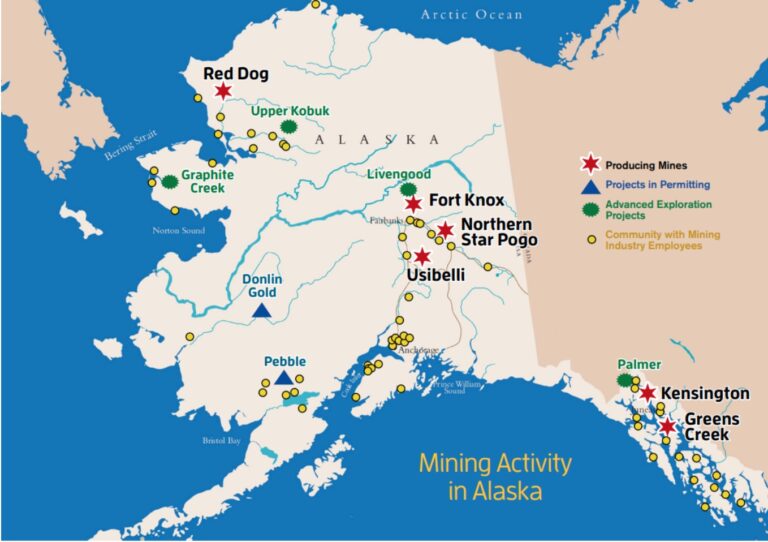
In Alaska, the Manh Choh gold mine under development near Fairbanks has become embroiled in controversy as the Native Village of Tetlin is divided on whether the mine should start production. A dispute about whether tribal leaders broke tribal law by approving it is the current barrier to progress. Kinross is the majority owner of the project and has plans to haul the ore by truck to Fort Knox, which has a mill.

Other gold mines in Alaska include those in production and those in development:

  • Hecla Greens Creek Mine: An underground mine producing polymetallic (silver, zinc, gold, and lead) ore to a surface mill and concentrator, which in turn produces three separate concentrates and is located on Admiralty Island, Greens Creek is the largest private-sector employer in Southeast Alaska.
  • Coeur Alaska-Kensington Gold Mine: An underground gold mine located on the east side of Lynn Canal some 45 miles north of Juneau. The ore is processed in a flotation mill that produces a gold-bearing concentrate which is sold to smelters.
  • Fort Knox Mine: An open-pit gold mine about 26 miles northeast of Fairbanks, operated by Kinross and employing over 400 people.
  • Pogo Gold Mine: An underground gold mine 38 miles northeast of Delta Junction.
  • Donlin Gold: Donlin Gold, owned by NovaGold Resources and Barrick Gold Corporation, it is working to build a gold mining project near Crooked Creek Village in the Yukon Kuskokwim area of Western Alaska. With some of the largest known gold deposits in the world, it has an estimated 33.8 million ounces of gold. The Donlin Gold project would create 3,000 jobs during construction, and up to 1,400 jobs for the estimated 27 years of production. Environmentalists have targeted it with legal challenges this year.
  • Pebble Project: In Southwest Alaska on state land set aside for mineral development, Pebble has one of the most important concentrations of copper, gold, molybdenum and silver in the world, but has been blocked by environmentalists for decades.
  • Niblack: A copper-zinc-gold-silver prospect on Prince of Wales Island, about 30 miles from Ketchikan, Niblack is in the exploration phase.
  • Livengood: Livengood Gold Project is 70 miles north of Fairbanks, and is one of the largest gold deposits discovered globally in 20 years.
  • More on Alaska mines at the University of Alaska Southeast’s Center for Mine Training link.

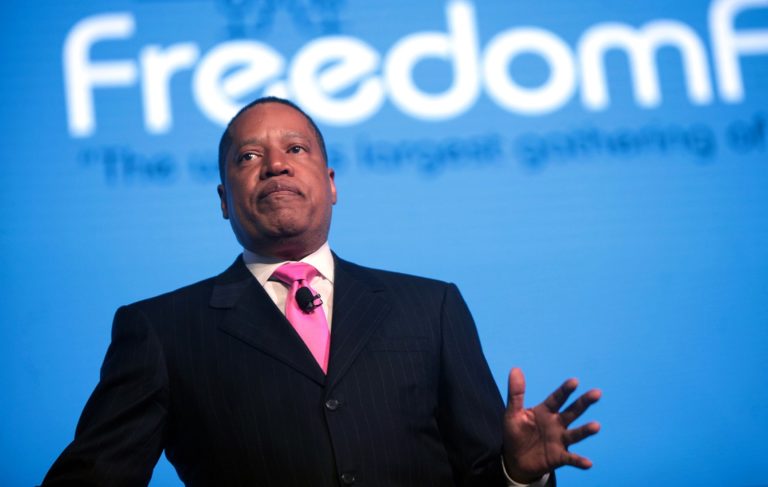
Kelly Tshibaka: Bold insights from Larry Elder

By KELLY TSHIBAKA

Larry Elder, a prominent conservative commentator and political figure, has been vocal about his views on various issues affecting the black community in the United States. While opinions on Elder’s proposed solutions may differ, it is essential to examine his perspectives, particularly in light of his formative life experiences. 

In Elder’s recent interview on the podcast show STAND with Kelly & Niki Tshibaka, he shared how his policy views were significantly shaped by witnessing how his parents overcame significant discrimination and poverty. Elder took the audience along his father’s inspiring journey from the Jim Crow South to the Marines and eventually to Los Angeles. Larry’s father, a symbol of perseverance, faced racial discrimination yet remained steadfast in providing for his family.

One of Larry Elder’s key pillars is the concept of personal responsibility. He argues that individuals, regardless of their race, must take responsibility for their actions and choices. Elder contended that systemic racism does not hold people back. Rather, he said the formula for success is to: a) wait to have kids until after 20 years old, b) get a job, c) don’t leave the job until you have another job, and d) avoid the criminal justice system. 

Elder then placed personal responsibility for the conditions faced by black Americans on the black community itself. He dropped these points in rapid fire:

  • – 70% of black kids enter the world without a father in the home married to the mother.
  • – The top cause of preventable death for a black person age 19 and under is homicide, almost always at the hands of another person age 19 and under
  • – There is a 50% urban dropout rate in many urban schools, like Milwaukee where 13 public high schools have 0% of the students who can do math at grade level

Elder also strongly advocated for school choice, believing that empowering parents to choose the best educational environment for their children is crucial. He argued that providing alternatives to underperforming public schools, such as charter schools, private schools, or homeschooling, can help break the cycle of poor education outcomes often observed in disadvantaged communities.

He criticized the Democrat Party for not supporting school choice and other solutions that would genuinely help the Black Community. Instead he said the Democrats intentionally mislead voters “because they want Black people to go in there and pull that lever for the Democratic party.” He called out the Democrat party for being the party of slavery, the party of the Confederacy, the party of Jim Crow, the party of Dred Scott, the party of the KKK, and the party that destroyed the family.

Larry Elder’s proposed solutions for the Black community revolve around principles of personal responsibility, education reform, economic empowerment, and the promotion of stable family structures. While his ideas may spark important discussions, it is crucial to consider a diverse range of perspectives and approaches to address the complex challenges faced by the Black community. Ultimately, a comprehensive and collaborative effort is needed to create meaningful and lasting change.

Kelly Tshibaka is the host of the podcast, TV, and radio show STAND, and the 2022 Alaska Republican candidate for U.S. Senate. She co-hosts the show with her husband, Niki Tshibaka.

Bethany Marcum: A Supreme Court case that could be the next Janus for labor unions

13

By BETHANY MARCUM AND STEVE DELIE

What good is a right if you don’t know you have it? What if you know about your right but are blocked from exercising it?

That’s the situation for millions of public workers. They have a constitutional right not to pay dues to government labor unions, yet unions are furiously trying to prevent workers from realizing it. The Supreme Court will decide any day whether to hear a case from Alaska that would ensure that all of America’s nearly 15 million teachers, police officers, firefighters, and other public workers have the information and opportunity they need to exercise their fundamental rights.

Alaska’s request has its roots in the Supreme Court’s 2018 ruling in Janus v. AFSCME. The justices recognized that the First Amendment rights to free speech and free association mean public workers can’t be forced to support labor unions. That was the correct decision, yet unions quickly subverted it. At the time, unionized public workers nationwide had to opt out of union membership proactively. Unions have made that process as difficult and opaque as possible, with the goal of keeping as many members as possible. Such union roadblocks have made Janus far less impactful than it should have been.

The union tactics are as obvious as they are unjust. In many states, government unions simply fail to tell workers that they have the right to opt out of membership, giving the impression that membership is mandatory. Some states have passed laws that ban employers from telling workers about their rights. And in other states, unions make the opt-out process so burdensome, few if any employees can navigate it.

Examples abound. In Oregon, one government union requires members to opt out between 45 and 15 days prior to the anniversary of the day they signed their membership cards. But the union doesn’t provide a copy of the card, making the window difficult to determine. In Michigan, the main teachers union only allowed opt-outs in August, when teachers are least likely to think about it due to summer break. When that was ruled illegal in 2015, the union required opt-outs to be sent to an obscure P.O. Box. In Alaska, state employees can only leave a union during a 10-day period in June.

Alaska tried to end this injustice in 2019. Gov. Mike Dunleavy revoked government unions’ control over membership and dues deduction, instead putting the state in charge of getting workers’ consent. Under the governor’s plan, Alaska would inform public workers on an annual basis about their right not to join a union or pay union dues. Workers would have the opportunity to decide on union membership and dues payments every year – replacing opt out with opt in.

Sadly, Alaska’s plan never went into effect, after state courts issued injunctions and the state Supreme Court struck it down on questionable grounds. Other states have had more luck. In 2020, Michigan began requiring annual direct consent from most state employees before unions get a cent of their paychecks. Turns out, huge numbers of workers didn’t know they had the option to leave their union, since no one told them, union or otherwise.

In the two years since Michigan’s policy went into effect, more than 10,000 state employees have decided to opt out of union membership. Overall, the share of state employees in government unions has fallen nearly 10 percent, to just over two-thirds of the workforce. Clearly, many workers had been paying union dues when they didn’t want to, likely never knowing they didn’t have to.

What if all public workers knew their rights and had a clear path to exercise them? If Michigan’s experience is any indication, an estimated 1.75 million workers would leave their government union in the next year or two. They would finally avail themselves of their rights to free speech and free association, despite union attempts to keep them in the dark. Unions should respect workers’ wishes, yet even if they don’t, they should be compelled to respect workers’ constitutional rights. The evidence shows that most workers would likely still choose to remain union members. That’s their choice, and they should be able to make it, without the union tipping the scales.

Only the Supreme Court can free America’s public workers. The justices should fully apply the logic of their 2018 Janus decision. If public workers can’t be forced into government unions, then they should be fully informed of their rights and given the chance to opt into union membership on a regular basis. Anything less will let unions continue to deprive public workers of the information they need and the freedom they deserve. It’s long past time to fully respect public workers’ rights.

Bethany Marcum is the Alaska State Director for Americans for Prosperity. Steve Delie is Director of Labor Policy at the Mackinac Center for Public Policy. This column first appeared at Fox News.

Brian Hove: Truth and consequences for Germany, Ukraine, and Vladimir Putin’s search for a legacy

18

By BRIAN HOVE

Can an action be considered inadvertent if the consequences of such action were predictable, inevitable and avoidable? 

Kelly Tshibaka’s most recent post is very much appreciated as the topic of Ukrainian sovereignty is an important consideration. However, emphasizing Germany’s involvement as “inadvertent” may lack vital context. In fact, I believe it’s much too kind.

Germany’s role in destabilizing the rules-based security structure Europe (particularly Eastern Europe) has enjoyed these last 30+ years cannot be overstated. To be clear, I’m not referring to its proclivity for NATO free-ridership (another issue for another time). 

I’ll explain. 

But first, why should we care about Ukraine? Well, history provides a compelling hint.

In the late 1930s Adolf Hitler assured the world that all he wanted was a little more land for German-speaking people, specifically parts of what was then Czechoslovakia. 

To avoid war, an agreement was struck sacrificing Czechoslovakia’s sovereignty. But, for despots like Hitler, it’s never enough. So, Poland was next. At this point all hell broke loose with the start of WWII. This is the moment the world learned a hard lesson about the efficacy of appeasement. 

Vladimir Putin is 71 years old. You can bet he has given considerable thought to his legacy. He would like nothing less than to be recorded as an historic figure, a great Russian leader in the class of Peter or Catherine or his personal hero, Stalin. 

Putting Humpty Dumpty back together again would certainly cement the legacy he desperately seeks. Restoration of the once great USSR might even qualify him for a new moniker. Vladimir the Great? Perhaps a final resting place next to Lenin?  

If we appease Putin by turning our back on Ukraine thereby allowing him to succeed in this misadventure, we must know that other sovereign nations will be next. The short list includes Poland, Lithuania, Latvia, Estonia and Finland – all EU and NATO members. Better to support Ukraine now than to have American boys fighting in Europe – again. 

So, what does Germany have to do with putting Europe back in Russia’s gunsights?   

For several years, Russia exported large quantities of natural gas to Germany which busied itself deactivating complementary power sources. Thus, over time, the German people became more and more dependent on an energy policy predicated on a single-source supplier of ill-repute.

Many former USSR republics and Warsaw Pact countries – now members of the EU and NATO – warned Germany about the unreliable nature of its bellicose business partner to the east. Choosing to ignore sage advice, Germany continued full speed ahead into Putin’s trap.  

During Putin’s reign, Russia has notoriously used energy resources to advance its foreign policy objectives. As a large consumer of Russian natural gas delivered via the Nord Stream pipeline, it was only a matter of time before Germans would be put over a barrel. How they could not see it coming is inexplicable. 

For the rest of the world, it’s fairly easy to understand. All we have to do is follow the Deutsche marks – specifically, Gerhard Schröder’s Deutsche marks.   

In the fall of 2005, within days of resigning his post as German chancellor, Schröder was hired by Gazprom, the Russian oil and gas giant, to oversee the nascent Nord Stream pipeline project. Think about that for a moment. 

Nord Stream was a proposal Schröder went to great lengths to endorse and promote as chancellor. Yet, we are to believe his subsequent employment was purely coincidental. This would be akin to a U.S. president – acting on behalf of the country he leads – cutting a deal with a strategic Chinese firm closely tied to the CCP and then, immediately after leaving office, going to work for that firm. Not cool, to say the least.

As a result, Germany is compromised. Awkward acquiescence toward Russia’s “special military operation” has been on full display from the outset. Europe’s largest economy needed Russian gas to operate. German homes needed Russian gas for wintertime heating. Clearly, Putin was counting on leveraging Germany the day he invaded Ukraine thus making impotent Russia’s largest potential European adversary.    

So, one could argue that Germany’s role in Ukraine’s existential struggle can be characterized as not so much “inadvertent” as it is complicit. Clearly, Russia is responsible. But, certainly, Germany has blood on its hands. 

It’s a hard truth to swallow. But how else are we to reconcile the actions of Germany’s former head of state vis-à-vis Nord Stream? There was nothing inadvertent about the geopolitical hazard Germany willingly walked into thereby putting its European neighbors at substantial risk. The consequences are plain as day for all to see.  

But, don’t take my word for it. Check it out.

Brian Hove is a UAF business graduate and a 43 year resident of Alaska. Much of his working life was spent in the banking industry. He also staffed a state senator back in the day. In 1999 he began what has become a wonderful infatuation with a small-but-spirited Eastern European country on the SE corner of the Baltic Sea and the Gulf of Finland. He’s fond of saying “Everybody needs a hobby.” His work can be found at 372collection.com. 

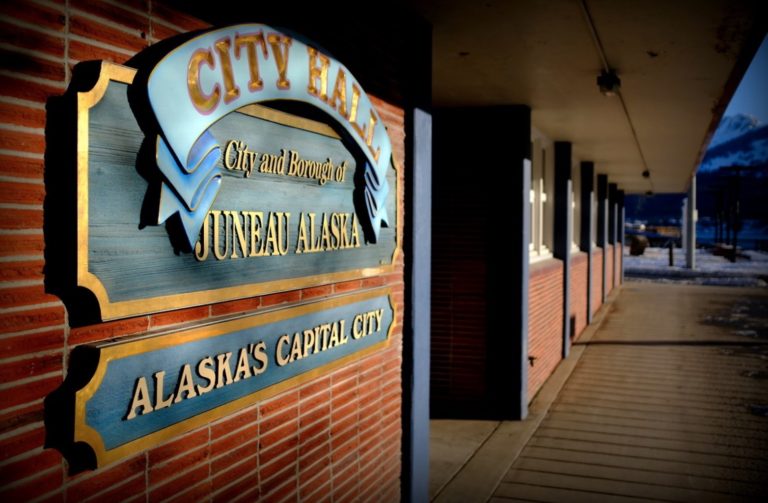
Ken Koelsch: Juneau Assembly needs to retreat

By KEN KOELSCH

We might not be privy to what the Assembly’s agenda is, but we need to begin with the premise that it wants to do the right thing. It is our job as citizens to help determine “the right direction” starting with the people here and then help make it happen.

Start with Taxation 101.

Taxes fund our local government so it can provide essential services we all value — like public safety, schools and roads. Property tax is calculated in mills, equivalent to one-tenth of a percent. A mill rate of 10 means that your property tax is equal to 1% of your property’s assessed value.

Do you remember what the millage rate was at the start of the 2023 year? It was 10.56.

In May, the Assembly lowered the rate from 10.56 to 10.16. The Juneau Empire headline read, “Assembly votes to lower property tax rate” and Assembly members proudly proclaimed that this was the lowest millage rate since the late 1990s.

Yes, the Assembly did lower the mill rate to 10.16, but what they couldn’t brag about was the fact that even though they lowered the millage rate, because property assessments rose so steeply — 13%, our tax bills actually went up an average of almost 9%.

But did you know that the Assembly’s 0.4 percent decrease (10.56 to 10.16) was actually less than what Juneau taxpayers achieved when they rejected $27 million in bonds for a new city hall in October?

That action effectively lowered the coming year’s debt rate nearly a half mill from 1.20 to 0.73 (0.47 percent).

What is happening to that money that does not need to be allocated to paying debt service on $27 million? Will it stay in the pockets of Juneau taxpayers or will it be collected for an Assembly “priority” that is not an essential service or just be collected because actually lowering property tax is not a thought process?

The CBJ has done an excellent job accumulating reserves (mostly by over-collecting sales and property taxes) they can disperse as they see fit without the permission of voters. But it is the citizens’ money.

There is $16.3 million that has been appropriated for a new city hall. That is your money.

There is at least $7 million appropriated for capital civic center funds; with another $10 million designated from passenger head taxes- That is your money.

There is projected to be $31 million in unrestricted 2024 budget reserves collected mainly from property and sales taxes. That is your money.

At the end of October (thanks to cruise ship passenger spending and inflation), the CBJ treasury set a record for third quarter sales tax collection of $21 million. That increase is your money.

And then there’s property tax. $64,484,700 was the budgeted value for FY24 for roughly 14,000 parcels. A total of $64.2 million collected so far (almost $5 million more than the projected $59.3 million collected in FY23). That increase is your money.

The senior population is now a larger percentage of the population than the under-18 population. What is needed to keep seniors and working families in their homes and attract young people to Juneau to balance out our population? There’s just one answer — we need to make Juneau more affordable.

So what sense is there in raising property tax on housing every year when we carry between $50-$60 million in restricted and unrestricted budget reserves? None. If this community wants to grow, it first needs to address the basic needs of its current population.

First, stop over-collecting taxes. Second, stop over-collecting taxes, Third, stop over-collecting taxes.

Make it affordable to live here. The 10.16 mill rate will be reduced by 0.47 as the debt service declines from 1.2 to 0.73. Why not lower the mill rate even further to keep the population we have here housed and attract new population? The Assembly during its retreat this weekend needs to actually ask for a plan to return over-collected taxes or a plan to use the over-collected tax for lowering property taxes for the next year or two.

It is Juneau taxpayers’ money that is filling the unrestricted reserve budget coffers well above normal levels; it is Juneau taxpayers’ money that is being appropriated to accounts for projects that voters have rejected. Leave the money in the taxpayers’ home budgets where they can use it to pay their mortgage or rent, or use it for food, medical and transportation costs.

Making Juneau a more affordable place for the people living here is a great starting place for any budget.

Ken Koelsch is a former mayor of Juneau.

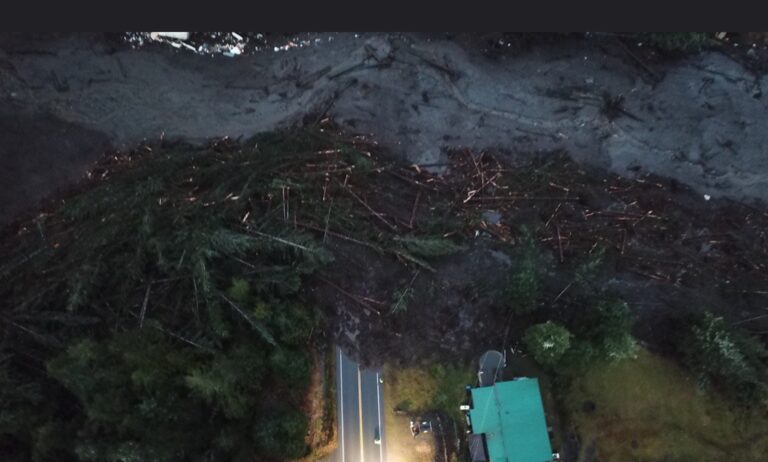
Wrangell finds remains of Otto Florschutz in landslide debris

1

The body of Otto Florschutz was located on Thursday and recovered from the Nov. 20 landslide debris, with the assistance of Wrangell Search and Rescue K-9, Wrangell Search and Rescue volunteers, and an excavator.

Florschutz was a commercial fisherman who in 2022 was one of 48 people who filed to fill the vacant seat in Congress, after the death of Congressman Don Young.

“Ottie” Florschutz, who was a grandfather, had been elected several times to Wrangell’s Port Commission, was for decades a member of the Wrangell Fish and Game Advisory Committee. He and his wife moved to Wrangell in the 1980s after winning the right to get some land there in the state land lottery.

The only person known to still be missing is 12-year-old Derek Heller; the rest of his immediate family’s remains have been recovered, including 44-year-old Timothy Heller, 36-year-old Beth Heller, 16-year-old Mara Heller and 11-year-old Kara Heller. Search and Rescue volunteers and a scent detection K9 team continue with reactive searching as any new information or evidence leads to a specific search area, according to the Alaska Department of Public Safety.

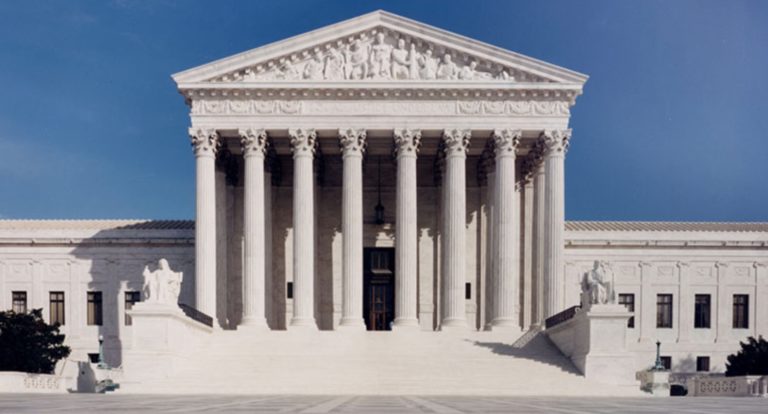
Passing: Sandra Day O’Connor, Reagan-appointed Supreme Court justice, wrote opinion on submerged lands on Alaska’s Arctic coast

3

The nation’s first female Supreme Court justice has passed. Sandra Day O’Connor was a woman of many “firsts.”

Born in El Paso, Texas to cattle ranchers, O’Connor was raised on a remote ranch that, in her younger years, was without electricity or running water.  

Through grit, hard work, and determination, she would become an accomplished lawyer and was named by President Ronald Reagan to the Supreme Court.

After graduating from high school in 1946, O’Connor was accepted to attend Stanford University, where she became senior class president. She completed two degrees in six years and received her law degree two years later, also from Stanford, during which time she was on the board of editors for the prestigious Stanford Law Review. She graduated third out of a class of 102 law students.

Her marriage and career took her to Germany, then to Arizona, where she raised her children with husband John O’Connor; she eventually returned to the practice of law and became an assistant attorney general for the state. She was appointed by the governor of Arizona to finish the term of a retiring state senator, and when she subsequently ran for the seat, she was reelected, and was immediately chosen by her peers to be the state Senate majority leader, another first.

In 1975, she was sworn in as an Arizona Superior Court judge and in 1979 she was sworn in as a judge on the Arizona Court of Appeals.

During the final month of the 1980 presidential campaign, candidate Ronald Reagan promised to voters that, if elected, he would appoint a woman to the U.S. Supreme Court. In July 1981, President Reagan made good on the promise and nominated O’Connor. The Senate confirmed her 99-0, with just one member missing the vote. O’Connor became the first female justice in the nearly 200-year history of the Supreme Court. 

She was diagnosed with breast cancer in 1988 and underwent a mastectomy and chemotherapy.

In an Alaska case decided in 1997, O’Connor penned an important opinion relating to submerged lands on the Arctic shelf, after the the federal government disputed the ownership.

The Alaska Statehood Act had expressly provided that the federal Submerged Lands Act applied to Alaska, entitling Alaska to submerged lands beneath tidal and inland navigable waters and submerged lands extending three miles seaward of the State’s coastline.

The federal government claimed a right to submerged lands along the Alaska’s Arctic Coast for mineral leasing.

Alaska sought to solidify its title to coastal submerged lands within two specific federal areas, the National Petroleum Reserve Alaska and the Arctic National Wildlife Refuge, formerly known as the Arctic National Wildlife Range.

The opinion authored by Justice O’Connor ruled that the federal government owned the disputed submerged lands adjacent to the National Wildlife Refuge and the National Petroleum Reserve along Alaska’s Arctic Coast.

Arguing on behalf of the State of Alaska was Bruce M. Botelho, who was attorney general for Alaska.

After serving for nearly 25 years, O’Connor retired in 2006. When she passed on Friday in Phoenix, she was 93.

More about O’Connor at the Sandra Day O’Connor Institute for American Democracy at this link.