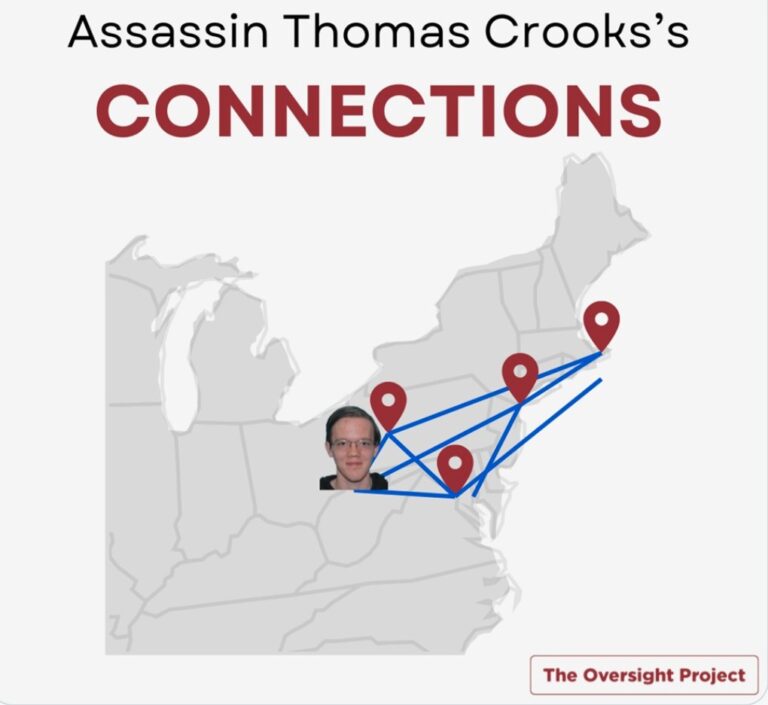
A cell phone associated with the home and work locations of would-be assassin Thomas Matthew Crooks was tracked by private investigators to a building in Washington, D.C., that houses both the Gallery mall and offices of the FBI, the Heritage Foundation’s Oversight Project reported on Monday.
The Oversight Project began a geo-location investigation soon after the July 13 attempted assassination of Donald Trump at a fairground in Butler, Penn.
Crooks was killed by a Secret Service counter-sniper after shooting at Trump and the crowd just after 6:11 p.m. Trump avoided death by turning his head slightly as he was speaking. A man behind him was killed and two others injured in the spray of bullets.
Read the report and see the maps of the Oversight Project’s geo-location investigation into the phone in question at The Blaze.
The Oversight Project reported on X, “For those that are tracking this type of data, we identified devices that were located at Crook’s home and his work within the past year. There were at least 9 devices linked to these AD-IDs We are willing to cooperate with legitimate investigations and share further information. For the protection of whistleblowers and our investigation, we will not be sharing further information with the congressional task force due to the connective tissue between that entity and FBI, USSS, and other entities.”
A judge has denied election attorney Scott Kendall and his Alaskans for Better Elections group in their efforts to disqualify the repeal of ranked-choice voting from the November ballot by lawfaring the petition booklets submitted to the Division of Elections.
The decision, granted on Friday, ended up in favor of the group that worked to collect tens of thousands of signatures over the course of a year.
Alaskans for Better Elections deployed paid spies to check on the people who were circulating the repeal petitions, to make sure they were not violating statute or regulations that govern petitions. The Alaskans for Better Elections group, with a trio of plaintiffs, challenged dozens of petition booklets and produced videos showing that sometimes the booklets were left unattended, which would be a violation of regulations governing initiative petitions.
But in the end, only a couple of dozen petition books were disqualified by the judge, and enough remained to exceed the minimum required to ask voters if they really want to stick with open primaries and ranked-choice general elections — the type of voting method ushered in by 2020’s Ballot Measure 2, a product of Outside dark money playing in Alaska’s election system.
One claim made by Alaskans for Better Elections is that one of the persons who notarized over 60 booklets had allowed her notary seal to expire. The Division of Elections had decided that this was the kind of error that the petitioners — Alaskans for Honest Elections — could fix. Alaskans for Better Elections objected to the Honest Elections group being able to repair that problem.
In another example, the plaintiffs said there was no way a person could collect over 500 signatures in one day. That was ruled unfounded because Alaskans for Honest Elections was able to show video of the busy venues they went to, including the Alaska State Fair and an event at the Palmer Train Depot, where former Gov. Sarah Palin was the star attraction.
Another example was when business owners who were in charge of petition booklets left them unattended while they left the room. Some of the instances of unattended booklets were caught on video or in photographs by the paid spies of Alaskans for Better Elections; some of those spies embedded themselves into the Alaskans for Honest Elections volunteer group to build the case and the Honest Elections activists had no idea at the time that there were double agents.
Attorney Kendall bought an expert witness from California who advises people on initiative packages before they are filed. That man told the judge that many of the petition booklets were very suspicious. He said that he found one incident where a petition book sponsor had three books going at one time.
But, during deposition he was asked if that is against the law. It is not. The man’s accusations, like this one, fell apart one at a time.
The judge ended up throwing out 27 booklets for various reasons, but in the end, over 34,500 signatures in 33 House districts were acceptable to the judge — more than enough to qualify for November’s ballot.
Republican Florida Rep. Greg Steube said today he has filed articles of impeachment against Secret Service Director Kimberly Cheatle, who dodged questions during an intense hearing today in the House Oversight and Accountability Committee. During that hearing, members from both parties demanded Cheatle resign, which she refused to do.
Last year, Steube was one of a handful of congressional representatives who filed impeachment articles against President Joe Biden; these were not taken up by the Senate, however.
The article of impeachment against Cheatle is for dereliction of duty by failing to ensure the safety of Donald Trump, who is the leading 2024 Presidential candidate. The Secret Service made decisions that enabled a shooter to target and injure President Trump in an attempted assassination, and to kill an American citizen who was behind Trump.
“The Secret Service calls themselves ‘one of the most elite law enforcement agencies in the world’. What happened under their watch in Butler, Pennsylvania was an international embarrassment and an inexcusable tragedy,” said Steube. “Today I’m exercising our Congressional authority of oversight by filing an article of impeachment against Director Cheatle for her dereliction of duty as it relates to the assassination attempt on President Trump’s life. As she said herself in a recent interview, the “buck stops with me.” Multiple confirmed reports show that the Secret Service Sniper had the would-be assassin in his sights for almost 20 minutes. How was the would-be assassin not neutralized before he shot? Every supervisor in that chain of command should be fired immediately and that starts with the Director. An American hero is dead and several severely wounded as a result of the Secret Service failure to protect President Trump. There are also multiple reports that Trump’s detail had repeatedly requested additional resources for safety and were denied. All in the chain of command including the Director should be held responsible,” Steube wrote in his statement.
“Particularly after her abysmal testimony today before the Oversight Committee, where little to no questions were properly answered and she doubled down on her refusal to resign, we have no choice but to impeach Director Cheatle,” he said.
? WOW! COMPLETE FLAMETHROWER ?
MTG TORCHES disgraced US Secret Service Director Cheatle after forcing her to answer point-blank:
"Was there a stand-down order, Ms. Cheatle? Was there a conspiracy to kill President Trump?!"
It’s been widely reported that the Secret Service knew of a threat to President Trump before he went out on stage, and that agents had identified the shooter as a person of interest over an hour before the shots were fired.
A Secret Service counter sniper had spotted the shooter on the rooftop with a direct line of sight to President Trump’s stage 20 minutes before the shots were fired.
“By Providence alone, President Trump survived the attempt on his life while being grazed by a bullet that injured his ear. Tragically, a rally attendee, Corey Comperatore, was fatally struck by a bullet in the attack and other rally attendees were injured,” Steube said.
In his impeachment articles against Biden in 2023, Steube listed crimes of bribery, extortion, obstruction of justice, fraud and financial involvement in drugs & prostitution as reasons to impeach Biden.
Steube said the president had undermined the integrity of his office, brought disrepute on the Presidency, betrayed his trust as President, and acted in a manner subversive of the rule of law and justice at the expense of America’s citizens. The evidence continues to mount by the day – the Biden Crime Family has personally profited off Joe’s government positions through bribery, threats, and fraud. Joe Biden must not be allowed to continue to sit in the White House, selling out our country.”
Those articles of impeachment were as follows:
Article 1: “Robert Hunter Biden (Hunter Biden) and James Biden sold access to then Vice President Joseph Robinette Biden, Jr. (Joe Biden) while he was in office from 2009 to 2017 and sold promised access to a future Biden Presidential Administration while he was out of office from 2017 to 2021. Hunter and James appear to have promised official actions by Joe Biden in return for payments and business opportunities from foreign and domestic business partners. Joe Biden assisted by making appearances, phone calls, meeting with the ‘business partners,’ and knowingly allowing his family members to promise access to him and actions by him in furtherance of these schemes. Hunter Biden threatened business partners that official actions could be taken against them if they did not meet terms or make payments. In at least one instance, Hunter implied that Joe Biden was aware of these threats and willing to assist in enforcing the threats, potentially through official actions. Hunter Biden attempted to enrich himself and the Biden family by threatening official actions from his father, who he claims was willing to assist in the scheme. These acts are abuses of power as well as the following federal crimes or conspiracy to commit the following federal crimes: Bribery of Public Officials, 18 USC § 201; Hobbs Act Extortion ‘Under Color of Official Right,’ 18 USC § 1951; Honest Services Fraud relating to use of official position, 18 USC § 1346.”
Article 2: “According to testimony from IRS whistleblowers, members of the Biden campaign improperly colluded with Justice Department (DOJ) officials to improperly interfere with investigations into tax crimes alleged to have been committed by Hunter Biden. These acts constitute an abuse of power as well as Obstruction of Justice, 18 USC §§ 1505, 1510, 1512.”
The Senate, run by the Democratic Party, refused to take up the articles last year. Still run by Democrats, with Vice President Kamala Harris as a spare vote if there was a tie, it’s unlikely this article of impeachment will proceed.
Monday is the final day for candidates to file in the City and Borough of Juneau elections. Over the weekend, Angela Rodell, the former executive director of the Alaska Permanent Fund, started collecting the 25 needed signatures to run for city office. It became clear then that the rumors were true: Mayor Beth Weldon, who has served two terms, will not get an easy path to reelection.
Rodell has been a financial consultant for the past few years, since leaving as the CEO of the Alaska Permanent Fund. She had also served as the Commissioner of Revenue, and Deputy Commissioner of Revenue – Treasury Division.
Her filing now shows on the elections tab at the Juneau.org website.
Rodell is a Republican, while current Mayor Beth Weldon is an undeclared — not with any party. Weldon recently lost her husband, served in the fire department, and is well-liked. Rodell will have to work hard to unseat her.
For the most part in Juneau, the mayor has no real power, other than running assembly meetings and ribbon cutting. The city manager answers to the assembly and has far more power than the mayor.
Here are the candidates for Juneau’s municipal election, which is conducted by mail and ends on Oct. 1:
ASSEMBLY CANDIDATES
Mayor – One open seat (3-year term)
Beth Weldon
Angela Rodell
Assembly District 1 – One open seat (3-year term)
Neil Steininger
Connor D. Ulmer
Assembly District 2 – One open seat (3-year term)
Emily Mesch
Nathaniel (Nano) Brooks
Maureen Hall
Dorene Lorenz
Mary Marks
Three open seats on the Board of Education. (All seats for a 3-year term)
The 2024 presidential election was already interesting but, let’s face it, it is now the most interesting of our lifetimes.
The incumbent, a mind-wandering geriatric who is arguably the worst president in American history –- scratch that; it’s not even arguable –- vs. a bombastic and twice-impeached former president who is arguably the most hated chief executive in history – scratch that, too; there is no president who has ever received the hate that Donald Trump has received.
We the public have witnessed the ravaging progression of dementia upon Joe Biden. Those of us who have endured the pain of watching our loved ones stumble down that path of confusion and deterioration have also cringed through three and a half years of seeing it happen to the most visible government official in the world; the suffering exacerbated by the hair-pulling frustration that comes with watching the Democrat party ignore, or more often blatantly lie with committee-researched-and-approved phrases about the president being “focused and on point.”
The public has also seen a legal assault on the former president, Donald Trump, by the incumbent and his political cronies, the likes of which are usually reserved for dictators wearing stern gazes or gawdy uniforms full of meaningless medals.
The use of political power to bring 88 felony charges against a political opponent because he is feared even more than he is hated, is an embarrassment for our legal system and a much bigger threat to democracy than the allegations that Trump himself is a threat to democracy. Again, the frustration factor in watching this happen is elevated by the complicity of the Democrat party and (just as with the dementia issue) a complicit mainstream media.
A stumbling, bumbling Biden performance in the June debate was painful to watch, even for those of us rooting heartily against him, and it became too much for even the most ardent Biden (or more precisely, anti-Trump) sycophants to bear. A few brave Democrats, fearing a November election loss more than the damage a non-present commander-in-chief could do to our country, began declaring publicly that the emperor wears no clothes . . . an equally unpleasant and not unlikely scenario if not for Dr. Jill hovering over her husband like a mother watching her three-year-old child.
Palace intrigue indeed.
On July 13, a would-be-assassin took a shot at the president’s opponent and came within an inch of being a full-fledged-assassin, taking place two days before the challenger’s party convention. It was enough to bring over the Trump-hesitant Republicans, including former Trump primary opponent Nikki Haley.
Trump takes a bullet then stands up defiantly.
Biden takes almost as long ascending an airplane stairwell as some Secret Service agents take to holster their weapons.
One can expect energy and enthusiasm to emanate from a party convention –- at least when John McCain or Mitt Romney aren’t the banner carriers –- but when Gold Star Family members take the stage to shout the names and tell the stories of their loved ones who died in military operations and, in doing so, expose front and center Biden’s lie about being the only president to not have any troops die under his command, the president and media could no longer ignore the drumbeat.
The increasing tempo became a deafening roar when Rep. Nancy Pelosi, (no clear-minded spring chicken herself) let her private conversation with the president leak to the press.
And now it looks like Kamala Harris, the most incoherent person to ever hold the office of vice president, is the Dems’ frontrunner despite approval ratings even lower than those of her boss. While Joe Biden mumbled his words due to dementia, Vice President Harris jumbles her words due to gross incompetence. If the Peter Principle needs a poster child, it needs look no further than the grand philosopher and her favorite, albeit meaningless, word salad, “What can be, unburdened by what has been.”
Nevertheless, a woman (despite being a word that’s difficult to define), and a woman “of color” to boot, is exactly the type of policy imperative the Left is seeking. Competence and coherence have no place when intersectionality reigns supreme. Donations that were withheld from Biden by millionaire Marxists will now flow into the collectivist coffers.
Meanwhile, Trump’s running mate is a man who has pulled himself up out of poverty by the bootstraps (a concept the Left abhors) and served in the United States Marine Corps. No president or vice president has ever held the title of U.S. Marine, and it’s about time to change that.
Will the Dems stick by Harris? If so, who will be her running mate? If not, who will be on the ticket? Will their Chicago convention be a repeat of the chaos of 1968? Will non-partisans and moderates support either ticket? Is RFK Jr. now more of a viable choice for voters?
Lots of questions and only four months to go, folks. It’s getting interestinger and interestinger by the day.
Tim Barto is a regular contributor to Must Read Alaska, and is Vice President at Alaska Family Council. During the Reagan Administration, he wore the uniform of a United States Marine.
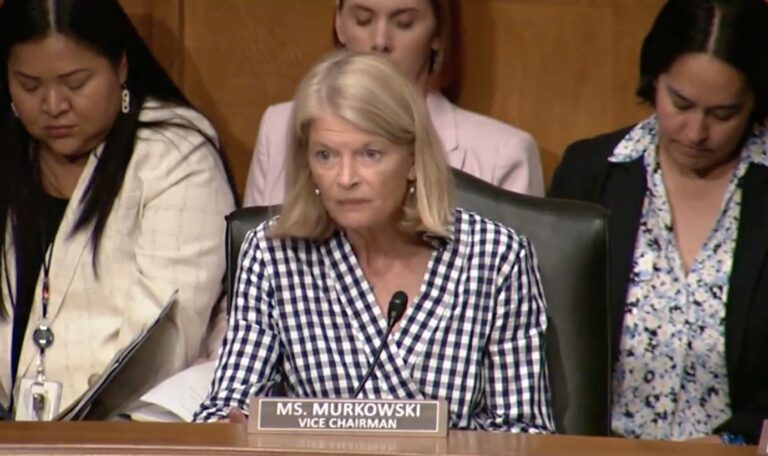
Sen. Lisa Murkowski is asking lawmakers to pass legislation to help tribal members who are bitten by their stray village dogs.
She said, “an average of 4,800 tribal members are hospitalized or receive outpatient care from dog bites each year. Some studies indicate that tribal areas experience a death rate from dog attacks that is 35 times higher than the rest of the nation, with most of these cases are in Alaska.”
Murkowski introduced the legislation intended to control rabies and distemper in Native Alaska communities by deploying veterinary services to Native areas.
“The overpopulation of stray and abandoned dogs in Indian country is a significant public health and safety issue,” Murkowski said. “More than 250,000 reservation dogs, as they’re often, called roam the Navajo nation alone. Alaska Native children experience the highest incidences of hospitalization from dog attacks than any other group in the nation and we need to deal with it.”
An average of 4,800 tribal members are hospitalized or receive outpatient care from dog bites each year. Some studies indicate that tribal areas experience a death rate from dog attacks that is 35 times higher than the rest of the nation, with most of these cases are in Alaska. pic.twitter.com/gpkQV3gFHu
— Sen. Lisa Murkowski (@lisamurkowski) July 19, 2024
Murkowski is vice chairwoman of the U.S. Senate Committee on Indian Affairs. Last month, she introduce S.4365, the Veterinary Services to Improve Public Health in Rural Communities Act.
The act addresses “uncontrolled animal populations and a lack of veterinary care in Native communities, Alaska Native villages, and on Indian reservations,” the bill says, which increases “the risk of parasites and zoonotic diseases, dog bites, food insecurity, and mental health issues among Alaska Natives and American Indians.”
“Dog bites and other injuries are common in rural areas in the State of Alaska, with the Norton Sound Health Corporation reporting an average of 87 bites per year in the Bering Strait region be- tween 2016 and 2023, and the Yukon-Kuskokwim Health Corporation reporting an average of 98 bites per year in the Yukon-Kuskokwim Delta region be- tween 2008 and 2017,” the legislation says. “Alaska Native children have the highest incidence of hospitalization for dog bites in the Indian Health Service system.”
The act will provide free veterinary services to tribal areas. It will also:
Amend the Indian Health Care Improvement Act to authorize Indian Health Service to provide public health veterinary services to Indian Tribes and Tribal organizations in Indian Health Service Areas where zoonotic diseases are endemic and the risk of transmission is elevated due to uncontrolled dog populations.
Allow Tribes and Tribal organizations to receive IHS funding for such services in their 638 self-governance compacts with Indian Health Service. These services would include eligibility to spay and neuter dogs.
Provide Indian Health Service with veterinary officers from the U.S. Public Health Service Commissioned Corps to fulfill the purposes of the bill.
Direct Indian Health Service to coordinate with the Centers for Disease Control and Prevention and U.S. Department of Agriculture in the implementation of the bill.
Require a biannual report to Congress on the bill programs and use of funds.
Direct USDA Animal and Plant Health Inspection Service Wildlife Services to conduct a feasibility study on deploying and improving the delivery of oral rabies vaccine in Arctic regions of the country.
Amend existing statute to designate Indian Health Service as a co-coordinating agency in the National One Health Framework, an initiative to address zoonotic diseases and advance public health preparedness across federal agencies.
The legislation was referred to her committee, where it has had one hearing. To view a copy of the bill, click here.
The Alaska Department of Health issued an epidemiological bulletin on the topic of dog bites in 2015, at this link.
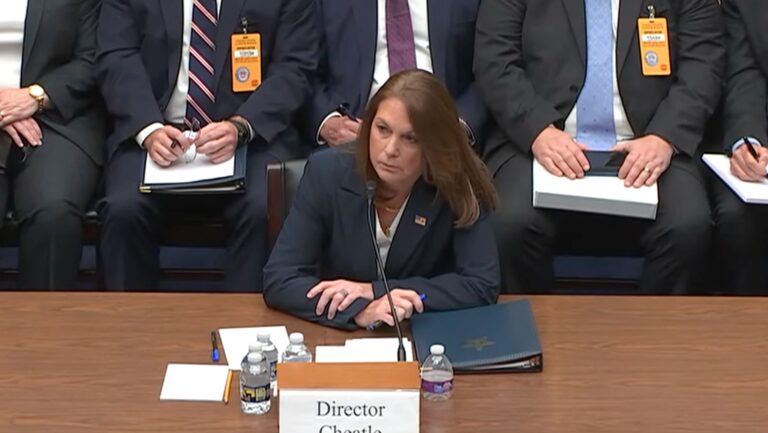
Secret Service Director Kimberly Cheatle appeared before the House Oversight and Accountability Committee on Monday, to answer questions about the failure of the Secret Service to prevent a shooting on July 13 that took the life of one man, injured two others, but that missed its target — Donald Trump, the Republican nominee for president.
Cheatle called the incident the agency’s “most significant operational failure” in decades.
She said that there were security lapses, but she refused to answer specific questions of the committee, which is headed by Rep. James Comer, a Kentucky Republican.
Comer said Cheatle’s agency has become the “face of incompetence.”
“Because Donald Trump is alive, and thank God he is, you look incompetent,” said Ohio Republican Rep. Mike Turner, who has called for President Joe Biden to fire Cheatle if she did not resign. “If Donald Trump had been killed, you would have looked culpable.”
Cheatle repeatedly told the committee that she is “unable to answer details” about how the shooting unfolded, due to the F.B.I. investigation under way.
Cheatle said that there were no requests by Trump for additional protection for the rally in Butler, Penn., where a man was able to get on top of a nearby roof and take several shots at Trump, nicking Trump’s ear but hitting people behind him before Secret Service snipers shot the assassin dead.
” I don’t understand how you can continue to stay in the position you’re in when this is a failure of historic magnitude,” said Republican Rep. Gary Palmer of Alabama, adding that nothing like the incident had happened since the assassination attempt on President Ronald Reagan 43 years ago. “You failed in this case in a spectacular way,” he said, adding that the incident put many lives in danger, including members of the Secret Service.
Rep. Ro Khanna, a California Democrat, asked Cheatle: “Now Director Cheatle, would you agree that this is the most serious security lapse since President Reagan was shot in 1981, of the Secret Service?
Cheatle responded, “Yes, sir, I would.”
Khanna continued: “Stewart Knight was in charge of the Secret Service [when Reagan was shot]. Do you know what he did afterwards?”
Cheatle responded, “He remained on duty.”
Khanna corrected her: “He resigned. He resigned.”
In a statement on the committee’s website, Rep. Comer called on Cheatle to resign.
“Given the historic security failures leading up to and during the campaign rally in Butler, Pennsylvania, Chairman Comer called on Secret Service Director Kimberly Cheatle to resign in order to ensure accountability. Chairman Comer encouraged Americans of all political stripes to unite against extremism and political violence and concluded action must be taken to ensure this never happens again,” the statement reads.
Alaska Democrats last week were all in for President Joe Biden. He had the party’s unwavering endorsement, the party told reporters from the mainstream media.
On Sunday, after a hastily called phone meeting organized by national Democrat officials, the Alaska Democratic Party leadership threw its newly discovered unwavering support to Kamala Harris for president. The announcement was made hours after President Joe Biden apparently signed a letter saying he was withdrawing from the race for reelection.
“On the heels of President Joe Biden’s announcement that he will be seeking re-election, Party leaders endorse Vice President Kamala Harris for the Office of President and commend President Biden for his noble decision and service to the Nation,” the Alaska Democratic Party announced.
“President Biden made a selfless and heroic decision,” said DNC Committeewoman Brenda Knapp, in a press release. ’’I’m all behind Vice President Harris and anxious to move forward with formal selection of her as the Democratic presidential nominee. I’m also heartened that Joe Biden will continue serving as our nation’s President through the end of his term.”
“I fully support Vice President Harris and know she is the most capable candidate of defeating Trump, earning the Party’s nomination, and uniting Democratic voters,” said Party Vice Chairwoman Jessica Cook, “She is a proven leader.’’
“President Biden is the best President we’ve had during my lifetime and did a phenomenal job in bringing our nation back together after Jan 6, 2021. Under he and Vice President Kamala Harris’s leadership, we’ve seen the largest infrastructure investments desperately needed in our state, job growth, unprecedented support for Unions, and policies enacted so that all Alaskans thrive,” said Alaska Democratic Party Chair and Alaska National Delegation Chair Mike Wenstrup. “Our country needs to unite behind the Democratic nominee and she can deliver that. A vote for her is a vote for a country where all Americans can live without fear of persecution. It’s a vote for democracy and against Project 2025. The values of the Democratic Party and the legacy of the Biden Administration will continue to prosper with her.”
Biden has arguably been the worst president for Alaska, signing over 63 executive orders and executive actions singularly focused on Alaska to shut the state economy down. Biden has done more for Venezuela, ruled by a dictator, than he has done for Alaska’s economy.
Chuck Degnan, Alaska Democrats’ DNC Committeeman, did not apparently vote. He is a Bering Sea commercial fisherman.
This vote by party leadership is a signal to all Alaska Democrat delegates to the Democratic National Convention in Chicago that they will vote for Kamala Harris as the nominee. They will not be given a choice. Among those going to Chicago for the Aug. 19 convention is Rep. Mary Peltola, a voting member of the delegation.
Democratic National Committee Chairman Jaime Harrison on Sunday said the Democrats will have “a transparent and orderly process” to choose the nominee. He said he would share the process soon.
“The work that we must do now, while unprecedented, is clear. In the coming days, the Party will undertake a transparent and orderly process to move forward as a united Democratic Party with a candidate who can defeat Donald Trump in November,” Harrison said. “This process will be governed by established rules and procedures of the Party. Our delegates are prepared to take seriously their responsibility in swiftly delivering a candidate to the American people.”
But on Sunday, Democrat Party officers, seeking to quell the chaos that quickly developed in the party, convened a phone meeting as the Association of State Democratic Committees to ensure the endorsement of Harris as the Democratic nominee. The vote was unanimous for all states, giving marching orders to the delegates across the country that they will fall in line.
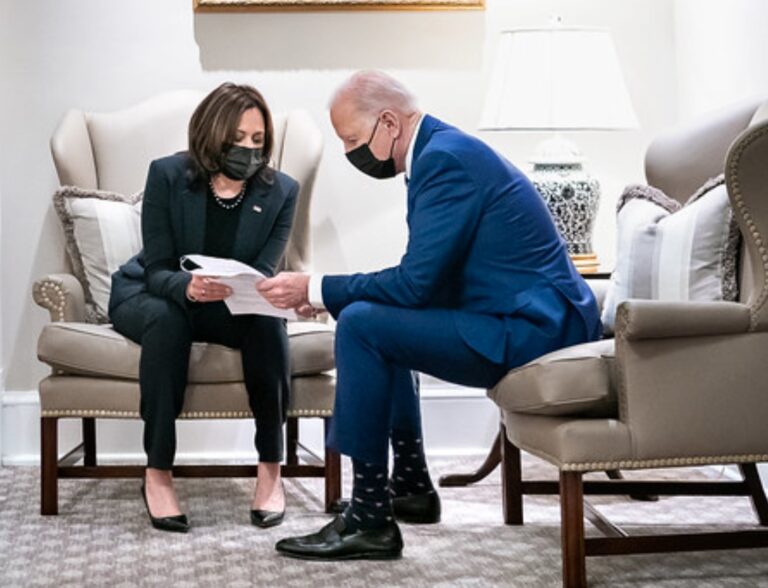
Democrats staged their palace coup this weekend, forcing President Biden to sign a letter saying he will not accept the nomination of the Democrats, and that he endorses Vice President Kamala Harris. This, just three and a half years after Biden won more votes than any president in American history, making him arguably the most popular president in history, if the 2020 election was accurate.
Alaska U.S. Sen. Dan Sullivan said that Democrats in general have such bad policies that it doesn’t matter who heads the presidential ticket for them — Alaska would lose if Joe Biden, Kamala Harris — or any Democrat — became president in November.
“Regardless of who is on the top of the ticket, the National Democrats and the failed Biden-Harris agenda will still be on the ballot this November,” Sullivan said. “If they win, Alaskans and the rest of America will continue to suffer from their far-left policies that caused crushing inflation, high energy prices, weak national security, open borders with fentanyl flooding into Alaska, and Biden’s unprecedented war on Alaska—with 68 executive orders and actions specifically targeting our state and our working families.”
U.S. Sen. Lisa Murkowski, who has had a close personal friendship with Biden over decades, was more terse: “I respect President Biden’s decision to act in the best interest of the country by stepping aside in the 2024 presidential election,” was her complete statement.
Rep. Mary Peltola, a Democrat who has tied her apron strings to Biden with glowing endorsements and past testimonials about his “sharpest” mental acuity, offered no statement about Biden dropping or Kamala Harris getting Biden’s endorsement. Peltola will be one of the Alaska delegates to vote during the Democratic National Convention that begins in Chicago on Aug. 19, and she will have to vote as the party tells her.
Kelly Tshibaka, chair of the Trump campaign in Alaska, offered this: “Democrats eliminated Biden not to try and win the Presidential race but to redirect all their donors and campaign efforts to Senate and House races. Biden would have surely cost the Democrats both majorities. Now they have a fighting chance.”
Sen. Mike Lee of Utah noted that Vice President Harris “didn’t accomplish this alone, by any means. She had help from the mainstream news media. She had help from people close to President Biden, including the White House staff.”
Sen. Marsha Blackburn of Tennessee said, “Finally, Joe Biden has realized what the rest of the American people and even his own party already knew—he is not only the wrong leader for America, but is wholly incapable of doing the job of President of the United States. But he didn’t go far enough. If Joe Biden is too weak to stay in the race for the presidency, he should RESIGN as our Commander-in-Chief immediately.”
Former Hawaii Democrat Rep. Tulsi Gabbard said, “Biden’s out, Kamala is in. Don’t be fooled: policies won’t change. Just like Biden wasn’t the one calling the shots, Kamala Harris won’t be either. She is the new figurehead for the deep state and the maidservant of Hillary Clinton, queen of the cabal of warmongers. They will continue their efforts to engulf the world in war and taking away our liberty.”
Alaska Democrats simply posted Biden’s letter declaring he is not going to be able to accept the party’s nomination on the party’s social media account, without comment. Two days earlier, the party had said it is backing Biden. The bumping of Biden will send delegates to the national convention scrambling, if other candidates jump in. Alaska Democratic Party is operated by the more Bernie Sanders end of the political scale.
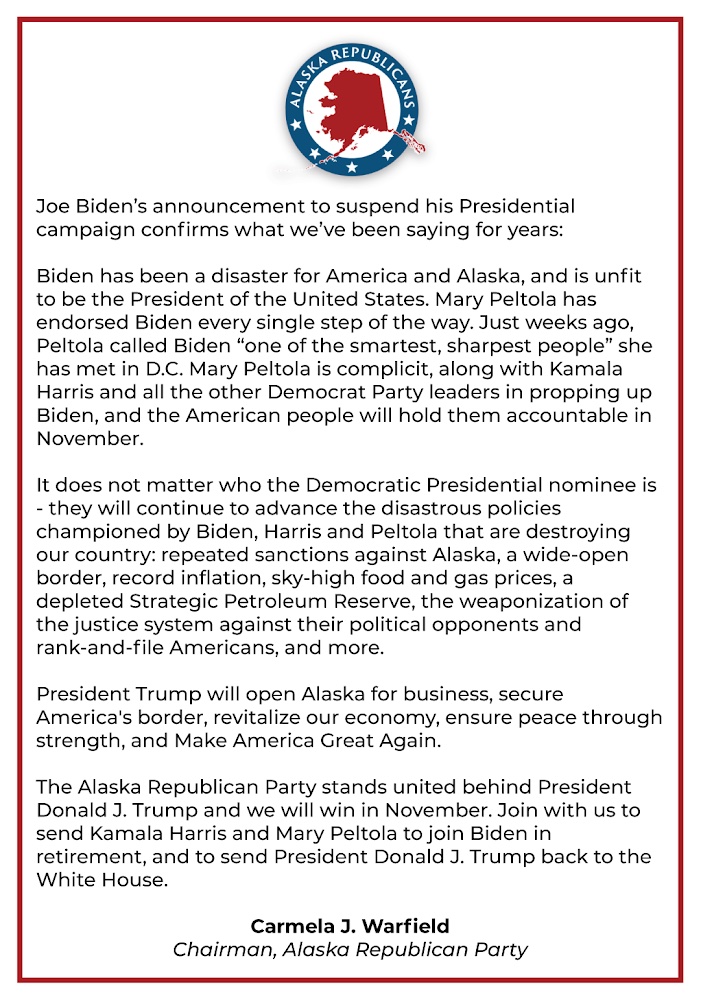
Alaska Republican Party Chairwoman Carmela Warfield, published a statement: