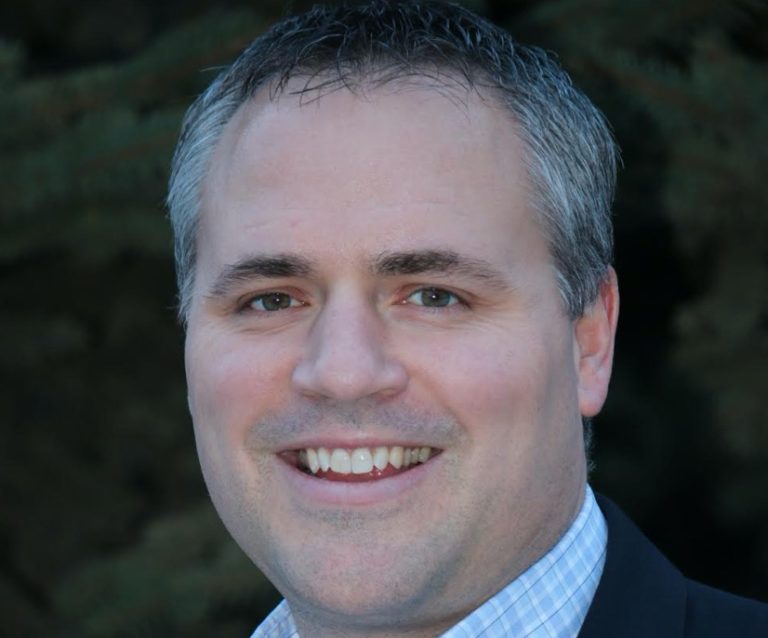
Sixty days before the November general election is over, Republican congressional candidate Nick Begich, who is running to unseat Democrat Rep. Mary Peltola, has a new team headquarters. The resources are rolling in, along with positive polling numbers, and a surge of enthusiasm from Alaskans.
The Begich “battle station” will have its open house on Saturday, Sept. 7 from 11 a.m. to 2 p.m. The headquarters is located at 207 E. Northern Lights Blvd. Suite 111, with entry on the west side of the building.
Campaigns across the state will move into high gear now that the primary has been certified by the Division of Elections.
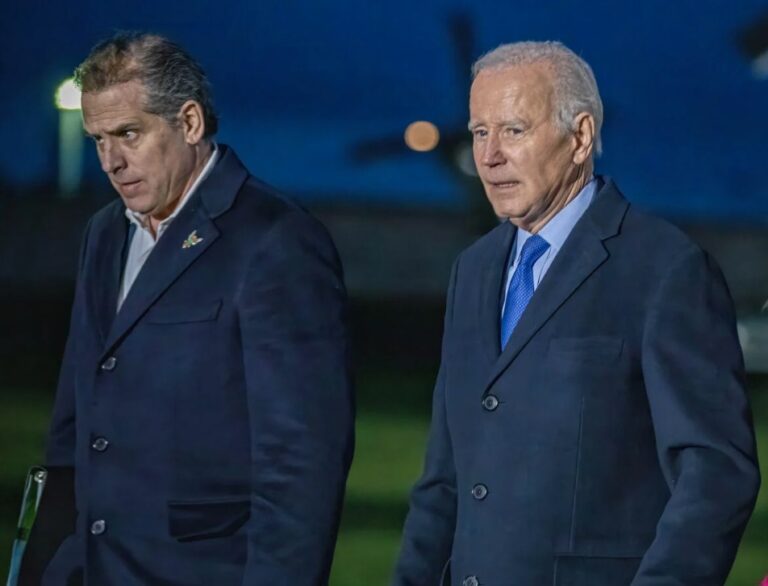
Hunter Biden, business partner with his father President Joe Biden, is attempting to make a no-contest plea to avoid his tax evasion case going to trial in California.
An Alford plea, as it’s know, would mean he would not admit he did anything illegal, but would acknowledge enough evidence has been presented to convict him.
His attorneys were in court in Los Angeles Thursday morning making the case to the court. Prosecutors objected because federal courts do not accept these Alford pleas. The judge recessed the proceedings to consider the decision.
He is supposed to face trial in California on charges he avoided paying $1.4 million in taxes even as he spent plenty of money on an extravagant lifestyle.
Update: The judge did not accept the plea and Biden has now pleaded guilty to avoid trial.
In June, Hunter was found guilty by a Delaware jury of making false statements while purchasing a firearm, unlawful possession of a firearm, and making other false statements regarding information kept by federally licensed firearms dealers.
Those prior charges stem from his use of and alleged addiction to illegal drugs at the time he was buying a Colt Cobra .38-caliber on Oct. 12, 2018, and lying about his drug use on purchasing forms. Federal law bans users of illegal drugs from possessing firearms.
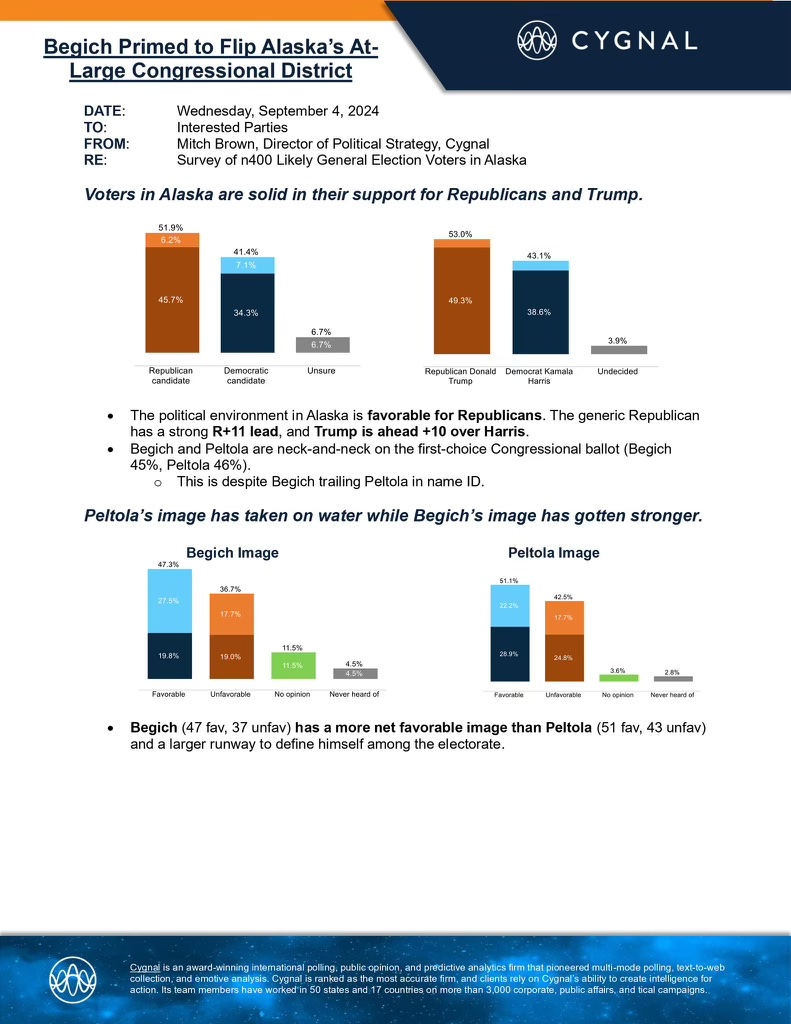
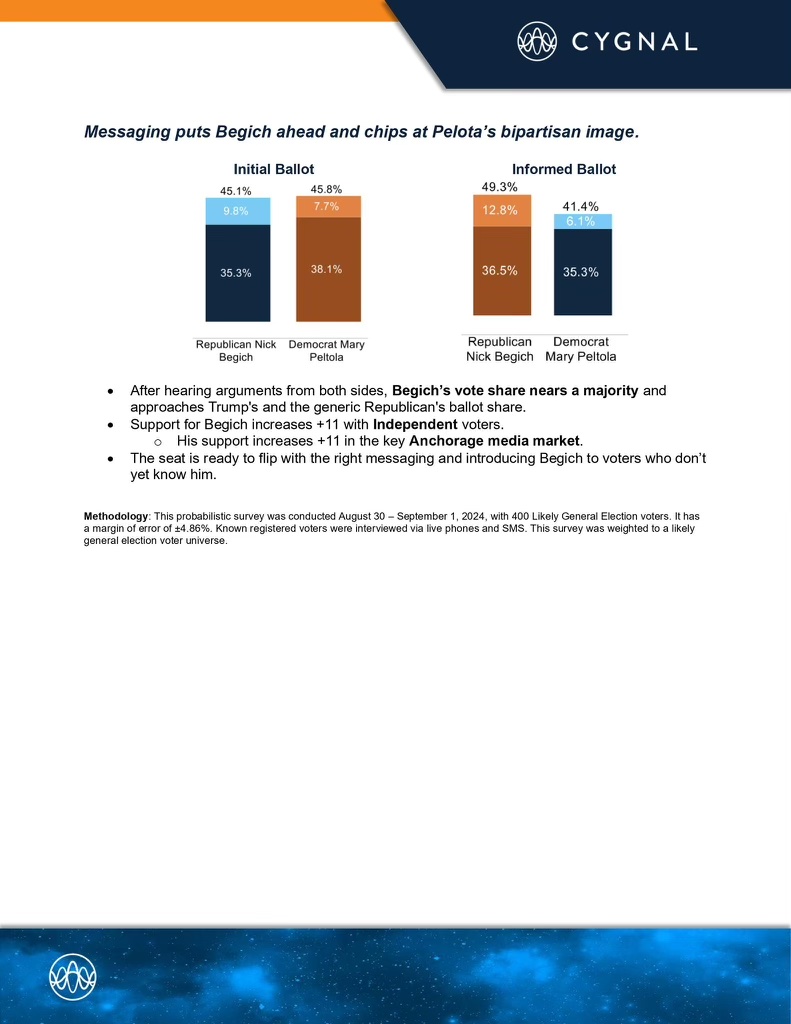
A new poll conducted by the National Republican Congressional Committee shows that Rep. Mary Peltola and Republican Nick Begich are in a statistical tie, with Peltola leading 45-45%, and a margin of error of 4.86%.
The poll was conducted after Republican Nancy Dahlstrom dropped from the race for Congress two weeks ago. The polling company, Cygnal, surveyed 400 likely general election voters from all political stripes.
This is the first poll that has been released since the Aug. 20 primary.
The Cygnal survey shows Alaska’s congressional race to be one of the most competitive in the country. While Begich has been outspent by Peltola by more than 10-to-1, he has outworked her and the poll shows he has a favorability rating of +10. Some 47% are favorable to Begich and 37% are unfavorable.
Peltola has a 51% favorable and 43% unfavorable rating.
When people are given reasons to support Begich or to not support Peltola, the numbers were overwhelming.
“We are not a purple state. Alaskans bleed red. Republicans have got to do a better job at getting out their message and executing campaign strategy, because the electorate is no-doubt with us on the issues,” said Bernadette Wilson, owner of Moneyball Strategies and senior advisor to the Nick Begich for Congress campaign.
Telling in this calculus is that the Peltola campaign has not released any polling data for months.
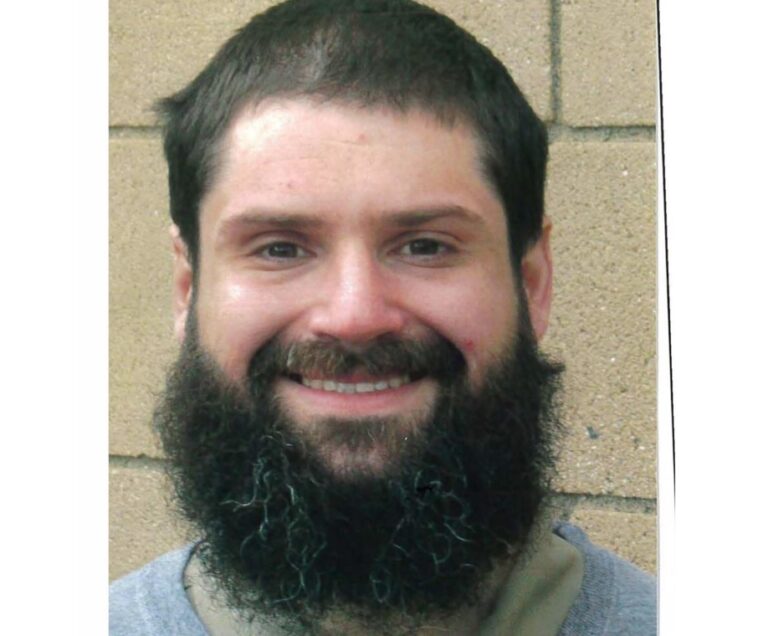
Complicating things for Peltola is that her party is now suing to get another Democrat off the general election ballot. Eric Hafner, a prisoner serving time for bomb threats and other threats, is a Democrat who wants to represent Alaska, and he could shave hundreds of votes off of Peltola.
In order to rig the elections, the Alaska Democratic Party has hired the nation’s top Democrat election lawyer, Marc Elias, and has sued the Division of Elections to get Hafner off the ballot and give their preferred Democrat a better chance. This could backfire on Peltola if voters see that she and her party are trying to misuse their ranked-choice voting system that they support by litigating against other candidates. It’s a bad look for the Democrats in Alaska and shows how desperate.
The Alaska Democratic Party is steaming mad that a Democrat, who is also a felon serving time in a federal penitentiary in New York, is on the final-four ballot for Alaska’s congressional seat in November. They are suing the Division of Elections to get him off the ballot so Mary Peltola can win.
Open primaries and ranked-choice voting was designed by liberals to ensure more Republicans would be on the November ballots than Democrats and split the campaign donations, volunteers, and momentum of conservatives. But it just didn’t work out that way on the second election to use the new system.
“Congresswoman Mary Peltola won the August 20 primary election with a clear majority of the votes cast. The next three highest vote-getters were all Republicans. But as an apparent result of last-minute machinations at the expense of Alaska voters, two of those three Republican candidates dropped out, and Defendants [Division of Elections] certified late Monday that they intended to place the fifth and sixth-place finishers on the general election ballot in their place,” the lawsuit says.
It goes on to say that the sixth-place finisher, Eric Hafner, the felon who has made violent threats against political figures, judges, and others, cannot and should not be on the ballot.
“Alaska law does not provide for the inclusion of the sixth-place primary finisher on the general election ballot under any circumstances. But if it did allow for such inclusion, Mr. Hafner would need to be replaced by the seventh-place finisher: Mr. Hafner is disqualified from representing Alaska in Congress for two reasons. First, because he is not and cannot possibly become an inhabitant of Alaska—as the U.S. Constitution requires—while he is serving a federal prison sentence in New York until 2036. And second, because he failed to list his full residence address on his declaration of candidacy, as Alaska law requires,” the lawsuit says.
The Democrats have been promoting open primaries and ranked-choice voting method, with the top four finishers in the open primary going on to the November ballot.
Now, however, they want to revise the rules to fit their desire to get Peltola reelected. And the lawsuit alleges, without proof, that the withdrawal of both Republicans was orchestrated by the Alaska Republican Party.
“On information and belief, the withdrawals of Lieutenant Governor Dahlstrom and Mr. Salisbury were orchestrated by the Alaska Republican Party in an effort to ensure that only one Republican candidate appears on the general election ballot,” the lawsuit reads. Even if it was, there is nothing in law to prevent a political party from acting in a politically advantageous way. It’s how the Democratic Party operated to get Al Gross off the ballot in 2022, so Peltola could win for Congress.
The lawsuit’s “information and belief” is based on dark-money news organization reporting from the Alaska Beacon. But weakening the case is the fact that the Democrats did not sue over Hafner’s name being on the ballot for the primary. The party only was interested after Hafner made it to the general election ballot, where he may peel votes away from the Democrats’ incumbent.
In addition to Anchorage attorney Thomas Amodio representing the Alaska Democratic Party, the Elias Law Group of Washington, D.C. is representing the plaintiff. David R. Fox is a partner at the law group that signed off on the lawsuit. He specializes in ballot access issues for the group. The firm was a key player in the Russia hoax, and Marc Elias was the man who paid Fusion GPS for the Steele dossierwhen he was at Perkins Coie. He is the biggest “lawfare” attorney the Democrats have nationally. Elias represented Sen. Bob Menendez and Hunter Biden’s business entities.
The open primary, ranked-choice general election has delivered for Alaska: Thanks to the new system, Eric Hafner is one of two Democrats who will appear on the November general election ballot for Alaska’s congressional seat.
Twelve people were on the primary election ballot. The top four are supposed to appear on the general election ballot.
But Hafner came in sixth, even though his address is a storage unit in South Dakota.
His actual residence is a federal prison where he is serving 20 years for making serious bomb threats and other murder threats, extortion, and bribery. The 467 votes for him from Alaskans may have simply been Democrats protesting the waffling and weak performance of Democrat Rep. Mary Peltola, who holds the seat for Alaska. And yet, even as the fifth-place candidate, he will still be on the November top-four ballot.
Alaskans voted in this system in 2020, persuaded by lawyers and operatives supporting Sen. Lisa Murkowski, who was no longer a viable candidate for the Republicans’ semi-open primary. They made it so that in 2022, she would not have to compete against a Republican to advance — she could advance with the help of Democrats.
The new election method, not used in any other state, was pushed and paid for by dark money from liberal billionaires outside Alaska, and the messaging was that better-quality candidates would be the result of the ballot measure that they bought and paid for.
With Alaska’s new system being used for the second time, the top four vote getters in the primary this year also proceed to the November ballot, regardless of party.
But with third-place Republican Nancy Dahlstrom and fourth-place Republican Matthew Salisbury dropping after the primary, that means the fifth- and sixth-place vote getters will appear on the general election ballot.
Hafner, whose candidate bio for the Alaska Division of Elections can be found here, got less than half a percent of the vote, and AIP candidate John Wayne Howe squeaked out a little more than half a percent, yet both now will advance. Together, they represent 1,088 votes of the 108,906 ballots cast — about 1% between them.
This means Peltola, who won over 50% of the vote in the primary, could see votes peeled off by Hafner, who is slightly to her left politically.
The Alaska Democrats are on record supporting this system of voting and are working to preserve it as Alaskans are trying to repeal it in November. Again, the same dark money is coming into the state to protect it and the Democrats who support it.
The U.S. Constitution only says congressional candidates must be at least 25, and must a U.S. citizen for seven years. If elected, the candidate must then be a resident of that state after the general election. This is the same way that Hillary Clinton became a U.S. senator for New York, even though she was not a resident when she ran. (Article 1, Section 2).
Alaska often sees people from outside the state file for federal office. But being a candidate from prison outside the state and advancing is a new twist, brought to Alaska by the open primary, ranked-choice general voting scheme.
Hafner has a long history of political activism. Between July 2016 and May 2018, while residing in the Mariana Islands to escape the long arm of the law, Hafner made threats to numerous individuals located in and around Monmouth County, N.J. and elsewhere. According to the Department of Justice, the victims were elected officials, judges, police officers, attorneys, and their families. Hafner sought to extort $350,000 from some of his victims. Hafner also made false bomb threats to an elected official’s office, a county courthouse, a police department, two law firms, and a business.
In 2018, Hafner ran for Congress against Democrat Rep. Earl Blumenauer of Oregon’s 3rd congressional district, and in 2016, he sought the nomination to represent Hawaii’s 2nd congressional district, and won 44% of the vote. He called himself a Hawaiian nationalist and an advocate for marijuana and criminal law reforms. He did not live in either of those localities when he ran for Congress. He was essentially homeless in 2018, he reported then, as he was trying to evade arrest.
Certified midwives, known for helping bring children into the families of Alaska, are now allowed to suction them into the fresh air for the express purpose of destroying them.
An Anchorage Superior Court judge has ruled that not only can doctors perform abortions in the state, licensed “advanced practice clinicians” can give out abortion-inducing pills and suction out living unborn children from mothers’ wombs. The decision is in advance of Garton’s decision in an underlying case brought in 2019 by Planned Parenthood of the Great Northwest, Hawaii, Alaska, Indiana, Kentucky.
The trial took place in November, when Planned Parenthood argued that physician assistants, nurse practitioners, and certified nurse midwives are entitled to provide both medication and “aspiration” or suction abortion, even though it is “beyond the scope of their practice.”
The pro-abortion group says that the ban is the only law in Alaska that targets the type of care an advanced practice clinician can provide. The claim is not factual; there are many sideboards put on the care that advanced practitioners can perform.
Planned Parenthood asserts that the law violates Alaskans’ fundamental right to abortion and the state constitution’s equal protection guarantee. Alaska has one of the most lenient abortion standards in the country, allowing the practice all the way up to the moment of birth.
Judge Josie Garton said that the group is likely to succeed in its argument that the law curbing the practice of abortion to doctors only is unconstitutional. She also said that the clinicians have a right to perform abortions.
Alaska’s Supreme Court has long been pro-abortion, believing it is a privacy matter, and Garton has now signaled that her decision on the underlying case will also be pro-abortion.
Witnesses in the trial testified that that the law delays access to abortion without any medical benefit and causes unique harm to rural Alaskans and those “experiencing intimate partner violence.”
“Every person in Alaska deserves the freedom to seek abortion from trusted health care providers in their own community,” said Rebecca Gibron, CEO of Planned Parenthood Great Northwest, Hawai’i, Alaska, Indiana, Kentucky (PPGNHAIK) in November. “Allowing advanced practice clinicians to provide abortion will ensure that patients are able to better access the time-sensitive care they need. We are hopeful that this court will again rule in favor of reproductive freedom and permanently block this outdated and medically unnecessary restriction.”
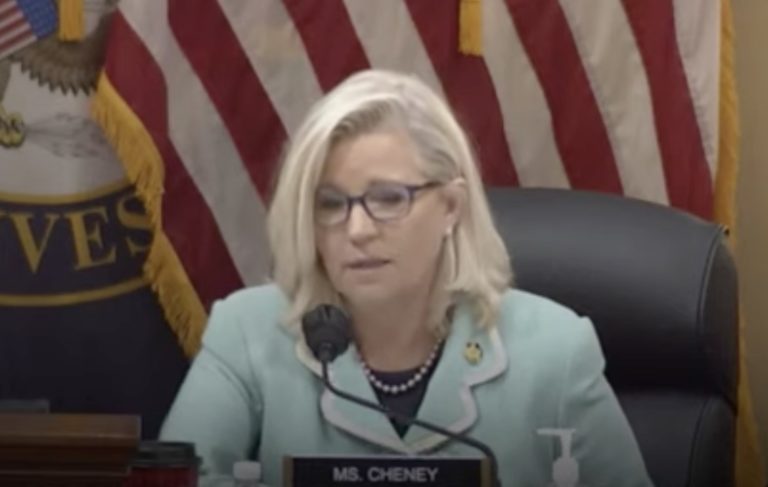
Former Wyoming GOP Rep. Liz Cheney announced her endorsement of Democratic presidential candidate Kamala Harris. She made the endorsement at Duke University in North Carolina.
It may not be an endorsement the Democrats want. For years, they have called the Cheneys a family of war-mongering fascists. Now, she is on their side.
WATCH: Just as Liz Cheney announced her endorsement of Kamala Harris, a video has resurfaced of her SLAMMING Kamala, calling her a radical
"Her voting record is to the left of Bernie Sanders… It's very clear, she [Kamala] is a radical liberal" pic.twitter.com/fIQFVkyKsS
Cheney co-chaired the House investigation into the Jan. 6, 2021 intrusion into the U.S. Capitol. She is a Trump hater who was eliminated from her state’s ballot during the 2022 primary.
“I don’t believe that we have the luxury of writing in candidates’ names, particularly in swing states,” Cheney said. “As a conservative, as someone who believes in and cares about the Constitution, I have thought deeply about this. Because of the danger that Donald Trump poses, not only am I not voting for Donald Trump, but I will be voting for Kamala Harris.”
Cheney, like Sen. Lisa Murkowski of Alaska, now routinely supports Democrats. She campaigned for Rep. Elissa Slotkin, a Democrat, like Murkowski supported Rep. Mary Peltola in 2022.
Cheney also endorsed Ohio Democrat Rep. Tim Ryan, who ran against Republican J.D. Vance for the open seat for Senate left by retiring Republican Sen. Rob Portman. Cheney also endorsed Virginia Democrat Rep. Abigail Spanberger.
Reputation associated with his military record already shattered, Minnesota Gov. Tim Walz now faces a reckoning tied to a signature education accomplishment – feeding schoolchildren – from a congressional committee chaired by a North Carolina congresswoman.
Called the “largest COVID-19 fraud scheme in the nation,” U.S. Rep. Virginia Foxx, R-N.C., on Wednesday sent a letter and subpoena to Walz and his state administration associated with the federal child nutrition programs and Feeding Our Future, and to the Biden administration’s U.S. Department of Agriculture and its Office of Inspector General.
Walz is Vice President Kamala Harris’s running mate on the Democratic ticket.
More than 70 individuals were charged in 2022 by a United States attorney for “roles in defrauding the USDA of $250 million in taxpayer funds – money intended to feed hungry children,” a release from the Committee on Education & The Workforce in the U.S. House of Representatives says. Five have been convicted, dozens await trial, with charges inclusive of but not limited to bribery, wire fraud, conspiracy and money laundering.
“As the chief executive and the highest-ranking official in the state of Minnesota, you are responsible for the MDE and its administration of FCNPs,” the letter from Foxx reads. “Statements in the press by you and your representatives indicate that you and other executive officers were involved, or had knowledge of, MDE’s administration of the FCNP and responsibilities and actions regarding the massive fraud.”
On the official website for the office of Minnesota governor, Walz touts an accomplishment in providing free breakfast and lunch at school for the state’s students. The program names involved in the charges are not included.
Walz has been a lightning rod of criticism for the Harris campaign since she picked him Aug. 6. He campaigned for years for Congress and governor falsely representing his National Guard rank and place of service, even wrongly labeling a challenge coin; his record for actions during the COVID-19 era have drawn condemnation; and his handling of riots following the death of George Floyd drew criticism even from himself.
Foxx says letters dated Nov. 14, 2023, and June 14 requested information that shows Walz’ actions, and of other executive officers “were insufficient to address the massive fraud.”
The letter says to Walz, “When you were asked about your decision of not holding agencies accountable and if MDE employees would be disciplined, you replied, ‘This wasn’t malfeasance.’ You also stated, ‘There’s not a single state employee that was implicated in doing anything that was illegal.’”
Foxx said her committee has been “unable to obtain substantive responsive materials in the many voluntary requests made in this matter.”
In the letter to Minnesota Commissioner of Education Willie Jett, Foxx wrote, “On June 25, 2024, and August 9, 2024, the committee received two additional productions of documents. Despite these productions, the documents and information provided to the committee do not explain how your agency and the USDA failed to identify what has been described as the largest pandemic fraud in the nation. The MDE’s production of information has been neither timely nor fully responsive. Accordingly, the committee is invoking compulsory process.”
The USDA funds the Child and Adult Care Food Program and the Summer Food Service Program under the state agency-administered Federal Child Nutrition Program. States set up contracts, and then request reimbursement.
The state of Minnesota – meaning its Education Department – is the administrator in the process, including for funds and meal sites. Feeding Our Future is the nonprofit approved by the Education Department.
The charges tied to the quarter-billion dollars relate to money spent on luxury vehicles, real estate and “other unlawful purchases,” a release says.
Alaska Attorney General Treg Taylor has joined an amicus petition before the U.S. Supreme Court to overturn a case that threatens the energy industry of states by how National Environmental Policy Act was applied.
“The case is as much about federalism and State sovereignty as it is about environmental law,” the brief states.
The National Environmental Policy Act requires federal agencies to assess the environmental effects of proposed actions and to allow public input.
In the car at hand, a proposed railroad in Utah would transport crude oil to the interstate network. The Surface Transportation Board authorized the construction of the rail. But the U.S. District Court in D.C. vacated it, citing the need to consider potential downstream environmental effects of the line, some 1,536 miles away, including in states with already established and highly regulated oil industries such as Louisiana and Texas.
“There is an absurdity in a federal judge overturning a federal transportation agency’s decision to authorize a short rail line in Utah because the agency did not consider the environmental effects of crude oil production in Louisiana and Texas. This is NEPA run amok. Under this way of thinking, the purview of an agency would be unending,” said Alaska Attorney General Treg Taylor.“That barrel of hypothetical Utah oil already goes through an assembly line of State and federal regulations. Weaponizing NEPA in this way harms any State that depends on the energy industry for its economy, which strikes a nerve in Alaska. That’s why we joined these states urging the Supreme Court to reverse the judge’s decision.”
Twenty-two other states with Alaska joined the friend of the court brief, led by Louisiana, including Alabama, Arkansas, Florida, Georgia, Idaho, Indiana, Iowa, Kentucky, Mississippi, Missouri, Montana, Nebraska, North Dakota, Ohio, Oklahoma, South Carolina, South Dakota, Tennessee, Texas, Virginia, West Virginia, and Wyoming in Louisiana’s friend of the court.
The brief argues that Congress did not intend NEPA to be so irrationally redundant, “there is zero reason to believe that Congress intended NEPA to be a super environmental law that tasks each federal agency with divining the propriety and effects of every hypothetical activity that could flow from its discrete regulatory action—no matter that the activity may be years and thousands of miles away; or that the agency has no regulatory authority over the activity; or that other actually knowledgeable federal and State agencies will regulate that activity if and when it occurs.”