Donald Trump was the intended target, it appears, of a man with a gun on the grounds of the Trump International Golf Course in West Palm Beach on Sunday. Trump was on the fifth hole of the course at the time and was unharmed. Palm Beach County Sheriff’s Office detained a “person of interest,” and has said the intent was unknown.
The man has now been identified as Ryan Wesley Routh. FBI is considering this an assassination attempt.
Routh has a history of being vocally anti-Trump.
Screenshot
“There were gunshots in my vicinity, but before rumors begin spiraling out of control, I wanted you to hear this first: I AM SAFE AND WELL! Nothing will slow me down. I will NEVER SURRENDER! I will always love you for supporting me. Unity. Peace. Make America Great Again,” Trump said in a statement from his campaign.
An AK-47 was discovered in the bushes, according to local law enforcement.
“The Secret Service, in conjunction with the Palm Beach County Sheriff’s Office, is investigating a protective incident involving former President Donald Trump that occurred shortly before 2 p.m. The former president is safe,” U.S. Secret Service Spokesperson Anthony Gugliemi said.
Teri Barbera, a spokeswoman for the Palm Beach County Sheriff’s Office, confirmed that a shooting took place on the grounds of the golf course and said person of interest has been detained.
In July, an attempted assassination of Trump took place during a campaign stop in Pennsylvania. That man was shot by police after he fired several bullets, one that killed a member of the crowd, and one that grazed Trump’s ear.
Florida Gov. Ron DeSantis said, “The State of Florida will be conducting its own investigation regarding the attempted assassination at Trump International Golf Club. The people deserve the truth about the would be assassin and how he was able to get within 500 yards of the former president and current GOP nominee.”
This story will be updatedas details can be confirmed.
The Alaska Republican Party, during its quarterly meeting that took place in Fairbanks on Saturday, passed a resolution that recommends Alaskans vote “Yes” on Ballot Measure 2, which would restore the voting procedures that were in place before voters approved ranked-choice voting methods in 2020.
Alaska has been part of a push by Outside dark money coming from groups like UniteUs.org and FairVote.org to get ranked-choice voting in place in every state. These groups understand the Republican voters, many of whom are not inclined to rank candidates. Ranked-choice voting favors the more malleable Democrat voters who will do so.
The ballot measure that Alaskans will be voting on in November came about through a citizens’ petition drive that was able to get over 36,000 signatures from Alaska voters who want the ranked-choice voting system to go away.
A “yes” vote supports eliminating the top-four primaries and ranked-choice voting general elections in Alaska, which were adopted in 2020, and establishing a party primary system.
A “no” vote opposes eliminating the top-four primaries and ranked-choice voting general elections in Alaska, which were adopted in 2020.
With the open primary established by voters in a dark-money initiative 2020, voters who are registered with parties no longer have the ability to choose who their party’s candidate is to advance to the general election.
This year, only the second time ranked-choice voting has been used in Alaska, the Democrats have a felon on the general election ballot for the congressional seat. That felon may handcuff the party’s ability to get Mary Peltola reelected.
In fact, while the Alaska Democratic Party has thrown its full support behind ranked-choice voting, it also now says that it is being harmed by the system.
Democrats sued the Division of Elections because the division director correctly placed felon Eric Hafner on the final-four November ballot for Congress. The November ballot will allow voters to rank Hafner along with the others — Peltola, Nick Begich, and John W. Howe.
The Democrats lost their case in Superior Court, so appealed to the Alaska Supreme Court, where they were crushed by the court’s decision to uphold the Division of Elections’ decision.
The Alaska Republican Party is the political home for 143,000 registered voters in Alaska who, before 2022, were able to choose someone who best represented their values in a primary system that allowed Republicans or any voter not signed up with another political party to vote the Republican primary ballot.
Since the Democrats successfully destroyed the party primary and made it a jungle or “garbage” primary, August’s primary voter turnout was the third-lowest in 50 years. Democrat promoters of ranked-choice voting are minimizing that turnout by saying it was a boring election.
But the “boring election” for Democrats turned into an electrifying election quickly, as the party of slavery defenders fought and lost in court to have the results of the election overturned by judges, in order to favor Peltola.
The Democrat Party leaders want to have their cake and eat it too, as demonstrated by their willingness to game the election system, not just this year through costly court appeals, but even in 2022, when ranked-choice voting first started.
Al Gross, who had been the party’s nominee for U.S. Senate in 2020 under the regular voting system, filed as an independent candidate for Congress in 2022, and he had the support of the Democrats.
But then Gross finished ahead of Mary Peltola in the special election, and so Democrats forced him out so they could support Peltola, who is a registered Democrat. He was third and she was fourth, but it was Al Gross who was strong-armed out by the party, because even though the party had supported Gross, it had an actual registered Democrat in Peltola.
The Democrat Party was playing games with ranked-choice voting in 2022 by forcing Gross to drop, and then two years later, the Democrats sued over the results of the primary because they once again want to game the election system.
The Alaska Republican Party has said the ranked-choice voting system in Alaska makes the state the laughingstock of the nation because the system allows Democrats to do what they do repeatedly: Strong-arm candidates and file lawsuits if they don’t get their way.
A Juneau man made his first appearance Thursday in a Juneau court, after his arrest on a criminal charge related to alleged production of child pornography.
William Steadman, 34, was arrested Sept. 6 after he allegedly produced child sexual abuse materials depicting a minor who was known to him. Court documents indicate that he allegedly spent time with other children in Juneau and there may be other victims.
Steadman is charged with sexual exploitation of a child. If convicted, he faces a mandatory minimum of 25 years in prison. A federal district court judge will determine any sentence after considering the U.S. Sentencing Guidelines and other statutory factors.
Steadman has other convictions and court cases, including for failing to register as a sex offender.He was convicted in 2018 for possession of child pornography. He is now in custody at Lemon Creek Correctional Center in Juneau.
The U.S. Secret Service is investigating the case.If anyone has information concerning Steadman’s alleged actions or may have encountered someone in person or online using the name William Steadman, contact [email protected].
The Alaska Republican Party on Saturday endorsed Jared Goecker for Senate, to represent Eagle River. This was a big statement, as there was no endorsement made for Republican Sen. Kelly Merrick, the incumbent. Goecker was also endorsed previously by District 23 and District 24 Republicans. He has the endorsement of Gov. Mike Dunleavy as well.
Merrick, although she is a Republican, is considered in poor standing with Republicans because she has helped put Democrats in charge in the Senate. She has won in the past with the help of Democrats. She does have the endorsement of half of her district — House District 24, she told Must Read Alaska, but it’s going to be a challenge for her to win, since Democrat Lee Hammermeister is in the race to take votes from Merrick’s liberal voters.
Rep. Jamie Allard was also endorsed for House District 23, by the entire party and has the endorsement of her district and five Republican women’s clubs.
Also endorsed on Saturday was Nick Begich for Congress. Nick Begich also hails from Eagle River.
Nick Begich, who was the only Republican endorsed for Congress by the Alaska Republican Party two years ago, has done it again. He has the full — and the only — endorsement of the Alaska GOP, which voted today in Fairbanks, where he received a long standing ovation from the members attending the quarterly meeting.
Begich is polling even with Democrat Mary Peltola, who is the incumbent. But Peltola has massive fundraising advantage and the Democrats are now turning their venom spigot on full force on Begich, whom they see as a major threat to Peltola’s incumbency.
Begich filed for office in June of 2023. Over the past year, Begich had already earned nearly 40% of the endorsements from individual Republican districts in the state, and has the endorsements of House Speaker Mike Johnson, Rep. Byron Donalds, Rep. Tom Emmer, Sen. Mike Lee, and numerous other conservatives at the national level, such as business entrepreneur Vivek Ramaswamy. The National Republican Congressional Committee and the Congressional Leadership Fund support him, along with Americans for Prosperity Action.
Begich is the former finance chairman of the Alaska Republican Party and has been involved with the party since high school. The longtime Alaskan has been in private business his entire career and has been elected to the board of Matanuksa Electric Association. In 2022, Begich came in third for Congress after Peltola and Sarah Palin.
The party as a whole had held off endorsing anyone until after the primary; Nancy Dahlstrom and another Republican dropped out of contention, which helped bring the party together behind Begich as he faced the ranked-choice general election ballot that has two Democrats and an Alaskan Independence Party candidate on it.
The Alaska Democratic Party is red-faced over having lost in Alaska Superior Court and then at the Alaska Supreme Court.
The Democrats are anguished there is a second Democrat running for Congress due to a situation created by the open primary system they defend.
It’s the “play stupid games and win stupid prizes” scenario they made, and they are now embarrassed and angry at the result. It’s someone else’s fault, they say. It’s Nick Begich’s fault.
Alaska’s hardline Democrats will now be able to choose between Democrat Rep. Mary Peltola and Democrat Eric Hafner, who is in federal prison. Voters may also choose Republican Nick Begich or Alaskan Independence Party John Waye Howe. All four will be on the congressional section of the Nov. 5 ballot.
The Democrats sued to get Hafner off the ballot. As an Antifa-style Democrat, he presents a real threat to Peltola, even though he is serving time in prison. Hafner pulls votes from Peltola’s left, and in ranked-choice voting, some Democrats may pick Hafner first to send a message.
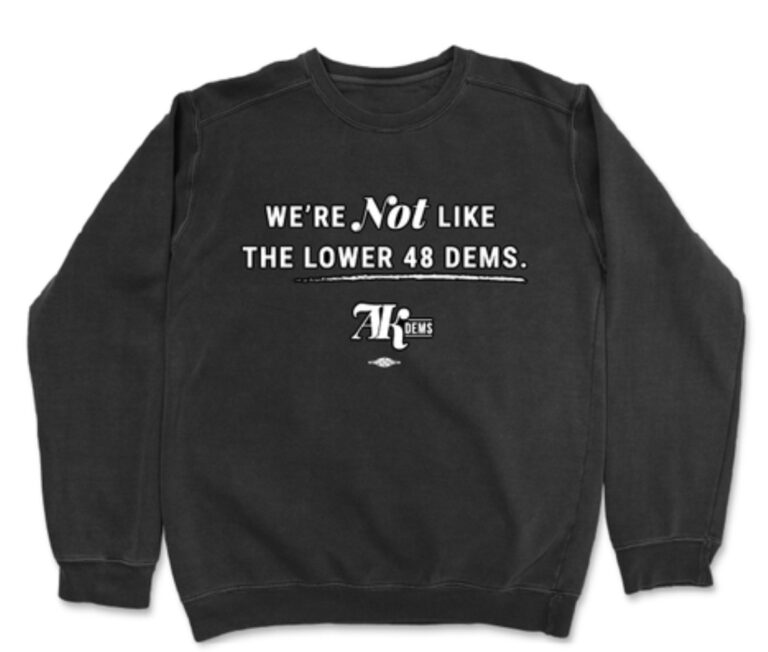
Alaska Democrats say on their t-shirts and hoodies that they’re “NOT like Lower 48 Dems.” Indeed, Alaska Democrats are more in the Sen. Bernie Sanders camp, with a socialistic flair. In 2016, they voted for Bernie Sanders for president over Hillary Clinton. They tend to go further to the left than most Democrats in America.
Hafner may appeal to the Alaska Democrat base, as he is more of a Bernie Sanders type. What’s more, Hafner has a platform that calls for Native sovereignty and return of all land to indigenous people; it’s a platform that helped him do well in Hawaii, when he ran for office there. Peltola, on the other hand, is so timid that she won’t even endorse Kamala Harris for president, and she doesn’t show up for work.
The Democratic Party say this is all Nick Begich’s doing that their Antifa Democrat is on the ballot. In a news press release, the Democrats call Begich a long shot who has a “snowball’s chance in hell of winning.”
Then, the Democrats accuse Begich of using dirty tricks, as if he was the one who had signed up Hafner. In fact, Hafner has run in other states — it’s kind of a hobby of his to run for Congress. He ran in Oregon as a Democrat in 2018. In Hawaii, he got 44% of the vote in the primary in 2016.
But evidently Begich is not such a long shot, because the Democrats are spilling a lot of ink being mad at him. They are not attacking their second Democrat candidate who filed for office against the incumbent. It’s all Nick Begich’s fault, they say in their news release that foreshadows what their message is going to be from here until Nov. 5.
“The Alaska Democratic Party is disappointed with the Alaska Supreme Court ruling that a convicted felon who is incarcerated in New York until 2036 will remain on the ballot as a candidate for Congress despite the fact that he cannot possibly be an inhabitant of Alaska when elected or serve out a term in Washington D.C.,” the Democrats wrote, before unleashing their full fury on “longshot” Nick Begich by calling him a “loser.”
“Eric Hafner. a non-Alaskan in prison in New York for making bomb threats against elected officials, was certified by the Division of Elections on September 2nd after finishing sixth in the August primary with less than 0.5% of the votes cast. The certification came on the heels of fifth-place finisher Republican Matthew Salisbury withdrawing from the race at the last possible moment after an orchestrated effort by two—time loser Republican candidate Nick Begich.”
Polling shows Peltola and Nick Begich are now tied, 45-45. The Democrats have their own polling that shows them the same thing, which is why they are turning their venom on him.
“Begich came in a distant second to U.S. Rep. Mary Peltola in the August primary and clearly knows he has a snowball’s chance in hell of winning.” said Executive Director Lindsay Kavanaugh, expressing the party’s deepening anxiety. “His dirty tactics don’t change the fact he’s a longshot.”
In fact, it was the Alaska Republican Party, not Nick Begich, that filed a brief to intervene in the case as an interested party. But it was the State of Alaska’s Division of Elections that was the defendant.
“Unsurprisingly, the Alaska Republican Party publicly supports the decision that a convicted felon who is running his campaign from a prison cell in New York should appear on Alaska’s ballot as a candidate for federal office.” said Mike Wenstrup, chairman of the party that has 73,000 registered voters in Alaska. “This ruling sets a dangerous precedent and is embarrassing for our state.”
Embarrassing to the state? The open primary and ranked-choice general election is proving to be that. But it’s mostly embarrassing for the Democrats, whose logic is that all that political parties need to do is have opponents arrested, and get them convicted by partisan juries to disqualify them from running for office.
It’s a playbook they have already used to injure presidential candidate Donald Trump. The fact that a Manhattan jury convicted Trump for 34 felonies for improper business documentation did not prevent Trump from continuing on as a candidate for president. The Constitution does not prohibit felons from running for office.
But the Democrats didn’t consider Hafner a real threat in June. In fact, the Democrats, through Democrat operative Jim Lottsfeldt, were spending tens of thousands of dollars on ads to get Republican Gerald Heikes more votes in the primary so he would appear on the November ballot and take votes from Nick Begich. They ignored the peril that Hafner posed to them if he moved into contention, so they never challenged his candidacy until the primary election was certified on Sept. 1.
The Alaska Supreme Court is known as a liberal body, due to the way judges are picked in the 49th state; the Alaska Bar Association has an oversized role in the process, and the lawyers who make up the bar are largely Democrat.
But even the Alaska Supreme Court did not think the Democrats had a case in their efforts to disenfranchise Hafner.
Democrats are in the “finding out” part of the “F— around and find out” scenario they created.
Notably, the Alaska Democratic Party did not publish its ‘loser, longshot, dirty tactics” statement on its own website, but rather just on social media. On the party’s own website, it fully supports the open primary system that put their own felon on the ballot.
“Ranked Choice Voting is easier than you think (and the Republicans would like you to believe),” the Democrats state on their website.
At the first and possibly last debate between former President Donald Trump and Vice President Kamala Harris, hosted by ABC on Sept. 10, moderators started with a question for Harris that was short and to the point:
When it comes to the economy, do you believe Americans are better off than they were four years ago?
Here is how Harris pivoted and did not answer the question from moderator David Muir:
“So, I was raised as a middle-class kid. And I am actually the only person on this stage who has a plan that is about lifting up the middle class and working people of America. I believe in the ambition, the aspirations, the dreams of the American people. And that is why I imagine and have actually a plan to build what I call an opportunity economy. Because here’s the thing. We know that we have a shortage of homes and housing, and the cost of housing is too expensive for far too many people. We know that young families need support to raise their children. And I intend on extending a tax cut for those families of $6,000, which is the largest child tax credit that we have given in a long time. So that those young families can afford to buy a crib, buy a car seat, buy clothes for their children. My passion, one of them, is small businesses. I was actually — my mother raised my sister and me but there was a woman who helped raise us. We call her our second mother. She was a small business owner. I love our small businesses. My plan is to give a $50,000 tax deduction to start-up small businesses, knowing they are part of the backbone of America’s economy. My opponent, on the other hand, his plan is to do what he has done before, which is to provide a tax cut for billionaires and big corporations, which will result in $5 trillion to America’s deficit. My opponent has a plan that I call the Trump sales tax, which would be a 20% tax on everyday goods that you rely on to get through the month. Economists have said that Trump’s sales tax would actually result for middle-class families in about $4,000 more a year because of his policies and his ideas about what should be the backs of middle-class people paying for tax cuts for billionaires.”
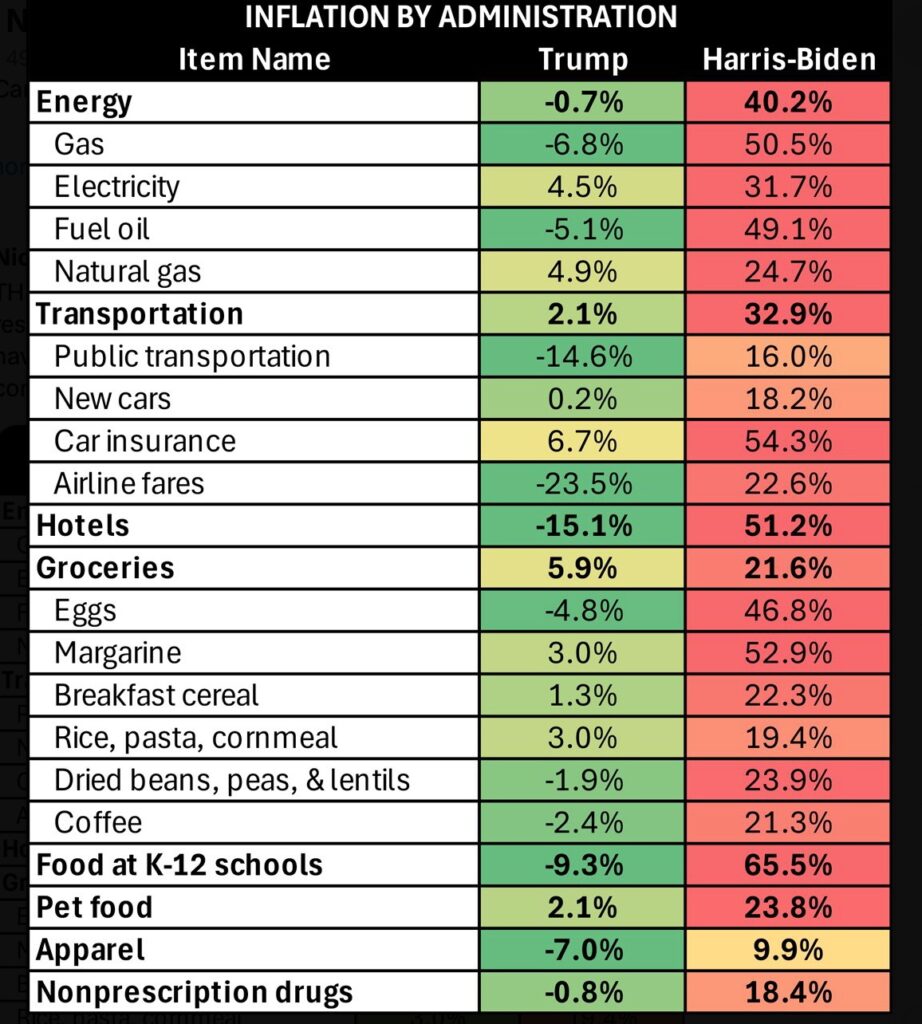
The facts:
Do you think most Americans are better off now than four years ago? Add your comments below.
Alaska Sen. Lisa Murkowski was impressed with Kamala Harris’ debate performance against Donald Trump earlier this week, according to a new interview with her in the publication Semafor. Murkowski is warming up to Vice President Harris, it appears, saying Harris has “leadership presence,” but stopping short of endorsing her.
Murkowski told the reporter she “saw a side of Kamala Harris that I’ve not seen before, which was a firm and clear kind of leadership presence. Maybe that was just practiced and rehearsed for one time only. But I think it came across … that was news to me. I’d never seen her in gatherings where she’s kind of talking leader-to-leader.”
It may be shocking for Alaskans who saw the debate between Trump and Harris, because Harris did not answer the questions but instead pivoted to her pre-planned answers. But for Murkowski, it was a good performance.
In fact, Murkowski may have a memory block. She has, indeed, been with Harris in leadership situations. She attended a luncheon of women leaders in Washington, D.C. in 2021, hosted by Vice President Harris, and the vice president seated Murkowski right next to her.
But newly discovered leadership presence and stunning debate skills aside, “I’m still really struggling with the policy perspectives that she brings to the table that for a state like mine are really hard. Really, really hard. So, I’m still ‘none of the above,’” Murkowski told Semafor’s reporter. Murkowski was one of just seven Republicans who voted in favor of convicting Trump during his second impeachment trial; her distaste for Trump is poorly disguised and he has no warmth toward her, either.
Will Murkowski throw her vote away and write someone’s name in? Why won’t she just tell Alaskans who she thinks is best for the state in terms of policy? She says she is worried about Harris’ policies, so what does she think about Trump’s policies? Or is this simply fear that if Trump is elected, she will be sidelined?
Murkowski is joined by Sen. Mitt Romney of Utah, Sen. Susan Collins of Maine, and Sen. Todd Young of Indiana, none of whom are supporting Trump, but all of whom are in the “none of the above” category.
Sen. Murkowski is also joined by Alaska Rep. Mary Peltola, who is refusing to say if she will vote for Harris, but it’s clear from her words she will not be voting for Trump.
“I’m not voting for Trump & I’m not endorsing anyone else either. The media won’t allow us to engage in nuanced conversation because it doesn’t sell clicks. I won’t vote for a candidate who’s not pro-choice. I can’t ask Alaskans to vote for a candidate who’s not pro-energy,” Peltola said on X/Twitter in July.
As she is in the heat of her reelection bid and is considered vulnerable, she is not saying who she supports. Her statements in the past have been that she wants to stay away from controversy. She often skips votes in the House when she thinks they are too controversial. Or she is known to just vote “present,” as she did on the Alaska’s Right to Produce Act, after telling her Democrat colleagues to oppose it.
Rather than be on record voting for Harris at the National Democratic Convention in August, Peltola just skipped going, even though she was a delegate with voting responsibilities.
This refusal to go public on a matter of the greatest consequence for Alaska is unheard of, and that makes it historic for Alaska: Two of the three sitting representatives in Washington, D.C. are simply not going to tell Alaskans who they are going to vote for in the presidential race.
Alaska Sen. Dan Sullivan has already endorsed Trump. In February he said that the policies of the Trump Administration were vastly better for Alaska than the over 65 executive orders Biden has signed that have targeted Alaska’s economy. Sullivan served for two years parallel to the Obama Administration, four years while Trump was president, and through Biden’s three and a half years, and he’s seen the difference.
Sullivan said in Ketchikan that “the two leading Presidential candidates both have detailed records on Alaska: Biden gets a “D-“ and Trump gets a “strong A.” In fact, working with me and our Republican Senate majority, the Trump Administration’s record to advance the interests of Alaskans is unmatched: ANWR, access to NPR-A, the King Cove Road, the Ambler Road, allotments for our heroic Alaska Native Vietnam Veterans, the Tongass Roadless rule exemption, reestablishing our state’s right to manage fish and game, Operation Lady Justice to address the missing and murdered indigenous women crisis, historic investments in public safety for rural Alaska villages, defending our Second Amendment rights, appointing conservative judges to the U.S. 9th Circuit Court of Appeals, and putting prominent Alaskans in Senate confirmed assistant secretary positions at the Department of the Interior.
“From Day 1, President Biden has focused on reversing this historic record of achievement to the significant detriment of Alaskans. If re-elected, President Biden will continue his aggressive, illegal push to turn Alaska into a giant national park. For all these reasons, I am again supporting former President Trump for President and working with my colleagues to regain a Republican majority in the U.S. Senate,” Sullivan said.
“Alaskans deserve to know who their elected leaders support,” said Randy Ruedrich, former chairman of the Alaska Republican Party. “It’s one of the things you do in representing us. If you’re afraid to represent us, maybe you should not be there.”
One politico at a Republican fundraiser in Anchorage on Friday night said, “We all know Mary and Lisa are both voting for Harris but they’re chickening out and won’t admit it publicly. This is just showing weakness and fear.”
Democrat Rep. Jamie Raskin of Maryland, a mentor and ally of Rep. Mary Peltola of Alaska, is a sponsor of legislation to force ranked-choice voting onto U.S. congressional elections for both the House and Senate — across all the states.
Raskin and Democrat Rep. Don Beyer of Virginia reintroduced their Ranked Choice Voting Act. Sen. Peter Welch, a Vermont Democrat, introduced mirror legislation in the Senate.
Rep. Peltola got to Congress due to the curiosities and quirks of ranked-choice voting in Alaska’s 2022 election, brought on by a dark-money ballot initiative that passed in 2020 in Alaska.
This year, voters in Alaska are being given the opportunity to unwind that legislation, which has been shown to be damaging to the state, particularly to the confidence voters have in election integrity. The system is so bad in Alaska that it even put an out-of-state Democrat felon on the ballot, which resulted in the Alaska Democrats suing over the system that they created with the intention of fooling voters.
Peltola is a close ally of Rep. Raskin. She joined Raskin’s “Democracy Summer” to train young people to be Democrat revolutionaries prepared to do battle should Donald Trump become president.
Raskin is on record saying he would stop Trump from becoming president by blocking his confirmation, and he’s been building the army of young Democrats to help him create “civil war conditions” if Trump wins in November.
The Raskin ranked-choice voting requirement would force ranked choice voting on all congressional primary and general elections starting in 2028. His legislation is being pushed by FairVote, the same dark-money group that convinced Alaskans to adopt the system.
With RCV, voters rank candidates, rather than pick one or another. If a candidate receives more than half of the first choices, that candidate wins. If not, the candidate with the fewest votes is eliminated, and voters who picked that candidate as ‘number 1’ have their votes redistributed and counted for their next favored choice. This process continues until a candidate wins with more than half the votes. It encourages people to soften their moral and political convictions and accept a less-than-ideal candidate because they “voted” for that people at some point in the ranking method.
In this method, people who rank may have their ballots counted more than once, while people who do not rank may have their ballots “exhausted,” punishing them for not ranking after the first round of counting if they did not choose the winning candidate.
Rep. Peltola supports ranked-choice voting. It was a major factor in her win as a Democrat in a conservative state.
Republican Nick Begich, who is challenging Peltola for her seat in Congress, opposes the scheme that was developed by liberals to divide and conquer the Republican-leaning slate of candidates.
“Ranked choice voting focuses American elections and campaigns on coalition-building,” said Rep. Raskin. “Our legislation incentivizes candidates to reach a broader range of the voting public, making our electoral process more democratic, more positive, more efficient and more representative—and our Congress too.”
In fact, Peltola has voted 80% of the time with Rep. Nancy Pelosi, and when Peltola finds voting uncomfortable due to her conservative district, she just doesn’t show up for work or votes “present.” She has not been bipartisan in the way people remember Congressman Don Young being bipartisan.
But Sen. Welch says ranked-choice voting is more “equitable.”
“This pro-democracy bill will make our elections more equitable, more civil, and more representative,” Welch said, promoting the mythology around ranked-choice voting, not mentioning that Alaska Democrats have sued because the system they created has now worked against them.
“Ranked choice voting is the fastest-growing election reform in the nation because it works,” said Meredith Sumpter, President and CEO of FairVote, the group that is one of the leading funders of ranked-choice voting initiatives like Alaska’s.
She, Welch, and Raskin don’t talk about the tens of thousands of Alaskans signed petitions supporting a repeal.
Sumpter’s FairVote group doesn’t just want ranked-choice voting in all states. It also promotes abolishing the Electoral College, a move that would favor states with more population and more socialist governments and penalize states like Alaska, where there are fewer people but who are more libertarian in political leanings. Funding for FairVote comes from various George Soros-allied foundations, according to InfluenceWatch.org:
Some of these groups, such as Laura and John Arnold Foundation, were also top funders for the ballot initiative that changed Alaska’s voting to the open primary and ranked-choice general election that has been so problematic. During the past week, Democrats in Alaska have been suing to force a Democrat off of the November ballot.
Although Raskin and Peltola are in the minority in the House and this legislation is not likely to advance if the Republicans maintain control of the House of Representatives, it comes at a time when Alaskans are having serious doubts about open primaries and ranked-choice general elections.
Their doubts are increased because this November, a Democrat who is a felon serving time in an out-of-state federal penitentiary, will appear on the ranked-choice ballot for Alaska’s congressional seat — all because of the open primary system that doesn’t allow parties to vet their candidates.