The FBI Anchorage Field Office seeks information regarding the identity and whereabouts of a man with alleged involvement in three separate bank robberies that took place in Anchorage one the past three weeks: In each robbery, the man presented a note demanding money from a bank employee and stated he had a wea[on. The robberies occurred on Sept. 23, Oct. 7, and Oct. 16.
The individual is believed to have robbed the following banks:
On Sept. 23 at approximately 11:45 a.m., the subject allegedly robbed the Credit Union 1, Midtown Branch, located at 3525 Eureka Street in Anchorage. After the robbery, the subject fled the area on a dark-colored bicycle.
On Oct. 7 at approximately 10:15 a.m., the subject allegedly robbed the Global Credit Union located at 8475 Hartzell Road in Anchorage. After the robbery, the subject entered a stolen vehicle and drove away.
On Oct. 16, at approximately 12:30 p.m., the subject allegedly robbed the Global Credit Union located at 2300 Abbott Road in Anchorage. After the robbery, he departed the area on foot and headed north toward Abbott Road.
The man approximately 5’5” tall, with black hair and brown eyes, weighing approximately 155 lbs.
Anyone with information concerning the identity and whereabouts of this individual should contact the FBI Anchorage Field Office at 907-276-4441 or submit a tip online at tips.fbi.gov.
The voters in the conservative Kenai Peninsula will have a clear choice for the state senate, and it is Ben Carpenter, currently a 2-term representative.
Voters in this district know me well, and they also know the role I played in giving a radio platform to the current holder of this senate seat, Jesse Bjorkman.
Bjorkman came into Nikiski High School and Alaska just as I was in the gradual stage of retirement, stretched out between 2012 to 2015. I was impressed with his attitude, conservative politics and his religious faith. After I retired, I invited him to speak on an afternoon radio show, regarding his excellent outdoor learning class, teaching kids how to properly gut and salvage a moose. He had the right disposition for limited government, as it appeared at the time, and I was green-lighted by the station management to ask him on as a permanent side-kick and very capable substitute on my days off.
Ben Carpenter was a student of mine in 1992-93, years into the “Great Books Method” I was using to teach students American government. Instead of using a textbook, long about 1986 I decided to use the actual documents of the Declaration and state and federal constitutions, go through them word-for-word, and explain it all to the students, the political philosophies behind limited government, and the context of American history. It also included the “original intent” and “strict construction” interpretation, whose finger prints are all over the document.
Ben was the star student in a class that was taught at the collegiate level: we had all of Nikiski’s seniors in one class, and the daily 55 minute lectures were given in Nikiski’s auditorium. The class was lively, with two very intelligent yet unapologetic Marxist students, who complimented me on allowing them to have their say, even as I refuted Marxist dogma. Ben was unquestionably impatient with them, and he got his licks in, too. It rated as one of the best classes in a line-up of 50 years of teaching. Upon graduation, I wrote a letter of recommendation for Ben to go into OCS training.
Bjorkman began to puzzle and worry me when certain issues came across our desk in the Monday-Friday two-hour radio program:
He made every excuse for the late Rep. Gary Knopp’s holdout and refusal to caucus with his own Republican Party. The essence of Bjorkman’s excuses for Knopp was the need to grease the skids for his constituents, over political principles. Bjorkman has proven that he was as good as his word, when he caucused with the Democrats.
He looked upon the Permanent Fund dividend as rightfully belonging to the state, not the citizens. He brought in a former Democratic lawmaker, who denied that part of the reasoning for the public support of the PFD, was that it was viewed as a compensation for the federal government’s refusal to grant Alaska being on “equal footing” with the lower 48 states. This continues to be a major complaint since statehood.
He vigorously defended ranked-choice voting, kept saying how simple it was to understand, and wrote a column in the local newspaper describing its alleged virtues. He invited Scott Kendall on the program, but nothing Kendall said clarified RCV in my mind, but certainly did for Jesse.
Bjorkman has now, thankfully, retracted his love for ranked-choice voting, initiated by his own constituents calling him out. However, all this bespeaks reams about his naïve judgment and trusting nature, and how he will glom onto controversial liberal opinions if they match his own.
In our school district, teachers have long been forced to contribute to the NEA, which I left way back in 1984 because of its radical pro-homosexual, pro-abortion policies. The NEA now includes every bizarre social issue imaginable and refuses to defend women’s sports.
I always have given Bjorkman’s NEA membership a pass, for if you have to pay the dues, why not get inside the NEA and change it? He was warned by a fellow teacher who once tried the same thing, that it would not work, but youthful inexperience rarely takes advice.
I never saw Bjorkman fighting to change NEA’s social-issues policies, either as a teacher within the NEA who made numerous trips to Juneau, or as a borough assemblyman or state legislator. If he did try, it obviously went nowhere. The NEA leads the charge in the cultural madhouse that America has become. Jesse Bjorkman is their man.
I maintain that it is immoral for a Christian, pro-life and pro-gun teacher to belong to the NEA. Bjorkman needs to be asked if he used the “Hudson packet” protocols that conscientious objectors were required to fill out annually, in order to keep their dues out of NEA political activism. It was a tiresome annual chore for me personally, and I grew disgusted with it.
It was Covid that finally drove Bjorkman and I apart. He was not influenced by the numerous programs where I got alternative opinions on the air, warning about the vax’s dangers and the lies that were being spread by Big Pharma regarding ivermectin and hydroxychloroquine. Naturally, my efforts were a mere pop-gun voice against the mainstream media carpet bombings. Then, Jesse publicly announced that he took the vaccines in order to “Get Covid behind us.”
As a personal decision, that’s OK. But using the platform as an elective officer of the borough shows that he was setting an example.
Then, he even defended masking, even after its absurdities were flushed out.
It appears that the same “trusted” federal and state medical bureaucrats are where Bjorkman has decided to hang his hat and political future on. If their advice is wrong, as it usually is, he can cover himself by saying, “Well, that is what the experts were saying at the time.”
Uh-huh.
Then he suggested, on the air, that Anne Zink ought to sue me for writing a column, calling Zink out when she waxed eloquent over her famous grandfather’s policies. That was the last straw for me.
Her maternal grandfather, Al Bartlett, was a University of Colorado Boulder physics professor and a nationally recognized speaker on exponential growth and humans’ inability to comprehend it — a lesson not lost on Zink as she navigates the COVID-19 pandemic.
“I think about him all the time,” she said, “particularly in this world of trying to understand exponential growth, and trying to keep our state from getting into a place of exponential growth.”
What is “exponential growth”? Simply put, it disdains human progress in food production and medicine, as its disciples believe that it will lead to an eventual global population catastrophe.
Using Anne Zink’s own words were apparently libelous for Bjorkman. I waited two weeks for my temperature to go down, then told him that we were no longer a good fit as co-broadcasters. I knew that simple justice to Bjorkman required that I split the program equitably with him. This we did, until as a candidate for office he was soon to no longer host a program.
What is right with Jesse Bjorkman? He will be a reliable prolife and progun vote, although I have never seen him carry water on the prolife side. Like most “prolife” Republicans, he gave in to the Democratic binding caucus about abortion funding in the budget.
No amount of constitutional explanations, especially on the state level, registered with him. But mind you, he has a lot of company, starting with Gov. Dunleavy and most of the other elected officials on both sides of the aisle.
He also does his homework thoroughly in regards to parsing through the tissues of legislation. However, that does not mean that he discerns its implications properly, as was shown with RCV.
If you want to see this miserable status quo in our beloved state change, Bjorkman will not be the one to fix it. He will take the shopworn path of safety and go with the flow. This was obvious when he caucused with Democrats and fake “independents”. That party has turned into an engine of evil at worst, or utterly bereft of common sense, at best. The left has done its work well: no Republican wants to be “Eastmanized”, suffering endless lawfare from the likes of Scott Kawasaki, who himself cheerfully ignores the ethics laws, while he controls the Ethics Committee.
Ben Carpenter understands constitutional principles. He demonstrated integrity during the losing fight for the con-con. If he cannot implement constitutional principles right away, he will do so when the puzzle fits more perfectly.
Almost every conservative agrees that impeachment of Alaska’s judiciary is long overdue. Tote up the issues: 1) Abortion — which over the years the judiciary has used to overthrow the power of the purse from the legislature and the governor’s line-item veto; 2) The courts green-lighted RCV’s obvious illegality in 2020, which used multiple topics, instead of the required single-issue; 3) Grand juries, where the courts have stolen it from the people; 4) Massive mail-in ballots.
It goes on and on.
In our state, impeachment begins in the Senate. Let’s see what Ben Carpenter can do.
Bob Bird is former chair of the Alaskan Independence Party and the host of a talk show on KSRM radio, Kenai.
The U.S. Supreme Court set the date for Dec. 4 to hear a case from the ACLU and other groups that are challenging a law passed by the Tennessee legislature that bans surgeries and treatments for minors that alter their external sexual characteristics.
Senate Bill 1 was signed into law by Gov. Bill Lee in 2023, but the ACLU The American Civil Liberties Union, Lambda Legal, and a law firm filed a suit to stop the law, claiming it violates the 14th Amendment of the U.S. Constitution.
Whether the 14th Amendment applies to children will be of interest to Americans for multiple other reasons. The amendment says, “No State shall make or enforce any law which shall abridge the privileges or immunities of citizens of the United States; nor shall any State deprive any person of life, liberty, or property, without due process of law; nor deny to any person within its jurisdiction the equal protection of the laws.” But the amendment does not make it clear that children are different. Under the ACLU interpretation, anything goes for kids.
The proposed Tennessee law bans health-care providers from performing gender-affirming surgeries on minors or prescribing hormones or puberty blockers to minors because children cannot make informed consent for such procedures.
The challenge to the law, United States v. Skrmetti, was brought by three sexually confused Tennessee teens. The Biden-Harris Administration took the side of the teens against the state of Tennessee. A federal judge agreed with the challengers, but that was overturned by a federal appeals court. The Biden-Harris Administration then took the case to the Supreme Court, which this past summer agreed to hear the case during this court term.
After casting our ballots, my wife and I always made sure our “I Voted” stickers were on full display as we left the polling station. This was a moment brimming with civic pride, a time we celebrated being Alaskan and American.
That was then. This is now. Now we are early voters. Still filled with the same pride and patriotism, but always early.
Why?
Simply put, races are no longer won on Tuesday. In fact, they are often decided well before election day – by early voters. Time and again we see conservative candidates build healthy leads on election night only to have hopes dashed as the early-voter ballots are counted.
The latest example is the Fairbanks North Star Borough election held earlier this month.
The Borough ballot had six seats in play. Remarkably, final vote counts in five of the six races were split almost dead even 50/50 between two candidates – one liberal, the other conservative. Regrettably, conservatives were on the losing end of three of the five races.
A closer look at all three losses reveals the conservative held a sizeable lead on election night, but ultimately fell short as a result of insufficient votes garnered pre-election. In other words, the deficit accumulated via early-voting was too large to overcome on election day.
Of course, professional rabblerousers would have us believe nefarious activity is the root cause of such adverse outcomes. Their objective is to manufacture doubt and sow distrust in our election systems thereby discouraging Republicans from voting. Let’s not be distracted.
As noted, final margins were extraordinarily close. Five of the six seats were very winnable. But conservatives tend to be traditionalists – we vote on election day. Consequently, we lost three of five races. Electoral success will require a change in our approach. We need to vote early.
So, why is early-voting effective in winning elections? Why is it strategically necessary?
Successful campaigns are obviously a function of voter turnout. For a candidate to win, supporters need to vote. Just commonsense, of course. But life is full of diversions. Sometimes we need to be reminded to cast our ballot. This is where GOTV comes into play.
Get-Out-The-Vote programs are critical to campaign success. They are also spendy. But since early-voters no longer present a drain on scarce campaign resources (time and money), all efforts can be fully concentrated on turning out those supporters who have not yet voted.
In a nutshell, meaningful GOTV efforts cannot be performed at the last minute – such as on election day. The more folks who vote early, the fewer ballots the campaign has to chase at relatively high cost. Monetary capital is critical. But volunteer time is of the essence.
So, the best way to help conservative candidates win is to scratch yourself off the campaign’s GOTV list as soon as possible by voting as soon as possible. Let the campaign move on to others who have not yet voted. Give campaign volunteers the precious gift of time. Vote now.
In our home, absentee ballots for the November election have already been cast. We still feel pride in doing our part. But we also enjoy a calm sense of relief in knowing our part is done.
Make a pledge to vote early. Mark yourself off the GOTV list. Ask your family, friends and neighbors to do the same. This is how contemporary elections are won.
Whether we call it “Bank Your Vote” or “Swamp The Vote” or whatever, let’s just call it done!
Two Common Ways to Vote Early:
Go to your local Division of Elections early-voting location. There are dozens throughout Alaska. DOE will launch in-person early-voting beginning Monday October 21st. Find your nearest location at: https://www.elections.alaska.gov/avo/
An absentee ballot is voting material requestedby the voter. In other words, these ballots are not shotgunned out to everybody. They only get sent to those who ask for them.
Also, you do not have to be literally absent on election day to vote “absentee”. No excuse is required to use this ballot. So, the term “absentee” may be somewhat of a misnomer.
Most importantly, once you receive your absentee ballot from the Division of Elections, please complete the voting process as instructed and send the ballot back immediately. The DOE includes an envelope for this purpose. A couple first-class stamps will assure it gets to DOE.
Thank you for voting early. Conservative candidates up and down the ticket will appreciate it!
Brian Hove is a UAF business graduate and a 44-year resident of Alaska. Much of his working life was spent in the banking industry. He also staffed a state senator back in the day. He has been a member of the Alaska Republican Party since 1980 serving in multiple roles over many years. He currently volunteers as the party’s National Committeeman. Opinions expressed in this forum are his own.
I received the latest Denny Wells mailer midweek. This one was a big, glossy, 8.5 x 11” color mailer on card stock. The front was adorned with photos of outdoors Alaska while the back was divided in half with all the wonderful things Denny Wells will do for us and all the awful things he says Mia Costello will do if elected to represent House District 15 in the Legislature.
Most infuriatingly, the front exhorts the reader to “… vote for leaders who will protect them.”
What do these clowns think we are? Two-year-olds?
These days, I mostly want leaders who will leave me alone and get out of the way of what should be a resource-development, free-market economy up here. From the looks of it, Denny Wells isn’t one of those leaders.
The mailer was done by an outfit calling itself the American Leadership Committee – Alaska, based out of Washington DC. Its top contributor is the Democrat Legislative Campaign Committee.
This is dark Outside money being spent by an outside political PAC mucking around in a local election. I thought ranked-choice voting was supposed to stop all that. Apparently not.
And what does list as his top priority as he “will always protect our families?” Once again, protecting us, unasked and uninvited. Wells claims “protecting access to reproductive care, including abortion, birth control and IVF.” While his opponent Mia Costello is lambasted for “banning abortion and restricting our bodily autonomy.”
Here is the problem with one size fits all campaigns funded out of Washington DC by democrat PACs. They are completely clueless about the state of play for abortion here in Alaska.
Due to the actions of the Alaska Supremes, elevating the right of privacy above all other rights in the Alaska constitution, the Legislature has no play in abortion at all. The judicial victory for the pro-abort side is so complete that Democrats don’t even bother to propose constitutional amendments to ensconce it in the state constitution. It’s a done deal already.
What are these Outside Democrats and their carefully selected lap dog Denny Wells talking about? Nothing useful, as they completely misread the legal landscape here in Alaska.
Other issues of interest to Wells per the flyer are “lowering costs for families and creating new, good-paying jobs.” He then goes on to blast away at Costello for “opposing job-creating initiatives and threatening our livelihoods.”
Once again, a lot of political Strum und Drang without any supporting information. How so?
Follow the money with Wells. As I pointed out in an earlier column, his single largest contributor is anti-oil mouthpiece Robin Brena. When you take money from the anti-oilies, you will quickly become a reliable anti-oil vote, and in turn, an anti-resource development advocate.
It’s tough to create jobs in a resource development state without developing resources, such as mining, drilling, fracking, cutting trees, farming fish, etc.
No resources = no jobs and the economic death of the state. This is of little interest to either Wells or his dark money backers. It should be of great interest to the rest of us.
Alex Gimarc lives in Anchorage since retiring from the military in 1997. His interests include science and technology, environment, energy, economics, military affairs, fishing and disabilities policies. His weekly column “Interesting Items” is a summary of news stories with substantive Alaska-themed topics. He was a small business owner and Information Technology professional.
It is safe to say I am passionate about real estate and helping Alaskans achieve their dreams to own a home.
After 42 years in real estate, I am more convinced than ever that the leadership in Washington truly matters not just when it comes to the housing market, it matters when it comes to the everyday lives of so many Alaskans.
There is no question Alaskans have been hit hard by inflation, energy prices, and an unaffordable housing market.
Life in Alaska certainly has its challenges and one of the most pressing is housing affordability. The dream of once owning a home seems beyond reach for many first time home buyers.
The economic policies prioritized by the Biden/Harris Administration have hindered growth through excessive regulation and high taxes. Housing costs have escalated because fewer people have the financial means to support the housing market.
Unfortunately for Alaskans, this has led to a cycle where housing affordability has become a significant barrier to economic prosperity in our state.
The stark reality is that there are far too many Alaskans who are struggling with high housing costs which has caused a wave of outmigration. Leaving the state should not be the solution for Alaskans who dream of owning a home.
The federal governments plays a significant role in shaping economic policies that can either alleviate or exacerbate housing affordability issues.
The policies coming out of Washington aren’t cutting it when it comes to tackling inflation and getting Americans back to work.
Our leadership in Washington has failed the American people by prioritizing a proxy war in Europe instead of getting a handle on our nation’s debt. This has led to housing costs skyrocketing and fewer Americans being able to afford basic necessities. This includes a place to call home.
The need for a change in leadership can not be overstated enough.
Rep. Mary Peltola has been a rubber stamp for the Biden Administration’s socialist agenda. The policies she has supported are failing Alaskan residents.
Her support for increased federal regulations and taxes has impacted real estate development and housing affordability in Alaska.
Her failure to support Alaska’s Right to Produce Act and vote against increased pay for military families was a nail in the coffin of her political career.
Alaska needs true conservative leadership in Washington – someone who will advocate for fiscal responsibility, deregulation, and economic growth. All these factors lay the groundwork for a thriving economy and affordable housing.
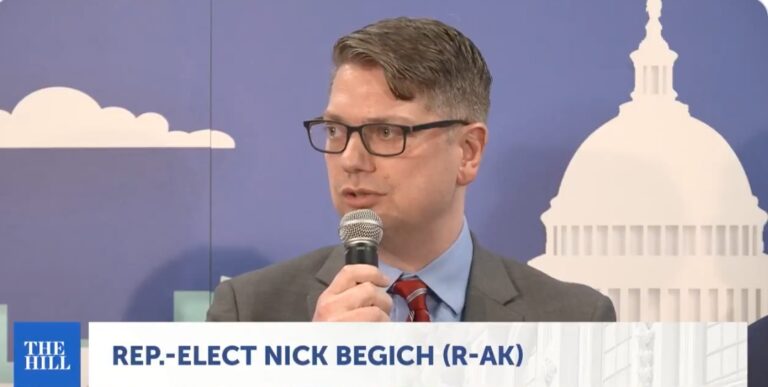
Nick Begich is the only candidate in this race who has signed a paycheck for hard working Alaskans and knows how to run a business. He will take that same pro-business mindset to Washington.
His support for responsible fiscal policies will keep inflation in check which help to stabilize housing prices.
As a candidate who puts Alaskans first, Nick Begich supports resource development, lowering taxes, and streamlining federal regulations. For Alaskans, this will lead to job creation and enhance Alaskans ability to afford homes.
When Alaska businesses thrive and job opportunities expand, the demand for housing increases, leading to a more dynamic and competitive housing market.
More importantly, sustainable resource development and a strong economy is vitally important to increase incomes and create a ripple effect across numerous industries here in Alaska.
It is critically important to have someone in Washington who fights for the future of our state and is pro- growth, pro-business, and can make housing affordable again by getting out nation’s debt under control. Nick Begich has proven he is up for that fight.
PeggyAnn McConnochie is a Juneau resident since 1980 and a member of Capital City Republican Women.
Steve Menard, who has a long history of questionable activities that include trashing a hotel room, is a candidate for House District 28 in Wasilla. But the property he lists as his physical address is a vacant piece of land that is technically agricultural property. There is no tent, nor is there a travel trailer parked on it. It’s undeveloped land that he owns.
There is no building, not even a barn, on the tax rolls for his registered address.
It’s hard to say where Menard actually lives. During a candidate forum last week, someone asked him if he lives with his wife. He appeared to say that he does. Then the person pointed out that his wife lives in District 29, and he appeared to say he doesn’t live with his wife. It was confusing to the audience, to say the least.
Must Read Alaska dug into it and found that Menard appears to live in Palmer, which is out of the district he is running in. He does get his mail in District 28 at 3060 N. Lazy Eight Ct. #2-777, at the Bogard Mail Depot, where mailboxes are for rent. No one lives in a rental mail box.
The land where he claims to lay his head is Parcel B in Menard Homestead. Tax on that 38-acre property was $5,455 this year, while the property next to it, which he does not own, has a building on it and was taxed at $13,000.
Menard is running for the seat being vacated by Rep. Jesse Sumner.
Also running for the seat is Elexie Moore and Jessica Wright. Moore, Wright, and Menard are all Republicans.
Menard was recalled from the Wasilla City Council in 2011 after he went to Sitka on Alaska Municipal League business. The city was charged a $350 cleaning tab for Menard’s hotel room, which was left in shambles. “The damage included a chair and two mattresses that were irretrievably ruined by urine, a burned mattress and vomit on the carpet,” according to Ballotpedia. “Additionally, a window screen had been removed from its proper location.”
He apologized to the city for his misdeeds and reimbursed the funds but was recalled by voters anyway.
Editor’s note: This story is being updated every few hours over the course of this event.
The data is not clear yet, but anecdotally it appears the water-and-ice basin that fills alongside the Mendenhall Glacier started releasing again late Friday night or early Saturday. The National Weather Service has issued a flood warning for parts of the Mendenhall Valley.
Juneau residents report that Fritz Cove near Gastineau Channel looked like chocolate milk, an indication that Suicide Basin had another outburst of water, known as a “Jökulhlaups,” the Icelandic word for glacial flood.
On Aug. 6, a major outburst of the basin led to record flooding in the Mendenhall Valley, where nearly 300 homes were impacted by flood waters, some severely.
The National Weather Service said that as of Saturday at 9:30 a.m., Mendenhall Lake was at 4.47 feet and continuing to rise. On Friday afternoon, the Weather Service said, Suicide Basin had lost 2.6 feet of measurable depth. That water flows in to Mendenhall River and makes its way to Fritz Cove and Gastineau Channel/Lynn Canal.
The camera and laser pool elevation gauge has been unhelpful due to snowy weather impacting the reporting of data. The last image available of Suicide Basin, shown above, is from Oct. 4, and shows the level of the ice-and-water level rising to nearly what it was when it caused catastrophic damage in August.
3:30 p.m. Saturday update: “As of Saturday afternoon at 3:30 pm, Mendenhall Lake was at 4.93 feet and is continuing to rise with its rate of rise increasing over time. Data from the laser pool elevation gauge continues to show a dropping level in the basin with a change of 28 feet since Thursday night. There is greater uncertainty in crest timing due to cold temperatures and this being an unusually late season event.”
5:30 p.m. Saturday update: “As of Saturday evening at 5:30 pm, Mendenhall Lake was at 5.10 feet and is continuing to rise with its rate of rise increasing over time. Data from the laser pool elevation gauge continues to show a dropping level in the basin with a change of 30 feet since Thursday night.”
5 a.m. Sunday update: “Mendenhall Lake was at 6.8 feet and is continuing to rise with its rate of rise increasing over time. Data from the laser pool elevation gauge continues to show a dropping level in the basin with a change of 74 feet since Thursday night.”
11:30 a.m. Sunday update: “As of Sunday morning at 11:30 am, Mendenhall Lake was at 8.1 feet, crossing into Action-stage/Bankfull, and continuing to rise. Data from the laser pool elevation gauge continues to show a dropping level in the basin with a change of 100+ feet since Thursday night.”
1:15 p.m. Sunday update: “Mendenhall Lake is at 8.56 feet, about 0.5ft from Minor Flood Stage. Data from the laser pool elevation gauge continues to show a dropping level in the basin with a change of 110+ feet since Thursday night.”
4:10 p.m. Sunday update: “Mendenhall Lake is at 9.2 feet, and has reached Minor Flood Stage. Data from the laser pool elevation gauge continues to show a dropping level in the basin with a change of 110+ feet since Thursday night.”
The August drop was 450 feet, to compare with current 110-foot drop since Thursday.
From the City and Borough of Juneau: “All members of the public should avoid the Mendenhall River until further notice for the safety of yourself and others. Banks are unstable and slippery with recent snow. ”
The Weather Service now says that the Mendenhall River could crest as high as 11.5 feet between 1-7 a.m. Monday. The last flood was nearly 16 feet.
At 9 feet flood stage, Skater’s Cabin will be under water. At 11 feet, View Drive will be flooded and impassible, and there will be some significant flooding of homes in the area. The Back Loop Bridge may see bank erosion along Meander Way, where homeowners may see flooding in their backyards. Portions of the Dredge Lake Trail will also be impassible, the Weather Service said.
On Monday, the Juneau Assembly will meet to discuss options. One option being considered is to authorize the purchase of oversized sand containers known as Hesco Flood Barriers, which would be placed along the river banks.That is a temporary solution and may only redirect flooding elsewhere if not done properly.
The Assembly meeting, which begins at 7 p.m., has this new item on the agenda:
“Emergency Resolution 3076 An Emergency Appropriation Resolution Appropriating up to $2,000,000 for Flood Levee Barriers; Funding Provided by Restricted Budget Reserves. This emergency resolution would appropriate $2,000,000 from the Restricted Budget Reserve for the installation of flood levee barriers. In response to glacial lake outburst flooding caused by the sudden release of water from Suicide Basin, the Assembly adopted Ordinance 2024-34 on October 3, 2024, entering the CBJ into a cooperative agreement with the Army Corps of Engineers for advanced flood mitigation efforts. This funding would contribute toward the first phase of installation of HESCO barriers along approximately four miles of the Mendenhall River to aid in the mitigation of future glacial outburst floods. Funding for this request is needed as soon as possible to authorize CBJ to incur expenses associated with this work in order to give the community the best chance at having this work complete before the next glacial lake outburst flood. For this reason, this is an emergency resolution. The City Manager recommends the Assembly adopt this emergency resolution.”
It appears the action by the Assembly may come too late for some homes, however, if water is already rising.
Others in the community have suggested longer-term solutions need to be considered, such as building an earth-filled levy around Mendenhall Lake itself, to better control and slow the release of water into the river.
That’s a solution that would require cooperation between the Forest Service, U.S. Army Corps of Engineers, and the City and Borough of Juneau. But as of now, the various agencies appear paralyzed as flood after flood begin to destroy the homes of people living in the Mendenhall Valley.
Unfortunately, there are few other places to build homes in Juneau, since the choices are mainly the landslide-prone mountainsides or the valley carved out by the Mendenhall Glacier. The U.S. Forest Service owns much of the land that could be used for housing, but is simply held onto by the federal government.
Some estimates say that the taxable property in the Valley makes up 20% or more of the City and Borough of Juneau’s taxable base. Hundreds of homes, however, may lose value quickly in part due to government inaction. There are more than $1 billion in assessed properties in that area of the community.
Release of water from Suicide Basin has gone on for years, but has recently become more dangerous and damaging. A major release in 2023 sent a couple of riverfront homes into the river, and then in August of 2024, the damage was extensive and, for some people, permanent.
As for the current situation in Suicide Basin, the Weather Service says, “There is greater uncertainty in crest timing due to cold temperatures and this being an unusually late season event.” On top of that, the camera isn’t working that shows the level of the basin, the days are getting shorter, and the weather has featured low clouds for days, further obstructing visual observation.
When the FBI originally released the “final” crime data for 2022 in September 2023, it reported that the nation’s violent crime rate fell by 2.1%. This quickly became, and remains, a Democratic Party talking point to counter Donald Trump’s claims of soaring crime.
But the FBI has quietly revised those numbers, releasing new data that shows violent crime increased in 2022 by 4.5%. The new data includes thousands more murders, rapes, robberies, and aggravated assaults.
The Bureau – which has been at the center of partisan storms – made no mention of these revisions in its September 2024 press release.
RCI discovered the change through a cryptic reference on the FBI website that states: “The 2022 violent crime rate has been updated for inclusion in CIUS, 2023.” But there is no mention that the numbers increased. One only sees the change by downloading the FBI’s new crime data and comparing it to the file released last year.
After the FBI released its new crime data in September, a USA Today headline read: “Violent crime dropped for third straight year in 2023, including murder and rape.”
It’s been over three weeks since the FBI released the revised data. The Bureau’s lack of acknowledgment or explanation about the significant change concerns researchers.
“I have checked the data on total violent crime from 2004 to 2022,” Carl Moody, a professor at the College of William & Mary who specializes in studying crime, told RealClearInvestigations. “There were no revisions from 2004 to 2015, and from 2016 to 2020, there were small changes of less than one percentage point. The huge changes in 2021 and 2022, especially without an explanation, make it difficult to trust the FBI data.”
“It is up to the FBI to explain what they have done, and they haven’t explained these large changes,” Dr. Thomas Marvell, the president of Justec Research, a criminal justice statistical research organization, told RCI.
The FBI did not respond to RCI’s repeated requests for comment.
Extensive Revisions in Violent Crime Stats
The actual changes in crimes are extensive. The updated data for 2022 report that there were 80,029 more violent crimes than in 2021. There were an additional 1,699 murders, 7,780 rapes, 33,459 robberies, and 37,091 aggravated assaults. The question naturally arises: should the FBI’s 2023 numbers be believed?
Without the increase, the drop in violent crime in 2023 would have been less than half as large – only 1.6% instead of the reported drop of 3.5%.
The FBI isn’t the only government agency that has been revising its data. The Bureau of Labor Statistics massively overestimated the number of jobs created during the year that ended in March by 818,000 people.
The FBI’s crime stats revisions reveal how much guesswork is involved in even the “final” numbers often seized on by politicians. The FBI doesn’t simply count reported crimes. Instead, it offers estimates by extrapolating data from police departments that report only partial-year data. The Bureau also makes estimates for cities that report no data. The FBI’s method of generating these estimates changes over time, and it affects the figures they report.
“The [FBI’s] processes, such as how it tries to ‘estimate’ unreported figures, has long been a black box, even to the Bureau of Justice Statistics – the Department of Justice’s actual statistical agency,” saysJeffrey Anderson, who headed the DOJ’s Bureau of Justice Statistics from 2017 to 2021.
Anderson said when he headed the Bureau of Justice Statistics, “We definitely would have highlighted in a press release or a report the 6.6% change recorded for 2022, which moved the numbers from a drop to a rise in violent crime.”
Many Crimes Are Unreported
Another problem with FBI crime data is its reliance on reported crimes. Most crimes go unreported, with only about 45% of violent crimes and 30% of property crimes brought to the police’s attention, according to the National Crime Victimization Survey. Since the FBI only tracks reported incidents and this gap is so large, researchers argue that when the media discusses crime rates based on FBI data, they should clarify that it reflects “reported” crime, not give the impression that total crime is changing.
Nonreporting of crime doesn’t affect all crimes equally. Nonreporting of murder and motor vehicle theft is relatively rare. In murder cases, victims can’t be overlooked, and for auto theft, insurance claims require police reports. However, it’s difficult to fully trust even these numbers because the FBI underreported 1,699 murders and 54,216 motor vehicle thefts in 2022, casting doubt on the reliability of the data.
Although recent attention has focused on the decline in murder rates, even with the revised numbers, the 16.2% drop from 2020 to 2023 still leaves murder rates 9.6% higher than pre-COVID levels.
A half-century ago, the DOJ provided a total crime measure, including both reported and unreported crime. The results of the department’s Bureau of Justice Statistics 2023 National Crime Victimization Survey, released in mid-September, tell a very different story from the FBI data.
The NCVS interviews 240,000 people each year about their personal experiences.
Instead of the FBI’s 3.5% drop in the reported violent crime rate in 2023, the NCVS found a 4.1% increase in the reported violent crime rate. Even with the revised FBI numbers, in 2022, the FBI’s 4.5% increase pales in comparison to the NCVS’s 29.1% increase.
Screenshot
Over the past few years, the number of police officers has declined because of cuts in budgets and many retirements. One result is that police departments nationwide – from Charlottesvilleand Henrico County, Va., to Chicago, Ill. and Olympia, Wash. – are no longer responding to calls unless the perpetrator is still there actively committing the crime. Instead of police coming out to investigate and take a report, residents in those jurisdictions can still go to the police station and wait in line to get a police report filled out. In addition, despite the widespread belief that calling 911 is enough to report a crime, the FBI officially doesn’t tally 911 calls. It only counts crimes when police make out an official report.
Other Data Show Sharper Rises in Crime
While the FBI claims that serious violent crime has fallen by 5.8% since Biden took office, the NCVS numbers show that total violent crime has risen by 55.4%. Rapes are up by 42%, robbery by 63%, and aggravated assault by 55% during Biden’s term. Since the NCVS started, the largest previous increase over three years was 27% in 2006, so the increase under Biden was slightly more than twice as large.
The increases shown by the NCVS during the Biden-Harris administration are by far the largest percentage increases over any three years, slightly more than doubling the previous record.
Comparing 2023 rateswith 2019 pre-COVID violent crime rates, the FBI’s new 2023 data show virtually no improvement – just a 0.2% drop – while the NCVS shows a 19% increase over that period. But the news media didn’t cover the crime survey when it was released last month.
“With the media using the 2022 FBI data to tell us for a year that crime was falling, it is disappointing that there are no news articles correcting that misimpression,” Moody told RCI. “We will have to see whether the FBI later also revises the 2023 numbers.”
At the beginning of this year, the media was running headlines like National Public Radio’s: “Violent crime is dropping fast in the U.S. – even if Americans don’t believe it.” “At some point in 2022 … there was just a tipping point where violence started to fall and it just continued to fall,” NPR claimed. But now the FBI has itself admitted its violent crime numbers were way off.
Even as polls show that Americans are concerned about crime, the FBI and the media are making it difficult to see how crime rates have changed over the last few years. A Gallup survey late last year found that 92% of Republicans and 58% of Democrats thought crime was increasing. A February Rasmussen Reports survey found that, by a 4.7-to-1 margin, likely voters say violent crime in the U.S. is getting worse (61%), not better (13%). A Gallup poll found in March that “crime and violence” was Americans’ second biggest concern, after inflation. But the media and politicians used the inaccurate FBI data to try to convince people that they were wrong.
“ThisFBI report is stunning because it now doesn’t state that violent crime in 2022 was much higher than it had previously reported, nor does it explain why the new rate is so much higher, and it issued no press release about this large revision,” said David Mustard, the Josiah Meigs Distinguished Professor at the University of Georgia who researches extensively on crime. “This lack of transparency harms the FBI’s credibility.”
John R. Lott Jr. is president of the Crime Prevention Research Centerand he lives in Missoula. He served as senior adviser for research and statistics in the Office of Justice Programs and the Office of Legal Policy at the Justice Department. This report first appeared in RealClearInvestigations.com and is reprinted with permission of RealClearWire.com.