The U.S. Surgeon General on Friday issued an advisory and recommended new advisory warnings on alcohol.
Surgeon General Dr. Vivek Murthy’s warning said there’s a direct link between alcohol consumption and increased cancer risk, and that alcohol use is the third leading preventable cause of cancer in the U.S., after tobacco and obesity. It’s a preventable cause for seven types of cancer.
“Alcohol is a well-established, preventable cause of cancer responsible for about 100,000 cases of cancer and 20,000 cancer deaths annually in the United States – greater than the 13,500 alcohol-associated traffic crash fatalities per year in the U.S. – yet the majority of Americans are unaware of this risk,” Murthy said. “This Advisory lays out steps we can all take to increase awareness of alcohol’s cancer risk and minimize harm.”
Shamsud-Din Jabbar, the man who rammed his truck through a crowd in New Orleans on New Year’s morning, killing 15, had been stationed at Joint Base Elmendorf-Richardson in Anchorage when he was in the U.S. Army. He also served in Afghanistan as an IT specialist in 2009 and 2010, about the era he was stationed in Alaska.
Jabbar, 42, according to the FBI, had been radicalized by the Islamic State — ISIS. His rented truck was flying a black ISIS flag.
Jabbar had also been stationed at Fort Bragg, North Carolina during his years of service. At the time of his death, he lived in a mobile home in a largely Muslim community on the outskirts of Houston, Texas.
Must Read Alaska will be updating this story as it develops.
The FBI Washington Field Office on Thursday released film footage and more information about the suspect who placed pipe bombs near the headquarters of the Republican National Committee and the Democratic National Committee in Washington, D.C., on Jan. 5, 2021.
The FBI posted on its Seeking Information webpage previously unreleased video of the suspect placing one of the bombs near the DNC and announced that it estimates the suspect to be approximately 5 feet 7 inches tall.
“Four years into the investigation, identifying the perpetrator of this attempted attack remains a priority for WFO; the Bureau of Alcohol, Tobacco, Firearms, and Explosives (ATF), Washington Field Division; the D.C. Metropolitan Police Department (MPD); and the U.S. Capitol Police Department (USCP),” the FBI said in a statement.
But questions are being asked about why the FBI issued this additional information just days before the 2024 presidential election is to be certified by a joint session of Congress. More questions are being asked about why the FBI has held onto this footage for so long. Every year since the bombing, the FBI has put out a call for information and announced its bounty, but has not released this particular footage.
The suspect placed pipe bombs in a Capitol Hill neighborhood near the RNC, located at 310 First St. SE, and the DNC, which is at 430 South Capitol St. SE, #3, on Tuesday, Jan. 5, 2021, between approximately 7:30 p.m. and 8:30 p.m., “the night before the riots at the U.S. Capitol,” the FBI said.
“Although these bombs did not detonate, the suspect walked along residential and commercial areas in Capitol Hill just blocks from the U.S. Capitol with viable pipe bombs that could have seriously injured or killed innocent bystanders,” the statement said.
“Over the past four years, a dedicated team of FBI agents, analysts, data scientists, and law enforcement partners has visited more than 1,200 residences and businesses, conducted more than 1,000 interviews, reviewed approximately 39,000 video files, and assessed more than 600 tips about who may have placed pipe bombs on Capitol Hill in January 2021,” said David Sundberg, assistant director in charge of the FBI Washington Field Office.
“The tips the FBI has received so far have helped us advance the investigation, but they have not led us to identify the suspect. Today, we are releasing additional information about the suspect—including that we estimate the person to be approximately 5 feet 7 inches tall—to encourage the public to take a fresh look at the Seeking Information webpage and contact the FBI if they recognize or have information about the suspect,” Sundberg said.
The website includes a new video with updated maps of the route the suspect walked the night the bombs were placed; previously unreleased footage of the suspect placing one of the bombs near the DNC; and closeup images of the distinctive Nike Air Max Speed Turf shoes the suspect wore.
“We urge anyone who may have previously hesitated to come forward, or who may not have realized they had important information, to contact the FBI. A reward of up to $500,000 is available for information that leads to the arrest and conviction of the individual responsible for this dangerous attempt to harm our community,” Sundberg said.
President-elect Donald Trump has a big job ahead of him in restoring common sense and sanity to federal energy policy when he takes office on January 20. The last four years in this realm can more accurately be characterized as a series of ill-considered, irrational scams than as any sort of coherent, productive set of policies. It has been four years of bad policies — largely based on crass crony capitalism principles — that has done severe damage to America’s level of energy security.
There is no doubt that cleaning up this mess left behind by President Joe Biden and his appointees will take the full four years of Trump’s second term. But the new president will be able to take some fast actions to jump-start the process as part of his first 100 days agenda.
With respect, here is a list of 10 quick common-sense actions Trump can take to begin to restore America’s energy security:
1 — Rescind Biden’s ridiculous permitting “pause” on LNG export infrastructure. Of all the Biden energy policy scams, this was perhaps the most heinous and unjustified of all. Terminate it immediately and get this American growth industry back on track.
2 — Terminate U.S. participation in the Paris Climate Agreement and in any future annual COP conferences sponsored by the United Nations. Halt the spending of federal dollars related to any and all goals and commitments related to either of these wasteful processes.
3 — Terminate the office of Senior Advisor to the President for International Climate Policy, aka “the Climate Envoy,” currently occupied by John Podesta and eliminate its budget.
4 — Turnabout being fair play, Trump should invoke a “pause” of his own related to permits and subsidies going to Biden’s pet offshore wind boondoggle. The pause would be justified by the need to conduct a truly thorough study on the potential impacts of those massive developments on marine mammals, seabirds, and the commercial fishing industry. Invoke the “precautionary principle” that has been ignored by Biden regulators related to these costly and possibly deadly projects.
5 — Order the Interior Department to immediately and aggressively restart the moribund oil-and-gas leasing program on federal lands and waters. Direct the Interior Department Inspector General to investigate the Biden-era manipulations of these programs for potential criminal violations.
6 — Form an interagency task force to recommend ways the executive branch of government can act to streamline permitting processes for energy projects that do not require congressional action. Congress has proven several times now that it is incapable of passing legislation in this arena.
7 — Place an immediate hold on all green energy subsidies pending a full compliance review. This should include any and all subsidy programs that were part of the IRA or the 2021 Infrastructure law. This review should also include suggested reforms to qualification requirements for these subsidy programs in light of the high percentage of bankruptcy filings by unsustainable companies that have benefited from these subsidies.
8 — In light of the Supreme Court’s recent recission of the Chevron Deference, order the Environmental Protection Agency to review the rationale for regulating atmospheric carbon dioxide, aka “plant food,” as a pollutant under the provisions of the Clean Air Act.
9 — Order an interagency review of the U.S. power grid and transmission infrastructure as they relate to national security concerns. Include a special focus on the current, growing trend of major tech firms locking up power generation assets for their own specific needs (AI, data centers, etc.) which might deny generation capacity that would otherwise be dedicated to the public grid.
10 — In light of recent reports of Biden regulators steering billions of dollars of IRA and other green energy funds to NGOs to provide funding for anti-fossil fuel propaganda, lawfare, and other abuses of the legal system, order an immediate freeze on all such spending pending a formal review.
In reality, this list could consist of hundreds of high priority items for the new administration to undertake. Such is the level of damage that has been wrought on American energy security by the outgoing administration.
But executing these ten items in the early days of his second term would represent a good start and place the country on a path to recovery. We wish Trump and his appointees the best of luck in restoring U.S. energy security.
David Blackmon is an energy writer and consultant based in Texas. He spent 40 years in the oil and gas business, where he specialized in public policy and communications.
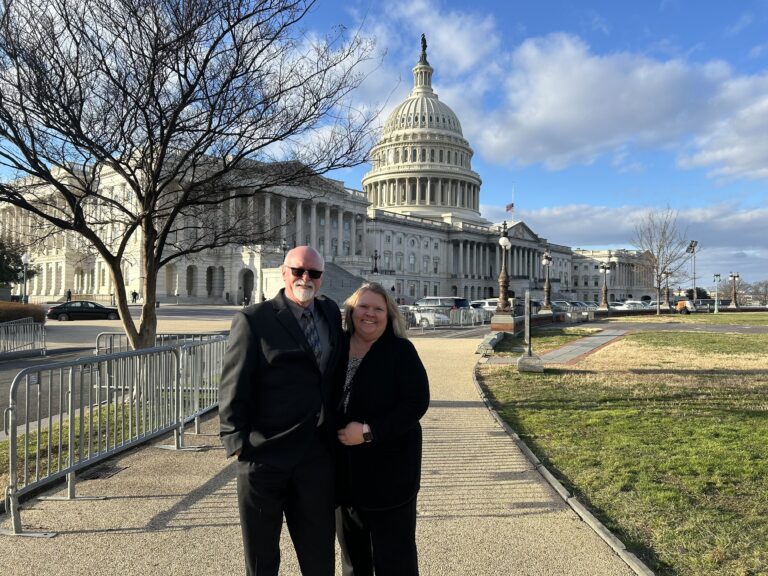
Washington, D.C. – Alaska friends and supporters of Congressman-elect Nick Begich III have gathered in the nation’s capital to witness the formal swearing in of Alaska’s 14th congressional representative since district and territorial days and only the sixth since statehood.
The official date of Jan. 3 at noon is set by the U.S. Constitution, which says Congress starts the new session at that time, but may also pass a law to start business on a different time or date.
After members are sworn in, the session begins the process of electing a House Speaker. Begich said today that he intends to support Speaker Mike Johnson of Louisiana, who also has the support of President Donald Trump.
“Speaker Johnson and his leadership team worked tirelessly to deliver the Republican House Majority. President Trump has asked House Leadership to ensure Speaker Johnson continues in his leadership role. Unity in the Republican conference is necessary for delivering on the America First agenda. I will be supporting Mike Johnson for Speaker of the House,” Begich said.
The noon swearing in ceremony means that by the time most Alaskans are finishing their morning coffee at 8 a.m., Alaska will no longer be represented in Congress by Democrat Rep. Mary Peltola.
Alaskans have flown in for the ceremony, although even the ones in D.C. will be watching it from the screen in Begich’s office, in the Cannon Office Building.
Some Alaskans took a guided tour of the Capitol on Thursday. On Friday, Congressman Begich will be on hand to greet them after the noon swearing in; he is allowed only one person with him at the ceremony.
Must Read Alaska is on scene and will be reporting from the Cannon Office Building and the Capitol on Friday.
Friday, Jan. 3, is also the birthday of Alaska, as it is the day it became a state in 1959. President Dwight D. Eisenhower signed the official proclamation admitting it as the 49th state after a 13-year struggle to make the case that Alaska would not become dependent on the federal government.
Begich III, a Republican, will be sworn in 66 years after Statehood. For 49 years of Alaska’s history, Congressman Don Young represented the state, until his death in 2022 at the age of 88.
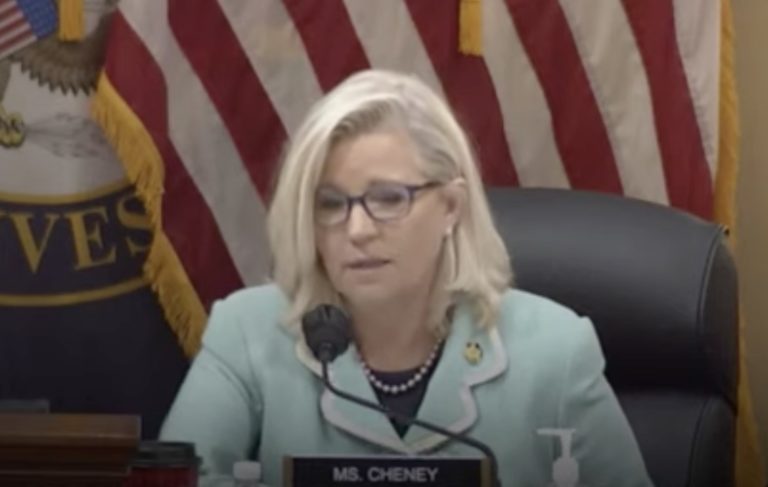
President Joe Biden on Thursday is awarding former Rep. Liz Cheney and Rep. Bennie Thompson, both who led the House special committee investigating Jan. 6, 2021’s events at the U.S. Capitol, the nation’s second-highest civilian medal, the Presidential Citizens Medal.
Cheney, a “never-Trumper,” endorsed Democrat Vice President Kamala Harris for president. A left-leaning Republican, she was booted out of office by Wyoming voters in 2022.
Cheney and Thompson, as well as 18 LGBTQ activists and friends of the president, will be honored in a ceremony.
Sen. Elvi Gray-Jackson of Anchorage, a leading Democrat in the Alaska Senate, has announced some of her early-filed legislation, some of which interferes with schools’ ability to improve students’ basic skills.
Three items involve education mandates that take students away from core courses and the fourth puts law enforcement officers in danger, by not allowing them to subdue a dangerous subject with a chokehold, if necessary.
Here are some of Gray-Jackson’s early bills for the legislative session that gavels in on Jan. 21:
Asian American/Pacific Islander Program: This bill will mandate the inclusion of Asian American/Pacific Islander history and culture in the curriculum of all Alaskan public schools. “It’s crucial that our students have a comprehensive understanding of the diverse history and contributions of all communities that make up our state,” she said.
Alaska is home to some Pacific Islanders, about 19,000 or about 3% of the state’s population. Some areas of the state have few Pacific Islanders, while other areas, like Anchorage, have more. The Asian American population is about 65,000 people, or up to 5% of the population.
Just .37% of the population in the Nome Census Area is Native Hawaiian and other Pacific Islander. The reading and math scores in this same region are abysmal. At Nome-Beltz Middle/High school, only 8% of students score at or above proficient in reading, compared to the state average of 27%.
In Valdez-Cordova Census Area, just .26% of the population is Pacific Islander.
Alaska schools are already required to include Alaska Studies, including social, economic, and political history of Alaska, as well as the history of Natives.
CPR Curriculum: Gray-Jackson wants to require school districts to teach CPR to students “at appropriate grade levels.” This is another distraction from reading, writing, math, science, and other life skills needed by students, who can learn these skills in extra-curricular settings.
According to the Children’s Hospital of Philadelphia, 39 out of 50 states have passed laws requiring CPR and automated external defibrillator training for high school students. But researchers found that rates of bystander CPR were barely higher in states requiring CPR education in high school versus those that did not: 41.6% vs 39.5%, respectively.
Mental Health Education: Gray-Jackson wants to require all school districts to integrate age-appropriate mental health curriculum into the mandated health curriculum. Many conservatives see this as a dog-whistle for woke education that may include gender politics and sexual-orientation indoctrination.
Chokehold Ban: For a third time, Gray-Jackson wants to ban the use of carotid holds and tracheal holds, as well as any restraint that impedes a person’s breathing or circulation in a way that could produce a loss of consciousness.
“This legislation aims to enhance public safety and prevent tragic outcomes,” she says.
What she does not say is that by hamstringing public safety frontline people, she puts their lives in danger, as the drug addicts on the streets become more and more dangerous. The senator is offering this legislation for the third time time; it failed in 2021-22, 2023-24, and has a better chance in 2025, since the Legislature has been taken over by the Democratic Party.
Deaths resulting from neck restraints are less than 1% of officer-involved killings. Eliminating them as an option would have little impact, other than requiring an officer to use even more deadly force.
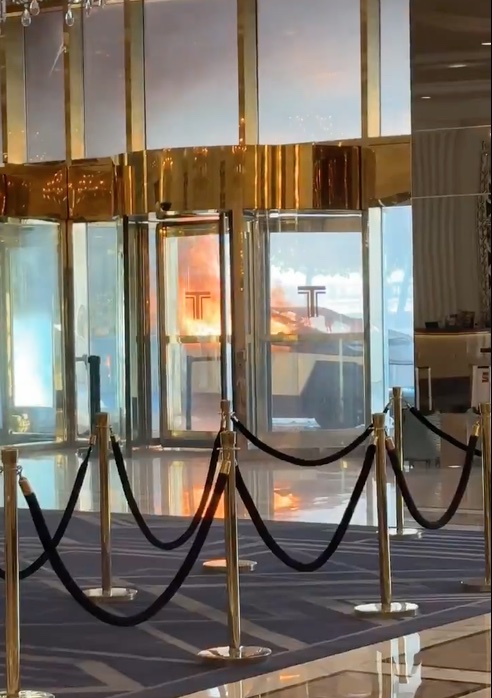
A Cybertruck, an electric-powered vehicle manufactured by the Tesla company owned by Elon Musk, exploded and burned in a fiery inferno at the entrance to Trump Tower in Las Vegas on New Year’s Day morning.
Police vehicles and ambulances are on the scene and the streets around the building have been shut down.
Musk is not only an ally of Trump, but contributed millions to his reelection campaign and has become one of Trump’s closest advisers in the months leading up to Inauguration Day, when Trump will once again take office in the White House. Both may be targets of political terror or violence; Trump has survived two known assassination attempts already and both men are now heavily guarded, although Musk, in his citizen role, provides his own personal security.
It’s not clear if this incident is a “message” to Trump and Musk.
Earlier on New Year’s Day, an apparent terrorist killed 10 people and injured dozens in an attack in New Orleans.
This story will be updated.
Thursday morning update: The driver of the Cybertruck was identified as Colorado resident and Army veteran Matthew Livelsberger, 37.
Update: Officials found gas cans, camp fuel canisters, and large fireworks mortars in the truck, which was rented in Colorado with the Toro app, the same app used by the man who slaughtered 15 people in New Orleans just hours earlier on New Year’s Day.
“A 2024 Cybertruck pulled up to the front of the hotel, and in fact, I can tell you it pulled right up to the glass entrance doors of the hotel. We saw that smoke start showing from the vehicle, and then a large explosion from the truck,” Sheriff Kevin McMahill said in a press briefing.
Law enforcement officials earlier ruled out terrorism, but now are not ruling it out.
“I don’t know, but what I can tell you is we’re absolutely investigating any connectivity to what happened in New Orleans as well as other attacks that have been occurring around the world,” McMahill said.
Update 3 p.m.: The perpetrator of the attack, Shamsud Din Jabbar, has a Federal Elections Commission record of donating to Democrat campaigns through the Democrats’ main fundraising site, ActBlue.
Update 2 p.m.: FBI said in a statement that the suspect is a U.S. citizen from Texas. The death toll has risen to 15.
“Weapons and a potential IED were located in the subject’s vehicle,” the statement said. “Other potential IEDs were also located in the French Quarter. The FBI’s Special Agent Bomb Technicians are working with our law enforcement partners to determine if any of these devices are viable and they will work to render those devices safe.”
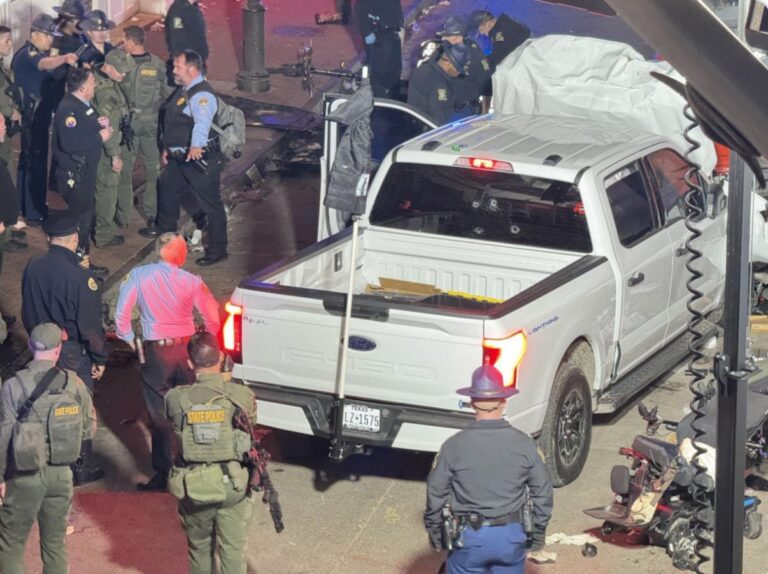
“He was driving a Ford pickup truck, which appears to have been rented and we are working to confirm how the subject came into possession of the vehicle,” the statement said of deceased suspect Shamsud Din Jabbar. “An ISIS flag was located in the vehicle and the FBI is working to determine the subject’s potential associations and affiliations with terrorist organizations.”
Jabbar is an Army veteran who was deployed to Afghanistan for 11 months starting in 2009. He was an IT specialist. Most recently, he lived in a mobile home in the outskirts of Houston, close to a mosque, and in a neighborhood of mostly Muslim immigrants.
Video shows the moment the FBI says Shamsud Din Jabbar raced onto a packed Bourbon Street from Canal Street in a pickup truck with Texas plates and an ISIS flag. https://t.co/P0iWiTX30Zpic.twitter.com/hmeB1tUjpc
Update 8:30 a.m.: The perpetrator has been identified as 42-year-old Shamsud Din Jabbar, who was then shot and killed in a shootout with police, law enforcement sources told Nola.com. The truck Jabbar was driving had a black flag mounted on it. Sources told the New Orleans Advocate that the flag was an ISIS flag, associated with an Islamic terrorist organization.
At least 10 are dead and more than 35 are injured and are at hospitals in the area, including two police officers, after a man drove a pickup truck into a crowd that was celebrating the New Year in the French Quarter of New Orleans at around 3:15 a.m. Wednesday morning.
After running over dozens of people at a high rate of speed, the man exited the truck and fired a weapon, injuring the two police officers.
No information has been released about the man’s identity, but investigators said they found what appear to be explosive devices in the truck. The driver was killed at the scene by police after a gun battle.
A flag, possibly a black flag with white lettering, was mounted on the truck, and law enforcement wrapped it in a gray bag so it was not visible, leading to speculation that this was an act of terror. The ISIS flag is black with white letters.
Mayor Latoya Cantrell called it a terrorist attack, although other officials, including the FBI, stopped short of that description. Update: The FBI has now said it is being investigated as a terrorist attack.
Police Superintendent Anne Kirkpatrick agreed the attack was intentional, as the man drove around barricades on Bourbon Street, which had been blocked off for New Year’s Eve revelers.
“It was very intentional behavior. This man was trying to run over as many people as he possibly could,” the New Orleans police superintendent, Anne Kirkpatrick, said in a news conference early Wednesday. “He was hellbent on creating the carnage, and the damage that he did.”
She said it appears that most of the dead were local residents, not tourists.
The FBI has taken over the lead role in the investigation, but thus far has not identified it as an act of terrorism. The attack came just hours before the kickoff of the Sugar Bowl at the Superdome, less than a mile away.
In a similar attack, on Christmas Day a man of Saudi origin drove his vehicle into a street market in Magdenburg, Germany, killing five and injuring over 40.
Update: A fire broke out at a New Orleans Airbnb rental residence that investigators now believe had been rented by the suspect in the Bourbon Street attack. Dozens of people were evacuated from the building early Wednesday morning when the fire was reported on Mandeville Street, at an address that was about two miles from the Bourbon Street attack.
Update: Fox News reported that the truck used in the New Orleans terrorist attack came through the border at Eagle Pass, Texas two days ago.
Update: At 10 a.m. Eastern, President Joe Biden issued a statement in which he said, “The FBI is taking the lead in the investigation and is investigating this incident as an act of terrorism.”