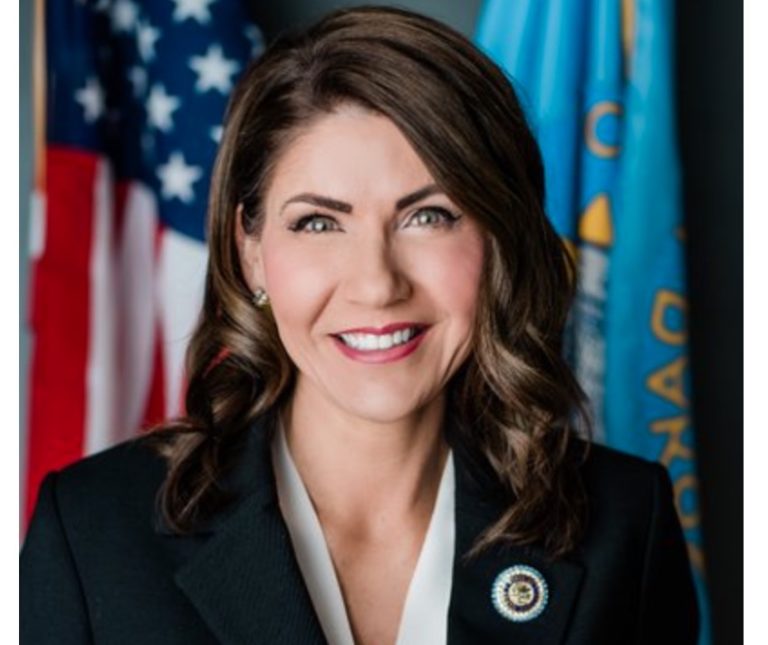
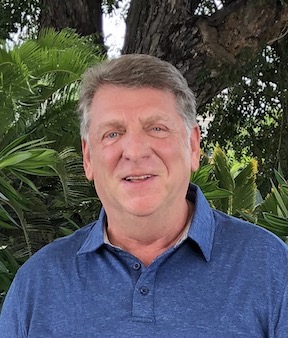
Kristi Noem was confirmed Saturday as secretary of the Department of Homeland Security.
The Senate voted 59-34 to confirm the former South Dakota governor, with Sen. Lisa Murkowski and Sen. Dan Sullivan both voting yes.
She succeeds Alejandro Mayorkas, who was in charge of President Joe Biden’s open-border policy that has brought millions of illegal immigrants, many of them violent criminals and suspected terrorists, into the country over the past four years.
Noem will be in charge of securing the borders, particularly the southern border, where the majority of illegal immigration occurs. But she’ll also need to focus on the border with Canada, which is increasingly becoming an entry point for bad actors.
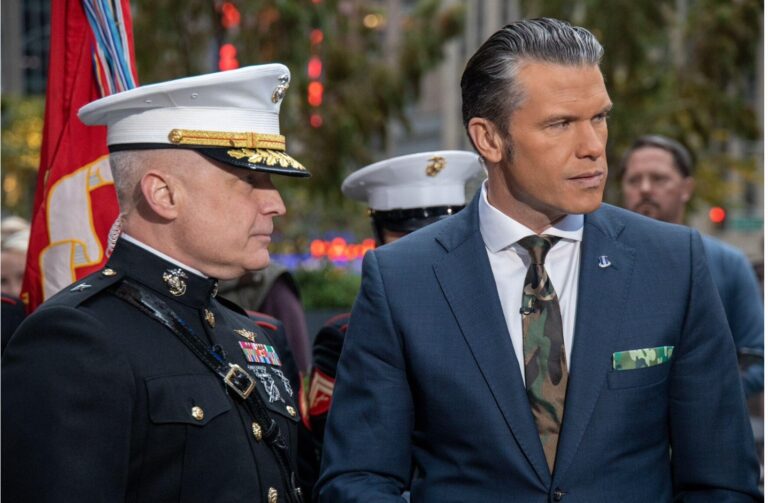
Noem’s confirmation makes three out of three for President Donald Trump. On Friday, the vote for Pete Hegseth for Department of Defense came down to a tie, which was broken by a vote by Vice President JD Vance to complete Hegseth’s confirmation. Marco Rubio was the first confirmation; he is now secretary of State.
A tie vote in the confirmation of Pete Hegseth as Defense secretary had to be broken by Vice President JD Vance on Friday night. The 50-50 split in the U.S. Senate was due to Sens. Lisa Murkowski, Susan Collins, and Mitch McConnell — all three Republicans — voting against Hegseth, along with the Democrats, while all other Republicans voted for President Donald Trump’s nominee.
The Senate waited for the vice president to arrive and cast the tie-breaking vote. It was Vance’s first tie-breaking vote in the Senate, which has a narrow Republican majority.
As Murkowski and Collins huddled together in the chamber, JD Vance arrived and voted to affirm Hegseth.
Murkowski was the first of the three Republicans to state her objection to Hegseth, saying he was not qualified. But Alaska Sen. Dan Sullivan, a U.S. Marine veteran, found him qualified enough and voted to affirm Hegseth.
Late Friday evening after the vote, Sullivan talked about Hegseth’s goals as Defense secretary:
“After a number of substantive discussions with Pete Hegseth, including during his confirmation hearing, I am confident Mr. Hegseth will work to refocus our military on lethality, warfighting and peace through strength, as well as getting rid of the damaging woke policies of the Biden administration, some of which I witnessed firsthand as a Marine Corps Reserve Officer,” Sullivan said. “These have been my top priorities as a member of the Senate Armed Services Committee, and they will be Mr. Hegseth’s. Mr. Hegseth also assured me that he understands the important role that women play in our military, including in combat, as well as the strategic importance of Alaska. Along with President Trump, he is also committed to continuing the military buildup in our great state. I want to congratulate the incoming Secretary of Defense on his confirmation and look forward to welcoming him up to Alaska soon to see firsthand the critical strategic asset our state is to our national security.”
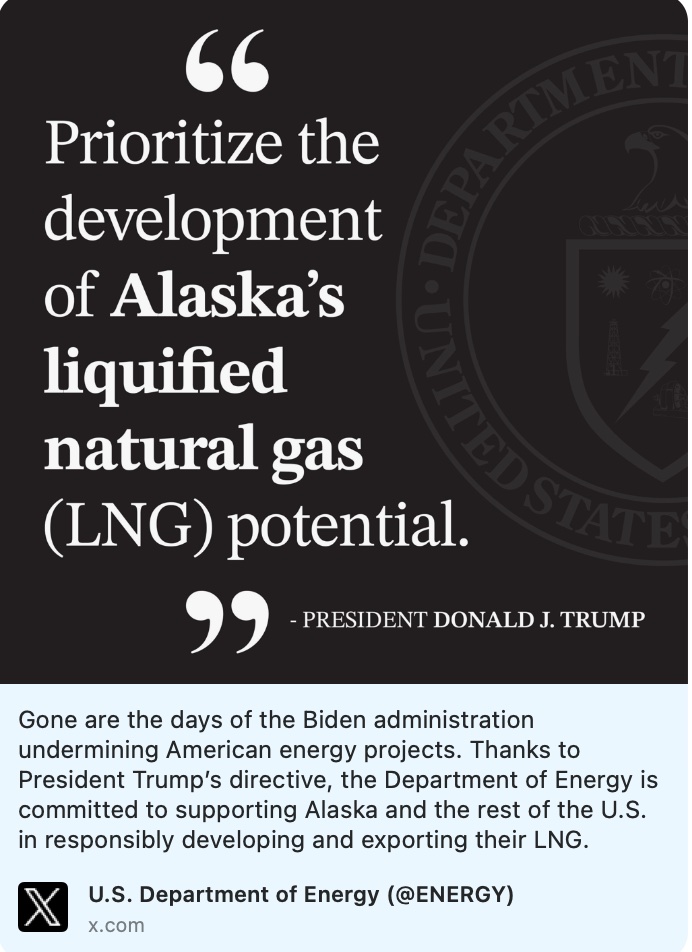
The U.S. Department of Energy made it clear on Friday that the punishing policies of the Biden Administration against Alaska are no more. It’s the Trump era.
“Gone are the days of the Biden administration undermining American energy projects. Thanks to President Trump’s directive, the Department of Energy is committed to supporting Alaska and the rest of the U.S. in responsibly developing and exporting their LNG,” the Department of Energy posted on X/Twitter.
Sen. Dan Sullivan responded: “Alaska is America’s energy powerhouse. I look forward to working with @ChrisAWright_ and @ENERGY to get clean-burning Alaska gas to Alaskans, all Americans, and our allies overseas.”
Congressman Nick Begich said: “The centerpiece of Donald Trump’s energy dominance strategy is clearly Alaska. From our heretofore stranded gas resources to enormous estimated quantities of liquid gold, Alaska has what the nation needs.”
The fact that Alaska LNG was prominently mentioned in the message was not lost on those who have watched the state being locked down.
For the past four years, President Joe Biden cancelled resource project after resource project, allowing only the ConocoPhillips Willow Project on the North Slope to proceed — and that one was only allowed to proceed because Biden’s lawyers told him he would lose in court, according to Biden’s own account.
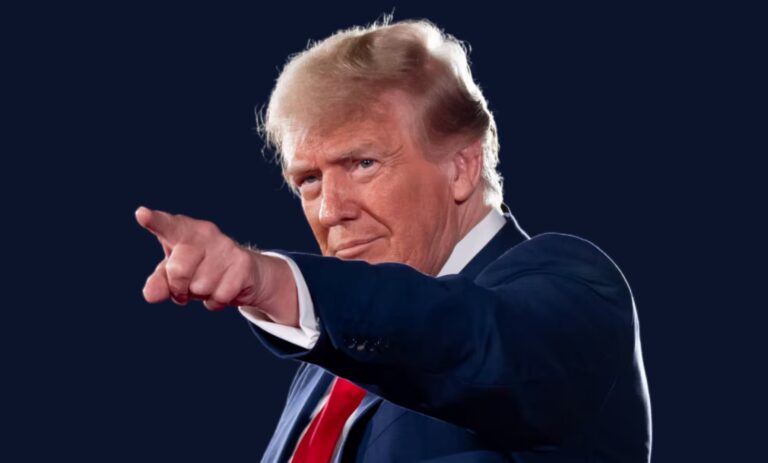
After President Trump was sworn in as president on Monday, he immediately prioritized Alaska LNG and other resource projects in the 49th state with his executive order titled “Unleashing Alaska’s Extraordinary Resource Potential.”
But such an exclusive mention by the Department of Energy signals that the turn has been made.
“The one [order] that hit me that will have the quickest effect on it, is getting rid of the LNG pause that Biden had put into place,” said former Energy Secretary Rick Perry.
The message from the Energy Department, even before Chris Wright’s nomination for Energy Secretary has been voted on, is clear: Alaska is a Trump priority.
Many parents have voiced their emotional attachment to Anchorage neighborhood schools during the proposed school closures. But changing schools and transitioning children to different schools in different states is pretty much the normal for military parents.
Here is the normal routine for the military and their children:
“We got orders, and we’re moving this summer.”
As a veteran, I can tell you these can be some of the most challenging words military members can utter to their family. Reactions can range from, “Not again. We just got here,” to, “Great news! I hate this place.” Relocating to an unfamiliar place is daunting. Choosing a place to live with schools in mind is even more so. We face a lot. The movers come and pack things—some of which we might never see again.
Likewise, our kids pack up their lives to probably never see their friends and classmates again. Our children feel like their friendships and social lives may never be the same. On top of that, our kids also must adapt and survive in new classrooms.
In many cases, some spouses remain in their current location, so their children can complete a school year after receiving relocation orders. Some spouses even stay put until their kids finish high school, which can take years. Uncertainty of the quality of education in the next place is enough for some families to feel they have no better option than to brave the hardships that such a distance can bring.
Military families sacrifice every day, especially when it comes to finding the best educational options for their children. This can be the greatest challenge of all. The challenge often begins with new neighborhood schools that may have a different curriculum, different sports programs, no advanced placement classes or fewer course options than families’ previous schools. Military kids lose the continuity of a curriculum.
Our children could use much more stability, and many schooling alternatives, including distance learning, charter networks, virtual learning and even home schools could provide that as kids move from place to place. Military families are at a distinct disadvantage getting their children into Anchorage’s better charter schools. That’s because there is a wait list for most of the desirable charter schools and once a child is enrolled, they seldom leave the charter school. So, if a newly arrived military family wants to enroll their child in a charter school’s third grade, there is usually no opening. The child is left to enroll in the neighborhood school. There is no equity for this child in education options.
Other education options are not available everywhere—a problem for families that move frequently from state to state. It’s a problem that could be solved, however, with education savings accounts (ESAs)—a flexible type of school choice—provided at the federal level. And why not? These parents are actually federal employees. In this way, military families would have more opportunities to ensure continuity in their children’s education. After all, our kids need that stability in what, to most, would be a disruptive life.
Education savings accounts allow parents to access the public funds already set aside for their children’s education. Those funds—often distributed to families via a restricted-use debit card—can cover private school tuition and fees, online learning programs, educational therapies, private tutoring, community college costs, higher education expenses and other approved customized learning services and materials.
ESAs could even allow families to use their funds to pay for a combination of public school courses and private services, depending on their children’s needs. A 2017 Surveying the Military report by EdChoice found young military/veteran parents and especially active-duty military parents are more likely than their counterparts to have already sought schooling options beyond a neighborhood public school for their kids.
Not only that, but most military-connected families said they support programs like ESAs and for good reasons. Mostly, they want access to better academic environments, more flexibility as parents and more individual attention for their kids.
As veterans, my wife and I feel the same way.
While serving, we relocated our kids to five different state school districts in a 10-year period. I can say that finding that “good neighborhood with good schools” in which to rent or buy a home is a formidable task. I remember arriving in a new location. I asked a friend who was already stationed there, “Is X school a good school?” She said it was.
Later on, my son told me, “Dad, I was sure glad to see you pick me up every day after school.” I came to find out that his school was a dismal failure, and my son actually feared for his safety every day! What an eye opener that was. But, hey, he got straight As!
How does a military family get current, valid, reliable data on a local school system? Which neighborhood has the better schools and teachers? How safe are the schools? What special needs do the schools provide? Does the school have career-technical education? How does one enroll in a charter school? The military base/post does not provide any information on the performance of local schools. The real estate industry provides some, although it’s dated and inaccurate. Most military families get their information from friends and by word of mouth. In my experience, that was not a very good source to determine my child’s future. This information vacuum needs to be filled to help military families find the best fit for their children’s educational needs.
Even though a military child’s new school may be substandard or ill-suited to their needs, they become comfortable or begin making friends, and parents find it difficult to put them through more trauma by moving again so they can attend a better public school. That’s the real challenge: finding a “better school” or other educational options. Every military parent wants to hear their children say these words: “I love my school.” “My teacher is the best.” “I met the nicest kids at school.”
You see, veterans and active-duty military members always look out for their kids. For most, a quality school is the primary criterion. In fact, more than one-third said dissatisfaction with their children’s education was a significant factor in their decision to remain or leave the military service. The ones who stay sacrifice to locate to a neighborhood where that ZIP Code- assigned school ranks high. They sacrifice to access alternatives. Data show they are more likely than non-military parents to go so far as getting a second job or taking out a loan just to ensure their kids get a chance at a quality education.
After a life full of sacrifices, couldn’t our education system do more? I think we all owe military families a debt not just on Veterans Day, but all days.
Let’s help them meet the educational challenges unique to their families. Let’s say “thank you for your service” by giving them access to the educational choice options that they want and that will help their children reach for the stars.
David Boyle is the education writer at Must Read Alaska.
By PHILIP LENCZYCKI | DAILY CALLER NEWS FOUNDATION
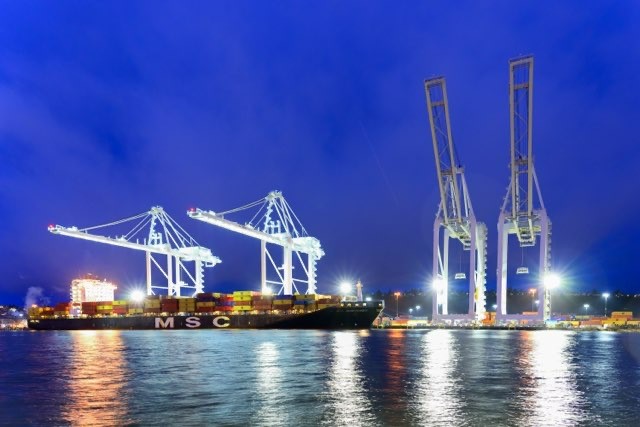
Republican lawmakers urged the U.S. Coast Guard this week to take “decisive action” against a Chinese military company that has “expansive operations at major U.S. ports,” according to a letter exclusively obtained by the Daily Caller News Foundation.
The House Committee on Homeland Security and House Select Committee on the Chinese Communist Party sent a letter to U.S. Coast Guard Acting Commandant, Admiral Kevin E. Lunday requesting information and a classified briefing related to COSCO Shipping, a Chinese state-owned enterprise that the Department of Defense (DOD) recently added to its list of “Chinese Military Companies.”
COSCO Shipping (China Ocean Shipping Company) poses a “significant” national security threat to the U.S., ranging from “espionage, cyber intrusions, sabotage, and supply chain disruptions,” according to the letter.
“Permitting vessels and personnel affiliated with COSCO SHIPPING to operate within U.S. ports without adequate safeguards exposes the nation to unacceptable risks, particularly during times of increased geopolitical tension,” the letter states. “As the lead federal agency for maritime security, the U.S. Coast Guard (USCG) must take decisive action to mitigate these risks.”
The letter is signed by House Homeland Security chairman, Tennessee Rep. Mark Green, China Select Committee chairman, Michigan Rep. John Moolenaar, Florida Rep. Carlos Gimenez and South Dakota Rep. Dusty Johnson.
The People’s Republic of China (PRC) exploits “Chinese Military Companies” for intelligence and military purposes as part of its “Military-Civil Fusion Strategy,” the letter states.
Military-Civil Fusion “supports the modernization goals of the People’s Liberation Army by ensuring it can acquire advanced technologies and expertise developed by PRC companies, universities, and research programs that appear to be civilian entities,” according to the Defense Department.
Toward that end, China engages in “forced technology transfer, intelligence gathering, and outright theft,” and directs Chinese enterprises to “undertake classified military R&D and weapons production,” according to the State Department.
In addition to being a state-owned enterprise, the committee’s letter warns that COSCO Shipping vessels “frequently have Chinese Communist Party (CCP) political commissars embedded amongst their crews.”
COSCO Shipping’s website includes a section for “Party building” and states that its CEO, Wan Min, also serves as the Party secretary of the firm’s internal CCP branch. A “Party branch” is the smallest “grass-roots” CCP organization, and one must be established within any Chinese institutions containing three or more Party members, according to the Chinese government.
The committee’s letter also urges the Coast Guard to intensify its protocols for “screening vessels, owners, and crew members associated with COSCO Shipping and other entities linked to the PLA or the PRC’s security and intelligence services.”
COSCO Shipping’s previous CEO, Xu Lirong, simultaneously served as deputy director of the China International Culture Exchange Center, which former analyst at the Australian Strategic Policy Institute Alex Joske identified as a front for China’s premier civilian intelligence service, the Ministry of State Security, the Daily Caller previously reported.
“It is essential that biographical information for all foreign mariners, particularly those from the PRC and other high-risk countries, undergo comprehensive scrutiny utilizing the complete range of classified and unclassified data resources accessible to the U.S. government,” the committee’s letter states.
A Coast Guard spokesperson told the Daily Caller News Foundation it “routinely evaluates vessels before arrival within U.S. waters” and examines vessels “for safety and security” after arrival as well.
The committee’s letter also requests for USCG to provide answers to nine questions by Feb. 3.
More than half of the questions relate to the protocols, process, or datasets USGC uses to vet foreign vessels and mariners.
For example, one question asks: “What classified and unclassified datasets are used by the USCG to vet foreign mariners, vessel owners, and operators?”
Another question asks: “Is the USGC’s vetting and screening process for foreign vessels and mariners fully automated, partially automated, or primarily manual?”
Other questions concern Coast Guard’s possible coordination with federal agencies, like the FBI, and inquire into whether or not USGC has conducted a risk assessment specific to COSCO Shipping.
“The USCG must prioritize the integration of both classified and unclassified intelligence, strengthen interagency coordination and collaboration, and leverage advanced technological solutions to enhance its ability to detect and deter emerging threats,” the committee’s letter states.
COSCO Shipping did not respond to multiple requests for comment.
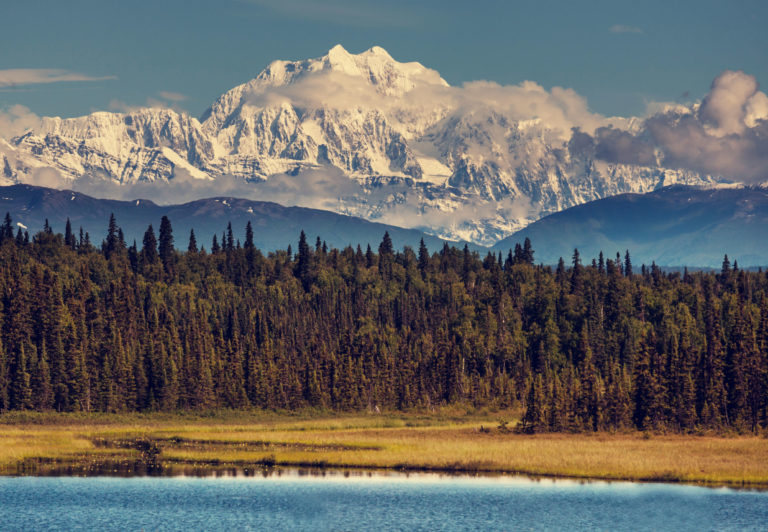
The Associated Press is publicly recognizing North America’s tallest mountain as Mount McKinley, following an executive order from President Donald Trump that reverted the name to what the mountain was called from 1917 to 2015, when Barack Obama changed the name to Denali.
For now, however, AP will not change the way it refers to the Gulf of Mexico. Trump renamed the gulf the Gulf of America, but AP says he has no jurisdiction over the body of water’s name. They are sticking with Gulf of Mexico.
Here’s what the AP wrote about the place names and its decisions after the Trump executive order:
“President Donald Trump has signed an executive order to rename the Gulf of Mexico to the Gulf of America. The body of water has shared borders between the U.S. and Mexico. Trump’s order only carries authority within the United States. Mexico, as well as other countries and international bodies, do not have to recognize the name change.
“The Gulf of Mexico has carried that name for more than 400 years. The Associated Press will refer to it by its original name while acknowledging the new name Trump has chosen. As a global news agency that disseminates news around the world, the AP must ensure that place names and geography are easily recognizable to all audiences.
“The AP regularly reviews its style guidance regarding name changes, in part to ensure its guidance reflects common usage. We’ll continue to apply that approach to this guidance and make updates as needed.
“There are other examples where the AP refers to a geographical place by more than one name. For example, the Gulf of California is sometimes referred to as the Sea of Cortez. The U.S. government has designated that body of water as the Gulf of California, while Mexico recognizes it as the Sea of Cortez.
“President Trump also signed an executive order to revert the name of North America’s tallest peak, Denali in Alaska, to Mount McKinley. Former President Barack Obama changed the official name to Denali in 2015 to reflect the traditions of Alaska Natives as well as the preference of many Alaska residents. Trump said in his executive order that he wanted to “restore the name of a great president, William McKinley, to Mount McKinley.”
“The Associated Press will use the official name change to Mount McKinley. The area lies solely in the United States and as president, Trump has the authority to change federal geographical names within the country.
“The AP Stylebook will be updated to reflect both decisions.”
The chairwoman of the Alaska Republican Party published an open letter on Friday, calling on Alaska’s senators to confirm the nominees of President Donald Trump.
Already, it appears that Sen. Dan Sullivan has been cordial and receptive to Trump’s nominees. But Sen. Lisa Murkowski has launched an opposition to the nomination of Pete Hegseth for secretary of Defense. The confirmation vote is expected Friday in the Senate, and Murkowski was the first Republican to oppose Hegseth, with Sen. Susan Collins close behind.
That Murkowski behavior is not playing well with the Alaska Republican Party in general. Murkowski was censured by the party for such behavior in the not-too-distant past and may face another grassroots rebellion.
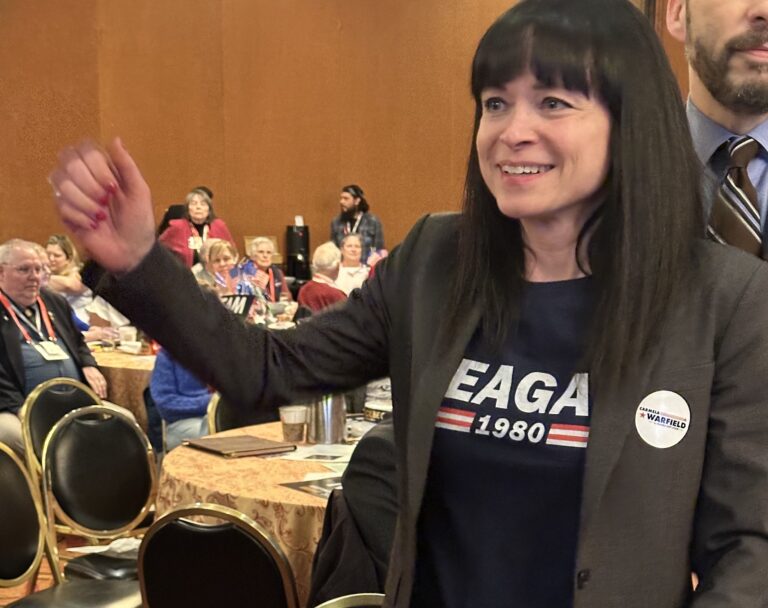
Carmela Warfield, party chairwoman, just returned from inaugural events in Washington, D.C. and wrote a to-the-point letter, published today on social media, that, without naming names, appears to be focused on Murkowski’s hatred of Trump. The letter says:
“The election of President Donald J. Trump was the beginning of the new Golden Age of America. His America First agenda brings much-needed change to our country and includes securing our border, unleashing America’s energy and natural resources potential, and rebuilding our military.
“The American people have spoken—President Trump was overwhelmingly elected with a mandate: an electoral college landslide and the popular vote by millions. For our part, Alaskans decisively delivered our endorsement of President Trump and his America First agenda by almost 14 points, because we Alaskans know President Trump’s agenda is laser-focused on rebuilding our great state and our nation.
“Unlike Biden, President Trump respects and values Alaska and understands Alaska‘s incredible importance to our nation—he knows the road to American energy dominance runs right through the great state of Alaska.
“The fact is, President Trump is already delivering on his promises to Alaska and America and has done more for our state in the past four DAYS than Biden did during the last four years, during which he enacted more sanctions against Alaska than the country of Iran.
“The President has carefully selected his cabinet to execute his America First agenda and to fulfill the promises he made to voters. This week, one nominee, Pete Hegseth, will be confirmed as Secretary of Defense. He has been thoroughly vetted and affirmed by many, including Sen. Roger Wicker, Chairman of the Senate Armed Services Committee, and our Senator Dan Sullivan, both of whom say Pete Hegseth is the right person for this job, qualified to help make America safe again and ensure Peace through Strength. This support is echoed by numerous members of our great military and our fellow Alaskans and Americans.
“We thank Senator Sullivan for his service to our country as a retired Colonel in the U .S. Marine Corps Reserve, for the care and due diligence he has shovm during the advice and consent process while vetting the President‘s nominees, and for his continued service as our U.S. Senator. By this time next month, President Trump’s cabinet will be in place and working to help the President rebuild our United States, including our military.
“The Alaska Republican Party stands proudly with our President — ready to work together to preserve our values and restore our great country. We also say THANK YOU, PRESIDENT TRUMP for the Executive Orders that will open our state for business! The Alaska Republican Party will be actively working to increase our number of registered Republicans, to make our Party even stronger, and we will be ready for the 2026 and 2028 election cycles. To all Senators, we say confirm President Trump’s cabinet and let’s get to work.
“Thank God, it is morning again in America, and we are ready and eager — for our country, for our state, for our children and future generations — to help President Trump Make America Great Again.”
Alaska Congressman Nick Begich III took a break last year from campaigning for Congress to hunt for Kodiak brown bear on Kodiak Island. He had just finished attending the Alaska Republican convention, where he had a tremendous reception from delegates. And then he had a successful hunt. It was a good month.
Now, as the congressman for Alaska, his office in Washington, D.C. needed some decor to remind him of home. The brown bear hide has taken its place on the wall of his office in the Cannon Office Building.
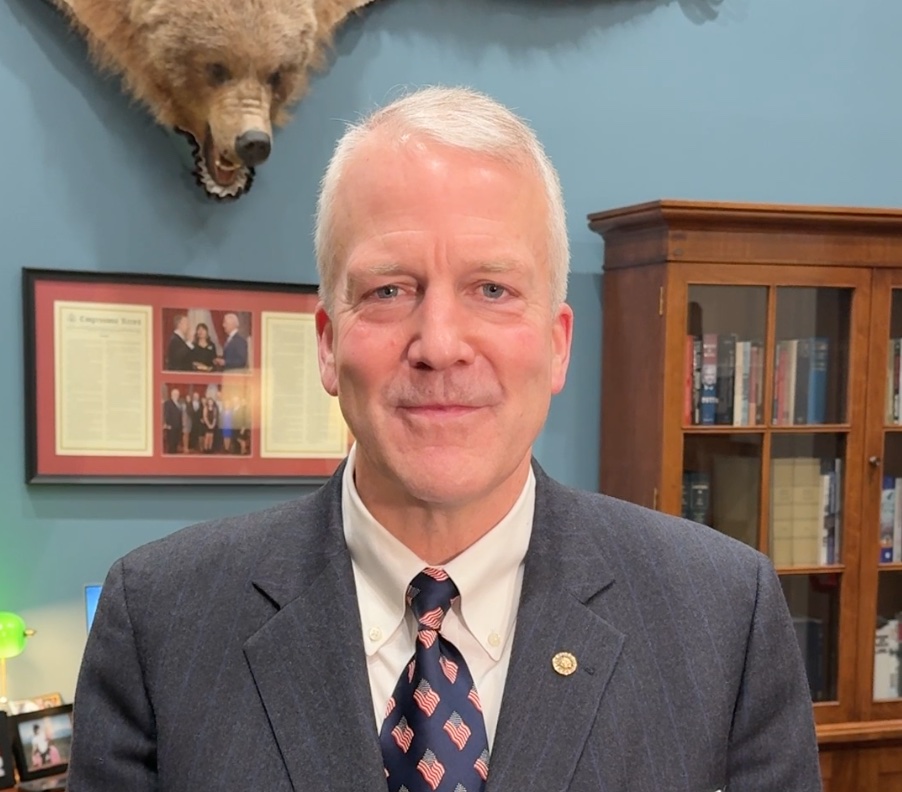
Alaska Sen. Dan Sullivan has a similar brown bear hide on the wall of his office in the Hart Building. So did the late Congressman Don Young, who served Alaska in Congress for 49 years and whose office was legendary for taxidermy mounts. Sen. Lisa Murkowski has Native art, masks, and regalia as her Alaska theme.
In 1972, as a student of history at the Kiev Pedagogical Institute, I participated in the archaeological excavation in Trans-Carpathia, an eastern part of the Carpathian Mountains.
The Carpathian Mountains form about a 1,000-mile-long range in Central and Eastern Europe. They stretch from west to east in an arc from the Czechia to Romania via Slovakia, Poland, Hungary and Ukraine.
It is an ethnically diverse region in the center of Europe, inhabited mostly by people who regard themselves as ethnic Ukrainians, Russians, Hungarians, Romanians, Slovaks, and Poles. It also has small communities of Jewish and Romani minorities.
Trans-Carpathia had reverted from Austro-Hungarian Empire to Hungary because of the dissolution of the Austro-Hungarian Empire in 1918, then reverted from Hungary to Czechoslovakia in 1944 because of liberation of Czechoslovakia from the Nazi occupation, and later was ceded to Soviet Ukraine in 1945 by a Czech-Soviet government agreement.
That year we excavated approximately 25,000 years-old Late Paleolithic cave in the vicinity of the remote Uglyanka village. One of the frequent visitors to our archaeological camp was a local naturalist and historian Peter Sova. He was in his mid-80s; and he knew everything and everyone about this region.
At one point, I asked Peter Sova, “Comrade Sova, what is your nationality?” “I am Trans-Carpathian,” replied Peter Sova with pride and without any hesitation.
“How can that be?” I questioned. “There is no such nationality, Trans-Carpathian.”
Peter Sova raised his eyebrows. “I was born and raised in the Austria-Hungarian Empire, in my youth years I lived under Hungarian and Czechoslovakian ruling and now it is the Soviet Ukraine; and all my life I lived in the same place—Trans-Carpathia,” he explained.
“So, you tell me, young man, what is my nationality?” he asked.
I was silent; truly, Peter Sova changed his citizenry four times during his life, while never relocating to any of the countries that took control over his homeland. Indeed, Peter Sova’s tragic life experiences are not uncommon in Europe—a continent, despite its great accomplishments in science, literature and arts, has been notorious for never-ending wars, regional conflicts and bloody revolutions. In short, European multiculturalism could be described as “from one to many.”
In contrast to Europe, the United States is an immigrant-accepting country that historically formed a unique landscape of multiculturalism “from many to one.” On our national coinage is the inscription in Latin E pluribus Unum— “from many to one.”
PART 2
I first visited Alaska in 1981, while participating in archaeological field research for graduate school at Brown University. Then, I was one of few, if not the only Soviet–born person in Alaska since 1945. In fact, from 1946 to 1986, or during the Cold War between the U.S. and the Soviet Union, travels to Alaska were officially closed to Soviet citizens and likewise Siberia for American citizens. There was an exception for select scientists, visiting both places for research–related purposes under the auspices of the International Research Exchange Board. In 1981, I already was a permanent resident of the United States, with a green light for traveling to Alaska.
Then, as a recent political refugee from the Soviet Union, my behavior was still typically Russian—direct, impulsive, critical, opinionated and emotional (certainly, a very general stereotype of the Russian character). Fortunately, my sponsors and hosts in Alaska, Charles Holmes from Anchorage and Glenn Bacon from Fairbanks, were trained and professional anthropologists; they cross–culturally were able to understand my behavior and occasional awkward expressions; and guide me through rough waters and unfamiliar landscapes. After 44 years, Charles and Glenn are still my good and loyal friends.
On one occasion, a rather humorous cross–cultural incident took place in Fairbanks. Glenn’s in-laws invited me to their house for dinner. To experience Russian cuisine, they asked me to cook some traditional Russian meals. So, I managed to cook a borshch (beets and cabbage soup) and authentic salad olivye (boiled potatoes cut in cubes, green peas, boiled eggs, cooked carrots cut into cubes, cubed ham, olives, onion, large pickles cut into cubes, and ½ cup of mayonnaise—all mixed together).
After dinner, I played a guitar and performed several Russian songs for everyone. At some point, Glenn’s mother-in-law approached me and confessed, “I had always envisioned Russians as tall, dark, with shaking hands. But you are different.” I only smiled in my response and took her description of a “Russian man” without offense. After all, I was the first Russian she had ever met, except for the demonic Russian characters portrayed in Hollywood.
Indeed, the process of acculturation and assimilation can be long and turbulent for many newcomers. It is critical, therefore, for American society to be inclusive, tolerant and educated in cross–cultural communication to welcome legal newcomers to our multicultural and exceptional country.
PART 3
As a political refugee who arrived in the United States from the former Soviet Union, with its entirely different socio-economic and political system, I had to learn about American culture and traditions through observation and daily exposure to the American way of life, its traditions, customs and symbols. For me, as for other immigrants in a foreign land, cross-cultural miscommunications and misunderstandings were unfortunate and unavoidable, especially in understanding uniquely American cultural symbols.
I learned a memorable lesson in the early 1980s, when I was a Ph.D. student in the Anthropology Department at Bryn Mawr College in Pennsylvania. At Bryn Mawr, the academic scholarship and stipend could cover only my immediate necessities. So, to supplement my $400 per month stipend, I worked as a security officer in the nearby St, Joseph’s University situated along the City Line Avenue of Philadelphia.
Then, St. Joseph’s was a medium-size private Catholic school, well-known for its basketball program, competing in the Atlantic 10 Conference. The school was also known for its Saturday night students’ parties on campus, followed by Sunday Mass and confession by most students at the Saint Joseph’s University Chapel. To my recollection, some 120 to 140 Catholic priests on the campus provided counselling to students and faculty members.
About 15–20 unarmed security officers, including myself, were employed by the University and were on duty 24/7 during different shifts. Among the officers were five supervisors—two sergeants, lieutenant, captain and a big boss—the chief of security. He was a retired high-ranking Philadelphia police officer. Most officers were black, but there was one Filipino and four or five Caucasians. I appreciated the multi-cultural environment of the group and learned a great deal about America’s ethnic diversity from this group.
One night, I was assigned to lower the American flag at the central location of the campus and bring it to headquarters. As I was performing my duty, the chief of security walked by, suddenly stopped, looked at me like an eagle at its prey, and commanded me to follow him to headquarters. I was lost in thoughts of what I had done wrong. Once at headquarters, he ordered all officers on duty to report there, immediately.
When everyone arrived, he pointed his index finger at me and firmly commanded, “I want this officer to never ever touch the American flag again. Do I make myself clear?” and he marched out of headquarters without further instructions.
The room was silent. I was absolutely puzzled and embarrassed by the scene, questioning myself— “Why me? What have I done? Will I be fired?”
The officers were confused and concerned about the incident. They quietly approached me, friendly tapping on my shoulders and expressing empathy with concerned faces. That day, I mentally wanted to go back to my former country—the Soviet Union. There, I, at least, knew what was culturally acceptable and what was not. And I questioned myself, “Is freedom worth all of this humiliation and prejudice?”
The next day, when the dust had settled, the lieutenant called me to his office and explained the nature of my mistake. “You know, when you lowered the flag, it touched the ground,” he said. “And it is a big no, no in our country. The chief is a Korean vet—he is a proud American.”
My ignorance about the treatment and respect of the essential U.S. symbol—the American Flag—was a critical experience in my understanding of its cultural significance. No grudges, no excuses, no going back to my former country.
Lesson learned, lesson appreciated, and lesson respected!
Alexander B. Dolitsky was born and raised in Kiev in the former Soviet Union. He received an M.A. in history from Kiev Pedagogical Institute, Ukraine, in 1976; an M.A. in anthropology and archaeology from Brown University in 1983; and was enroled in the Ph.D. program in Anthropology at Bryn Mawr College from 1983 to 1985, where he was also a lecturer in the Russian Center. In the U.S.S.R., he was a social studies teacher for three years, and an archaeologist for five years for the Ukranian Academy of Sciences. In 1978, he settled in the United States. Dolitsky visited Alaska for the first time in 1981, while conducting field research for graduate school at Brown. He lived first in Sitka in 1985 and then settled in Juneau in 1986. From 1985 to 1987, he was a U.S. Forest Service archaeologist and social scientist. He was an Adjunct Assistant Professor of Russian Studies at the University of Alaska Southeast from 1985 to 1999; Social Studies Instructor at the Alyeska Central School, Alaska Department of Education from 1988 to 2006; and has been the Director of the Alaska-Siberia Research Center (see www.aksrc.homestead.com) from 1990 to present. He has conducted about 30 field studies in various areas of the former Soviet Union (including Siberia), Central Asia, South America, Eastern Europe and the United States (including Alaska). Dolitsky has been a lecturer on the World Discoverer, Spirit of Oceanus, and Clipper Odyssey vessels in the Arctic and sub-Arctic regions. He was the Project Manager for the WWII Alaska-Siberia Lend Lease Memorial, which was erected in Fairbanks in 2006. He has published extensively in the fields of anthropology, history, archaeology, and ethnography. His more recent publications include Fairy Tales and Myths of the Bering Strait Chukchi, Ancient Tales of Kamchatka; Tales and Legends of the Yupik Eskimos of Siberia; Old Russia in Modern America: Russian Old Believers in Alaska; Allies in Wartime: The Alaska-Siberia Airway During WWII; Spirit of the Siberian Tiger: Folktales of the Russian Far East; Living Wisdom of the Far North: Tales and Legends from Chukotka and Alaska; Pipeline to Russia; The Alaska-Siberia Air Route in WWII; and Old Russia in Modern America: Living Traditions of the Russian Old Believers; Ancient Tales of Chukotka, and Ancient Tales of Kamchatka.