A U.S. appeals court has put an end to former President Joe Biden’s SAVE plan, which made taxpayers pay for student loan debt taken out by college students.
The decision by the 8th U.S. Circuit Court of Appeals based in St. Louis said that Biden went beyond his authority when he ordered the Department of Education to forgive loans outright.
The lawsuit was brought by Missouri Attorney General Andrew Bailey and attorneys general of Alabama, Arkansas, Florida, Georgia, North Dakota, and Ohio. This was the third legal challenge of Biden’s illegal attempts to work around the law and force some $450 billion in student loans onto Americans who did not sign for those loans.
“We obtained another court order BLOCKING an illegal Biden-era student loan scheme,” Bailey wrote on X on Tuesday. “Though [Biden] is out of office, this precedent is imperative to ensuring a President cannot force working Americans to foot the bill for someone else’s Ivy League debt. HUGE win.”
“The Secretary has gone well beyond this authority by designing a plan where loans are largely forgiven rather than repaid,” the court wrote.
Now that Donald Trump is back in the White House, it is unlikely the Department of Education will appeal the ruling.
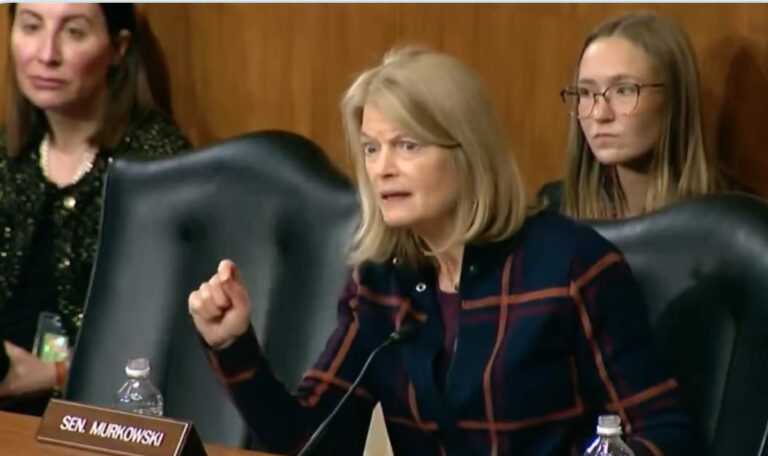
Sen. Lisa Murkowski’s staff earned an average of $92,454 in 2024, which is 33% higher than the average Senate staff member, according to Legistorm, a website that tracks congressional staff movements.
Murkowski’s staff earns more than any other staff in the Senate, the website reported. Sen. Dan Sullivan’s staff only earns 13% more than the average.
Legistorm reports that staff members for Florida’s two U.S. senators anchor the bottom of the pay scale, earning 22.4% less than the Senate average.
Former Sen. Marco Rubio, now Secretary of State, paid the lowest average salary of any senator, with his staff earning $45,000 on average, 35% below the chamber average and less than half what Murkowski pays her staff.
Murkowski has said she does not agree with President Donald Trump’s efforts to reduce government, saying on the record that reducing federal expenses is fine but he is not going about it the right way; she did not offer a suggestion about what the right way would be.
Earlier this week she indicated on X that cuts to a few dozen federal forestry and park jobs in Alaska will do more harm than good.
As debates over the state’s funding of the Base Student Allocation suck the oxygen out of the education committee rooms, there are a few education-related bills worth looking at.
A couple of good ones are from staunch conservative Rep. Jamie Allard. A few surprisingly good ones are from liberal-to-center-left legislators. Then there are the requisite woke bills from staunch liberal Sen. Elvi Gray-Jackson.
SAVE GIRLS’ SPORTS. House Bill 40 is Eagle River Rep. Allard’s repeat attempt at getting girls’ sports reserved for girls – real girls and only real girls. Her bill passed the House in the final days of the last session, but the Democrat-controlled Senate didn’t do anything with it. To be fair, they had very little time to do anything with it, but the time crunch provided an excellent excuse not to consider it. Fear not, Allard has – rightfully so – introduced it again.
President Donald Trump championed this cause successfully during his 2024 presidential campaign, and polls reflect a clear majority of Americans are for keeping guys out of girls’ sports. Despite the recent actions taken by the president and U.S. House of Representatives, our state still needs a law to ensure the safety of our female athletes and the continued success of girls’ and women’s sports. If nothing else, floor votes will identify those legislators who either support girls’ sports or think it’s okay for female impersonators to compete against true females.
IT’S A GRAND OL’ FLAG.House Bill 45is another Rep. Allard bill. This time, she has the radical notion that the American flag should be displayed at all state buildings and inside each schoolroom. Under this bill, the American flag shall have prominence when displayed, meaning no other flag will fly higher than the stars-and-stripes. Additionally, this bill will prohibit government entities from displaying flags that represent political viewpoints, including matters concerning race, sexual orientation, or gender. In other words, gender-bending teachers who seek to indoctrinate students with pride flags of various color schemes won’t be allowed to do so.
By the way, it’s been a heyday for capitalist-minded flag makers because, according to the Human Rights Campaign, there are now 25 different flags to represent the ever growing list of alternative lifestyles and sexual preferences. Going out on a limb here and assuming the people waving these multi-colored flags tend to be the same folks who cheer when an American flag is set on fire or an athlete makes a stand by kneeling for the red-white-and-blue, it is ironic to see such importance placed on cloth representations. Here’s just a smattering of the different flags now available:
Pride
Philadelphia Pride
Progress Pride
Lesbian
Bisexual
Pansexual
Intersex
Asexual
Nonbinary
Genderqueer
Gender-fluid
NO PHONES IN SCHOOL. House Bill 57 would prohibit the use of cell phones in public schools during regular school hours. It was introduced by Rep. Zack Fields, a Democrat from Anchorage. Senate Bill 18 is a companion bill introduced in the Senate by Anchorage Democrat Sen. Bill Wielechowski. Fields and Wielechowski aren’t exactly middle of the road politicians, but these bills make sense and deserve support. Removing cell phones from school grounds will eliminate distractions for students and teachers alike, and will promote a better learning environment.
Author’s unsolicited trip down memory lane . . . As kids, some of us used to stuff a transistor radio in our jacket or pants pockets and run a wired earpiece through our clothes so we could surreptitiously listen to postseason baseball broadcasts during school. This only occurred over a few days in October, and while it bordered on disrespectful and villainous, it was often done with a wink from the teacher. In fact, on one occasion, Miss Sciapiti, our easy-on-the-eyes sixth grade home room teacher and the first crush for many of us boys at John Muir Elementary School, told me to take out my earpiece and turn off my radio . . . and then had the play-by-play piped in through the intercom so the whole class could hear. That was it – I was smitten.
We, obviously, couldn’t do all the things with transistor radios that teachers have to put up with these days; i.e., make phone calls, watch videos, exchange text messages, or record videos. After all, those transistors only received AM radio signals. Today’s teachers have to put up with many distractions and distracted students. Taking away the biggest sources of those distractions makes sense.
LEARNING ABOUT MONEY.Senate Bill 22 is another bill introduced by Sen. Wielechowski, and it makes sense, as it mandates a financial literacy course for all high school students. All people are going to have to deal with opening bank accounts, paying bills, and balancing checkbooks. This is pragmatic learning, and well worth our teenagers’ time to learn about banking, savings, investing, budgeting, and filing for student aid; and with credit debt at an all-time high, we can nary afford to continue ignoring this unavoidable part of life.
CIVICS CLASS MAKING A COMEBACK. Senate Bill 23, introduced Senate President Gary Stevens of Kodiak, a registered Republican who caucuses with the Democrats, is another piece of common sense education legislation. It includes topics that really should already be taught in our public schools including: founding of the United States, including foundational documents and the principles of government; federalism; the three branches of government; civil liberties and rights; campaigns and elections; domestic and foreign policy; comparative governments; and international relations.
That these topics are not being taught in our public schools is a tragedy. As long as credit is being given to the likes of Fields, Wielechowski, and Stevens, we might as well heed the commentary of another unlikely source: legendary musician and nonconformist, Frank Zappa, who had this to say about the dire state of constitutional knowledge and citizen awareness:
“One of the things taken out of the curriculum was civics. Civics was a class that used to be required before you could graduate from high school. You were taught what was in the U.S. Constitution. And after all the student rebellions in the Sixties, civics was banished from the student curriculum and was replaced by something called social studies. Here we live in a country that has a fabulous constitution and all these guarantees, a contract between the citizens and the government – nobody knows what’s in it . . .”
So, now that we’ve have reached across the philosophical and political ire to give credit where credit is due, it’s time to go after the bills that will not improve our schools.
Sen. Elvi Gray-Jackson of Anchorage is as nice a person as there is in the Legislature, but she is also one of the most liberal, and she seeks to spread her brand of wokeness by introducing a few unnecessary bills – and one potentially dangerous bill, such as:
ASIAN/PACIFIC ISLANDER CURRICULUM.Senate Bill 6 will require the inclusion of lessons on the history and contributions of Asian/Pacific Islanders to students in kindergarten through 12th grade. This adds another layer of non-basic educational requirements that already keep our students from concentrating on core subjects and pragmatic lessons.
Now, before you start hurling racist epithets at me, please know that my wife is of Japanese, Okinawan, and Filipina heritage and was born and raised in Hawaii. You can’t get much more Asian/Pacific Islander than that, and it means that the people I love and care for most – my wife and the five children we raised together – are Asian/Pacific Islander (and the kids get to throw in Slovak ethnicity as well). We made sure they learned of their varied, rich, and diverse heritages because that’s part of who they are . . . and it makes for some interesting mealtimes: chicken adobo and haluski, miso soup and stuffed cabbage.
MANDATORY CPR TRAINING.Senate Bill 20 calls for mandatory CPR training for public school students. While not necessarily a bad thing, it becomes another state-mandated curriculum requirement that takes valuable school hours away from core subjects. It is my understanding that training of this nature is already available to any student who wants it.
MENTAL HEALTH EDUCATION. Senate Bill 41 is something of a rehash of Sen. Gray-Jackson’s previous attempts at making mental health education a part of the public school curriculum. It sounds rather innocuous, but the mandatory lessons it dictates will be crafted by state-level bureaucrats and there is a wide swath down which the topic of mental health can travel if this bill becomes law.
Giving education bureaucrats the authority to develop mental health guidelines for children is a dangerous proposition, as we have all seen what leftist idealogues do develop curriculum. It opens the door for topics such as racism, equity, sexuality, and gender to creep their way into public schools under the guise of mental health.
Tim Barto is vice president of Alaska Family Council and a regular contributor to Must Read Alaska.
In my commentary of Dec 22, 2024 in Must Read Alaska I stated, “Now is the time to remove the impediments to progress in oil and gas development in Alaska so our Cook Inlet natural gas production will become popular again, and increased production of oil from the North Slope can once again be a major focus for our efforts.
That is where our economy will be built and which will ensure our ability to put forth balanced budgets in the future, while still providing full Permanent Fund dividends to our citizens.”
On Nov 24, 2024 my commentary included “Instead of only considering raiding the dividend, why not consider long-term finances for the State of Alaska? I think a priority for this legislative session is to work on encouraging, incentivizing and enabling legislation to ensure active interest in any lease sales which might be arranged in the near future.
One of the most important objectives for Alaska to work on at this time is to get increased oil flow in the Trans Alaska Pipeline, with a goal of a million barrels a day or more so that we can have assured revenue sufficient to fund the necessary items of the annual budget well into the future. The way to ensure a balanced budget with the least hassle is to ensure future revenues. Oil and gas are the best revenue sources we have.”
If we can get some short timeline projects in the works that can get some additional crude oil into the Trans Alaska Pipeline while the longer term projects are being developed, would help Alaska fiscally. “North to the Future” won’t work if there are not some positive actions towards economic development through our extractive industries.
SB 92 or the “Yundt Tax” offered by Wasilla freshman Sen. Rob. Yundt is definitely an action that will hinder desire for oil producers to invest in increased oil production for Alaska. The uncertain tax on oil and gas producers is much of what drove the major oil companies away. Now is time to encourage oil and gas production as well as mining and timber.
We need elected officials who find ways to reinvigorate our industries which have been sabotaged by unnecessary environmental constraints that have halted oil production projects which could have kept the coffer full. Alaska is not warming two to three times faster than the rest of world, as I have pointed out a number of times.
Then for another boost for Alaska, do whatever it takes to get more gas wells drilled in Cook Inlet. There is enough gas to last maybe another 200 years. The lowest cost way forward for energy in the immediate future is to poke holes into the Kitchen Light Unit. And then at least get the gas pipeline from the North Slope to Fairbanks so we can reduce the wood burning in the interior and maybe build a natural gas fueled power plant in Fairbanks to feed the Railbelt Electric System from the Northern end. We need energy, high density energy, which can be there year round.
Robert Seitz, is a professional electrical engineer and longtime Alaskan.
The Trump Administration is ending the Biden-era bans on incandescent light bulbs and household appliances.
U.S. Secretary of Energy Chris Wright announced Friday that the Department of Energy will delay the implementation of seven restrictive home appliance regulations introduced by the Biden Administration.
Secretary Wright said the decision aligns with President Donald Trump’s commitment to easing financial burdens on American households.
“A top priority for President Trump is lowering costs for American families,” Wright stated. “Today’s announcement will foster consumer choice and lower prices – it is a win for all Americans. The people, not the government, should be choosing the home appliances and products they want at prices they can afford.”
The postponed efficiency standards impact the following categories of home appliances:
Central Air Conditioners
Clothes Washers and Dryers
General Service Lamps
Walk-In Coolers and Freezers
Gas Instantaneous Water Heaters
Commercial Refrigeration Equipment
Air Compressors
Additionally, the Energy department is introducing a new energy efficiency category specifically for natural gas tankless water heaters. This adjustment exempts these appliances from the previous administration’s stringent efficiency rules, giving consumers greater flexibility in choosing cost-effective options for their homes.
Under Biden, New non-condensing, natural gas-fired water heaters would be prohibited for sale starting in 2029.
The decision is part of a broader effort by the Trump Administration to roll back regulations that many economists say have led to increased prices and reduced appliance performance.
The DOE’s actions were announced alongside a parallel initiative by the Environmental Protection Agency to revise all Biden-era “WaterSense” specifications that curtailed through regulation bathroom and kitchen faucets, residential toilets, and sprinkler nozzles.
Topline: The White House subscribes to POLITICO Pro, a premium service meant to inform the public what is happening inside the White House, spending $16 million since 2017, according to a new report from OpenTheBooks.com.
It’s part of $44.2 million the federal government has paid POLITICO in subscription fees since 2017: $32.3 million from 38 different executive agencies and subagencies, and $11.9 million from offices in the House of Representatives.
Key facts: The Department of Health and Human Services is POLITICO’s best customer on the Hill, with $6.9 million spent on subscriptions since 2017.
President Donald Trump’s administration spent between $1 million and $3 million on POLITICO subscriptions during each year of his first term. Then, spending increased under President Joe Biden, reaching a high of $7.8 million in 2023.
The premium subscriptions to POLITICO Pro cost nearly $3,000 per person.
The Pro service is meant to help “lobbyist, executive, consultant, researcher, strategist, or analyst” get “the inside scoop on the public policy and players that matter most to you” with “elite access” from POLITICO’s reporters.
One might expect that having a job inside the actual White House would be a better kind of elite access than anything POLITICO can provide.
The government has not sent any direct assistance to POLITICO, aside from a $1,000 Covid-19 relief grant in 2020.
Background: On Feb. 5, White House Press Secretary Karoline Leavitt announced that the more than $8 million the U.S. Agency for International Development has sent to POLITICO would be canceled by the Department of Government Efficiency. There was only one problem: USAID has only spent $44,000 on POLITICO subscriptions, OpenTheBooks found in its review of federal data.
The false claim originated with a social media post on X. It was picked up by online political commentators, and within hours was repeated by Leavitt.
“Upon coming out here to the briefing room, I was made aware of the funding from USAID to media outlets including POLITICO,” Leavitt said in her press briefing. “The more than $8 million in taxpayer dollars that have gone towards essentially subsidizing subscriptions to POLITICO will no longer be happening.”
Rep. Lauren Boebert also falsely claimed during a Congressional oversight hearing that POLITICO is laying off staff because its nonexistent USAID funding was cut, Will Sommer of the Washington Post reported.
Summary: Paywalls and subscription fees are enough of a nuisance in taxpayers’ personal lives without having them funding the White House’s reading material.
The #WasteOfTheDay is brought to you by the forensic auditors at OpenTheBooks.com.
The Iditarod start has been moved to Fairbanks due to lack of snow on the route that usually leaves from Willow. Over the weekend, mushers reached out to the Iditarod committee with their concerns, saying that aerial footage of the usual route shows there are miles upon miles of trail that has no snow on it.
The committee wrote on Monday afternoon:
“After careful consultation with our dedicated Trail Breakers and thorough review of current trail conditions, the Iditarod Trail Committee has made the difficult but necessary decision to move the Official Restart of the 2025 Iditarod Trail Sled Dog Race to Fairbanks, Alaska. Previous flyovers and information collected at the end of January proved for a safe, very passable trail on the Southern Route for all areas except this stretch which was still questionable. Unfortunately, due to the absence of snowfall since the January 31st decision to take the Southern Route, the on-the-ground data that our Trail Breakers provided today after their assessment has deemed this portion of trail unpassable.
“Our Trail Breaker crew has just spent over a week prepping the trail from Skwentna through to Rohn, historically the most challenging terrain of the race. After a heavy discussion with our lead Trail Breaker and other friends of the race including local knowledge, and with no new snow on the horizon, there is simply no way we can allow the teams to progress through that 20-mile stretch just before the Salmon River, 20 miles from Nikolai. It is a shame because the remainder of the trail is in great shape all the way to Nome,” said Race Marshal Warren Palfrey.
The Anchorage Ceremonial Start will still take place as scheduled at 10 a.m. in Downtown Anchorage on Saturday, March 1, 2025.
Mushers and their crew will have to pack up their dogs and sleds and head to Fairbanks after the ceremonial start, which is part of the Anchorage Fur Rondy festival and which is also a money-maker for the racers.
The official restart will now occur at 11 a.m. on Monday, March 3, 2025, in Fairbanks.
The 2025 route will run as follows: Fairbanks, Nenana, Manley, Tanana, Ruby, Galena, Nulato, Kaltag 1, Eagle Island 1, Grayling 1, Anvik, Shageluk, then looping back up river to Grayling 2, Eagle Island 2, Kaltag 2, then to Unalakleet then continuing onto Nome using the traditional checkpoints between Unalakleet and Nome.
“While this change will be a logistical feat for many, it is a necessary adjustment to ensure that the race can proceed safely and fairly. The Iditarod remains committed to upholding its legacy as the most challenging and exciting sled dog race in the world, and we appreciate the understanding and support of the community, mushers, and fans,” the race organization said.
Further updates will be made available on our website and through official race channels.
A new executive order signed on Valentine’s Day ended mandated Covid jabs for children in K-12 schools, as well as for university students.
The K-12 schools and universities either stop the mandated Covid jabs or they stand to lose millions of dollars in federal funding.
The executive order stated some universities and school districts continue to force children and young adults into getting the Covid jab and have made it a requirement for them to remain in school or get admitted to a university.
Parents should be able to make decisions for their children and young adults should be able to make their own decisions. Forcing these children and young adults to get a Covid jab is an infringement on their personal freedom and interferes with parents’ rights..
The EO went on to state that discretionary federal funds should not be used to directly or indirectly support or subsidize an educational service agency, State educational agency, local educational agency, elementary school, secondary school, or institution of higher education that requires students to have received a Covid-19 vaccination to attend any in-person education program.
The EO includes the following:
“The Secretary of Education must issue guidelines to all educational entities as soon as possible regarding “those entities’ legal obligations with respect to parental authority, religious freedom, disability accommodations, and equal protection under law, as relevant to coercive COVID-19 school mandates.”
“Within 90 days the Secretary of Education together with the Secretary of Health and Human Services “shall provide to the President, through the Assistant to the President for Domestic Policy, a plan to end coercive COVID-19 school mandates, consistent with applicable law, and including, as appropriate, any proposed legislation.” The plan will include:
A list of discretionary Federal grants and contracts provided to these entities that are not in compliance with the guidelines issued.
Each executive department or agency’s process for preventing Federal funds from being provided to, and rescinding Federal funds from these entities that are non-compliant with the issued guidelines, to the maximum extent consistent with applicable law.
This EO fulfills a promise President Trump made on the campaign trail that he would “not give one penny to any school that has a (Covid) vaccine mandate”
According to the CDC, Alaska had zero deaths from Covid in the age group 0-24through October 2021. There were no Covid deaths in that age group for the following years as well.
=
Now the Alaska Department of Education and Early Development and the Department of Health must send guidance to all districts and schools to implement this EO once direction comes from the US Department of Education.
So, what would be the fiscal impact on Alaska if this EO is not followed?
In Fiscal Year 2023 Alaska received more than $138 million in federal funds, not including federal Impact Aid funds ($74 million) and E-Rate funding of $100 million.
Some of this $138 million comes for the school lunch program, Title I funding for low-income students, and funding for the disabled. How much of the funding will be impacted by President Trump’s EO will be determined by the USDOE.
The State Department of Education and Early Development must guarantee that the K-12 schools/districts do not have a Covid vaccine mandate in place. This needs to be a documented requirement before the schools/districts receive some of the millions of federal funding.
It will be interesting to see how this plays out.
Will the K-12 schools and universities merely hide the Covid vaccine mandate?
Will parents and students be apprised of the EO and the rescinded Covid mandates? We await answers from the local districts and the Department of Education and Early Development.
David Boyle is the education writer at Must Read Alaska.
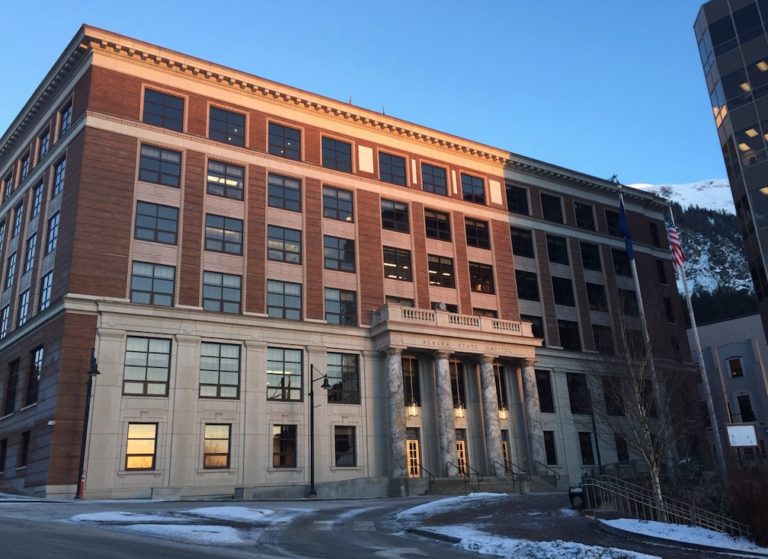
Protesters converged on the Alaska Capitol and other capitols around the country to express their disapproval of President Donald Trump and his Department of Government Efficiency, run by his appointee Elon Musk.
The crowd appeared to be about 250.
They converged on the State-owned building because no one is at the Federal Building in Juneau, due to it being a federal holiday.
Signs read, “BAD DOGE,” “CALL IT WHAT IT IS A COUP,” “MUSK MUST GO,” RESIST FASCISM,”and “FREEDOM MEANS GAY TRANS FEMALE IMMIGRANTS.”
Although most of the raucous crowd of federal employees stayed outside the state Capitol, a few came inside to the press office to make sure the mainstream media appropriately covered their grievances.
The crowd was larger than the usual protests at the Capitol, in part because of it being a federal holiday, when federal workers in non-essential positions have the day off. Many of them brought their dogs. But unlike other protests, few children were at this one, even though schools were closed due to Presidents Day. Juneau, which is largely a government town, is facing a population crash because the current generation is not having children. By 2050, the state estimates the population, now at about 31,500, will be down to 27,000, what it was in 1990.