Thursday, May 7, 2026
Home Blog Page 260

U.S. Department of Education says ‘never mind’ on Covid-era school funding dispute with Alaska

9

When Covid relief funds were distributed to states in 2021, Alaska officials directed those funds to districts according to the state’s lawful formula.

Earlier this year, Alaska Department of Education Commissioner Deena Bishop was sent a stern letter from the U.S. Department of Education, accusing it of not distributing the funds according to the fed’s “equity” test. The federal department said it would withhold $17.4 million from the state and put it on a “high-risk grantee” list unless the state distributed the funds according to the federal equity formula that has been enacted during the Biden Administration.

Read Gov. Dunleavy’s reaction to the letter here:

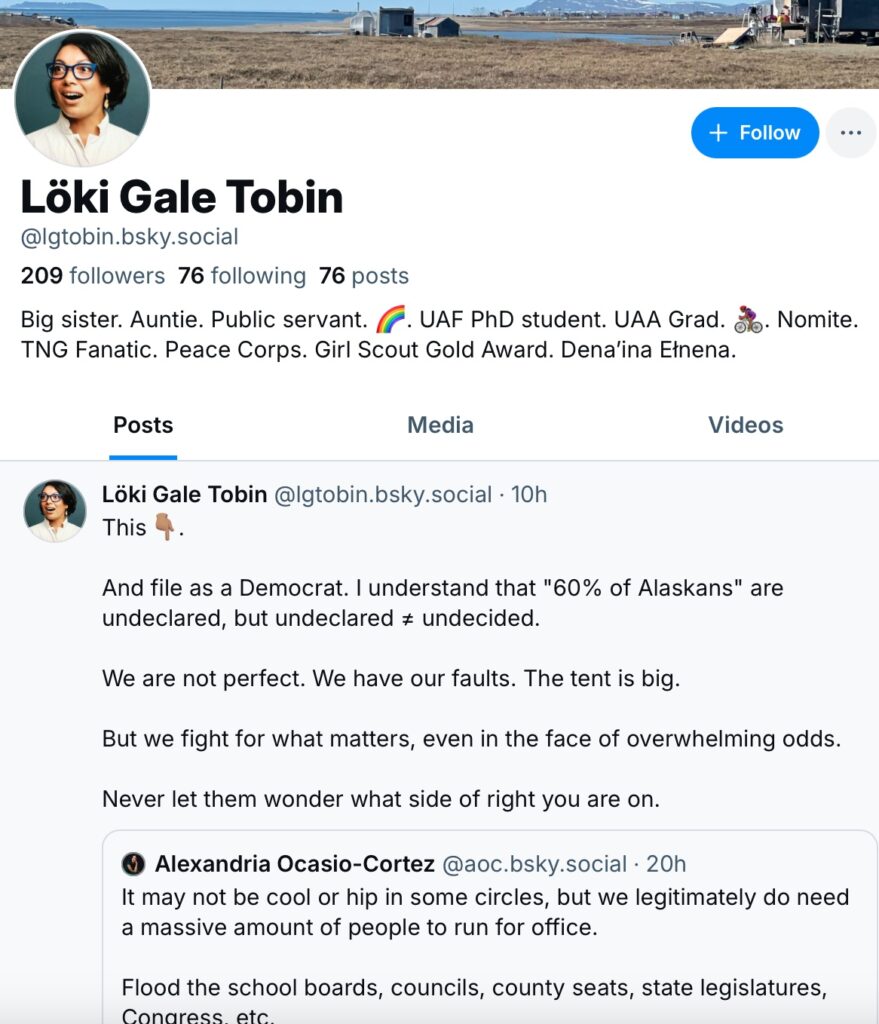
Democrat lawmakers like Sen. Loki Tobin, chairwoman of he Senate Education Committee, jumped on the bandwagon and all but accused the Dunleavy Administration of racism.

“The state is on the hook for an additional $29 million while putting in jeopardy hundreds of millions of dollars in federal grants,” Tobin said in March of 2024, after the federal government sent its letter. “Despite being assured by the department and commissioner that a resolution was in the works, the state has failed its duties.”

Sen. Jesse Kiehl, another Democrat member of the Senate Education Committee told reporters, “”It doesn’t look like Alaska Department of Education watched that very closely.”

Alaska was singled out as the only state put on the federal Department of Education’s naughty list, for not meeting the novel “equity requirements” for use of the funds.

But at the time, Commissioner Bishop wrote, “Alaska’s appropriations complied with the plain language and clear intent of Congress when it passed ARPA and its MOEquity provision; state funding for education was not cut for low-income or any other students during fiscal years 2019-2023 in order to take advantage of new federal funding; instead, Alaska continued to apply its equalized funding formula as required by ARPA.”

Now, as news reporters have all gone off to celebrate Christmas, Hanukkah, Festivus, and Kwanzaa, the U.S. Department of Education has quietly backpedaled, issuing a new letter.

The gist of the letter is “never mind.”

Government agencies eager to hide unfavorable or embarrassing news often use the time around Thanksgiving, Christmas, and the New Year to issue certain decisions. It’s sometimes called the holiday news dump — news released when people are least paying attention.

“I write regarding the Alaska Department of Education and Early Development’s (AK DEED) compliance with the American Rescue Plan (ARP) Act fiscal year (FY) 2022 and FY 2023 maintenance of equity MOEquity) requirements under the Elementary and Secondary School Emergency Relief (ESSER) program,” wrote Adam Schott, principal deputy assistant secretary of the Department of Education, who was tasked with the federal retraction letter.

“After the U.S. Department of Education (Department) inquired about the State’s final budget, AK DEED provided the Department with data on December 5, 2024, demonstrating that Alaska’s FY 2024 and FY 2025 approved budgets included one-time funding increases to the Base Student Allocation (BSA) used in the State’s education funding formula. Based on this updated information and AK DEED’s analysis in this December 5, 2024, submission, it appears that the approved BSA increase across both fiscal years exceeds the combined FY 2022 and FY 2023 MOEquity shortfall for all four impacted LEAs,” he wrote.

In other words, the state did nothing wrong in distributing the federal funds according to the existing state formula.

“Based on the verified data and analysis described above, and to reflect the Department’s continued interest in ensuring that as much funding as possible reaches Alaska’s neediest students and LEAs, the Department is lifting the July 30, 2024, withholding actions for FY 2022 and FY 2023 and releasing the associated $17,450,118 of Alaska’s ARP ESSER award that was previously withheld due to AK DEED’s non-compliance with the MOEquity requirements.

“We now consider these matters regarding Alaska’s compliance with the MOEquity provision in FY 2022 and FY 2023 closed.”

And thus, at Christmas, the federal Department of Education has folded on the matter and no longer designates Alaska as a “high-risk grantee” for its Covid grants, and will get the more than $17.4 million that the federal government has been holding onto for two years while it punished Alaska for a ginned-up offense that appears to have been political in nature, and was made more so by Senate Democrats like Loki Tobin.

Tim Murtaugh: ProPublica’s attempted hit piece on Pete Hegseth shows drive-by media are still at it

By TIM MURTAUGH

Rush Limbaugh used to call them the “drive-by media.”

That’s how the legendary talk show host used to describe journalists who blast out reckless stories like criminals spraying gunfire from moving vehicles.

“Their actions sometimes are destructive and ruinous to individuals,” Limbaugh told a caller named Brad from Topeka, Kansas, in 2007, when asked why he used the phrase. “They kill the reputations of people, or try to. And then they get in the convertible, head on down the highway, and find the next group of people to do the same thing while there are those of us who have to go in and clean up the mess.”

Well, the drive-by media are at it again, because that’s exactly what the leftist publication ProPublica tried to do to Pete Hegseth, President-elect Donald Trump’s designee for secretary of defense.

At 12:52 p.m. on Dec. 10, a ProPublica reporter emailed Mr. Hegseth’s team asking why the nominee had “made false statements” about being accepted to West Point, the U.S. Military Academy. The liberal outlet had decided to fact-check that aspect of Mr. Hegseth’s biography, and the school had twice told him that not only was he not accepted to the institution, but he had never even applied.

“Why did Mr. Hegseth say he got in to West Point when that is not true?” ProPublica asked, and set a one-hour deadline for a response.

Had the story had been published and had been accurate, that the nominee to lead the Department of Defense had lied about getting into West Point, then it would have immediately killed any chance he had of being confirmed by the Senate.

But it wasn’t true, and Mr. Hegseth could prove it. He rapidly produced his acceptance letter from January 1999.

The West Point public affairs office admitted having made an error, and the ProPublica story got shut down in its tracks. Little did Mr. Hegseth know, when he kept that document as a memento, that it would play such an important role 25 years later.

When the email traffic from ProPublica was released, the one-hour deadline and accusatory tone of the messages made it clear that the publication had already reached its conclusion before it contacted the target of its hit piece. Rather than inviting Mr. Hegseth to explain the discrepancy between his claims about West Point admission and the school’s initial denial, ProPublica chose to outright accuse him of lying about it, and you could practically feel the glee seeping from the text of the email.

When an uproar arose about ProPublica’s tactics, mostly in conservative media, the outlet’s editor took to the social media platform X to offer a defense.

“So: No, we are not publishing a story,” Jesse Eisinger wrote. “This is how journalism is supposed to work. Hear something. Check something. Repeat steps 1 and 2 as many times as needed. The end.”

Except that’s not how journalism is supposed to work.

Fair journalists don’t load up hit pieces against unaware subjects and allow their intended target only one hour to gather and supply a response.

But then again, fair journalists might recognize that the real story was that someone at West Point misled the media about the military record of the nominee for secretary of defense. It seems likely that ProPublica would find it newsworthy if other government agencies made glaring misstatements to the media. Still, it elected to drop the whole thing in this instance.

Again, it’s worth noting that if Mr. Hegseth had not kept a letter he received a quarter century ago, this story likely would have gone the other way. The barrage that ProPublica would have unleashed would have been deafening, and the drive-by media would have struck again.

But Mr. Hegseth survived, and his nomination now appears to be on steady ground.

We’ve just come through an election where the corporate media spent all its time lionizing one candidate while demonizing the other. Vice President Kamala Harris, the Democrat, was the media darling, while Mr. Trump, the Republican, was the devil incarnate.

According to a Media Research Center analysis of the broadcast networks — ABC, CBS and NBC — Ms. Harris received 78% positive coverage versus 22% negative coverage during the campaign. Regarding Mr. Trump, those numbers flipped — 85% negative stories versus only 15% positive.

The center called the network reporting “the most wildly imbalanced in history” and “the worst ever.”

And if the Pete Hegseth-ProPublica fiasco is any indication, the media collectively haven’t improved much since the election.

Tim Murtaugh is a Washington Times columnist and the founder and principal of Line Drive Public Affairs LLC. He served as a senior adviser to the 2024 Trump campaign and as communications director of the 2020 Trump campaign. This column first ran in the Washington Times.

They hid the decline: Wall Street Journal’s bombshell on Biden reveals White House conspiracy

The Wall Street Journal wrote on Thursday that White House aides immediately “insulated” President Joe Biden, even from his top Cabinet members, from the very start of his presidency in 2021.

This means top aides have been lying, not only to people within the administration, but to the entire country, all while understanding and trying to disguise the fact that Biden was unable to function as president.

The Journal report starts by revealing that during the 2020 campaign, “Jill Biden campaigned so extensively across Iowa that she held events in more counties than her husband—a fact her press secretary at the time, Michael LaRosa, touted to a local reporter.” That press secretary was then told to immediately call the reporter back and downplay the fact that Joe Biden, then 77, was unable to keep up with his wife, who was doing the campaign for him while he stayed in the basement of their home and read prepared scripts.

After he took office in January of 2021, his official staff quickly realized they had to rearrange his schedule to accommodate for his episodes of fuzzy-headedness and fatigue.

It wasn’t until Democratic lawmakers and donors spoke to the Wall Street Journal that the extent of this coverup has been known, with staff shielding him from the public and the press in a coordinated fashion.

By the spring of 2021, Biden’s “good days and bad days” were forcing schedule changes routinely. During one meeting on national security, one senior official told an aide at the time: “He has good days and bad days, and today was a bad day so we’re going to address this tomorrow,” as relayed by the aide to the Journal.

As his first year as president continued, officials were told that briefings must be short and to the point, meetings with top cabinet members, including national security officials, became rare. According to the Journal, one cabinet member finally gave up on trying to schedule a talk with Biden after being repeatedly put off.

Biden was so mentally frail that he wouldn’t take a call from Rep. Adam Smith, Democrat chair of the House Armed Services Committee in the hours leading up to Biden’s catastrophic withdrawal of troops from Afghanistan, when 13 U.S. soldiers died, 45 were injured, and 170 Afghan civilians were killed. The last military aircraft left Afghanistan on Aug. 30, 2021, just nine months into Biden’s presidency, when already his staff had formed a shield around him. Biden left the Taliban in charge of $7 billion in military weapons, aircraft, and equipment that he abandoned to the terrorists.

“I was begging them to set expectations low,” Rep. Smith told the Journal, because he thought the withdrawal was going to be more difficult than Biden was imagining. But he could not get a call through to Biden due to the protection racket.

The newspaper revealed that a voice coach was brought in to try to help Biden with his increasingly faint and whispery voice, described by the newspaper as a “fading warble.”

What the newspaper is describing is an extensive, coordinated cover-up that was executed at the same time the Democrats, including people like Rep. Mary Peltola, were describing Biden as not only competent, but sharp.

“I think that Joe Biden’s mental acuity is very, very on. He’s one of the smartest, sharpest people I’ve met in D.C.,” Peltola told NBC’s Meet the Press one year ago this month.

In February, it was determined that Biden could not be prosecuted for having highly classified documents at his house, because he has such poor memory issues, wrote Robert Hur, special counsel fo the Justice Department. Among documents stored along with various garage junk were papers that are still classified “up to the Top Secret level and includes Sensitive Compartmented Information, including from compartments used to protect information concerning human intelligence sources,” Hur said, including documents about Afghanistan and the U.S. military. While Biden could have classified documents as vice president, he kept them when he became a private citizen after leaving office in 2017.

A question now is whether Democrat voters will lose faith in their party leaders to tell them the truth, after such a coordinated propaganda campaign, where top operatives put power ahead of their country, has been revealed. Another question Americans might be asking is how much of this was a criminal act by staff members in the White House who knew full well that the lights were on, but nobody was home in Biden’s brain.

“There is a bigger problem here, and that is that I think Democrats are at the point where Republicans might have been right after the Bush election or after the Bush term was up, which is that I think Democrats are starting to mistrust their institutions,” Roginsky said. “And this goes back to a bipartisan effort to lie us into the Iraq war, not just by George Bush, but also by a lot of Democrats.

Senate Republican Minority Caucus announces committee assignments

The Alaska Senate Republicans, made up of six members who are serving in the minority after seven five Republicans jumped over to join the Democrat caucus, released the names of which minority members will serve on committees during the 2025-26 legislative session:

Sen. James Kaufman of Anchorage and Sen.-elect Mike Cronk of Tok will be seated on Senate Finance Committee.

Sen. Shelley Hughes of Palmer and Sen. Robert Myers of North Pole will be on the Resources Committee

Other committee assignments include:

Mike Cronk – Finance, Arctic Affairs, Ethics (alternate)

Shelley Hughes – Resources, Health & Social Services, World Trade

James Kaufman – Finance     

Robert Myers – Natural Resources, Judiciary 

Mike Shower, Senate Minority Leader of Wasilla – Transportation, Rules, Joint Armed Services, Committee on Committees 

Rob Yundt, Wasilla – Labor & Commerce, State Affairs, Community & Regional Affairs, Ethics

The Alaska Legislature will gavel in on Jan. 21.

Paul Fuhs: Is renewable energy a threat to oil and gas production in Alaska?

By PAUL FUHS

In a polarized world, some proponents of fossil fuels would say renewable energy poses a threat to oil and gas. On the other side, there are those who claim the oil industry is intentionally blocking the development of renewable fuels. 

Neither one is true. It is so important that we are clear about these issues, and that we get it right, in consideration for both of our quality of life and for concerns about climate change. 

This was a key question at the climate change conference, COP29, which I recently attended in Baku, Azerbaijan.

It takes a rational view of human energy production and consumption, with some real historical perspective, to understand this answer that renewable energy is not a threat to oil and gas. We can best see this conclusion through the human need for our ultimate personal source of energy — food.

Energy has been the central focus of human development, ever since we learned to control fire about 1.5 million years ago, providing a wider range of foods, heat and shelter from predators. However, we were still limited to what we could hunt or gather. At that time, people spent almost their entire daily lives seeking food. These societies were small and primarily nomadic. When local natural resources were depleted, they moved.

Then about 12,000 years ago we crossed the neolothic threshhold into agriculture, which allowed for more and stabilized food production, and we stayed in one place, becoming “civilized.”  It doesn’t mean we were more caring of people outside of our tribes, and warfare was an almost constant state, civilized just means you stay in one place. Domesticating animals gave us a little more energy leverage such as plow animals. But any of us who has grown a garden, realize how hard it would be to grow all the food we need for an entire year.

How then did we get to the point that without industrial energy, opulent temples and pyramids were built, and certain people lived in incredible luxury? The answer is slavery. In the great empire of Rome, one out of every three people were slaves.  Then feudalism took hold in Europe, another form of slavery, where up to 75% of the people were indentured to their lords.

Then modern forms of energy were discovered and increasingly applied to a metal based industry.  First coal, then oil and gas. The days of slavery were doomed.  

This was only 200-250 years ago, at a time when human life expectancy was about 40 years. In addition to enhanced food production, the benefits of fossil energy based industry allowed the development of highly effective medical interventions. In the U.S. we now live to 77 and in the United Kingdom it is 82.

Yet in the rest of the world there are still about two billion people without any access to modern energy forms. Many of them heat their food with dried cow dung as briquets, a highly unhealthy practice. The Massai in Africa now average 55 years longevity, but Massai women live only until about 45. The Kalahari in Australia average 40 years but 20% of their children die before 12 months, and 50% die before age 15.  It’s going to take a lot of energy to provide these people with a higher quality of life.

So, what is the conclusion? Without modern, mainly fossil fuel energy, half of us at our age would already be dead and wouldn’t even be here. Of those left, 1/3 to 3/4 would be in slavery.  

We take so much for granted.

And what of today? Rather than most of us spending our whole day gathering and processing food in the United States, our entire food production is produced by only 2% of our population. Yet food production is highly energy intensive, consuming 20% of total energy use, primarily fossil fuel. It takes from 7-10 calories of energy to produce one calorie of food. Just think of the fruit and vegetable sections of our local stores and think about what to took to produce those and get them here.

In the meantime, this ready availability of food has led to a world population level of 8 billion people, expected by 2050 to be 11 billion, while world obesity is reaching crisis levels. It’s going to take a lot of energy to feed them all, not to mention all their other associated energy uses.  

In addition, using artificial intelligence it is expected to increase server farm energy use by 160%.

It is clear now that total world energy use is set for some serious increases.   The US Energy Information Adminsitration projects that by 2040, world energy consumption will increase by 28%.  

In fact, the only time we saw a temporary reduction in energy use was during the covid epidemic where we were forced to stay home, close schools and restaurants, halt kid’s sports programs and were generally fearful of each other.  I don’t think anyone wants to go back to that.

What then, does this graph mean for renewable and fossil fuel use? The EIA projects that due to highly aggressive renewable energy programs, renewable energy will rise from 7% to 24%.  The remainder of consumption growth will continue to be covered by traditional fossil fuels going up at the same rate as renewables, except for coal which will level out.

The world will still need fossil fuels for many years to come, and it can reliably come from Alaska. The most unfair and false promotion is that all Arctic oil should stay in the ground, which is the official position of the European Union and many nongovernmental organizations.  

If they are successful, it would just be produced somewhere else such as the Alberta tar sands, the dirtiest oil in the world, which supplies the U.S. with 4 million barrels per day, eight times Alaska’s production. And they say they are ready to supply even more if there are reductions elsewhere; they have a verified 149 years of supply.

Of course, we should all support as much renewable energy as possible. We are going to need all of it and then some.  Norway is a great example, where they have 98% renewable energy and also export 2 million barrels of oil a day, with the proceeds going into their permanent fund which has reached $2 trillion.  

In Alaska we have reached 30% renewable energy. Even arch conservative Sarah Palin had set the goal at 50%. Yet, the country overall, sits at a shameful 9%. And in Washington D.C., the brain trust for energy policy, which relentlessly tries to cripple Alaskan oil production, they use coal for 18% of their energy, natural gas for 40%, nuclear for 36%, and a pathetic 7% renewable.

For those most concerned about climate change, I wish I had better news, but this is reality. The only possible major change could be a massive increase in nuclear energy or climate geoengineering. If you want to do something about it, both of these should be explored.

Paul Fuhs is Former mayor of Unalaska, former Alaska commissioner of Commerce and former chairman of the Board of the Alaska Energy Authority.  He currently serves as Arctic Goodwill Ambassador of the Northern Forum, a coalition of Arctic states and regions.

Anchorage schools end practice of abusing ‘remote learning days’ for weather-related closures

16

The Anchorage School District has reinstated the use of traditional weather closure days, halting the practice of remote learning on such days. Missed days will be made up by adding more school days at the end of the school year.

This marks a departure from policies adopted during the Covid-19 pandemic. The policy was extended into weather-related school closures over the past three years.

The district’s decision comes amid concerns by many over the loss of valuable instructional time and criticism of the effectiveness of randomly approved remote learning days, which is different than home schooling.

Earlier this month, Department of Education Commissioner Deena Bishop called on schools to stop the practice of weather-related remote learning.

“Bad weather happens, but in prior years we would make up those days. We would say, ‘If we’re out for a day, we’re going to have a day of learning.’ Our practices have slid a little bit, and we’ve become more comfortable with, ‘Let’s call today an e-learning day,’ ” Bishop told the Alaska Board of Education and Early Development, while talking about the skyrocketing levels of absenteeism in Alaska schools.

“One day at a time off … there really is a lack of learning going on. The time on task isn’t there, and it really sets our students and our parents up not to be successful sometimes,” Bishop said.

The MatSu School District responded to Bishop’s comments and immediately changed its policy. Anchorage took a bit more time but reached the same decision.

Under the new Anchorage policy, the next two instances of inclement weather that prevent normal school operations will result in closures with no expectation of remote learning because two days are already built into the academic calendar year.

In the event of more than two weather-related closures, the district will implement make-up days to recover the lost instructional time, days that will be added to the calendar by “repurposing” existing non-student days or extending the school year, the Anchorage School District announced.

To better prepare for future disruptions, the district announced plans to incorporate designated make-up days into upcoming school year calendars. The proactive approach aims to enable families to plan ahead.

Schools will continue to close when road conditions are deemed hazardous. The district emphasized that the updated approach balances safety considerations with efforts to maintain continuity in learning.

Rep. Jamie Allard, who co-chairs the Alaska House Education Committee, welcomed the news and thanked Commissioner Bishop for applying pressure to districts, which have begun to abuse the practice of “remote learning days.”

“I want to thank Commissioner Deena Bishop for working with me to make a change! We didn’t quit fighting until a change was made!” Allard said.

Alaska statutes says students must have 180 days of instruction each school year.

ConocoPhillips announces first oil at Nuna in Kuparuk River Unit

13

ConocoPhillips Alaska announced the Nuna drillsite 3T in the Kuparuk River Unit on the North Slope has achieved first oil on Dec. 17, 2024.

It is the first drillsite developed in the Greater Kuparuk Area in nearly a decade, and it came in under budget and ahead of schedule

The Nuna project is the 49th drillsite developed within what is known as the KRU.

“From fabrication to first oil, the Nuna project’s milestones belong to Alaskans. The Nuna module was the first production module like this fabricated in-state in more than two decades and demonstrates ConocoPhillips’ commitment to Alaska. The fabrication took place right here in our backyard and was built by Alaskans,” said Erec Isaacson, president of ConocoPhillips Alaska. “Projects like Nuna create hundreds of in-state jobs, contribute to a stable local economy and demonstrate the remarkable resource development potential Alaska’s legacy fields still have.”

This project will add 29 development wells, on-pad infrastructure, and pipelines that tie back to existing KRU processing facilities. Drilling at 3T began in September and is expected to continue for the next few years. 

“We are thrilled to announce the first oil milestone from the Nuna project,” said Michelle Bundy, Nuna Project Integration Manager. “This achievement is a testament to the dedication and expertise of our incredible team. Delivered ahead of schedule and under budget, the project showcases our commitment to safety and execution excellence. We couldn’t be prouder of the collaborative effort that made this milestone possible.” 

So far this year, ConocoPhillips Alaska has invested more than $2 billion in Alaska projects and will continue to invest about $1 billion each year to grow our Alaska legacy business with projects such as Nuna, the company said.

Sen. Dan Sullivan gives the nod to RFK Jr. for secretary of Health and Human Services

Alaska Sen. Dan Sullivan said he had a “very productive meeting” with Robert F. Kennedy Jr. on Tuesday.

“We spoke at length about tackling the roots of our country’s chronic disease epidemic and about Alaska’s unique health care challenges. I was particularly impressed with his knowledge of Alaska, the Indian Health Service, and the issues surrounding rural healthcare. I look forward to working with Bobby in his new role as Secretary for the Department of Health and Human Services. MAHA!!” wrote Sullivan on X/Twitter.

Kennedy, formerly a Democrat, filed for president as an independent last year. After disappointing results trying to get ballot access in enough states, he stopped his campaign, met with Donald Trump, and agreed to work with Trump on his campaign and to advance better health in America.

After being elected on Nov. 5, Trump immediately named Kennedy as the nominee flor secretary of the department that is in charge of health programs in America.

Kennedy is a health advocate who practices what he preaches. He has been an environmental lawyer who was embraced by the Left, until he joined the Trump team.

Kennedy has said that pollution caused by fossil fuels is a threat to public health and as a candidate he pledged to ban offshore oil drilling. But oil and gas are not going to be in his wheelhouse at DHHS.

The legacy media calls him an anti-vaxxer, but in fact Kennedy is just cautious about the quality of vaccines and whether they provide the health qualities desired, or come with side effects, such as autism in children. RFK Jr. has said he wants transparency in vaccines. It was the former Trump Administration that fast-tracked the Covid vaccines under emergency use orders.

Kennedy is also concerned about food additives and ultra-processed foods in America.

Trump has given him direction to get rid of corruption from health agencies, return the agencies to evidence-based science and medicine, and to end the chronic disease epidemic.

If every Democrat senator opposes his nomination, RKF Jr. can only afford to lose three Republican votes during his confirmation. It is unclear if Alaska Sen. Lisa Murkowski will be one of those votes.

After RFK Jr.’s meeting with Sen. Roger Marshall, the Kansas senator immediately launched a new caucus in the Senate, the Make America Healthy Again — MAHA — Caucus.

Marshall was joined with co-founders of the caucus Sens. Tommy Tuberville of Alabama, Cynthia Lummis of Wyoming, and Rick Scott of Florida.

“The MAHA caucus is committed to improving health outcomes by prioritizing nutrition, providing access to affordable, nutrient-dense foods, and focusing on primary care availability to tackle the root causes of chronic diseases,” Marshall said. “With our ‘Food is Medicine’ approach, support from RFK Jr., and a shared goal to Make America Healthy Again, we aim to foster transparency, innovation, and a transformative agenda that builds a healthier, stronger nation.”

Anchorage Assembly to consider changing 3% sales tax vote to ‘advisory vote only’ in April

40

The Anchorage Assembly, facing headwinds from the public over the city’s downward-spiraling quality of life and upward-spiraling cost of living, will consider changing its proposed 3% sales tax ballot question to an advisory-only vote in April.

According to a proposed ordinance for April’s municipal ballot, “the Municipality of Anchorage is suffering from a net outmigration of residents with a net decline from 2013 (302,127) to 2023 (289,653) of 12,474 residents or ~4.1%; of which 18,314 are of working age and multiple forecasts predict this decline will continue …” Somehow, a sales tax will stop people from leaving.

Other proposed new versions to the 3% sales tax were offered by members of the Assembly on Dec. 17, and they will also be taken up at the next regular meeting on Jan. 7. The Assembly has to approve the language before it can be placed on the ballot.

In the ordinance, the proponents state “the Municipality of Anchorage has identified housing, aging infrastructure and equipment, challenging attracting and retaining workforce, and the high costs for residents and small business as key policy priorities to address outmigration and encourage economic growth; and WHEREAS, there is a desire to revitalize Anchorage to attract and retain residents, increase resident and visitor enjoyment, and enhance the livability of Anchorage…” as a key motivator for raising taxes in Anchorage.

The sales tax ordinance is generally called Project Anchorage by its promoters.

According to Constant’s newest version, “Given the complexity of the originally proposed ballot initiative and the broad diversity of opinions within the community, the proposed substitute version changes the ordinance to an advisory question for the April 1, 2025 ballot. Such a proposition would provide the sponsors an opportunity to further engage and educate the public on the proposed sales tax, while allowing the body the opportunity to gauge public opinion on the topic. Both of these processes would greatly inform our various positions while allowing additional time to refine the ordinance to deliver a better product.”

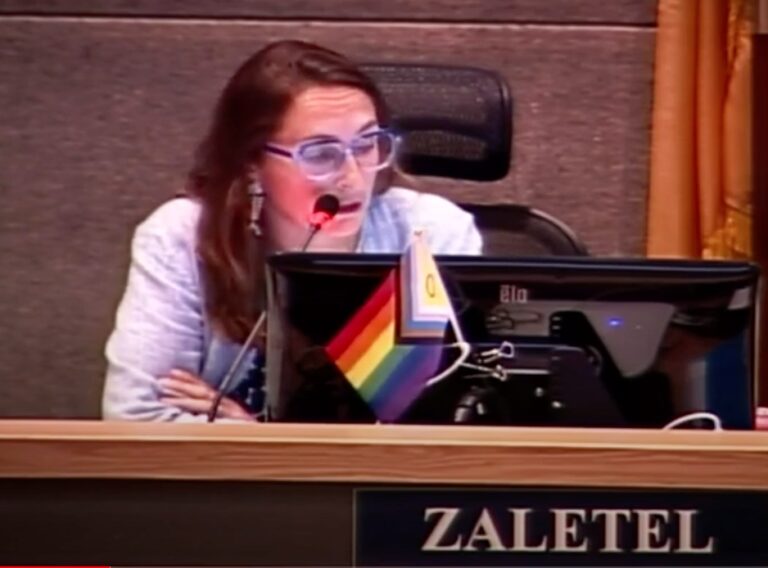
However, other versions of the new proposed tax include the substitute version from Vice Chairwoman Meg Zaletel and Assemblyman Daniel Volland, which would reduce the sales tax to three-fourths of one percent (0.75%) sales and use tax “dedicated to the reduction of property taxes under the tax cap. The full amount of this tax revenue, after the cost of administration, [emphasis ours] is dedicated to reduction of property taxes, dollar for dollar. This is estimated to reduce the overall property tax burden by approximately $120 million, or 16% of an average property tax bill, the sponsors write.

One third of the sales tax would be skimmed off for the administration of the tax program itself “and general government.” According to the ordinance, the tax would be temporary — for seven years. Exemptions on the sales tax would be granted to those who are at 80% or lower than the federally established “poverty line.”

A ballot proposition ordinance must be approved by at least eight Assembly members — a 2/3 majority — to be placed on the ball​ot, and must be approved at least 70 days before the election is held, which puts the final decision by Jan. 27.

All of the new versions of the sales tax proposal can be seen at these links:

More information about the proposed sales tax is at this link.