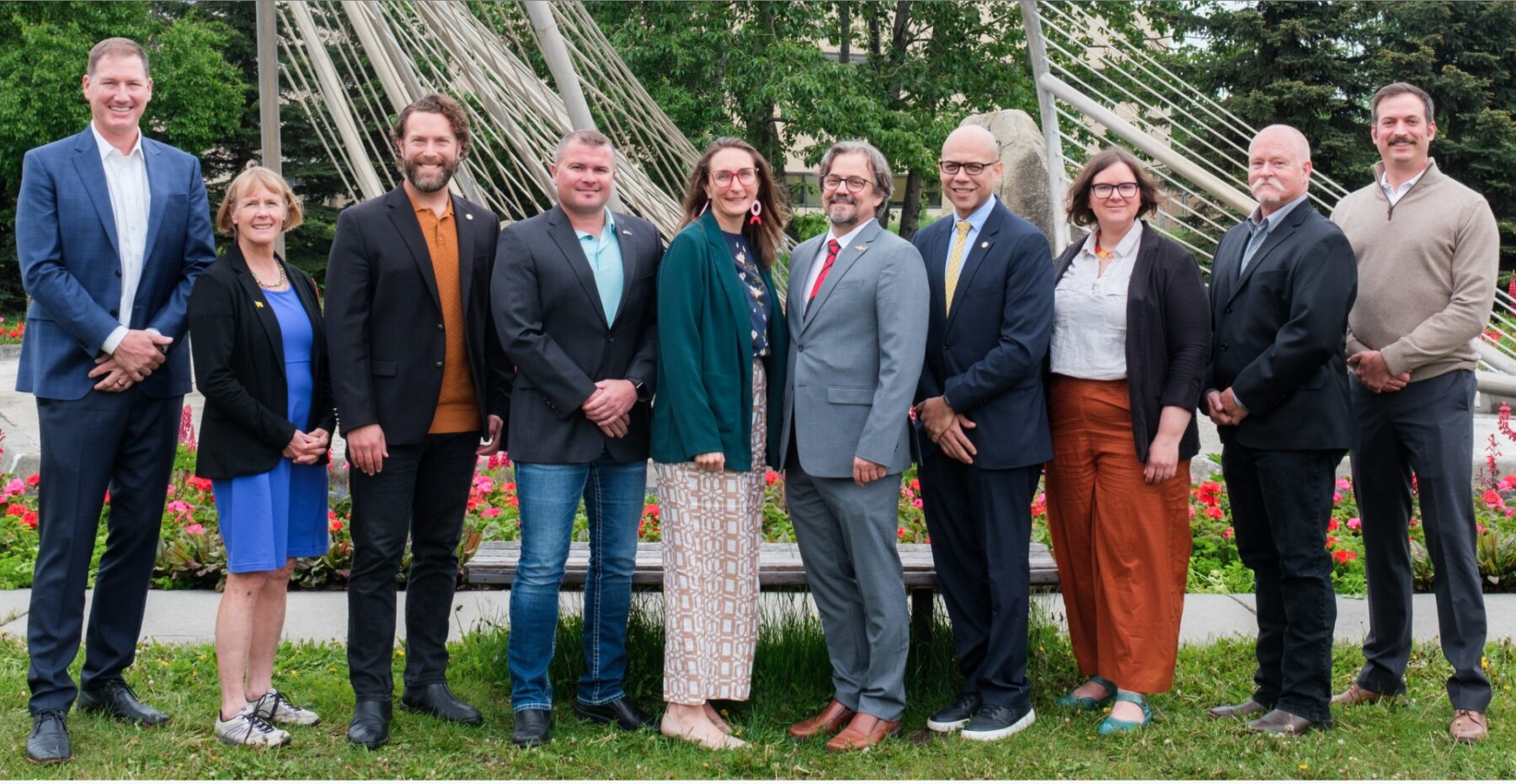
The Anchorage Assembly, facing headwinds from the public over the city’s downward-spiraling quality of life and upward-spiraling cost of living, will consider changing its proposed 3% sales tax ballot question to an advisory-only vote in April.
According to a proposed ordinance for April’s municipal ballot, “the Municipality of Anchorage is suffering from a net outmigration of residents with a net decline from 2013 (302,127) to 2023 (289,653) of 12,474 residents or ~4.1%; of which 18,314 are of working age and multiple forecasts predict this decline will continue …” Somehow, a sales tax will stop people from leaving.
Other proposed new versions to the 3% sales tax were offered by members of the Assembly on Dec. 17, and they will also be taken up at the next regular meeting on Jan. 7. The Assembly has to approve the language before it can be placed on the ballot.
In the ordinance, the proponents state “the Municipality of Anchorage has identified housing, aging infrastructure and equipment, challenging attracting and retaining workforce, and the high costs for residents and small business as key policy priorities to address outmigration and encourage economic growth; and WHEREAS, there is a desire to revitalize Anchorage to attract and retain residents, increase resident and visitor enjoyment, and enhance the livability of Anchorage…” as a key motivator for raising taxes in Anchorage.
The sales tax ordinance is generally called Project Anchorage by its promoters.
According to Constant’s newest version, “Given the complexity of the originally proposed ballot initiative and the broad diversity of opinions within the community, the proposed substitute version changes the ordinance to an advisory question for the April 1, 2025 ballot. Such a proposition would provide the sponsors an opportunity to further engage and educate the public on the proposed sales tax, while allowing the body the opportunity to gauge public opinion on the topic. Both of these processes would greatly inform our various positions while allowing additional time to refine the ordinance to deliver a better product.”
However, other versions of the new proposed tax include the substitute version from Vice Chairwoman Meg Zaletel and Assemblyman Daniel Volland, which would reduce the sales tax to three-fourths of one percent (0.75%) sales and use tax “dedicated to the reduction of property taxes under the tax cap. The full amount of this tax revenue, after the cost of administration, [emphasis ours] is dedicated to reduction of property taxes, dollar for dollar. This is estimated to reduce the overall property tax burden by approximately $120 million, or 16% of an average property tax bill, the sponsors write.
One third of the sales tax would be skimmed off for the administration of the tax program itself “and general government.” According to the ordinance, the tax would be temporary — for seven years. Exemptions on the sales tax would be granted to those who are at 80% or lower than the federally established “poverty line.”
A ballot proposition ordinance must be approved by at least eight Assembly members — a 2/3 majority — to be placed on the ballot, and must be approved at least 70 days before the election is held, which puts the final decision by Jan. 27.
All of the new versions of the sales tax proposal can be seen at these links:
- 2024-105 (S) – Sponsors’ Substitute Version, Assembly Members Randy Sulte & Felix Rivera
- 2024-105 (S-1) – Assembly Chair Christopher Constant
- 2024-105 (S-2) – Assembly Vice Chair Meg Zaletel & Member Daniel Volland
- 2024-105 (S-3) – Assembly Member Martinez
- 2024-105 (S-4) – Assembly Member Brawley
More information about the proposed sales tax is at this link.