The White House sent a memo to several federal agencies telling them to prepare to reorganize and fire high quantities of workers.
The memo is the latest in Trump’s ongoing war against what he calls bloated federal “woke” policies, overregulation, and wasteful spending. About 75,000 federal workers took a buyout to leave their position, and a few thousand have been fired so far.
“The federal government is costly, inefficient, and deeply in debt. At the same time, it is not producing results for the American public,” reads the memo from Russell Vought, director of the Office of Management and Budget, and Charles Ezell, acting director of the Office of Personnel Management.
OMB runs federal agencies for the White House. OPM acts like a human resources department for the federal government.
“Instead, tax dollars are being siphoned off to fund unproductive and unnecessary programs that benefit radical interest groups while hurting hardworking American citizens,” the memo continued.
Trump signed executive orders after taking office directing federal agencies to identify and eliminate wasteful spending. Agencies have until March 13 to prepare “agency reorganization plans.”
The memo says agencies should attempt to cut expenses, reduce its need for office space, and carry out a “significant reduction in the number of full-time equivalent (FTE) positions by eliminating positions that are not required.”
“Pursuant to the President’s direction, agencies should focus on the maximum elimination of functions that are not statutorily mandated while driving the highest-quality, most efficient delivery of their statutorily-required functions,” the memo said.
American Federation of Government Employees National President Everett Kelley, who leads the largest union of federal workers, blasted Trump after the news broke.
“Laying off potentially hundreds of thousands of federal workers will mean fewer services at higher costs for the American taxpayer,” Kelley said.
Kelley argued Americans will receive lower quality federal services with “no discernible savings for taxpayers.”
“This administration has targeted every single federal worker and does not seem to care how much turmoil they cause for either the employees or the American public,” she added. “The chaos is the point.”
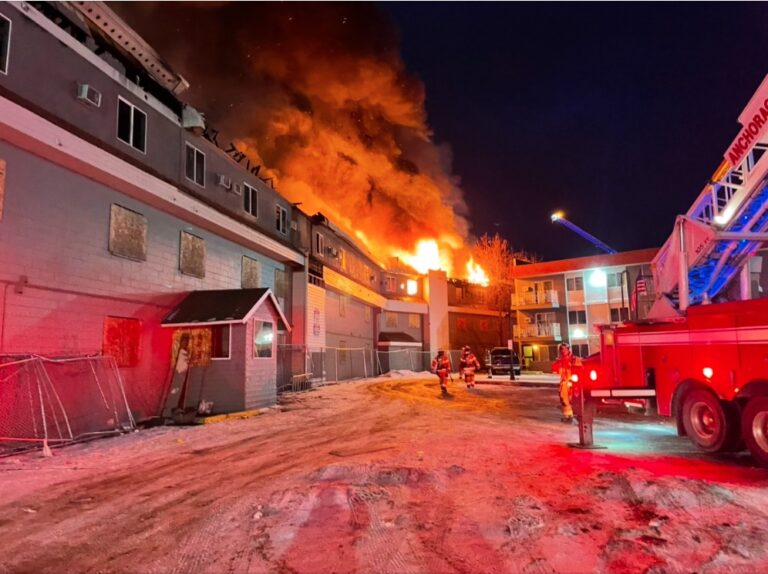
Be advised, if you own a building and it catches fire, the Anchorage Fire Department may be blaming you for not providing security patrols of your property.
The department issued a statement that assigns blame to the property owner for a major fire last week that was set by vagrants who had taken over a former hotel in Spenard.
“Last week’s fire in Spenard shines a light on the dangers of makeshift sheltering and the need for proactive actions of property owners and the community,” said Chief Doug Schrage, referring to the fire at the former Americas Best Value Inn and Suites.
A good portion of the rooms were haphazardly and dangerously occupied despite most of the openings and exits being boarded up, according to Asst. Chief Brian Dean, Fire Marshal for the Anchorage Fire Department.
“Witnesses reported 30 to 40 people fleeing from the hotel before our firefighters arrived. Thankfully, they were able to rescue the last four individuals that couldn’t escape.”
Chief Schrage said that people should hire security companies to guard their properties.
“Property owners should check on their properties regularly or hire security to verify the properties haven’t been breached and unauthorized encampments haven’t sprouted. If they have, it needs to be reported so we can hopefully prevent a similar incident. This is a life safety issue. We are fortunate everyone made it out of this fire with their lives.”
Due to significant damage and risk of collapse, AFD investigators were unable to completely excavate the room where the fire started, the fire department said.
“While a definitive cause of the fire cannot be determined, there is ample evidence the fire inadvertently started as a result of improvised heating or cooking arrangements,” the fire department said.
In 2020, the Democrat mayor of Anchorage planned to buy the building and turn it into a homeless shelter. That was the plan of Mayor Ethan Berkowitz, who left office in disgrace before finalizing the purchase. His temporary successor, Austin Quinn-Davidson, scrapped the idea because the cost of renovating the hotel was too great.
The building “was supposed to be unoccupied and secured,” the fire department said. There is no power or water to the building and no smoke alarms or sprinklers that are working.
Numerous “buddy heaters, propane tanks, oil lamps, makeshift cooking arrangements and smoking materials were found throughout the ‘unoccupied’ building,” the department said. These apparently were used by the dozens of vagrants that had taken over the building, all without being discovered by police.
“Property owners have an obligation to keep their properties safe and secure. Vacant properties or suspected illegal occupancies can be reported online at #ANCWorks,” the fire department said, shifting public safety back to property owners, rather than the government, which has the job of public safety.
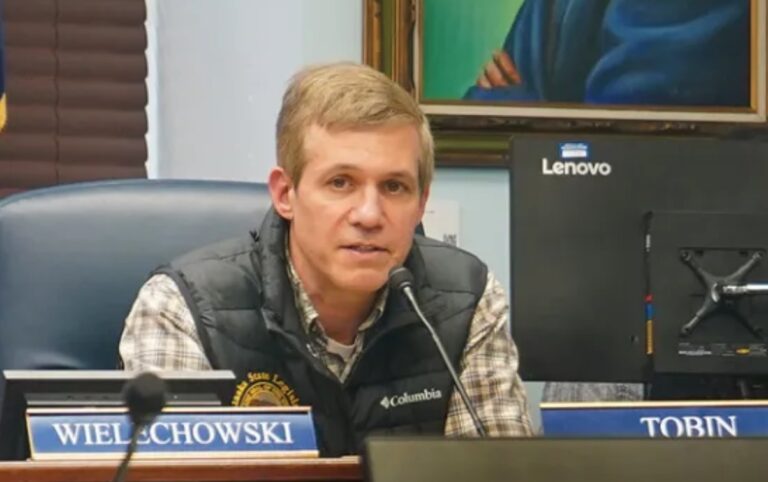
Facing what is believed to be a $500 million budget shortfall, the Alaska Senate Rules Committee, led by Democrat Sen. Bill Wielechowski, has introduced two bills aimed at addressing the state’s revenue desires by increasing taxes on businesses and oil. Senate Bill 113 will tax profits on out of state companies that do business in Alaska through the internet. Senate Bill 112 proposes a tax increase on every barrel of oil produced.
The push for revenue was forecasted earlier this week by Sen. Cathy Giessel, who said that without revenue for the state, more Alaskans would commit suicide.
SB 113 changes Alaska’s corporate income tax structure to capture more from the digital economy. Under current tax laws, online sales from out-of-state corporations are not addressed. The proposed legislation adopts a system already in place in at least 36 other states, which taxes businesses based on the customer’s location rather than the business’s physical location.
SB 113 introduces a single sales factor to determine tax liabilities for highly digitized businesses operating in Alaska.
“This legislation will not raise taxes for Alaskans or local businesses,” said Senate Rules Chair Senator Bill Wielechowski, D-Anchorage, without explaining why those companies will not just pass the costs to consumers. “It simply ensures that major out-of-state corporations benefiting from our economy contribute just as local businesses do. This establishes a level playing field for all entities operating in Alaska.”
According to one estimate, this could generate between $25 million and $65 million annually in new state revenue.
SB 112 focuses on reforming Alaska’s sliding-scale per-barrel oil production tax credits. This bill makes major changes that undo the work of Senate Bill 21, which passed in 2013.
Under the SB 21 system, these credits provide major North Slope oil producers with tax discounts based on oil prices. Wielechowski says this costs Alaska billions of dollars.
The proposed reform reduces the credit range from $8–$1 per barrel to $5–$1 per barrel.
But it’s not really a credit. It’s a deduction. Right now, the oil producers can deduct $8 per barrel. Wielechowski wants to claw back most of it. This issue has been litigated and debated for years.
Additionally, SB 112 introduces an investment match requirement, which says tax credits are only granted when they align with qualified capital expenditures that the state approves of.
“For years, the size of the per-barrel credit system has cost the state billions of dollars without delivering tangible benefits,” said Sen. Wielechowski. “This simple change ensures that tax credits are granted with accountability and a clear return for Alaskans while continuing to support investment in our oil fields.”
SB 112 has been referred to the Resources Committee and the Finance Committee for further deliberation, while SB 113 has been directed straight to the Finance Committee, which will speed its passage.
The bill will most certainly impact investment and won’t raise what its proponents predict.
Alaska is in the 11th year of tax stability, which has led to the development of Willow and Pikka, North Slope projects expected to boost oil production by 30% by the year 2032.
With these new revenue bills, Wielechowski likely eliminates himself as a viable candidate for governor in 2026.
Alaska Congressman Nick Begich has been appointed Vice Chair of the House Subcommittee on Railroads, Pipelines, and Hazardous Materials, a position that will better enable him to champion efforts aimed at strengthening transportation infrastructure, boosting energy security, and expanding economic opportunities in Alaska and the nation.
After being in office for less than eight weeks in Congress, Begich is now on three committees and eight subcommittees, and is vice chair of two subcommittees. His predecessor, Mary Peltola, served on just two committees and was on four subcommittees, with no vice chair positions during her two years in office.
“I am honored to be named Vice Chair of the Subcommittee on Railroads, Pipelines, and Hazardous Materials and look forward to working with Subcommittee Chairman Webster and my colleagues to modernize and expand our nation’s transportation networks,” said Congressman Begich in a statement. “This role presents a tremendous opportunity to advance critical infrastructure projects that will strengthen Alaska’s economy, improve supply chain efficiency, and support energy development.”
House Transportation and Infrastructure Chairman Sam Graves commended Begich’s appointment, emphasizing the importance of his leadership in key infrastructure sectors.
“Congressman Begich is an excellent choice to serve as vice chair of our subcommittee with jurisdiction over railroads and pipelines – infrastructure networks that are critical to Alaska and the entire country. I look forward to working with Nick and Subcommittee Chairman Webster to reauthorize pipeline safety programs, improve rail transportation, and foster America’s energy independence,” Graves said.
A major priority for Congressman Begich in this new role is advancing the long-held goal of connecting Alaska to the Lower 48 via a railroad. Currently, Alaska remains disconnected from the North American rail network, a gap that limits economic growth and trade opportunities.
“Alaska has immense resource potential, but we must have the infrastructure to move goods and energy efficiently. Expanding our rail and pipeline networks will lower costs, create jobs, and strengthen our state’s position in the global economy,” Begich stated.
In addition, Begich has been a vocal advocate for the Alaska LNG pipeline, an 800-mile project aimed at unlocking the vast natural gas reserves of the North Slope and bringing them to market. The pipeline is expected to create thousands of good-paying jobs for Alaskans, reduce energy costs for homes and businesses, and bolster U.S. energy independence and national security.
By leveraging previously untapped resources and facilitating LNG exports, the Alaska LNG pipeline would play a crucial role in strengthening the state’s economic future.
The Subcommittee on Railroads, Pipelines, and Hazardous Materials has jurisdiction over essential transportation agencies, including the Surface Transportation Board, the Federal Railroad Administration, Amtrak, and the Pipeline and Hazardous Materials Safety Administration. The Subcommittee is responsible for ensuring the economic and safety regulation of railroads, pipelines, and hazardous materials transportation—industries that are particularly vital to Alaska’s economy.
As vice chair of the subcommittee, Congressman Begich will advocate for pro-growth, pro-energy policies to enhance Alaska’s infrastructure.
Begich’s assignments are, to date:
Committee on Natural Resources
Subcommittee on Energy and Mineral Resources (vice chair)
Subcommittee on Oversight and Investigations
Committee on Transportation and Infrastructure
Subcommittee on Aviation
Subcommittee on Coast Guard and Maritime Transportation
Subcommittee on Railroads, Pipelines, and Hazardous Materials (vice chair)
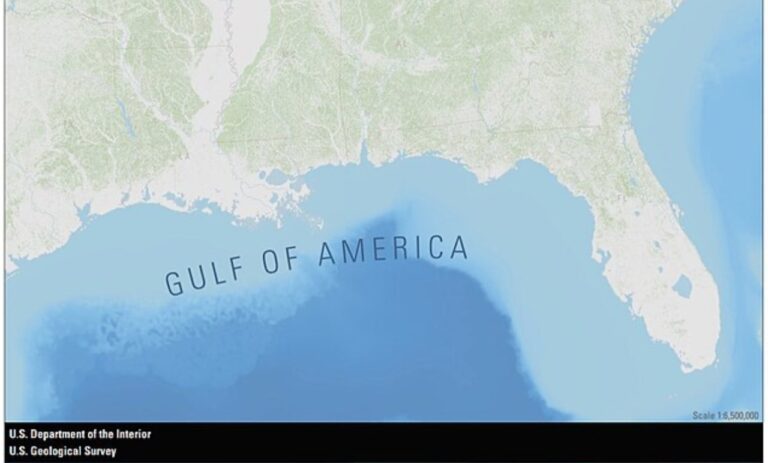
The U.S. government has officially renamed the Gulf of Mexico to the Gulf of America. The decision, enacted by the U.S. Board on Geographic Names this month, follows an executive order from President Donald Trump as part of an initiative to restore names that “honor American greatness.”
President Trump’s Executive Order 14172, titled “Restoring Names That Honor American Greatness,” directed Secretary of the Interior Doug Burgum to issue Secretary’s Order 3423, formally implementing the name change. Burgum signed the order on Feb. 7, recognizing the Gulf’s historical and economic significance to the Americas.
“The area formerly known as the Gulf of Mexico has long been an indelible part of America and an asset to our Nation,” the order stated. “The Gulf has played a pivotal role in shaping America’s history and promises to play a vital role in our future, serving as a flourishing natural resource of critical importance to our Nation’s economy and people.”
In conjunction with this change, President Trump issued a proclamation recognizing Feb. 9, 2025, as the first-ever Gulf of America Day.
Federal agencies have begun updating maps, products, and official documents to reflect the new name. The U.S. Geological Survey has now updated its systems, including the National Map Viewer, Lidar Explorer, and Geographic Names Information System Search Tool, to integrate the revised name. The USGS topoBuilder application has been enhanced to accommodate the anticipated high demand for updated paper maps.
The renaming effort extends beyond government agencies, with commercial platforms such as Google Maps and Apple Maps already adopting the Gulf of America designation.
The decision has sparked varied reactions across the country and beyond. Supporters argue that the name change reinforces national pride and acknowledges the Gulf’s deep ties to American history and industry. Critics, however, view the move as unnecessary and diplomatically contentious, given the Gulf’s geographical connection to Mexico and other nations.
The Associated Press refused to go along with the new name and has hence been banned from the White House press conferences. The AP challenged the ruling, but a judge has allowed it to stand. AP did, however, adopt the return of the name of Mt. Mckinley, which was also done by executive order of the president.
As the transition unfolds, businesses, cartographers, and government agencies continue ensuring widespread adoption of the Gulf of America name. The administration has emphasized that this change is a significant step in reaffirming America’s cultural and historical influence on its natural landmarks.
The name change process is expected to continue in phases, with updates rolling out across various official and commercial platforms. The administration has also indicated that additional geographical name revisions may follow as part of its broader initiative to restore traditional American place names.
Today marks the anniversary of the 1917 naming of Mt. McKinley by President Woodrow Wilson. Trump reaffirmed the McKinley name on his first day of his second term in office on Jan. 20, 2025.
The Alaska Republican senator who is unwelcome in most Alaska Republican circles and who makes it her daily mission to verbally oppose President Donald Trump has written a book on bipartisanship.
The book by Sen. Lisa Murkowski is titled, “Far From Home – An Alaskan senator faces the extreme climate of Washington, D.C.”
“A voice of reason in a polarized U.S. Senate, Lisa Murkowski of Alaska tells the story of how she learned to adapt to the harsh climate of Washington, D.C., and issues a fervent appeal for a politics grounded in compromise and compassion,” says Penguin Random House, the publisher, in the online promotion.
“Lisa Murkowski has repeatedly stood at the center of our nation’s most challenging issues, serving as a swing vote and a voice willing to challenge the president, regardless of who holds the office. In this candid memoir that offers hope for a functional Washington, she guides readers through the defining events of her more than twenty-year career: her beginnings in Alaska and appointment to the U.S. Senate, the rise of the Tea Party and her historic 2010 write-in reelection campaign, and the pivotal events of the Trump era, including her vote against Brett Kavanaugh’s confirmation to the U.S. Supreme Court, the 2020 election, January 6, the impeachment trials, the overturning of Roe, and Trump’s second election,” the publisher says.
“Written at a time when Americans’ trust in their institutions is in crisis, Far from Home is a candid account of how things get done in Washington. It is an uplifting narrative for anyone seeking reassurance that our political system can,” the publisher says.
It’s safe to say that the book was authored by longtime Murkowski ally Charles Wohlforth, who served on the Anchorage Assembly and wrote a column for the Anchorage Daily News before moving to New Jersey. He is the author of several books, including “as told to” biographies. His work appears in liberal publications such as “The Daily Beast” and the “New Republic.” Wohlforth appears as a cowriter on the book cover.
Murkowski has become increasingly visible on the national stage, appearing at events sponsored by the “No Labels Party,” and granting interviews to leftist national media. The upcoming memoir raises the question that some have asked: Is the 67-year-old (68 in May) senator planning to run for president in four years? Or is this her swan song?
Gov. Mike Dunleavy has proposed $450-per-student grants from the state for K-6 students who demonstrate proficiency in reading or improve their reading proficiency. When Gov. Dunleavy announced that proposal in press conference, the question was asked if there was any evidence that incentives have worked anywhere else. The answer is yes.
Florida has used focused incentive grants since 2003, to encourage students to take AP courses by paying bonuses for students who pass an AP exam. After implementing that policy, Florida saw more than 1000% increase in low-income students enrolled in AP courses.
Florida was ranked 3rd in the nation in 2022 for the percentage of students who graduated high school with a 3 or higher on an AP test — despite being ranked 45th in the nation in K-12 funding adequacy by a recent Rutgers University Study.
Yes. With the one of the least funded education system in the US, Florida is producing some of the highest quality high school graduates in the nation, according to Rutgers.
For comparison, Alaska was ranked the second-most funded K-12 system in the US by the same Rutgers study and was 44th in the US in the percentage of students graduating with at least one AP test of 3 or higher.
Only 11.9% of Alaska students achieved an AP test of 3 or higher compared to 28.8% in Florida.
It doesn’t take a degree in economics to understand that people and organizations respond to incentives. When we incentivize things we want, we get more of more of what we want.
In the latest NAEP results, Alaska was ranked, 49th in the US for 4th grade reading scores for low-income students and 50th for upper/middle-income students. It’s a very clear that we need to incentivize improvements in early childhood literacy.
If we simply add money, with no strings attached to a well-funded K-12 system that has produced disappointing results for decades, we shouldn’t be surprised when we get a more expensive version of the same disappointing results.
Bob Griffin is on the board of Alaska Policy Forumand serves on the Alaska Board of Education and Early Development, but writes this in his own capacity.
I am a life-long Alaskan, working and living in Anchorage for the past 35 years, and retired last year. Now that I have more discretionary time, beginning in January I decided to attend several Municipality of Anchorage Assembly regular meeting. Rather than read articles about Assembly Member personalities and meeting activities, I wanted to see for myself.
Most of the meetings activities in January and first week of February were perfunctory and dutiful. Exceptions were a marijuana licensing dispute, extended Assembly discussion about a new trailhead parking area, and public comment about a proposed sales tax.
At the beginning of Assembly regular meetings a Land Acknowledgement proclamation is read after the Pledge of Allegiance. The proclamation’s content seemed a bit off to me but, I just passed it off as political dogma. A copy of the Land Acknowledgement proclamation from the Feb. 25, 2025 Assembly Meeting Agenda is at the end of this letter.
After the second meeting I thought more about the land acknowledgment proclamation. Because of its reference to land use and the term decolonization, it is more appropriately a manifesto. A manifesto challenges the prevailing authority. The prevailing authority over the Municipality of Anchorage is the State of Alaska.
When Assembly Members and Mayor were sworn in to their offices, they took an oath to uphold State of Alaska’s authority. It follows that the Assembly’s Land Acknowledgement proclamation is challenging State of Alaska’s authority to govern and, they therefore contradict their oath of office.
The proclamation uses the term decolonization. The last time in American history there was decolonization, we fought a long and difficult war with Great Britain. Has the Assembly prepared a Declaration of Independence that we are not aware of (sarc)?
With regard to land, I own my property as underwritten by the State of Alaska, and do not occupy tribal land. The 1970s Alaska Native Claims Act put to rest native land claims. The Assembly’s land acknowledgement casts doubt on private land ownership within the municipality because it states that we are occupiers of the Indigenous people’s land.
The proclamation furthermore states, “Denai’ana have been and continue to be stewards of this land.” Steward is understood as a manager or caretaker of land resources. The use of the word “continue” is present tense. When I develop my land it is land use rules of MOA Title 21 that govern, and not the Denai’ana tribe.
When attending the Feb. 11 meeting, during the audience participation segment I provided comments to the Assembly about the Land Acknowledgement proclamation. My comments were specifically about decolonization and I was given three minutes to complete comments. The following are my comments to the Assembly.
“Colonization refers to establishment of something to benefit that something. Decolonization is an aggressive term, referring to removal of that something.
“During the last ice age, 18,000 years ago, an ice sheet covered south central Alaska, south of the Alaska Range out to the Gulf of Alaska, west to the Alaska Peninsula and south to British Columbia. At that time MOA lands were covered with hundreds and thousands of feet of ice. 10,000 years ago, when the ice sheet melted colonization began with plants, animals, and fish… followed by people groups. The last non-European group was the Denai’ana.
“The business of the Assembly includes bonding for roads, drainage, water-sewer systems, schools, and trailhead parking areas… and generally promoting development. Assembly business is the business of colonization. MOA is an agent of colonization.
“My following questions are rhetorical:
“Where do the Assembly and Mayor find the authority to decolonize?
“Who and what are to be decolonized? I don’t think you are referring to dandelions.
“Did you check with the State Attorney General, ACLU, or constitutional lawyers such as Alan Dershowitz to determine whether your decolonization proclamation violates the United States Constitution?
“In conclusion the proclamation is nonsensical… it is a like a dog chasing its tail.”
From the Feb. 25, 2025 Anchorage Assembly General Meeting Assembly Agenda: “MOA Agenda Item 3. Land Acknowledgement. A land acknowledgement is a formal statement recognizing the Indigenous people of a place. It is a public gesture of appreciation for the past and present Indigenous people of a place. It is a public gesture of appreciation for the past and present Indigenous stewardship of the lands we now occupy. It is an actionable statement that marks our collective movement towards decolonization and equity. The Anchorage Assembly would like to acknowledge that we gather today on the traditional lands of the Dena’ina Athabascans. For thousands of years the Dena’ina have been and continue to be the stewards of this land. It is with gratefulness and respect that we recognize the contributions, innovations, and contemporary perspectives of the upper Cook Inlet Dena’ina.”
Dave Arehart is aretired registered civil engineer and lifelong resident of Alaska. His engineering work and projects are scattered across Alaska, from Ketchikan to Utqiagvik, and Diomede to Atka. His 10 years out of Alaska included university studies and, design and construction engineer for USAID-funded water projects in Malawi, Africa.
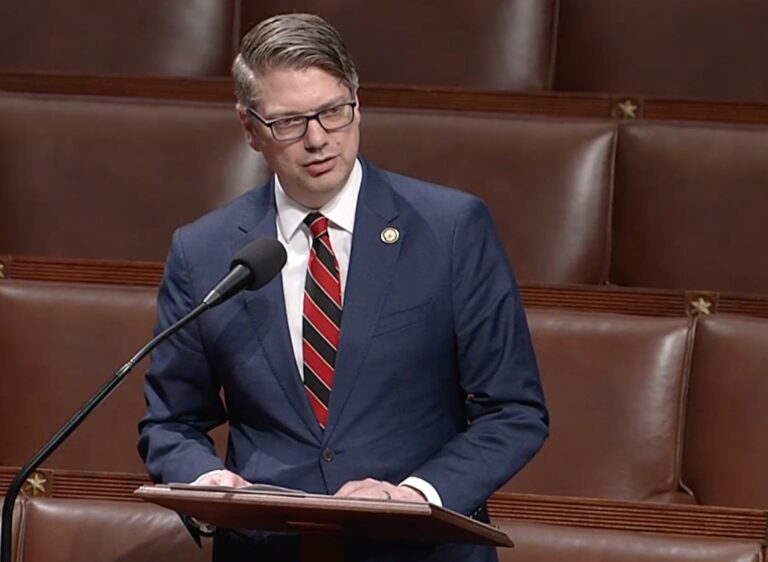
Debate on the House floor today about an 11th hour rule by the Biden Administration to crush American natural gas production included remarks from Alaska Congressman Nick Begich, who implored his colleagues to vote yes on House Joint Resolution 35, repealing the Biden tax on methane emissions from natural gas.
Under the Congressional Review Act, such last-minute rules by an administration can be repealed by Congress via a simple majority of the House and Senate.
House Joint Resolution 35 would repeal an Environmental Protection Agency rule relating to “Waste Emissions Charge for Petroleum and Natural Gas Systems: Procedures for Facilitating Compliance, Including Netting and Exemptions.”
Begich spoke to the importance of unleashing American energy first and spoke to the importance of the Alaska LNG project:
“I rise in support of House Joint Resolution 35 to repeal the Biden administration’s tax that drives up costs, stifles investment, and weakens energy security. This so-called emissions charge won’t change emissions but will punish producers and make life more expensive for America’s working families.
“While some claim this tax does not directly impact my home state of Alaska, what’s bad for American energy is bad for Alaskan energy. Alaska holds over 100 trillion cubic feet of natural gas, and they argue this increases energy security but increases our reliance on foreign adversaries. We must repeal the natural gas tax. H.J.R. 35 is a strong energy future, and I urge a yes vote.
“The Alaska LNG project is our best chance to bring it to market. Burdensome federal regulations discourage investment, keeping Alaska’s energy potential locked away. Meanwhile, Cook Inlet gas supplies are declining, threatening those in south-central Alaska with higher heating and energy costs. If we want long-term security, we must develop our resources.
“Mr. Speaker, every job is an energy job because energy powers everything that we do. Supporting American energy production means creating good-paying jobs in oil and gas, construction, transportation, manufacturing, and small businesses that rely on affordable energy. The Alaska LNG project alone would generate thousands of jobs, strengthening our economy and supply chains. If we want to grow opportunity for working families, we must stand with American energy and repeal the natural gas tax.
“Let’s be clear. Opponents of this bill are spreading falsehoods. They claim this tax will cut emissions, but the U.S. already leads the world in methane reduction, cutting emissions intensity by 42% since 2015. They say this is about big oil, but 90% of U.S. natural gas comes from small and mid-sized producers. I claim only gas producers are affected, but the Biden administration designed this rule to also hit oil producers.”