Candidate Alexander Rosales is learning the hard way how viscous politics can turn even for a seat on the Anchorage school board. Rosales is challenging school board incumbent and the teacher’s union backed Margo Bellamy for her seat.
Rosales has been labeled a white nationalist and Nazi sympathizer.
Liberal agitator Ivan Hodes, who has a long history of attacking conservatives as racists, has unleashed a barrage of accusations against Rosales.
Hodes is calling for Bellamy supporters to show up Thursday night at a Hillside Home and Landowners Association (HALO) candidate forum at the Alaska Zoo and confront Rosales for his “White Nationalists” ways.
Labeling conservatives “White Nationalists” is a common tactic among many on the left but seems to be losing its effectiveness. Especially from vicious partisans like Hodes who have a long history of making such attacks. Hodes’ social media posts are loaded with racially obsessed accusations.
On a recent post on the liberal social media platform, BlueSky, Hodes accuses Republican Rep. Jamie Allard of Eagle River of naming her dog after a Nazi sympathizer. That so-called Nazi sympathizer is conservative commentator Charlie Kirk, who heads up Turning Point USA, a prominent conservative group. Hodes also accused DOGE head Elon Musk of being a Nazi.
Hodes clearly seems obsessed with Rosales with dozens of negative and nasty posts about the candidate. Most accuse Rosales of either being a Nazi or a racist.
As of this writing, Margo Bellamy has yet to condemn Hodes’ unfounded and vicious attacks on her challenger, Rosales.
Rosales is an Air Force veteran and has never run for office before. He says he’s taking the attacks in stride even though he has received death threats. He is of Hispanic heritage, with a father born in Mexico and a grandmother who was in Dachau concentration camp in Germany. His great grandparents were in the Auschwitz concentration camp. He said he is decidedly anti-Nazi.
“It’s frustrating because people in my campaign are also getting threats as well,” said Rosales. “I’m OK with people attacking me, but it’s unfair for my supporters.”
Rosales says Bellamy can’t run on her record so she has to rely on unfounded personal attacks from surrogates like Hodes.
“We are last in the nation with test scores and near the top in education spending,” said Rosales. “They’re talking out of the side of their mouths. They have to attack me. That’s their only play.”
Rosales says he’ll keep working hard sharing his message. As a father, he says doing better with education is important to him. He says our kids deserve better than this low ball political mudslinging.
“I hope their attacks don’t work, but it’s going to take me getting in front of as many people as I can showing them I am not the person they say I am,” said Rosales.
If Hodes is successful in getting a strong showing of Bellamy supporters for Thursday night’s candidate forum, Rosales could be walking into a political buzz saw. Rosales says he’s ready and does not regret his school board candidacy and his first foray into politics.
“There’s always the haters coming out,” says Rosales.
Dan Fagan reports for Must Read Alaska and hosts a morning drive radio show between 7 and 9 a.m. on 1020 am 92.5 and 104.5 f.m. on KVNT. For news tips email him at [email protected].
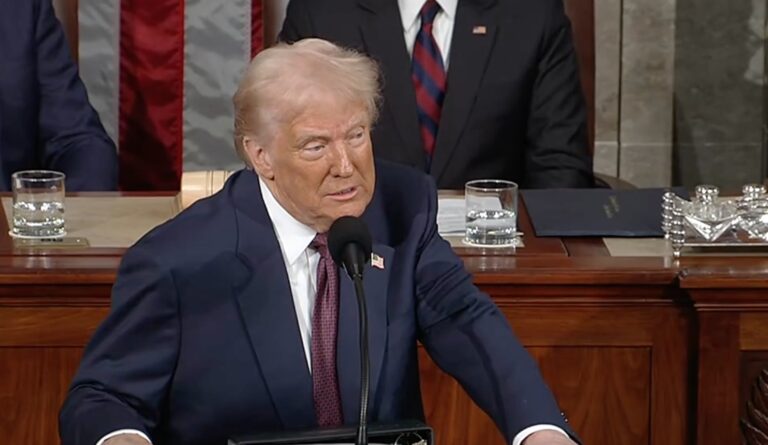
The audacity of Democrats to lecture President Donald Trump last week for being rude and disrespectful to Ukraine President Volodymyr Zelenskyy became even more ridicule-worthy when they threw a kicking-and-screaming temper tantrum during Trump’s speech to the joint body of Congress on Tuesday.
Democratic senators sided with Zelenskyy and condemned Trump and Vice President JD Vance as “shameful” and “disgraceful” last week.
They should know because they set the standard. The bar for decorum has now been set lower than ever. It’s practically as low as British Parliament.
This has been their bad behavior habit for some time, however. During Trump’s State of the Union address in 2018, Democrats booed and jeered. In 2019, they heckled and booed.
And in 2020, not only did they hiss and boo, Speaker Nancy Pelosi, in her white suffragette suit, stood up behind Trump and ripped up her copy of his speech, so that the media could take in the full meaning of her intent to humiliate Trump on live camera.
Speaker Nancy Pelosi rips up a copy of President Trump’s State of the Union Address in 2020.
There was a bit of payback from one Republican last year, when Rep. Marjorie Taylor Greene wore a red ball cap that had “Make America Great Again” printed on it. She heckled President Joe Biden during his speech, yelling out “Say her name,” after Biden talked about raped-and-murdered Laken Riley, but who did not use her name. She nearly got the hook, but not quite.
Her outburst it was nothing like this year’s Democrats, who went beyond the “loyal opposition” phase and showed themselves to be “Antifa in a suit.”
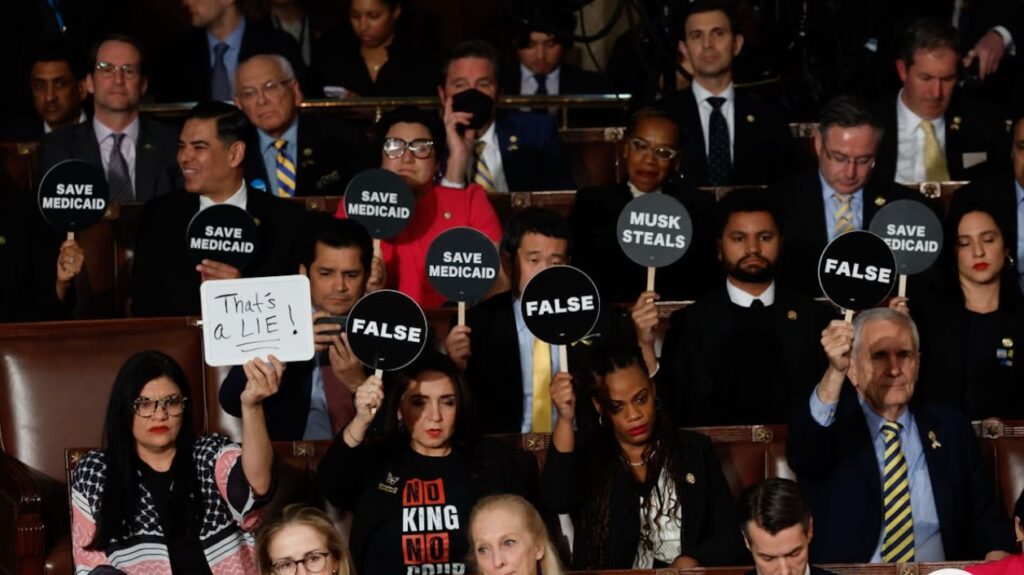
On March 4, 2025, throughout the speech by Trump the Democrats held bingo paddles: “FALSE,” “SAVE MEDICAID” AND “MUSK STEALS.”
Congressional Democrats set a new low in decorum for a State address.
The bingo paddles — or were they auction paddles? — were far more disruptive than MTG’s red hat ever was in 2024, and the hat almost got her ejected that year.
But even more disrespectful and shameful in 2025 was the shouting, booing, and hissing by the Democrats, some of whom walked out midway through the 100-minute speech.
What viewers heard on the audio on television was only half of the raucous noise being made on the Democrats side of the aisle, where a dozen Democrats were absent and another handful walked out. It was loud in the chamber.
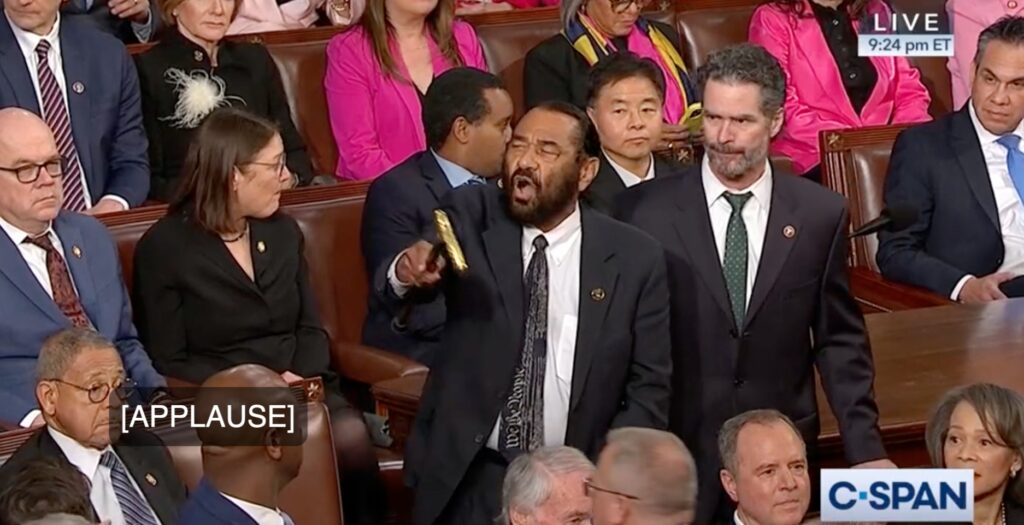
Only one of the Democrats, however, was ejected — Rep. Al Green from Houston, who stood and shook his cane while screaming at the president. Speaker Mike Johnson finally, after a couple of warnings, ordered him to leave and he was escorted out.
Rep. Jasmine Crockett of Dallas also walked out the chamber after standing up with fellow Democrats who had the word “RESIST” printed on the backs of their shirts.
Rep. Greg Casar of Austin, who was sitting with Rep. Green, held a sign that said “MUSK STEALS” throughout the speech. He might find himself subject to a lawsuit.
This year, Rep. MTG wore a red hat, just like she did last year. Only this time, her hat said “TRUMP WAS RIGHT ABOUT EVERYTHING.”
Sen. Ted Cruz of Texas said that in the 13 State of the Union addresses he has been to, Republicans always stood to welcome the guests of the president, whether it was Obama, Trump, or Biden.
But on Tuesday, the Democrats would not stand to recognize the family of Laken Riley, who was murdered by an illegal immigrant in Georgia. Even the Georgia Democrats would not stand for their own constituents.
The Democrats also refused to acknowledge a 13-year-old survivor of brain cancer, who the president introduced and highlighted as an honorary member of the Secret Service, in recognition of the boy’s long-held hopes of becoming a police officer.
In fact, anyone who was there as a guest to be introduced on Tuesday got the silent treatment from the Democrats, many of whom were thumb-scrolling through their X feed on their phones.
The president won the night. The Democrats self-owned and exhibited their worst instincts. But the parallel spectacle of them lecturing Trump about respect and decorum for President Zelenskyy, all while they plotted and planned to disrupt the president’s annual address is the lesson in hypocrisy that America needed to witness to fully understand just how far the Democratic Party has fallen.
Trump broke the Democrats on Tuesday. He knew they came loaded for bear, and he was ready for them. He knows he has nothing to gain by trying to play nice, and everything to lose. There is no time to waste for him.
This time, he simply allowed Democrats to show the public who they really are.
And they did.
Suzanne Downing is founder and editor of Must Read Alaska.
Three heliskiers are feared dead after Alaska State Troopers say they were buried in an avalanche on Tuesday.
Guides from a commercial heliskiing operation immediately used avalanche beacons in attempt to locate the three. They zeroed in on area near the West Fork of 20 Mile River near Girdwood.
It’s estimated the snow burying the skiers was as deep as 100 feet. Limited daylight, deep snow, and avalanche danger prevented guides from recovering the three skiers on Tuesday.
On Wednesday, Alaska State Troopers told Must Read Alaska they are assessing the situation from the air but say the weather has not been cooperative for recovery efforts.
They will continue to evaluate the possibility of safely resuming recovery efforts and will likely do so if the weather improves.
The Chugach National Forest Avalanche Information Center in recent days described avalanche danger where the skiers were buried as considerable, with human triggered avalanches likely.
The avalanche story has garnered the attention of the national media with outlets like The New York Post, Newsweek, and The Seattle Times reporting the story.
Since 2020, 11 people have been killed by avalanches in Alaska. Three of them were heliskiers.
Dan Fagan reports for Must Read Alaska and hosts a morning drive radio show between 7 and 9 a.m. on 1020 am 92.5 and 104.5 fm on KVNT. For news tips email him at [email protected]
The University of Alaska Fairbanks library subscribes to many different services, but leave it to the librarians and you’ll get certain results.
HeinOnline is a service that academic institutions subscribe to, “allowing students and researchers to search and access a vast collection of legal materials, including scholarly journals, historical documents, case law, statutes, and government publications, often dating back to the inception of the publications, all in a fully searchable, image-based format; essentially providing a comprehensive legal research platform for academic study and research.”
The University of Alaska Fairbanks library subscribes to HeinOnline. It does not subscribe to the Law Journal Library service of HeinOnline, which is a core service. But it does subscribe to these other databases:
Civil Rights and Social Justice
Gun Regulation and Legislation in America
LGBTQ+ Rights
Open Society Justice Initiative
Slavery in America and the World: History, Culture and Law
The Open Society Justice Initiative is a project of the George Soros-founded Open Society Foundations.
Last month, Assembly Members Felix Rivera and Randy Sulte unveiled a substitute version of their AO 2024-105, theProject Anchorage 3% sales tax that the sponsors say will be temporary.
Two town halls this week are devoted to the subject of the Rivera Sulte Tax on Anchorage consumers:
If approved by a two-thirds vote of the Assembly, the ordinance would send the sales tax question to municipal voters.
Project Anchorage is an initiative developed by the Anchorage Economic Development Corporation that proposes to enact a temporary 3% sales tax that proponents say will give property tax relief and fund the development of local projects picked by the Marxist-dominated Assembly of Anchorage.
Over the past six months the Anchorage School Board has wrestled with a large budget deficit—estimated at $107 million. Solutions have ranged from closing schools and using its unrestricted fund balance, to shutting down classroom programs.
Like all Alaskans, our schools have been suffering from rapid inflation over the past four years.
Alaska schools are also suffering from the loss of thousands of students over the last few years.
To counter the loss of students and state funding, the education establishment wants to increase the per student funding known as the base student allocation.
The ASD administration has recommended that seven schools be closed. In the end, only two have been scheduled for closure due to parent blowback. And these two schools will not be closed; they will actually be repurposed into charter schools. There will be minimal savings from “closing” these two schools.
However, there is a source of money in the district—the unrestricted fund balance.
State law requires school districts to have a minimum of 5% of its operating budget in its unrestricted fund balance, its piggy bank, for emergencies.
As of June 30, 2024, the district had $121,624,513 in its piggy bank. This is 18.5% of its operating budget, far exceeding the state minimum of 5%. The district plans to use $50 million of this unrestricted fund balance to help fill the budget hole.
The administration has done a good job of identifying reductions in its operating costs. It recommended that counselors, assistant principals, nurses, and librarians be reduced. These reductions do not directly affect the classroom.
The district has started its budget discussion by only looking at the FY25 adopted budget. But that FY25 budget was increased dramatically from the FY24 budget.
To get a more accurate picture, one must look at the differences in budgeting from year-to-year.
Here is a chart showing the budgeted “certificated” staff (those with teaching credentials) for FY22 through FY25:
There was a significant increase in classroom teachers between FY24 and FY25: 136 full time equivalents.
Note that the district compares the number of classroom teachers from FY25 to FY26, a reduction of 305.62 FTEs. But if one compares the number of classroom teachers between FY24 to FY26 there is only a reduction of 169 FTEs.
The other very interesting category is the number of “Other Certificated” positions. These are credentialed teachers who are not working in the classroom. The budget does not specify where these positions are or what their function is.
The Special Service Teacher category lists those positions that are special education. A slight increase in SPED (special education) teachers is projected for FY26.
The district has been digging a budget hole for several years. It dug the hole even deeper when it funded 400 teacher positions with federal Covid dollars. It used one-time money for recurring salaries and benefits. The Department of Education and Early Development instructed districts not to use these Covid funds to pay for recurring costs because it would be unsustainable.
The Anchorage School District disregarded that instruction.
Anytime the district talks about cutting teachers it is talking about cutting vacant positions — positions that are also funded.
There is a huge difference between laying off employees and cutting vacant positions. The district says it has about 200 vacant positions with additional employees retiring or moving. So, how many actual teachers will be laid off?
Maybe none.
The district has also lost students this year. The newly released student count shows the ASD has 41,598 students. It has lost an additional 420 students since the last school year.
And since FY16 the district has lost 6,358 students.
Considering the loss of more than 6,000 students and cutting only vacant positions, it doesn’t make sense that the pupil/teacher ratio would be adversely impacted. Unless that is, the district is counting the reduced vacant teacher positions in that ratio’s denominator. That truly is misleading the public but resonates with the legislature.
And misleading and activating the public may be just the purpose of cutting language immersion programs, middle school sports, gymnastics, swimming, the Ignite program for gifted students, and high school hockey. Get the public’s attention and support for these programs and cry “flat funding” and “inflation” to the Legislature.
Board members Lessens and Jacobs offered an amendment that would restore all the reductions if the legislature increases the Base Student Allocation by $1,000, a cost to the State of more than $250 million. That would bring another $71 million to the district.
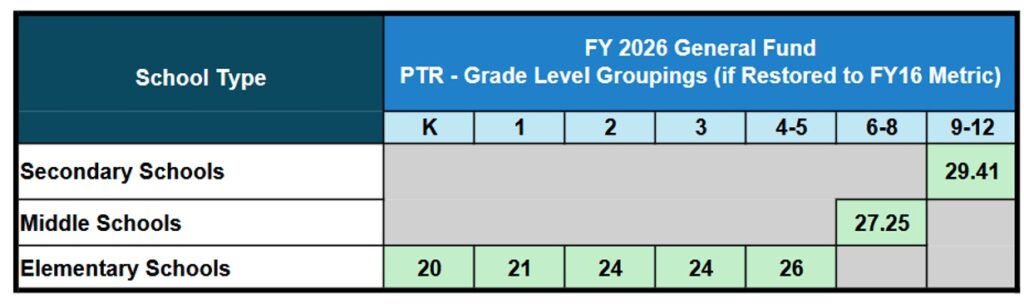
The $71 million would restore the pupil/teacher ratio back to the FY16 ratio. But would more students be proficient at reading and math?Here is a chart showing the pupil/teacher ratio restored to the FY16 level:
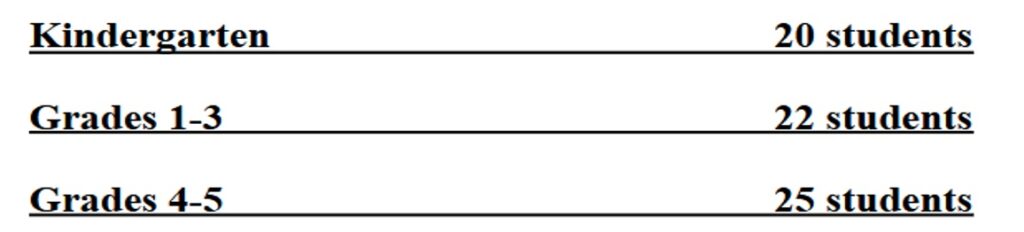
Interestingly enough, that chart almost aligns with the teachers’ union going-in position on contract negotiations on pupil/teacher ratios shown here:
It appears that the district doesn’t need the entire $1,000 BSA increase to maintain its current education programs and pupil/teacher ratio.
Just to maintain the current classroom instruction and the FY25 pupil/teacher ratio, the district would only need a BSA increase of approximately $650, not the $1,000 it lobbies for.
This $650 BSA increase would not pay for these items which are not essential to classroom instruction:
Return the district to the 2016 pupil/teacher ratio (142 FTE).
Add the hold back teachers (those held in reserve) (16 FTE).
No new elementary counselors (2.5 FTE).
Library assistants (7.87 FTE).
Principals (5 FTE).
Elementary Nurses (13 FTE)
Counselors (3.5 FTE)
Removing these FTEs does not adversely affect classroom instruction, where student learning occurs. And the district would provide the same programs it does in this academic year. Plus, the pupil/teacher ratio would also be the same as the current academic year.
Adding approximately $650 to the BSA for inflation purposes will allow the district to provide the same level of service to students while reducing some current unnecessary overhead (Items 2,3,4,5,6 and 7 above).
Besides, the district will still have its Diversity, Equity & Inclusion office!
The educational system that ASD has established is failing our kids. More and more parents are taking their children out of these failing schools because they are concerned that their children are not learning, but instead are being indoctrinated.
Programs are being maintained that do nothing to support our children learning to read and do math.
More money will not solve the problem of a lower student population.
More money directed at overhead support will not ensure students can read at grade level.
The Alaska Legislature may have to increase funding, but it should be outside the funding formula and earmarked for specific funding items.
David Boyle is the education writer at Must Read Alaska.
It was a speech and it was a spectacle. The president was victorious and the Democrats were triggered and humiliated by the man they tried to impeach twice without success during his first term.
Democrats in Congress loudly booed and held signs up protesting President Donald Trump throughout his joint congressional address, and after Speaker Mike Johnson tried to restore order repeatedly, one lawmaker was finally ejected.
Rep. Al Green of Houston Texas was removed from the chamber for standing in the aisle and shouting over the president, and refusing to stop. He shook his cane at Trump, disagreeing with the president’s characterization of the November election as a mandate.
Rep. Al Green of Houston shakes his cane at President Donald Trump and tries to shout the president down during the State of the Union address. He was removed from the chambers by sergeants at arms.
About 15 of the Democrats lawmaker women wore pink in solidarity with women, although the Democrats had just blocked a bill to protect girls’ and women’s sports from males. Four years ago during the Trump State of the Union, the women Democrats wore all white and then-Speaker Nancy Pelosi tore up the speech as soon as he had finished, on camera.
This speech was even more in-your-face to the Democrats. Trump did not yield an inch to them. Several Democrats got up and walked out halfway through it.
The Republicans, who hold the majority in both the House and Senate, drowned out the booing from the Democrats with chants of “USA! USA!”
The Democrats were so dour that many of them would not even sit and clap, much less stand, to recognize a 13-year-old boy who has survived brain cancer and was honored to be in the chamber as a guest of the president.
Trump said that his administration is ushering the golden era, which may be the greatest era in the country’s history. He went through a long inventory of his recent executive orders, getting raucous applause from the Republicans and grumbling from Democrats, who didn’t want to get thrown out like Rep. Green was.
Early in his speech to a joint session, Trump mentioned that he loves Alaska and is going to make the Alaska LNG pipeline a reality, with deals underway with Japan as a buyer.
Alaska Gov. Mike Dunleavy wrote, “On the global stage, President Trump just committed to our LNG pipeline.‘Beautiful Alaska, we love Alaska!’ President Trump’s support for AKLNG will ensure this massive LNG project is completed, and clean Alaska gas supplies our Asian allies and our Alaskan residents for decades to come! Thank you @realDonaldTrump.”
The speech, which went for over 100 minutes, was one for the ages and holds the record for the longest. It can be seen here:
The Democrats in the chamber, after having held auction paddles with opposition messages throughout the speech, immediately rushed out of the chamber as Trump uttered his final words, “God bless America.” He had triggered them repeatedly and with intention, even calling Sen. Elizabeth Warren, who sat playing with her phone during the entire speech, “Pocahantas.”
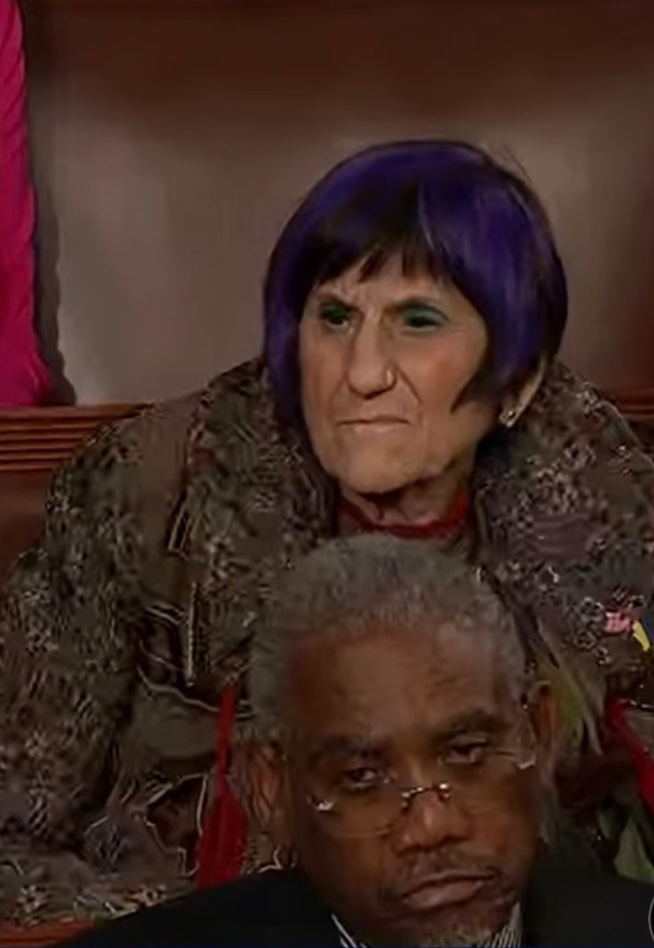
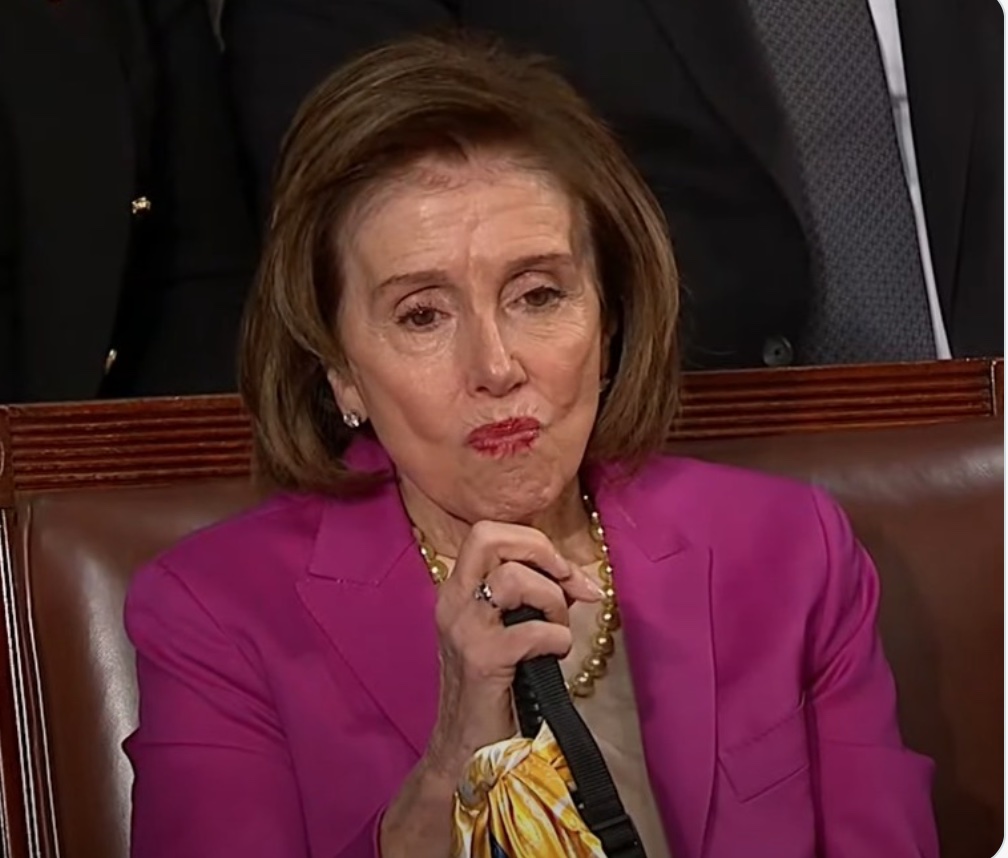
Rep. Rosa DeLauroRep. Nancy Pelosi
There were several Democrats who skipped attending, including:
Rep. Alexandria Ocasio-Cortez (D-NY): She held a livestream on BlueSky social media.
Sen. Chris Murphy (D-CT): Confirmed he would skip the address to attend an event with MoveOn, calling it a “farce” and a “Maga pep rally.”
Sen. Patty Murray (D-WA): Announced she would not attend, citing Trump’s actions against federal agencies and laws, and planned to meet with affected constituents instead.
Rep. Gerry Connolly (D-VA): Stated he would sit out the speech, emphasizing the unprecedented challenges to democracy and his prior perfect attendance record at such events.
Sen. Martin Heinrich (D-NM): Told ABC News he would not attend, saying he’d start attending when Trump “starts following the law.”
Rep. Becca Balint (D-VT): Announced via X that she would not attend, citing Trump’s lies and division.
Rep. Don Beyer (D-VA): Indicated he would skip the speech, frustrated by the prospect of colleagues cheering policies he views as harmful.
Sen. Ron Wyden (D-OR): Listed in X posts as planning not to attend.
Rep. Maxine Waters (D-CA): Also named in X posts as intending to boycott, consistent with her past criticisms of Trump, though not explicitly confirmed in web reports.
Sen Bernie Sanders (D-VT): Named as boycotting and not spotted in the chamber.
A group of protestors, mostly middle-aged and older whites, took to the streets in Anchorage during the noon hour, advertising their litany of complaints and grievances. Many of them were women, and they arrived in expensive cars to protest. They did not take the bus.
They don’t want government spending to be reduced. They don’t like President Trump. They don’t like Elon Musk. And there were several other placards filling out their complaint list.
It was a protest against everything Trump.
They marched from the Anchorage Performing Arts Center down to L Street, and stood in front of the building that houses congressional and senatorial offices, Peterson Tower.
One sign said, “This is a coup,” while another sign said, “Stop the coup!” It was confusing. They yelled that they want a town hall. The older crowd got their photo ops and then dispersed.
The group was part of national protests organized by a group calling itself 50-50-1. One was planned for Fairbanks, where Mayor David Pruhs said he would host a barbecue for the protesters.
Two key moments in US-Ukraine relations involving President Volodymyr Zelenskyy have defined American politics and foreign policy.
The first, a phone call in 2019 between President Donald Trump and Zelenskyy, led to the impeachment of a sitting US president.
The second, a 2025 meeting between Democratic lawmakers and Zelenskyy, allegedly led to the rejection of a peace agreement, prolonging the war and ensuring thousands more deaths.
Yet only one event was treated as a national scandal—while the other remains ignored by the media and unexamined by Congress.
Remember the infamous Trump-Zelenskyy phone call of 2019. This was the foundation of Trump’s first impeachment.
On the July 25, 2019, phone call between President Donald Trump and Ukrainian President Volodymyr Zelenskyy, President Trump requested that Ukraine investigate former Vice President Joe Biden and his son, Hunter Biden, regarding their involvement with the Ukrainian energy company Burisma.
Specifically, President Trump stated:
“The other thing, there’s a lot of talk about Biden’s son, that Biden stopped the prosecution, and a lot of people want to find out about that, so whatever you can do with the attorney general would be great. Biden went around bragging that he stopped the prosecution so if you can look into it. It sounds horrible to me.”
The call was leaked, framed as an abuse of power, and used as grounds for Trump’s first impeachment in December 2019.
Trump was impeached by House Democrats on charges of “abuse of power” and “obstruction of Congress.” The call was portrayed as a pressure tactic to influence U.S. elections. Trump was acquitted in the Senate, but the event was weaponized politically against him.
What do we know about the February 28, 2025, meeting between Senator Chris Murphy, other unnamed Democrats, and Zelenskyy?
On Feb. 28, 2025, Ukrainian President Volodymyr Zelenskyy met privately in Washington, D.C., with Sen. Chris Murphy (D-Conn.) and other unnamed Democratic lawmakers. This meeting occurred just before Zelenskyy was scheduled to finalize a mineral deal with President Trump—a deal widely viewed as a steppingstone toward a ceasefire with Russia.
Following this closed-door meeting, Zelenskyy abruptly reversed course, rejecting the agreement and engaging in a heated public confrontation with President Trump and Vice President JD Vance. As a result, the deal collapsed entirely, prolonging the war and ensuring the continuation of U.S. military aid to Ukraine.
While details of what was discussed remain undisclosed, the timing and immediate consequences of this meeting raise serious concerns about whether Democratic lawmakers deliberately influenced Zelenskyy to sabotage the potential peace process. The full list of attendees and what was said behind closed doors remain critical questions that demand further investigation.
Sen. Murphy later admitted the meeting took place, posting on X (formerly Twitter):
“Just finished a meeting with President Zelensky here in Washington. He confirmed that the Ukrainian people will not support a fake peace agreement where Putin gets everything he wants and there are no security arrangements for Ukraine.”
This failure orchestrated by Murphy and other unnamed Democrats promulgated the continuation of the Ukraine-Russia war. This failure will plainly lead to thousands of additional deaths, the potential of U.S. after the midterms to continue funneling billions in military aid, and benefiting defense contractors.
It also denied Trump a diplomatic win, keeping Ukraine a political pawn.
But now the question remains: Who else was there?
Which Democratic lawmakers attended the meeting with Zelenskyy?
Did any intelligence officials or members of Biden’s administration play a role?
Was classified information used to steer Zelenskyy away from peace?
Did any of these officials have financial ties to defense contractors profiting from war?
If Trump’s phone call was treated as an impeachable offense, why has Murphy’s closed-door meeting, which allegedly derailed peace, not faced the same scrutiny?
The Double Standard: Why was Trump impeached but the Murphy gang walks free?
We all know Trump’s call with Zelenskyy was a diplomatic conversation in which he inquired about Hunter Biden’s business dealings in Ukraine and then-Vice President Joe Biden’s involvement with Burisma. The call also aimed to investigate potential corruption related to US-Ukraine relations at the time.
Senator Murphy’s meeting, along with other unnamed Democrats, directly interfered with a president’s diplomatic efforts to negotiate a peace deal in Ukraine. This interference contributed to the continuation of the war, leading to further deaths and displacement, with approximately 15.23% of Ukraine’s pre-war population directly impacted by casualties and forced migration.
Trump’s 2019 phone call was a request for an investigation.
Murphy’s 2025 secret meeting may have manipulated a foreign leader into rejecting a peace deal.
One was considered an impeachable offense, the other ignored entirely.
Trump’s call did not lead to war—the Murphy gang’s actions ensures more deaths and destruction
No one died because of Trump’s phone call.
Murphy’s meeting contributed to thousands of additional deaths in Ukraine and Russia.
Trump was accused of political pressure—the Murphy Gang’s meeting was overt political sabotage
Trump was accused of “pressuring” Zelenskyy for political gain.
Murphy and other Democrats allegedly influenced Zelenskyy to reject a peace deal, prolonging war for political leverage.
What must Republicans do?
Grow a set!
If Trump was impeached for a diplomatic phone call, then Murphy and any other Democratic lawmakers involved in the 2025 meeting must face consequences for undermining diplomacy and prolonging war.
Demand a full Congressional investigation
Identify every Democratic lawmaker present at the Zelenskyy meeting.
Determine if classified intelligence was used to pressure Zelenskyy.
Investigate whether this meeting violated diplomatic protocols.
Invoke the Logan Act (18 U.S.C. § 953)
The Logan Act prohibits unauthorized individuals from negotiating with foreign governments in disputes involving the U.S.
Did Murphy and others illegally interfere in official U.S. diplomacy?
Introduce a motion to censure or expel Murphy and other officials
If Trump was impeached for a phone call, Murphy and others should face congressional censure or expulsion for backroom sabotage.
Expose the financial connections to defense contractors
Who in Congress profits from prolonging the war?
Did anyone involved in the meeting have financial stakes in military aid and arms production?
Is Ukraine a complex money laundering operation designed to perpetuate campaign support for a select group of politicians?
Final question: Will Republicans act, or will this be buried?
If Trump’s phone call warranted an impeachment, then Murphy’s meeting, which allegedly torpedoed peace and cost lives, is a national scandal that demands equal or harsher consequences.
Will Republicans demand accountability and expose who else was involved? Or will this, like so many Beltway crimes, be swept under the rug?
If Republicans fail to act, they send a clear message which will end their control of Congress in 2026:
Political power is above justice.
War is more valuable than peace.
The establishment will protect its own—at any cost.
The American people deserve answers. Who was in that room, and why did they block peace?