For the second time in just two months, the People’s Republic of China has issued a stern diplomatic rebuke to Alaska Gov. Mike Dunleavy over his administration’s continued engagement with Taiwan, this time focusing on the presence of Taiwanese officials at the Alaska Sustainable Energy Conference held earlier this month.
In a formal diplomatic letter from the Chinese Consulate General in San Francisco to Dunleavy’s office, China expressed “solemn representations,” criticizing the inclusion of Pan Men-An and other Taiwanese delegates at the June 2–5 conference in Anchorage, which is the fourth energy conference the governor has held. Pan, the governor of Taiwan’s Pingtung County, led a delegation that participated in the high-profile energy forum, which brought together stakeholders in global energy and technology development, including members of President Donald Trump’s cabinet — Secretary of Interior Doug Burgum, Secretary of Energy Chris Wright, and EPA Administrator Lee Zeldin.
China called the invitation “a very wrong signal to the ‘Taiwan independence’ separatist forces,” and warned that Dunleavy was “moving further down the wrong path of manipulating the Taiwan Question.”
The letter doubled down on Beijing’s stance on Taiwan, stating, “There is only one China in the world, Taiwan is part of China, and the Government of the People’s Republic of China is the sole legal government representing the whole of China.”
The letter, signed by the Consulate General of the People’s Republic of China in San Francisco, cited the 1971 United Nations General Assembly Resolution 2758, which recognized the PRC as the legitimate representative of China at the UN.
The Chinese government referenced a June 5 phone call between Chinese President Xi Jinping and US President Donald Trump, during which Trump reportedly reaffirmed the US commitment to the one-China policy. The consulate said Dunleavy’s meeting with Taiwanese officials “compromises the interests of the Alaskan people” and demanded that Alaska abide by federal commitments.
This is the second such diplomatic message from Beijing to the Alaska governor in recent months. In a previous letter obtained and reported by Must Read Alaska, China rebuked Dunleavy for a direct visit to Taiwan earlier this year, during which he met with top Taiwanese leaders and oversaw the signing of a letter of intent between Taiwan’s state-owned CPC Corporation and the Alaska LNG export project. The letter accused Dunleavy of violating the one-China principle and crossing a “red line” in China-U.S. relations.
The governor’s visit to Taiwan marked a sharp policy contrast with his immediate predecessor, former Gov. Bill Walker, who in 2017 signed a joint development agreement with Communist Chinese state-owned companies to fund and build the $44 billion Alaska LNG project. That deal was terminated by Dunleavy immediately after he took office in 2018.
Dunleavy’s administration has pursued economic engagement with Taiwan through LNG development and trade relationships that bypass mainland China. While Beijing has stated it is not opposed to nongovernmental exchanges between US states and Taiwan, it continues to object strongly to any meetings it perceives as “official” in nature or as lending legitimacy to Taiwanese independence efforts.
A long-awaited comprehensive audit of Alaska’s election system reveals that while the state’s Division of Elections generally complies with state and federal laws, it has ongoing challenges in voter registration, election administration in rural areas, fraud response, and cybersecurity preparedness.
The audit was conducted by the Department of Administration’s Oversight and Review Unit at the request of former Lt. Gov. Kevin Meyer. It came after distrust developed over perceived flaws in the 2018 election. Election security advocates have been waiting for the release of the unredacted version of the report for years.
“Over the past five years, the Division of Elections has taken significant steps to address security and operational issues within the scope of its statutory authority, and key State systems and processes have undergone substantive changes to mitigate security concerns. Accordingly, a comprehensive review of the redactions took place this spring,” says a June 9 memo from Guy Bell, the public records officer in the Office of the Governor. “That review found that disclosing the redacted information would no longer raise security concerns and that waiving the privileges now would be less likely to have the adverse effects that were previously identified. For these reasons and because members of the public continue to request the unredacted report, an unredacted version of the report is being released.”
The report paints a mixed picture: Elections are effectively administered, but significant vulnerabilities and inefficiencies threaten public trust and operational integrity.
A major concern identified in the audit is the PFD Automatic Voter Registration law, which registers residents through their Permanent Fund dividend applications. While designed to improve access, the program has unintentionally registered ineligible individuals, including non-citizens and felons, and proved costly. In 2018, the state spent $1.5 million to register just 4,639 voters who actually cast ballots.
The PFD-AVR process has also introduced manual burdens. In 2017, the DOE had to manually process over 27,000 voter records, many with incorrect addresses, straining staff capacity and increasing the risk of error.
The Division of Elections has no formal policies or training in place for addressing voter fraud. Instead, staff rely on instinct and ad hoc judgment. This has led to inconsistent handling of issues like duplicate voting, including 23 cases in the 2018 primary and 54 in the general election, as well as cases of ineligible felons voting. Many of these cases were not fully investigated due to time constraints.
The report emphasizes the logistical and staffing challenges of conducting elections in Alaska’s remote communities. Election officials are hard to retain, and aging technology compounds problems. In 2018, TSX voting machines malfunctioned in multiple precincts, and 15 precincts reported unresolved issues, though only one was audited, due to narrow audit criteria.
Despite attempted interference in 2016 by Russian actors, the Division of Elections declined a free Risk and Vulnerability Assessment from the U.S. Department of Homeland Security, citing limited staff time. This occurred under the previous lieutenant governor, the late Byron Mallott.
Critically, the DOE operated its IT systems independently from the State Security Office (SSO), which reduced oversight. That has been corrected by the division. The agency also lacks a formal Election Security Preparedness Plan, though it has recently begun holding monthly meetings with the state’s Chief Information Security Officer, a move the audit deemed positive but insufficient.
Alaska’s current auditing procedures are also weak. Only precincts with optical scan voting and 5% or more of a district’s total votes are audited, leaving many discrepancies unexamined. The state does not yet use risk-limiting audits, considered best practice nationally, due to structural constraints—but the audit recommends adapting them to Alaska’s system.
The audit also reviewed lingering concerns from the 2010 Senate race between Joe Miller and Lisa Murkowski. While courts upheld the Division of Election’s actions at the time, the audit notes that current internal controls have since improved, mitigating risks of similar allegations.
The DOE has made several updates, including:
Purchasing federally certified voting equipment for the 2020 elections.
Adding reCAPTCHA protection to online voter tools.
Creating a spoiled ballot log for improved tracking.
Increasing election worker pay to attract more poll workers.
Among the audit’s 18 recommendations, several stand out:
Implement signature comparison software to detect fraudulent ballots.
Develop voter fraud policies and staff training programs.
Create a sustainable process for maintaining accurate voter rolls.
Recruit back-up election workers, especially in rural areas.
Expand hand count verification beyond current limits (requires statutory changes).
Repeal or amend PFD AVR, or introduce opt-out provisions.
Conduct DHS security assessments and adopt NIST-based cybersecurity plans.
Place DOE cybersecurity under Office of Information Technology (OIT) oversight and engage third-party providers for security enhancements.
Secure voting machines locally to reduce shipping damage and cost.
According to Bell’s memo, 13 of the 18 recommendations have been completed. The other four require legislation, which was introduced by the governor but not passed by the Legislature.
Bell’s memo can be read here with the details on the improvements made:
The audit concludes that the Division of Elections is performing its duties under the law but is hampered by outdated technology, procedural gaps, PFD Automatic Voter Registration, and limited cybersecurity infrastructure. Some of the fixes will require legislative action.
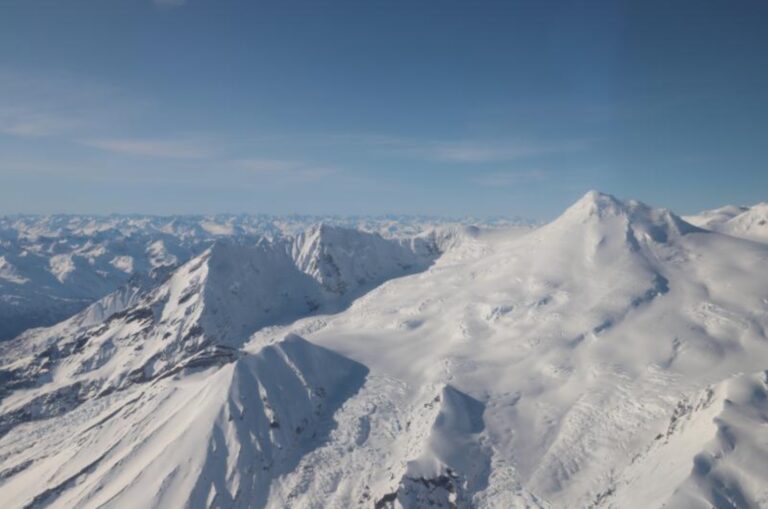
Mount Spurr, the 11,070-foot volcano that towers west of Anchorage across Cook Inlet, is showing signs of settling down, at least for now, after a winter of heightened unrest that sparked eruption watches from the Alaska Volcano Observatory.
In March, scientists with the AVO issued a notable alert, warning that “the likelihood of Mount Spurr eruption in the next few weeks or months has increased.” They cited significantly elevated volcanic gas emissions, newly reactivated fumaroles at the volcano’s Crater Peak vent, and persistent earthquakes and ground deformation. The data suggested that new magma had intruded into the crust beneath the volcano, raising concerns that Mount Spurr might be preparing for an explosive eruption similar to those of 1953 and 1992.
But three months later, those dire warnings have not materialized. While Mount Spurr remains restless, the volcano has not escalated to a more threatening phase. “Although low-level unrest continues, no changes have been observed in the monitoring data to indicate that the volcano is moving closer to an eruption,” the AVO reported this week.
Volcanologists are continuing to track low-level seismic activity and occasional steam plumes seen on clear days through webcam feeds. Yet the volcano’s behavior has not intensified in a way that would suggest magma is rising toward the surface, a necessary step before an eruption.
“Based on previous eruptions,” the AVO explained, “changes from current activity in the earthquakes, ground deformation, summit lake conditions, and fumarolic activity would be expected if magma began to move closer to the surface.”
That means the eruption risk, while not entirely dismissed, appears significantly lower than it was earlier this year. The warning signs scientists are watching for, such as more frequent and stronger earthquakes, increased gas output, and rapid surface changes, have not materialized.
Things can change in Alaska’s volatile volcanic landscape. In both 1953 and 1992, Mount Spurr produced short-lived but powerful eruptions that launched ash clouds into the skies and dropped a thin layer of ash on Southcentral communities, including Anchorage.
While the volcano is currently holding steady, AVO continues to monitor Mount Spurr, which remains relatively quiet, but under watch.
The Fairbanks North Star Borough Assembly is set to hear public testimony on two ordinances during its regular meeting on June 12.
Ordinance 2025-10: Reforming Absentee Voting
This proposed ordinance makes several changes to the borough’s absentee voting process. It would require that absentee ballots be received by the day of the election, rather than up to a week afterward, as is currently allowed.
Because most absentee ballots in the borough are submitted via in-person early voting or through email, the shift in deadline will not meaningfully suppress voter turnout, but will help bolster the integrity of the electoral process by ensuring a more timely and secure vote count.
Additionally, the ordinance would prohibit exclusive vote-by-mail elections, thereby preserving in-person early voting and traditional polling place voting options. Another provision is a requirement that voters not only sign their absentee ballot envelopes but also print their names clearly alongside their signatures. This change would assist election officials in verifying ballots, as some signatures alone can be difficult to decipher.
Ordinance 2025-20-1A: Joy Community Center Funding
This ordinance addresses the fate of the Joy Community Center, which was defunded during the recent borough budget cycle. Funding previously allocated to the center was redirected to the Fairbanks North Star Borough School District.
Now, a proposal is on the table to restore funding to keep Joy Community Center open. The building requires repairs and ongoing maintenance, raising concerns about the borough’s financial capacity to sustain it. The Parks and Recreation Department is advocating to keep the facility open, suggesting the department could move its offices from the Big Dipper Ice Arena to Joy. Some are warning that maintaining Joy could divert resources and programs from other borough facilities, including the Fairbanks Senior Center.
The Assembly’s discussion on these ordinances will take place at the Borough Assembly Chambers. These meetings are held at 6 pm in the Mona Lisa Drexler Assembly Chambers, 907 Terminal Street, Fairbanks. Citizens can attend in person, watch live online, or listen to broadcasts on KUAC Radio 89.9 FM. Members of the public can provide input by emailing [email protected], calling 907-459-1401 to sign up for testimony by phone or in person, or appearing at the meeting to testify.
Phil Izon, a lifelong Alaskan, didn’t build the PFD Doomsday Clock as a gimmick. He built it because Alaskans deserved to know the truth—not the sugarcoated headlines, not the legislative spin, but the cold, undeniable reality:
Your dividend wasn’t reduced. It was taken. Stolen. Redirected behind closed doors. Quietly siphoned from the pockets of working families and handed over to the same political machine that promised to protect it.
This wasn’t an honest debate about budgets. It wasn’t shared sacrifice. It was a betrayal — engineered by a small circle of legislators and bureaucrats who put unions, special interests, and Lower 48 donor networks above the very people they were elected to serve.
These weren’t budget cuts — they were backroom raids.
They didn’t ask your permission. They didn’t hold a vote of the people. They didn’t amend the law. They just ignored it.
They gutted a statutory formula that was designed to protect Alaskans—especially the working class and rural families—and they converted it into a slush fund for bureaucrats, nonprofit insiders, and political operatives who answer to dark-money donors, not to you.
Year after year, they diverted billions with a shrug, while you paid the price in higher heating bills, stretched grocery budgets, missed mortgage payments, and kids forced to forgo opportunity. The wealth that was meant to build your family’s future was quietly absorbed into a government system that only grows, never gives back.
This is not governance. This is economic colonization.
And Phil Izon’s PFD Doomsday Clock doesn’t just keep time, it counts every dollar taken and exposes the names, the votes, and the mechanisms that made it possible.
Let’s not pretend this was accidental. It started with Gov. Bill Walker in 2016 and continues to this day. Billions that should’ve gone to Alaskans went instead to government unions, bureaucratic expansions, and a web of Lower 48-funded nonprofits. And behind it? The usual suspects: Hansjörg Wyss, Arabella Advisors, and the 1630 Fund — dark-money power brokers pulling strings from outside our state.
These same groups engineered Ranked Choice Voting, Automatic Voter Registration, and a laundry list of “equity” and “climate” programs run through groups like SalmonState, Alaska Venture Fund, and Alaska Outdoor Alliance. What they actually did was install a new political machine designed to keep the public out and redirect Alaska’s resource wealth to the select few.
And the PFD? It was the first casualty.
Just a few figures from the PFD Doomsday Clock:
2018: Alaskans were owed $2,900. They were paid $1,600. Over $800 million stolen.
2020: $992 paid. Over $1 billion diverted.
2022: Should’ve been $4,200. Got $3,284. $600 million redirected.
2024: Should be $4,000. Paid: $1,718. $1.3–1.4 billion stripped away.
If the statutory formula had been followed, dividends would rise above $4,000 annually by 2029 and reach $5,000 by 2035. A family of four will have lost over $180,000 during this 20-year period. That’s not hypothetical — it’s real money that could have gone toward tuition, mortgages, groceries, heating oil, or medical care.
So where did it all go?
Into the state’s political machine. Into unaccountable education bureaucracies. Into pension systems and NGO slush funds. Into the hands of consultants and campaign donors who make a living expanding government, not serving the public.
Alaskans never voted to give away their dividend. But the same network that re-engineered our elections made sure that our voices no longer matter—by installing politicians who do their bidding.
And here’s the part that too many still don’t understand:
Government money doesn’t vanish. It gets reassigned. It gets redistributed. It gets redirected, usually upward.
There’s a dangerous myth, whispered into our politics and baked into our complacency, that when funds go into the hands of the government, they somehow just disappear. That it’s all too complex to follow. That it’s nobody’s fault when money meant for the people evaporates into a black hole of “budgetary necessity.”
But that’s a lie.
Money doesn’t disappear — it moves.
And it moves exactly where someone tells it to.
When the Legislature strips the PFD from your family, it doesn’t evaporate into the ether. It flows—into union pensions. Into multi-million-dollar grants for political nonprofits. Into expanding agencies that never shrink, never reform, and never return a dime of value to the people footing the bill. It funds bloated administrative offices, ESG consultants, DEI contracts, and the revolving door of insiders who profit every time the public loses sight of where the money goes.
The mindset that government spending is just some fuzzy abstraction is how they get away with it.
Because if the people think the money’s just “gone,” there’s no one to hold accountable.
But when you follow the dollars—when you trace them from the hands of the working class into the spreadsheets of political allies, lobbyists, and ideologically driven nonprofits—the betrayal becomes personal. It becomes visible. And it becomes something we can fight.
That’s why the PFD Doomsday Clock matters. Because it shatters the illusion. It draws a straight line—from what you were supposed to receive to where it actually went.
This isn’t accidental. It’s not mysterious. It’s engineered.
Every dollar the government takes without transparency or consent is a dollar it assigns a new owner. And spoiler alert: It’s not you.
So the question is no longer whether the money is gone. The question is: who has it now? And why are you, the rightful recipient, the one being told to tighten your belt?
This isn’t just about restoring the PFD.
It’s about breaking the mindset that the government’s money is anything other than your money, whether it was taxed, seized, or withheld from the people it was meant to serve.
Theft disguised as budgeting is still theft.
And the Doomsday Clock exists to call it what it is—and to help Alaskans take it back. Every dollar. Every vote. Every piece of the future that belongs to them—not the machine.
Because until every Alaskan understands the scale of what’s been lost—and the forces behind it—we will continue to lose more.
This isn’t about partisan politics. This is about who owns Alaska’s future—you, or the people who think they’re entitled to rule you.
And that’s why the Doomsday Clock exists: To make sure the theft is no longer silent. To make sure the people know. And to make sure that one day soon, they take it all back.
This is why Phil Izon built the Doomsday Clock—and why Phil created the upcoming film:
“The Permanent Short: Alaska’s Reallocation of $25+ Billion from the Citizens of Alaska to Unions and NGOs” It is scheduled to premiere in October.
In the meantime, you can explore: PFD Doomsday Clock 2.0 (adjusted for inflation and investment loss), the Alaska Budget Analyzer, and more films and tools at: TropicTundra.com
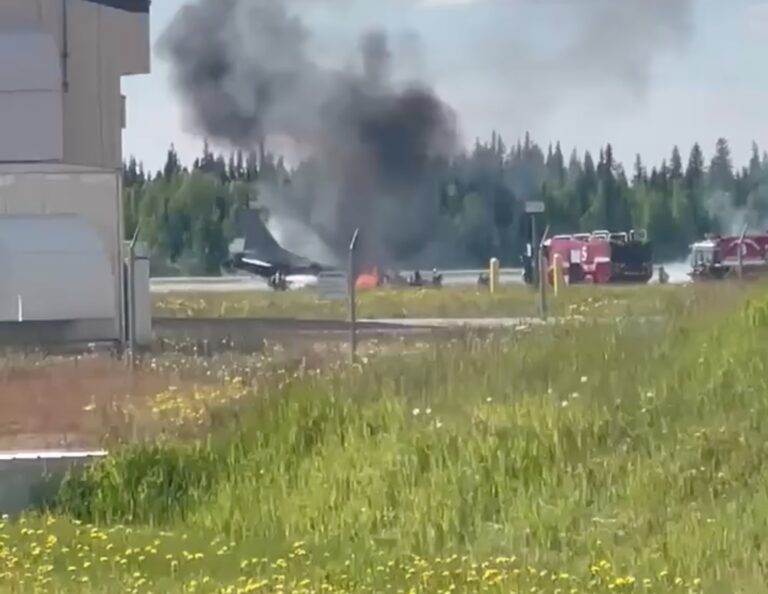
A Republic of Korea Air Force F-16D Fighting Falcon crashed Monday afternoon during takeoff at Eielson Air Force Base, prompting a swift emergency response and the safe ejection of the aircrew.
The crash occurred around 4 pm as the aircraft was departing the runway. According to initial reports from Eielson, the F-16D left the surface of the airstrip and crashed nose-down on the runway, sparking a fire. The aircraft was within the base perimeter at the time of the crash.
Both crew members ejected and were transported to Bassett Army Community Hospital for further medical evaluation. Their current conditions have not been publicly disclosed, although they reportedly had some cuts, burns, and bruises.
Emergency response teams on base quickly arrived at the scene and extinguished the fire. No additional injuries were reported.
The F-16D was one of several aircraft brought to Fairbanks for participation in Red Flag-Alaska, a recurring multinational training exercise involving US and allied air forces. This year’s exercise is scheduled to begin Thursday.
Officials have not yet released the cause of the crash but said it’s under investigation.
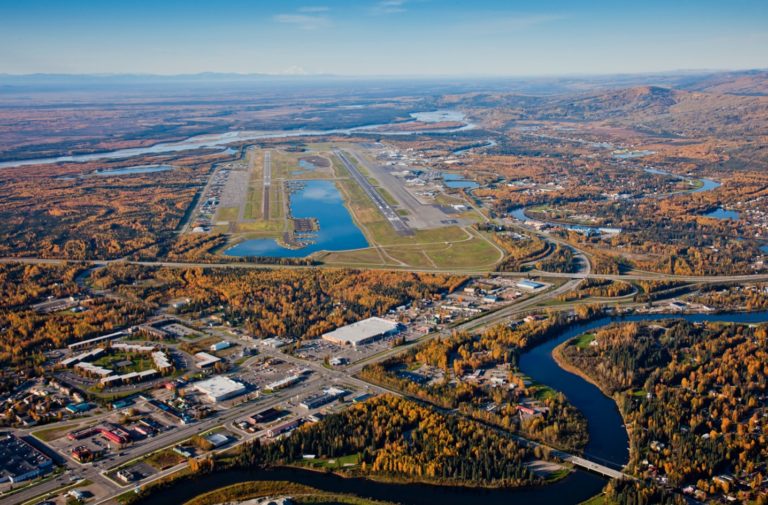
Eielson Air Force Base is southeast of Fairbanks, and regularly hosts Red Flag-Alaska to provide a realistic combat training environment for friendly forces from across the globe.
If the Alaska Center and the Renewable Energy Alaska Project (REAP), two sides of the same coin, now are in charge of the Chugach Board of Directors, what is it that they have actually won? Are they in position to do some actual damage to energy here in Southcentral, or are they in the same position that a dog that has been chasing vehicles up and the down the streets for years after he finally catches one? What do they do next?
With any luck, it will be the latter, though I expect they will make every attempt to do the wrong thing, supporting the most expensive, the least efficient, the most unstable, the least reliable, and the least environmentally friendly generation choices humanly possible. Yes, this means renewables.
Their problem is that the climate change world has changed. It started changing Nov 5, and that change has only accelerated since Jan 20, Inauguration Day.
We discovered several things over that time. First, and most importantly, is that climate change and all renewable projects (renewables for renewables sake) ended up being simply a form of grift, where tens of billions of dollars were disbursed to build all manner of wind and solar projects, most of which were expensive failures from a generation standpoint, but spectacular success in putting money in the pockets of donors to future democrat election campaigns. Rural broadband is similar grift here in Alaska.
That is what the $93 billion in grants, loans and commitments pushed out of the Department of Energy over a period of 76 days following Trump’s election is all about. In its previous 15 years, the Loans Programs Office committed only $42 billion.
It was that money that the renewables advocates on the Chugach Board were counting on to fund their hoped for large solar and large wind projects in the MatSu. That money is gone, and won’t be back for at least three years, if not longer.
What to do next? One observation is that we are now hearing noises from the Alaska Center / REAP crowd about their support of “all forms of energy,” a mix of generation sources all happily playing together in the same generation portfolio. You’ve got to give these guys credit for turning on a dime and changing their message in near real time.
But what does all forms of energy really mean? For one thing, it means we are going to be seeing reactors, small modular Generation IV (GenIV) reactors in Alaska. The first one will show up at Eielson Air Force Base courtesy of the congressional delegation. The Trump Administration is pushing small modular reactors, particularly at military bases, so we will be seeing a lot of them. I could envision several more in Alaska, all sited at military bases. Of course, the Alaska Center / REAP crowd managed to defeat the two board candidates knowledgeable of and willing to consider reactors.
The other thing we have in the not-so-distant future is a natural gas pipeline of some sort from the Slope. How long that takes is anyone’s guess, but I think we are a lot closer than we have been in years.
What does the new landscape look like? Big Wind and Big Solar are off the table for years. Reactors and natural gas are on the table. While I would personally like coal, coal to liquids (Fischer Tropsch, CTL) and gas to liquids (Fischer Tropsch GTL) on the table, I’ll take what I can get.
Three additional observations for your consideration.
The first is that wind farms operate by virtue of waivers allowing them to kill large numbers of birds. Remove those waivers, better yet simply treat them like we currently treat natural gas and oil exploration, and they can no longer operate.
Finally, all is not lost, as battery technology is moving very quickly. While it is not good enough yet to be economically viable on a regional basis, that technology is making large strides. Given Tesla’s commercial involvement in this field, nothing 4-5 years down the road would surprise me. I would expect home-sized battery backup will become economically viable first.
The Alaska Center and REAP managed to catch their prize. We are about to find out if they are smart enough to operate in the Brave New World of 2025.
Happily, whatever happens, there will be another board election next year for at least two board members.
Alex Gimarc lives in Anchorage since retiring from the military in 1997. His interests include science and technology, environment, energy, economics, military affairs, fishing and disabilities policies. His weekly column “Interesting Items” is a summary of news stories with substantive Alaska-themed topics. He was a small business owner and Information Technology professional.
Courage is the ability to face fear, discomfort or danger. It is about acting in the face of adversity, whether that’s physical hardship, moral opposition, or personal loss. Essentially, courage is about doing what is necessary even when it’s difficult or scary.
An example of courage is when someone speaks up against injustice or stands up for their beliefs and values, even if it means facing opposition or potential consequences. This could involve refusing to go along with a group that is doing something wrong, or simply helping others in need.
Historically, the famous “Dreyfus Affair” exemplified a courage and determination that tore through late 19th century France and rocked the country’s claim of “Liberty, Equality and Fraternity.” It was the Dreyfus Affair that convinced Theodore Herzl, the founder of Political Zionism, of the need for a Jewish state, which became a reality in 1948 with the creation of Israel by the United Nations.
The “Dreyfus Affair” was an espionage trial that took place in France in 1894. Captain Alfred Dreyfus, a Jewish officer, was convicted of treason for allegedly passing military secrets to the Germans. He was sentenced to a solitary confinement for life on the Devil’s Island, France’s notorious penal colony off the remote coast of South America. How could this happen in 19th century France, in which Jews had been equal citizens?
On Jan. 13, 1898, the most famous front page in the history of journalism appeared in a French paper L’Aurore (Aurora) beneath a two-word headline: “J’accuse” (I accuse!). In a long and fearless article, France’s leading novelist, Emile Zola (1840-1902), accused the French government of having orchestrated the conviction of an innocent man, Alfred Dreyfus.
Zola’s brave article immediately caused French society to split into Dreyfusards and anti-Dreyfusards. At the heart of the Dreyfus Affair was a toxic and rapidly growing anti-Semitism in France. In fact, the Dreyfus Affair and anti-Semitism in France contributed greatly to the rise of Jewish political leader Theodor Herzl and Zionist movement. Thus, Zionism was a nationalist and political movement that advocated for the establishment and maintenance of a Jewish state in the historic Land of Judea (Israel).
Zola’s intention in publishing “I accuse!” was to provoke the French government to prosecute him for libel, so that the emerging and exculpatory facts of the Dreyfus case could be, for the first time, publicly heard. Accordingly, he was tried, convicted, and sentenced to jail for his provocative (courageous) act—a penalty Zola evaded by urgently fleeing abroad.
In short, in 1898, the prolific writer Emile Zola took a courageous stance in defense of the falsely accused Dreyfus and was himself threatened with imprisonment. As a result, he urgently fled to England to avoid incarceration, without luggage, without sufficient resources, and unable to speak fluent English. Dreyfus was finally vindicated in 1906 or four years after Zola’s death in 1902.
Indeed, the patterns of history tend to repeat. Today’s pro-Palestinian and anti-Israel rhetoric masks deep-rooted antisemitism in our country and worldwide, regardless of who advocates either for or against Israel, or those who demand a release of remaining Jewish hostages that are still been held in the tunnels of Gaza by Hamas terrorists.
My good and long-time friend, via private correspondence, had a courage and intelligence to clearly assess the situation in our country, regarding the subject matter and a lack of courage on the part of American Jewry in confronting antisemitism:
“It really is surprising how silent most Jews seem today about all the widespread antisemitism sweeping the United States and Europe. Your Juneau synagogue does not seem unusual in that respect. I suppose so many Jews, at least in the United States, find it confusing to be so strongly committed to the Democrat party and then see that party embrace the “Palestinian” cause, even with its extreme and violent antisemitism. Maybe that’s an example of how we can become some political self-image of who they are. (‘I’m a liberal Democrat,’ cries my brother as he spouts the latest party talking points taken without question from Democrat politicians). But, wow, you’d think a lot of Jews would be questioning their unswerving allegiance to a political party in this case, by now. Your points [in the article ‘Free Palestine’ is a call to destroy Israel and exterminate Jews‘] about the historical background of Mideastern nations is an important perspective, too. As very few people alive today (including myself) know anything about that history and simply assume that all those nations have had very long histories as such, like so many of the major nations of the world. If it weren’t for all the petroleum in that region, all those “nations” would still be poor and ‘backward’ (primitive, undeveloped). But even though Israel has real and very long historical claims to its “homeland” and nationhood there, they are at a disadvantage of being a minority; peaceful religion surrounded by religious fanatics of an especially violent religion and basically having been given their land by a political fiat at the end of World War II. I don’t see how today’s politics cannot be terribly upsetting to any Jewish person anywhere in the world.”
Clearly, “Free Palestine” is not just a slogan, it is a genocidal call echoing the darkest chapters of history. It takes courage for all peace-seeking people, regardless of their political and religious affiliations, to stand proudly against this terrorist organization, its virulent movement and antisemitic agenda.
Alexander Dolitsky was born and raised in Kiev in the former Soviet Union. He received an M.A. in history from Kiev Pedagogical Institute, Ukraine in 1976; an M.A. in anthropology and archaeology from Brown University in 1983; and enrolled in the Ph.D. program in anthropology at Bryn Mawr College from 1983 to 1985, where he was also lecturer in the Russian Center. In the USSR, he was a social studies teacher for three years and an archaeologist for five years for the Ukrainian Academy of Sciences. In 1978, he settled in the United States. Dolitsky visited Alaska for the first time in 1981, while conducting field research for graduate school at Brown. He then settled first in Sitka in 1985 and then in Juneau in 1986. From 1985 to 1987, he was U.S. Forest Service archaeologist and social scientist. He was an Adjunct Assistant Professor of Russian Studies at the University of Alaska Southeast from 1985 to 1999; Social Studies Instructor at the Alyeska Central School, Alaska Department of Education and Yukon-Koyukuk School District from 1988 to 2006; and Director of the Alaska-Siberia Research Center from 1990 to 2022. From 2006 to 2010, Alexander Dolitsky served as a Delegate of the Russian Federation in the United States for the Russian Compatriots program. He has done 30 field studies in various areas of the former Soviet Union (including Siberia), Central Asia, South America, Eastern Europe and the United States (including Alaska). Dolitsky was a lecturer on the World Discoverer, Spirit of Oceanus, and Clipper Odyssey vessels in the Arctic and Sub-Arctic regions. He was a Project Manager for the WWII Alaska-Siberia Lend Lease Memorial, which was erected in Fairbanks in 2006. Dolitsky has published extensively in the fields of anthropology, history, archaeology and ethnography. His more recent publications include Fairy Tales and Myths of the Bering Strait Chukchi, Ancient Tales of Kamchatka, Tales and Legends of the Yupik Eskimos of Siberia, Old Russia in Modern America: Living Traditions of the Russian Old Believers in Alaska, Allies in Wartime: The Alaska-Siberia Airway During World War II, Spirit of the Siberian Tiger: Folktales of the Russian Far East, Living Wisdom of the Russian Far East: Tales and Legends from Chukotka and Alaska, and Pipeline to Russia: The Alaska-Siberia Air Route in World War II.
There have been several editorials lately that call out the Governor’s Sustainable Energy conference as having “left out” information and supported only the state’s fossil fuel assets.
As the sponsor of a geothermal hydrogen project in the Aleutians, this outlook couldn’t be further from the truth. Did the writers of these criticisms actually attend the conference?
I found it to be really balanced with most of the panels focused on technological breakthroughs in alternative energy. I found the section on geothermal energy particularly useful, and of course we have many potential geothermal projects that are under development.
Perhaps what the writers found distasteful was the press coverage on the three energy related secretaries who travelled to Alaska at the invitation of Gov. Mike Dunleavy, an unprecedented accomplishment.
While support was shown for all the alternative energies, we have to accept the fact that our economy is strongly supported by the oil and gas industry and is the source of our incredible Alaska Permanent Fund, which just reached a record $83 billion in value. In addition to earnings from investments, the oil industry still contributes over $100 million to the fund every year.
This oil industry funded fund now provides a majority of state funding for critical state services, while allowing Alaskans to benefit from them without having to pay taxes. In addition, the oil industry represents about one third of the jobs in Alaska.
Incredibly, one of the writers stated that “the people of Alaska drive the economy, not some outside corporations.” Excuse me for saying this, but without these ‘outside’ companies, the ‘people’ wouldn’t even have a job.
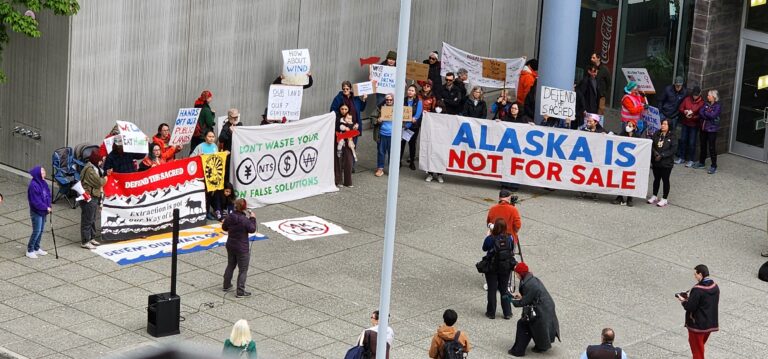
Likewise, there were protesters near the conference. I saw one banner, held up by well-meaning people saying “Extraction is not our way of life.” I guess this was intended to drive a wedge between industrial development and subsistence hunting. Did they ever stop to think if the moose, caribou or salmon that they killed consider themselves to be extracted?
Of course, the human race has “extracted” resources throughout time on earth, or we wouldn’t even be here.
Criticizing the Sustainable Energy conference with such arguments is just pure foolishness. Alaskans and the whole world will need the energy resources that Alaska represents, and we shouldn’t be discriminating against any of them. The conference certainly didn’t.
Paul Fuhs is former Commissioner of Commerce and Economic Development for Alaska, Former Mayor of Dutch Harbor and is currently promoting geothermal and related hydrogen industries in the Aleutian Islands.