Thursday, October 15, 2026
Home Blog Page 1555

Property taxes just went up in Anchorage for schools

STUDENT POPULATION DECLINING, BUDGET INCREASING

The Anchorage Assembly this week approved a 1.3 percent property tax increase that will bring the Municipality another $3.3 million to fund the growing Anchorage School District budget.

It’s an increase that city fathers say taxpayers will hardly notice.

The Assembly also approved spending $885 million on the school district’s operating budget, a 13 percent increase over last year.

The associated mill rate for schools will hit 7.15, a 3.5 percent increase over the current rate. For comparison, the school portion of the mill rate was 6.79 in 2007. By 2017, it had crept up to 6.92.

Overall, the current mill rate for Anchorage real properties is about 16.4, for all local government and school services.

WHAT DOES THIS MEAN TO YOU?

According to Realtor Connie Yoshimura, the tax on a $350,000 home in Anchorage is $5,740 while a $500,000 home owes $8,200 to the Muni, excluding any exemptions entitled to the Anchorage property owner.

The increased school tax will add between $74 and $107 to the property taxes of homes in this valuation range.

The school district’s final budget won’t be final until after the State budget is signed, which is expected before the beginning of the State’s fiscal year beginning July 1.

Anchorage schools are primarily funded through the State of Alaska “foundation funding formula” and local property taxes.  Federal revenue come from Federal Impact Aid and reimbursements for JRTOTC instructors, and Medicaid. A small amount of revenue is generated by things like facility rentals.

However, Gov. Michael Dunleavy has proposed pulling back the state’s reimbursement of local school construction bonds, which now reimburses locally approved projects.

That would leave those due payments on bonds to Anchorage property taxpayers, and could cost them an average of $430 per homeowner.

The Anchorage School District budget is predicated on assumptions that there will be no change to the state’s base student allocation, which is $5,930 per student, or foundation funding formula. The district was also counting on an additional $8.4 million that was in House Bill 287, passed in by the 2018 Legislature, which gave extra funding outside the foundation formula. The district assumes there will be no decrease in the State’s debt reimbursement.

Meanwhile, Anchorage voters are facing another tax increase in a ballot proposition in the current municipal ballot, which would have voters approve another $59.1 million in capital spending for schools. A homeowner with a $300,000 valuation would pay an additional $40 a year in property taxes if this bond passes. Ballots are due in by April 2.

[Read: Five things you should know about the Anchorage bond package]

SAGGING ENROLLMENT IN ANCHORAGE
The school district has gone from having 48,707 students in 2007, to 46,949 in 2018, a decrease of 3.61 percent over 11 years. Administrators predict a loss of another 580 students in the fall of 2019.
Also, in the 2007-2008 school year, the district received 65.39 percent of its budget from the State of Alaska; now it’s receiving 58 percent of its funding from the State. As spending has increased, the state portion has become a smaller portion of overall spending, which is being picked up by local taxpayers.
The school district is expecting to reduce the number of teachers and staff allocated for the coming year, including a reduction of 46 full time equivalent (FTE) elementary school teachers. The middle school teacher allocation is being reduced by 13.8 FTE, an average of 1.4 FTE per school. High school teacher allocation is being reduced by 19.1 FTE, an average of 2.4 per school due to lower anticipated enrollment next year.

Seattle is dying; will Anchorage follow suit?

ANCHORAGE DAILY PLANET

Watching a Seattle television station’s take on homelessness in the Emerald City is shocking and makes us wonder about Anchorage’s future.

The latest in KOMO-TV’s raw, gritty trilogy on homelessness and addiction in the city – “Seattle is Dying” – is sometimes stunning, sometimes sad, sometimes infuriating.

The city is losing its battle with homelessness despite more than a billion dollars being spent on the problem in the Puget Sound area. The more Seattle spends, the worse its problem becomes.

We wonder how Anchorage would fare if a local television station – and we are not holding our breath – invested the time and money to honestly detail and document our city’s homeless problem. That report likely would be stunning, sad and infuriating, too.

From where we sit, in Seattle and Anchorage – and other cities, as well – the old adage certainly is true: If you want more of something, subsidize it.

In Anchorage, the Assembly and Mayor Ethan Berkowitz are hawking Proposition 9, a 5 percent retail alcohol tax they managed to place on the April 2 ballot, along with a charter change to allow its adoption with less than the normally required 60 percent supermajority vote.

Watch the KOMO special here.

Read the rest of the editorial at:

http://www.anchoragedailyplanet.com/151709/seattle-is-dying-is-anchorage/


Bill would allow Alaskans to donate PFD to General Fund

8

A bill that would allow Alaskans to contribute their Permanent Fund dividends to the state budget has been resurrected.

SB 92, sponsored by Sens. David Wilson of Wasilla, would have the Department of Revenue add a provision allowing Alaskans who receive dividends to contribute some or all of their dividends to the state, just as they do for nonprofit organizations through Pick, Click, Give.

Last year, the Senate passed a similar bill, SB 154, on a unanimous vote. It was referred to the House, where it died in committee.

This time, SB 92 has two other Senate sponsors: Scott Kawasaki and Elvi Gray-Jackson. Kawasaki has sponsored the similar bill on the House side last year after it passed the Senate.

“Many Alaskans have told me they wouldn’t mind giving up a portion of their dividends to pay for state government,” said Sen. Wilson. “This bill creates a simple mechanism for them to do so. If you want to donate your dividend, that’s your choice. If you want to keep your dividend, you’re free to do so. Senate Bill 92 is about the freedom to make your own decision.”

Participants could contribute $25, $50, $75, $100, or more, in increments of $50, up the total amount of their dividend.

PFD donations are subject to a 7 percent administrative fee paid to the Permanent Fund Dividend Division.

Currently, PFD applicants can donate directly to the state’s Crime Victim Compensation Fund, the Peace Officer and Firefighter Survivors’ Fund, or one or more of the educational organizations, community foundations, or charitable organizations that appear on the contribution list contained in the PFD application. This bill would add the state’s general fund to that list.

SB 92 was referred to the Senate State Affairs Committee and the Senate Finance Committee.

Sen. Mike Shower of Wasilla applauded the bill:

“Based on the averages we’ve seen during testimony and then extrapolating with the well over 600,000 who qualify for a dividend, I’d expect about 150,000 people, or more, to take advantage of this opportunity. Using the statutory formula and a $3,000 dividend I would expect to see a $450 to $500 million bump into the general fund next year as everyone who says they prefer the dividend to go to the state honors their word,” he wrote.

Anniversary: 30 years since Exxon Valdez hit Bligh Reef

11

Sunday marks the 30th anniversary of the Exxon Valdez oil spill in Prince William Sound.

At 12:04 am on March 24, 1989, a tanker loaded with crude oil was entering Prince William Sound when it struck Bligh Reef and emptied 10.8 million gallons of crude oil into the water.

The oil, which had been loaded at the Valdez terminus of the Trans Alaska Pipeline, spread far and wide around the Gulf of Alaska coastline. Until 2010’s Deepwater Horizon spill in the Gulf of Mexico, the Exxon Valdez spill was the largest in U.S. history.

The habitat of the Prince William Sound coastline was damaged and is still recovering. Some 1,300 miles of coastline was impacted, with about 200 miles considered heavily or moderately oiled.

Captain Joseph Hazelwood was blamed for the accident, as he was asleep in his bunk, with the tanker under the control of the third mate. Hazelwood had consumed an uncertain amount of alcohol hours earlier.

As the third mate was manuevering between icebergs, he miscalculated and took the tanker too far to the east. The radar on the ship was also not functioning at the time of the grounding.

Hazelwood was later acquitted of being under the influence, but he was convicted of a misdemeanor for unlawful discharge of oil, fined $50,000, and ordered to perform 1,000 hours of community service, which he performed in Anchorage at Beans Cafe and by picking up roadside litter. He has endured withering criticism and ridicule in the years since the accident.

The entire cleanup operation took three years, but much of the oil was never removed and the region is still considered to be in recovery. The ship itself was returned to service under various names and finally became scrap metal in 2012.

[Read: A complete narrative of the accident.]

Remaining oil has worked its way below the surface of sand and rocks on the beaches around Prince William Sound, particularly in places that are sheltered from the weathering process. Its impact is still being studied. And while many species have recovered to their pre-spill population, some, such as herring, have not, as shown in this 25-year recovery chart published by the National Oceanic and Atmospheric Administration five years ago:

As the 30-year anniversary of the accident is Sunday, Alaskans can expect news providers and environmental organizations to post commentary and remembrances about the worst manmade disaster in Alaska history.

Do you have memories of the Exxon Valdez oil spill? Where were you? Did it impact your life? How? Did you take part in the clean up? Add your comments below.

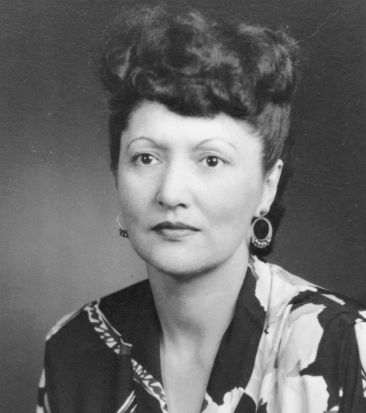
Elizabeth Peratrovich obituary appears in the New York Times

0

Alaska Native civil rights champion Elizabeth Peratrovich, who died on Dec. 1, 1958, has finally had her obituary written by the New York Times.

Feature obituaries appearing in the Times showcase lives of notable men and women from around the world, achievements, and contributions to their field or society as a whole. It is rare for an Alaskan to be featured in a non-paid obituary in the most widely read newspaper in the world.

A new feature called “Overlooked No More” is highlighting the lives of people the Times never got around to noticing. Many of the subjects are women and people of various ethnicities whose lives went unnoticed. The newspaper is playing catch-up for all the extraordinary lives overlooked while Times obituary writers wrote about the achievements of white men who had passed. The series makes for interesting reading.

Born in Petersburg on July 4, 1911, Peratrovich was a member of the Lukaax̱.ádi clan, in the Raven moiety of the Tlingit nation. At a young age, she was orphaned and adopted by Andrew and Mary Wanamaker. Andrew was a fisherman and Presbyterian lay minister.

Elizabeth grew up in Petersburg, Klawock, and Ketchikan. After graduating from Ketchikan High School, she attended Sheldon Jackson College in Sitka, and Western College of Education in Bellingham, Washington.

A Tlingit woman graduating from college was notable for its time. But her later work lobbying for civil rights for Alaska Natives is what made her an icon. She and her husband Roy rallied Natives to ensure the passage of the 1945 Anti-Discrimination Act, the first anti-discrimination law in the United States. The Territorial Legislature passed the bill on Feb. 6, 1945, nearly two decades before the Civil Rights Act of 1964 was signed into law.

At the time in the Territory of Alaska, Natives endured deep discrimination in housing and public facilities. Some merchants had signs on their doors that read “No Natives Allowed.”

In Alaska, Elizabeth Peratrovich Day is Feb. 16. Gov. Michael Dunleavy issued a proclamation, recognizing her contributions to Alaska and the nation.

Here are the first few paragraphs from the New York Times “Overlooked” obituary of Elizabeth Peratrovich:

“It was hardly the first affront. They had grown up in a segregated Alaska: separate schools, hospitals, theaters, restaurants and cemeteries. But for Elizabeth Peratrovich and her husband, Roy, Tlingit natives, the sign they spotted in Alaska’s capital one day in late 1941 was the final straw.

“No Natives Allowed” read the notice on a hotel door.

“The proprietor of Douglas Inn does not seem to realize that our Native boys are just as willing as the white boys to lay down their lives to protect the freedom that he enjoys,” they wrote in a letter to Ernest Gruening, the territory’s governor, signaling the start of their campaign to fight discrimination in Alaska.

Calling such open bias “an outrage,” the couple continued, “We will still be here to guard our beloved country while hordes of uninterested whites will be fleeing South.”

Gruening agreed with the Peratroviches, and they joined forces. In 1943, they attempted to usher an antidiscrimination bill through Alaska’s two-branch Territorial Legislature. It failed, with a tie vote of 8-8 in the House.

[Read the New York Times obituary of Elizabeth Peratrovich here]

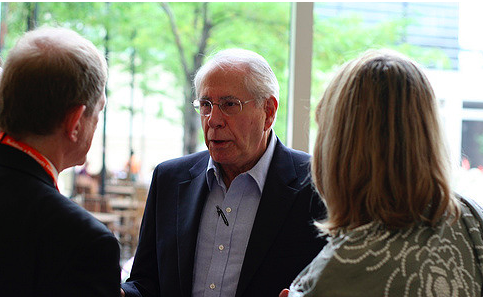
Alaska former Sen. Mike Gravel exploring run for presidency

Former Alaska Sen. Mike Gravel has filed with the Federal Election Commission and formed an exploratory committee for a run for president.

The 88-year-old would be the oldest candidate in an increasingly crowded field of Democrats; he’s 11 years older than Sen. Bernie Sanders and will turn 89 in May.

Gravel was in the Alaska House of Representatives when he ran for Senate, beating Sen. Earnest Gruening. He served from 1969 to 1981.

While in office, Gravel was the senator who read the Pentagon Papers into the public record in 1971, in the middle of a Supreme Court case involving the New York Times reporting on the Vietnam War. The Pentagon Papers were a secret Department of Defense study of U.S. military involvement in Vietnam between 1945 to 1967, but by reading them into the record, they immediately became public documents.

Gravel, a Democrat, lost to Clark Gruening in the 1980 primary; Gruening lost to Republican Frank Murkowski. Gravel ran for president in 2008, and also served as CEO of a cannabis company, KUSH, which made a cannabis lozenge known as “Kubby,” (named after a Libertarian who helped draft California Proposition 215 to legalize medical marijuana).

Gravel has launched the simplest of campaign web sites that indicates he wants to have a voice in the 2020 race, so he can say “what establishment candidates won’t” say.

He also has a Twitter handle, where he has plenty of jokes and jabs at fellow Democrat contenders, calling them out by name. A click on the Twitter button on his website brings up a suggested Tweet: “Holy crap Mike Gravel is running https://mikegravel.org #2020election”.

During his 2008 campaign for president, Gravel was something of a media sensation with his sometimes mystifying television ads, such as this one:


Gravel says he hopes to get enough donations in to qualify for the presidential debates, as he did in 2008, and to push the dialogue “leftward.”

At his web site, he describes his progressive intentions further:

“Sen. Gravel is committed to ending America’s imperial policies (especially in Venezuela and Iran), rescheduling cannabis, fundamentally reforming our politics through direct democracy, abolishing mass surveillance on American citizens, prioritizing climate change, dismantling America’s carceral [prison] state, and building a foreign policy free of undue influence by Israel and Saudi Arabia.”

“If he were to run, he would aim not to win, but instead to qualify for the 2020 Democratic debates in order to send a message that no other candidate, not even Bernie Sanders or Tulsi Gabbard, is willing to issue. Our goal is to push the rest of the Democratic field toward policies, especially on political reform, climate change, and foreign policy, that, for the first time in decades, will truly challenge the American plutocracy and military-industrial complex.”

Governor begins his community budget talks

17

NARY A KOCH BROTHER IN SIGHT AT FIRST COMMUNITY MEETING

The mainstream media doesn’t like Gov. Michael Dunleavy partnering with Americans for Prosperity in a series of community budget discussions across the state.

Critics and reporters pounced. One commenter on MustReadAlaska.com compared the meetings to a gathering of Hitler’s Brown Shirts (a violent paramilitary group attached to the Nazi Party).

Why? Because the Koch Brothers, who fund AFP, are the meeting sponsors.

Here’s how the Fairbanks NewsMiner reported it:

However, Dunleavy began his Koch-free “budget roadshow” bright and early this Wednesday at a pro-business group that regularly meets in Juneau.

The media wasn’t invited, (but will be to the AFP-sponsored discussions).

The place was packed and attendees — about 35 of them — asked thoughtful and informed questions as Dunleavy explained that he ran for governor to fix the problem that was created over multiple years of spending more than Alaska was taking in in revenue. He said now is the time to fix it. And the only way he can see to fix it is to rip the bandaid off now and put in place some constitutional amendments to prevent it from getting out of control again.

Numerous other meetings are being put on the governor’s calendar with civic groups, such as chambers of commerce, the Alaska Support Industry Alliance, Associated General Contractors, and more. They, too, will control the venues and meeting rules, like AFP.

In short, AFP is just one of many sponsors of these discussions, but the one most eager to get credit and wanting to publicize it broadly, and it’s the one the Governor’s Office announced — without mentioning AFP.

AFP and the Governor’s Office should have disclosed all of the details of the AFP meetings up front, rather than let the media sink its teeth into the story. If a Democrat governor had his public meetings organized and sponsored by MoveOn, Must Read Alaska would have pointed it out, especially if the meetings had similar strict sign-up requirements.

With so many meetings planned, this roll-out could have been better, although for some Alaskans, anything related to the Koch Brothers is akin to the Brown Shirts.

[Read: Dueling road shows for budget talks]

Theater review: ‘Guys and Dolls’ at Perseverance gets two thumbs up

4

PLAYING IN JUNEAU NOW, ANCHORAGE IN MAY, AND IS A ‘SURE BET’

By KEN KOELSCH
GUEST CONTRIBUTOR

“Guys and Dolls” is currently playing at Perseverance Theatre in Douglas (for non-Juneauites, this is over the bridge from Juneau).  Much of the script by Jo Swerling and Abe Burrows revolves around gambling. If you are looking for professional entertainment with an exceptional cast, then “Guys and Dolls” is a sure bet.

In another life, while I was teaching English, history and American government at Juneau-Douglas High School, I produced and directed the JDHS Spring Musical.  Working in theater provided the opportunity to engage as many students as I could corral into stepping outside of their comfort zones (and my own) to participate in the annual event.

My first production in 1971 was “The Sound of Music” and my last in 1996 was “Joseph and the Amazing Technicolor Dream Coat.”  (In this age of full disclosure, I should note that Must Read Alaska’s, Suzanne Downing, appeared as Maria in “The Sound of Music.”  Obviously, she did an outstanding job because there has been a spring musical ever since.)

Twenty-five years ago, I chose the 1950 Broadway musical “Guys and Dolls” for the production. Eighty-five high school students were cast as dancers, gangsters, gamblers and Salvation Army band members.

That year, Kelly Richards (current Eagle River State Rep. Kelly Merrick) played a lead role as Adelaide.

I should also come clean and confess that crapshooters in the production carried their dedication to the musical beyond all expectations and actually learned to shoot craps. I discovered that one lunch hour in a back hall at the school. That they were joined by some members of the Hot Box girls and the Mission Band was doubly troubling. Like the good law enforcement officer I was about to become, I broke it up and threatened severe consequences if it happened off-stage again.

Fearing I was responsible for fostering a bad habit, I sought out Juneau’s Catholic Bishop Michael Kenny for counsel. Bishop Kenny always attended the spring musical, sat in the front row, laughed and clapped in the right places, and was the first to his feet to lead a standing ovation. Bishop Kenny’s suggested penance was that perhaps we should again do “Sound of Music” the next year to balance things out.

Over the last 40 years, I have seen many Perseverance Theatre productions. “Guys and Dolls” did not disappoint. The production is, in fact, fantastic. Director Shona Osterhout (wisely) didn’t mess with the book, music, or lyrics.  “Guys and Dolls” doesn’t need to be modernized.  My only gentle criticism is that if there is a “marker” for 12 sinners, there should be 12 sinners in the Mission!

Perseverance’s 15 actors are well cast, multi-talented and create even, solid characters.  This is one of the most athletic group of actors I have seen outside of the gym. The choreography is sharp and quick-paced and demonstrates the required athleticism and rhythm. Between the choreography and the stair-stepping at mach speed, they might want to have an EMT on call just in case.

The four main characters: Sarah Brown (Allison Holtkamp) Nathan Detroit (James Sullivan), Miss Adelaide (Ericka Lee), and Sky Masterson (Enrique Bravo) stand and deliver stellar performances.   Nicely-Nicely Johnson (Michael Gamble)’s “Sit Down You’re Rockin’ the Boat” is a personal favorite along with General Cartwright (Stacy Katasse) cutting loose in the song, as is Arvide (Derrick Grimes)’s “More I Cannot Wish You.”

You’ll recognize “Guys and Dolls” songs like “A Bushel and a Peck,” “Luck be a Lady Tonight” and “Sit Down You’re Rockin’ the Boat.’

I give you my marker, you will leave the theater with one of the songs stuck in your head.

Also in the “A” category are the five musicians who not only sound like a 20-piece orchestra but interact hilariously with the actors on stage.  I especially enjoyed the choreographed standing up in “Sit Down You’re Rockin’ the Boat.”   I’m still not sure how Nicely-Nicely Johnson gets down to the sewer through the main stage.  The levels on the set worked well and adding in the audience area at times was genius.  The lighting and the costuming were top notch as were the scene changes.

Criticism… I got nothin’.

“Guys and Dolls’ will play in Douglas at Perseverance Theatre until April 13 and then go to Anchorage where it runs from May 3-12.  “Guys and Dolls” is an American classic and Perseverance pulls it all together — music, lights, sets, costumes, choreography, dancing, acting, and singing.

Put it on your calendar – miss it and you’re outta luck.

Tickets and other information can be found at this link.

Ken Koelsch is the former mayor of Juneau, and was a teacher at Juneau-Douglas High School for decades. He also served on the Juneau Assembly and was Port Director for U.S. Customs and Border Protection. He and his wife Marian live in Juneau.


New at AOGCC: Jessie Chmielowski

1

Petroleum engineer Jessie Chmielowski has been appointed to the Alaska Oil and Gas Conservation Commission by Gov. Michael Dunleavy.

She is a professionally licensed engineer with 19 years of experience in Alaska and a long list of regulatory oversight work in her background.

Jessie Chmielowski

Chmielowski replaced Cathy Foerster, who retired this month. Foerster’s was a planned retirement after 14 years on the commission; she originally planned to retire in February but stayed on extra weeks at the request of the governor, who is in the process of replacing another former AOGCC commissioner, Hollis French.

Most recently, Chmielowski was the senior petroleum engineer for the Bureau of Land Management’s Alaska office, where she oversaw federal onshore oil and gas activities in the National Petroleum Reserve-Alaska and the Kenai Peninsula.

The commission was created as a quasi-judicial agency by statute to ensure that the state’s oil and gas is not wasted. This is one of three paid seats on the commission and it’s assigned to a petroleum engineer. The others are assigned to a geologist and a member of the public.

The public seat is vacant since Dunleavy released French for cause: He wasn’t showing up at work on a regular basis.