Monday, October 12, 2026
Home Blog Page 1508

MRAK Almanac: Food bloggers converge on Juneau

PRODUCED BY KOBE RIZK

The MRAK Almanac is your place for political, cultural, and civic events, events where you’ll meet political leaders or, if you are interested in getting to know your state, these are great places to meet conservative- and moderate-leaning Alaskans.

Denali Climbing Report:

As of yesterday evening, there have now been a total of 449 successful summits of Denali this season, up over 200 since this time last week. We can tell the climbing window is beginning to close, as 350 climbers are currently on the mountain. It’s the lowest number of in-progress climbs since the May 17 report by the National Park Service.

6/19: Eaglexit meeting and presentation at the Eagle River Lion’s Club, beginning at 7 pm. Come to learn more about Eagle River’s pitch to separate from the Municipality of Anchorage, and potential plans for a new local government. Bring a neighbor or two.

6/19: The University of Alaska Board of Regents will hold a special meeting in Fairbanks for an update on the FY20 operating budget and how it is set to impact the university, should it be signed by Governor Dunleavy.  Begins at 9 am, read the full agenda here.

6/19: June edition of Coffee with a Cop in Anchorage. This monthly event is sponsored by Anchorage Cops for Community and the Anchorage Police Department Employees Association. Come enjoy free treats, coffee, and good conversation with our great local law enforcement officers. Facebook event here.

6/19: Chugiak-Eagle River Chamber of Commerce lunch with UAA Chancellor Cathy Sandeen. Registration required, details here.

6/19: Alaska Bikers Advocating Training and Education (ABATE) general membership meeting at La Cabaña restaurant in Anchorage, starts at 7 pm. More info on the Alaska Harley-Davidson website here.

6/19: The Federal Subsistence Management Program has released their weekly Alaska Fisheries Update. Read it here.

6/19: Need to brush up on your Alaska wildlife track ID’s? Alaska Department of Fish and Game education specialist Mike Taras will be giving a free lecture on animal track and sign identification in the Murie Building Auditorium at UAF beginning at 7 pm.

6/19: Juneau Assembly meeting as “Human Resources Committee” to consider applicants for the Eaglecrest Board of Directors, 5:30 pm, City Hall.

6/19: Homer City Council meeting, including executive session on agenda. City Hall at 4 pm. Agenda is here.

6/19: Kenai City Council, Kenai City Council Chambers at 6 pm. Agenda is here.

6/20: Fairbanks’ Alaska Goldpanners baseball team is celebrating their 60th season of summer baseball this June. The first of their three-game stint against the Seattle Studs this week will begin at the Growden Fields at 7 pm—and don’t forget about the annual Midnight Sun Game on Friday night. No artificial light will be required. See the Goldpanners’ schedule here.

6/20: Interested in joining the Department of Corrections? The Alaska DOC will hold an informational recruiting workshop at the Mat-Su Job Center in Wasilla beginning at 1 pm. Read more here.

6/20: Ketchikan City Assembly meeting. Discussion of plastic bag ban ordinance. Discussion of Ward Cove cruise ship dock development. 7 pm.  Agenda is here.

6/20: The Alaska Board of Agriculture and Conservation will hold a regular public meeting in Palmer at 8:30 am. The board is set to review several new loan applications and discuss ongoing delinquencies. Further details here.

6/20: The Alaska Gasline Development Corporation will hold a regular board meeting beginning at 9 am at the Atwood Building in Anchorage. There will be an opportunity for public participation, and citizens unable to attend in Anchorage may participate via telephone. Further details here.

6/20: The Anchorage Enterprise and Utility Oversight Committee will meet at City Hall at 11 am. They’ll be discussing this item: ASCENT PGM/Northern Compass (Mark Begich) Contract. Read the agenda here.

6/20: Block Party hosted by the Downtown Association of Fairbanks. Gather along the banks of the Chena River and enjoy the many vendors and food options available in downtown Fairbanks while enjoying live music and lots of family fun. More information here.

6/20: The Alaska Division of Retirement and Benefits will host an AlaskaCare Town Hall meeting. This is a good opportunity for Alaskan retirees to share their thoughts and questions about their AlaskaCare health plans. Division staff will be on hand to answer questions and give detailed responses to comments and concerns presented. All retirees and dependents are invited to attend, but registration is required at least an hour in advance. Read more here.

6/20: The Petroleum Club of Anchorage will host their Summer Rides Car Show & BBQ, with the latter being available for $10 a plate. This event is open to both members and non-members of the Petroleum Club. Read more at the Facebook link here.

6/20-6/23: The International Food Bloggers Conference will take place in Alaska’s capital city of Juneau. Over 250 food bloggers, techies, and culinary enthusiasts of all stripes will assemble at this unique gustatory gathering. Read about the conference here.

6/21: Summer Solstice is at 7:54 am to be exact. But expect all kinds of festivities in Alaska, where it is a high holy day.

 Alaska History Archive:

June 19, 1865 – 154 years ago: Union soldiers, led by General Gordon Granger, arrived in Texas to share news that the civil war had officially ended in the union’s favor, and that all remaining slaves were officially free. The symbolic move represented a decisive end to slavery in the United States, as Texas was the last remaining state to preserve the practice after President Lincoln’s Emancipation Proclamation in 1863. The commemoration of this event became known as Juneteenth Day, and all but five states recognize it as an official holiday. Alaska Governor Mike Dunleavy issued a proclamation in celebration of the day last week. Read it here.

 June 20, 1977 – 42 years ago: Oil began flowing through the Trans-Alaska Pipeline for the first time. The well-known steel pipeline carries Alaska’s economic lifeblood through 800 miles of rugged Alaskan wilderness, and remains to this a day a striking example of human achievement and engineering. The 48-inch diameter pipe weaves around mountains, cuts through rivers, and crosses three mountain ranges on its journey from Prudhoe Bay to Valdez. The first oil to be sent via pipeline from Prudhoe Bay took 38 days to arrive in Valdez, and traveled at an average speed of 4 miles per hour.


Accused of thrill killing, Schilmiller, Brehmer now indicted for child porn

In addition to being accused of planning and executing a vicious, cold-blooded murder, there’s the child porn issue.

Federal investigators have now pinned those charges on Darin Schilmiller and Denali Brehmer.

U.S. Attorney Bryan Schroder announced today that the two have been indicted on federal child pornography and child exploitation charges, arising from the investigation into the murder of Cynthia Hoffman, age 19.

According to Schroder, Darin Schilmiller sometimes went by the aliases of “Babe, or “Tyler.” He is 21 and lives in New Salisbury, Indiana, a small town in Harrison County. Schilmiller attended North Harrison High School and graduated in 2017.

In texts to Schilmiller, Denali Brehmer, 18, sometimes went by the name “Angel.”

Both are named in the federal indictment charging them with conspiracy to produce child pornography, production of child pornography, receipt and distribution of child pornography, and coercion and enticement of a minor.

Their porn exchanges came to light after June 3, when Anchorage Police received a report that Cynthia Hoffman had not returned home the night before. The 19-year-old was missing. The next day, police found her body in a creek at Thunderbird Falls in Eagle River. She had been executed with one bullet hole to the back of her head.

A search of Brehmer’s telephone for evidence relating to Hoffman’s death revealed child pornography embedded in text messaged that occurred between Brehmer and Schilmiller from June 2 to June 4.

The text string included Brehmer and a contact listed as “Babe.” During an interview with Brehmer, police learned that “Babe” is also known as “Tyler.”

Detectives used phone records to link the number to Schilmiller in Indiana. The federal charging documents allege that, at Schilmiller’s direction, Brehmer produced videos depicting sexually explicit conduct involving a minor and sent them to Schilmiller.

[Read: Who is Darin Schilmiller and how is he connected to the murder of Cynthia Hoffman?]

If convicted, the two face a minimum of five years and up to life in prison. Under the Federal Sentencing Guidelines, the actual sentence imposed will be based upon the seriousness of the offense and the prior criminal history, “if any.”

Of course, the “if any” part is still to be prosecuted.

Police say the evidence shows that texts between Schilmiller and Brehmer contain messages that show Schilmiller asked for Hoffman’s murder and video evidence of that murder. It appears to have been a thrill killing, with Schilmiller accused of offering an extraordinary sum of $9 million for the murder — more than an average 21-year-old could likely manage to acquire legally.

[Read: Investigators: Indiana man offered $9 million for death of Cynthia Hoffman]

[Read: Alaska is ‘catfishing’ capital of America]

According to the court records, Brehmer recruited four of her friends: 19-year-old Caleb Leyland, 16-year-old Kayden McIntosh, and two juveniles. She promised them a huge chunk of cash for their part of the murder.

Brehmer’s “best friend” Cynthia Hoffman was to be the victim. As the five took Hoffman to Thunderbird Falls, duct taped her, McIntosh shot Hoffman in the back of the head, and dumped her in the river, while Brehmer was sending Schilmiller SnapChat photos and videos.

Court records say Schilmiller told investigators he and Brehmer also planned to murder someone else, and that he blackmailed Brehmer into raping people. Brehmer is also accused by authorities of rape and child sexual assault.

Last Friday, a grand jury indicted Schilmiller and five others in Hoffman’s murder. Schilmiller will be extradited to Alaska to face those charges.

Breakthrough: GCI going big with 5G

11

GCI is going where no Alaska telecom companies have gone before: It’s investing tens of millions of dollars into technology that delivers lightning-speed data, cutting download times in half.

It’s called 5G, and there aren’t all that many places in the world that have it.

Ron Duncan, CEO of GCI, made the announcement today, saying that a partnership with Ericsson, one of the world’s top providers of 5G technology, will making it possible for the homegrown Alaska company to bring a 5G network first to Anchorage, and later to other urban centers such as Fairbanks, Mat-Su and Juneau.

It’s a sign that the company has “cautious confidence” in Alaska’s economy, Duncan said. “I will say it’s an improving level of confidence. We are gradually becoming convinced that we are at the bottom (of the recession) and are slowly crawling out of it. We are comfortable that the state is on an improving trend.”

Starting this summer, the company will deploy Ericsson’s 5G New Radio hardware and software to 82 macro cell sites from Girdwood to Eklutna, an area larger than the state of Rhode Island.

GCI’s metro fiber network will provide backhaul services to these sites, which include both towers and building locations.  The project will be completed in 2020 with initial 5G service coming online in the first half of the year.

“We are committed to providing superior 5G wireless service to the residents of Anchorage just as we already provide the fastest internet service,” Duncan said. “We are bringing all our assets – fiber, spectrum, wireless footprint, Alaska expertise – to bear on that commitment.”

GCI’s 5G deployment will support local Anchorage’s efforts to grow the nation’s northernmost smart city. Anchorage already uses a “light grid” to improve efficiency for municipal street lights and is exploring programs that rely on automated systems and connectivity to deliver services more efficiently.

5G is new — so new that only large cities have it, at this point, according to HowtoGeek.com. In fact, Anchorage will be the smallest U.S. city to have those 5G bragging rights.

GCI controls more low/mid-band mobile radio spectrum than any other wireless provider in Anchorage and more macro cell sites in Anchorage than any other Alaska wireless provider.

“The combination of our assets and Ericsson’s industry-leading 5G solution will increase the capacity of our Anchorage wireless network by 10 times or more and also provide better coverage,” Duncan said. “All of our customers will benefit from this increase in capacity.”

The announcement was made at a joint press conference attended by Ericsson President and CEO Börje Ekholm and members of the company’s leadership team who traveled to Alaska to be present at the announcement.

“The result will be a wireless/wireline experience that will provide our customers nearly ubiquitous data connectivity. We are making these investments here in Anchorage because it’s our hometown, and we know how to deliver service to Alaskans better than any other provider.  Anchorage will serve as the model for our network modernization efforts in other Alaska cities,” Duncan said.

For more information about GCI and its 5G network, visit https://www.gci.com/.

Historic run: Salmon strong at Russian River

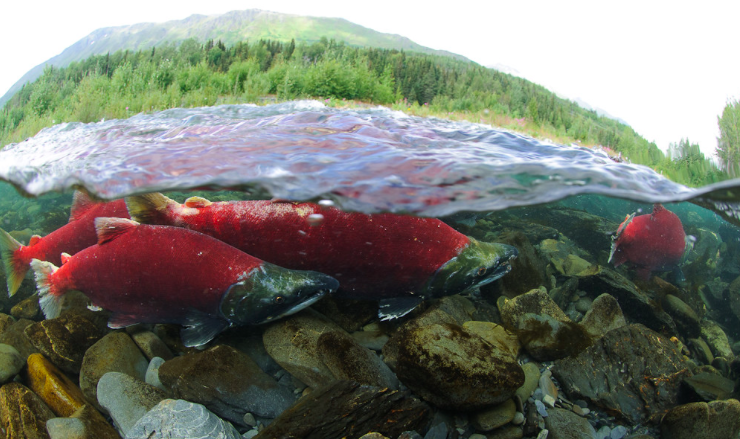
Sockeye salmon are back in droves on the storied Russian River. So much so, that an emergency order has come from Alaska Department of Fish and Game last night: The Russian River/Upper Kenai bag limit has been increased to nine per day starting Wednesday at 12:01 am, with 18 in possession.

Folks in the region can’t remember a time when this happened in the past. It’s an historic run.

This is the first run of sockeye on the Kenai, and they are typically smaller fish, but these salmon are coming in at about 7 or 8 pounds, said Ben Mohr, executive director of the Kenai River Sportfishing Association.

“This shows that if there is an abundance of fish, and opportunity, Alaskans will come and harvest those fish with hook and line,” he said. “It’s been busy down here, but this speaks to who we are as Alaskans, and the desire to provide for your family off of the abundance of the land.”

Reports to Must Read Alaska say fishers are catching their limits within just a few hours.

“I encourage people to carpool down, and give yourself plenty of time because there is construction on the highway, be a good neighbor with other Alaskans out there. And there are also bears, so follow recommendations they have there: Keep your fish on a stringer, and keep your backpack within reach,” Mohr advised.

He also recommends because of the historic nature of the run, the increased limits, and with so many Alaskans fishing for them right now, that fishers don’t fillet their fish on site. Instead, head and gut your catch, cut up the discards, and throw it into fast-moving water, then put your fish on ice and fillet it when you get home.

Over the past few days, between 5,000 and 8,000 fish a day have been seen crossing the sonar on the Lower Kenai River. This means fishing should be good on the Upper Kenai and Russian Rivers for at least the next week, he said.

Left-wing mega-funders target Alaska’s natural resources

By HAYDEN LUDWIG
GUEST CONTRIBUTOR

In recent years, an Alaska mining project has garnered intense scrutiny from the Lower 48 in the shape of the environmental Left, which is desperate to kill it in the cradle. Should they succeed the consequences for Alaska—and the rest of the country—are dire.

The target is Pebble Mine, a mineral exploration project in southwest Alaska that’s been locked in intense legal battles for nearly fifteen years. Pebble has the potential to supply as much as 25 percent of the United States’ copper needs over the next century—a critical metal used in everything from refrigerators and smart phones to the electric cars and wind turbines so beloved by environmentalists.

In fact, copper is essential to electric vehicles; according to the Copper Development Association, up to 49 pounds of copper are used in the construction of petroleum-powered cars, whereas electric cars can require as much as 183 pounds of copper to build. And copper is even more valuable in the construction of wind and solar power sources, which couldn’t exist without the metal. Wind turbines, for example, are each built using some 800 pounds of copper.

Considering its value to the construction of renewable energy sources like wind and solar, one might expect left-wing groups to be the loudest voices in support of the Pebble project. After all, many of the environmentalist groups targeting the project are vocal supporters of the Green New Deal—you know, the one that mandates 100 percent renewable energy in the U.S. over the next decade.

But there’s little consistency from the “keep-it-in-the-ground” crowd, which happily demands renewable energy production while protesting the means to generate it.

Washington, D.C.-based mega-lobbying groups, including the Natural Resources Defense Council (NRDC), Sierra Club, and Greenpeace, aided by front groups for D.C. “dark money” funders, are all aligned against the project.

As usual, hysterics rule the day. The NRDC has claimed the mine would pit an “eternal supply of food against an eternal supply of poison,” absurdly casting Pebble as a scheme by money-grubbing miners to pump toxics into Bristol Bay.

Bizarrely, the League of Conservation Voters even painted the mine as an insidious effort by “foreign mining companies” to intentionally pollute Alaskan waters. (Pebble’s primary backer is based in Canada, our friendly neighbors to the north).

The Left has coalesced its efforts to halt Pebble around the so-called “Save Bristol Bay” campaign, which alleges that Pebble will destroy the venerable salmon fishing industry. But Save Bristol Bay isn’t even headquartered in Alaska; it’s a front for Trout Unlimited, a D.C.-based group run by radical eco-activists masquerading as “conservationists.”

Trout Unlimited is a classic decoy funded by left-wing mega-foundations to fool viewers and the gullible media into thinking it’s a sportsmen’s group. The group was founded in the 1950s by conservation-minded fishermen, but it’s since been taken over by liberals closely connected to the professional Left. The group is led by Chris Wood, a member of President Barack Obama’s 2008 transition team.

Despite its outward appearance, Trout Unlimited is, in fact, little different from groups like the Environmental Defense Fund, pushing radical global warming policies such as an economy-wrecking carbon tax.

And little wonder. Trout Unlimited has received tens of millions of dollars from the Nature Conservancy and the Gates, Hewlett, and Wyss Foundations, which also fund the radicals pushing population control, abortion-on-demand, global warming, and anti-Trump causes.

As I recently wrote, the Save Bristol Bay campaign is being waged alongside SalmonState, another front for Beltway cash. SalmonState is a “pop-up” group—eco-activism in the form of a website made to look like a real nonprofit.

But SalmonState is just one of hundreds of phony “pop-up” groups run by the D.C. consulting firm Arabella Advisors through its network of shadowy “dark money” nonprofits.

Arabella’s model is the ultimate form of “Astroturfing”—fake grassroots activism. And it’s huge; in 2017 alone, the Arabella empire brought in nearly $582 million which it used to push leftist policies in healthcare, gun control, and climate change. (My group, the Capital Research Center, recently mapped the reaches of the Arabella network in our exposé Big Money in Dark Shadows.)

And like Trout Unlimited, none of that activism would be possible without the steady stream of money coming from liberal foundations, almost all of which are headquartered in San Francisco, New York, and Chicago.

Does that sound like local “conservationism” to you?

Pebble Mine brings Alaska to an important crossroads. It’s an opportunity to tap into The Last Frontier’s vast abundance, bringing much-needed prosperity to the state as well as American mineral independence from countries like communist China. But it’s a decision Alaskans—not wealthy Beltway activists—need to make.

Hayden Ludwig is an investigative researcher at the Capital Research Center in Washington, D.C.

Trump launch watch parties in Fairbanks, Anchorage

Watch parties are the thing this evening around the nation, as President Donald Trump launches his campaign for reelection in Orlando, Fla., which will be live streamed starting at 4 pm Alaska time. Tens of thousands are planning to attend the event live, but elsewhere, Trump supporters will gather to watch on television.

In Alaska, we found two Trump launch watch parties:

Fairbanks: 4611 Maresh Avenue, the home of Ralph and Connie Seekins, 4 pm.

Anchorage: KOAN (radio)-sponsored party at Flattop Pizza, 600 West 6th, with host Eddie Burke, from 3:30-5:30 pm.

Both events are free.

Alaska Life Hack: A mosquito flies into a bar …

2

IT’S MID-JUNE. MOSQUITOES ARE ON A MISSION

A mosquito flies into a bar that has a cow, a goat, a pig,  a human, a dog, a cats and a chicken sitting at the counter.

Which one is the mosquito going to target?

47.6 percent of the time, the blood-sucking mosquito is going for the cow, while humans are the target less than 5 percent of the time, according to a study conducted back in the 1940s.

There aren’t nearly enough cows in Alaska to feed our voracious mosquitoes, especially between mid-June through mid-July, when all 17 trillion of them in our state are at their most numerous and most voracious. A short breeding season and a short feeding season means they’re mosquitoes on a mission to reproduce.

The good news is that Alaska’s mosquitoes are not yet vectors for diseases like Zika or West Nile Virus. The bad news is, when we most want our arms to be bare, they are at their most determined.

Some facts about mosquitoes that you’ve been itching to know about:

Female mosquitoes have ovaries that need blood protein to produce the eggs that make more mosquitoes. They don’t get their own nourishment from blood — it’s strictly for the protein needed by the eggs. For their own energy needs, they sip flower nectar.

Male mosquitoes drink nectar from flowers; no blood for them.

Although numerous, Alaska mosquitoes are relatively small, especially compared to the 4-inch wingspan of the horror-movie-sized Holorusa mikado species, the largest mosquito family in the world.

Scents that attract mosquitoes include human sweat, limburger cheese, beer, carbon dioxide from breath, perfume, and feet.

What doesn’t seem to repel them? Eating garlic or ingesting vitamin B12. Studies show these have no effect.

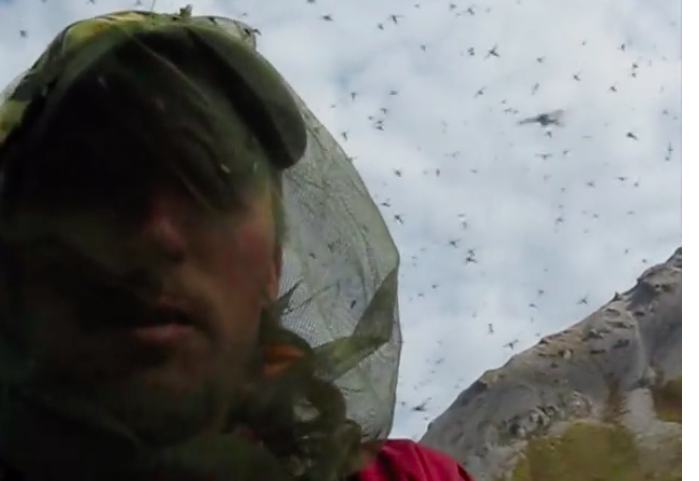
To lessen the attraction to mosquitoes, it helps to bathe often and reduce body odors. Wear light-colored clothing; Insect Shield clothing is said to retain repellency for up to 70 washes. Use a DEET-infused repellant. Bring a net and gloves, like these hardy hikers in the Itkillik River did in this 2009 video:

Do electronic bug zappers work? Black light insect electrocution devices kill insects indiscriminately, unfortunately. One study showed that of all the insects killed, only .13 percent were female mosquitoes. There is no significant difference in the number of mosquitoes found in yards with bug zappers, vs. yards without them, according to the American Mosquito Control Association.

If you’re attacked by a swarm of mosquitoes, keep moving. They only fly about 1.5 miles an hour typically. If you can’t find shelter, try climbing a tall tree. A really tall tree. Mosquitoes don’t typically like to fly higher than 25 feet above ground.

If all else fails, take your cow hiking with you.

Alaska Life Hack: Alaska is ‘catfish’ capital for romance fraud

1

ANCHORAGE RAPE-MURDER CRIMES LINKED TO ‘CATFISHER’ FROM INDIANA

Which state are you most likely to be scammed by online romancers?

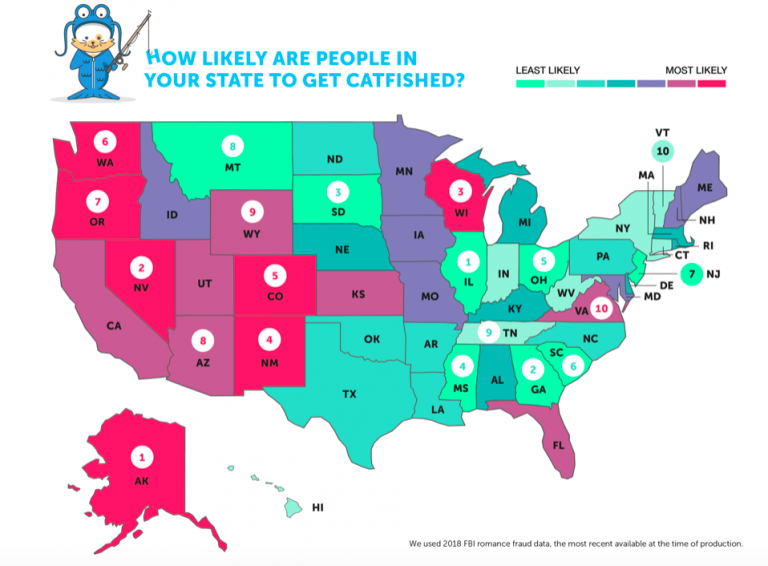
Turns out, it’s Alaska, according HighSpeedInternet.com in its report “When Love Bites,” which identifies the 49th state as the Number 1 location where people are most likely to fall prey to romance fraud.

“Catfishing” is the term used for website bottom-feeders who create fake profiles and lure in their victims, often finding ways to extract or extort money from them, or even get them to commit crimes.

Such a scammer may be found in the Indiana man who is in federal custody after allegedly offering $9 million to an 18-year-old Anchorage woman, Denali Brehmer, to murder another Anchorage woman, Cynthia Hoffman, and to film it. Brehmer is accused now of murder for her role in that horrific incident at Thunderbird Falls in Chugiak.

[Read: Investigators: Indiana man offered $9 million for death of Cynthia Hoffman]

Darin Schilmiller, of New Salisbury, Indiana, was indicted in Alaska on Friday on multiple murder charges for his role in the killing of 19-year-old Hoffman. While he didn’t pull the trigger, investigators say he offered the money. His romance victim, Brehmer, is accused of organizing the execution of Hoffman.

[Read: Who is Darin Schilmiller and how is he connected with Cynthia Hoffman’s murder?]

Schilmiller is also under arrest for participating in child porn by encouraging Brehmer to film herself sexually abusing children. Evidence is found in text messages between the two.

Schilmiller posed as someone named “Tyler,” a millionaire from Kansas, and the texts between Brehmer and him indicate romantic attachment.

Two women who know Schilmiller have recounted their experiences that show it’s not the first time he’s posed with a fake identity online to lure women into sexual wrongdoing.

[Read that report here.]

HighSpeedInternet.com based its analysis on data from the 2018 FBI Internet Crime Report, and U.S. Census population estimates. While Alaska is Number 1, Nevada is Number 2, and Wisconsin is Number 3. Western states factor high for having victims of romance fraud.

Con artists use platforms such as Match.com, eHarmony.com, and Tinder.com, as well as lesser-known ones, such as Plenty of Fish. They move their conversations with their marks away from the dating app and over onto Facebook or Whats App to deepen their ability to discover useful things about their victims.

The Better Business Bureau has a complete primer on the ways that con men (and women) operate, how they gain the confidence of their prey, and some of the scripts they use to grow the relationships.  You can report to the BBB any instances of this occurring to you at its Scam Tracker page.

Have you been a victim of catfishing romance fraud? You can comment below and keep your identify private.

Juneau property taxes: fair or foul?

3

By WIN GRUENING
SENIOR CONTRIBUTOR

Property tax management can be confusing for local taxpayers.

The mill rate is the amount of tax payable per dollar of the assessed value of a property. A “mill” represents one-tenth of a cent with the rate normally expressed as the amount per $1,000 of property value.

In recent CBJ Assembly action, the FY2020 mill rate was approved at last year’s level after an unusual split vote.  Typically, this part of the municipal budgeting process rarely raises controversy.

Win Gruening

Holding the mill rate stable over time is admirable but, as most people know, even if the mill rate remains unchanged, your property tax usually increases.  That’s because our current mill rate, 10.66 mills (or 1.066% of your property value), is only part of the equation.   The other part is the value of your property as assessed by the city – which tends to increase every year with inflation.

In other words, if the Assembly wanted to hold your property tax constant or even reduce it, it would have to lower the mill rate enough to compensate for the annual increase in assessed property values.

The City Manager initially proposed lowering the mill rate from 10.66 to 10.56 mills for FY2020. The Assembly Finance Committee then recommended leaving the existing mill rate unchanged at 10.66.  When the Assembly voted on it at their June 3 meeting, Assembly member Mary Becker moved to roll it back to 10.56 mills.  She cited the urgency in lowering the cost of living and housing costs, specifically, as the reason for her concern.  Others mentioned uncertainty about the amount of school bond debt reimbursement as a reason for the higher amount.  The motion failed with a 4-4 tie vote.

But did the Assembly really “hold the line” on property taxes?

Here is where it gets complicated.  Part of the mill rate is reserved for debt service.  But because we have continued to pay off CBJ bonds, our mill rate for this portion was reduced.  What the Assembly actually did was reduce the debt service mill rate and increase the operational mill rate an equal amount of 10 mills – a wash to the taxpayer. But, along with higher property values, this action effectively increases property tax receipts over $1.0 million for the city treasury next fiscal year.

And if budget fears don’t materialize, what happens with that extra tax money?  Assembly member Rob Edwardson stated it best,” …are people going to get a rebate?  I don’t think so.”

And indeed, recently the Legislature agreed on a compromise budget that preserved full funding for school debt reimbursement.

While that funding may be subject to the governor’s veto, the city has ample resources to bridge any fiscal gap until a long-term solution is crafted.  The tax relief at stake would have been good news for seniors on fixed incomes and young families struggling to make ends meet and wouldn’t have made much difference in offsetting a large reduction in state funding.

The Assembly can be commended for considering the unpredictability surrounding state funding, but one can also argue that the city has accumulated sufficient savings that it is now taxing residents unnecessarily.

Has the city been over-collecting?  According to CBJ financial statements, available general government fund balances and budget reserves now exceed $32 million which should allow Juneau to weather any short-term financial gaps.

The budget fears expressed seem at odds with on-going Assembly conversations regarding sizable municipal contributions toward a $26 million arts and cultural center and another $26 million for a new city hall.  Further, discussions continue unabated about implementing a Juneau pre-K program that will eventually cost millions of dollars annually.

People will continue to debate the merits of these projects, but their economic benefits remain largely uncertain.

Here is what is certain.

According to 2018 Alaska Department of Labor reports, among urban areas of the state,

  • Juneau has the most expensive housing.
  • Juneau has the most expensive groceries.
  • Juneau has the highest medical costs.
  • Juneau has the highest transportation costs.

Instead of speculatively raising property taxes, perhaps the Assembly could raise its collective social consciousness and consider the most basic needs of Juneau residents first?

Win Gruening retired as the senior vice president in charge of business banking for Key Bank in 2012. He was born and raised in Juneau and graduated from the U.S. Air Force Academy in 1970. He is active in community affairs as a 30-plus year member of Juneau Downtown Rotary Club and has been involved in local and statewide civic organizations.