Monday, October 12, 2026
Home Blog Page 1506

Wasilla special session is going to cost a bit more

BUT SPECIAL SESSION COULD DONE BE CHEAP, IF WORK IS DONE IN FOUR DAYS

Editor’s note: This has been a fast-moving story. The update is at this link, describing the legislative leadership’s decision to decline a special session in Wasilla.

$1.3 million for 60 legislators spending 30 days in Wasilla.

That’s what the Legislative Affairs Agency estimates a 30-day special session will cost, and it compares well enough with previous special sessions, which cost as much as $1.1 million for 30 days. Gov. Michael Dunleavy has called for the special session to convene on July 8 somewhere in Wasilla.

Although the cost does pencil out to $6,666 more per day to have the special session meet at Wasilla Middle School than, say, Juneau, the tab could be a lot smaller if legislators finish the one thing the governor has asked them to do: Fund the Permanent Fund dividend. And that could be done in less than a week.

Many legislators would be able to drive home every night. Anchorage is only 40 minutes away. And for most of special session, only Finance Committee members and leadership would be needed on most days.

The House Republican Minority — 15 of them — are sticking together to keep the special session in Wasilla. They like the chances of the Permanent Fund dividend being fully funded if meetings are held near where people really care about this issue.

Even while the House and Senate Majority are searching for one last vote that would move the session away from the fastest growing area of the state, the Wasilla delegation has thrown out the welcome mat. In a letter to fellow legislators, they wrote today:

“On behalf of the residents of the City of Wasilla and the over 100,000 residents of the entire Mat-Su Borough, it is our pleasure to host the upcoming Special Session in Wasilla. Celebrated as the Valley’s major business center, Wasilla’s diverse businesses will no doubt be able to offer the legislature numerous choices in hotels and lodging, restaurants, transportation, audio/visual assistance, medical services and centralized LEO/EMS services.

“In touring Wasilla Middle School, we saw firsthand that it is ready to accommodate all meetings necessary to conduct state business. In reference to recent discussions about the additional $200,000 cost compared to meeting in Juneau, a Wasilla businessman said it best: “This whole question is ridiculous.The cost overage is a bogeyman, in a state where $200,000 is 3 ten-thousandths of one percent of the state budget.That’s like objecting to spending one dollar and eighty cents out of a household income of sixty grand.”

“Because of Wasilla’s centralized location, many Alaska residents from numerous communities statewide will be able to attend much more affordably than if the special session were held in Juneau. Messages received from across the state clearly indicate that many, many Alaskans are excited to be involved and for their voices to be heard.

“Although a number of Alaskans are frustrated with the challenges our state faces and discussions regarding the PFD, it’s important to point out that the Valley has a proud history of civil and respectful public gatherings, including large legislative town halls.

“Should there be a chance to take a break during the special session, the Mat-Su is the crown jewel of recreational offerings: kayaking at Wasilla Lake, hiking at Hatcher Pass, bike rides along our miles of bike paths or at Government Peak Recreational Area, all within ten miles of Wasilla Middle School. Additional and nearby fishing, boating, and other summertime opportunities are vastly available whether north on the Parks Highway or to the east in the Palmer or Sutton area.”

Not to mention the great restaurant options all over the Mat-Su Valley. Even Rep. Laddie Shaw could find a mountain to climb and para-sail off of.

The Legislative Affairs Agency again expressed concerns about security at Wasilla Middle School, but a group of veterans gathered at a coffee shop in Wasilla this morning suggested that the Palmer Correctional Center is also available for the security-minded legislator.

“They’d be safe there,” one of them offered in jest. “It would be a great location, and the camera system needs to be set up anyway for the influx of criminals that are going to be sent there — as soon as [legislators] get their work done.”

But when it comes to safety, the City of Wasilla has a lot of police per capita — more than Anchorage or Juneau.

Gov. Michael Dunleavy has placed just one item on the special session agenda: Funding for the annual Permanent Fund dividend. That item was separated from the operating budget by the Legislature this year and, with checks expected to go out in September, is still unfunded.

But a special session on this topic could take as little as four days — two days of work in the House, and two in the Senate.

“A bunch of us out here in Wasilla think it’s worth getting legislators together in a place where people are unequivocal on the Permanent Fund dividend,” one old-timer said. Wasilla would definitely be that place.


MRAK Almanac: Bird watchers gather in Anchorage; assemblies tackle taxes

PRODUCED BY KOBE RIZK

The MRAK Almanac is your place for political, cultural, and civic events, events where you’ll meet political leaders or, if you are interested in getting to know your state, these are great places to meet conservative- and moderate-leaning Alaskans.

Alaska Fact Book

Question: Which state has the lowest population density?

Answer: Alaska, of course. If the New York City borough of Manhattan had a population density equal to Alaska’s (about 1.3 people per square mile), a grand total of seventeen people would be living on the entire island. Conversely, if Alaska had the same population density of Manhattan over its entire land area of 663,000 square miles, there would be over 44 billion people living in the Last Frontier—around six times the population of earth.

6/24 – 6/28: American Ornithology Society meetings in Anchorage. It’s the 137th annual meeting of American Ornithology. Details here.

6/24: Regular meeting of the Fairbanks City Council at 6:30 pm. There will likely be a crowd turning out to testify on the proposal to remove the mill rate levy from city code, opening the doors for higher property taxes. If passed, this new ordinance will be placed on the local ballot in October. Read the full agenda here.

6/24: The Seward City Council will hold a regular meeting at 7 pm. On tap for this evening is discussion of Seward’s sexual harassment policy as well as a proposal to repeal a city ordinance requiring voter approval to increase the sales tax cap. Read the agenda here.

6/24: Regular meeting of the Seldovia City Council. The council will hear public testimony on proposed changes to the local election ordinances as well as discuss Seldovia’s new paperless initiative. Detailed agenda here.

6/24: Homer City Council regular meeting at 6 pm. The council will be considering citizen comment on their proposed public utilities regulation and rates overhaul. Read the agenda at this link.

6/24: Regular meeting of the Wasilla City Council, starting at 6 pm. The council will hear an update from the Wasilla Airshow committee and discuss further funding for the Veterans Wall of Honor project. Agenda at this link.

6/24: The Alaska Tobacco Control Alliance (ATCA) will hold a teleconference to discuss marijuana in Alaska. Begins at 3 pm. Call-in details here.

6/24: Regular meeting of the Juneau Borough Assembly starting at 7 pm. Read about ordinances up for public comment here.

6/24: Power of Porn presentation at the BP Center in Anchorage. This workshop will offer personal stories from both men and women whose lives and relationships have been harmed in some way by the pornography industry. Registration required, visit the Facebook link here.

6/25: The City of Ketchikan will host a public forum to solicit comments regarding proposed improvements to the Port of Ketchikan and the city’s tourism industry. 6 pm at the Ted Ferry Civic Center.

6/25: The Wrangell Borough Assembly will hold a regular meeting beginning at 7 pm. Read the full agenda here.

6/25: Regular meeting of the Palmer City Council at 7 pm. Should be an interesting evening, as the council will hear public testimony on proposed term limits for the mayor and council members. What do you think? Find the agenda here.

6/25: Regular meeting of the Sitka Borough Assembly at 6 pm. The assembly will be adopting a final resolution to remove city administrator Keith Brady and will follow by discussing options for hiring an interim. They will also be considering the renewal of the marijuana cultivation license for Northern Lights Indoor Gardens. Find the full agenda at this link.

6/25: Lunch on the Lawn weekly event at the Anchorage Museum. Admission is free and there will be food trucks, live music, and fun activities for all ages. A great chance to get out and enjoy summer in downtown Anchorage. Read more at the Facebook link here.

6/25: The Federal Subsistence Board will hold a public hearing regarding proposed changes to wolf hunting and trapping policies in Unit 2. Among the changes is an increase of the allowed sealing period from 14 days to 30 days. The meeting will take place in Klawock but testimony may also be given via phone. Read more here.

6/25: Fly Tying Clinic at the Wasilla Veterans Center at 7 pm. Put on by Alaska Fly Fishers and Project Healing Waters Alaska. Read more here.

6/25: Fairbanks Chamber of Commerce weekly luncheon at the Carlson Center starting at noon. The guest this week is noted American Cancer Society physician Dr. Mary-Claire King who will be speaking about the genetics and prevention of breast cancer and ovarian cancer. Read about it here.

6/25: Alaska Public Media will hold a live broadcast on Pebble Mine at 10 am. This (hopefully) balanced discussion will feature both Pebble CEO Tom Collier and former Alaska state senator and Pebble opponent Rick Halford. The current comment period for the proposed mine ends on July 1. Read more here.

6/25-6/26: Public hearings scheduled for the EPA’s Serious State Implementation Plan (SIP) to address air quality in the Fairbanks North Star Borough. The first hearing is at 6 pm at the Fairbanks Westmark Hotel downtown. Read more about the plan and see the full schedule of hearings here.

6/26: The Alaska Resource Development Council will host their 44th Annual Membership Luncheon at the Dena’ina Center in Anchorage at noon. Guests include U.S. Assistant Secretary of the Interior for Lands and Minerals Joe Balash and Governor Mike Dunleavy. Details here.

Alaska History Archive:

June 24, 1965: 54 years ago—Benjamin Franklin Heintzleman, the 8th Governor of the Alaska Territory from 1953 to 1957 died in Juneau at the age of 76. Governor Heintzleman was a Yale graduate and moved to southeast Alaska in 1918 where he served as a regional forester for the U.S. Forest Service. First opposed to statehood, the Republican governor had a change of heart and signed the bill establishing the Alaska Constitutional Convention in 1956. After leaving office later that year, Heintzleman remained in Alaska where he served on the University of Alaska Board of Regents and as an advisor to the Alaska Rail and Highway Commission.

June 25, 1897: 122 years ago—the paddlewheel river steamship Alice arrived in the quiet old Russian town of St. Michael in Southwest Alaska carrying 25 miners with over $500,000 dollars in gold. In many ways, this represented the start of what would become the Klondike Gold Rush. After hearing of the money that could be made deep in the Klondike near Dawson, thousands of miners from across America made the journey to Seattle in hopes of hopping on the next vessel headed “North to Alaska”.

Video: Dunleavy testifies about Permanent Fund to legislative committee

17

Gov. Michael Dunleavy made an unusual appearance at the Bicameral Working Group, an appointed body of the Legislature  deliberating the past, present, and future of the Alaska Permanent Fund dividend.

Dunleavy emphasized that whatever happens to the structure of the Permanent Fund dividend, the people of Alaska deserve to have a say. His administration has advocating allowing Alaskans to vote on whether the dividend should be enshrined in the Alaska Constitution.

The group meets again on Friday, June 28, at 10 a.m.

Check out this video from Red Flag last week

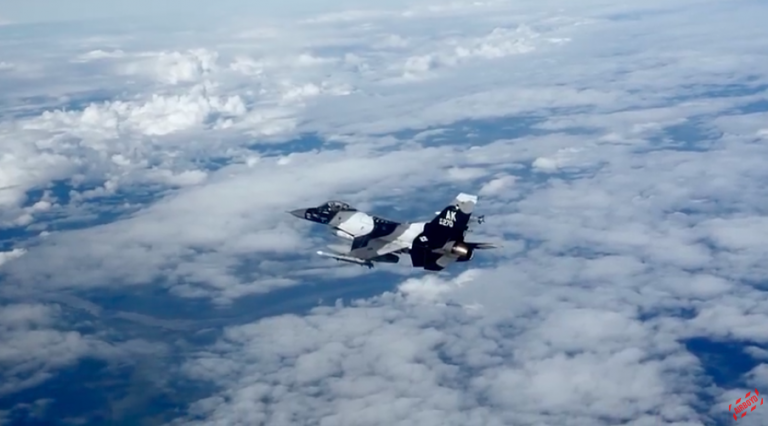
The buzz is about the paint job on this F-16 flying during the Red Flag exercises in Alaska, as the F-16 Fighting Falcon aircraft from the Air Force’s 18th Aggressor Squadron goes through its paces at the Joint Pacific Alaska Range Complex, out of Eielson Air Force Base on June 19. JPARC has about 67,000 square miles of air space. The F-16 shows up about a third of the way through this 7-minute video.

Red Flag Alaska will return Aug. 1-16, 2019. Learn more about it here.

Alaska Democrats gear up to run their presidential primary

Alaska Democrats are abandoning the sometimes-unpleasant caucusing system, where people go to a local district gymnasium on a specified day to haggle for their favorite presidential candidate and rotate around the room raising their hands for their presidential picks.

For the first time, the Alaska Democratic Party is moving to the system pioneered by Alaska Republicans, the presidential preference primary, but with upgrades: Democrats will use electronic voting, rather than paper.

And they are not calling it a “Presidential Preference Poll” like the Alaska Republicans call theirs, but instead it will be a “Presidential Preference Party-Run Primary.”

Wordy but accurate.

[Read: Democrats may make dramatic change to their primary process]

A simple way to think of a PPP is that it is caucusing by ballot box in every House district, and it’s run by volunteers, which makes it a bit cumbersome, compared to elections run by the State of Alaska.

In Alaska, such a system of picking presidential candidates is hard enough in towns, but harder still in vast rural areas. It’s Jedi-level volunteer management, not without its hazards. Whether by caucus or PPP, a lot of rural Alaskans don’t have the opportunity to participate in these exercises.

After the voting period closes, the ballots are counted by volunteers at the district level and the results are called into Party Headquarters, which then uses them during the state convention to divvy up delegates going to the national convention.

Ensuring accuracy and instilling confidence in voters that the votes will be counted fairly is a challenge the Democrats will have to figure out. During their last primary process, they lost the confidence of many of their members, after Bernie Sanders voters felt disenfranchised by a system that appeared to pre-pick Hillary Clinton.

[Read: Wikileaks emails show Alaska Democrats fretting about Bernie rebels]

Here’s how the Democrats’ presidential preference primary will operate:

The Democrats are calling it a true primary, complete with electronic voting centers open for four hours on April 4, 2020. This date coincides with Hawaii’s Democrat primary.

Democrats will then gather by House district and elect delegates to the State Convention, which will take place May 15-18 in Fairbanks. That’s where delegates and alternates to the Democratic National Convention will be selected. Those delegates and alternates will be assigned who they must vote for at the Democratic National Convention.

In other words, if Bernie Sanders gets 50 percent of the vote and Joe Biden gets 50 percent, half of the delegates heading to the national convention would be required to vote for either Sanders or Biden.

[Read: the Democrats’ new plan for choosing delegates for the 2020 Democratic National Convention]

The Democratic National Convention is where the actual presidential candidate will be selected by the delegates from around the country. It will be held in Milwaukee Wisconsin from July 13-16, 2020.

Alaska Democrats say that any registered Democrat can participate in the Democrat PPP, and Alaskans can register as Democrats anytime up until April 4, 2020, to be eligible to participate. This had been the same for Republicans when they held their PPPs, but the rules are now that voters must be registered as Republicans 90 days prior to the PPP. It’s a way to grow your party numbers.

April 4, 2020 is a Saturday, a full month after Super Tuesday (March 3). Most of the Democrat candidates will be gone by then, but with electronic voting, the Alaska Democrats will be able to adjust their offerings to the few that remain.The locations that will be announced after Oct. 19, 2019, and voting will take place from 10 am to 2 pm on April 4.

The Democrats’ PPP will occur three days before the Anchorage Municipal Election ballots are due back in for the Assembly seats that will be on the ballot. It is likely the Democrats in Anchorage will use their PPP to assist in the get-out-the-vote effort to elect left-leaning Assembly members in Alaska’s largest city, and may even engage in ballot harvesting practices in conjunction with their PPP.

Why not wait until the Aug. 18 state-run primary? Neither Democrats or Republicans can do that, because the national conventions are July 13 for Democrats and Aug. 24 for Republicans. This is the main reason the parties have run their own preference-primaries and caucuses — they need to get through their district and state conventions and pick their delegates to send to the national convention.

WILL REPUBLICANS HAVE A PRESIDENTIAL PREFERENCE POLL?

The Alaska Republican Party will meet in September and decide on whether it will do a PPP for 2020. It has conducted a PPP for the last three contested presidential cycles, and this year, there’s no real contest, so turnout for such an exercise would naturally be low.

Odds are good that Republicans will skip the PPP process this time around and keep their volunteer focus on House, Senate, and the two statewide seats they want to protect: Sen. Dan Sullivan and Congressman Don Young.

DEMOCRATS START THEIR DEBATE SEASON

June 26 and 27: First Democrat Primary debate in Miami, (NBC News, MSNBC, Telemundo), moderated by Savannah Guthrie, Lester Hold, Chuck Todd, Rachel Maddow, and José Diaz-Balart.

Candidate qualifications: To qualify, Democratic candidates needed to get one percent in three national polls, or raise $65,000 or more from at least 200 donors in at least 20 states. If more than 20 candidates qualified, those with the lowest polling numbers are eliminated.

Qualified: Colorado Senator Michael Bennet; former Vice President Joseph R. Biden Jr.; New Jersey Senator Cory Booker; South Bend, Indiana Mayor Pete Buttigieg; former housing secretary Julián Castro of Texas; New York, New York Mayor Bill de Blasio; former Maryland Congressman John Delaney; Hawaii Congressman Tulsi Gabbard; New York Senator Kirsten Gillibrand; California Senator Kamala Harris; former Colorado Governor John Hickenlooper; Washington Governor Jay Inslee; Minnesota Senator Amy Klobuchar; former Congressman Texas Beto O’Rourke; Ohio Congressman Tim Ryan; Vermont Senator Bernie Sanders; California Congressman Eric Swalwell; Massachusetts Senator Elizabeth Warren; Marianne Williamson of California; and Andrew Yang of New York.

  • First night: Cory Booker, Julián Castro, Bill de Blasio, John Delaney, Tulsi Gabbard, Jay Inslee, Amy Klobuchar, Beto O’Rourke, Tim Ryan, and Elizabeth Warren.
  • Second night: Michael Bennet, Joe Biden, Pete Buttigieg, Kirsten Gillibrand, Kamala Harris, John Hickenlooper, Bernie Sanders, Eric Swalwell, Marianne Williamson, and Andrew Yang.

IMPORTANT FUTURE DATES

July 13, 2020, the 48th Democratic National Convention, Milwaukee, Wisconsin
Aug. 24, 2020, the 42nd Republican National Convention, Charlotte, North Carolina

July 30-13 : Second round of Democrat debates in Detroit, CNN

Sept. 12-13: Third announced Democrat debates, location TBD, and it will have a higher qualifying threshold. ABC and Univision

Defense Secretary nominee Mark Esper visited Alaska bases last summer

Mark Esper, President Donald Trump’s nominee for Secretary of Defense, spent time in Alaska last summer at the invitation of Sen. Dan Sullivan, who took Esper, the Secretary of the Army, on a familiarization tour of three bases.

Esper and Sullivan visited military personnel at JBER, Fort Greeley, and Fort Wainwright. During a press briefing, Esper spoke to the importance of Alaska’s strategic geography, naming Russia and China as “near peer threats.”

“What I like to say, our Army, our strategic location, our training, it sells itself,” Sullivan said last August, stressing the importance of getting military leaders to visit Alaska.

Last summer, Sullivan also hosted Navy Secretary Richard Spencer, U.S. Coast Guard Commandant Admiral Karl Schultz, and U.S. Air Force Secretary Heather Wilson.

[Read: The Marines are coming, with Sen. Dan Sullivan]

Esper will take over as Acting Secretary of Defense on Monday. Other changes include David Norquist as Deputy Secretary of Defense, and Ryan McCarthy as Secretary of the Army. Norquist has been comptroller at the Pentagon, and McCarthy is the undersecretary of the Army.

After graduating from high school in Uniontown, Penn., Esper earned his bachelor of science in engineering at the United States Military Academy — West Point.  He received a master’s degree in public administration from the John F. Kennedy School of Government at Harvard in 1995 and a PhD in political science from George Washington University.

Esper was an infantry officer with the 101st Airborne Division during the 1990-91 Gulf War, and was awarded a Bronze Star, the Combat Infantryman’s Badge, and other service medals. He led an Airborne Rifle Company in Europe and served as an Army fellow at the Pentagon. After 10 years of active duty he transferred to the Army National Guard and later the Army Reserve.

Esper was chief of staff at the Heritage Foundation and staffed the Senate Foreign Relations Committee and the Senate Governmental Affairs Committee. He was also a senior policy advisor and legislative director for Sen. Chuck Hagel and was deputy assistant secretary of defense for negotiations policy in the George W. Bush Administration.

In the private sector, he lobbied for Raytheon and worked for the U.S. Chamber of Commerce and the Aerospace Industries Association.

Since former Defense Secretary Gen. Jim Mattis exited on Jan. 1, the position has been filled in an acting capacity by Patrick Shanahan, who withdrew from consideration last week under less-than-ideal circumstances. Shanahan had gone through an ugly divorce during which his now ex-wife accused him of punching her in 2010. He denied the accusation and said that she, in fact, had thrown the punch during a domestic dispute.

Alaska Life Hack: Forewarned – TSA is about to get even busier

1

ANCHORAGE AIRPORT WILL SEE 80,000 A WEEK

The Transportation Security Administration says it will be the busiest summer travel season ever, with a record number of passengers departing Ted Stevens Anchorage International Airport.

Alaska’s biggest airport will see a 6 percent increase in travelers this summer over last, higher than the national air travel projection, which is expected to grow 4 percent over last summer.

TSA is now screening an average of 50,000 passengers a week in Anchorage, but starting in mid-July, the number will increase to 80,000 a week and stay that way through mid-August.

The busiest days of the week at security checkpoints are Thursdays, Fridays, and Saturdays. Travelers are still advised to arrive two hours prior to departure, especially if you have to check luggage, which generally must be checked 40 minutes prior to departure.

The TSA’s busiest time blocks in Anchorage are projected to be:

  • 4-6 am
  • 12 noon to 3 pm
  • 9 p.m. to midnight

TSA had its busiest day ever on May 24, when it screened nearly 2.8 million travelers across the nation’s airports.

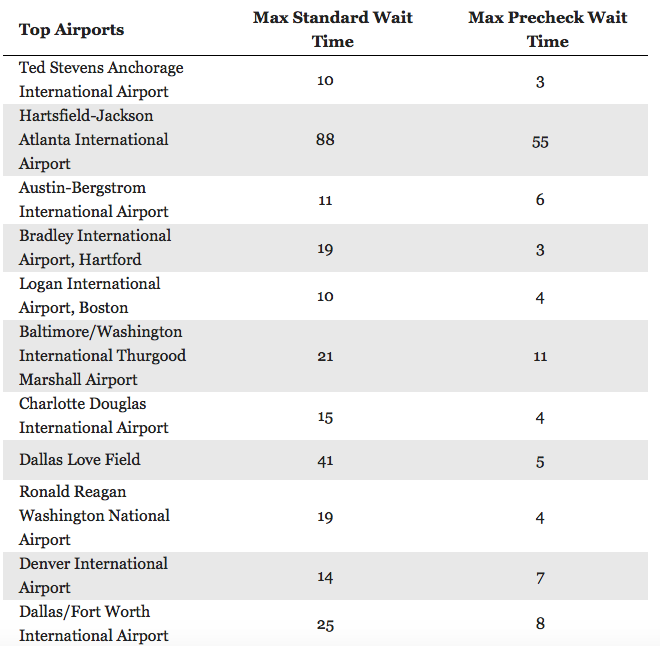
Anchorage’s airport has some of the shortest lines for the security checkpoints of major airports, according to reporting by the 24/7 Wall Street, which wrote in January that the standard screening line maximum wait is about 10 minutes, and the TSA Precheck line wait is 3 minutes at Ted Stevens International.

In addition, Anchorage air traffic controllers make a concerted effort to make sure that once you’re aboard your plane, there’s very little delay in getting the plane on the runway. In airports such as Atlanta, those wait times can exceed 20 minutes as planes line up for takeoff.

Alaska fliers heading south will find that Seattle-Tacoma International Airport will be extremely crowded, with a 5 percent increase in passengers over last summer. TSA’s passenger screening volume in Seattle is 12th in the nation out of 427 airports.

The heavy travel through Sea-Tac is driven, in part, by the increase in the number of people taking Alaska-bound cruises out of Seattle.

Helpful tips from TSA to make it easier:

  • Unpack your bag before you pack it – at home. By unpacking your bag fully and re-packing it before coming to the airport, you will avoid bringing items to the airport that are prohibited in carry-on luggage. This includes knives; stun guns; self-defense and martial arts items. Use the “What Can I Bring” feature at TSA.gov to help determine if an item is allowed in a carry-on bag or if it needs to be checked.
  • Dress for security screening. Simplify your screening experience by wearing slip-on shoes and avoid bulky jewelry and clothing, scarves, hair accessories and large belt buckles. These types of items may require additional screening. Remember to remove all items from your pockets – including cell phones – and secure them in your carry-on bag.
  • Standard screening preparation. In the standard screening lanes, non-TSA Pre✓® lanes, organize your carry-on bag so electronics larger than a cell phone can be quickly and easily accessed when at the security checkpoint. All electronic devices larger than a cell phone should be placed in bins for X-ray screening with nothing on top or below. Common examples of these devices include laptops, tablets, e-readers and handheld game consoles. Also, in the standard screening lanes, remove your bag of travel-size liquids, gels and aerosols.
  • TSA Pre✓® screening preparation. TSA operates dedicated TSA Pre✓® lanes at checkpoints 1 (south end of airport) and 4 (north end of airport). When screened through a TSA Pre✓® lane, there is no need to remove any items from your carry-on luggage. In addition, you do not need to remove your shoes, belts and light jackets.
  • Enroll in TSA Pre✓®. It is not too late to enjoy the benefits of a streamlined security process at airports nationwide this summer. In May, 92 percent of travelers screened through a TSA Pre✓®lane waited five minutes or less to be screened through the security checkpoint at Sea-Tac.

Amazon establishing beachhead in Anchorage; what follows?

Amazon Air will fly into Anchorage starting June 27. Online shoppers will find their Amazon Prime orders will be delivered a lot sooner — within two days perhaps, rather than two weeks.

Amazon currently uses UPS, the U.S. Postal Service, and Federal Express for Alaska orders. Those who order through Amazon Prime get free shipping in exchange for a membership fee ($119 a year), but usually the goods take the slow route and not all goods are eligible for Prime free delivery. Those companies will still deliver packages to your door, but Amazon is taking away some of their air freight business.

With Amazon flying in and out of Ted Stevens International Airport, this is a big change for consumers. Look for many more Alaskans to sign up for Amazon Prime membership and for more items to be made eligible for free shipping.

But this also represents a new challenge for retailers in the 49th state, especially those along the Railbelt. With an Amazon order just two days away, Alaskans can shop from their easy chairs with even greater confidence. And there are cost-savings considerations in having items delivered to your door, rather than traipsing about looking for a specific “thingy.”

WHAT’S IN IT FOR AMAZON?

For Amazon, Alaska is still a fragment of a market. With only 737,000 residents in the state, why would Amazon establish a freight flight of its own, bringing goods north to a state with a population of less than Columbus, Ohio? And if the freighters come north filled to the gills with boxes, what will they take south with them?

This is clearly a beachhead focused on bigger markets, an investment in the future. What the Seattle-based company realized is that Ted Stevens International Airport is just hours from Asia — a huge market, not only for things coming into the United States, but also a market for Amazon goods heading to the Orient and the billions of people living there.

Look for Amazon to lease space at the airport for a maintenance hangar, and possibly a logistics facility. UPS and FedEx built their multi-million dollar logistics centers years ago because of Anchorage’s advantages.

Amazon Air now has 50 planes and flies into more than 20 airports. The company has increased its delivery network with 185 fulfillment centers globally, and over 10,000 truck trailers.

At the International Paris Air Show, Amazon announced a partnership with GE Capital Aviation Services to lease an additional 15 Boeing 737-800 cargo aircraft. These will add to the five it already leased earlier this year.

Amazon will also open new air facilities this year at Fort Worth Alliance Airport, Wilmington Air Park (Ohio), and Chicago Rockford International Airport. The main Amazon Air Hub at the Cincinnati/Northern Kentucky International Airport will open in 2021.

In Anchorage, Amazon Air will be using the Airport’s Kulis Business Park, south of the east-west runways, said Jim Szczesniak, Ted Stevens International Airport Manager.

“This is the second new airline we’ve welcomed to Ted Stevens Anchorage International Airport this quarter, and another business being added to the airport’s business park on the former Kulis Air National Guard Base,” he said on Facebook. “Ted Stevens Anchorage International Airport is perfectly situated to support the movement of e-commerce goods between Asia and North America, and this new business fits with our strategy of maximizing ANC’s potential for development.”

What do you think are the pros and cons of Amazon starting air freight service to Anchorage? Will it change your shopping habits? Leave your comments in the comment section below.

Alaska Life Hack: Solar energy growing in 49th State

8

“Happy Summer Solstice” is the greeting of the day. Are we harnessing the power of the midnight sun? Not so much.

The 49th state may be almost dead last in the use of solar power (thank you, North Dakota for sparing us the embarrassment), but according to the Solar Energy Industries Association, Alaskans are starting to adopt this next-generation energy source.

As of the first quarter of 2019, there are 3.6 megawatts of solar power being used in Alaska, enough to power 410 homes. Nearly half of that capacity was installed in 2018, and most of it is residential. This chart shows the growth, through the first quarter of 2019:

Alaska has 14 solar energy companies total: 0 manufacturers, 8 installers, and 6 others, according to the trade organization, which says the total solar investment in the state is nearly $11 million. Prices for solar energy have dropped 34 percent over the past five years, which likely accounts for the growth in solar energy additions to homes and businesses.

Some villages and rural hubs are now installing solar panels. Take the Native Village of Hughes, which just installed the framework for a 120-kilowatt solar photovoltaic system that will cut diesel use and costs while advancing the village’s renewable energy goal of 50 percent by 2025.

Once the system is integrated with the local power system, this community of 110 people on the Koyukuk River, some 210 air miles north of Fairbanks, will boast rural Alaska’s largest solar project.

[Read more about the Hughes solar project here.]

There are now over 660 solar installations in Alaska and 66 solar jobs, according to SEIA.org.

Of course, the use of solar energy still only comprises 0.04 percent of the energy used in our oil-consuming state. But in the north, whenever there’s more than 12 hours of daylight, that’s enough solar potential to power a home for half a day.

The problem is, it takes years to recover the savings from an installation, so most people who are installing solar cells are doing it for other reasons than cost savings. Maybe they live off the grid, or maybe they are early adopters of new technologies, but they’re making a big investment they might not recover in their lifetime.

A solar system in many parts of Alaska will actually produce more energy than the home consumes from April through September, according to the University of Alaska Fairbanks, which has a complete study of Alaska solar energy design practices here.

Read more about Alaska’s solar energy profile at the Solar Foundation.

Do you have a solar installation? Is your village or rural community installing solar panels? How is it working for you? Leave your comments below.