Saturday, July 25, 2026
Home Blog Page 149

Rioters storm Portland ICE, federal officers injured, as local police stand down and watch

A violent protest that escalated into a riot outside a US Immigration and Customs Enforcement facility in Portland left four federal officers injured Saturday evening, as demonstrators launched fireworks, hurled rocks, and lobbed smoke grenades at federal law enforcement agents.

The unrest began late in the afternoon and intensified into chaos by early evening. Rioters reportedly broke a glass door, disturbed the peace, and threw objects. Despite the violence, the Portland Police Bureau did not assist ICE in securing the federal facility.

Federal law enforcement officers successfully regained control of the premises, though the confrontation left four ICE officers injured. According to the PPB, one federal officer was injured but did not require treatment, and the bureau facilitated access for medical support.

Secretary of Homeland Security Kristi Noem issued a direct statement in response to the violence: “You will not stop us or slow us down. ICE and our federal law enforcement partners will continue to enforce the law. If you lay a hand on a law enforcement officer, you will be prosecuted to the fullest extent of the law.”

At 6:38 pm, the Portland Police declared the protest a riot. Three were arrested for attempted assault of a public safety officer, criminal mischief, and theft. Still, the police response remained limited, with officers focusing on isolated criminal acts rather than broader crowd dispersal.

The Portland Police say they are prohibited by state and local laws from participating in immigration enforcement activities. They have stretched that to mean they will not help protect federal officers under siege, if those officers are with ICE. Portland’s progressive policing reforms, such as the 2020 ban on tear gas by city police, likely influenced the department’s strategy during the riot.

The police described the riot in a press release that said, “During the afternoon of Saturday, June 14, 2025, the Portland Police Bureau (PPB) facilitated a large-scale peaceful demonstration and march with tens of thousands of participants. Numerous resources were used for this event. As PPB members were pivoting toward its planned response to ongoing protests in the area of the ICE Building, located in the South Portland Neighborhood, they learned criminal activity was starting to occur.

“PPB’s resources were being put into place at this time. These resources included Dialogue Liaison Officers, Rapid Response Team, Mobile Field Forces, Sound Truck, Air Support Unit were managed by an Incident Command Team. At 5:49 p.m., PPB was informed that a federal officer had sustained an injury from the crowd. Portland Police announced to the crowd that a medical event had been reported from within the facility and to not interfere with police and medics in their response to render medical aid. Shortly after, PPB declared a riot due to ongoing criminal activity. At 8:11 p.m., officers made one arrest for Attempted Assault of a Public Safety Officer. As the situation stabilized, PPB learned the federal officer did not require medical treatment. 

“Throughout the night, PPB observed criminal behavior which resulted in targeted arrests. Officers on bikes conducted visibility patrols in an attempt to deter crime but also recognized that at times their presence escalated the crowd. During those times, the decision was made to disengage but officers remained in the area to respond to any additional criminal activity.”

The police are on record saying they were intimidated by the crowd and so withdrew from the immediate area.

“A reminder that the Portland Police Bureau does not engage in immigration enforcement as outlined in PPB Directive 810.10, but are still responsible for maintaining public safety and enforcing state laws,” the department reported late in the evening.

Something stands out in the Fairbanks skyline

A 3:25 am photo by Robert Lype shows the Chena River and the Fairbanks waterfront, with Golden Heart Plaza and its iconic clock.

But where the once-tallest building in Fairbanks used to serve as a backdrop, there’s an empty spot.

The Polaris building, built in 1952, was an 11-story apartment complex built to address a housing shortage. Back then, Fairbanks was booming with federal investment in Cold War-era military infrastructure, such as Ladd Field and Eielson Air Force Base. The building also housed delegates for Alaska’s Constitutional Convention and was a hub of activity in the city. It had a gymnasium and a hair salon at one time, and the top floor had popular restaurants. Later, it became a hotel.

Then came the 2001 flood, when 800,000 gallons of Chena River water poured into the basement of the building, adding to its decline. Mold, asbestos, PCBs, and other hazardous materials made it too costly to renovate.

The building was abandoned in 2002. It was too toxic to be sold and the owner stopped paying the property taxes, so it became a city problem.

Polaris demolition began in 2023. Robert Lype photo.

Deconstruction was planned for years, but with an EPA grant, demolition finally started in 2023 and will conclude this fall, forever changing the Golden Heart City’s skyline. All of its materials are being shipped out of state, as the building is considered toxic due to PCBs.

In the Robert Lype photo above, you can see the few stories remaining as demolition continues this week. In the photo to the right, taken by Lype in 2023, the work had just commenced.

Tale of Two Alaskas on Flag Day

The No Kings protests in Alaska were peaceful on Saturday, with no reported violence or vandalism. Large crowds of people unwilling to accept the outcome of the November election gathered under fair skies in downtown in Anchorage, Juneau, Fairbanks, and in other towns around the state to express their displeasure with President Donald Trump, whom they describe as a king.

At the Colony Days Parade in Palmer, it was a celebration of Americana, with tractors, bagpipers, and other classic fare. The Colony Days Parade is an annual tribute to the farming heritage in the Mat-Su Valley, where 203 families from Minnesota, Wisconsin and Michigan came in 1935 to develop an agricultural base for the territory.

Protesters who gathered in Palmer were polite, and the main protest took place at the Glenn Highway, after protest organizers gave their “takeover the Colony Days Parade” idea a second thought.

Although the election is not until next year, candidate for governor Bernadette Wilson was spotted with a trio of rigs and supporters in the parade.

In Anchorage, the No Kings protesters centered themselves in front of the Peterson Tower, where the congressional delegation has its offices, in the heart of the very liberal section of Anchorage. The protest drew about 2,000 people.

In Fairbanks, a sizable group of anti-Trump protesters took to the streets. They were generally cheerful and enjoying the pleasant weather while they exercised their Fist Amendment rights, protesting and vilifying an elected president they call a “king.”

In the nation’s capital, a parade in celebration of the US Army’s 250th birthday took place, along with other celebrations of the event, such as a demonstration jump by the Golden Knights parachute team.

“Tonight’s #Army250 parade is a reminder that we’ve always been there for America, and we always will. THIS WE’LL DEFEND,” the Army wrote on its X page.

Bob Griffin: Want better schools? Healthy competition is the difference

By BOB GRIFFIN

Despite significant disparities in funding and adequacy, Florida dramatically outperforms Alaska in the quality of high school graduates. This is despite having a higher poverty rate than Alaska and twice the rate of students who speak English less than “very well”.

In 2024 a Rutger University study ranked Alaska as the second most adequately funded K-12 system in the US with a score of 95 out of possible 100. Florida was rank last with a score of 12. 

In 2023, 28.4% of Florida high school graduates passed at least one Advanced Placement (AP) test, ranking 4th highest in the US. Conversely, Alaska ranked 40th with only 12.4% of high school graduates passing at least one AP test.

A common misconception is that Alaska’s poor school performance is solely due to low-performing rural schools in predominantly native communities. While there are notable challenges in some rural schools, urban schools in Alaska also show lackluster performance.

The 2024 NAEP 4th grade reading scores for upper/middle-income white students in Alaska were statistically indistinguishable from the reading scores in Miami Dade Public Schools in Florida, where 94% of the students are ethnic minorities, two-thirds are from low-income families, and over half speak a language other than English at home.

So, what is the key difference between the Florida and Alaska education systems? In two words: Healthy competition.

The Alaska K-12 education system is essentially a government-controlled monopoly. Though there are some options for parents, such as charter schools, local government school boards often openly hostile to charters routinely restrict their authorizations and enrollment levels well below public demand. Alaska is one of only five states in the US where local school boards have sole authority to authorize charter schools and limit their capacity. Consequently, only 5.5% of Alaska public school students are enrolled in charters compared to 13.3% in Florida.

Additionally, 13.4% of Florida students attend private schools, with over 70% of them being low-income students who receive government assistance for their private school tuition. In Alaska, private school enrollments make up only 3.3% of all students—a figure that is one of the lowest in the country and predominantly comprised of students from upper-income families.

When healthy competition exists, there are incentives to innovate and improve to attract patrons. Monopolies, on the other hand, have no incentive to improve and tend to devolve into low-quality and overly expensive enterprises.

In summary, the stark differences in educational outcomes between Florida and Alaska can be attributed to the presence or absence of healthy competition within their respective education systems. The competitive environment in Florida fosters innovation and improvement, whereas the monopolistic system in Alaska lacks the necessary incentives to excel.

Rutgers Study: 

Bob Griffin is on the board of Alaska Policy Forum and served on the Alaska Board of Education and Early Development.

Minnesota House speaker, her husband assassinated by suspect believe to be Gov. Walz appointee

THE CENTER SQUARE | MUST READ ALASKA

Two Minnesota state lawmakers who are members of the Democratic-Farm-Labor Party were shot early Saturday by a person posing as a law enforcement officer just north of Minneapolis.

House Speaker Emeritus Melissa Hortman, and her husband, were shot and killed in what Gov. Tim Walz called a politically motivated assassination. The suspect, who was impersonating a police officer, remains at large and a manhunt is under way.

The suspect is believed to be Vance Luther Boelter, a former board appointee of Gov. Walz. He had fliers in his vehicle with the words, “No Kings,” a reference to the planned insurrection and protests against the Trump Administration. He also had what appeared to be a manifesto with other political figures’ names on it.

Vance Luther Boelter

Law enforcement issued a shelter-in-place order for an area around Edinburgh Course that continued in the morning hours Saturday while they continued to search for a man believed to be wearing blue pants, a blue shirt, body armor, and reportedly driving a dark SUV with lights.

The shelter-in-place order extended as far away as at least 10 miles east of the shooting area.

State Sen. John Hoffman, DFL-Brooklyn Park, and his wife also were shot about 2 am, and Hortman and her husband were found about 90 minutes later.

Walz said the Hoffmans were each shot multiple times but was he hopeful for their recovery.

“The Hoffman’s are out of surgery at this time and are receiving care, and we are cautiously optimistic they will survive this assassination attempt,” Walz said. 

President Donald Trump also released on X, posted by White House Press Secretary Karoline Leavitt.

“Our Attorney General, Pam Bondi, and the FBI are investigating the situation, and they will be prosecuting anyone involved to the fullest extent of the law,” Trump said. “Such horrific violence will not be tolerated in the United States of America. God Bless the great people of Minnesota, a truly great place!” 

Drew Evans, superintendent of the Minnesota Bureau of Criminal Apprehension, said Saturday that officers arrived at the Hortman residence as part of a routine check on lawmakers in the area and exchanged gunfire with the suspect, who managed to flee.

Brooklyn Park Police Chief Burley said officers knocked on the Hortmans door and were met by what appeared to be a police officer wearing police gear, a gun, a taser and a badge. Officers and the suspect exchanged gunfire in the home before the suspect fled out the rear of the house.

Update: Boelter is the director of Security Patrols at Guard Security Services in Minnesota, which may be how he was able to easily impersonate an officer.

The Minnesota State Patrol advised, “Given the targeted shootings of state lawmakers overnight, we are asking the public to not attend today’s planned demonstrations across Minnesota out of an abundance of caution.”

Candles for a Cause to host ‘Any Mountain’ ovarian cancer fundraiser on June 28

Alaskans are invited to a spirited evening of cocktails, high-end appetizers, music, and mission-driven community as Candles for a Cause hosts its first-ever fundraising event in support of the Any Mountain Project, an initiative dedicated to ovarian cancer prevention and early detection.

The event will take place Saturday, June 28, from 6 to 8 pm at Alaska Candle Supply, located at 475 W Parks Highway in Wasilla. Tickets here.

Guests will enjoy an “Alaskan Cocktail” themed night complete with guest speakers, a purse auction, and opportunities to learn more about the fight against gynecologic cancers. Survivors of ovarian cancer — Randee, Mary Kaye and Erika — will share their stories.

Anchorage cancer Dr. Joanie Mayer Hope will be among the evening’s honored guests, as the event shines a light on local medical leadership in the national effort to fight ovarian cancer. Proceeds from the night will benefit the Any Mountain Expedition Team, a group of ovarian cancer specialists, survivors, and supporters who are taking their cause to literal new heights.

In 2023, the team made history when Jess Wedel became the first ovarian cancer survivor to summit Mount Everest at 29,032 feet. In 2024, they continued their mission with a successful ascent of Mount Baker in Washington. To date, the group has raised more than $900,000 for research, prevention, and awareness initiatives.

The Any Mountain Project is spearheaded by the organization Let Every Woman Know, which supports education and research around gynecologic cancers. The project’s message is simple but powerful: Fighting ovarian cancer is harder than climbing Any Mountain—but every step makes a difference.

Sponsorship opportunities are available, and all funds raised will directly support research into early detection and prevention methods for ovarian cancer.

For more information about the Any Mountain Project and Let Every Woman Know, visit this link.

Drill, Baby, Drill: Appeals court says Alaska’s Willow Project can proceed

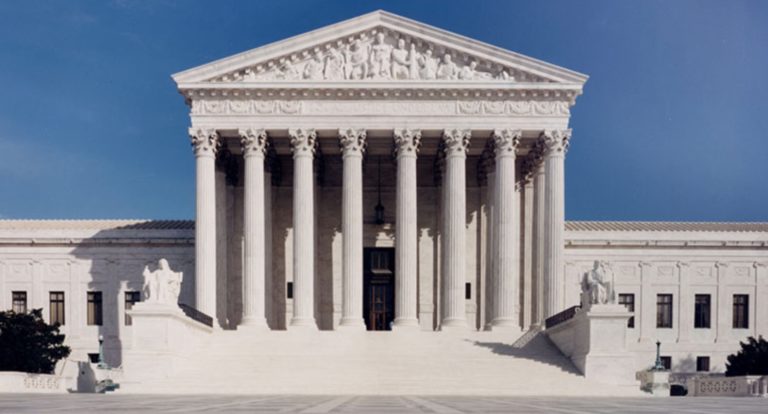
A three‑judge panel of the US Ninth Circuit Court of Appeals on Friday declined to take apart a Biden-era federal approval for ConocoPhillips’ Willow Project on the edge of the National Petroleum Reserve-Alaska. Though the court said there were some procedural shortcomings in the Bureau of Land Management’s review, those errors were minor in nature and insufficient to block the project.

“We’re thrilled that the Willow Project can move forward. The court highlighted its significant benefits for our state, including job creation and better access,” said Gov. Mike Dunleavy. “The tide is turning. Common sense in the courts hopefully becomes a constant in the future. Alaska is a resource development state. We do it better than any place in the planet.”

The appeals court told Earthjustice, Center for Biological Diversity, Friends of the Earth, Greenpeace, and the Natural Resources Defense Council to take a hike.

Judge Gabriel  P.  Sanchez, a liberal Biden appointee, issued a dissenting opinion, saying the procedural mistakes were enough to halt progress. Now, attorneys for the environmental litigation industry are evaluating whether to elevate the case to the Supreme Court.

While the court sent the environmental impact study back to the BLM and directed officials to explain their decision for reducing the drilling plan from five drilling pads to three, the question of an appeal to the US Supremes remains. But work is already underway at Willow, located on land set aside 100 years ago specifically for petroleum development. The size of Indiana, the NPR-A covers approximately 23 million acres. The Willow footprint is 385 acres, less than 0.002% of the total NPR-A. ConocoPhillips plans on first oil production by 2029.

Begich: China can’t compete when the playing field is level

Congressman Nick Begich took to social media on Friday with a several-part explanation about the effectiveness of tariffs, arguing that fears over tariff-driven inflation have not come to pass and that tariffs have instead led to reduced inflationary pressure and increased domestic investment.

In an eight-part thread on X, Begich outlined what he sees as the economic logic behind the use of tariffs, particularly on Chinese imports. He began by stating that “tariff-driven inflation hasn’t materialized,” and then proceeded to break down what he believes are the contributing factors, concluding: “Free trade requires fair trade.”

He pointed to China’s “massive processing and manufacturing overcapacity” as a key factor in global price suppression, describing a pattern in which Chinese companies operate at a loss with the help of government subsidies in order to dominate markets and drive out competition in order to achieve control over a given sector. They then drop prices to rock bottom with the intent of becoming the only global supplier of a product or industry process. According to Begich, when tariffs are imposed on Chinese goods, those subsidies become unsustainable, and global supply chains realign in favor of more competitive producers, including those in the US.

“This drives margins so low that these producers often operate at a loss, but they remain competitive because of support from government subsidies,” he said.

However, “when we levy a massive tariff on China, the jigg is up! They can’t subsidize industry at the level necessary to remain competitive and the supply chains snap back to a more market-driven orientation, allowing the U.S. and our allies to compete on a more level playing field again.”

Begich noted that China’s heavy corporate debt burden and “shadow financing,” coupled with underutilized industrial capacity, force the country to further slash prices to remain competitive under tariff regimes. “…China must then drastically lower their prices to offset tariff impacts in order to compete with lower tariff jurisdictions. It’s either that or an economic crunch.”

He argued that these dynamics blunt the inflationary effects that many critics of tariffs had predicted.

He also referenced demographic changes—particularly declining populations in East Asia and China—as naturally reducing consumption and therefore easing inflationary pressures globally. Automation and artificial intelligence, he said, also play a role in improving productivity and holding down costs.

“In addition to continued automation and AI integration, downward trajectories on consumption due to collapsing populations in East Asia and China have offset industrialization-driven demand and naturally offset inflation pressure,” he noted.

In a perfect vacuum, tariffs would likely result in a one-time bump in inflation, he said, “but we don’t live in a vacuum. Businesses in most nations want to be producers and will fulfill that production at competitive prices. As a result, tariffs as constructed have thus far resulted in lower inflation and unparalleled domestic investment.”

“Free trade requires fair trade,” Begich concluded. “And fair trade requires a level playing field. America First works.”

Begich’s comments come as trade policy continues to be a major issue in Washington, DC. He is arguing that strategic tariffs can and do protect national industries without stoking runaway inflation.

Here’s the complete thread:

North Slope Borough Mayor Patkotak survives recall effort, extends olive branch to critics

North Slope Borough Mayor Josiah Aullaqsruaq Patkotak emerged from a months-long recall effort with his position intact — and with a message of unity for his critics.

In a statement published Thursday, Patkotak addressed the petitioners directly, acknowledging the failed recall attempt while emphasizing the importance of civic engagement.

“To the 153 individuals who signed the petition, my message is clear: my door is always open to constructive criticism,” Patkotak wrote. “If there’s a problem, let’s work to find a sustainable solution. I remain committed to listening, learning, and leading with respect for every voice in our borough.”

The recall effort, which began in the winter, centered on allegations that Patkotak acted unethically by accepting borough-funded travel accommodations for his family, including luxury hotels and first-class flights, prior to approval by the borough assembly.

Petitioners needed 371 valid signatures to trigger a recall vote, representing 25% of the voters from the last mayoral election. But when the deadline arrived at the end of May, the borough clerk reported that only 153 verified signatures had been collected, which was less than half of what was required.

The group has also filed a court complaint against the borough, citing delays and changes made to their petition. That legal case remains ongoing in Utqiaġvik.

Despite the controversy, Patkotak used his letter to stress shared values and the need for collaboration.

“Civic engagement, even when there is disagreement, is a vital part of a healthy democracy,” he wrote. “We must work to resolve conflict and move our region forward.”

He reaffirmed his administration’s mission to deliver essential services and invest in the well-being of North Slope communities, concluding his message with a biblical reference of Proverbs 27:17 and a note of thanks.

“Together,” he wrote, “I look forward to continuing the important work ahead.”