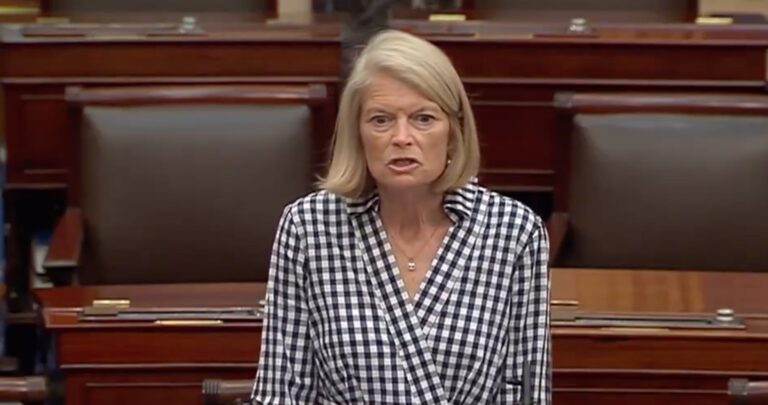
Sen. Lisa Murkowski spoke on the Senate floor Wednesday to express her opposition to the proposed federal rescissions package, which seeks to cancel roughly $9.4 billion in previously approved government spending.
The package, supported by President Donald Trump, targets $8.3 billion in foreign aid and $1.1 billion in domestic programs, including funds allocated to the Corporation for Public Broadcasting.
Murkowski, criticized the proposal for undermining commitments already made by Congress. She raised concerns about the potential impact on communities that had been counting on this funding for infrastructure, public services, and other local priorities.
“It’s not that I don’t think we should be doing more when it comes to ensuring that we’re working to get our levels of spending down,” she said, although she has no history of attempting to reduce spending and a long history of supporting increased spending.
“But I also think we need to be doing more as legislators, more as lawmakers, more as senators when it comes to our own authorities, our constitutional authorities, when it comes to the power the purse. We do rescissions. We do rescissions in our annual budget bills, in our own appropriations bills, in fact, bills we are working on right now as appropriators. We’ve got a series of markups that are going to be coming up this week, we had some last week. We do this. We look to provisions that have been included in the budgets, we look to programs, we look to rescind. We do that as legislators. There’s a good reason I think we haven’t seen a successful rescissions package before the senate for in almost 33 years. It’s because we’ve recognized that hey, that’s our role here,” she said.
She spoke to not knowing which specific accounts could be impacted and said she wanted more clarity from the Administration. And she lamented she hadn’t gotten enough information about global health programs that would be cut. Then she strongly defended the Corporation for Pubic Broadcasting.
“You don’t need to gut the entire Corporation for Public Broadcasting.” She said if public broadcasting is biased, that could be addressed in a different way, although she has never suggested this before.
It was five minutes of, essentially, her opposition to Donald Trump, who was elected by 54.4% in Alaska in 2024.
Murkowski was one of three Republicans who tried to block the package from coming to the Senate floor. Vice President JD Vance had to come into the Senate chambers and break the tie to move it forward. With Senate Democrats largely unified against the measure, its passage remains uncertain.
A final vote on the rescissions package is expected later this week.
We are lawmakers. Our responsibility is to legislate, not to shrug our shoulders and take direction from the White House. pic.twitter.com/gf6rGYQCY1
— Sen. Lisa Murkowski (@lisamurkowski) July 16, 2025
The Terrorist Screening Dataset is a watchlist that contains the names of over a million suspects who pose a threat to the United States. It was conceived in the aftermath of the September 11, 2001 attacks and is maintained by the Federal Bureau of Investigation for the use of multiple law enforcement agencies, such as Customs and Border Protection.
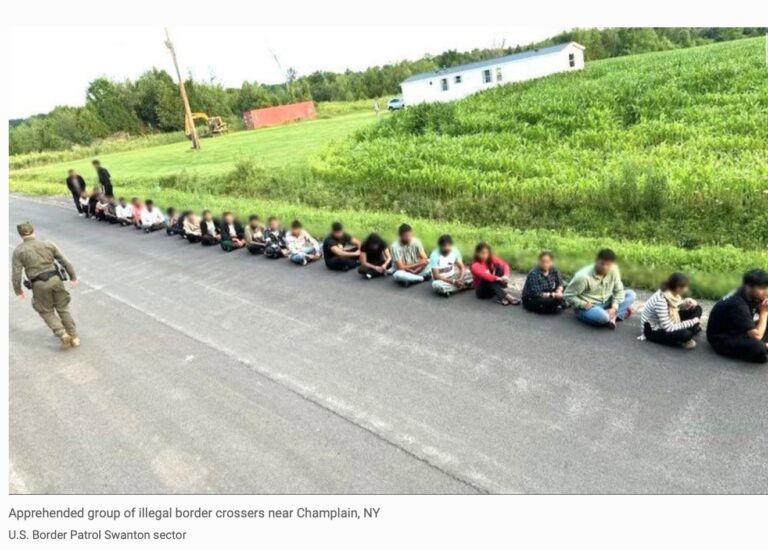
When most people think of how a terrorist might attempt to penetrate the U.S. interior, their thoughts understandably gravitate toward the southern border. But in 2023,85 percent of all land-based encounters with individuals on the terrorist watchlist occurred along the Lower 48’s northern border with Canada, according to an analysis by the Wilson Center.
The United States-Mexico border gets most of the attention, and that makes sense, considering how porous it has been over the years, functioning more like an international highway for people and drugs than a boundary between nations. There is ample reason to take seriously growing security concerns, not least because our border with Canada is the longest land barrier in the world, spanning more than 5,500 miles of mostly rough and remote terrain, making it increasingly attractive to traffickers and terrorist threats.
Although it has changed, the initial demarcation with our northern neighbors has its roots in the American Revolution. The same treaty that ended the war with Great Britain also created the boundary between the nascent United States and the British Empire in North America. Today, it encompasses more than 8,000 monuments, seven states, an equal number of Canadian provinces and one territory. The part of the northern border that separates Alaska from Canada consists of a stretch of land greater than 1,500 miles long. For comparison, the southern border with Mexico is only 400 miles longer. And yet, the Alaska-Canada border receives just a fraction of the resources and attention that its counterpart does.
It’s true that comparatively more drugs like fentanyl enter America through the south than the north. However, that does not change the fact that Alaskan boroughs have become hotspots for drug activity.
Through what it coined the “Disproportionality Index” (DI), the Manhattan Institute devised a system that allows for a comparison between a county’s proportion of large fentanyl seizures against its proportion of the national population for 2023-2024. A score of 1.0 means that the number of seizures is proportionate to the local population, while a score lower than 1.0 indicates fewer seizures than expected, and a score greater than 1.0 indicates more seizures than expected. Of the three counties or collections of counties along the northern border with an average DI greater than 1 were Juneau and Ketchikan, which the institute concluded is “suggestive of Alaska markets possibly being supplied from Canada.”
Notably, 2023 was the year that Alaska witnessed its highest number of opioid overdose deaths, the majority of which were attributed to fentanyl. That marked a nearly 40 percent increase over the previous year and the largest percent increase of any state during the same period. The staggering death toll has spurred various campaigns to raise awareness, such as Sen. Dan Sullivan’s “One Pill Can Kill” initiative.
“A single deadly dose of fentanyl fits on the tip of a pencil,” Sullivan says in an educational video released as part of the campaign. “Seven out of every ten pills seized by the DEA contain a lethal dose of fentanyl.”
On Wednesday, the Trump administration signed the HALT Fentanyl Act, which reclassified the drug as a Schedule 1 substance, placing it in the same category as the government’s most restricted substances. That’s good news for America, and great news for Alaska, which has been fighting an uphill battle out of the national limelight against the drug.
The legislation will also enable law enforcement to go after drug traffickers by shutting legal loopholes that had previously provided them with a measure of protection. In a statement to Must Read Alaska, a spokesperson for the Federal Bureau of Investigation said the agency is focused on identifying the source of the problem.
“The FBI remains focused on disrupting and dismantling transnational organized crime groups whose actions violate the laws of the United States and bring harm to U.S. citizens, wherever and however these crimes may occur,” said Chloe Martin, the public affairs specialist for the FBI in Anchorage. “We urge anyone who witnesses illicit drug trafficking or human trafficking activity in Alaska to contact the FBI.”
You may provide an anonymous tip to the FBI Anchorage Field Office at 907-276-4441, 1-800-CALL-FBI, or online at tips.fbi.gov.
We are being inundated with messages and misinformation stating we need to just spend even more on our K-12 education system to get better student outcomes.
This misinformation comes from various parts of the Education Cartel: local school boards, local school administrators, the NEA-AK, the American Federation of Teachers, the Alaska Association of School Boards, the Alaska Council of School Administrators, the Coalition for Education Equity, and others.
Note that all these vocal supporters of increasing K-12 funding benefit directly and indirectly from this additional funding. In effect, the State of Alaska and local governments are funding these voices of “raise the BSA.”
Let’s look at three state senators who have voted for increasing the Base Student Allocation and voted for overriding the governor’s veto of raising the BSA. To them, more funding is the answer to improve Alaska’s K-12 system. And it seems to them that more funding is never enough. The goalposts get moved: They just need more, and they don’t want any accountability to measure success. They don’t want to measure the return on investment.
How are the students in Sens. Loki Tobin’s, Bill Wielechowski’s, and Forrest Dunbar’s districts doing on the standardized state tests, the AKSTAR?
How much are we spending on the schools in these three senators’ districts?
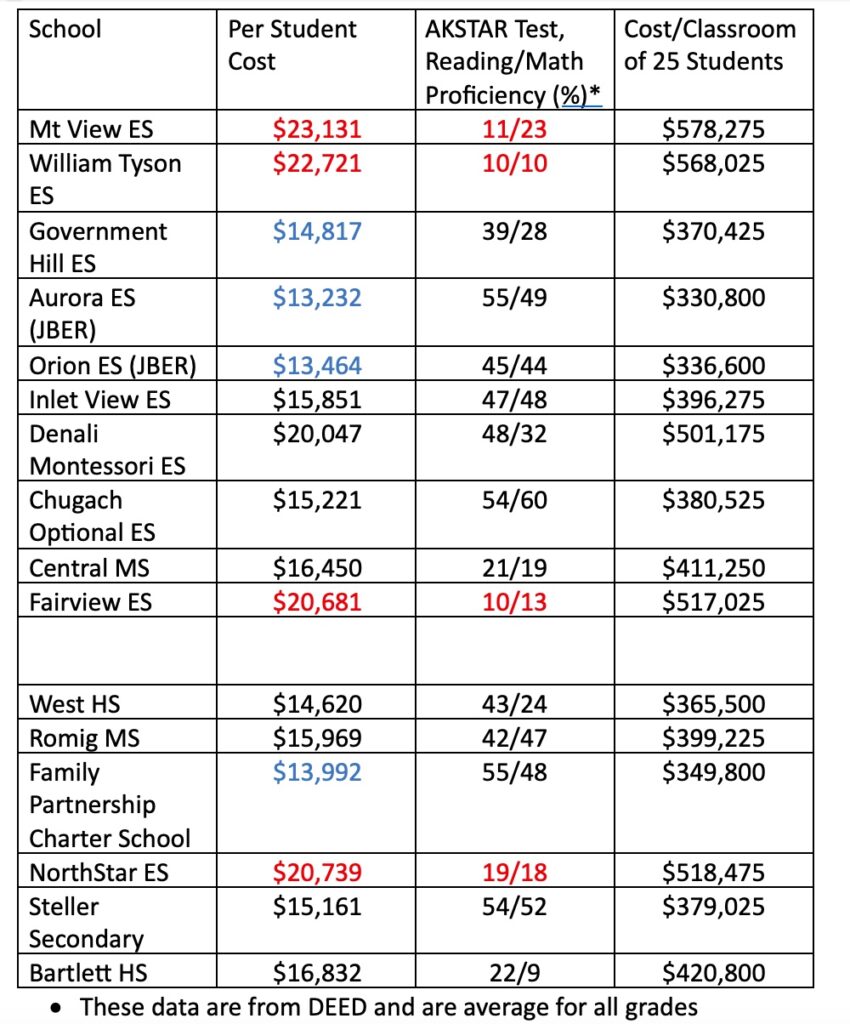
Here is a chart showing the schools in Sen. Tobin’s district (District I), the per student costs, and the average student AKSTAR results:
The above data show that the lowest performing elementary schools in Sen. Tobin’s district (Mountain View, William Tyson, Fairview, and North Star) have the highest per student funding. There is a direct relationship between more funding and lower student achievement in these specific schools. Then why would Sen. Tobin want more funding? Would she want the AKSTAR schools to go down?
On the other hand, two of the highest performing elementary schools, (Aurora and Orion) have the lowest per student cost — nearly $10,000 less per student than Mountain View Elementary School.
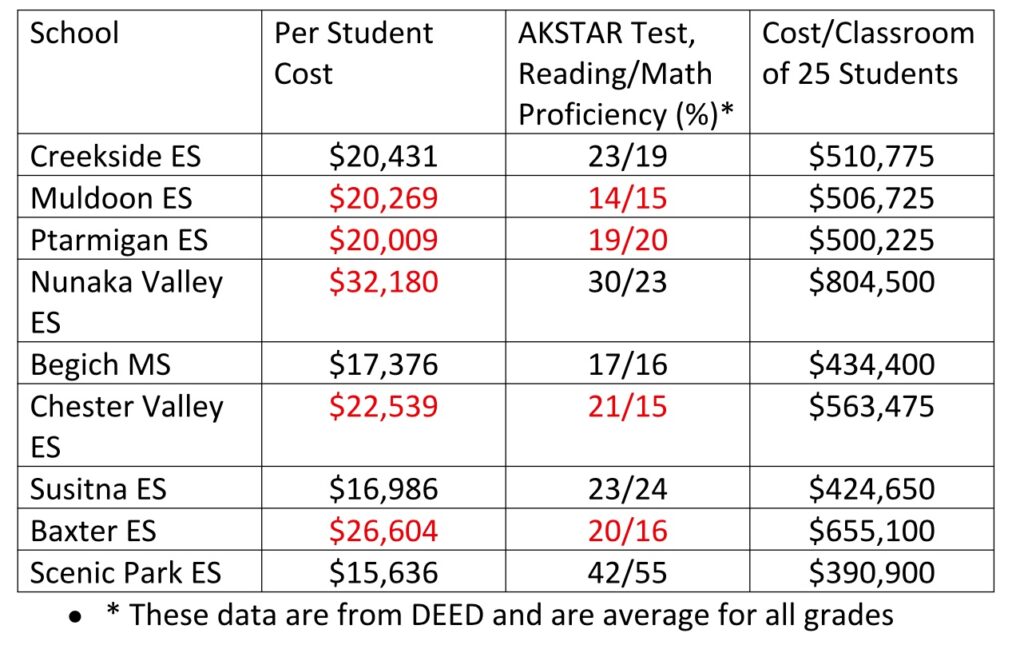
Another strong supporter of more K12 funding with no accountability for results is Sen. Wielechowski (District K). Let’s see how the schools in his district fare for spending and student outcomes:
The above data show that Senator Wielechowski has some of the lowest performing schools in the Anchorage School District. This is nothing new. For many years these schools have been the lowest performing schools. What has Sen. Wielechowski done to improve his district schools?
His current solution is to throw more money at the problem without demanding accountability for results. He also voted to raise the BSA and voted to override the governor’s veto that would decrease the increased funding in the Anchorage School District a mere $4.3 million. Mind you, there is still an increase in funding, just not as much as the cartel desires.
Does Sen. Wielechowski really believe that increasing the per student funding of $32,180 for Nunaka Valley Elementary School would ensure that more than 30% of its students could read at grade level?
He hasn’t ever insisted on any accountability for the extra spending so we shall never know if there is a correlation between student achievement and that spending increase.
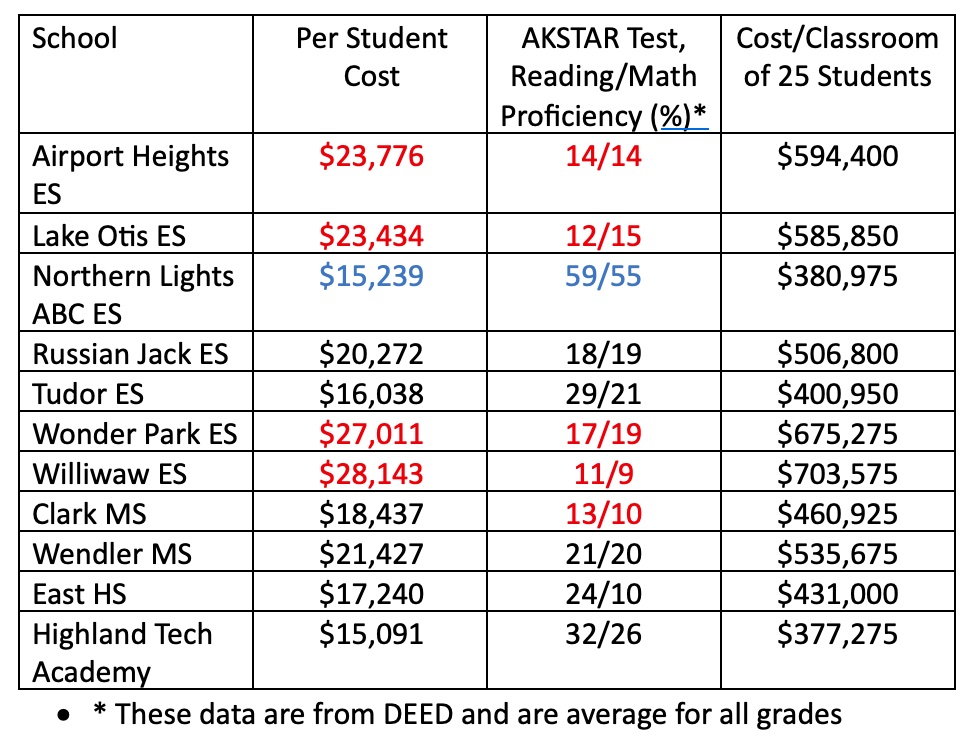
Now let’s look at the schools in Sen. Dunbar’s district (District J). Dunbar also voted to increase the BSA with no accountability. Here are the per student costs and student test scores for those schools:
A very bright shiny school in Dunbar’s district is Northern Lights ABC school. This is one of ASD’s lottery schools. One must win the lottery to get their child into this great school. Trouble is, not every parent wins the lottery, and their children are relegated to the lower performing neighborhood schools.
Northern Lights’ students perform well above average in the AKSTAR tests. Maybe that’s because it uses Saxon Math and phonics in its curriculum. One wonders why other ASD schools don’t replicate these programs to teach their students. Teachers love to teach at Northern Lights because the students are behaved, motivated, and want to learn. The curriculum also works for the teachers and the students. Finally, parents are involved in this great school.
Note that less than 17% of the students in Airport Heights, Lake Otis, Williwaw, and Wonder Park elementary schools are proficient in reading.
Even worse, less than 14% of the students in Clark Middle School are proficient in reading. What will they do when they enter high school? Or are the other 86% of students destined to fail?
Dunbar believes that more funding is needed to help these students read at grade level.
What if parents in all these schools received at least one-third of the per student funding in the schools and chose the best education fit for their children? Maybe they could choose correspondence school. Maybe they could choose a private school. Maybe they could independently home school. Just maybe these students could really succeed in life.
The bottom line: More funding is not the answer to improve Alaska’s K12 system. Two years ago, the Alaska Reads Act passed into law. That’s when we learned that our university system was not teaching reading skills as a basic tenet of elementary school teacher’s curriculum.
Since then, the University of Alaska has added the science of reading to its elementary teacher program. And as bad as our reading scores are, they are improving.
The state cannot continue to throw more money at a broken system and expect different results. We must make targeted reforms that will improve our student outcomes.
The governor has called a special session in August to inform legislators what other states did to fix their underperforming schools. We need to open our minds and learn from others what works well to increase student achievement.
If we continue to focus on input (money) and not on output (student outcomes), then Alaska will continue to be mired in the morass of mediocrity while other States succeed in educating their children.
David Boyle is an education writer for Must Read Alaska.
The Alaska Department of Law announced on Tuesday a step toward expanding public oversight of government by launching a new process that allows citizens to request investigative grand juries to examine suspected systemic wrongdoing by public officials or entities.
This effort establishes a more accessible and transparent pathway for citizens to bring forward evidence of misconduct affecting public welfare or safety. The initiative includes a dedicated webpage, procedures and policies, and designated legal staff to review citizen-submitted requests.
The move follows a 2022 ruling by the Alaska Supreme Court, known as SCO 1993, which amended Alaska’s criminal rules to clarify the role of investigative grand juries. Under those rules, the Alaska Attorney General is tasked with reviewing citizen requests to determine whether they meet the legal threshold to warrant a grand jury investigation.
Attorney General Treg Taylor emphasized the constitutional foundation of the program, pointing to a key provision in Alaska’s Constitution which guarantees the right of grand juries to investigate public welfare matters.
Taylor said the formalized process ensures that “every Alaskan’s voice can be heard when it comes to safeguarding our community and holding our government accountable.”
The investigative grand jury process is distinct from criminal grand juries. While criminal grand juries are typically initiated by prosecutors or jurors to consider indictments in criminal cases, investigative grand juries are focused on examining broader issues related to public safety or governance when requested by citizens. Once convened, these panels have authority to subpoena witnesses, review documents, and take testimony under oath. After completing their work, grand juries can issue public reports—subject to judicial review—that highlight findings and recommendations.
The newly created webpage hosted by the Department of Law contains detailed guidance on how Alaskans can petition for an Investigative Grand Jury, including the criteria their request must meet and the application process. Citizens are now able to review the standards being applied, track the status of their submissions, and challenge outcomes if necessary.
The Department of Law noted that if a citizen request involves alleged wrongdoing within the department itself, a neutral prosecutor will be assigned to advise the grand jury, ensuring impartiality.
This formalization of the citizen-initiated investigative grand jury process comes amid increasing public interest in government accountability, following years of public disputes over the use of grand juries in Alaska. Legal observers point to recent debates surrounding judicial oversight and public transparency as factors pushing the Department to clarify procedures.
While the policy shift does not alter the grand jury’s authority, it creates the first structured and public-facing mechanism to petition for such investigations since the Supreme Court’s 2022 ruling. The department characterized the launch as the “first phase” of its ongoing work to uphold constitutional rights and pledged continued improvements.
Weeks before the start of the new school year, Anchorage School District Superintendent Dr. Jharrett Bryantt issued a scathing letter to staff and families on Tuesday, sharply criticizing state and federal leaders over what he described as a “coordinated failure of leadership” that is forcing widespread layoffs and service cuts across Alaska’s largest school district.
In the letter, Bryantt announced that ASD had begun issuing more layoff notices and reassignments district-wide, attributing the disruption to “unstable decision-making, delayed funding, and systemic negligence” from both Juneau and Washington, DC
“This letter is not just an update. It is a warning, and a call to action,” Bryantt wrote. He signed the letter, “In solidarity and resolve.”
According to Bryantt, ASD is reeling from a combination of a federal funding freeze and recent state budget increases that were trimmed back in a move he apparently did not see coming.
On July 3, the US Department of Education froze nearly $46 million in federal grants to Alaska schools, including more than $14 million earmarked for Anchorage. The abrupt freeze, Bryantt said, strips funding from essential services, which he describes as after-school programs, special education, English learner services, and Alaska Native student services.
He then blamed Gov. Mike Dunleavy for vetoing some of the massive increases that legislators had passed in education funding.
The administration is also pursuing regulatory changes through the State Board of Education that would cap how much local governments can contribute to their public schools, potentially draining millions more from Anchorage classrooms.
“This is not a coincidence. It is a pattern,” Bryantt said. “These decisions reflect a coordinated failure of leadership that disregards the will of Alaskans and jeopardizes the foundation of our public schools.” It seems that no one is smart enough to lead but Bryantt.
Bryantt detailed how ASD had already eliminated 42 central office positions, cutting over $30 million in salaries and services, drawing down reserves below policy minimums, and increasing class sizes. Even these measures, he said, were insufficient to absorb the latest wave of cuts.
“These are not abstract policy outcomes. They are real people. These are real losses. And students will feel the difference when they walk into school in August,” the superintendent warned.
Bryantt’s letter was sent with the Aug 2 special session in mind, where he hopes the Legislature will override the governor’s vetoes.
“This is what happens when systems fail students,” Bryantt wrote. “We are not just managing a crisis. We are resisting the slow dismantling of public education in Alaska.”
The letter concluded with a rallying cry to the Anchorage community, vowing that the district “will not be silent” in the face of what he called reckless governance decisions.
In a rare victory for the conservative minority, the Anchorage Assembly on Tuesday night passed an ordinance to rein in vagrant encampments on public lands, marking a sharp shift in the city’s approach to the growing crisis of vagrancy and drug addiction that has enveloped Alaska’s largest city.
The Assembly passed AO 2025-74, an ordinance that makes it illegal to camp on public property within city limits. The measure passed by a 7-5 vote, handing a win to those wishing to restore law and order in parks, trails, and other municipal spaces.
Under the new law, unauthorized camping is now classified as a Class B misdemeanor, meaning violators can face police action, fines, and even jail time. Enforcement set to begin within 30 days. Anchorage Police will be tasked with removing campsites and citing individuals in violation of the law.
The measure passed with support from Assembly Members Scott Myers, Keith McCormick, Zac Johnson, Daniel Volland, Yarrow Silvers, Jared Goecker, and Kameron Perez-Verdia. The remaining five members of the Assembly, including Assembly Chairman Chris Constant voted against it, expressing concerns about criminalizing homelessness without guaranteed shelter for all. Many of those living out-of-doors are doing so because they do not like the structure of shelters, which have rules of conduct.
Proponents of the ordinance argue it restores public access to parks and trails that have increasingly become semi-permanent encampments. Recently, the city removed 744,000 pounds of debris and stolen goods from Davis Park, one of the worst encampments. Many trails and parks are no longer safe in Anchorage for unarmed women or unaccompanied minors.
The ordinance requires the city to monitor shelter capacity and availability. Enforcement actions, including citations and removals, must be accompanied by tracking and annual reporting to the Assembly.
Anchorage officials are leaning on recent legal precedent to back up the ordinance. In their legal justification, they cite the US Supreme Court’s recent decision in City of Grants Pass v. Johnson, which upheld the right of local governments to enforce anti-camping laws as long as shelter options exist and the laws regulate conduct rather than targeting status as homeless.
The Senate moved a step closer Tuesday to approving President Donald Trump’s proposal to rescind $9.4 billion in federal funding, advancing the measure by the narrowest of margins after Vice President JD Vance cast the tie-breaking vote.
The bill, pushed by the White House and the Department of Government Efficiency under Elon Musk, would cancel $8.3 billion in foreign aid and $1.1 billion in funding for the Corporation for Public Broadcasting. It represents some of Trump’s effort to scale back federal spending, particularly on programs the administration has characterized as non-essential or misaligned with “America First” priorities.
Three Republican senators — Lisa Murkowski of Alaska, Susan Collins of Maine, and Mitch McConnell of Kentucky — broke with their party, voting against moving the bill out of committee and to the floor. Their opposition forced the 50-50 split, with Vance casting the decisive vote to advance the legislation.
Murkowski has been among the most vocal critics of the bill within the Republican caucus, focusing on the potential impact to rural communities in Alaska. Alaska’s widespread use of public broadcasting for news has been a key point of contention, although in this century there are many alternatives.
The Senate’s next procedural hurdle is a vote to begin formal debate. That also requires 51 votes. GOP leadership remains cautiously optimistic but is contending with lingering concerns from several Republican senators who have not publicly committed to supporting the package.
Under the fast-track rescissions process, the legislation must be approved by both chambers of Congress within 45 days of the president’s formal request, which puts the deadline at midnight on Friday, July 18.
The House narrowly passed the bill in June by a 214-212 vote, and would need to reconvene to approve any changes made by the Senate.
Senate Republicans can only afford to lose three votes without relying on Vice President Vance. Any additional defections would likely doom the bill, requiring the White House to release the funds as originally appropriated.
This week, Congressman Nick Begich celebrated a key legislative victory with the House passage of his bill, H.R. 410, the Alaska Native Vietnam Era Veterans Land Allotment Extension Act of 2025.
This makes four bills Congressman Begich has sponsored that have made it through the House in the first 193 days he has been in office. He has set a record in Congress for the freshman with the most bills passed this year.
The bipartisan legislation extends the application window for Alaska Native veterans who served during the Vietnam War to apply for long-overdue land allotments.
Begich called the vote “an important step toward honoring Alaska’s veterans,” emphasizing the need to fulfill promises made to those who served. The bill, which passed with broad support, extends the existing land allotment program from five to ten years, giving Vietnam veterans more time to apply for and select land parcels.
“The men and women who served our nation during the Vietnam War deserve the opportunity to secure the land they were promised,” Begich said in a statement. “This legislation extends an important land allotment program and ensures that Alaska Native Vietnam-era veterans will have the time and resources they need. Today’s passage of this legislation is paramount for Alaska’s Vietnam veterans, and I urge my colleagues in the Senate to take swift action so we can send this bill to the President’s desk.”
House Committee on Natural Resources Chairman Bruce Westerman praised Begich’s work on the issue: “Congressman Begich’s legislation that advanced today will keep our promise to Alaska Native Vietnam Veterans by extending an important land allotment program. I’d like to thank him for his continued leadership for Alaskans and look forward to working to advance this legislation.”
The legislation addresses a longstanding injustice faced by Alaska Native Vietnam veterans, thousands of whom were unable to apply for their congressionally promised land allotments because they were serving overseas during the eligibility period. As of early 2025, out of more than 2,000 eligible veterans, only 41 applications have been certified, and just 18 veterans have received their land conveyances.
In conjunction with the bill’s passage, the Trump Administration’s recent reinstatement of certain federal land withdrawals, which were previously revoked under the Biden administration, has expanded the pool of available lands. This development opens up more options for eligible veterans to select viable parcels of land.
During committee hearings, Alaska Native leaders, including Nelson N. Angapak, Sr., Vice President Emeritus of the Alaska Federation of Natives, highlighted the urgency of the issue, pointing to the advanced age of many of the veterans affected.
Veterans’ organizations and Alaska Native groups have broadly endorsed the legislation, citing it as a crucial step toward justice and recognition for Native veterans.
Begich introduced H.R. 410 on January 15, 2025. This marks the fourth bill he has successfully passed in the House since taking office. He testified in support of the legislation before the House Subcommittee on Indian and Insular Affairs on Feb. 5.
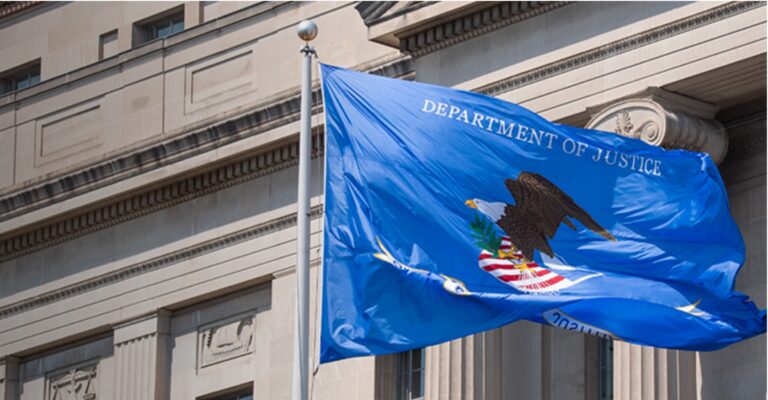
The Department of Justice on Monday issued its guidance to enforce President Donald Trump’s Executive Order No. 14224, which establishes English as the official language of the United States. The directive is a shift from the Clinton era in terms of federal language policy, prioritizing English proficiency and reducing the government’s reliance on multilingual services.
The DOJ announced it will spearhead a coordinated effort across federal agencies to “minimize non-essential multilingual services, redirect resources toward English-language education and assimilation, and ensure legal compliance with the Executive Order through targeted measures where necessary.”
Attorney General Pamela Bondi hailed the move as a long-overdue course correction.
“As President Trump has made clear, English is the official language of the United States,” Bondi said. “The Department of Justice will lead the effort to codify the President’s Executive Order and eliminate wasteful virtue-signaling policies across government agencies to promote assimilation over division.”
Assistant Attorney General Harmeet K. Dhillon echoed the administration’s focus on unity through language.
“President Trump’s Executive Order marks a pivotal step toward unifying our nation through a common language and enhancing efficiency in federal operations,” Dhillon stated. “While we respect linguistic diversity, our federal resources will prioritize English proficiency to empower new Americans and strengthen civic unity.”
According to the DOJ, the policy will “streamline federal processes, reduce administrative burdens, and increase operational efficiency” by scaling back costly translation services and reorienting federal programs around English language skills. The Guidance leaves room for linguistic diversity in community and private spheres but shifts the focus of federal agencies toward assimilation through a shared language.
The Executive Order revokes Executive Order No. 13166, issued by President Bill Clinton in 2000, which mandated expanded access to federal programs for individuals with limited English proficiency. DOJ officials said Clinton’s policy “strained federal resources and impeded the assimilation of new Americans.”
Today’s announcement is part of a broader wave of executive actions taken since Trump’s return to the White House that include a focus on unified national identity and government efficiency.