Wednesday, April 29, 2026
Home Blog Page 1476

Now is the time to limit state spending

3

By KATI CAPOZZI, PRESIDENT
ALASKA STATE CHAMBER OF COMMERCE

As Alaskans, we face these fiscally uncertain times together.

With the private sector’s success inextricably linked to how the rest of the economy fares, we must ensure that we continue to grow our businesses. After all, investment and job creation are mandatory to the state’s future success.

Yet as long as significant state budget deficits remain, economic growth is in jeopardy.

The Alaska State Chamber of Commerce represents 100,000 Alaska employees and businesses large and small. Smart spending habits and pro-business policies that grow our economy are the cornerstones of the chamber’s advocacy efforts.

As the voice of Alaska business, our membership votes every year to determine our public policy positions.

The positions naturally change with time, but one key issue has consistently remained a priority for more than 20 years, both when the state was flush with cash from high oil prices, and when it was struggling through economic recession: the need for a sustainable fiscal plan focused on Alaska’s future.

Every year, we also look outside our diverse membership to better understand Alaskans’ attitudes about the state’s much-discussed fiscal situation.

Recently, the chamber conducted its annual statewide poll — and the 2019 numbers are in. Unsurprisingly, state spending and the Permanent Fund Dividend remain the overwhelmingly dominant issues on Alaskans’ minds.

Alaskans have spoken. They want reasonable restraints on government spending and a final say in big budget decisions. Based on the data, without a doubt Alaska’s fiscal dilemma remains residents’ top concern.

Interestingly, 47 percent of Alaskans rate the state economy as good, an improvement of nine points from last year. That said, when asked in a separate question if they felt Alaska was on the “right track” or “wrong track” economically, 64 percent of Alaskans still think the state is on the wrong track.

That number is virtually unchanged from last year, indicating that Alaskans want closure on the public policy debate that has been raging in our state for nearly five years now. The good news is opportunities exist now for state leaders to stabilize and improve the health and direction of the Alaska economy.

It is clear Alaskans have paid close attention as the new governor and Legislature tackle tough issues related to budgets. We asked Alaskans where they stand on current proposals meant to fix Alaska’s budget dilemma.

The proposals of particular importance to chamber members who enjoy majority support:

• 75 percent support requiring the Legislature to obtain voter approval before a statewide tax could take effect.

• 61 percent support a constitutionally mandated state spending cap.

Other policy issues that saw majority support:

• 69 percent support a work requirement for Medicaid recipients.

• 65 percent support exploration and production in the Arctic National Wildlife Refuge.

Over the remaining days of the legislative session and interim, we will share insights and meaningful trends from the 2019 polling data with partners and communities across Alaska. The data we present is pulled from one of the largest surveys conducted in the state and representative of Alaska’s unique electorate.

While Alaska continues to climb out from under a record-breaking recession, the good news is that we may have turned a corner. Especially encouraging is the revelation that many issues still unite Alaskans, even in challenging times.

While the voices that seek to divide us are loud, we look forward to people and businesses uniting around public policy that Alaskans from across the state can support. Clearly, civil conversations on the merits of the proposals on the table are a good place to start.

Kati Capozzi is president and CEO of the Alaska State Chamber of Commerce.

All watered down

By THE ANCHORAGE DAILY PLANET

You have to wonder sometimes what lawmakers in Juneau possibly could be thinking.

Gov. Mike Dunleavy in February offered a tough criminal justice bill. Instead of using the opportunity to make Alaskans safer, the House Majority watered down the measure, and then rushed to pack it with amendments and other bills over a few days, before calling it good and sending it to the Senate.

Almost unbelievably, there were page upon page of amendments at the last moment and Republican testimony was limited and no time was allowed for the minority to read the majority’s changes. To its credit, the House GOP minority did not buy in and voted no.

Apparently the ‘yays’ were not paying attention during the last election when Alaskans sick of crime and the state’s revolving door criminal justice system said they wanted changes, real changes in Senate Bill 91, a measure blamed for much of the crime surge in Alaska.

Despite the problems, there are some in the Legislature who cling to SB91, now law, and are trying to salvage it because its aim was to save the state money.

House Bill 49 may or may not save money, but it does Alaskans little good.

It is just something else to remember for the next election.

http://www.anchoragedailyplanet.com


Alaskans still guarded about economy, survey shows

1

A Dittman Research survey done for the Alaska Chamber of Commerce shows that Alaskans are somewhat split down the middle on their views of the current state of Alaska’s economy.

Although the sentiment still falls slightly toward pessimism, there is a marked improvement in optimism over last year.

OVERALL ECONOMY

Overall, 52 percent of those asked say Alaska’s economy is not too good or pretty bad, while 47 percent think its good or very good. This is an improvement of nine points over the same survey conducted last year.

Republicans have a more positive view than Democrats have for Alaska’s economic situation, with 61 percent of GOP likely voters rating the economy as good, while just 44 percent of Democrats rate it as good.

DIRECTION THE STATE IS HEADING

Overall, 64 percent of respondents — about the same as last year — think things are still headed in the wrong direction.

On this question, Republicans are also more optimistic than Democrats. Only 16 percent of Democrats think Alaska is headed n the right direction, while 51 percent of Republicans think it is.

STATEWIDE TAX – VOTE OF THE PEOPLE

75 percent of those asked said they support a requirement that any statewide tax be approved by a vote of the people. This is one of Gov. Michael Dunleavy’s constitutional amendment proposals and it has strong support, according to this survey.

CONSTITUTIONAL SPENDING CAP

61 percent support a constitutional spending cap. That proposal is the third one Dunleavy has asked the Legislature to send to the voters for their decision.

CHAMBER PRIORITIES – SOLID FISCALS

Kati Capozzi, President, Alaska Chamber of Commerce

Alaska Chamber of Commerce President and CEO Kati Capozzi said Alaskans have spoken: “They want reasonable restraints on government spending and a final say in big budget decisions. Based on the data, without a doubt Alaska’s fiscal dilemma remains residents’ top concern.”

[Read: Chamber President says it’s time to rein in spending.]

Advocating for a sustainable fiscal plan has been a priority of the Chamber for more than 20 years, she added.

PFD ENSHRINED IN CONSTITUTION

54 percent say they think the Permanent Fund Dividend payment should be guaranteed by the Alaska Constitution.

This, too, is one of Dunleavy’s proposed constitutional amendments and voters support it by close to the same percentage as swept him into office. Dunleavy won by 51.4 percent in November over Mark Begich, the Democrat.

PFD TO PAY FOR GOVERNMENT

When asked if they support using some of their Permanent Fund dividend to pay for government, 46 percent support it and 53 percent oppose it.

MEDICAID WORK REQUIREMENTS

On the question of Medicaid work requirements for some who receive health insurance through the federal-state program, 69 percent say they support requiring low-income, able-bodies adults without young children to get a job in order to qualify. That is down from 77 percent just a year ago.

Republicans support that proposal more than Democrats: 83 percent of the Republicans queried responded that they somewhat or strongly support a Medicaid work mandate for those who are able.

NATURAL GAS PIPELINE

Alaskans are less optimistic about a natural gas pipeline, with 57 percent saying the gasline won’t be built in the foreseeable future. Those who were most skeptical of the gasline identified as nonpartisans or undeclared voters, with over 60 percent of those saying it’s not likely to be built anytime soon.

ANWR EXPLORATION AND PRODUCTION

65 percent of respondents somewhat support or strongly support exploration and production of oil and gas in a portion of the Arctic National Wildlife Refuge. This is a drop from the highest support for ANWR drilling, 75 percent in 2002. It is also the lowest number tracked by the group since 1990, when 72 percent of Alaskans supported drilling in ANWR.

METHODOLOGY

The survey sampled 705 likely voters, 60 percent landline and 40 percent cell phone. The margin of error is considered 3.69 percent.

Dittman Research has correctly predicted the outcome of every election for governor and U.S. Senate in Alaska for the last 50 years. The firm is ranked in the top 10 nationally out of 300+ polling firms for “Races Called Correctly” by Nate Silver’s 538 Pollster Ratings, scoring 100% ‘Correct Calls’ with nine elections evaluated.

The entire slide deck of the survey can be studied at the Alaska State Chamber of Commerce.

REAL ID Alaska: Here’s how to do it like a pro

TALES FROM THE DMV

500 days. That’s how many days are left before all Americans boarding a commercial aircraft, or accessing a federal facility such as a military base, will need to show a form of REAL ID. If you’re leaving Alaska in September of 2020, and intending to come back after Oct. 1, you’ll need a REAL ID of some sort to get on a jet.

But because of State of Alaska working days, you only have about 352 days until you must have your paperwork in order.

REAL ID is generally a U.S. passport or a state-issued driver’s license or identity card that has a few more bells and whistles. Military ID and some Native IDs are REAL ID compliant.

The State of Alaska began in January issuing these souped-up drivers licenses with a star in the top righthand corner.

This author went through the process last week and can report that it’s not that bad. Here are the Pro-tips:

At the Benson Blvd Department of Motor Vehicles, Tuesday morning seemed safe enough. I arrived when the offices opened at 9 am only to find a line trailed out the door.

Once inside, a helpful DMV employee asked me what I needed, and then handed me the form to fill out for a REAL ID. I pulled a number from the take-a-number machine and found a seat. The helpful DMV lady brought me a clipboard.

The worst part of the experience was gathering all my documents. Go through the online checklist here to be sure you have the right docs.

The best part was the workforce at DMV — they are amazingly customer friendly and considerate. This has been my experience every time I’ve dealt with them.

I had brought with me all the documents: A Social Security Card, a valid passport, and two recent pieces of mail to my home address that had an actual cancellation stamp on it to show it was less than 90 days old. I suggest a power bill, if you are getting them at your home address. I brought a few more items of mail just to be safe — official mail from the federal government and a letter from my mom seemed a safe bet. I brought a Voter ID card with my address. My birth certificate. My membership at the state-owned  Rabbit Creek Shooting Park. My Acai Alaska punch card.

OK, I overdid it on the document front, but that’s what I recommend. There’s no sense in waiting for 20 minutes and then having to return another day because you don’t have the required proof of who you are.

The toughest part was the wait. It is 20 minutes of your life you’ll never get back, but as time passes, that Oct. 1 deadline is going to make the lines just longer, and ratchet up the urgency of getting it done. And, the people watching is epic. Check the waiting times and web cams here before you go.

They’ll take your photo again, so run a comb through your hair. And no smiling with your teeth showing. That’s not allowed anymore. The no-grin rule messes with the facial recognition software in use around the country.

They’ll also check your eyesight, but you don’t have to take another driving test.

That was it. It took about an hour altogether.

I left with … a photocopy of my new license, and a punch through my old license. The new license is supposed to arrive by mail from Fort Wayne, Indiana. This central issuance of REAL ID feels a lot like a federal ID program, which makes some strict constitutionalists very uncomfortable. But, as with a passport, they are not handing these things out over the counter. They’re mailed from a secure facility and arrive about two weeks after you’ve gone through the process.

The temporary paper license is valid for 60 days and has a barcode on it and the pertinent information. You’ll want to keep your punched license with you. But if you travel a lot, like I do, this is an extra consideration; you’ll want to keep your passport handy until your license arrives. You can check the status of the whereabouts of your REAL ID here.

What if you live in a community that doesn’t have a DMV? You’re up a creek without a paddle. Go to the DMV website for help for rural areas of the state, or be smart and plan your trips to town around this task.

Oct. 1, 2020 is the drop-dead date for getting your REAL ID house in order.  As the date gets closer, you’ll hear TSA agents say things like, “Oh look, how quaint, an Alaska driver’s license with no REAL ID star. That is so cute.” Don’t wait until Oct. 1 for “cute” to become “no flying for you today.”

The Alaska REAL ID is not mandatory if you don’t fly or need to get into a nuclear power plant or military base, but if you want one it will cost your $40, double what a standard driver’s license costs. It’s $120 for a commercial license REAL ID. If you’re just getting a State ID with no driver’s license, it’s $35.

Sen. Sullivan has his first challenger: a Bernie supporter

SULLIVAN IS RAISING A FORMIDABLE CAMPAIGN ACCOUNT

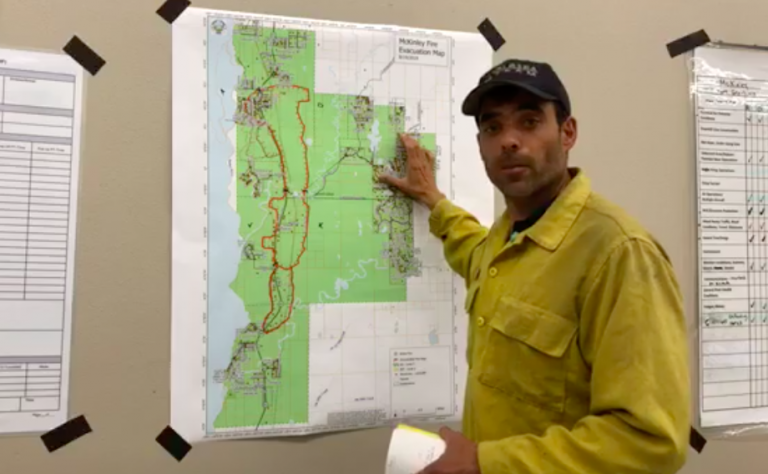
Wildfire technician and Democrat-turned-Undeclared candidate David Paul Matheny has filed for U.S. Senate for Alaska, the first to challenge Sen. Dan Sullivan in his first bid for reelection.

Sullivan was elected in 2014, winning the seat from former Sen. Mark Begich.

In fundraising for the next election cycle, Sullivan has made the top 20 senators in terms of his campaign treasury, with over $2.7 million raised.

For comparison, Sen. Thom Tillis, (R-NC) who is at Number 11, has raised $4.6 million, and Sen. Mitch McConnell (R-Kentucky) has raised $7.9 million, putting him at the Number 2 spot behind New Jersey Democrat Sen. Cory Booker.

The entire list of U.S> Senate candidates and their current campaign war chests can be viewed here.

Matheny has raised no money, but then he just registered with the Federal Elections Commission on April 30. He lists his address in Fairbanks and lists his party as “Independent.”  While there is no “Independent” party in Alaska, he is registered as an “Undeclared” voter. His Senate committee is called Alaskans to Elect Dave Matheny.

Dave Matheny

Matheny is employed by the State Department of Natural Resources as a Wildland Fire and Resource Technician III out of Delta Junction. He lists himself as a union chapter president for ASEA. In 2016 he was a activist and volunteer for Bernie Sanders for president, caucused for Sanders as a Democrat, and went to Philadelphia to protest the Democratic National Convention choice of Hillary Clinton.

The General Election is Nov. 3, 2020.

Inside Spring Creek Correctional’s trashed unit

WHAT A NINE-HOUR RIOT WILL DO TO A PLACE

Broken windows, busted toilets, and destroyed cameras. The Alaska Department of Corrections released photos of the damage done by a 62-prisoner riot that lasted 9 hours at Spring Creek Correctional Institution.

A tour for the media on Friday took reporters through the partially cleaned up unit that had been taken over by prisoners on Tuesday. Gov. Michael Dunleavy and Corrections Commissioner Nancy Dahlstrom attended the briefing and thanked Corrections officers for their capable response.

No one was injured in the riot, although several gangs were involved. The gangs were not battling each other but had joined forces to battle the institutional rules, officials said. Because of the sequence of events, officials are sure the riot had been planned.

The prisoners involved have been relocated and some are in solitary confinement. Hotel Mod, or H-Mod houses a general population of prisoners, all whom are serving for serious crimes.

Full restoration of the Spring Creek unit is expected to take a month.

The photos are from the Department of Corrections showing the damage before the cleanup:


Lt. Gov. Meyer to host town hall on crime

Lt. Gov. Kevin Meyer and members of the Dunleavy Administration will host a town hall on Monday, May 13, 6-7 pm, to hear from Alaskans about the ways crime has affected their lives. The event takes place at the Marston Theater, in the Loussac Library.

Meyer will be joined by officials from the Departments of Law, Corrections, and Public Safety.

“Alaska can no longer be a safe haven for criminals. Our number one priority is to protect law abiding citizens while taking criminals and predators off the streets by enforcing stricter penalties. Action needs to be taken on the Governor’s proposed crime legislation to repeal SB 91 this session,” said Lt. Gov. Kevin Meyer. “We cannot put this off any longer.”
Legislators are currently deliberating HB 49, which will unwind some of the more egregious problems that SB 91 created with lower sentences, and a revolving door for car thieves, shoplifters, burglars and other criminals.

Public broadcasting, university advertising to keep funding

COURT OF PUBLIC OPINION IS NOW IN SESSION

Both Alaska Public Media and the University of Alaska have advertising pushes underway to preserve their state funding. The Legislature has five days left in its regular session, and will deliver its budget to the governor shortly thereafter. Gov. Michael Dunleavy is then expected to trim spending back or even call the Legislature back into special session.

The video ads for the University of Alaska are showing up on television, YouTube, and Facebook. There are also campaign-style signs around Anchorage that state: “UA Strong.”

Under Gov. Bill Walker, these right-of-way signs like the one spotted below would be considered illegal and DOT would have removed them, but these are gentler times:

Public broadcasting ads are showing on YouTube and Facebook. They direct people to “Do democracy” and call the governor’s office to tell the governor public broadcasting wants its money.