MRAK Almanac: Sine die day, and Roald Amundsen and the dirigible Norge
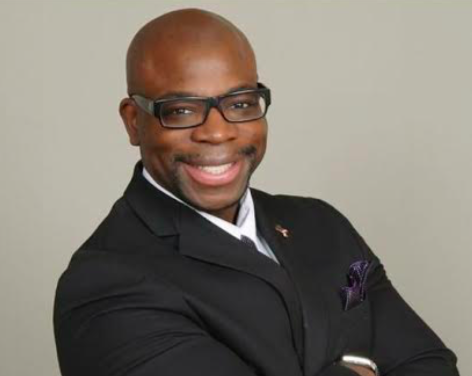
Al Gross forming exploratory committee for U.S. Senate
Al Gross, a practicing orthopedic surgeon from Juneau who lives in Anchorage and Petersburg, says he’s formed an exploratory committee to help him decide if he’s going to challenge U.S. Sen. Dan Sullivan in 2020. He is expected to announce the committee today in Petersburg, but has the announcement on his website, also launched today.
Gross is 57 and has been talking openly about a Senate bid for over a year, and writing op-eds about the need for more government intervention in medicine in Alaska.
While he lives in Anchorage, he is registered as a nonpartisan voter in Petersburg, where he fishes in the summer, and would be the second no-party challenger to Sullivan. Dave Matheny of Fairbanks filed with the Federal Elections Commission last week as an “independent.” (Alaska does not have such a designation on the ballot, but Matheny is registered as an “undeclared” voter).
Gross was raised in Juneau, the son of the late former Attorney General Av Gross, and Shari Gross Teeple, who was the Alaska lobbyist for the Port of Tacoma for 25 years.
Gross was an orthopedic surgeon in Juneau, but left his practice in 2013 to earn a masters degree in public health, and to champion what some might call socialized medicine for all Alaskans. He led two ballot initiatives — one to enshrine Medicaid expansion, as provided by Gov. Bill Walker’s executive order, and the other to start setting prices for medical services in order to regulate insurance companies.
Neither made it to the ballot.
Gross has been the medical director of surgery for the Petersburg Medical Center since 1994. With his announcement, he is launching a listening tour throughout the state this summer.
Sen. Micciche: If Alaska was a country, it would be second in world for sexual assault
If Alaska was a country, on a per-capita basis it would rank #2 in the world for sexual assault, compared to 119 other nations.
That was one of the messages that Sen. Peter Micciche delivered to the Senate just before asking them to vote in favor of SB 49, a criminal justice reform bill he carried on behalf of the Dunleavy Administration.
HB 49 rolls back the previous reforms of SB 91, which was signed by Gov. Bill Walker in 2016.
In his remarks, Micciche cited the need to make victims the priority in crime legislation, and make sure those who break the law face consequences:
“We are prioritizing public safety, we are protecting Alaskans, we are putting victims and the law-abiding first and removing those from our communities that are a threat to safety and security.
“From the latest FBI data, Anchorage is next to the highest on the list of high property crime cities at 5,441 per 100,000 population, or roughly four times the rate of New York City and two times that of LA.
“For violent crime (murder, rape, robbery and aggravated assault) Alaska is number one in the US at 829 per 100,000…more than seven times the lowest state of Maine, and more than twice the average of 373 per 100,000.
“Then there is Alaska’s dark secret…and today we declare a formal war on sexual assault.
“We dealt with the Schneider Loopholes through the passage of another bill this session (SB12/HB/14), but we have so much more to do.
“If the state of Alaska were a country unto itself, and we compared the number of sexual assaults per capita to the other 119 nations in the world, Alaska would be number two in the world at 116.7 per 100,000 in front of Botswana and right behind South Africa.
“Alaska’s sexual crime rates are three times higher than the national average, and child sexual assault rates are six times the national average.
“Six times. Disproportionately, victims of sexual violence are between 11 and 17 years old, from all over Alaska and were attacked by someone they knew.”
HB 49, amended and strengthened by the Senate, passed 20-0 and was returned to the House for concurrence. The House is now in session (11:20 am Tuesday, May 14, 2019).
Letter to the editor: Read ‘Rules for Radicals’
Letter to the editor:
This will be short and direct. I’m done trading barbs with the Cole Brothers. I just consider the source and consider it a compliment!
I invite each of you to read, if you have not already done so, “Rules for Radicals” also known as Rules for Revolution by Saul Alinsky and “The Prince” by Niccolo Machiavelli to understand the methods and means of the Coles and their fellow travelers.
Both Hillary Clinton and Barack Obama are disciples of Saul Alinsky and I would wager they’ve studied Machiavelli as well.
In a society where individuals choose to be free it is every citizen’s responsibility to become informed and know enough to make rational decisions and judgments. After reading the above suggestions you will be better prepared to do that.
Freedom is the prize. Responsibility is the price
Richard (Dick) Randolph
Crime bill strengthened in Senate
The Alaska Senate is working through its version of House Bill 49, the roll-back of the much-maligned SB 91, which has been blamed for Alaska’s crime wave. The Senate has inserted stronger sanctions for drug offenses, sex offenses, and other crimes.
Senate Finance Committee passed a heavily amended version HB 49 on Sunday that included many pieces of the original legislation requested by Gov. Michael Dunleavy, provisions that had been stripped out by the House Democrat-led Majority.
Some of the changes to the bill that was heard on the Senate floor today:
- Repeals the “marriage defense” for rape. This defense was left in law by the House last week. This makes it easier to prosecute sex crimes when victims are incapacitated or unaware.
- Increases presumptive felony and misdemeanor sentencing ranges, many pretrial provisions, and probation lengths to levels that existed before SB 91 took effect.
- For drug possession, the first offense would be a misdemeanor, with up to a one-year sentence; after that it would be a class C felony. The bill that came from the House allowed two misdemeanors.
- Prohibits mandatory parole and good time for murder 1, murder 2, and manslaughter; and only allows discretionary parole for these crimes after 2/3rds of the sentence has been served.
- Increases the penalties and seriousness of certain sex crimes including unlawful exploitation of a minor, indecent exposure near children, and child pornography.
- Requires a presumption of “no contact orders” for cases of domestic violence and sexual assault.
- Expands the “duty to report” abuse for people who work with children.
- Increases the amount of notification and information available to crime victims.
- Reinstates “Truth in Sentencing” language.
- Reinstates stricter penalties for violating bail conditions and conduct.
- Repeals the Pretrial Enforcement Division and moves its duties to the Department of Corrections.
- Removes technical violations for parole and probation but allows administrative sanctions.
- Allows, but does not require, the use of the risk assessment tool for setting bail and returns discretion to the court on bail.
- Keeps the time between arrest and arraignment at 24 hours, barring compelling reasons to extend.
- Limits treatment credit against a sentence to 180 days.
- Removes mandatory electronic monitoring for DUIs.
- Prohibits “good time” for treatment, time in a private residence, and electronic monitoring for certain serious crimes.
- Makes it a crime of harassment to send repeated, unwanted pictures of genitals to someone.
- Clarifies that Native organizations are eligible entities to run VPSO programs.
- Requires Department of Law, in conjunction with Department of Public Safety, to track and gather data on felony sex offenses to be included in the Alaska Criminal Justice Commission’s annual report.
- Removes provisions related to reentry plans. This has since been amended on the Senate floor.
- Requires the court to transfer records regarding involuntary commitment going back to 2011 instead of 1981.
- Allows drivers’ license cancellation for people who owe more than $1,000 for moving violations.
- Requires use of headlights at certain times; prohibits any requirements to use headlights except as provided for in (a).
- Changes who is eligible to have a permanently revoked drivers’ license restored after 10 years.
The bill was held until the Senate reconvenes on Tuesday.
‘Shameful narrative’ about Native students disputed by think tank
NATIVE STUDENTS ARE NOT DRAGGING DOWN ALASKA’S TEST SCORES
The Alaska Policy Forum, a public policy group based in Anchorage, published a series of charts that the group says disproves an “offensive narrative has been circulating that Alaska Native children are to blame for our state’s low reading test scores.”
The narrative the group refers to has been pushed by opinion writer for the Left, Dermot Cole, in some of his recent columns.
“That narrative is not only extremely divisive and offensive – it is untrue,” the policy group wrote on its website.
Across the spectrum of demographics, almost all Alaska students are under-performing their peers in 4th and 8th grade reading scores, according to the U.S. Department of Education’s National Assessment of Educational Progress. It doesn’t matter if they are white or Native, they’re almost all doing worse than ever in 4th-grade reading.
The charts show where Alaska students rank, and note that economic status is more of an indicator for how a child will do.
What the charts show is that nearly all students across demographic categories in Alaska are scoring below national norms. The exceptions are 4th and 8th grade Hispanic students, who scored above average in reading in the 4th and 8th grades, and black students, who scored higher in reading in the 4th grade, but lower than average by the 8th grade. White students who qualify for free or reduced lunch (lower income homes) scored slightly above the U.S. average.
Other than that, Alaska students are scoring dead last in 13 of 20 measurements for the 4th grade.
In 2003, Alaska students as a whole scored 10th from the bottom in 4th-grade reading. By 2017, they were the worst readers in the nation.
In 2003, Alaska low-income students were third from the bottom, but by 2017, they sank to the bottom.
Here’s the kicker: In 2003, students who were not from low-income families were 8th from the bottom in reading, and in 2017, they too were at the bottom of the heap.
White students in Alaska, which represent the largest number of students, had nothing to write home about in these scores. They were fourth from the bottom of the barrel in 4th-grade reading:

While Native students also dropped, they did not drop by as much as white students. Their comparison is only with states that have enough Native Americans that allow a comparison to be made, thus the smaller comparison:

“Test scores for Native Alaskan children are indeed disappointing relative to other AmericanIndian/Native students in the U.S. But as these bar charts show, early childhood literacy in Alaska is at crisis proportions across the entire economic and ethnic spectrum,” the organization wrote.
The bar charts compare the NAEP reading scores of all 50 states and the District of Columbia between 2003 and the most recent NAEP scores in 2017. Comparisons are made across a wide variety of data slices including economic status, students with disabilities and ethnicity. A 10-point difference in NAEP test scores indicates roughly a one-school-year difference in student achievement, the policy group wrote.
The group has highlighted Alaska in red, the U.S. average in green, Florida in orange, and Mississippi, which in 2017 scored above Alaska on the NEAP for children who qualify for free or reduced lunches.
Alaska students were almost a year behind Mississippi for 4th grade reading.
In all the charts, 2003 scores are on the left side, while 2017 score are on the right. The takeaway is that Native children are not the ones dragging down Alaska’s 4th-grade student performance. There is a greater correlation to socio-economic status in school performance than there is any other measurement.
[Visit the charts at this link.]
MRAK Almanac: Game of Thrones edition
Monday is the 119th day of the legislative session. Winter is coming.
May 13-17: Infrastructure Week. Labor unions and public works agencies are hosting events in the nation’s capital and around the country to support investment in roads, rail, power, and water projects. In Juneau, some goings on with docks and harbors. They used to converge on Juneau for this event, but meh, there’s no capital budget so speak of so the heavy hitters of construction may take a pass on Juneau. Details
This seasonal event occurred on Sunday, the first day in Barrow-Utqiagvik this year with no night or twilight. Next sunset is Aug. 1:

May 13: House gavels in: 11 am, Senate gavels in: 1:30 pm
May 13: House Labor and Commerce will hear HB 81, An Act prohibiting disposable plastic shopping bags. The legislation has exempted newspaper plastic bags. 3:15 pm
May 13: Homer City Council Committee of the Whole, 5 pm
May 13: Seward City Council meeting, 7 pm
May 13: Juneau Assembly meeting, 7 pm
May 13: Wasilla City Council. 6 pm. Details, agenda
May 13: Sand Lake Community Council, Sand Lake Elementary School, 7 pm
May 13: Lt. Gov. Kevin Meyer’s town hall meeting on crime, Loussac Library. Anchorage, 6 pm
May 14: The Bethel City Council will vote on an ordinance to pay itself $100 per regular council meeting and $25 for each special council meeting. A vote of the community would take place before it would take effect. Ordinance language is here.
May 14: Palmer City Council meeting; taking up an ordinance regarding penalties for dwellings where there are excessive police response needed in a given year, i.e. drug houses, trafficking. Details.
May 14: University of Alaska Fairbanks Staff Council meets to review the recent morale survey. 9:30-noon. Morale survey is here.
May 15: Soldotna Chamber of Commerce topic is: Save Bristol Bay, Impacts of Pebble Mine on Bristol Bay’s Fish and Wildlife Resources and the Kenai Peninsula Economy. Speaker: Sam Snyder, (Save Our Salmon fame). Noon-1 pm
May 15: On-site cannabis use is the topic at Anchorage Federation of Community Councils, 1057 West Fireweed Lane, Suite 100, 6-8 pm. Details
May 16-19: We’re getting fired up for the Little Norway Festival in Petersburg. Details
* * * *
HISTORY NOTES
May 13, 1909: It was just 17 days until the opening of the Alaska-Yukon Pacific Exposition in what is now the University District, and the Seattle Times front-page headline writer was worried: “The Fair Will Be Ready, Will Seattle?” As the fair approached, the city raced to complete improvements for the exposition and the crowds of visitors that would show up. The upgrades included a new sewer line, graded roads with curbs and sidewalks, two new double-track streetcar lines, and street lighting.
Bill Williams: May 21, 1943 – May 12, 2019
Former Rep. Bill Williams, who rose from being a council member in the City of Saxman to being the Co-Chair of House Finance, died on May 12, 2019 in Ketchikan. He was just shy of his 76th birthday.
Williams was born on May 21, 1943 in Ketchikan, where he lived all his days. He attended Ketchikan High School from 1958-62, and while still in his 20s, he was elected to the City Council of Saxman. He became mayor of Saxman in 1976 and served until 1983. In 1993, he was elected to the Alaska state House, and he became Finance co-chair in 2001 with former Rep. Eldon Mulder.
“I was fortunate to serve as Co-Chair of House Finance with Bill. He was a man of few words, but intense passion. He cared deeply about his hometown and his State. Today I lost a friend and Alaska lost a quiet statesman,” Mulder said.
Williams also chaired the House Transportation Committee, from 1997-1998; and House Resources Committee, 1993-1996;
Williams was a Republican. Speakers during his era in the Legislature included Ramona Barnes, Gail Phillips, Brian Porter, and Pete Kott.
James Armstrong worked for Williams over the years and remembers him as an “old soul, a gentle soul.” The two had a running joke about Armstrong being the “Nod Man,” who would wisely nod the affirmative to anything Williams would say. Armstrong said he could always get Williams to “crack up” when he started nodding. The two became lifelong friends.
Williams was a member of Alaska Native Brotherhood and Saxman Tlingit & Haida.
Married to Caryl, he was the father to Steve, Mike, Krissy, David, Adam.
Sen. Bert Stedman offered a statement today:
“Representative Bill Williams was a strong voice for Southeast and Rural Alaska. He understood that political differences don’t need to divide Alaskans and took the lead on both subsistence and development issues. Bill was known for working with our federal delegation and governors to keep jobs in the Tongass. He was also a strong voice on subsistence and other Alaska Native issues. In the Capitol, Bill was known for keeping his word and putting Alaska’s interests above politics. My wife Lureen and I, and my current staff who worked for Representative Williams, are saddened by his loss.”
Editor’s note: Check back. This story will be updated with details about services and when the Alaska flag will be flown at half staff.