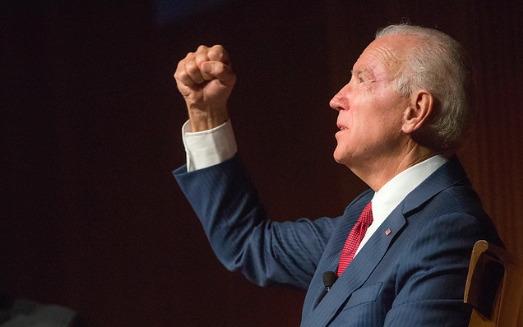
Joe Biden is the winner of the Alaska Democratic Party’s first-ever balloted primary, a mail-in process that replaced traditional caucuses.
A total of 19,759 ballots were mailed back by Democrats statewide, for a 28 percent turnout after the party allowed people to cast ballots for an additional week longer than originally planned.
The party said it mailed 71,000 ballots, and they were due in the party headquarters by April 10.
Joe Biden won 55.3% of the vote, with 10,834 votes. He will be awarded nine delegates. Bernie Sanders won 44.7%, with 8,755 votes, and will be awarded 8 delegates.
Biden, although he won by over 2,000 votes, only netted one delegate more than Sanders for the Democrats’ National Convention.
The Democrats experimented with ranked choice voting, allowing people to rank their top five candidates in the order of preference. The party has not announced who received the third, fourth, and fifth most votes.
Ranked choice voting allows people who pick losing candidates to have their ballots recounted for their next favorite pick, allowing those voters to have their ballots counted twice or more. Alaskans for Better Elections is attempting to have Alaska’s official elections adopt this plan, which was executed during the private party-run process this past month.
Candidates who suspended their campaigns but requested that their votes still be tabulated were reflected in the results, the party said, while candidates who have asked that their votes not be tabulated were not reflected in the results.
Sanders suspended his campaign April 8, but said would still seek delegates to go to the convention.
Democrats will have virtual district caucuses held on April 18 by each of Alaska’s 40 House Districts to choose delegates to go to the statewide convention.
The Alaska Democratic Party’s statewide convention, originally scheduled to be held in Fairbanks on May 15-16, will be conducted online, just as the Republicans held theirs online earlier this month due to the COVID-19 coronavirus pandemic.
During the 2016 Alaska Democratic Caucuses, Bernie Sanders won 81.6% of the votes by participants, to Hillary Clinton’s 18.4%.
Kenai Peninsula Borough Mayor Charlie Pierce is looking toward summer and an eventual end to the shutdown of the coronavirus economy.
Pierce sent a letter to Sens. Dan Sullivan and Lisa Murkowski, Congressman Don Young and Gov. Mike Dunleavy last week, requesting they ask the International Halibut Commission to restore the Southcentral 2020-2021 halibut sport fishing regulations to two halibut per person, per day, and seven days a week fishing allowed for charters, with multiple trips allowed per day.
Sports fishers used to be able to catch two halibut a day in the central Gulf of Alaska. Charter operators would take two groups of six a day — one in the morning, and one in the evening, for a total of 12 customers a day.
But in February, the International Halibut Commission cut the harvests in all areas in the Pacific Northwest to try to build up a dwindling fishery.
Area 3A (Central Gulf of Alaska) was set at one halibut per day for the coming season.
It’s not going to be enough to jumpstart the economy on the Kenai to just allow one halibut a day, Pierce said.
“The restoration of our economy following the COVID-19 pandemic is critical and affects all Alaskans,” Pierce wrote, reminding lawmakers that the halibut charters bring people to the stores, restaurants, hotels, and other businesses all over the peninsula and that tourism is one of the primary industries of the borough’s economy.
“All I’m asking them to do is, in light of the crisis we’re faced with, reconsider the rules, and delay them until 2021 or 2022,” he said.
Eleven new cases of COVID-19 were diagnosed in three Alaska communities – Anchorage (9), Craig (1) and Wasilla (1), since Friday’s midday update. This brings the total case count in Alaska to 257. One person, a 73-year-old woman from Fairbanks, died of causes related to the virus at Fairbanks Memorial Hospital.
Her death brings the total to eight since the first case of the Wuhan coronavirus was announced in Alaska in early March.
Three more Alaskans have been hospitalized with the illness, bringing the total hospitalizations to 31, although most of those are no longer actually in the hospital.
Of the new cases, five are male and six are female. One is under age 10; two are between 10-19; three are between 20-29; one is between 30-39; two are between 50-59, one is between 60-69 and one is between 70-79.
“Our thoughts are with this individual’s family and loved ones,” said DHSS Commissioner Adam Crum. “Every time we lose a life to COVID-19, we pause to reflect on the loss and also to remind ourselves of the importance of staying home to save lives, maintaining physical distance from non-household members, practicing careful hand hygiene and wearing a mask in public settings where social distancing is difficult to maintain.”
A week or so ago, we pointed out San Francisco is banning reusable shopping bags to prevent coronavirus from reaching grocery carts and counters. Today, more cities are jumping on the band wagon.
Again, almost inexplicably, Anchorage is not one of them despite reusable bags being a serious health risk as they brings germs into locations.
Among those calling for a ban on reusable bags are the plastics industry and unions representing grocery workers, who largely have continued to work and are at particular risk. The union representing Oregon workers wants such a ban and a Chicago union has called for an end to a local plastic bag tax.
Massachusetts banned reusable bags last week, while other states, CBS says, including New Hampshire, Colorado, Illinois and Maryland, either have stopped enforcing plastic bag bans or banned reusable bags. Denver is expected to delay a proposed tax on plastic and paper bags until at least 2021 rather than July 1 of this year, David Sachs reports in Denverite.”
In Anchorage, a ban on the one-use plastic bags remains solidly in effect and the use of reusable bags largely is allowed. Anchorage Mayor Ethan Berkowitz suspended the city’s 10-cent fee for disposable paper bags in retail establishments, such as grocery stores.
That fee was supposed to coerce us into bringing our own reusable bags to stores to rid the land of the one-use plastic bags. It was a lousy idea. Three Bears grocery stores temporarily have banned reusable bags because of the health risks.
The Anchorage Assembly should move to do the same and ban use of reusable bags in critical locations and allow the one-time-use plastic bags.
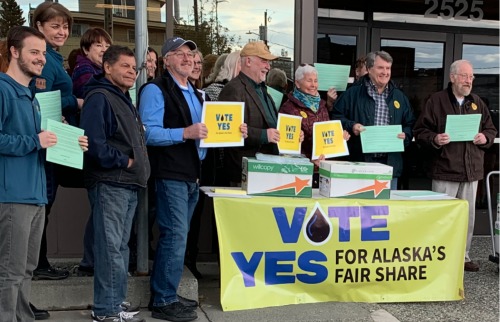
A group of trade organizations has filed a civil complaint against the Division of Elections over the signatures on the Our Fair Share oil tax increase ballot initiative.
Resource Development Council of Alaska, Alaska Miners Association, Alaska Trucking Association, the Associated General Contractors, the Alaska Chamber of Commerce, and the Alaska Support Industry Alliance filed the civil complaint on Friday. Read the lawsuit here:
The allegation is the Our Fair Share proponents hired a company out of Las Vegas to collect the signatures needed for the initiative to appear on a ballot. That company, Advanced Micro Targeting, violated the law by promising signature gatherers that they could expect to get 80 to 100 signatures a day six days a week, and if they did that, they’d get $4,000 a month plus a bonus. They were also compensated with air fare, meals, and hotels.
Alaska law prohibits paying more than $1 per signature on ballot initiatives.
Advanced Micro Targeting is also the subject of a similar lawsuit alleging fraudulent signature gathering in Montana. They have faced lawsuits on local races in other states.
Our Fair Share wants to increase taxes on oil production in Alaska by 200-300 percent. The group is led by the law partner of former Gov. Bill Walker, Robin Brena.
The effort by Brena is another attempt to undo the most recent oil tax reform, SB 21, which passed in 2013, was challenged by Brena in 2014, but was reaffirmed by voters. SB 21 led to an increase in investment in Alaska’s oil patch.
Our Fair Share needed to get 28,501 signatures before Jan. 21, 2020 in order to make the November General Election ballot. They had just 90 days after taking receipt of the petition from the Division of Elections. So they hired Outside signature mercenaries through Advanced Micro Targeting.
Robin Brena reacted immediately on Facebook: “It is not surprising in the least to see the surrogates for the international oil producers standing against Alaskans getting back a fair share of our oil or standing against Alaskans right to vote on it.”
The Alaska Attorney General has in past communications cautioned that the ballot language for this next round of taxation is confusing and could lead to unintended interpretations.
But evidently the language was good enough for the sponsors of the initiative, which include former U.S. Sen. Mark Begich, current State Sen. Tom Begich, former Anchorage Assemblyman Eric Croft, former Gov. Walker deputy chief of staff Marcia Davis, former Rep. Les Gara, U.S. Senate candidate Al Gross, Anchorage Daily News columnist Stephen Haycox, ACLU’s Laura Herman, Rep. Ivy Spohnholz, and Sen. Bill Wielechowski.
‘ATTRACTIVE NUISANCE’ WOULD ENDANGER CITIZENS IN GUSTAVUS
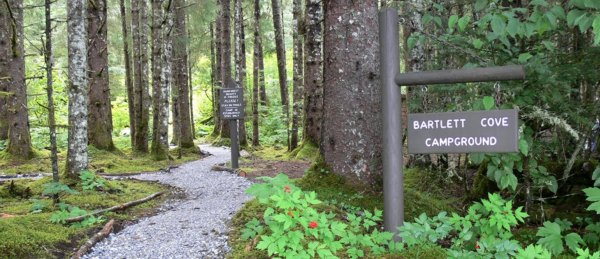
A campground in Bartlett Cove, which serves as a jumping off point for kayakers and explorers of Glacier Bay, has been closed by National Park Service officials.
The decision was made to prevent COVID-19 coronavirus from being spread to the community of Gustavus from Juneau, the town where most visitors travel through on their way to Gustavus, Bartlett Cove, and Glacier Bay. Juneau has had 14 diagnosed cases of the coronavirus.
Bartlett Cove is 10 miles from Gustavus and is the headquarters for the National Park Service operations in Glacier Bay National Park and Preserve. In addition to the campground, there is a lodge run a concessionaire of the Park Service, which normally opens for the summer season, but is currently closed. The area is accessed by boat, or the road to Gustavus, where there is an airstrip used by both commercial and private operators.
“Per State of Alaska Health Mandate 12 that went into effect in late March, travel is prohibited between communities in Alaska except to support critical infrastructure or critical personal needs. The state and City of Gustavus also call for mandatory self-quarantine by individuals entering the state, as well as the community of Gustavus,” according to the National Park Service.
“The dry campground has no handwashing facilities and limited staffing does not allow for routine cleaning of facilities multiple times per day. The park has no control over group composition or origin, or group numbers in tents or sites, and therefore cannot enforce social distancing practices recommended by the Centers of Disease Control and Prevention and mandated by the state.
“If the campground remains open it is an attractive nuisance inviting Alaskans and visitors to travel from their communities to the park and congregate in campgrounds in violation of state mandates,” the Park Service wrote. The closure is effective for 60 days from April 6, 2020.
Earlier this month, the Park Service closed down access to the National Park, and limited use of the dock at Bartlett Cove.
BROOKS CAMP ACCESS LIMITED
The National Park Service has also modified access to Brooks Camp at Katmai National Park. Through July 1, no services outside those that support visitor or resource protection will be available.
The Brooks Camp Developed Area is closed and operations are suspended, including the campground and on-site visitor information and public programs.
Outdoor spaces outside of the Brooks Camp Developed Area remain accessible to the public in accordance with the latest federal, state, and local health guidance. Law Enforcement and first responder services remain accessible.
Police Chief of Seldovia is telling people who own homes in the tiny Kachemak Bay community they are not welcome — to turn their boats around and leave.
Scott Ogan, former legislator, considers Seldovia his legal address, as it’s where he is registered to vote and where he spends much of the year.
But according to the mandate from Police Chief Paul Cushman, if you have a home elsewhere, you should not come to your bug-out cabin in Seldovia.
“People that have a secondary home here and a primary home residence somewhere else, should not be returning to their secondary Seldovia homes right now. It is pretty simple and clearly defined who is allowed to travel,” Cushman wrote.
“I am sure you may have heard that I am contacting people that arrive in Seldovia to make sure they have legitimate reasons to be here that follow the state mandates. This will continue and those found in violation may face consequences for their actions as allowable per the mandates,” Cushman wrote. In other word, fines and arrests.
Ogan said he confronted Chief Cushman and said that he intends to spend the summer there, as he has for years, and as other Alaskans do.
The City of Seldovia collects over $280,000 in property taxes each year from property owners, but for those who are not living there year round, the current message is: You can own a home and pay the property taxes on it to the City of Seldovia. You just can’t actually use it if you are not a year-round resident.
Homer Police Department is taking the COVID-19 mandates seriously. It doesn’t want to have to bust people who gather in groups or violate other state mandates, but it will.
Police are asking for the public’s help in reporting violators.
Chief Mark Robl wrote in a press release that if people want to lodge complaints about others who are not obeying the “hunker down” orders, or who are traveling between communities, they should email [email protected] .
“These mandates are enforced by state and local law enforcement and our focus is on education first,” Robl wrote. But there are penalties, he warned, and people can be arrested.
Must Read Alaska has learned that the Homer police raided and broke up a meeting of Alcohol Anonymous in Homer. Participants say they were practicing social distancing, but were dispersed by police anyway.
Several Alaska medical doctors have reached out to Must Read Alaska with grave concerns about the long-range effects of the national, state, and municipal COVID-19 health mandates. They were responding to a column linked at the bottom of this story.
The doctors who responded said they are concerned about the health of their patients, the health impacts of the generational poverty that current policies are creating, and the very civil liberties of Americans.
But they can’t speak out, because the State can take retaliatory measures against them and their license to practice in the state. Must Read Alaska obtained permission to quote them anonymously.
“This is the largest abuse of power I have ever witnessed in my lifetime,” wrote one Anchorage physician, expressing the sentiments of others in his practice. “And I believe the largest ever in our modern history. Emergency health and safety powers have never been used so broadly or for so long. How dare my government order me not to work indefinitely, or order me not to associate with others out of fear of something I may never have. Many are beginning to talk of class action suits and legal challenges. I pray they go forward.”
“We are destroying our state and our nation for generations. The federal government is focused on propping up the stock market with trillions in fake money, money that didn’t even exist yesterday,” that physician wrote.
Another doctor wrote to Must Read Alaska that breast cancer patients are staying away from needed appointments, and that there could be grave consequences months from now, as Stage 1 cancers become Stage 2 or higher:
“I do a lot of breast cancer surgery, and patients aren’t even coming to my office because they believe they won’t even be considered for surgery, and they’re in fear of getting the virus because of the media generated hysteria. I also have had conversations with some of my internal medicine colleagues who’s patients have presented to the ED with advanced complicated disease because they have been in fear of leaving their homes to seek care for their diabetes and other chronic illnesses. Hospitals are closing, healthcare providers are being laid off or furloughed, nurses are in tears because their hours are being cut. Private practice physicians are going out of business. My hospital is only 30% full,” the doctor wrote.
Still another physician wrote that although the coronavirus is serious, it likely has a mortality rate of under 1 percent, and the current mandates prevent herd immunity.
“The vast majority of people who get this will survive, and may even have minimal to no symptoms. We are hundreds of physicians who, although we have been team players contributing to COVID readiness, adamantly disagree with the current governmental mitigation strategy,” the doctor wrote.
“This strategy is based on the most flawed and false data and prediction models. These projections have changed on a daily basis, and before you say, “well, that’s because social distancing works,” we will remind you that the models touted by experts like Dr. Fauci 1-2 weeks ago suggesting the US would have over a million deaths with strict social distancing were absurd overestimates. Then the experts told us we would suffer 100,000-200,000 deaths from this, and now they say it will probably be around 60,000,” one doctor wrote.
“In fact, the longer term mortality rate that accompanies poverty and despair will be much higher. For every one percent increase in unemployment, there is a mortality rate of 10,000. With this new found government imposed poverty comes higher rates of suicide, domestic and child abuse, suicide, and general poor health and lack of health maintenance.” – Anchorage physician.
“There’s also the psychological effects of a hard working person being told you are a non essential worker, and the only thing you can contribute to this crisis, is to stay at home…how demoralizing. Individuals can and will find ways of keeping their businesses going while protecting the public without a distant government telling them how to. You have robbed them of their ability to do so with these mandates,” the doctor wrote.
While this is just a handful of comments, it’s evident that not all doctors are aligned with the state health mandates that prevent them from practicing medicine during the COVID-19 pandemic.
The opinion column that prompted the responses is linked here: