Backers of a proposed ballot initiative aimed at massively changing elections in Alaska have turned in more than 41,000 signatures in a bid to qualify the measure for this year’s ballot. It needed only 28,000 signatures.
It is discomfiting so many people were duped.
Backed primarily by moneyed Outside interests, the initiative boasts 25 pages of legalese that would radically change Alaska election law. Pushed by Alaskans for Better Elections, it would, among other things, institute ranked-choice voting, open primaries and limit campaign contributions.
Make no mistake, ranked-choice voting is a terrible idea designed to favor independents and the Left. You could end up voting for somebody you would never vote for in any other circumstances. A Republican could end up with his or her vote going to a Democrat. A Democrat could end up supporting a Republican he or she detests.
The Heritage Foundation describes ranked-choice voting as “a scheme to disconnect elections from issues and allow candidates with marginal support from voters to win elections.”
By any standard, California Gov. Gavin Newsom is no right-wing crank. He vetoed ranked-choice voting for runoffs in his state, saying it “often led to voter confusion, and that the promise that ranked-choice voting leads to greater democracy is not necessarily fulfilled.”
As for opening primary elections? Why? Closed primaries replaced onerous behind-closed-doors candidate selection. Open primaries hamstring a party’s ability to choose its strongest candidates and field those who adhere to and support its platform. How does that strengthen the electoral process and offer the best candidates?
Lt. Gov. Kevin Meyer moved to keep the question off the ballot, claiming the myriad extensive changes violate the state constitution’s single-subject requirement for initiatives.
Superior Court Judge Yvonne Lamoureux in October ruled against him and allowed the group to begin signature-gathering. The judge’s decision in under appeal.
If the question makes it onto the ballot, we can only cross our fingers and hope Alaskans finally see it for what it is – a way to dismantle our election system.
It was apparent throughout today’s hearing that no matter what charges a group might lodge — true, false, frivolous, or ridiculous — the voters should have the right to decide on the merits of whether a lawmaker should be recalled in Alaska. It doesn’t matter if the ballot describes falsehoods in its allegations. It will be up to Gov. Mike Dunleavy to essentially run again in a special recall election, and tell people that he did not commit those offenses that are being alleged.
Judge Eric Aarseth issued his ruling today after the Recall Dunleavy Committee and the Attorney General presented their opposing views in Superior Court.
Whatever the allegation are, they are is taken as true, the judge opined. It’s up to the voters to decide “if they are true or not true.” His ruling will be appealed by the governor’s supporters, Stand Tall With Mike to the Alaska Supreme Court.
It was expected that the lower court judge would rule in favor of the Recall committee.
One allegation, however, was struck as false. It said the Legislature was precluded from performing its responsibilities. He said the Legislature could override a veto. But the judge said the other allegations could be interpreted as true.
This court is of the opinion it doesn’t have the discretion to create more stringent definitions” than previous courts, he said.
This story will be updated.
The judge allowed the petitioners to get their next petition from the Division of Elections by no later than Feb. 10, when they can start collecting the 78,000 signatures they will need to place the item on the ballot. The Stand Tall With Mike group said they would ask the judge to stay that decision, although Aarseth had already indicated how he would rule.
Facing a changing media market and less interest in print newspapers by the public, the Juneau Empire has let go two key members of its editorial staff: The staff photographer and the local sports reporter.
Photographer Michael Penn has been with the newspaper since about 1995, and is the longest-serving staff person in the news department. In fact, it’s hard to imagine any editorial department staffer with a longer tenure than Penn in the history of the newspaper, which was founded in 1912 as The Alaska Daily Empire. Nolin Ainsworth has been the local sports and outdoors writer, and he’s now off the roster as well.
“The unfortunate reality, however, is that newspapers of our size can no longer support these dedicated positions,” wrote Robert Monteith, the general manager of the Empire in today’s Friday edition. He went on to acknowledge that the financial pressures would continue without the support of subscribers and advertisers.
In June, the newspaper ceased publishing its print edition on Mondays and rolled the weekly Capital City Weekly into its Thursday edition, basically shutting down the stand-alone publication.
For those who were raised with the Empire, it’s painful to see the capital city newspaper shrink yet again. The newsroom had a staff of 20 when the new millennium started, but is down to four now — an editor and three writers, all of whom are entitled to vacation, sick leave, and an 8-hour day.
Putting out a newspaper under those conditions is going to be a herculean task.
Must Read Alaska publisher Suzanne Downing was the editor of the Juneau Empire when it launched its digital presence on the World Wide Web in the late 1990s.
It will take more than a public corporation to save Alaska’s ferry system
The study commissioned by Gov. Dunleavy concerning future operations of the Alaska Marine Highway System’s (AMHS) is still being finalized for publication.
The delay in releasing the report has generated some angst among ferry critics and advocates alike. But it’s critical that the report is vetted closely, and factual errors and inconsistencies are eliminated before its release.
Win Gruening
The report, created under a $250,000 contract to the Anchorage-based firm, Northern Economics, is expected to identify potential reductions of the State’s financial obligation to AMHS but also include analysis of options available for reshaping the system, such as through a public/private partnership.
Many critical of ferry service cuts have characterized the idea of folding AMHS into a public corporation as the cure-all for what ails the ferry system.
But it’s wishful thinking to believe that a public corporation, by itself, can do this.
Without systemic changes in the state’s transportation plan, re-creating AMHS as a public corporation is akin to re-arranging the deck chairs on the Titanic.
A Juneau-headquartered organization, Southeast Conference (SEC), has been the most ardent proponent of forming a “ferry authority” overseen by a professional board of directors. According to SEC Executive Director, Robert Venables, such a structure “would be better to control costs…and raise new revenue streams.”
Most recently, however, SEC seems more focused on protesting system cuts and promoting costly modifications to vessels. SEC’s advocacy of retrofitting AMHS’s newest vessels, “Alaska Class Ferries” (ACFs) designed as “dayboats”, with crew quarters would negate operational costs savings essential to the long-term survival of the system.
Ferry service frequency should improve when vessels now undergoing winter maintenance and retrofits come back online. But, blindly restoring service to previous levels without substantial reductions in costs is not a solution. Unless AMHS can continue to reduce its operational costs, adding service, especially on low volume runs, will only drive the subsidy back up.
BC Ferries, by comparison, subsidize their ferries at approximately 25%, half of AMHS’s subsidy after its budget reductions.
Ironically, it was a unanimously endorsed Southeast Conference regional plan in 1977 that proposed extending roads where possible, eliminating double crews on most vessels and operating primarily day-shuttle ferries. If that original plan had been fully implemented, it’s likely we wouldn’t be in the fix we are today.
What proponents of adding crew quarters won’t acknowledge is that dayboats with single crews can still be used on longer runs by overnighting vessels in a destination port similar to airline operations today.
Ferry advocates’ insistence that Alaska’s “roads don’t make a profit” and reducing ferry service would be like “shutting down the Parks Highway” is a faulty comparison. 99.5% of Alaska’s vehicular traffic occurs on roads and over 80% of the highway operations/maintenance budget is offset by users through gas taxes and other fees.
In contrast, ferries historically have moved less than 1% of vehicular traffic with only 30% of the operational costs paid by users and 70% subsidized by state general funds.
Roads will always be less expensive than ferries. Despite this, SEC has declined to support the Juneau Access Road Project in upper Lynn Canal that would minimize the need for ferries and allow the system to be downsized, thereby reducing costs.
This project, connecting Juneau with Haines and Skagway, remains the best way to accomplish this. And to lessen the burden on the State, why not consider making the proposed Lynn Canal Highway a toll road?
The 2018 Juneau Access EIS estimated potential daily road traffic averaging 810 cars (counting both directions). Annual highway maintenance was estimated at $2.4 million/yr. A toll of around $8 per vehicle would offset this cost and, when added to the Katzehin-Haines shuttle ferry fare, it’s still under $30 each way for vehicle and driver.
That’s the kind of public transportation improvement that can be realized with a day-shuttle ferry operation coupled with a road extension.
Whether a public corporation would be willing to support increased road access as well as raising selected fares, privatizing some services, and renegotiating labor contracts to help lower ferry subsidies remains to be seen.
Such a balanced approach could garner broad-based support from the Legislature, the Administration and the traveling public.
Win Gruening retired as the senior vice president in charge of business banking for Key Bank in 2012. He was born and raised in Juneau and graduated from the U.S. Air Force Academy in 1970. He is active in community affairs as a 30-plus year member of Juneau Downtown Rotary Club and has been involved in various local and statewide organizations.
Must Read Alaska has had a busy year. We are now the No. 2 online news site in Alaska, the No. 1 newsletter in Alaska, and the new podcast that broadcasts Monday and Wednesdays has had thousands of downloads. Thank you for your support.
If you appreciate Must Read Alaska, please help keep it going. It’s a labor of love for Alaska, to be sure, but it’s far from free to produce. Your donations make it possible to balance out the activist mainstream media with solid news that conservatives are looking for.
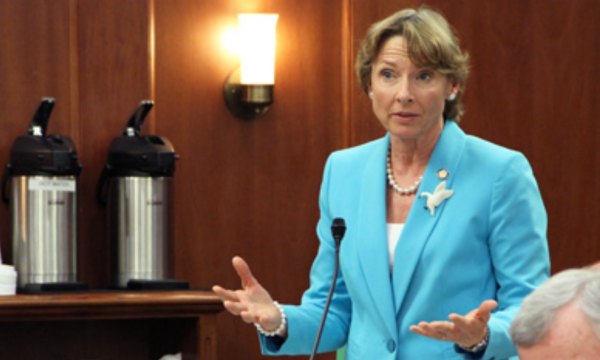
I can’t remember the last time I was up bright and early for a 7 am meeting, but there I was at the Alliance/Resource Development Council breakfast, listening to Senate President Cathy Giessel deliver a presentation on the upcoming legislative session that can best be described as the “same ole.’”
The room was full of movers and shakers, wannabes, politicians, and media. The crowd was polite, but no more, for Giessel, who is the political equivalent and has all the bedside manners of Nurse Ratched.
On the way out I asked a friend, “If she were a Democrat, what would she have said differently?” We agreed that had she been a Democrat she’d have probably railed a bit about increasing oil taxes but otherwise any Democrat would have made pretty much the same pitch.
Speaker Bryce Edgmon was supposed to attend with Giessel, as the two are inseparable these days. But he was a no-show, having begged off for illness. He didn’t need to be there anyway; Giessel did a good imitation of a Democrat.
She couldn’t tell us enough about the wonderful collaboration she has with Speaker Edgmon.
Senator Giessel didn’t give any details but hinted at proposed cooperative agreements with the village or regional corporations for “local control” of education in the rural areas.
For those who know anything about the Indian Self-determination Act, this looks a lot like the scheme in which the federal government gives federal money to tribes and other tribal/Native entities and the entity runs the programs.
Of course, that is precisely what the Regional Education Attendance Areas are supposed to do. Giessel tried to justify it by saying the locals would run it at least as well as the State.
But the State doesn’t “run” rural education; it sets some standards that it barely enforces and sends the money to the local district/REAA, which is exactly the way federal agencies manage Indian Self-determination Act grants and contracts.
My money-laundry detector is going off on this one; if they want to have even less control than the State already has, then they are aiming for no control at all.
Then there was talk of revenue and taxes, taxes, taxes and in this portion we got a cameo from Giessel’s sidekick, Sen. Finance Chair Natasha von Imhof. They were a tag team on the latest revenue fad — the magic $100 billion Permanent Fund.
Giessel says if we stop with that nasty Permanent Fund dividend, we can get the Fund to $100 billion in 14 years, while von Imhof says 18 years. I know people who think we could get most of the way to $100 billion in the corpus with a stoke of the governor’s pen ordering an honest accounting of the money currently in the State’s hands, and sweeping all of the appropriated but unexpended funds, sub-funds of the General Fund, and all the various other funds listed only in the small and obscure print in the Comprehensive Annual Financial Report, if listed at all.
I’ve been saying for years that the State was stuffing money in coffee cans and mattresses. When the Department of Revenue, the Division of Finance, and the Office of Management and Budget gives the Legislature and the plebes that “General Fund Revenue Available for Appropriation” figure, they’re telling you what they want you to know. In fact, there is a whole lot of money laying around out there in various hidey holes and slush funds.
$100 billion in the corpus is purported to be the level at which we can support recurring spending on Permanent Fund earnings alone, at least in good years, with no regard for revenue from other sources.
They whispered a few sweet nothings about that requiring spending limits, but you knew they really didn’t mean real limits.
I’m usually critical of binary propositions; few things are as simple as Door A or Door B, but this is truly a binary proposition: The Republican president of the Senate either thinks we are too ignorant to deal with State finances so she can’t tell us the truth, or legislators are themselves too ignorant and self-absorbed to understand State finances.
I worked for the Legislature awhile and dealt with them I lot; I well knew that if you couldn’t reduce it to three bullet points and give them a plausible deniability strategy if anything went wrong, you weren’t getting anywhere with the Legislature.
I didn’t hear a thing in the presentation that hasn’t been around for the 45 years I’ve been in Alaska. Back in the Gov. Jay Hammond era, the whole idea was to turn oil revenue into the revenue created by the oil revenue. We’ve been talking about who should run rural education since the Seventies. We’ve been talking about whether or not to have an income tax since the first barrel of oil flowed. We’ve been talking about general or special “temporary” sales taxes for just as long.
The people who “run” this State are like the elites in DC: They’re famous for being famous and powerful because they are powerful. And they are clueless.
If you did not catch the presentation, word is Giessel and Edgmon was the program for the Democrats’ Bartlett Club meeting at noon at the Anchorage Senior Center.
Art Chance is a retired Director of Labor Relations for the State of Alaska, formerly of Juneau and now living in Anchorage. He is the author of the book, “Red on Blue, Establishing a Republican Governance,” available at Amazon.
Sen. Lisa Murkowski defied expectations and surprised critics today by giving her full-throated support of the drone strike ordered by President Trump that killed Iranian Gen. Soleimani.
Murkowski, who at key times has stood in opposition to Trump, issued a statement of support and agreed to cosponsor a resolution to back the president:
“I am pleased to support Senator Cruz’s resolution commending the President and the men and women of the United States Armed Forces and intelligence community for the successful operation against Qasem Soleimani. It has long been known that General Soleimani and the Iranian Quds Force are dangerous and destructive members of one of the largest terrorist groups in the world. For decades the U.S. attempted to dissuade Soleimani and the Quds Force from continued aggression against the U.S. and our allies. They are responsible for the deaths of hundreds of American servicemembers and repeated attacks on American facilities, including the horrible and unacceptable attacks on the U.S. Embassy in Baghdad that recently took place.
The actions taken by the U.S. military and intelligence community at the charge of the President were significant, decisive, and eliminated one of the greatest threats to peace in the region. The precision and professionalism of our men and women in uniform and throughout the intelligence services demonstrates why we are all grateful for their service. – Sen. Lisa Murkowski
“Through collaboration and continued briefings with my colleagues, the administration, and members of the military community, I hope to find a path forward to de-escalation,” Murkowski wrote.
Democrats in Congress have been critical of the killing of Soleimani. Sen. Chuck Schumer said, ‘We do not need this president either bumbling or impulsively getting us into a major war.”
The House of Representatives, on a party-line vote, adopted a war powers resolution to try to limit the ability of the president to take further military action against Iran. It passed 224-194, with Congressman Don Young voting against it.
Speaker Nancy Pelosi said, “Last week, in our view, the administration conducted a provocative disproportionate airstrike against Iran which endangered Americans, and did so without consulting Congress,” Pelosi said at her weekly press conference.
Murkowski didn’t issue an immediate statement, but rather she waited because she knew Sen. Cruz was working on a resolution that she wanted to cosponsor.
The resolution is similar to that which passed after Osama bin Laden was killed in a raid by Seal Team Six, at the direction of then-President Barack Obama. That resolution, offered in 2011, passed unanimously in the Senate with all 100 senators voting in favor of it.
Senator Cruz’ resolution has 43 cosponsors, including Sen. Murkowski, and Sen. Dan Sullivan of Alaska. The others include:
Sen. Cruz was joined by 43 original cosponsors: Sens. Tom Cotton (R-Ark.), Martha McSally (R-Ariz.), Kevin Cramer (R-N.D.), Lindsey Graham (R-S.C.), John Barrasso (R-Wyo.), Marco Rubio (R-Fla.), John Cornyn (R-Texas), Cindy Hyde-Smith (R-Miss.), Roy Blunt (R-Mo.), Pat Toomey (R-Pa.), Roger Wicker (R-Miss.), Joni Ernst (R-Iowa), John Hoeven (R-N.D.), Thom Tillis (R-N.C.), Shelley Moore Capito (R-W.Va.), Rick Scott (R-Fla.), Steve Daines (R-Mont.), Mike Braun (R-Ind.), Josh Hawley (R-Mo.), John Kennedy (R-La.), Kelly Loeffler (R-Ga.), David Perdue (R-Ga.), Marsha Blackburn (R-Tenn.), Ben Sasse (R-Neb.), Deb Fischer (R-Neb.), Pat Roberts (R-Kan.), Jim Inhofe (R-Okla.), Chuck Grassley (R-Iowa), John Boozman (R-Ark.), Rob Portman (R-Ohio), Jim Risch (R-Idaho), Ron Johnson (R-Wis.), Mike Rounds (R-S.D.), James Lankford (R-Okla.), Bill Cassidy (R-La.), Mike Enzi (R-Wyo.), Tim Scott (R-S.C.), Richard Shelby (R-Ala.), Mike Crapo (R-Idaho), Cory Gardner (R-Colo.), and Senate Majority Leader Mitch McConnell (R-Ky.).
Congressman Don Young issued a statement in support of the president:
“Qasem Soleimani was a terrorist who committed heinous atrocities and facilitated human rights abuses against the oppressed people of Iran. Freedom-loving people everywhere shed no tears for his loss, and our world is a safer place without him. America’s military is strong and stands ready to defend our citizens, allies, and way of life against further aggression by the Iranian regime. I am grateful for President Trump’s strong leadership as the world comes together in support of the Iranian peoples’ pursuit of liberty.”
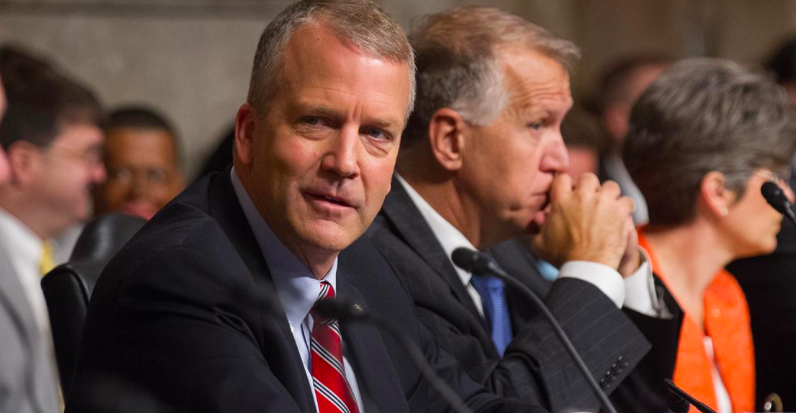
Sen. Dan Sullivan, interviewed on Fox, also voiced his strong support of the president’s decision:
CHIEF OF STAFF SCOTT KENDALL USED SEAL ON NGO TALKING POINTS
CNN and Alaska blogger Dermot Cole are breathlessly pounding their chests because the Pebble Partnership gave the Dunleavy Administration suggested talking points about the history of the project — talking points that were then used to help inform the White House about progress made in the permitting process, and the steps yet to be taken.
“Gov. Mike Dunleavy’s office was given detailed talking points, ghostwritten letters and advice on lobbying strategies by Pebble Limited Partnership executives, emails show. Dunleavy and his office then used that material, sometimes adopting the company’s language word for word, in an effort that culminated in President Donald Trump promising favorable action on the mine, according to emails…” wrote CNN.
The headline said the collaboration was “secret.”
Except it wasn’t — the public records made by environmental groups and delivered to CNN reporters gave reporters all they felt they needed to know, because it was not secret to begin with. It was not redacted or withheld, but delivered upon request.
Why? Because Gov. Dunleavy has not been secret about his intent to stand up to the EPA about its unfair process under policy set by the Obama White House and the governorship of Bill Walker, who slow-rolled every state decision on Pebble.
If you read the mainstream media or D. Cole, a “resist” activist who writes regularly for the Fairbanks News Miner and other mainstream publications, you’d get the impression that using white-paper talking points is somehow a bad thing.
And yet, it’s quite common. Talking points are given to governors all the time from subject experts. It’s called information sharing. Gov. Walker used talking points provided to his office by Criminal Justice reform advocates when he signed SB 91 into law, for instance.
And that brings us back to Gov. Walker. What is uncommon is for a Governor’s Office to put a State Seal on a white paper written by environmental groups.
This is exactly what happened under the Walker Administration, yet the mainstream media — CNN, Dermot Cole, etc. — was dead silent.
The document that the former governor put the State Seal on? It was titled “Alaskans Celebrate: EPA Right to Keep Bristol Bay Protections in Place,” and was a clear message to the public that the State of Alaska had taken a position against the Pebble Mine and against allowing the company to apply for a permit.
It was not written by the Governor’s Office, but was provided to the Governor’s Office. And it was jointly issued with the State Seal affixed:
This use of the State Seal on an anti-Pebble Mine talking-point paper occurred under the guidance of former Chief of Staff Scott Kendall, who is now the lead attorney for Recall Dunleavy Committee, the group trying to get Gov. Mike Dunleavy recalled. Kendall will appear in court tomorrow in Anchorage to try to advance his group’s recall petition to a special election.
Kendall, who once again represents anti-Pebble organizations, had previously done extensive legal work for groups fighting the Pebble Project and had never recused himself in any decision making when he became chief of staff to the governor.
In the Walker-Obama era, this was standard operating procedure. It was acceptable for environmental groups to collude behind the scenes with the EPA to disenfranchise the Pebble Partnership from being allowed to participate in the fair permitting process under the Clean Water Act. The EPA simply told Pebble that it could not even apply for a permit. It, alone among any projects in America, would not be allowed to approach the imperial throne.
Now, the Dunleavy Administration is simply requesting is that the EPA does what it says it would do under the Trump Administration, which is to remove the pre-emptive vetoes that circumvent the public process. Let the project advance or be denied on its merits.
What the public isn’t being told by CNN is that the news organization received this story, practically turnkey, from the National Resources Defense Council and that it has no intention of being fair in its reporting on Pebble, on the Trump Administration, or on America. CNN has revealed itself once again to be wedded to the Left and beholden to its talking points.
Kris Warren announced today he is running for the position of Alaska Republican Party national committeeman. The election for the national committeeman and committeewoman will take place during the party’s State Convention in Juneau, April 2-4.
The national committeeman is one of three Alaska seats on the National Republican Committee, which is the political committee that leads the Republican Party.
The position is held by former Alaska GOP Chairman Peter Goldberg, who recently announced that he will not seek another term.
Kris is chairman of District 23, Anchorage, of the Alaska Republican Party.
Kris and his wife, Dawn Linton-Warren, have remained active in party activities for several years, hosting and organizing a number of fundraisers for the party, individual candidates and incumbents. He is a gold member of the Alaska Republican Party’s Freedom Club, and attended the 2016 National Convention in Cleveland. The Warrens have attended two RNC quarterly meetings at the national level and will attend the next meeting in Miami later this month.
Kris said his goal is to primarily assist ARP Chairman Glenn Clary and National Committeewoman Cynthia Henry in raising funds for the party as well as local and national candidates and to help get Republicans elected.
Mike Tauriainen, chairman for GOP District 29 Kenai, longtime activist, and a 2016 a delegate to the Republican National Convention, said he is considering running for the national committeeman post and that he and his wife, Kay, are still discussing it.
Cynthia Henry, national committeewoman, announced she would be running for reelection for that post. She has served in the role since 2016.