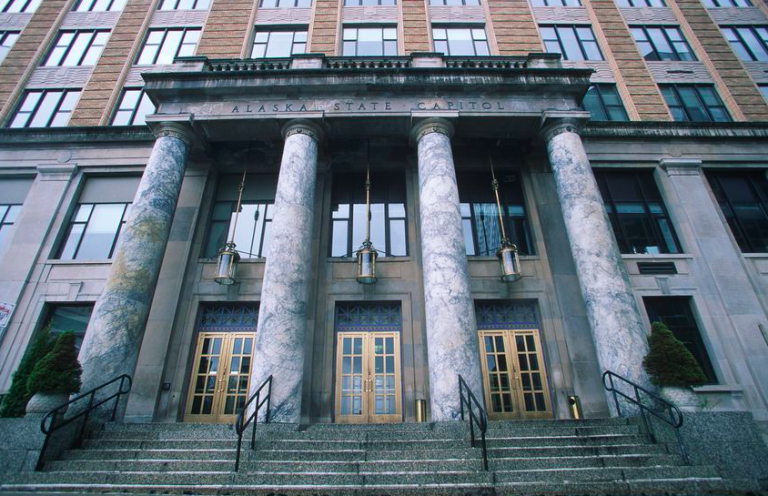
The State of Alaska has joined the Texas lawsuit on election integrity.
“Alaska submitted a letter to the United States Supreme Court that adds Alaska to the list of amici states supporting Texas in its lawsuit against lawsuit against Pennsylvania, Georgia, Michigan, and Wisconsin,” the Department of Law said in a statement.
“I agree with the attorney general that the integrity of this election is a critical bedrock principle of our republican form of government,” said Gov. Mike Dunleavy. “There are too many critical questions that need to be answered to give the American people confidence that their vote counts.”
“Signing onto cases such as this should never be taken lightly. While this case concerns election integrity, it also has an impact on state’s rights. As Alaskans, we should all be careful about involving ourselves in the inner workings of other states. However, the issue of election integrity impacts all of us, and the question of free and fair elections must be answered in order for all Americans to have confidence in our system. We hope for an expedited decision from the Supreme Court,” Dunleavy said.
Alaska becomes the 18th state to back the lawsuit against Georgia, Pennsylvania, Wisconsin, and Michigan for violating election laws.
Six states are signed onto the lawsuit Thursday: Missouri, Arkansas, Louisiana, Mississippi, South Carolina and Utah.
The amici brief was filed Wednesday by the attorneys general of 17 states where Trump was the projected winner involved Missouri, Alabama, Arkansas, Florida, Indiana, Kansas, Louisiana, Mississippi, Montana, Nebraska, North Dakota, Oklahoma, South Carolina, South Dakota, Tennessee, Utah, and West Virginia.
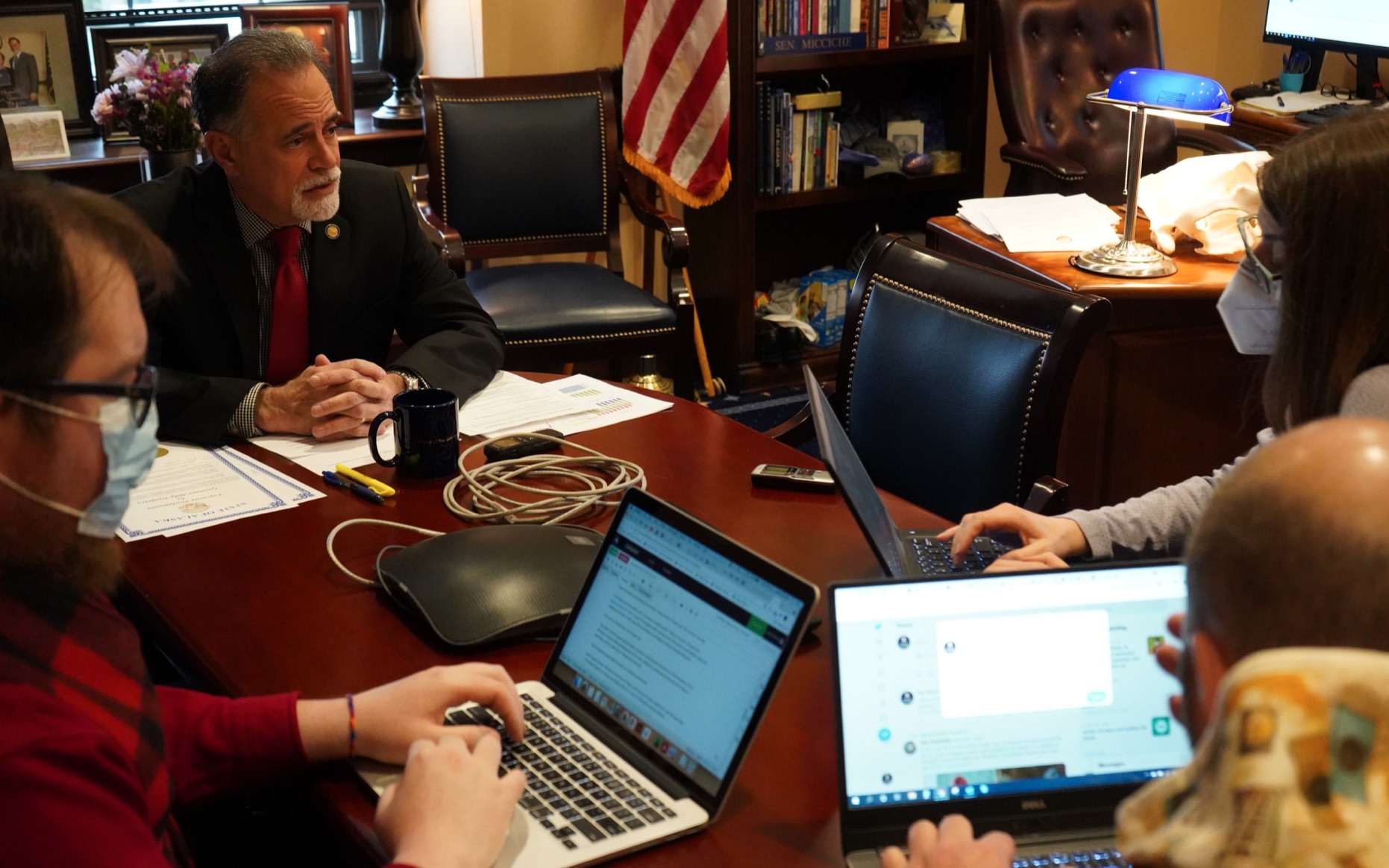
The Municipality of Anchorage appears to want to make an example of activist Dustin Darden, who is involved in a legal action to recall the acting mayor. They’ve now arrested him twice for trespassing on public property.
On Tuesday, Darden was arrested and removed from an Assembly meeting, after shouting at the Assembly for its actions on emergency orders that have shut down commerce in Anchorage.
But then on Thursday, he was cited again for trespassing for an incident that happened on Monday.
On Dec. 7, Darden showed up at a joint meeting of school board and the Assembly at the Boniface Education Center. When he realized there was no meeting at that location, he left. The meeting had been moved to Zoom. On the ASD website, however, the meeting was noticed for the Boniface location.
It was Thursday when Anchorage police showed up at his workplace and issued him a notice of trespass for the Monday incident. The court file at this point says he remained on the property after being told to leave, but that is not his recollection of the events.
Darden frequently testifies at public meetings in Anchorage and is often passionate and loud in his testimony. His supporters say that he is expressing some of the anger that is felt by Anchorage residents who feel their government is oppressive.
He and David Nees on Thursday had filed a lawsuit to force the City Clerk to give them a recall petition so they can work toward recalling Acting Mayor Quinn-Davidson and Assembly member Kameron Perez-Verdia.
Darden has cited Alaska Statute 11.76.110, which makes it a Class A misdemeanor for someone to interfere with someone else’s constitutional rights.
AS 11.76.110 states: A person commits the crime of interference with constitutional rights if
(1) the person injures, oppresses, threatens, or intimidates another person with intent to deprive that person of a right, privilege, or immunity in fact granted by the constitution or laws of this state;
(2) the person intentionally injures, oppresses, threatens, or intimidates another person because that person has exercised or enjoyed a right, privilege, or immunity in fact granted by the constitution or laws of this state; or
(3) under color of law, ordinance, or regulation of this state or a municipality or other political subdivision of this state, the person intentionally deprives another of a right, privilege, or immunity in fact granted by the constitution or laws of this state.
(b) In a prosecution under this section, whether the injury, oppression, threat, intimidation, or deprivation concerns a right, privilege, or immunity granted by the constitution or laws of this state is a question of law.
(c) Interference with constitutional rights is a class A misdemeanor.
In a related incident, Must Read Alaska’s coverage of Darden’s initial arrest prompted Assembly member Chris Constant to accuse her of trying to have the Assembly killed.
Constant had been caught on hot mic saying that Darden needed to be thrown out of the meeting, and Assembly member Pete Petersen, also on hot mic, said Darden needs to be “86’d.”
Gov. Mike Dunleavy’s conservative base wants him to sign on as a “friend of the court” in the Texas Attorney General’s lawsuit against four states, which changed their voting rules in the middle of the election cycle.
But that ship has sailed. Dunleavy wrote on social media that his administration became aware of the invitation to join the election lawsuit on the evening prior to the deadline.
And there was just no time to give it serious consideration. His administration views such an action through a federalist lens, not wanting other states, such as New York, to turn around and meddle in Alaska’s sovereign elections.
“I, along with Attorney General Ed Sniffen and his staff, worked quickly to try to understand the merits and intended outcome of the case. Before we could make a decision, the short deadline to join the case had passed.
“As governor of Alaska, I have an obligation to thoroughly understand the facts at hand before committing to such a suit.
“I’ll be the first to admit that I was disappointed that we didn’t have enough time to thoroughly review the details. Had this not been the case, we may have come to a different decision.
“Regardless, I will be watching the suit carefully. Electoral integrity remains a cornerstone of our democracy, and every American should know that their vote matters,” he wrote.
In fact, Alaska has election problems of its own and may want to “stick to its knitting.”
A lawsuit against the Division of Elections by a group of citizens in District 27, is challenging the decision of the Alaska Supreme Court to order an injunction prohibiting the requirement of a witness signature on absentee ballots for the General Election, due to COVID-19. The election is all about election integrity, which the group says has been broken in Alaska.
Five Republican lawmakers have requested the governor join the Texas lawsuit in some capacity, and comments on Must Read Alaska stories indicate dissatisfaction for him not having done so, after 17 other states and the president had formally joined in the effort to scrap the elections of Michigan, Wisconsin, Georgia, and Pennsylvania.
The lawsuit by Texas AG Ken Paxton alleges those states ’ “failure to follow and enforce state election laws during the 2020 election.”
The Texas lawsuit seeks to delay the appointment of presidential electors in the four states while allegations of fraud and violations of law can be investigated.
Texas lawsuit detail
Texas is challenging the way that four states conducted their elections in 2020. Texas claims that the election in these states was flawed because:
Signature-verification requirements were abolished or undermined in Pennsylvania, Georgia, and Michigan;
Ballots were not handled in a secure manner in Pennsylvania, Michigan, and Wisconsin;
Mail-in ballots were treated differently in different areas of each state;
Bipartisan observers were excluded in certain counties;
The Pennsylvania Supreme Court extended the deadline to receive mail-in ballots.
What is Texas’ Legal Argument?
Texas’s main argument is that the Electors Clause (Article II, Section 1 of the U.S. Constitution), which says Presidential electors will be appointed “in such Manner as the Legislature [of the state] may direct,” prohibits non-legislative actors from modifying election procedures during any presidential election.
Texas alleges that non-legislative actors in each of the four states have altered important statutory provisions enacted by the state’s legislature, and that only the legislature can make rules governing the conduct of elections for federal office.
These alleged alterations, largely justified based on the pandemic, were made either unilaterally by officials, through the settlement of lawsuits, or by a state’s highest court after litigation.
What does Texas Want?
Texas asks the U.S. Supreme Court to deem the presidential election results in those states unlawful and remand the issue to the states’ legislatures to choose presidential electors.
Texas also asks the Court to delay the electoral college vote pending the outcome of this lawsuit.
Other Challenges to this Conduct.
Many of the allegations in the lawsuit about unlawful modifications to elections procedures have been brought up in other cases, including in the case challenging a Pennsylvania Supreme Court decision in which the U.S. Supreme Court denied a stay.
Anchorage Assembly member Christopher Constant has accused Must Read Alaska publisher Suzanne Downing of trying to get the Assembly “killed.”
In a bizarre Twitter response on Wednesday, Constant replied to a criticism by a left-leaning commentator who was critical of a Must Read Alaska story detailing Dustin Darden’s arrest at the Tuesday Anchorage Assembly meeting.
“She’s literally trying to get us killed,” Constant wrote in his response. Literally.
The article in question focused on Assembly Chairman Felix Rivera’s double standard when enforcing rules of decorum in the Assembly meeting room.
During the summer, Chair Felix Rivera tolerated two transgenders who conducted a lie-down protest in front of the dais.
The report on the incident involving Darden provided readers context for the Assembly’s liberal majority cracking down on conservative viewpoints and criticism.
The tweet sheds light on Constant’s continuing lack of self-awareness, extending beyond his behavior at Tuesday’s Assembly meeting, when he complained that the public was using his name in testimony and pointing.
On numerous occasions, Constant has shut down public testimony critical of his job performance or public policy positions, only to criticize the public sanctimoniously.
In June, he badgered a rabbi in Anchorage by asking him if he agreed that putting the homeless behind a fence would be a good final solution to the Anchorage problem of homelessness. He later apologized.
Now, Constant is accusing a citizen journalist of provoking murder. It’s not the first time he has singled out Downing. Years earlier, he called her the C-word on Facebook, apologizing a few days later after being criticized by women on Facebook.
Anchorage activists Dustin Darden and David Nees today completed legal filings on two recall petition applications that were denied by the Anchorage Municipal Clerk.
The two are challenging the rejection of their request for petitions to recall Assembly members Austin Quinn-Davidson, who is now the acting mayor, and Kameron Perez-Verdia.
“The recall rights in the Alaska Constitution are a basic right and the clerk has infringed on it,” Nees said. “The Constitution states that all political power resides in the people.”
One of the main gists of the recall allegations is that both Quinn-Davidson and Perez-Verdia were derelict in their fiduciary responsibility as it pertained to the federal CARES Act funds the municipality received.
Austin Quinn-Davidson, Kameron Perez-Verdia
Darden and Nees allege that Kate Vogel, the Municipal Attorney, advised the Assembly how to do a workaround of federal prohibitions on spending CARES Act funds.
“The Inspector General was very specific on how the money could be spent, and it had to be spent according to the guidelines (See exhibit 3). Assembly member Quinn-Davidson in conjunction with other members decided to reallocate the funds to skirt the prohibition. They revised the Ordinance to funnel the funds into the Police and Fireman Reserve and use the reserve money to purchase the buildings. (See exhibit 4)”
According to the complaint, the courts have numerous times stated that the review of the grounds for a recall is to be construed liberally. In this aspect, the complaint cites the case against Division of Elections Director Gail Fenumiai by the Recall Dunleavy Committee, when Judge Eric Aarseth concluded:
“… noting that the recall is a political process and that prior recall cases show that the current claims are sufficient to get the issue in front of voters.” As for the damage done by the governor’s actions, Aarseth said that’s something for the voters to weigh if the recall reaches a vote.
“This is a political process. Neither side, as you would be at trial, is limited to a particular day or a certain number of hours or even limited to evidentiary rules as to what they can present when they campaign, if the recall ballot is eventually issued. In that campaign, they have the ability to explain to the public what the allegations and defenses mean, and what the evidence is or the lack thereof to support each sides’ position. The point is, is that it really only takes a single sentence with a few words to adequately put a person on notice of the conduct that is being alleged.”
According to Nees, the failure to include the implications from Recall Dunleavy v. State of Alaska in their review is a fatal flaw in the advice given to the Municipal Clerk by Municipal Attorney Vogel.
“The attorney also relied on the current, and probably unconstitutional review process” for the Municipality of Anchorage, Nees wrote.
Darden is the activist who the Anchorage Assembly Chair Felix Rivera had hauled out of the Assembly Chambers on Tuesday in handcuffs. The Municipality of Anchorage had the police arrest him and is charging him with trespassing during a public meeting; he has an arraignment date of Jan. 12.
Case numbers 3AN-29-09618 and 3AN-20-09636 have been assigned to Anchorage Superior Court Judges Gregory Miller and Josie Garton.
Nees, a retired math teacher who is acting as his own counsel, split the cases into two to prevent the Municipality from objecting that the cases are combined, thereby further delaying the recall effort and frustrating the applicants, but the cases will likely be joined into one by the court, as they are identical.
MUNI ATTORNEY EXPLAINS: NEW COURT HAS NEW FOCUS ON RIGHTS
By SCOTT LEVESQUE
Anchorage’s acting mayor retained her authority on Tuesday to keep the city’s economy locked down for the rest of the month.
Emergency Order 16 is on the books until at least Dec. 31 after an effort by Assembly members Jamie Allard and Crystal Kennedy failed to wedge open the strict business and personal freedom sanctions from the Administration.
Assembly members directed questions at the Austin Quinn-Davidson Administration about EO 16 and its effectiveness. After all, Assembly member Kennedy pointed out, Quinn-Davidson appears to have followed all of her own mandates and protocols, but she still came down with COVID-19.
When asked by Assembly Member Kameron Perez-Verdia whether the virus can be even controlled, Heather Harris, the director of the Anchorage Health Department, said it can, in fact, be controlled.
“Yes,” she said. “There’s ample research that shows that some of our primary mitigating factors is around wearing a mask, maintaining a distance, and washing your hands.”
“And so, as we evaluated options in these emergency orders it was really important to come back to that, and these measures are all informed by that baseline context around being able to maintain mask usage, keeping our distance, and washing our hands,” Harris said.
Harris’s explanation aligns with the CDC’s recommendations for reducing transmission in densely populated areas: Hand washing, masks, and social distancing are the main preventatives to lowering transmission.
If hand washing, masks, and distancing are the most critical factors in controlling the virus, why is Anchorage locking down its businesses? Assembly member Allard probed that riddle in a number of her questions of the Administration.
Allard, an opponent of the lockdowns, also asked the Administration why churches are allowed to be open (which Allard supports) while many congregations are clearly not following the restrictions outlined in Emergency Order 16. She was pointing out the regulatory dissonance in the order.
Harris summarized the emergency order’s recommendations for churches. Municipal Attorney Kate Vogel interjected during Harris’ response to expound on why the municipality is easing off of churches — it’s because of the U.S. Supreme Court’s shift back to the constitution, she said.
“With the new makeup of the United States Supreme Court, they did change course a little bit from where they’d been in the spring when they had Ruth Bader Ginsburg on the bench,” Vogel said.
“There is a new makeup of the court, and they elevated, as I said, the importance, the constitutional importance, of being able to gather for the purpose of worship.”
Assembly member Kennedy followed up with a comment that controlling the virus is not apparently working, arguing that closing down businesses within the Municipality only drives Anchorage residents to spend their money elsewhere — including the Valley — further damaging Anchorage’s own economy.
Attorney Vogel responded, saying it is Gov. Mike Dunleavy’s fault that people in Anchorage are going to the valley to shop and dine:
“I think, from a legal standpoint, I can only say we have a certain jurisdiction, and we can do what we can to stop spread within our jurisdiction. The governor could be taking stronger action. It [mask mandate] would be statewide, and it would alleviate some of these concerns about people going to the lowest common denominator in terms of finding the place with the least restriction and doing their shopping there.”
With that, the Municipal Attorney of Anchorage had just called the Matanuska-Susitna Borough the lowest common denominator because it doesn’t have a mask mandate or business closures.
Among other edicts, EO16 mandates that everyone in Anchorage limit their outings and physical contact with those outside their households. Gatherings are limited and people are to wear masks when in public.
Most damaging to livelihoods is that restaurant and bars are closed except for curbside pickup and delivery, and all businesses are ruled by EO 16’s reduced occupancy mandates.
Assembly member Meg Zaletel, who is the subject of a recall attempt, said she could not support the amendment to remove a number of restrictions, because it “doesn’t feel strategic in nature.”
A group of voters in House District 27 has filed a challenge to the recount that was done in the General Election race, where UAA Professor Liz Snyder won over incumbent Rep. Lance Pruitt by 11 votes.
The group also filed a separate lawsuit challenging the decision of the Alaska Supreme Court to order an injunction prohibiting the requirement of a witness signature on absentee ballots for the General Election, due to COVID-19.
In the first case, the group alleges that a voting location in Precinct 915 was suddenly changed from Muldoon Towne Center to Begich Middle School. It was the second change of polling place. There was little notice and many voters were confused about where to vote. This precinct typically has been supportive of Rep. Pruitt over several elections.
The plaintiffs say that state law mandates that the Director of the Division of Elections must publish notices when voting locations are changed, putting the notices in a newspaper of general circulation, and in other places as well, and include the information in the final election pamphlet. That did not happen.
As a result of of the change of voting location, voters were disenfranchised, not given equal protection guaranteed by the 14th Amendment of the Constitution.
The other lawsuit, an election integrity complaint, says at least one voter had returned two ballots, one using his first name and one using his middle name. The lack of a requirement for a witness signature is a case of the courts making election law, something that only the Legislature can do.
Following what the plaintiffs are calling an unconstitutional elimination of the witness signature by the courts, the suit says the Division of Elections failed to develop a procedure for review of the signatures to ensure that the person casting the ballot signed the certificate.
The group is hinting it was unconstitutional given the recent Texas lawsuit against four states — Georgia, Pennsylvania, Michigan, and Wisconsin — where similar mid-election changes were made. The group has not sought review or injunction for the witness signature requirement.
The group, represented by elections lawyer Stacey Stone, is asking for a new election to be held in the District.
For the State of Alaska, Margaret Paton-Walsh has been assigned to defend the State.
The election integrity case will be of high interest to conservatives in Alaska, and may find its way to the U.S. Supreme Court.
Mat-Su Valley Reps. George Rauscher and Colleen Sullivan-Leonard today requested Gov. Mike Dunleavy and Acting Attorney General Clyde Sniffen, Jr. to join in a lawsuit with Texas against the states of Georgia, Pennsylvania, Michigan, and Wisconsin, due to violations of their own election laws that led to a win for Joe Biden.
That makes five Alaska lawmakers altogether who have put in a request to Gov. Dunleavy to join the lawsuit.
“There are major concerns by the people in the great State of Alaska regarding the recent elections. Irregularities in the election process in other states have … stripped all U.S. citizens of their constitutional, and legal, right to fair and just election for the presidency of the United States of America,” the two wrote.
“As pursuant to our oath of office to defend the Constitution of the United States of America and that of State of Alaska we, the undersigned, ask that you do the same, and support Texas in suing the States of Georgia, Michigan, Wisconsin and the Commonwealth of Pennsylvania for unconstitutional irregulates in the recent election process.
“Amongst other items, the suit asks the Supreme Court of the United States of America to extend the December 14, 2020 deadline for certification of presidential electors so that investigations into the irregularities can be completed by asking the court to ‘enjoin the use of unlawful election results without review and ratification by the defendant states’ legislatures.”’
The election statues were disregarded by courtrooms not only before, but also while the election was already in progress, which resulted in opportunities for fraud, the letter stated.
On Tuesday, three lawmakers from the Kenai Peninsula sent a letter to the governor — Reps. Sarah Vance, Ben Carpenter, and Rep.-elect Ron Gillham.
Seventeen states and Donald Trump have joined in the lawsuit, which University of Texas Law Professor Texas Steve Vladeck calls a stunt “relying on an obscure source of the Supreme Court’s power — its ability to hear disputes between states immediately without having them go through lower courts, known as “original jurisdiction.” But the claim at the heart of the suit has nothing to do with interstate relations — like a border dispute or litigation over water rights. Nor does it have anything to do with fraud. Rather, Texas is arguing that coronavirus-related changes to election rules in each state violate the federal Constitution, never mind that most states (including Texas) made such changes this cycle.”
Neither Assembly member realized their mics were still hot.
And so he was removed. Dustin Darden, activist and frequent candidate for office, was ejected from the Loussac Library’s Assembly Chambers.
Darden was not only removed, he was taken away in handcuffs by armed police after an outburst at the public podium, in which he blasted the Anchorage Assembly for not honoring the wishes of the public concerning economic sanctions on businesses.
Darden has been a participant at Assembly meetings for many years. He has never cussed while at the podium. He has never gotten violent. When the mask requirement was enacted in the chambers, he simply wore a cardboard box over his head in protest.
Darden is active as a sponsor of two petitions to recall members of the Assembly.
No one ever remembers him being kicked out, much less in handcuffs. Former Mayor Ethan Berkowitz used to take a time-out and chat with Darden in the back of the room, man-to-man.
But during the dire shutdowns and the new behavior rules the mayor and Assembly have imposed in recent months due to its fear of the COVID virus, Darden has become more strident at times.
On Wednesday night, he was agitated because of the way the Assembly had treated a previous member of the public, who had yielded a portion of her three-minute time to Darden.
Assembly Chair Felix Rivera had lectured the woman about being respectful. Here’s the tape:
Rivera shut the mic off immediately after Darden started yelling from behind the Plexiglas screen that has recently been installed to protect the assembly from the spittle of the public. That triggered Darden.
Darden raised his voice louder. He was shouting, pounding the podium and demanding the Assembly reverse the crushing shutdown orders against the Anchorage business community.
Rivera called security to have Darden removed. And then, as if by magic, the police arrived. They approached Darden, who had taken his seat, and they talked to him. Then Darden rose, put his hands behind his back, and was escorted out the side door.
The government-controlled audio of the meeting was shut off for several minutes while the incident took place. There is no question that Darden was out of order for a public meeting, but did they need to call the police, the members of the audience wondered.
After all, Rivera this summer allowed two men to lie in front of him during an entire meeting. The men were protesting. And Rivera allowed a Black Lives Matter protester to yell profanities at the Assembly in a loud voice this summer, and only thanked the man for his testimony.
But Darden is someone Chair Rivera has no tolerance for.
“Every business owner in Anchorage owes Dustin Darden a thank you. He consistently shows up every single meeting fighting for them when they won’t even show up for themselves,” said Bernadette Wilson, a civic activist who also shows up at meetings and who has organized rallies, and who has also pointed at the Assembly members and yelled at them without being called out of order.
Darden was never booked, and it appears he was not charged either. But the speed that police showed up to haul him out of the Assembly Chambers was impressive to those witnessing the spectacle.
During another section of testimony by the public, Assemblyman Chris Constant also objected to citizen Tim Rooney, who was making fun of the Assembly, as he described the types of themed sandwiches that local restaurants have made in honor of them, such as “Recall Rivera Sandwiches,” and “Curmudgeon Constant Croissants.”