Having second thoughts about signing the Recall Dunleavy petition during the past two years? Don’t want your name made public after the recall petition is filed?
You are not be the only one. So many people have contacted the Keep Dunleavy campaign about “signature regret,” that a few days ago it launched a quiet website: RemoveSignature.com.
The way it works is that if you enter your name, email, and birthdate at the site, it will send an official letter to the Division of Elections asking that your name be removed from the petition, if and when the Recall Dunleavy petition is ever filed with the office.
The recall group has acquired about 58,000 signatures of the 71,252 it needs to move forward with a vote of the people. Data analytics shows the group is gaining fewer than 50 signatures a day, and it has been at the signature gathering process for nearly two years. It looks like it will take the rest of the year for the group to get the signatures it needs to move forward, which would put the special election into Spring of 2022, a few months before the August primary, when Gov. Mike Dunleavy will be, presumably, running for reelection.
All that is required to remove your name from the petition is the letter that is automatically generated and submitted by the RemoveSignature.com page. It’s the exact same form people can use by going directly to the Division of Elections.
But the key is that your letter must be received by the Division of Elections before the recall petition is filed. Once it’s filed and the names are certified, the names remaining on the petition become public record.
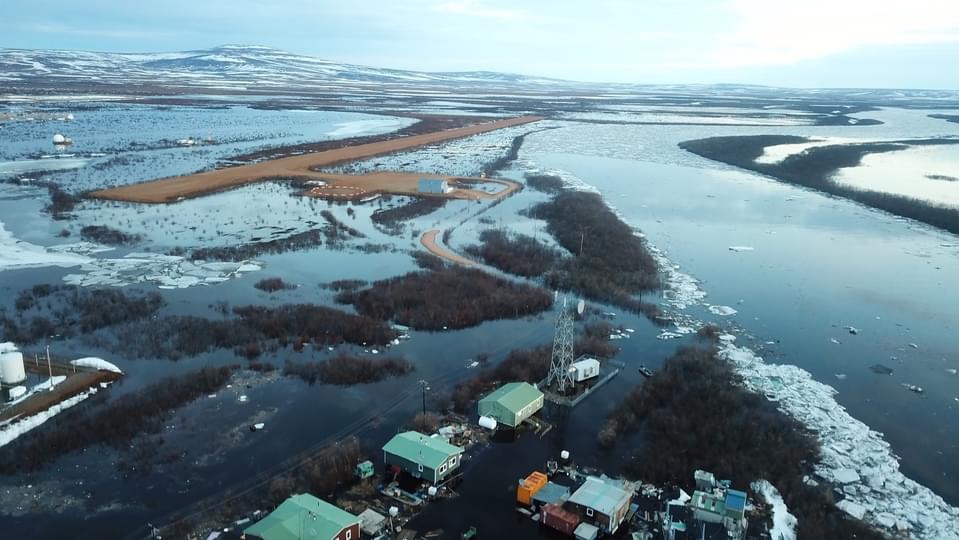
Gov. Mike Dunleavy declared a disaster for the City of Buckland and Native Village of Buckland after an ice jam on the Buckland River caused severe flooding in the city.
The declaration activates the state’s Individual and Public Assistance disaster recovery programs.
“I have directed all state agencies to provide assistance in the most expeditious manner possible,” said Governor Dunleavy. “The flooding caused significant damage to homes, roads and utility infrastructure so a declaration is warranted to get the community back on its feet as soon as possible.”
The City of Buckland and the Northwest Arctic Borough had both declared disasters in response to the flooding that began May 12. The flooding brought more than five feet of water and river ice into the community and inundated homes, forcing evacuations. A “boil water” notice is in effect because of impacts to the water treatment plant. Displaced stove oil barrels have left some homes without heat.
“We’re sad to see this happen to the people of Buckland, but the city, tribe, and borough’s response to this event has been incredible,” said Bryan Fisher, Director of the Division of Homeland Security and Emergency Management. “This community had a Small Community Emergency Response Plan and enacted it immediately. Coordination between Buckland, the Northwest Arctic Borough, and the state has been seamless.The leadership and residents of Buckland should be commended for their preparedness, quick actions, and resilience.”
The water level has dropped in the community and responders are beginning a more thorough damage assessment.
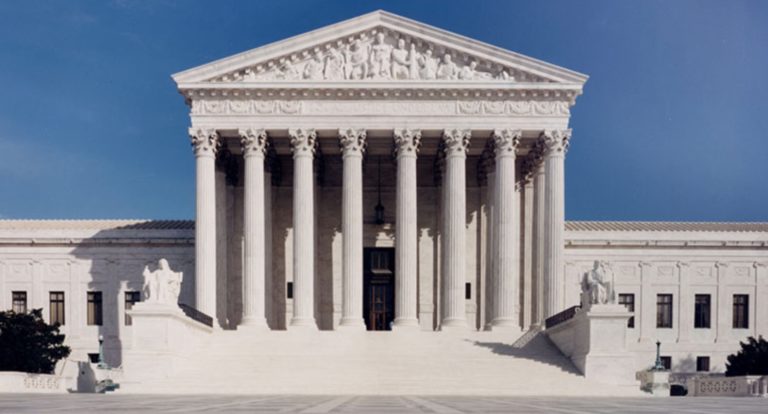
The Supreme Court today agreed to hear a Mississippi case that is a challenge to Roe vs. Wade, the historic Court decision in 1973 that legalized abortion.
The case, Dobbs v Jackson Women’s Health Organization, will be heard in the session that starts in October, and is a challenge to Mississippi’s ban on elective abortions when the fetus is 15 weeks old. A decision is not expected until next year.
The abortion case comes as the Supreme Court is now more conservative, with the appointment of Amy Coney Barrett making the 6-3 mix of justices less hostile to the unborn.
The law passed by the Mississippi Legislature bans abortion if the unborn’s gestational age is determined to be more than 15 weeks, with exceptions for medical emergencies or severe fetal abnormalities that would indicate the baby would not survive.
Mississippi’s Attorney General Lynn Fitch said in a statement, “The Mississippi Legislature enacted this law consistent with the will of its constituents to promote women’s health and preserve the dignity and sanctity of life. I remain committed to advocating for women and defending Mississippi’s legal right to protect the unborn.”
The last time the high court faced an abortion question was before Justice Ruth Bader Ginsburg died, when the court struck down Louisiana’s abortion restrictions. The vote was 5-4, with Chief Justice John Roberts siding with the pro-choice members, Ginsberg, Sonia Sotomayor and Elena Kagan.
The level of political pettiness on the Anchorage Assembly is disheartening.
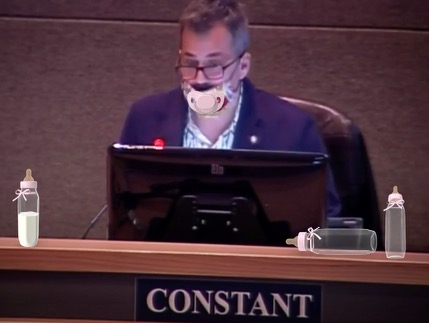
Take, for instance, Downtown Assemblyman Chris Constant’s quick move Friday to have the Assembly finally remove Anchorage’s controversial and burdensome mask mandate.
Why did he do it? Why, to head off Eagle River Assemblywoman Jamie Allard’s amendment, already on the table, to do just that. Allard battled the mask mandate for months, often alone, and Constant, working for months on the Forrest Dunbar for Mayor campaign, made the move to ensure she could not take credit for the mandate’s demise, MustReadAlaska.com reports.
Constant was caught on a hot mic saying, “I just didn’t want to give Jamie the power,” the website reports.
He did not offer the motion because it was the right thing. Or because the public was lining up to pressure the Assembly. Or even that the Centers for Disease Control was abandoning mask mandates. Nope. He offered it to deny Allard any credit.
In an editorial by the Anchorage Daily News on Saturday, the largest newspaper in Alaska sniffed and talked down its bespectacled nose to the winner-apparent of the mayoral election in Anchorage.
Although Dave Bronson has had the courtesy not to declare himself the winner prematurely, it’s evident that he has won that election and that the newspaper editorial board has lost. The writer of the ADN editorial is clearly grieving, just like the liberals on Twitter, where there is the expected wringing of hands, wailing, and gnashing of teeth.
Mind you, we are talking about a Pulitzer Prize-winning newspaper that did not have the courage to take a stand on who should be mayor of a city that represents over 38 percent of the state’s population. It remained neutral, after having endorsed Bill Evans in the April 6 election. Evans got less than 10 percent of the vote. For the runoff, the ADN played dead.
Now, ADN management has decided it better give Bronson a shot from its editorial bow: He will have to be the mayor for all of Anchorage, including those who didn’t vote for him.
Thanks, ADN, for stating the obvious. This is a slap at Bronson, rather than a handshake, from the ineffectual intellectuals.
The editorial might have been: “Congratulations, Anchorage. We have a new mayor. This city has been through a lot without even having an elected mayor for eight months, and for having a terrible disgrace of a mayor before that. Remember that Ethan guy who couldn’t keep his pants on? Let’s get behind the new mayor and help him be successful. The battle is over, so let’s move on to brighter days ahead.”
Here’s what the ADN said: “And for the past year, it has been some of Bronson’s most ardent supporters who have showed up en masse to Assembly meetings, delivering invective testimony, protesting and even burning a mask during the proceedings. As mayor, Bronson will have to balance the wishes of those supporters with those of the rest of the municipality — including the nearly 50% who supported a candidate Bronson and his supporters vilified.”
This is not the advice the newspaper gave former Mayor Ethan Berkowitz, who ran the city into ruin with the complete gutting of the downtown economy, and with the now-historic vacancy rates in Class A real estate. It’s also not likely that the editorial board would have lectured Forrest Dunbar, had he won. No, the writers would have popped the champagne and lauded Dunbar as the future of Anchorage.
Here’s what the ADN said: “It is that responsibility — to govern for all of the city, not just one’s own supporters — that makes holding the office so much more difficult than running for it. It’s possible to act as though those supporters are the only constituents who matter, and some politicians do. But the sharp ones realize that to move a city forward, that’s the wrong tack. And not just because being responsive to all residents is the right thing to do: The political reality is that Bronson will accomplish little if he isn’t willing to work with the Assembly. And the Assembly much more closely resembles the half of the municipality that voted for his opponent.”
Really. The newspaper is telling Bronson he’d better get on board the leftist agenda. He shouldn’t try to make good on his promise to voters.
The newspaper without the courage to take a stand now has shown its cards: It was always all-in for Dunbar.
The newspaper continued with its nose held high and its eyebrow raised, but we’ll summarize: Bronson has no experience. He had better lean on the experience of the extremists on the Assembly. This will be a steep learning curve for him. He should not settle scores with those who didn’t support him on the Assembly (Dunbar, Quinn-Davidson, Perez-Verdia, Peterson, Constant, Weddleton, Rivera, Zalatel, LaFrance).
What the newspaper could have said is it’s time for the Assembly members who didn’t support Bronson to drop their destructive plans for ruining Bronson before he is sworn in. They, too, need to act like leaders and not further damage the once-great city of Anchorage with their anti-business policies.
Those supporters of Bronson that the newspaper disparages? Those are business people. Showing up en masse? When was that ever a crime in America? Petitioning the “government for a redress of grievances,” as expressed in the First Amendment? How is it that the free press is now criticizing the people of the community and protecting the power of their lords?
This election was as much a referendum on the Assembly as anything else, which is why the Assembly quickly removed its mask mandate; they know that four seats are up next April, and that the citizens have been activated. They are already looking at those four assembly seats that will come up in 2022.
Meanwhile, soon-to-be Mayor Bronson will have to get used to the beatings from the ADN editorial board, which has now given a dog whistle to its writers that they can unleash the hounds of hell on Bronson and there will be nothing but support from the top. There will be no repercussions from management for unfair reporting.
The ADN had it right on one sentence of its diatribe against Bronson and those whom the newspaper finds to be his distasteful supporters, who comprise 50 percent of the Anchorage bowl: “In order for Anchorage to move forward, we’ll need a mayor and Assembly who can work with one another, regardless of ideological differences. That work should start today, because there’s plenty of ground to cover.”
We can agree on that much: Leaders need to work together for the common good. But politics is about ideology and elections have consequences. We’ve seen those consequences for the past six years. Anchorage is ready for a new direction.
Suzanne Downing writes for Must Read Alaska, Must Read America, and NewsMax.
During the 2021 American Association for Political Consultants Awards this year, Art Hackney Communicationswon nine awards — four golds, four silvers, and one bronze Pollie Award.
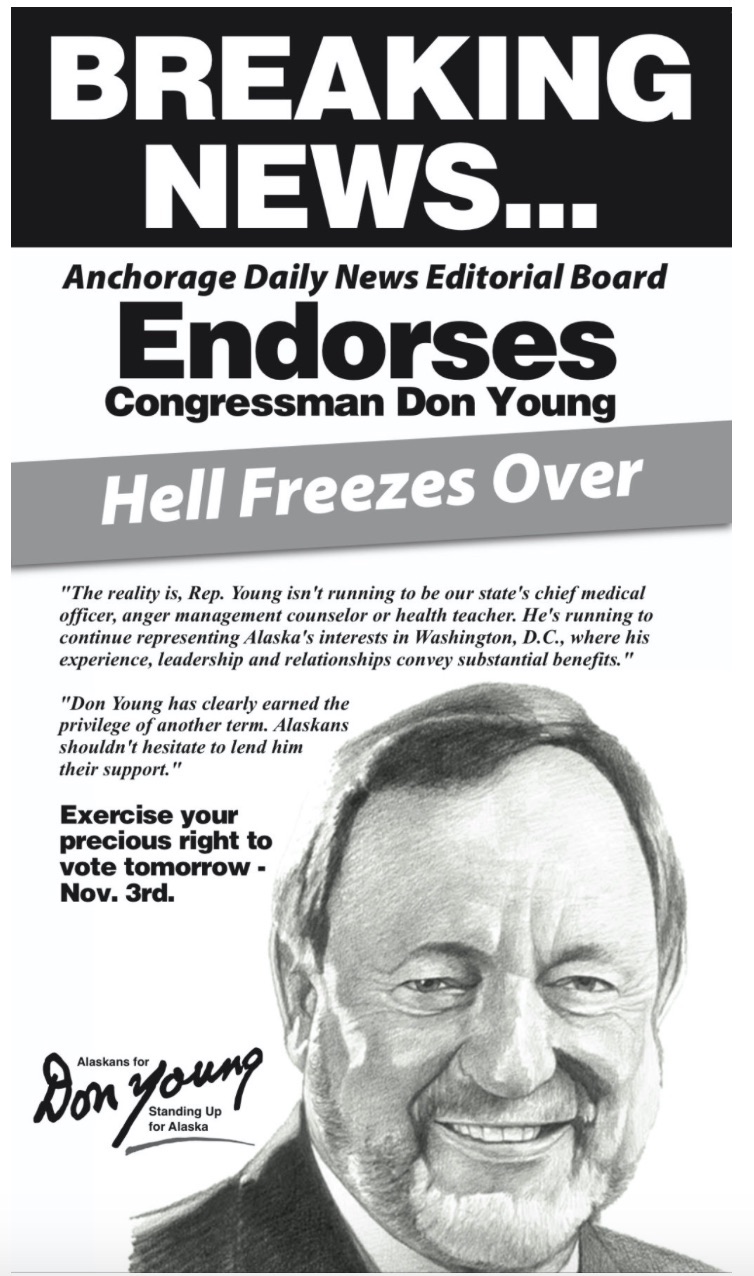
Hackney won top awards for Best Overall Radio Campaign of the 2020 cycle: Gold for the campaign for Troy Downing for State Auditor in Montana; and Silver for the US congressional campaign for Congressman Don Young. He won Gold awards for Best Regional Radio, Best Negative/Contrast Radio and Best Newspaper ad – for Don Young.
The newspaper ad that won the Gold award was the one pictured above, which declared that hell had frozen over with an endorsement for Young by the Anchorage Daily News.
The other Silver awards were for Best Regional Radio, Best Non-Federal Radio and Best US Congressional Radio ad in the US for the 2020 cycle.
The Bronze award was also for a newspaper ad campaign for Congressman Don Young.
Esquire magazine has dubbed the Pollie Awards “…the Oscars of political advertising.” Hackney has walls and walls of Pollie awards lining his Spenard eighth-floor offices.
Founded in 1969, the AAPC is a multi-partisan organization of political and public affairs professionals, with over 1,500 members from all corners of the globe. It is the largest association of political and public affairs professionals in the world.
Hackney also won several awards at the Reed Awards, named after Campaigns & Elections founder Stanley Foster Reed.
Hackney won five Reed trophies – for Best Legislative Radio for James Kaufman for House, Best Congressional radio for Don Young, Toughest Radio and Best Overall Radio of the 2020 cycle for Troy Downing race in Montana, and Best Newspaper ad for Congressman Don Young.
Hackney remains the winningest writer and producer of political radio ads in America for the past 20 years. A lifelong Alaskan, he is based in Anchorage.
In 2016, when the Must Read Alaska website was launched, a profile on Art Hackney was its first story. It’s at this link: The art of being Art Hackney.
Secretary of Homeland Security Alejandro N. Mayorkas issued a National Terrorism Advisory System (NTAS) Bulletin on Friday that says as the Covid-19 virus restrictions diminish, another threat looms: “The United States is facing threats that have evolved significantly and become increasingly complex and volatile.” These threats are posed by “domestic terrorists, individuals, and groups engaged in grievance-based violence, and those inspired or influenced by foreign terrorists and other malign foreign influences.”
Because restrictions are lifting on people’s movement, there are now more opportunities for bad actors to carry out their plans to harm the country, DHS says.
Specifically, the DHS says:
Violent extremists may seek to exploit the easing of Covid-19-related restrictions across the country to conduct attacks against a broader range of targets after previous public capacity limits reduced opportunities for lethal attacks.
Historically, mass-casualty Domestic Violent Extremist attacks linked to racially or ethnically motivated violent extremists have targeted houses of worship and crowded commercial facilities or gatherings. Some extremists advocate via social media and online platforms for a race war and have stated that civil disorder provides opportunities to engage in violence in furtherance of ideological objectives.
Through 2020 and into 2021, government facilities and personnel have been common targets of domestic violent extremists, and opportunistic violent criminals are likely to exploit constitutionally protected freedom of speech activity linked to racial justice grievances and police use of force concerns, potentially targeting protestors perceived to be ideological opponents.
Ideologically motivated violent extremists fueled by perceived grievances, false narratives, and conspiracy theories continue to share information online with the intent to incite violence. Online narratives across sites known to be frequented by individuals who hold violent extremist ideologies have called for violence against elected officials, political representatives, government facilities, law enforcement, religious or commercial facilities, and perceived ideologically-opposed individuals.
The use of encrypted messaging by lone offenders and small violent extremist cells may obscure operational indicators that provide specific warning of a pending act of violence.
Messaging from foreign terrorist organizations, including al-Qa‘ida and ISIS, intended to inspire U.S.-based homegrown violent extremists continues to amplify narratives related to exploiting protests. HVEs, who have typically conducted attacks against soft targets, mass gatherings, and law enforcement, remain a threat to the Homeland.
Nation-state adversaries have increased efforts to sow discord. For example, Russian, Chinese and Iranian government-linked media outlets have repeatedly amplified conspiracy theories concerning the origins of COVID-19 and effectiveness of vaccines; in some cases, amplifying calls for violence targeting persons of Asian descent.
DHS encourages law enforcement and homeland security partners to be alert to these developments and prepared for any effects to public safety. Consistent with applicable law, state, local, tribal, and territorial (SLTT) law enforcement organizations should maintain situational awareness of online and physical activities that may be related to an evolving threat of violence.
“Today’s terrorism-related threat landscape is more complex, more dynamic, and more diversified than it was several years ago. We know that providing timely and useful information to the public is critical as we all work together to secure the homeland. With the issuance of today’s NTAS Bulletin, we are advising the public to be vigilant about ongoing threats to the United States, including those posed by domestic terrorism, grievance-based violence, and those inspired or influenced by foreign terrorists and other malign foreign influences,” said Secretary Mayorkas. “In this evolving threat environment, DHS is redoubling our efforts to detect and disrupt all forms of foreign and domestic terrorism and targeted violence, while safeguarding privacy protections, civil rights, and civil liberties.”
DHS and the Federal Bureau of Investigation will continue to provide guidance to state, local, tribal, and territorial partners about the current threat environment. DHS is collaborating with industry partners to identify and respond to the radicalization that results from the spread of disinformation, conspiracy theories, and false narratives on social media and other online platforms, the department said, adding that it has no any information to indicate a specific, credible plot; “however, DHS asks all Americans to report any suspicious activity and threats of violence to local law enforcement,FBI Field Offices, or a localFusion Center.”
Fusion centers are cooperative functions between state and federal law enforcement agencies. The Alaska fusion center is called the Alaska Criminal Intelligence Center and can be reached at 907-269-8900 / 855-692-5425.
DHS has also established a new, dedicated domestic terrorism branch within the Department’s Office of Intelligence and Analysis and is increasing training opportunities for law enforcement partners, including through threat assessment and management programs related to domestic violent extremism.
The Social Security Administration has published its list of most-popular names for babies in every state for 2020.
For boys in Alaska, parents are going with Oliver, Liam, Elijah, and Theodore. William comes in at Number 5, with 35 Williams crawling around on living room floors this year. The name Aaron, once quite popular in Alaska, is now down at Number 94 on the list. There are no Waynes, Peters, or Josephs on the Top 100 list for Alaska baby boys.
For girls, it’s Amelia, Charlotte, Olivia, and Sophia. Ava is the Number 5 name for girls. Nowhere on the list is an Ashley or an Alexa, and Mary and Susan are also clearly out of fashion. But the old-school name Hazel, at Number 12 on the list, is making a comeback, with 24 Alaska baby girls bearing that first name in 2020. But the name Denali is nowhere to be found. But there are some names that do sound a bit like dog names.
The list from Social Security Administration can be sorted to look at the other states, where Oliver, Liam, Amelia, and Olivia make the list across the country, but regional differences can be spotted. For instance, in Washington state, Oliver and Olivia both hold the top spot, but in West Virginia, it’s Liam for boys and Harper for girls.
In what’s been compared to putting a dead man on a ventilator, Democrat senators led by Sen. Maria Cantwell of Edmonds, Washington, are planning to use $2.3 billion in public funds to underwrite local newspapers and broadcasters as part of President Joe Biden’s $2.3 trillion infrastructure plan.
The money would come in the form of grants and tax credits, and newspapers across the country are welcoming the help.
The Seattle Times editorial board encouraged its readers to contact their lawmakers to support the plan, which will be introduced by Cantwell this week. The request to readers from the family-owned company came in an editorial titled, “Support U.S. Sen. Cantwell’s outstanding proposal for news.” The Friday editorial documented the demise of newspapers across the country and the need for government financial backing; the newspaper even removed the paywall on the editorial so more people would be able to read it without a paid digital subscription.
The Times has an estimated annual revenue of $25 million and is thought to have 650 employees. It will qualify for the grant program.
The new bill is in addition to the Local Journalism Sustainability Act, which was introduced last year and would give tax credits to subscribers of newspapers, as well as to those that hire newspaper journalists, and small businesses that buy local advertising in newspapers.
Democrat Rep. Ann Kirkpatrick of Arizona, along with 57 Democrats and 20 Republicans, have cosponsored the “sustainability” bill that would, if passed, give up to:
$250 per year per person/subscriber, covering 80 percent of a subscription fees to local newspapers for the first tax year and 50 percent for subsequent years.
$50,000 per year for each local newspaper to reduce employment taxes and to hire and pay journalists.
$5,000 per year for each small businesses to cover 80 percent of advertising with local media, which includes newspapers and broadcast stations, and up to $2,500 per year for subsequent four years to help small businesses pay for their advertising.
Local newspaper is defined as print or digital publication with news and current events as its primary content, and at least 51 percent of its readers (including both print and digital versions) as residents of a single state, or in cases where a newspaper serves a border community, (think August Chronicle) within a 200-mile radius. Newspapers such as the Anchorage Daily News, Juneau Empire, and Fairbanks News-Miner would qualify. Broadcasters would also qualify, but alternative digital news sites such as Must Read Alaska, which has local readership but no traditional employees, would not likely qualify.
According to a report produced by Cantwell’s office, “Local Journalism: America’s Most Trusted News Sources Threatened,”the decline in local news revenues has led to the newspaper industry to release about 60 percent of its journalistic workforce since 2005. In Alaska, newspaper newsroom employment dropped from 179 in 2005 to 120, according to Cantwell’s research, a 67 percent drop in employment in the sector.