Wednesday, June 3, 2026
Home Blog Page 1157

And to think I grew up near Mulberry Street

By CRAIG E. CAMPBELL

This past week I experienced an epiphany — you know, events that change the course of your life and enlighten you with self-actualization and a realization that you are the problem.  

I am a witness that if you just listen to your critics, look deep into your soul and reflect on your sins you can become a better human being. 

To accomplish this, I needed to go back to my youth, to a time right after World War II, when the United States of America defended freedom, liberty, and evil by fighting two simultaneous wars, one against Hitler’s Germany, the other against Imperial Japan.  

After the war, soldiers came home, married, got jobs, moved to suburbs, and read Dr. Seuss books to their children.  One of those children was me.  You see, I grew up on Garfield Street.    

Theodore Seuss Geisel was a born in Springfield, Massachusetts in 1904.  Seuss was of German decent and experienced anti-German bigotry as a youth. He grew up on Fairfield Street.  It was a fairly modest, middle income neighborhood. 

During World War II, Seuss wrote political cartoons against fascism and was a critic of America’s isolationist policies. He wrote the book Dr. Seuss Goes To War, in which he denounced Hitler and was critical of both Jewish anti-semitism and black discrimination.  He seems kind of patriotic to me.

Regrettably, this past week, I learned from our enlightened media and cancel culture warriors that Dr. Seuss was actually a racist bigot. We are being told that many of his children’s books were filled with degrading, insulting, racist images. How could that be?  I needed to do some deep soul searching to better understand how Dr. Seuss may have corrupted my life.  

You see, I was also born in Springfield and grew up on Garfield Street, which is the street right next to Fairfield Street, just a few blocks from Mulberry Street.  

My parents read me Dr. Seuss books. I grew up in the same neighborhood, attended the same schools and celebrated the same community events as had Dr. Seuss. So how had Springfield created such horrible person as Dr. Seuss?  

It all became clear when I looked at the history of Springfield. The Springfield Armory was established by General George Washington in 1777 to manufacture military firearms for American revolutionaries against the British. The Springfield Rifle was the distinctive weapon for winning independence to become the United States of America.  

I started to understand the Dr. Seuss problem. It’s Springfield. You see, George Washington owned slaves and ordered Indians to be killed. Today’s enlightened society is removing George Washington statues and renaming schools that were named after this horrible example of humanity.  Thank God the Springfield Armory closed in 1968.

 As I further studied the history of Springfield, I found a very disturbing anti-Indian culture had festered there for hundreds of years. 

In 1675, the colonial village of Springfield was placed under siege by the Agawam Indians, who later attacked and burned the majority of village homes.  Miles Morgan was one of the few settlers who successfully defended his home against this attack and today a statue of Miles Morgan stands in front of Springfield City Hall.  Abuse of the Indian culture had to be at the center of this problem.  

In my research I found a motorcycle company was founded in Springfield in 1901. Alas, in 1923 it was named the Indian Motorcycle Company. Clearly a slap against the Native American culture.  Its premier motorcycle was named the Indian Chief and became the best selling motorcycle in America.  Racism and bigotry was spreading across this great land, all centered in Springfield, Mass. It was with a triumphant cheer that the Indian Manufacturing Company went bankrupt and closed its Springfield operations in 1953.

The Springfield Indians was a professional minor league hockey team that played in Springfield from 1926 until 1994 (albeit the team had two temporary name changes during that period). It was one of the founding members of the American Hockey League. Finally after self-recognizing the culturally degrading name, the franchise ceased operations.

But there’s more to this web of dark Springfield discrimination.  Springfield became home for minor league baseball teams.  First the Springfield Cubs, later the Springfield Giants.  Both played at Pynchon Park.  

My research found that Pynchon Park was named after the colonist, John Pynchon, who was the village leader during the burning of Springfield by the Agawam Indians in 1675.  I felt ashamed that as a lad I had actually gone to Pynchon Park to watch baseball games. 

There are other dark characters that hailed Springfield as home. Milton Bradley started a color lithography shop in Springfield in 1860. Following the Civil War, he founded the Milton Bradley Company, one of America’s most successful board game companies. But let’s not forget the checkered past, when Milton Bradley produced the early version of “Life” which had success defined as advanced education and marriage, while the penalties for failure included suicide (which was depicted in a box with a noose), or ruin, where you were depicted as a drunk and destitute.  

Imagine defining success as prosperity and marriage. Stop it, these cultural values are killing society.  Thank God the Milton Bradley Company was sold to Hasbro where some sanity was restored to board games.

Springfield is also home of the Peter Pan Bus Company. Established in 1933, Candidate Bill Clinton chartered Peter Pan for his 1992 campaign. Sadly, the Peter Pan Bus Company is just another example of a company profiteering from cultural degradation. Disney+ has rightfully limited the 1953 children’s movie “Peter Pan” from being seen by children because of its dark and disturbing message.  

Now that I have seen the light, I understand how disturbing Tinkerbell really is to a child’s psyche.  When will the Peter Pan Bus Company learn that Tinkerbell is really degrading to the LGBTQ community by being depicted as so small, and “fairy” like?

Smith and Wesson, headquartered in Springfield, is one of America’s most successful hand gun companies. Smith and Wesson has provided law enforcement with revolvers for over a century. But after this past summer of anti-police riots, I realize Smith and Wesson is a problem. It is a prime culprit in providing weapons to police officers to enforce law and order; thereby fueling racism when police officers use deadly force against violent criminals or those who may be assaulting officers with deadly forced.  

My softer side now understands we must defund the police and disarm these predators of justice in order to end discrimination in America. How could I have been so blind?

But the clincher for me was knowing that Springfield, Mass. is home of the Naismith Memorial Basketball Hall of Fame.  Founded in Springfield in 1891, basketball has become an American classic sport.  It is clearly evident that the National Basketball Association is a racist organization.  In 2020, the NBA racial make-up consisted of approximately 10 percent white, 80 percent black, and 10 percent others. Did I miss something, or are these numbers indicative of racial discrimination? And to think it all started in Springfield, Mass.

The NBA has been a leader in fostering national pride. From players who kneel for the national anthem, to Dallas Maverick owner Mark Cuban not playing the national anthem at the start of each home game (thankfully overruled by the NBA), to cozying-up to China to bolster profits and poke a finger in the eye of America, basketball has developed a true identity crisis.  

Which brings me back to Dr. Seuss. Sure, there are some dated pictures and characterizations in some of his books, but are they really cultural prejudice? Dr. Suess opened the eyes of millions of Americans to adventure, world travel, cultural differences, and imagination.  

Was his depiction of a Chinese guy running in oriental silks, eating rice with chop sticks really a statement of discrimination?  No way. It was a cartoon depiction of a Chinese guy running in oriental silk eating rice with chop sticks.  

Was the Arabian prince riding a camel wearing a turban and shoes that curled up at the end really a mark of discrimination against Middle Eastern culture? No way. It was a cartoon depiction of an Arabian prince riding a camel wearing a turban and shoes that curled up at the end.  

The above examples I read when I was very young come from “And to Think That I Saw This on Mulberry Street”  That book, among many others, led me to a lifetime of adventure, eventually leaving New England and finding my way to Alaska.  

I have traveled to Japan, Mongolia, China, Russia, the Middle East, and many other lands. Cultures are different. People have different customs.  That makes the world a majestic tapestry, enriched by our differences. It is tragic when today’s Cancel Culture seeks to quash a child’s inquisitive nature by branding other cultures depicted in a cartoon as offensive.  

If things should be canceled because they are offensive to some, than I want the Cancel Culture immediately canceled because it is offensive to me and millions of other Americans who respect freedom of speech, liberty, and the right to self-expression.  

Let’s bring back all Dr. Seuss books to our libraries and once again honor Dr. Seuss as the inspirational author who was the icon for “Read Across America” week.  

America has got to stop being so offended by everything.  

Craig E. Campbell served on the Anchorage Assembly between 1986 and 1995 and later as Alaska’s Tenth Lieutenant Governor.  He was the previous Chief Executive Officer and President for Alaska Aerospace Corporation.  He retired from the Alaska National Guard as Lieutenant General (AKNG) and holds the concurrent retired Federal rank of Major General (USAF).


Must Read? Seuss books canceled on Amazon, while Hitler best-seller for sale

Mein Kampf, the political and social manifesto written by Adolf Hitler, is for sale at Amazon.

But don’t try to buy any of the six children’s classic by Dr. Seuss that have banned.

The books in question by Dr. Seuss have been withdrawn by the Dr. Seuss Enterprises because the company now believes they portray people “in ways that are hurtful and wrong.”

Immediately after Seuss Enterprises removed the books from print, Amazon erased them from their online commerce. The books include:

And to Think That I Saw It on Mulberry StreetIf I Ran the Zoo,McElligot’s Pool, On Beyond Zebra!, Scrambled Eggs Super!, and The Cat’s Quizzer.

“These books portray people in ways that are hurtful and wrong,” Dr Seuss Enterprises said in a statement.

eBay also began canceling the Seuss books from its sellers’ stores, although some antique book dealers are selling old copies of the children’s books for hundreds of dollars, such as this copy of McElligot’s Pool.

Amazon continues to sell copies of The Communist Manifesto, by Karl Marx, and the Unabomber Manifesto by serial bomber Ted Kaczynski.

Vaccine science: CDC says if you’re vaccinated, you don’t need to wear mask at home

61

The CDC released new guidelines today, advising that those who are fully vaccinated against Covid-19 can take their masks off at home.

“There are some activities that fully vaccinated people can begin to resume now in the privacy of their own homes. Everyone — even those who are vaccinated — should continue with all mitigation strategies when in public settings,” CDC Director Dr. Rochelle Walensky said in a statement Monday.

According to the new federal guidance, fully vaccinated people can visit with other fully vaccinated people and some unvaccinated people indoors without wearing masks or social distancing.

People who are fully vaccinated can also visit with unvaccinated people from a just one other household without wearing masks or social distancing as long as they’re at low risk for severe disease, the CDC says, without acknowledging it has no authority to set these rules.

“For example, fully vaccinated grandparents can visit indoors with their unvaccinated healthy daughter and her healthy children without wearing masks or physical distancing, provided none of the unvaccinated family members are at risk of severe COVID-19,” the CDC says.

For those who are vaccinated, “If you’ve been around someone who has COVID-19, you do not need to stay away from others or get tested unless you have symptoms. However, if you live in a group setting (like a correctional or detention facility or group home) and are around someone who has COVID-19, you should still stay away from others for 14 days and get tested, even if you don’t have symptoms,” the CDC says.

It’s the first set of behavioral guidance released from the federal government for people who have been fully vaccinated.

The CDC says you cannot do many normal activities. It advises that if you’re fully vaccinated:

  • You should still take steps to protect yourself and others in many situations, like wearing a mask, staying at least 6 feet apart from others, and avoiding crowds and poorly ventilated spaces. Take these precautions whenever you are:
  • You should still avoid medium or large-sized gatherings.
  • You should still delay domestic and international travel. If you do travel, you’ll still need to follow CDC requirements and recommendations.
  • You should still watch out for symptoms of COVID-19, especially if you’ve been around someone who is sick. If you have symptoms of COVID-19, you should get tested and stay home and away from others.
  • You will still need to follow guidance at your workplace.

The full CDC guidelines are at this link.

Sen. Barrasso says he’ll back Murkowski in 2022, even if Trump opposes her

28

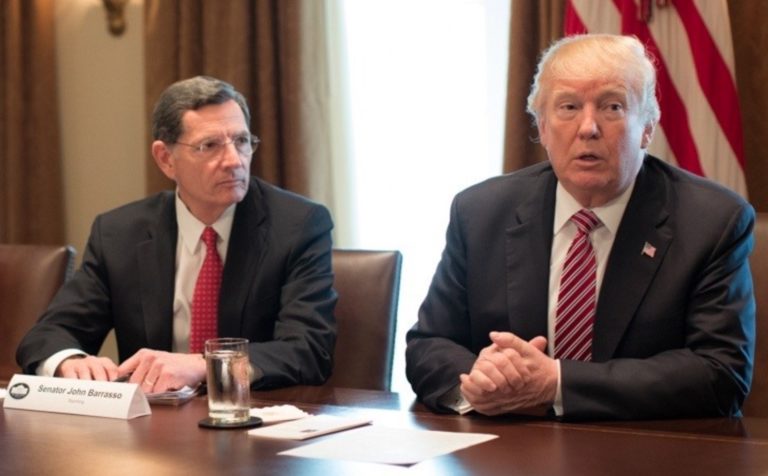
On NBC’s “Meet the Press,” Sunday, Sen. John Barrasso of Wyoming said he will back Sen. Lisa Murkowski of Alaska, who has been targeted by former President Donald Trump for removal from office in 2022.

Barrasso, a Republican, also said he’ll support Rep. Liz Cheney, a Republican never-Trumper who will also face the ire of the Trump “Save America” political action committee.

“I want to always make sure we nominate somebody who can win in November. Lisa Murkowski knows Alaska better than anybody, and she’s an incredible fighter for American energy. She hasn’t made an announcement if she’s even going to run again. If she does, I’m going to support her,” Barrasso said.

Barrasso, who has previously chaired the Senate Committee on Indian Affairs, traveled to Alaska with Murkowski for a roundtable discussion at the University of Alaska Anchorage focusing on health care issues facing Alaskans and Alaska Natives in 2016. Murkowski is now a member of that committee.

This day in Juneau history: Franklin Graham preached his first evangelical sermon

8

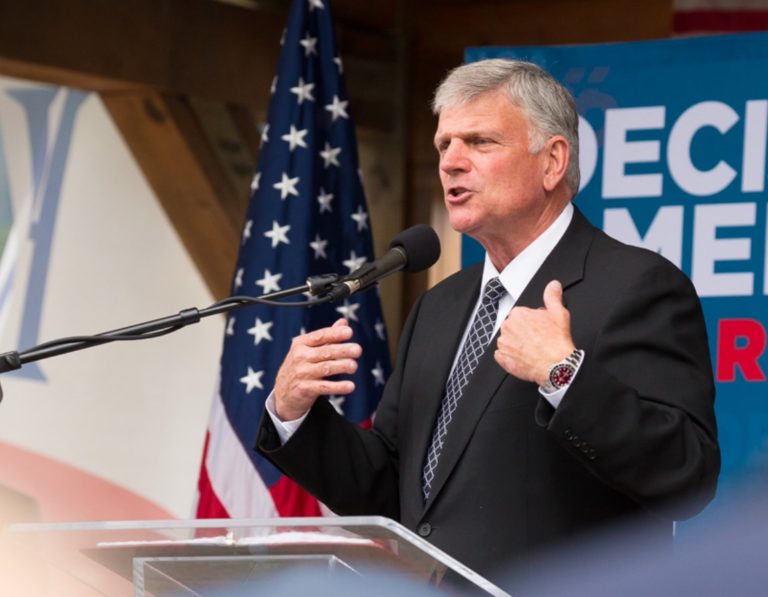
Franklin Graham preached his first solo evangelical sermon on March 7, 1989. It was in Juneau, Alaska, and it was the only the beginning.

Before doing so, Graham had to overcome his rebellious past, as well as the enormous pressure of following in the footsteps his father Billy Graham.

His first attempt at evangelism went badly. At an event in Saskatoon, Saskatchewan a few years earlier, when he gave the invitation for people to come forward to be saved, not a single person came.

But in Juneau, he was on fire, preaching one of his father’s favorite sermons, the story of the blind man Bartimaeus, whose sight Jesus restored.

According to his friends, the people of Juneau responded well. “They packed the place, drunks, divorcees, and prostitutes,” said his friend John Wesley White, who had convinced him to give it another try. “He gave the invitation and they poured down. It was a miracle and he knew it.”

Graham is the president of Samaritan’s Purse, an international Christian disaster relief nonprofit, and his organization has a lodge at Lake Clark to help veterans heal their marriages and relationship with God.

Since that day in Juneau in 1989, Graham has preached to more than 7 million people in cities around the world. “For more than 60 years,” said Graham, “our calling at BGEA (Billy Graham Evangelical Association) has been to ‘preach the Gospel—not with words of human wisdom, lest the cross of Christ be emptied of its power’ (1 Corinthians 1:17). Wherever I go, whether to a modern city in Europe or Asia, or a rural village in Africa or South America, I always proclaim Jesus Christ as ‘the way and the truth and the life’ (John 14:6).”

Graham returned to Juneau in 2016 and preached at Savikko Park on Douglas Island as part of his 50-state campaign to reach every capital city in America.

“The only hope for this country is God,” Graham told the 750 people gathered in the drizzling rain. “And the most important thing we can do is pray.”

Murkowski votes against amendment that would protect women athletes

59

Senate Democrats voted against an amendment in the Covid-19 relief bill that would have kept women’s sports for women, by barring schools from receiving funding if biological males are allowed to compete against girls or women.

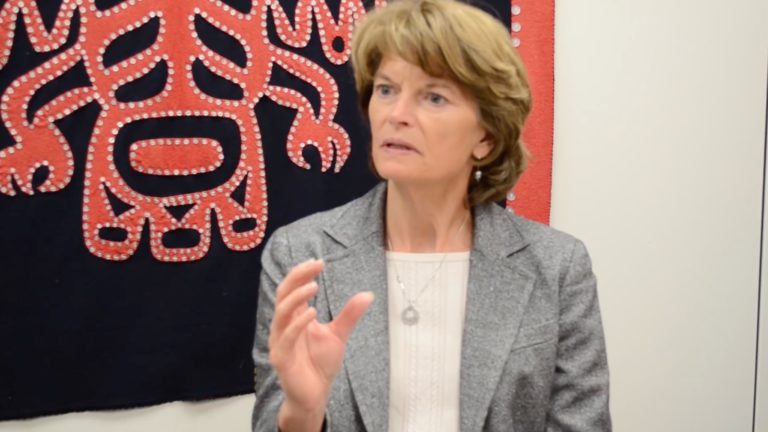
Joe Manchin of West Virginia was the only Demcrat who voted with Republicans to save women’s sports, but Sen. Lisa Murkowski of Alaska joined the Democrats to block the amendment, which then failed 49-50.

Murkowski was the only Republican to vote against the amendment to protect female athletes.

The amendment offered by Sen. Tommy Tuberville was intended to preserve the sanctity of women’s sports and the intent of Title IX. The amendment was proposed Saturday amid a flurry of amendments from both sides of the aisle to the $1.9 trillion “American Rescue Plan.”

Title IX was sponsored and championed by Alaska Sen. Ted Stevens to ensure that schools do not discriminate in funding and opportunity for women to participate in athletic and educational opportunities. Stevens was known for championing the rights of girls and women.

Tuberville, in announcing his amendment, said that Title IX “ensures that young women have the same opportunities as young men, and the same access to funding, facilities, and athletic scholarships. Title IX has given young women the long-denied platform that had always been afforded to men. And today, America’s female athletes are routinely the best performing on the world stage. Under this amendment, educational institutions would prohibit from receiving funding if biological males are allowed to compete in women’s athletics. This amendment safeguards fairness for equality for women.”

In a twist on equity issues, schools across the country are now increasingly allowing transgender males to compete against female athletes. Tuberville’s amendment was an effort to build more of a firewall, so that girls would not be forced to compete against biologically stronger boys.

The amendment, while failing to pass, was part of the greater bill that did pass the Senate without Murkowski’s support, and is now on the way back to the House for a reconciliation vote.

Chris Nyman: It’s time to suspend the dividend

By CHRIS NYMAN

The “illusion of truth effect” is the tendency to believe false information to be correct after repeated exposure.

Many may also be familiar with “Stockholm Syndrome,” where victims sympathize with their captors after prolonged exposure to stress and propaganda.

The people of Alaska, regrettably in my lifetime, are suffering from these effects in a way that threatens to destroy the very fabric of the institution we call the State of Alaska.

The trickle-down effect of that is to destroy our economy, our ability to make a living, and the social welfare of our lives.

Here is a summary of the most popular misconceptions:

  1. You are “owed” a Permanent Fund dividend.
  2. The dividend is “the people’s money.”
  3. Reducing or eliminating the dividend is a “tax.”
  4. The dividend is a beneficial boost to the economy.
  5. Reducing the dividend is unfair to low-income Alaskans.

The reason I focus this column on the dividend is because it has singularly been the obstacle to creating a sustainable Alaska State budget for the past decade.

The old axiom that “government will spend every cent it can get its hands on” seems to be very accurate whether it is New York, California, or Alaska and even most notably the United States Congress. There will always be the temptation to borrow from the future for the benefit of the current generation.

In Alaska, the Legislature has drained every reserve account it can get its hands on for the past 10 years to prop up unsustainable deficit spending. The Legislature has even decided to drain the Constitutional Budget Reserve (which requires a 3⁄4 majority) instead of over-drawing the Permanent Fund Earnings Reserve Account (which only requires a simple majority).

To add insult to injury, the Legislature seems to have the opinion it does not have to observe the will, or plain text, of the state constitutional requirement to re-pay funds “borrowed” from the Constitutional Budget Reserve.

Keep in mind that up to 75% of all mineral lease rentals, royalties, royalty sale proceeds, federal mineral revenue sharing payments and bonuses received by the State… (paraphrasing Article 9, Paragraph 15 Alaska Constitution) has already been consumed by our State government over the past 40 years. The other 25% was deposited into the Permanent Fund corpus and thank goodness for that.

For most of that 40 years, the dividend was affordable, as State oil income exceeded the cost of State government. Thus the surplus was available as a “true dividend.”

That changed 10 years ago, and one could argue six years ago when Bill Walker vetoed half the dividend and the Legislature essentially began to reduce the dividend each year and observe a percent of market value strategy for drawing from the Permanent Fund.

Despite this laudable effort, the Legislature continued to deficit-spend by raiding the Constitutional Budget Reserve. Today we are at a point where we cannot afford any Dividend without over-drawing from the Permanent Fund.

Other repercussions from deficit dividends are the minimization of our Capital Budget, out inability to pay off the oil tax credits, and our inability to build back our budget reserve account – the Constitutional Budget Reserve.

Now is the perfect time to suspend the dividend indefinitely. With the pandemic and economic reset we are experiencing – federal aid is expected to be over $5 billion, (5 times the impact of the dividend).

We cannot afford to pay deficit dividends. It’s not an illusion.

Chris Nyman writes occasionally for Must Read Alaska.

Dan Fagan: Former DPS Commish says Dunleavy fired her after she demoted politically connected trooper

By DAN FAGAN

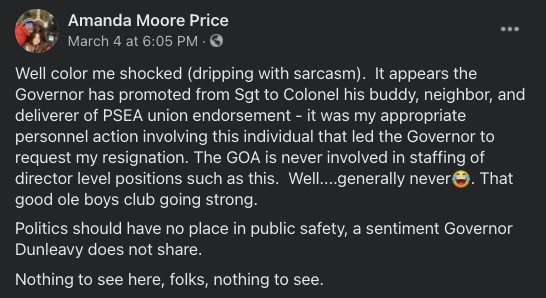
Former Department of Public Safety Commissioner Amanda Price took a direct shot at Mike Dunleavy on Facebook this week describing the governor as a member of the “good ole boys club.” 

Price believes Dunleavy fired her back in February after she demoted a former union boss and political ally of the governor’s. 

This past week, Dunleavy reversed Price’s demotion of Trooper Doug Massie from colonel to sergeant. He’s a colonel again.

Massie, who was president of the Public Safety Employees Union during the time Dunleavy was running for governor, played a big role in securing the union’s endorsement of “Big Mike.”

It was a huge get, considering Dunleavy ran as a government cutting candidate. Public employee unions aren’t typically too keen on candidates promising to cut government. 

Here’s what Price posted on her Facebook page on Thursday:

Price says in 2019 she spoke with Dunleavy about her concerns with Massie and what she describes as his inability to perform his duties as director of the Troopers’ Wildlife Division. She says she even considered removing him. 

“During the conversation I asked the governor if I could take appropriate and necessary personnel action with Massie or if he expected me to keep Massie as colonel regardless of performance issues,” says Price. “At that time, he told me that Col. Massie was my staff, and I should handle it as I see fit.”  

Price says she demoted Massie and quickly heard from Dunleavy. 

“A few hours after I took the action to demote Massie, the governor called me very upset,” says Price. “He was more escalated than I’ve ever heard him in the three plus years that I’ve known him, even though the action should not have been a surprise to him as I had spoken to both he and the Chief of Staff Ben Stevens a number of times about my concerns. He was very upset and ultimately hung up on me.” 

Price says Dunleavy called her a few days later and apologized, telling her he needs to think about this and that he would get back to her. 

Price says that was the last time she ever heard from Dunleavy. To this day she says he won’t take her calls. 

Three days later Stevens called Price to his office telling her she must resign or be fired. The only reason Stevens gave for the firing was the governor wanted to take the department in a different direction. 

Price believes she was fired because she demoted Massie. 

Price says because of his political connection to the governor, Massie now becomes untouchable for the incoming commissioner.  He or she cannot take action against the colonel if they want to keep their job. 

Price says it’s clear to her when Dunleavy promised during the campaign to make public safety a priority, what he really meant was he’d make the Public Safety Employee Union’s endorsement a priority.

Dan Fagan hosts the number one morning drive radio show in Alaska on Newsradio 650, KENI. He splits his time between Anchorage and New Orleans.

Trump says explicitly that he’ll campaign against Murkowski in 2022

In Politico on Saturday, former President Donald Trump made it clear that he will get involved in the 2022 Senate race in Alaska, where incumbent Sen. Lisa Murkowski is expected to defend her seat.

“I will not be endorsing, under any circumstances, the failed candidate from the great State of Alaska, Lisa Murkowski. She represents her state badly and her country even worse. I do not know where other people will be next year, but I know where I will be — in Alaska campaigning against a disloyal and very bad Senator,” Trump wrote to Politico. “Her vote to advance radical left democrat Deb Haaland for Secretary of the Interior is yet another example of Murkowski not standing up for Alaska.”

This is the second time he has said he will be in Alaska next year, campaigning against Murkowski.

Murkowski has been Alaska’s senator since appointed to the seat by her father, former Gov. Frank Murkowski, in 2002.

Some political observers, among them Must Read Alaska columnist and radio show host Dan Fagan, are wondering aloud if Alaska’s Commissioner of Administration Kelly Tshibaka is preparing for a run for Senate.

Trump coming to Alaska to back a candidate other than Murkowski could make Alaska’s Senate race the one to watch nationwide. After all, in November’s General Election, 189,951 Alaskans voted for Trump, with 153,778 voting for Biden.

According to Politico, Trump’s political team commissioned polling about Murkowski, which was conducted Jan. 30-Feb 1, just before Murkowski voted to convict Trump during the impeachment trial. That poll found Murkowski with a 43 percent favorable rating among Alaska voters, while Trump had a 52 percent approval rating, nearly identical to the percentage of Alaska voters who voted for him in November.

The survey by McLaughlin and Associates was paid for by Save America, Trump’s political action committee. McLaughlin was key to Trump’s 2016 and 2020 campaigns.

Politico wrote that Trump’s statement and the poll from his leadership PAC “represents a new escalation in his battle against Murkowski. It also stands in stark contrast to his support for other Republican senators up for reelection in 2022. In recent days, Trump has given his endorsements to several incumbents in generally safe seats, including Sens. Mike Crapo (Idaho), Tim Scott (S.C.), Todd Young (Ind.) and John Kennedy (La.).”

Due to Ballot Measure 2, it will be harder than ever for a challenger to unseat Murkowski, who will not have to face a semi-closed party primary this cycle. Her name will be on a jungle primary ballot with all others who choose to run for Senate, giving her a distinct advantage with name recognition, power of the purse, and her ability to convince Democrats to vote for her.
That’s an advantage she did not have in 2010, when Joe Miller beat her in the Alaska Republican Party’s semi-closed primary, which has been outlawed by Ballot Measure 2.

In 2016, Bob Lochner, Paul Kendall, and Thomas Lamb challenged her in the primary, which she won with 71 percent of the vote.