Wednesday, April 29, 2026
Home Blog Page 1077

Homer couple raided by FBI finds travel harder on the ‘special’ list with TSA

A Homer, Alaska couple, whose home was raided in April by federal agents who said they were looking for House Speaker Nancy Pelosi’s laptop, have found they’ve been placed on a special security screening list by the Transportation Security Administration.

Their recent experiences traveling have left them feeling like their government is treating them like domestic terrorists.

Read: FBI breaks into Homer home, looking for Nancy Pelosi’s laptop

When Paul Hueper drove from Homer to Anchorage and returned to Homer on Ravn Air two weeks ago, he was pulled aside by airline personnel. His ticket had an SSSS designation, which means he’d been selected for secondary screening.

“They held me at the check-in for 45 minutes while they were conversing with TSA,” Hueper said. He was finally able to catch his flight home.

Last week, when he and his wife Marilyn tried to board a flight in Anchorage for Seattle and San Francisco, on their way to a memorial service in Sonoma, they were pulled aside for such extensive screening that they missed their flight. And then they missed their next flight out of Seattle.

“They went through every piece of clothing, every piece of paper, swabbed everything,” Paul said, of TSA at Ted Stevens Anchorage International Airport. After going through the full-body scanner, the couple were physically patted down.

Missing their first flight, they booked the next one available. When they arrived at the gate to board, TSA was waiting for them again, and went through all of their belongings once more.

The couple arrived in Seattle, but then missed their flight out of Seattle due to their Anchorage experience and also because they were turned away at the gate and forced to submit to TSA baggage and personal searches again, and yet again at the gate.

Everything in their bags touched once again by TSA, everything swabbed for traces of explosives, full-body pat-downs. Again, TSA was waiting for them at the jetway and went through all their possessions one last time.

For their flight home on July 5, after all the pat downs, scans, and checks, there was even a last surprise mobile TSA checkpoint placed halfway down the jetway to their plane in order to intercept them again to swab their carryons and for agents to interrogate them.

The Huepers realize they’ve been singled out because they went to Washington, D.C. on Jan. 6, and, as far as the way the government is treating them, the Huepers think they’ve landed on some kind of domestic terrorist list.

The Huepers have concluded that any trip they take will need to have four hours built into it ahead of any flight or connecting flight, and they’ll need to ask the airlines for help to get them on their flights since they have been  turned back whenever they try to board.

The drop into their Orwellian experiences started in late April, when 12 agents — FBI, Capitol Police, ATF, and even local law enforcement — broke down the door of the Huepers’ home. They held the Huepers at gunpoint and accused Marilyn of having stolen Pelosi’s laptop during the Jan. 6 protests inside the U.S. Capitol. They did not produce a search warrant until after they had searched the whole house and kept the Huepers and their houseguests in handcuffs for hours, not allowing them to even use the bathroom.

Marilyn says she never went inside the Capitol on Jan. 6, although Paul posted on Facebook photos of her on the steps of the Capitol. The couple had gone to D.C. to hear former President Donald Trump speak, along with tens of thousands of other Americans who attended that day. Some went into the Capitol and created dangerous conditions. One woman inside the Capitol was shot by Capitol Police or other unknown police officer.

A photo circulated by the Capitol Police and FBI led law enforcement to single out Marilyn as the person who had stolen the laptop from Pelosi’s office. The comparison between Marilyn, below left, and the unidentified woman sought by federal agents, right, shows numerous differences.

During the federal raid in April, the couple’s door was damaged and never repaired by the government, which took her and Paul’s laptops, the couple’s cell phones, and a copy of the U.S. Constitution.

That Pelosi laptop has never been found, but after weeks, the Huepers’ laptops were returned to them, although their laptops were compromised and unusable due to being bitlocked by the FBI.

That led to Rep. Jim Jordan interrogating FBI Director Christopher Wray in June about why the FBI had taken the pocket copy of the U.S. Constitution during the raid of the Huepers’ home. Wray dodged the question and said he could not talk about an active investigation.

Read: Rep. Jim Jordan asks FBI director why the agents took the Huepers’ copy of the Constitution

Michael Hanifen: Covid reveals broader health disparities that put Alaskans at risk

Dr. MICHAEL HANIFEN

Despite the promising recent news that those who want the vaccine can get one, Alaska has been seeing a troubling trend. There has been a considerable surge of new cases of the virus in Interior Alaska, leaving healthcare workers concerned for public health more widely in the area.   

Unfortunately, this news reflects a broader trend of health disparities that have torn through Alaska for years. With such a large rural population, many people across our state lack consistent, reliable access to high-quality healthcare, putting many in danger of having serious health problems with nowhere to turn.

In rural areas with less reliable access to internet services, even telehealth isn’t always a viable option. A report released last year by the Centers for Disease Control and Prevention found that one in five American Indians or Alaska Natives were in “fair or poor health,” considerably more than the 12.1 percent average for U.S. adults more broadly.    

Furthermore, data from the Indian Health Service, which is operated by the U.S. Department of Health and Human Services, reveals American Indians and Alaska Natives have a life expectancy of 5.5 years lower than the average for the U.S. population. They also have higher rates of various health conditions including heart disease, diabetes, liver disease, and more.    

Add in the pandemic, and the problems only grow. According to a CDC report issued last summer, American Indians and Alaska Natives had an incidence of confirmed Covid-19 cases 3.5 times higher than other Americans. These communities were also at higher risk for serious health problems due to the coronavirus pandemic, amplifying the broader inconsistencies at work that must be addressed.   

Finally, reining in these health concerns will be a daunting task that requires action from more than just state or federal governments. Thankfully, many companies and nonprofits are stepping up to tackle the issues of both rural health among Native American Indian and Alaska Native populations.    

For example, the Department of Veterans Affairs recently partnered with Veterans of Foreign Wars, the American Legion, and Philips North America to create a program called Accessing Telehealth through Local Area Stations (ATLAS). This program helps to bring telehealth options directly to veterans – many of whom live in rural parts of Alaska and other states – directly at their closest VFW or American Legion posts. That way, they don’t have to worry about being unable to use home telehealth options and can avoid extensive travel.   

In another public-private partnership that saw a high level of success, the IHS partnered with Philips and eHealth Initiative to create a series of webinars on Native Americans’ health during the pandemic. Now, Philips is also partnering with the Health Equity, Action & Leadership Initiative, which provides fellows who spend two years working and learning from hospitals in Native American communities.   

The inconsistencies that pervade the American healthcare system will not be dispatched overnight, and the success of efforts to bring them to an end will depend on support from local and federal lawmakers.

Our lawmakers should be doing what they can to expand public-private partnerships like those that (ATLAS)  is spearheading. Given that these issues affect Alaskans poignantly and uniquely, I encourage Senators Lisa Murkowski and Dan Sullivan and Congressman Don Young to help support both public and private projects to create and sustain a more equitable consistent health system for all Alaskans. 

Dr. Michael Hanifen is owner and president of North Star Chiropractic Wellness Center, LLC. 

Dunleavy appoints Jennifer Henderson to Alaska Supreme Court

Gov. Mike Dunleavy today announced the appointment of Jennifer Stuart Henderson to the Alaska Supreme Court. Judge Henderson was selected from a group of individuals nominated by the Alaska Judicial Council to fill the seat of retiring Chief Justice Joel Bolger.

Judge Henderson has been an Alaska resident for 18 years, and has practiced law for 18 years. She graduated from Yale Law School in 2001 and is currently a superior court judge in Anchorage.

Earlier, the governor had written to the Alaska Judicial Council and asked if they had any other names than the three they had sent. And he remarked that they had ignored a rural applicant from Kotzebue, Judge Paul Roetman. Although the governor did not include any reference to that letter to the council, it appears that he was unable to persuade the majority of the members to provide him with other names.

In Alaska, the governor must choose a justice from a list provided by the Judicial Council, which is largely controlled by the Alaska Bar Association.

Read: Dunleavy pans names provided for Supreme Court pick

Firefighters get help from cooler temperatures, light rain near Chena

0

Wildfire crews reported quiet fire behavior due to light rain, high humidity, and cooler temperatures in the Munson Fire near Chena Hot Springs Road and the Chena Hot Spring Resort.

Crews have cleared brush and installed sprinklers on cabins between mileposts 42 and 48. By Tuesday evening, protection had been completed on 72 cabins on the south side of Chena Hot Springs Road, which is closest to the fire, between miles 48 and 56.

No structures at the resort or along Chena Hot Springs Road have been lost, and Chena Hot Springs Resort remains open. Nearly 200 firefighters and overhead personnel are assigned to the fire.

Crews had completed a fire line south of the resort and were spraying water on it to slow the fire but had to be pulled back for safety concerns.

Firefighters wet down buildings around the resort and cabins closest to the fire with pumps, hoses and sprinklers that have been set up during the past week in anticipation of the fire reaching the resort.

Starting yesterday and continuing today, firefighters are able to “go direct” on the burning edge of the fire to stop the slow, creeping movement down the hill directly behind Chena Hot Springs. They have wrapped up point protection on four cabins along the Middle Fork of the Chena River, the Division of Forestry wrote.

Read: Fire rages near Chena Hot Springs Resort, but owner says he’s ready

Art Chance: National Education Association has zero authority to bargain Critical Race Theory in curriculum

By ART CHANCE

1987 wasn’t the happiest year of my life. I got divorced after 16 years of marriage and became a single father of a teenage daughter. I had to give up a job I really liked because I needed a job with less travel so I could take care of my daughter.   

I was looking for a job, and the State was looking for a labor relations analyst 1. I had become a pretty good bureaucrat after three years at a professional level with the federal government. I had a background in labor relations on the union side and had the University of Alaska’s masters/professional level courses in labor law and collective bargaining practice.  

I used the tried and true Alaska method of conning my way into the job and seeing how long I could keep it. My time on the Boards of Laborers’ Local 71 and the Alaska District Council of Laborers and with the Anchorage Central Labor Council gave me a decent 10,000-foot level understanding of State politics and union relations, but while I wouldn’t have admitted it at the time, I didn’t have a clue about actual policy and practice at the State’s Division of Labor Relations, but I’d spent a lot of my life on a stage or behind a lectern, so I was confident that if you hummed a few bars, I could fake it.

I was a stranger in a strange land. The manager who hired me left for a new job in Oregon the day after I started.   My new co-workers were all people who went from school, mostly college, to work for the State or came up through the largest State employee union, the Alaska Public Employees’ Association and moved over to the State.   I came over from the very hierarchal and rule-bound Federal government. My culture was to start a letter or memo with something like; “pursuant to the authority granted me by 25 CFR nnn.nn I have determined that …”   

I quickly learned that the State was a cult of personality; if you were in the right place on the org chart, “because I said so” was the state of the law. It was only the rarest State employee who had a clue about the statutory or regulatory authority that authorized their actions; the State ran on the concept: “We’ve always done it this way.”   But, the State wasn’t doing what it had always done.

In response to the 1985 collapse of world oil prices and the resultant collapse of Alaska’s oil revenue, the Legislature had refused to fund the monetary terms of the third year of its 1984-1986 labor agreements with most of its unions.   Governor Steve Cowper, who’d been elected with heavy public employee union support, had famously announced that “all bets are off.”   

You can tell how much I needed a job in town to have walked into the 10th Floor of the Juneau State Office Building on April 14, 1987.  The State was at war and in court with its unions, the major contracts expired on June 30, 1987, and needed significant economic concessions from those unions, and it didn’t really have a clue how to get those concessions.   

The State’s labor relations policy since collective bargaining for all employees began in 1972 had basically been, “ask the unions what they want.”   

Gov. Jay Hammond got a little feisty with them in ’78 and the Supervisors and ferry unions went on strike.   Getting them back to work was pretty much like “The Ransom of Red Chief” and thirty years later I was trying to take or buy back stuff that the State had given them to settle those strikes.   

The State’s reticence to confront them was aggravated by the fact that the Bill Sheffield Administration had given them all sorts of goodies to try to placate them for the Legislature having refused to fund their promised 3.8% general wage increase for 1986. I spent 20 years being harangued by union reps about how the State owed them 3.8%.

The State had to learn something it had only barely contemplated: Understand its rights and duties under the Public Employment Relations Act (AS 23.40.070-260). When the law was passed in 1972, the State hired a nondescript Seattle arbitrator to analyze the law and brief them about rights and duties. By my time there wasn’t even a copy of his analysis in the Division; State Labor Relations ran by rote.   

I managed to acquire a copy from a departmental personnel office’s files; those people never learned nor forgot anything.   

It was useless, so we had to figure it out ourselves.   The bible of labor relations practice is an American Bar Association book called “The Developing Labor Law.” Its primary focus is private sector labor law and practice, but Alaska’s public sector law is pretty much the pre-1948 National Labor Relations Act with a few concessions to legislative authority. I don’t remember if we even had a copy in the office in those days, but we soon got one.   Since I was the only one in the office who’d ever had a labor law course, I did still have my old textbooks from my UA classes. We didn’t have anyone to ask what we’d always done, because nobody had ever done this before, and that was true not just in Alaska, but in every state that engaged in public sector bargaining.

But, once the private sector had actually challenged labor unions and there was a good body of law on that, and our law mirrored the federal law on fundamental rights and duties.  When I first joined the staff, the plan had already developed to take the APEA units, supervisors and general government, to impasse in bargaining and then impose terms on them, which they could either accept or strike.   

Looking back, the State’s plans were astoundingly naïve.  My boss and I didn’t like each other and my resignation got written a lot of times in those days, but I had a mortgage to pay and a kid to take care of. She spitefully gave me a “training” assignment of writing a briefing memo on the State’s rights and duties at impasse in bargaining and the necessary processes for the employer imposing terms of employment on the union. This, of course, was by design a critique on a decision that had already been made and approved all the way to the Department of Law and the Governor’s Office. I was born in the morning, but not that morning, so I saw the set up, and dived right in.

I pulled no punches in telling them that they couldn’t do what they planned but were stupid for thinking they could and were going to embarrass the Administration. I didn’t learn to tell people they were stupid from the safety of Facebook. There were screams of outrage and calls for my head up and down the org chart but nobody with the courage to do it since they’d already taken the initial steps and the unions had filed for a temporary injunction.  I got to bask in smug self-satisfaction on that fateful Friday afternoon when the judge handed down the TRO at about 4:15 pm and ended all the self-aggrandizing plans. Funny how much the judge’s order read like my memo that caused so much upset. Never heard much about that memo thereafter.

Somewhere in there – there was lots going on that spring – my boss came back to the office after APEA had walked out of bargaining and announced, “I just refused to bargain classification of jobs with APEA; somebody tell me why I did that.”  That spring and summer I laid the groundwork for what became my advocacy and managerial style for the next two decades; I worked hard at being underestimated. I wanted an arrogant and underprepared adversary, and my first significant adversary was my boss and her boss; they were the past and the problem. The upper levels of the State administrative and managerial bureaucracy, the State salary ranges that start with a two, are a clique, a social club, and I hadn’t been invited into the club house. So, without an invitation, you have to make smoke and noise and break things to get in.

The set-up memo about the events that led to the TRO was basic tradecraft; I just did what you were supposed to do and researched the facts and the law, albeit that was a foreign and controversial concept in the State’s cult of personality.   Answering the “… why did I do that” question was my, and I think the State’s first foray into seminal thinking on labor relations policy.   There was nobody to ask what we’d always done, because we’d never done it before.   Heretofore, if the union wanted to talk to you about it, you had to talk to them; we were seeking legal justification for refusing to talk to them.

Under most bargaining laws you have to negotiate with a union about wages, hours, and terms and conditions of employment.   Wages and hours are pretty easy. Lots of walls are lined with shelves of books reporting cases about just what is a term or condition of employment. Alaska’s law has an interesting and unique phrase that exempts “policies expressing the essential functions and purposes of the public employer” from the duty to bargain. We, well, to hell with modesty, I, developed the theory that how the State ranked the value of one job relative to another was an essential function and not subject to bargaining. And, funny thing, the Alaska Supreme Court agreed with us.

An essential part of the Supreme Court’s analysis in this case, styled APEA v. State, was a group of cases under the teacher bargaining law in Title 14, now supplanted by the teachers having been placed under the PERA. As I recall there are three of them called “The Kenai Cases,” in which the teachers sought to define the contours and limits of the right and duty to bargain.  The court articulated what it styled a balancing test to measure how much the issue affected the employee and how much it affected policy; if it more affected the employee, you bargained it, if it more affected policy, you didn’t.  It is a good test and it directly affects the current controversy about Critical Race Theory.

The National Education Association has precisely zero authority to bargain or dictate the curriculum of a school.   They are showing their true colors as a leftist political party disguising itself as a labor union.  No public employer has any duty to bargain with the NEA about what teachers teach. If you have a School Board bargaining with its union about curriculum, it is either stupid, owned by the union, or both. 

Americans are being fed union propaganda.  If a state says you can’t teach CRT in state law, and a teacher decides to defy that law, the teacher gets fired, and his/her only hope is getting before a judge that wants an appointment to a higher court from a Democrat; that’s really the way it works.

Art Chance is a retired Director of Labor Relations for the State of Alaska, formerly of Juneau and now living in Anchorage. He is the author of the book, “Red on Blue, Establishing a Republican Governance,” available at Amazon. 

Alaska sues Biden Administration for making Alaska a ‘de facto park’

The State of Alaska is suing the U.S. Department of the Interior for illegally and unjustifiably extending decades-long restrictions on nearly 28 million acres of federal land in Alaska, Gov. Mike Dunleavy said today.

Interior Sec. Deb Haaland blocked state land selections and Alaska Native Vietnam Veteran allotments, he said. 

“This is a methodical effort by the Biden administration – more than just bureaucratic foot dragging – to frustrate ANILCA and the Statehood land entitlement and leave these lands locked up as de facto parks,” Dunleavy said. “They are consciously ignoring and going around appropriate processes to hold things in perpetual limbo. It has needed to be challenged for a long time and it needs to be challenged now more than ever due to these new delays – and I am challenging it. The intent of ANILCA matters, these unnecessary withdrawals need to be lifted, and we need to finally move this process forward. This is another federal attempt to deny Alaska the full realization as a State promised under our Statehood Compact, and it should not stand.”

These withdrawals have prevented the State from exercising its Statehood right to claim valuable lands or assess the natural resources on these lands, and blocked Alaska Native Vietnam War veterans from selecting land allotments, the governor said in a press release.

Under a 1971 federal law, the Secretary was allowed to issue temporary land withdrawals to restrict the use of federal land in Alaska to allow the Department of Interior time to determine how federal lands should be used in the state. These withdrawals also effectively prevented the transfer of temporarily withdrawn lands to the State under the Alaska Statehood Act.

Many of these 1970s-era orders have never been lifted even though the reasons for the withdrawals have been satisfied for decades. Under 16 such orders, about 28 million acres of land have sat under outdated restrictions, all the while with the federal government proposing that the withdrawals be lifted, but never doing so, Dunleavy said.

In fact, in 2006, the Bureau of Land Management reported to Congress that these temporary withdrawals could be lifted on over nearly all these areas without affecting the public interest. Following that report, BLM has completed numerous, multi-year reviews and land-use plans, each recommending that the withdrawals be lifted. In January of this year, then-Interior Secretary David Bernhardt issued orders based on these extensive analyses to finally lift these 16 land withdrawals from about 28 million acres.

Shortly after assuming office, however, Haaland announced she was unilaterally repealing former Secretary David Bernhardt’s actions from taking affect for at least two years, claiming that the department needed to conduct even more analyses of environmental, endangered species, historical preservation, and military land use laws – analyses that the BLM, itself, said it had already completed or were unnecessary.

“This announcement follows the Biden administration’s already well-established pattern of assuming excessive administrative authority, rehashing completed actions, and even defying settled law to advance the policy goals of anti-development activists and political donors in the lower 48 rather than the everyday Alaskans that benefit from multiple use of public lands,” said Corri Feige, Commissioner of the Department of Natural Resources.

“Any reasonable grounds for withdrawing this land expired long ago, and this renewed delay is entirely unjustified. Interior’s final decision in January to end those withdrawals was both appropriate and long overdue,” said Attorney General Treg Taylor. “The decision by the Biden administration to further delay the effective date of actions lifting these restrictions is a punch in the gut to Alaskans, an affront to common sense, and a violation of law.”

The state’s lawsuit asks the federal district court in Alaska to prevent the Department of the Interior from continuing to delay the January 2021 orders and to direct the Department to lift these 16 obsolete withdrawals immediately.

San Francisco Gay Men’s Chorus sings ‘We’re coming for your children’

Just in case it was not enough to have Drag Queen Story Time in your local public library or Native Heritage Center, the San Francisco Gay Men’s Chorus wants you to know that they are, indeed, “coming for your children.”

The choir posted on its YouTube channel a song on that theme, but quickly took it down.

But not quickly enough. A Must Read Alaska reader had already recorded it for posterity. Take a look, before his anonymous YouTube channel is canceled by Big Tech:

[Update: It’s too late if you’re just getting here. YouTube has taken it down and banned the channel that posted it (not the Gay Mens Chorus channel, but the anonymous channel). YouTube said it was a copyright violation.]

Here is the Rumble version.

https://youtu.be/QKenZGmseJo

Muni clerk to ask Assembly to allow her three weeks to count ballots in future elections

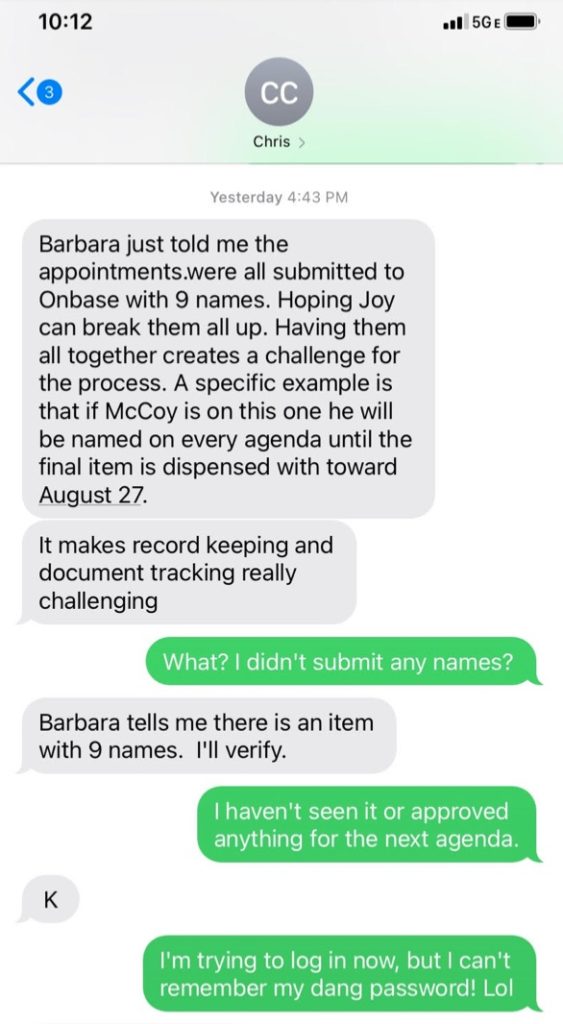
Anchorage Municipal Clerk Barbara Jones said to an Assembly committee last week that she will be asking the Assembly to give her a third week for counting of ballots in future elections.

Jones was giving the Assembly committee a report on the recent mail-in elections, and said that counting and verifying all the ballots is too much to get done in just two weeks.

“On canvass day, you saw it is chaotic,” she said. “We are counting every single ballot. Counting and counting and counting again. It is a lot to do in two weeks. We’re going to be asking the Assembly, next year [for a code change] to make the public session of canvass … three weeks after the election.”

That would push the Assembly vote certifying the results to the fourth week after the election.

Before the municipality moved to all-mail-in elections in 2018, most elections were decided the night of Election Day.

How that extra week of counting will work in runoff campaigns in future mayoral elections is something the Assembly will need to consider. If the candidates going forward to a runoff don’t get the results for a month, it gives them little time to run a campaign.

For example, in the case of the most recent mayoral runoff, the election ended April 6, and the results weren’t certified until April 20. Ballots for the runoff went in the mail on April 22. The extension of that to April 27 certification for a May 11 runoff would mean the ballots wouldn’t be in the mail until April 28 at the earliest.

Rivera demands that Mayor Bronson buy old Alaska Club building for homeless by Friday

Assemblyman Felix Rivera issued a press release on Tuesday urging Mayor Dave Bronson to purchase the old Alaska Club building on Tudor Road and use it to serve homeless people.

It is a building that the former acting mayor rejected buying in November because of its poor condition and the need for costly remodels. The building was one of a series of buildings that former mayor Ethan Berkowitz was buying around Anchorage to create a network of shelters and services for homeless people and addicts.

At a meeting of the Assembly Committee on Housing and Homelessness, the mayor’s Chief of Staff Craig Campbell told the Assembly that the mayor was not inclined to buy the building.

“Mayor Bronson has until this Friday, July 9 to determine whether his administration will move forward with a years-long process to acquire the old Alaska Club building on Tudor Road. The building purchase was part of a larger framework to move forward with addressing homelessness and underlying issues in the Municipality of Anchorage, including substance misuse treatment and permanent supportive housing,” Rivera said in a statement.

“Visible homelessness is an issue for Midtown and one as representatives we’ve been asked to deal with repeatedly. The Alaska Club purchase is a reasonable response to those requests and can be done in conjunction with other options to address homelessness in Midtown and throughout Anchorage. Without the Alaska Club as an option, nothing in Midtown will change,” Assemblywoman Meg Zaletel said, calling the Alaska Club location a “reasonable path forward.”

“Without the Alaska Club, Mayor Bronson is forcing the Assembly into a no-win scenario,” Rivera said. “I’ve heard many times that this new administration wants to work with the Assembly to solve the problems of our city. Removing the Alaska Club from the negotiating table is tying one arm behind our backs.”

The previous acting mayor did many things as she left office — she signed a family leave policy, she remodeled the website for the Municipality, but one thing she didn’t choose to do is to purchase the Alaska Club building.

Mayor Dave Bronson is working on a plan to build a $15 million transition center for homeless in Anchorage, which would cost the city $12 million a year to operate. His model is based off of similar centers in Reno, Nevada and San Francisco, California.