Friday, June 5, 2026
Home Blog Page 1073

Teachers dance and clap for the school year, and then the superintendent issues the mask mandate for 50,000 students

By SUZANNE DOWNING

The teachers gathered in the Bartlett High School auditorium in Anchorage, crowded in together, hardly a mask in sight, while a woman who appeared to be Superintendent Deena Bishop sashayed across the stage to the microphone.

The lyrics to the song, “Ain’t No Stoppin’ Us Now” blared, and teachers rose from their seats and clapped, bobbed, and sang along, as they would in church:

“There’s been so many things that’s held us down
But now it looks like things are finally comin’ around
I know we’ve got, a long long way to go
And where we’ll end up, I don’t know”

It was a school leadership conference moment captured for posterity by Assembly member John Weddleton for his Facebook followers, and he was clearly in the groove with enthusiasm when he wrote, “The School Board has way more fun than the Assembly. The ASD leaders summit turned into a dance party. There seems to be a lot of excitement for a year that is not like last year.”

That didn’t age well.

One day after the video went live on Facebook, Bishop sent a letter to parents saying that she will require face masks on all 50,000 children in the district, from K-12, plus on staff and teachers’ faces when school begins this fall.

Her decision was reviewed by the Anchorage School Board on Tuesday and they declined to take any action or advise her to change course.

Bishop, the leader of Anchorage schools and ultimate decider, was taking her cues from the board itself. Word is, school board member Pat Higgins had bullied her and said she would be fired if she didn’t put a mask mandate in place. And so she did. Her job was clearly on the line. The decision was clearly in her wheelhouse, but she bent to the pressure of her employers, the Anchorage School Board. It’s pure cowardice.

The decision not only covers all traditional buildings operated by the school district, but also stretches to charter schools that operate out of their own private buildings, if those schools are under the supervision of the school district.

Anchorage parents wondered what happened to the mayoral order, made on July 1 by Mayor Dave Bronson, that said, “Effective today, mask mandates in all Municipality of Anchorage owned, leased, or used buildings is rescinded. While individuals may make personal choices to wear a mask as a protective health measure, masks will not be required to be worn by anyone entering or while with a municipal facility. In addition, the Municipality of Anchorage will not require any employees, or applicants for city employment, to be vaccinated.”

Aren’t school buildings owned by the Municipality of Anchorage? If not the municipality, then is it the school district? Has the mayor no jurisdiction to override the superintendent?

Such are the questions of reasonable people, the ones who observe with a raised eyebrow the see-saw advice coming from the Centers for Disease Control and Prevention.

But our government is structured in such a way that the Assembly must stay out of the School Board’s realm.

Even child advocate Assemblywoman Jamie Allard, who said that masking children eight hours a day constitutes child abuse, only has her voice to use — she has no authority over the school board or the superintendent. She can only be a verbal champion and critic of the mask policy being laid down as law in Anchorage Schools. At least she stood up and said what many parents think: This mask policy is child abuse.

In the same way, the governor of Alaska cannot hand down edicts to the Anchorage School Board. Gov. Mike Dunleavy has his own jurisdiction and in reality, Alaskans would not want to grant a governor that level of authority.

Friends, we get the local government that we elect. Anchorage voted for this school board, and this school board’s the exception of one, is a radical body. Scores and graduations are dropping, suicides among students are rising, and this board and this superintendent is going to muzzle the young faces all over again — with no end in sight, no set point for when the muzzles can come off.

It was Kelly Lessens who was elected to serve out the term of Starr Marssett, who resigned earlier this year. Lessens said during the most recent school board meeting that Americans don’t live in a fundamentally free society, inferring that putting a mask on children should be an acceptable price to pay for living in America.

She will have to run for reelection in 2022 and those words will, perhaps, come back to haunt the hardcore Democrat.

Margo Bellamy, the racially charged School Board President who supports using critical race theory in schools, has a term that also ends in 2022. Her seat could use some freshening up, as well.

If both of those seats flip to conservative, the Anchorage School Board will be more diverse in its perspective, but it will still vote for a progressive, union agenda at least until the 2023 election. Only Dave Donley is standing for education, not fads, for Anchorage schools.

Read: Dave Donley: Why I voted against the masking of the young

The adage goes, “The beatings will stop when morale improves.” This is our Anchorage School District today under the current leadership.

The fear-based, NEA-driven, science-free masking of our children will continue until Anchorage voters have had enough and start treating the school board elections with more concern than any other elected body. There are recalls, there are lawsuits, but all of this has to start with the stakeholders — the parents and grandparents, aunts and uncles, and dare we say, the students themselves.

Democrats pressure governor to appeal the reversal of $500 campaign donation limit

The Alaska Senate Democrats are asking Gov. Mike Dunleavy to fight a Ninth Circuit Court of Appeals decision that made the $500 campaign donation limit in Alaska illegal.

The court said in Thompson v. Hebdon that Alaska laws placing limits on certain campaign contributions violate the First Amendment of the U.S. Constitution.

Read: Court strikes Alaska’s $500 campaign contribution limit

“If the court’s ruling stands, there will be no limits on individual campaign contributions to candidates or political groups, and no limits on nonresidents’ campaign contributions,” the group wrote in a letter to the governor.

“Alaskans recognize the corrosive effects of big money in politics and understand that elections should not be decided simply by wealthy individuals capable of making unlimited campaign contributions—including Outsiders who do not live and work here, and cannot vote here, but seek influence over Alaska’s elected representatives for favorable policy from which they will reap benefits. Unlimited campaign contributions are a threat to our democracy and should not be permitted to drown out the voices of average Alaskans,” the Democrats said.

The campaign limit is one that especially hurts Republican candidates because they do not typically get donations from union organizations, which are exempt from the limit.

But the group is saying the governor has a constitutional duty to fight the court.

“We therefore urge you to direct the attorney general to seek rehearing en banc within the timeframe required for the petition. The case was decided by a three-member panel of judges, with the court’s Chief Judge dissenting in the outcome. If the petition is granted, eleven members of the court will review these issues, and the Chief Judge would serve on that bench,” the group wrote, adding that “The Chief Judge’s dissenting opinion is factually and legally sound, and the state should rely on that reasoning for our arguments.”

The Democrats say the ruling is going to threaten the integrity of elections and must be blocked by the governor.

“Campaign season is already underway, and there is a danger that a gap in the law could result in wealthy donors making significant, unfettered campaign contributions. Therefore, as long as legal proceedings continue or should the petition be denied, the attorney general should seek a stay of the Thompson ruling until it is overturned or until Alaska enacts constitutionally permissible changes to our donation limits,” they wrote.

Those signing the letter were Senate Minority Leader Tom Begich, Scott Kawasaki, Jesse Kiehl, Elvi Gray-Jackson, Donny Olson, and Bill Wielechowski. Sen. Lyman Hoffman, a Democrat, did not sign the letter.

Mat-Su Borough school superintendent: No masks required for back-to-school

Superintendent of the Mat-Su Borough School District Randy Trani presented his school Covid-19 mitigation plan to the borough school board on Wednesday night.

The plan to be rolled out is school-specific, and is dramatically different from that being implemented by the Anchorage School District, where it’s “one size fits all” and students and staff must be masked when in campus facilities, except in limited situations.

For Mat-Su schools that have no cases of Covid-19, no masks are required of students and staff, while if there is a Covid-19 diagnosis at a school, the administration will review information from the State of Alaska Department of Health and Social Services, and has an option of masks or other measures. If there is a widespread outbreak at a school, the campus may be closed temporarily, with students doing distance learning.

“We are treating each individual school building as a community,” said Thomas Bergey, who is president of the School Board. The only guidance the board has given to the superintendent is that the schools will remain open, he said. The details of how to do that are operational matters in the purview of the superintendent.

“What folks don’t understand is that school boards, under Title 14 of state code, have specific duties, and the superintendent has specific duties. Keeping schools open or closed — that is the superintendent’s job,” he said. “The school board doesn’t have the authority to close the schools but has the authority to end a superintendent’s contract.”

Enrollment numbers for Mat-Su Borough schools were released last night by Trani during his superintendent report, and it appears the district will be on track for about 19,000 students, Bergey said, about the same as last year.

In Anchorage, parents are sharing stories about moving to the Mat-Su so their students can attend school without masks, and play football or other sports and take part in after-school activities. Bergey has heard those stories. Many parents testified at the board meeting on Wednesday, and nearly all of them wanted the board and superintendent know that they oppose masking the children.

In a parent survey responded to by 750 people in the Mat-Su, only 17 percent supported masks for school this fall, while 71 percent of the parents said “no” to masks on students. 55 percent of all parents participating in the survey were in the “hell no” category.

Read: Mask outrage at Anchorage School Board meeting

Read: Kenai will not mask school children

Read: Enrollment explodes at no-mask Anchorage Christian Schools

Dave Donley: Why I voted against masking the kids

By DAVE DONLEY / ANCHORAGE SCHOOL BOARD

The two school districts geographically contiguous to the Anchorage School District, Kenai and Mat-Su, have rejected mandatory masking of students for the coming school year. At the Aug. 3 meeting of the Anchorage School Board, Superintendent Deena Bishop presented her plan for Anchorage schools this fall.

It included changing from the completely successful Summer School policy of parent-choice optional masking to essentially full-time mandatory masking of every child while in a school district building. Some case-by-case exceptions will be allowed.

Students will not be forced to wear masks while actively doing sports. No longer will parents have the option to choose this health decision for their children.

The School Board could have rejected mandatory masking at the Aug. 3 meeting, but my three amendments against it all failed without being seconded. Those were essentially 6-1 votes in favor of no parental choice and mandatory masking.

The Board received hundreds of messages specifically on the masking issue both in support and opposed to mandatory masking. On the night of the meeting, my count was about 20 people testified in support and almost 50 against.

The primary expressed justifications for mandatory masking were support from the American Association of Pediatrics and the Center for Disease Control; the increased risk of the Delta COVID-19 variant; and currently increased COVID-19 case counts and hospitalizations. Additionally, proponents argued that masks have some, however small, ability to reduce COVID-19 transmission, so why not force their use?

The primary oppositions to mandatory masking were that:

1. Parents are the best at deciding personal health choices for their children and not a one-size-fits-all bureaucracy;

2. Typical masks do not work well against COVID-19 transmission;

3. Optional masking has worked successfully all summer in Anchorage Summer School, with only one publicized case out of 9,000 students;

4. Masks are potentially damaging to the physical and mental health of children;

5. The Centers for Disease Control has been so wrong so often and so political they cannot be trusted (the primary justification for the newest CDC mask recommendation was a single Massachusetts event that was not school related, and the school environment has many special safeguards);

6. The World Health Organization does not fully agree with the CDC;

7. Even the CDC reports that fewer than 1 in 200,000 or .005% of children infected have died from COVID-19, which is less than the children who die from influenza (the flu) most years, and we have never mandated masks due to the flu;

8. While the Delta variant is much more contagious, it is no more deadly, and the vaccines we have do a very good job of preventing serious illness;

9. Mandatory masking just will not work for the youngest children, at least those in kindergarten and first grade, and is harmful to them educationally, mentally and physically.

10. The school district’s process for approving exceptions to the masking rules is not working well, and children with special needs are suffering;

11. Some district staff will likely use the guidelines to justify forcing mask-wearing even outside the buildings and in spite of the identified exceptions;

12. Just like last year, because of other non-student-based influences, once a policy is in place, the school district will delay or refuse to change even if the science clearly no longer supports it;

13. Many parents who can afford to or can homeschool so will withdraw their children from ASD if masks are mandatory.

I extensively read and studied the facts and the data and concluded that, on the whole, mandatory masking of all students will do more harm than good for the students of the Anchorage School District. I am especially concerned with increased suicides, mental health damage to our children directly caused by mask mandates, and educational loss.

Accordingly, at the Aug. 3 meeting, I proposed three amendments to the policy, all of which failed due to having no supporting second for my motions. No other amendments were proposed. The plan then went into effect without the Board actually voting to adopt it.

My amendments were:

1. That the Board amend the plan to continue the Summer School parent-choice optional masking policy.

It failed for lacking a second.

2. That the superintendent reconsider the plan based on the public testimony.

It failed for lacking a second.

3. That the Board amend the plan to continue the Summer School optional masking policy for kindergarten and first-graders.

It failed for lacking a second.

I hope the superintendent and my fellow board members will reconsider and actively seek alternatives to mandatory masking of all students.

One idea a testifier offered to preserve parental choice was to group students into mask and no-mask classrooms. Our community needs to hold the district’s leadership responsible for promptly returning masking choices to parents if Anchorage is not in a high COVID-19 risk condition.

Dave Donley is a lifelong resident of Anchorage, parent of teenage twins, attorney, and served as a state representative and senator for 16 years. He wrote this as an individual School Board member and not on behalf of the Anchorage School District, School Board or any appointed or military position he may hold.

Don Young fundraiser draws in bipartisan group of supporters

From former Gov. Bill and Donna Walker, union representatives, to politicos whose resumes stretch far back in Alaska history, about 150 people gathered for the annual Congressman Don Young “Taste of Alaska” fundraiser for his next campaign for reelection.

Young has run for reelection since winning a special election to become Alaska’s lone congressman in 1973. He has served 25 two-year terms.

At a lovely private home on the lower hillside in South Anchorage, Young was introduced to the crowd by Julie Fate-Sullivan, wife of U.S. Sen. Dan Sullivan, who was to be a special guest but has been held in Washington D.C. by the infrastructure bill vote, which is pending.

Young held forth in his usual good-humored stump speech, telling the crowd that he’ll serve in the role as long as Alaskans say they need him there.

Spotted in the crowd were these notables (and many others): CJ Zane, Admiral Tom and Sylvia Barrett, Chuck Heath (brother of Sarah Palin), John Boyles, Rep. James and Nancy Kaufman, Jeremy Price, John Hendrix, Ashley Reed (father of Truman Reed), Sarah Erckmann Ward, Jim Udelhoven, Rachel Bylsma, Frank Bickford (Young’s 1984 campaign manager when he was challenged by Pegge Begich), Aves Thompson, Carl Mars, Joe Balash, John Crowther, Tara Sweeney, Mike Anderson, Daniel Shaw, Zoi Maroudas, Jason Hoke, Mary Ann Pease, Judy and Randy Eledge, Joseph Lurtsema, Frank McQueary, Curtis Thayer, Perry Green, Jordan Schilling, Deb Bronson, Ryan McKee, Daniel George, former Sen. Cathy Giessel, and former UA President Jim Johnsen.

Congressman Young was accompanied by his wife Anne Walton Young.

The annual Taste of Alaska event was postponed in 2020 due to the Covid-19 pandemic, and made a triumphant return at a new venue, and with many familiar faces, and several young up-and-comers.

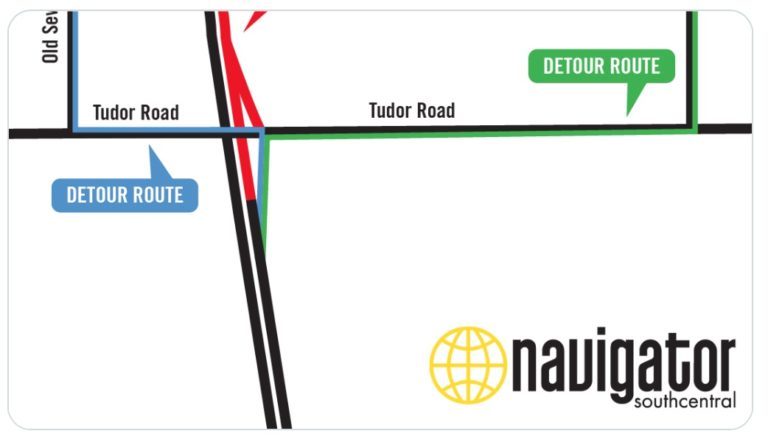
Alaska Life Hack: Tudor Road on-ramp repairs this weekend, expect detour

0

The Department of Transportation and Public Facilities is making permanent repairs to areas damaged by the Nov. 30, 2018 earthquake throughout Southcentral Alaska.

Starting Friday, Aug. 6, DOT is closing the on-ramp northbound Seward Highway at Tudor Rd at 10 pm. The ramp and highway will reopen at approximately 4 am on Monday, Aug. 9.

Birth, death, marriage certificates are back online as state Vital Statistics returns after massive cyberattack took it down

The Alaska Department of Health and Social Services completed the first of a three-step process to recover from the attack on its information technology infrastructure.

Back online are a few services, such as the ability to get birth, death, and marriage certificates.

The “detection and analysis phase” is complete and the department’s security contractors identified those responsible for conducting the attack. The department has called it “a highly sophisticated group known to conduct complex cyberattacks against organizations such as state governments and health care entities,” but did not elaborate.

“At this time, the investigation has found no indications that this was a ransomware attack and there is no current evidence that Alaskans’ protected health information or personally identifiable information was stolen,” the department said in a statement.

“The type of group behind this disruptive attack is a very serious operation with advanced capabilities,” said Commissioner Adam Crum. “DHSS is intensely focused on responding to the attack and we continue to work with our security partners and the state Office of Information Technology to restore services as quickly and safely as possible.”

“This was not a ‘one-and-done’ situation, but rather a sophisticated attack intended to be carried out undetected over a prolonged period. The attackers took steps to maintain that long-term access even after they were detected,” said Technology Officer Scott McCutcheon. “In addition to getting everything back up and running, our team is taking strong, preventative actions and developing more robust incident response capabilities so we can quickly respond to any future cyberattacks.”

DHSS is focused on:

  • Containment, eradication and recovery: “Significant progress has been made in removing the attacker from DHSS systems and we have no evidence of the attacker being active in our environment at this time. Recovery work continues to build back resilient systems and restoring services. A firm timeline on full restoration of services is not yet known as the Information Technology Incident Response Team is developing and implementing new processes and technologies to provide more secure and resilient services.”
  • Post-incident activity: “DHSS will further strengthen its processes, tools and people to be more resilient to future cyberattacks. Recommendations for future security enhancements and any additional funding needs will be provided to Commissioner Crum.”

The first system brought back online was the Electronic Vital Records System used by the Health Analytics and Vital Records Section (HAVRS) to fulfill requests for vital records such as birth, death and marriage certificates.

Access to the system was restored on July 26, HAVRS has been transitioning back to automated processes and addressing the backlog of work created by the outage.

Both the Juneau and Anchorage Vital Records Offices have restored most of their certificate services, with a few limitations in place so staff can focus on processing the backlog orders.

There is no timeline for how long it will take to eliminate the backlog, but this task is a priority for HAVRS, and staffing has been adjusted to work through the process as quickly as possible, the department said.

More details about limitations and current capabilities at HAVRS are posted online at dhss.alaska.gov/dph/vitalstats/pages/.

“As systems move closer to coming back online, DHSS recognizes this lengthy outage of many of its online services has been disruptive to Alaskans but again asks for everyone’s patience as we work through this ongoing situation. Staff are working as efficiently as they can to process requests in a timely manner; however, in many cases, the procedures they have been following take longer due to the need to perform tasks manually,” the department said.

For phone assistance during business hours (8 a.m. – 4:30 p.m.), contact the department at 907-269-7800 or download this detailed list of contacts for divisions, sections and programs. Many divisions have temporary webpages available with their most critical information and forms at dhss.alaska.gov.

For questions specific to COVID-19, the COVID-19 vaccine helpline is available at 907-646-3322 from 9 a.m. – 6:30 p.m. on weekdays, and 9 a.m. – 4:30 p.m. on weekends. You may also email [email protected] for help or visit the temporary COVID-19 section of the DHSS website at dhss.alaska.gov/dph/epi/id/pages/COVID-19/default.aspx.

Alaska Courts order masks in court

Alaska Supreme Court Chief Justice Daniel Winfree has ordered all who visit courthouses and court facilities in Alaska to wear face masks.

He also said that visitors may be required to undergo screening protocol with questions about whether the visitor has had flu-like symptoms, been ordered to quarantine, or been in close contact with someone who has been diagnosed with Covid-19.

Alaska has seen increased Covid-19 case counts and the prevalence of the Delta variant, Winfree wrote in his order.

“The Centers for Disease Control and Prevention (CDC) recommends people who live in an area of substantial or high coronavirus transmission wear masks in indoor public spaces, regardless of vaccination status. It also recommends vaccinated people with vulnerable household members, including young children and those who are immunocompromised, wear masks indoors in public spaces. The agency recently released information showing fully vaccinated people can spread the highly contagious Delta variant as readily as non-vaccinated people,” he wrote.

Court system officers or employees may exclude visitors who refuse to cooperate with this Order and those who fail the screening protocol, he said.

Winfree said judges may ask people to remove their masks for the purpose of “witness testimony, defendant identification, or making an appropriate record, provided that other protective measures are in place such as Plexiglas barriers.”

The number of Alaskans who are in the hospital with Covid is 100, as of this morning’s state report.

Civics lessons from school board member: Masking kids is ok, because ‘it’s not a fundamentally free society’

New Anchorage School Board member Kelly Lessens waxed philosophic at the end of Tuesday’s board meeting. The board had just rubber-stamped the mask mandate implemented by Superintendent Deena Bishop, and the meeting was coming to a close when Lessens issued her remarkable statement: She supports the masking of children because “It’s not really a fundamentally free society.”

Lessens went on to explain that she doesn’t drive on the wrong side of the road or sell alcohol or tobacco to children, nor does she pass a school bus when its lights are flashing.

To her, masking children is a safety precaution for the children and until every child 12 years and older whose parents want them to be vaccinated is vaccinated, plus two weeks beyond that time for good measure, that’s where she will stand on the issue.

Lessens is a Democrat who joined the school board after winning in April, although narrowly.

Over 100 parents testified and the board received another 914 emails from parents, most who do not support the superintendent’s actions.

“I support caution as we move forward in this Covid moment,” Lessens said. “And I see it as a moment.”

Roll tape:

Read: Mask outrage: Parents testify they’ll pull their kids from Anchorage public schools