Saturday, June 6, 2026
Home Blog Page 1068

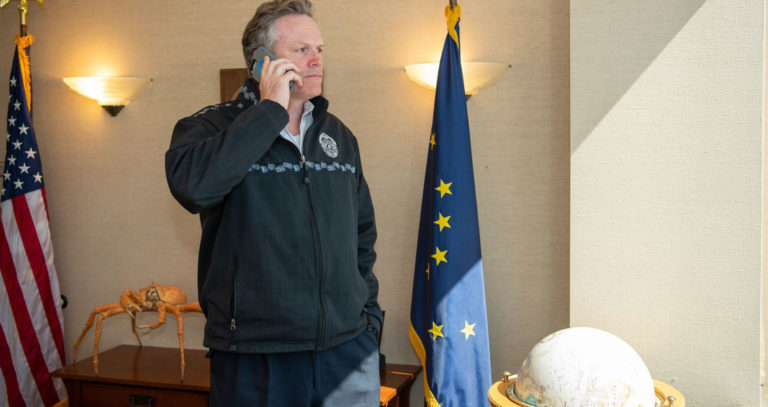
Breaking: Dunleavy files for reelection

Gov. Mike Dunleavy made it official this morning. He is running for reelection. His filing showed up on the Alaska Public Offices Commission reports.

Dunleavy expressed his intent to run for reelection to his cabinet on Thursday night.

In the next few days he will announce who the chair of his campaign is. Because of APOC rules, at this point, he has not made a campaign website or set up a campaign structure.

Under ranked choice voting, the governor will need to make a decision about a running mate, but it is a decision that won’t need to be made until the filing deadline next June. According to Alaska Public Media, he has chosen his lieutenant governor, Kevin Meyer.

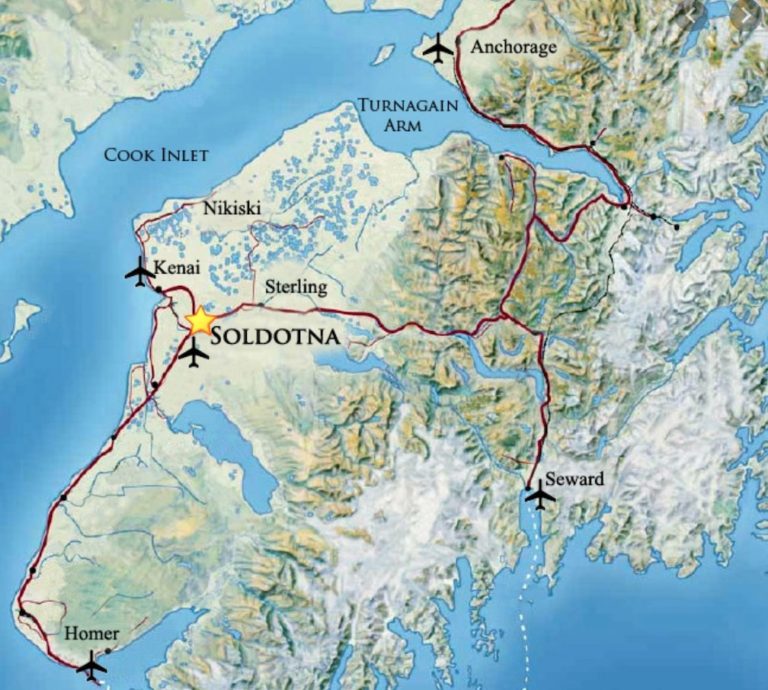
(Writer Suzanne Downing is on the road to Kenai and will update this story over the course of the day.)

Murkowski has nearly a dozen new staffers

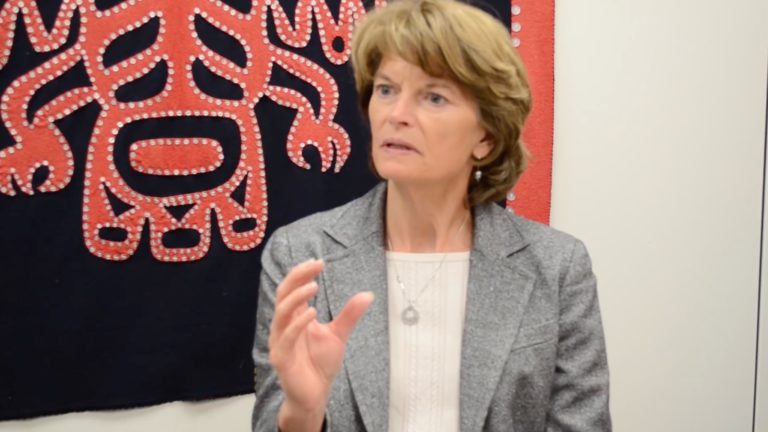
Sen. Lisa Murkowski has a host of new staff members, she has announced. They are:

Kate Williams Sterne returns to the office as Deputy Chief of Staff and Legal Counsel. Kate graduated from Juneau-Douglas High School and holds a bachelor’s degree in Economics from the University of North Carolina at Chapel Hill as well as a Juris Doctor from the University of San Diego School of Law. Kate has ample Capitol Hill experience, having previously served as Legislative Director for Senator Ted Stevens, Oil and Gas Counsel for the U.S. Senate Energy and Natural Resources Committee, Deputy Chief of Staff and Legislative Director for Senator Murkowski, and Counsel for Majority Whip Senator John Cornyn. Kate has also served in a number of roles in Alaska including as an Associate Attorney, Legal and Regulatory Affairs Manager for the Alaska Oil & Gas Association, Business Manager for a leading commercial construction company, and most recently Assistant Attorney General for the State of Alaska. She is from Juneau.

Aaron Thiele joined the office in January as a Legislative Assistant handling Energy and Natural Resource issues. Aaron previously served as a Senior Advisor in the Office of Congressional and Legislative Affairs at the Department of the Interior, where he worked on issues pertaining to United States Geological Survey, Bureau of Indian Affairs, Bureau of Indian Education, and the Bureau of Reclamation. Prior to joining the Department of Interior, Aaron previously worked in the House of Representatives and graduated with a bachelor’s degree in International Relations from California Polytechnic State University, San Luis Obispo.

Chris Griffin joins the office as a Legislative Aide assisting with a portfolio of energy issues, including the Department of Energy, renewable energy, climate change, energy efficiency, and nuclear energy. In January, Chris joined Senator Murkowski’s personal staff from previously serving as a member of her U.S. Senate Energy and Natural Resources Committee staff, where he was also a Legislative Aide working on public lands and natural resource issues. Chris graduated with a bachelor’s degree in political science from Tufts University. He is from Anchorage.

Jamie O’Connor joined the office several months ago as a Legislative Assistant for fisheries, oceans, and sciences. She is a fifth generation Alaskan and salmon fisherman from Bristol Bay, Alaska where she set nets with her family each summer. Jamie graduated from the University of Alaska Anchorage with a bachelor’s degree in Journalism and Public Communication. This is a return to Capitol Hill for O’Connor, who previously served in the office of Senator Dan Sullivan in 2015-2016 as Senior Staff Assistant and Internship Coordinator. Prior to joining Senator Murkowski’s staff, JO’Connor served as the Working Waterfronts Director for the Alaska Marine Conservation Council (AMCC) out of Homer, Alaska as well as serving on the Advisory Panel to the North Pacific Fishery Management Council. Her fisheries experience also includes the AMCC Young Fishing Fellowship with the North Pacific Fisheries Association and contract fisheries communications work.

Maya Becker joins the office as the 2021 National Oceanic and Atmospheric Administration (NOAA) Sea Grant Knauss Fellow. Becker earned a bachelor’s degree from Columbia University and a master’s degree from the Scripps Institution of Oceanography at the University of California, San Diego, both in earth sciences. Becker is currently a PhD candidate at Scripps Oceanography, and her dissertation research is centered on ice–ocean interactions on Antarctica’s largest floating ice shelves. During her graduate studies, she spent time in McCarthy, Alaska, for a glaciology course organized by the University of Alaska Fairbanks.

Abigail Hemenway recently joined the office as a Legislative Correspondent. Previously, she served as a Staff Assistant for the U.S. Senate Energy and Natural Resources Committee. Hemenway holds a bachelor’s degree in political science from the University of Miami Florida. She was born and raised in Juneau.

Brian Dusek joins the office as Deputy Press Secretary. Dusek graduated from Colorado State University and holds a bachelor’s degree in Business Administration with a concentration in marketing and a bachelor’s degree in Communication Studies. Prior to serving on Senator Murkowski’s staff, Dusek was an intern for the CBS News communications team, an intern in Senator Dan Sullivan’s office in the summer of 2019, and an intern in Senator Murkowski’s office in 2017. Dusek was born and raised in Soldotna.

Joining Senator Murkowski’s Anchorage office:

Cordelia Kellie joins the office as Special Assistant for Rural Affairs. Cordelia Qiġñaaq Kellie is Iñupiaq, and comes from the Tagarook and James families from Wainwright on the North Slope. Her career has included communications and external affairs, tribal education, rural community development, legislative affairs on the state and federal levels, language and cultural instruction, and building regional and statewide rural and Alaska Native relationships through grassroots community organizing. Kellie received her bachelor’s degree in English Language and Rhetoric and a minor in Communications from UAA. She is a 2021 NANA Richard A. Baenen Award winner for outstanding service to the Northwest Arctic. For her work in language revitalization and community building, she has also received the 2020 AFN Eileen Panigeo Maclean President’s Award for Education and was 2020 Olgoonik Corporation Shareholder of the Year. Her board service has included the Alaska State Council on the Arts, appointed by former Governor Walker; Alaska Humanities Forum as Board Secretary, Get Out the Native Vote, and the Anchorage Symphony, and is an Advisory Group Alternate for the UN Decade of Indigenous Languages for the Arctic Region. She was born in Anchorage, raised in the Matanuska-Susitna Valley, has lived in Juneau, Fairbanks, and Utqiaġvik.

Hannah Ray is relocating to the Anchorage office after being promoted to Deputy Communications Director. Hannah has served in Senator Murkowski’s D.C. office as Press Secretary since 2017. Hannah has a bachelor’s degree in Communication and Public Relations from the University of Central Arkansas Honor College. Prior to working in Senator Murkowski’s office, Ray served as the Community Events Manager for the American Cancer Society (ACS) in Anchorage. During her tenure at ACS, she worked in communities across the state to help manage events and develop patient services for cancer patients in rural Alaska.

Leann Sommer joins the office as the Alaska State Scheduler. Leann is Athabascan and of the Louden Tribe. Leann holds a bachelor’s degree in Business Administration: Tourism and Hospitality Management from Fort Lewis College. She has been working in the tourism industry in Alaska throughout the last decade. Most recently Leann was the Director of Sales at the Hyatt Place Anchorage-Midtown and received two awards during her time there: The 2020 National Center for American Indian Enterprise Development Native American 40 Under 40 and the Alaska Hotel and Lodging Association 2019 Sales Manager of the Year. Previously, she was an Associate Consultant at OSIYO Communications, LLC. working with Indian Country. Sommer is from Galena.

Hannah McCue joins the office as a Staff Assistant. Hannah recently graduated from Oregon State University with a bachelor’s degree in Environmental Science, specializing in Conservation, Resources, and Sustainability with a minor in Chemistry. McCue previously interned in Senator Murkowski’s Anchorage office in 2020 and the D.C. office in 2017. Prior to joining the office, McCue volunteered for a sustainability initiative in Oregon focusing on watershed restoration. Her family has lived in Anchorage, Alaska for the past 12years.

Covid shuts down Alaska jury trials again

Jury trials have been suspended across Alaska for most of August due to the increase in Covid-19 cases. The courts that have canceled the trials are:

  • Anchorage – until at least 08/27/2021 Order 896
  • Dillingham – until at least 08/27/2021 Order 897
  • Homer – until at least 08/27/2021 Order 895
  • Juneau – until at least 08/31/2021 Order 21-16
  • Kenai – until at least 08/27/2021 Order 895
  • Ketchikan – until at least 08/31/2021 Order 21-18
  • Kodiak – until at least 08/27/2021 Order 898
  • Kotzebue – Trial Jury until at least 08/31/2021 Order 21-07 
      Grand Jury until 08/26/2021 Order 21-08
  • Palmer – until at least 08/27/2021 Order 894
  • Prince of Wales Island – until at least 08/31/2021 Order 21-19
  • Sitka – until at least 08/31/2021 Order 21-17

James Kaufman: Fiscal planning and Alaska’s productive path forward

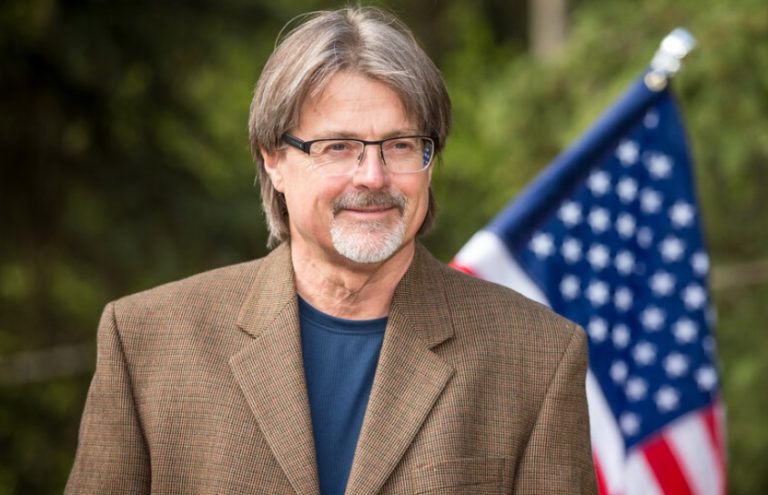
By REP. JAMES KAUFMAN

Alaska needs a path forward, and Alaskans deserve the most productive path, one that maximizes our incredible potential. 

During my 2020 campaign to represent Alaska House District 28, I was often asked to explain why I was running and what I would do differently.  

I said then that I thought Alaska has not been managed for best results. We deserve better than business-as-usual. We need more performance, less waste.  

What would I do differently? 

I can make a difference using problem-solving techniques learned during my career in quality and project management.  

  1. Study the problem and define it accurately.
  2. Determine root causes, seek to understand underlying conditions. Treating symptoms is not the cure.
  3. Develop corrective action plan(s) using knowledge learned in steps 1 – 2.
  4. Implement corrective action plan(s) while managing the impacts of changes.
  5. Monitor improvements and sustain progress. Adjust using steps 1 – 4 as problems arise.           

If what is described above doesn’t sound like can-kicking government business-as-usual, it’s not. So, let’s apply this process to one of our biggest challenges.

Step 1: Defining the problem

Alaska has a structural fiscal imbalance. Symptoms include revenue not matching our spending, use of our savings account to cover expenses, and abrupt policy changes. We have a lagging economy along with declining resource revenue, and a shrinking population. 

We need a coherent set of policies that work together to control spending while optimizing benefit from our resources.     

The governor, past and present fiscal policy work groups, and others have taken on the “comprehensive fiscal plan,” but Permanent Fund Dividend/Revenue combinations have monopolized the current conversations. 

I’ve also been working on fiscal policy.  I am now presenting a key component of my plan to improve our fiscal balance, which I believe to be the top issue now on the table. 

Step 2: Determining root causes

Spending: Alaska has been operating without an effective appropriation limit for nearly 40 years. The current limit was enacted in 1982, when approaching peak oil production. The timing, plus a population and inflation adjustment, have created a cap too high to control spending. 

Productivity: Resource revenues have declined while we have been operating in ways that do not support a healthy, productive economy. Flawed or outdated processes have decreased satisfaction, transparency, and trust. There is immense opportunity if we can do a better job investing in Alaska and Alaskans.

Step 3: Corrective Action Planning

Goal: Develop policies that prioritize stability, control spending, and increase the health of our private sector. Use measurements and control mechanisms that are relevant. 

To accomplish this, I have submitted legislation proposing a new, functional cap which will use a factor based upon a five-year trailing average of private sector economic performance within Alaska’s borders. Specifically, the factor being averaged is real GDP minus government spending.

If the government wants to spend more, it must support policy that will enable the growth of our private sector (productive) economy. A spending limit tethered to our GDP creates a constructive link to our private sector and ensures that government doesn’t outgrow the economy that it’s meant to support. This proposal would set a spending cap roughly at current levels and would include a constitutional provision allowing for some flexibility in the case of unforeseen risks.

The results of the legislation would be the following:

  • Our revised upper control limits would refocus and prevent chronic overspending.
  • The link to our private sector performance would incentivize beneficial policy, enable prosperity, and increase revenue from economic activity.
  • Pressure on the permanent fund as a funding source will decrease in the presence of increased prosperity and resultant revenue.  
  • Using a 5-year rolling average creates predictability. Spending during short-term downturns will be slightly inflated by the averaging, while government growth will lag slightly behind in sharp upward trends.
  • A resilient Alaskan economy is a good counterbalance to the Permanent Fund’s reliance on global investment.   
  • Lastly, we can avoid the trap of becoming a “financialized” economy that relies only on the permanent fund while ignoring other opportunities. There is a real hazard of becoming a trust-fund state with a trust-fund government that does little to develop its people and resources. 

Step 4: Implementation

On Aug. 16, the Legislature will return to Juneau for a third special session. The agenda includes an appropriation limit.

Hopefully my proposed legislation will pass. We need to create a strong link between government and our productive economy before it’s too late. Let’s be productive and take this opportunity. 

Rep. James Kaufman serves in the Legislature for Alaska House District 28.

Census factoids III: Hispanics were the winners for population growth, at 23%

While Americans who identified themselves as “White alone” decreased as a percent of the population since 2010, Hispanics and other races and race combinations grew.

Some statistics release by the U.S. Census Bureau on Thursday:

  • The White population remained the largest race or ethnicity group in the United States, with 204.3 million people identifying as White alone.
  • Overall, 235.4 million people reported White alone or in combination with another group.
  • The White alone population decreased by 8.6% since 2010.
  • The Two or More Races population (also referred to as the Multiracial population) has changed considerably since 2010.
  • The Multiracial population was 9 million people in 2010 and is now 33.8 million people in 2020, a 276% increase.
  • The “in combination” multiracial populations for all race groups accounted for most of the overall changes in each racial category.
  • All of the race alone or in combination groups experienced increases.
  • The Some Other Race alone or in combination group (49.9 million) increased 129%, surpassing the Black or African American population (46.9 million) as the second-largest race alone or in combination group.
  • The next largest racial populations were the Asian alone or in combination group (24 million).
  • American Indian and Alaska Native alone or in combination group was 9.7 million, and the Native Hawaiian and Other Pacific Islander alone or in combination group was 1.6 million.
  • The Hispanic or Latino population, which includes people of any race, was 62.1 million in 2020. The Hispanic or Latino population grew 23%, while the population that was not of Hispanic or Latino origin grew 4.3% since 2010.

“It is important to note that these data comparisons between the 2020 Census and 2010 Census race data should be made with caution, taking into account the improvements we have made to the Hispanic origin and race questions and the ways we code what people tell us,” the Census Bureau said.

Other results

Alaskans identifying as White alone are now at 59.4%, compared with 66.7% in the 2010 Census.

Alaska is the 12th most diverse state in the country, at 62.8 percent on the governments complicated “diversity index.” The index measures the probability that two people chosen at random will be from different race and ethnicity groups.

Maine is the least diverse state, at 18.5 percent on the diversity index.

California is now an Hispanic-majority state, as more than 39 percent of Californians identified as Hispanic or Latino White-not-Hispanic makes up 35 percent of the 40 million Californians.

Hawaii is the most diverse state, followed by California.

Phoenix, Arizona’s population grew from 1.4 million people in 2010 to 1.6 million in 2020, a rate of 11.2 percent, according to the Census Bureau; it is the fastest rate of growth among America’s largest cities, making Phoenix now the fifth-largest city int he U.S., surpassing Philadelphia in that slot.

The Villages, Florida, a master planned community, was the fastest-growing “metropolitan area” over the last decade, according to the Census Bureau. It went from 93,000 residents in 2010 to about 130,000 since 2010.

Census factoids II: Top 25 boroughs in Alaska

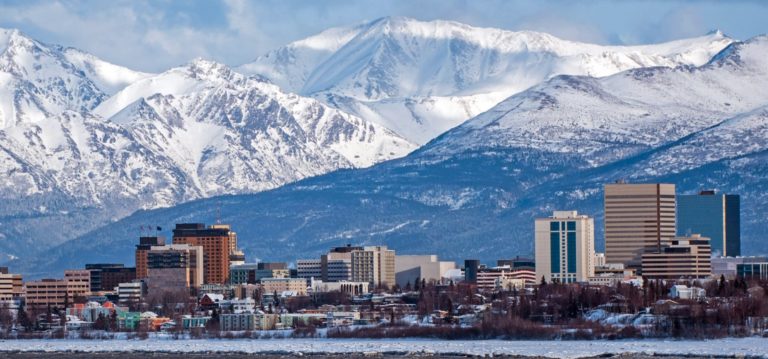
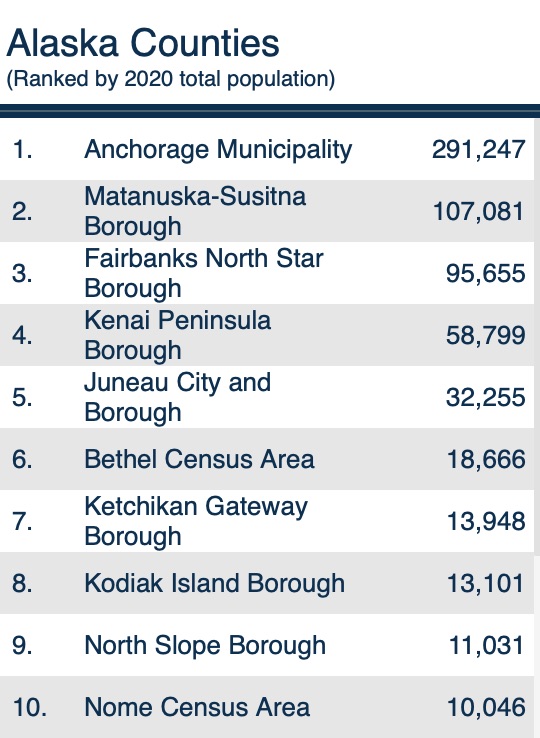
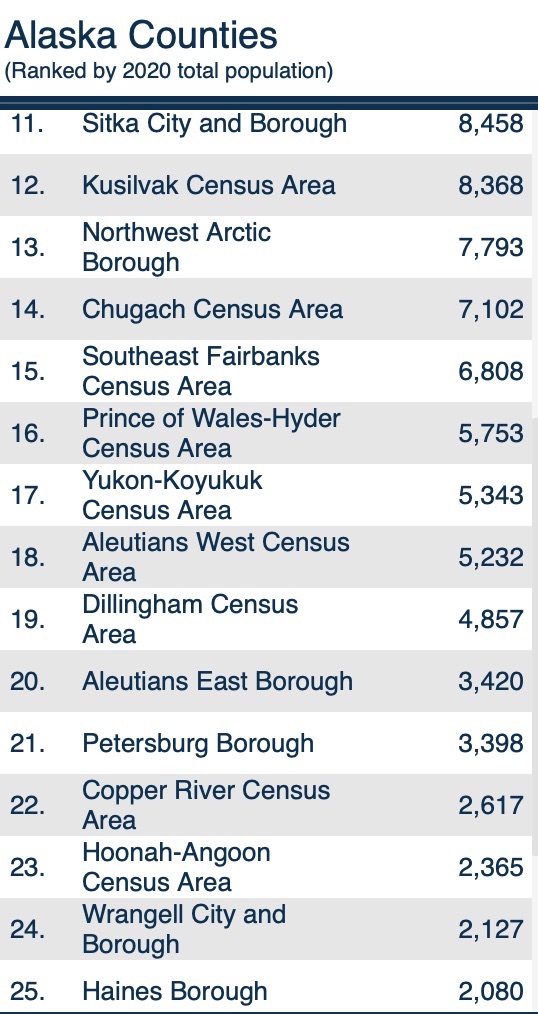
Anchorage, the Mat-Su Borough, and Fairbanks North Star Borough are at the top of the population chart for Alaska, and Kenai is moving up the list.

Anchorage has inched downward population-wise in the 20 years since the 2000 Census, when there were 291,826 residents, while in that same Census, Fairbanks North Star Borough had 82,840 people, and the Mat-Su Borough had 59,322, which is about what the Kenai Peninsula Borough has in 2020.

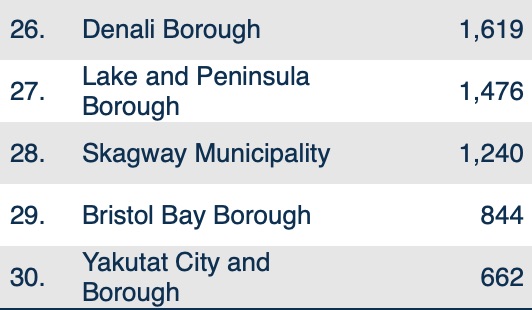
Here’s the list from the U.S. Census:

Changes in the neighborhood

Ketchikan: 13,948, an increase of 3.5 percent

Sitka: 8,458, a decrease of 4.8 percent

Lake and Peninsula Borough: 1,476, a decrease of 9.5 percent

Northwest Arctic Borough: 7,793, an increase of 3.6 percent

Kusilvak: 8,368, an increase of 12.2 percent

Bethel: 18,666, an increase of 9.7 percent

Dillingham: 4,857, an increase of 9.2 percent

Kodiak: 13,101, a decrease of 3.6 percent

Haines: 2,080, a decrease of 17 percent

Denali Borough: 1,619, a decrease of 11.3 percent

Yakutat: 662

Hoonah-Angoon: 2,365

Prince of Wales: 5,753

Petersburg: 3,398

Read: Mat-Su Borough grew by 20 percent in decade

Census factoids: Mat-Su population grew by over 20 percent in last 10 years

The Matanuska-Susitna Borough was one of the fastest growing areas of the state in the past 10 years.

The 2020 Census counted 107,081 people living in the Mat-Su, an increase of 18,086 or 20.3 percent.

Fairbanks lost population, and is now at 95,655, which is 1,926 fewer than in 2010, or a loss of 2 percent.

Anchorage Borough lost population as well, although slightly. The current population is 291,247, a shrinkage of 579 people in the decade, or 0.2 percent.

Kenai Borough grew to 58,7999, an increase of 3,399 in the decade, or 6.1%

Juneau City and Borough gained population and is now at 32,255, which is 980 more than in 2010, or a 3.1 percent increase.

Wrangell City and Borough shrank to 2,127. That is a loss of 242 people or 10.2 percent.

North Slope Borough also grew rapidly, although the overall numbers are smaller: There are 11,031 people living in the borough, an increase of 1,601 since 2010, or 17 percent.

The borough that has seen the most growth in the decade is Skagway, which went from 968 in 2010 to 1,240 in 2020, an increase of 272, or 28 percent growth.

The population shifts are what will inform the redistricting process, as political boundaries all over the nation change as a result of changing population and demographics.

The overall population of Alaska is 733,391, an increase of 3.3 percent in the decade.

Check back with Must Read Alaska for more information about the Census in Alaska, as we take a look at some of the more rural districts in Alaska.

National factoids

County and metro area highlights released on Thursday by the U.S. Census Bureau:

  • The largest county in the United States in 2020 remains Los Angeles County with over 10 million people.
  • The largest city (incorporated place) in the United States in 2020 remains New York with 8.8 million people.
  • 312 of the 384 U.S. metro areas gained population between 2010 and 2020.
  • The fastest-growing U.S. metro area between the 2010 Census and 2020 Census was The Villages, FL, which grew 39% from about 93,000 people to about 130,000 people.
  • 72 U.S. metro areas lost population from the 2010 Census to the 2020 Census. The U.S. metro areas with the largest percentage declines were Pine Bluff, AR, and Danville, IL, at -12.5 percent and -9.1 percent, respectively.

Rep. Eastman attends Mike Lindell election security conference in South Dakota

Rep. David Eastman was a speaker Wednesday at a Mike Lindell’s (My Pillow) Cyber Symposium in Sioux Falls, South Dakota, an event that ends today.

Eastman spoke about the U.S. Constitution being words on a page until people have the conviction to follow those words. As far as election integrity, he said, if there is no obligation on the part of those who administer elections to provide answers to reasonable questions and transparency to the public, “then you don’t really have an election.”

Eastman recounted briefly the hack of the Alaska Election Division last year before the election.

“The fact that we were hacked before the election, and we as legislators were not told about that, and the public was not told about that, and information not released until after the election is unconscionable,” he said.

Hackers gained access in 2016 to the server that hosts Alaska’s elections website.

In 2020, Unknown hackers stole state of Alaska voter information, such as birth dates and drivers license numbers, from about 113,000 voters on file with the Division of Elections. The information about the cyber break-in was discovered in October, 2020 but not made public until December by Lt. Gov. Kevin Meyer.

The conference, which has about 200 attendees, is being broadcast on frankspeech.com

Soldotna City Council reinstates mask mandate for public buildings

The Soldotna City Council has passed a resolution requiring face masks be worn in public indoor areas of city-owned buildings whenever the Central Kenai Peninsula is seeing spiking cases of Covid-19.

Soldotna’s mask mandate was implemented in January, but had been relaxed in late May, when the Centers for Disease Control and Prevention issued new guidelines.

The council vote was 5-1 in favor of reinstating the mandate, which says when there are more than 50 new cases of Covid-19 per 100,000 persons in the central Kenai Peninsula over the past 7 days, or if the percentage of positive tests reaches past 8 percent, the mask mandate will be in effect.

The new rule goes into effect on Monday, Aug. 16 for the main lobby and council chambers of Soldotna City Hall, the Soldotna Public Library, the Soldotna Regional Sports Complex, and the public lobby of Soldotna Police Department, Wastewater Treatment Plant, and Maintenance Shop.

Soldotna’s city manager has the authority to interpret the mandate and make exceptions, for example people who are eating or drinking or to conduct tasks during which wearing a mask would not be safe. Children under the age of 2 are exempt.

Soldotna, on the Kenai Peninsula, has 4,649 residents in the city limits. There are two open seats on the Soldotna City Council for this October’s election.