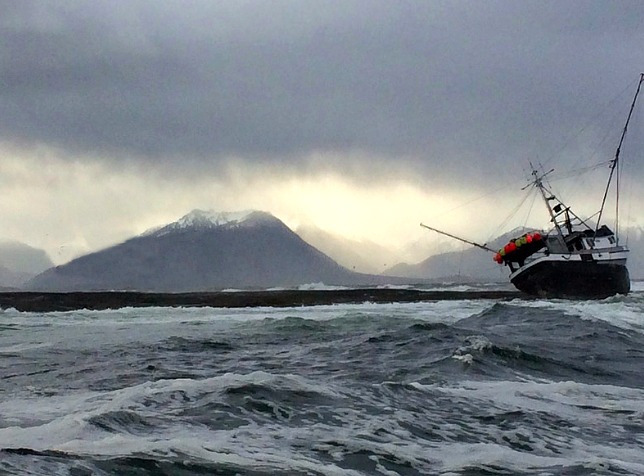
An environmental group that blames Alaska salmon fishing for the decline of Washington-area orcas won another day in court last week. On Friday, U.S. District Court Judge Richard Jones of Seattle denied the State of Alaska’s request for a stay of Jones’ May 2 order vacating the “incidental take statement” for the Southeast Alaska winter and summer commercial Chinook salmon troll fishery.
The document would give these fisheries coverage for the incidental “take” of species listed under the Endangered Species Act. The judge’s order has the practical effect of closing the directed summer and winter Chinook troll fisheries until a new ITS is in place.
Wild Fish Conservancy sued the National Marine Fisheries Service, alleging violations of the Endangered Species Act and National Environmental Policy Act. The group says that Southeast Alaska troll fisheries are at fault for the decreasing population of Washington and Oregon Chinook salmon and the Southern Resident Killer whales off the coasts of Washington, Oregon, and Canada.

Troll fishing is one of the least intensive forms of commercial salmon harvesting.
The environmental industry plaintiffs make no mention of the major dams that Washington and Oregon have built over the many years that have cut off those states’ own supply of salmon.
The State of Alaska quickly filed an appeal to the Ninth Circuit Court of Appeals and is filing a motion for stay of the judge’s order.
The State is requesting a decision by June 23 so that the fishermen can gear up for the summer season, which starts on July 1.
“Vacating the ITS and effectively closing the fishery spawn disaster for Southeast Alaska’s economy and way of life while providing no meaningful benefit to the endangered Southern
Resident killer whales,” said Alaska Fish and Game Commissioner Doug Vincent-Lang.
“Troll fishing for Chinook is critical to Southeast Alaska’s economy, local government, and culture. It is a way of life. And we intend to do everything we can to defend our fisheries.”
Vincent-Lang added, “the district court singled out an Alaskan fishery to shoulder the entire burden of conservation, while other fisheries, notably those occurring along the Pacific Northwest coast that have disproportionately higher levels of impact, are left untouched and unrestricted. This is unequitable and unfathomable. If this ruling sticks, we will be looking at having all fisheries treated equally.”