
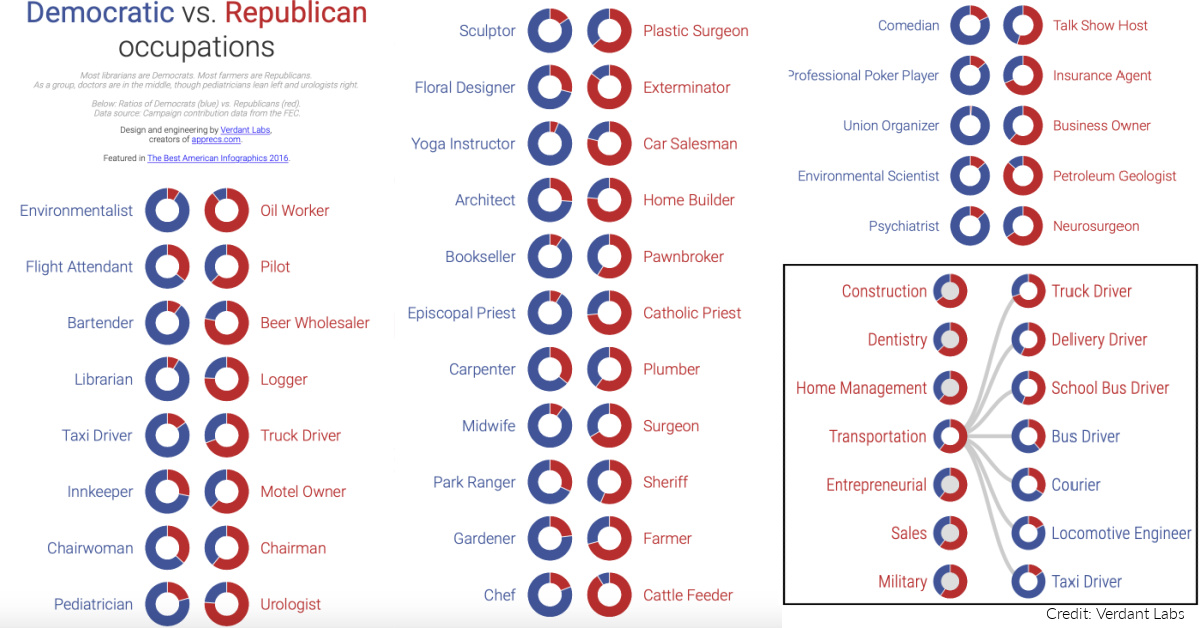
Most librarians are Democrats, while farmers are typically Republicans. Doctors are in the middle, although pediatricians lean left and urologists lean right, according to an analysis of campaign donor data.
Yoga instructors, midwives, bartenders, and booksellers are mainly Democrat, according to the findings of Verdant Labs, a company that analyzes data.
The study took campaign donation information from the Federal Elections Commission database, where donors must list their occupations. The result was, unsurprisingly, that people in the resource extraction industry tend to donate to Republican candidates, while environmentalists and those in philanthropy donate to Democrats.
That, in part, may explain why the Biden Administration is so eager to shut down the oil industry and the jobs that go with it, while at the same time opening up the southern border to allow more service workers to flood in. It’s about the numbers.
Here’s the formula used by the study:

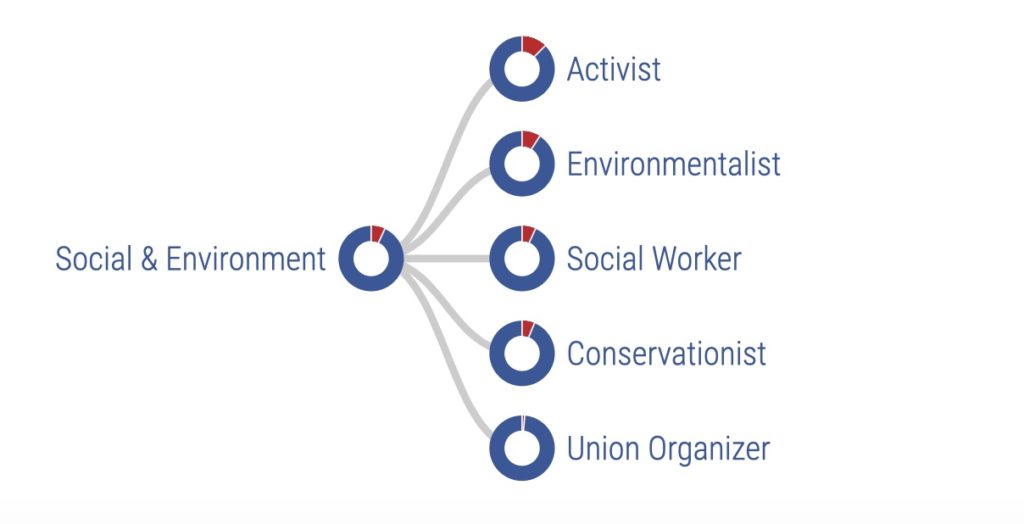
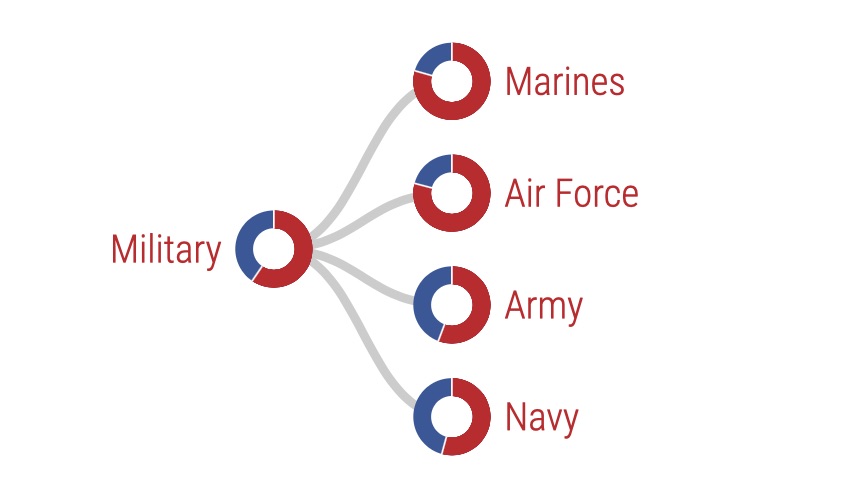
The study breaks it down further, and shows that most serving in the military lean right, with Marines and Air Force being more Republican than Army and Navy. Union organizers are the most partisan Democrats of any profession, with conservationists and social workers also leaning left.
“A caveat with this methodology is that we assume Democrats and Republicans contribute at a similar rate to each other within each profession. In other words, we assume that a 75 / 25 split of contributions by Democratic teachers vs. Republican teachers translates to a 75 / 25 split of Democrat vs. Republican teachers in the general populace. If it’s actually the case that, say, Republican teachers are looser with their wallets and have a higher per capita contribution rate, our ratio for that profession will be a bit skewed. Thus, the ratios should be viewed as approximate,” the group acknowledged.
Verdant Labs is a Seattle-based technology company that makes baby-name apps.
The entire analysis, done in 2015, can be found at this link.


