
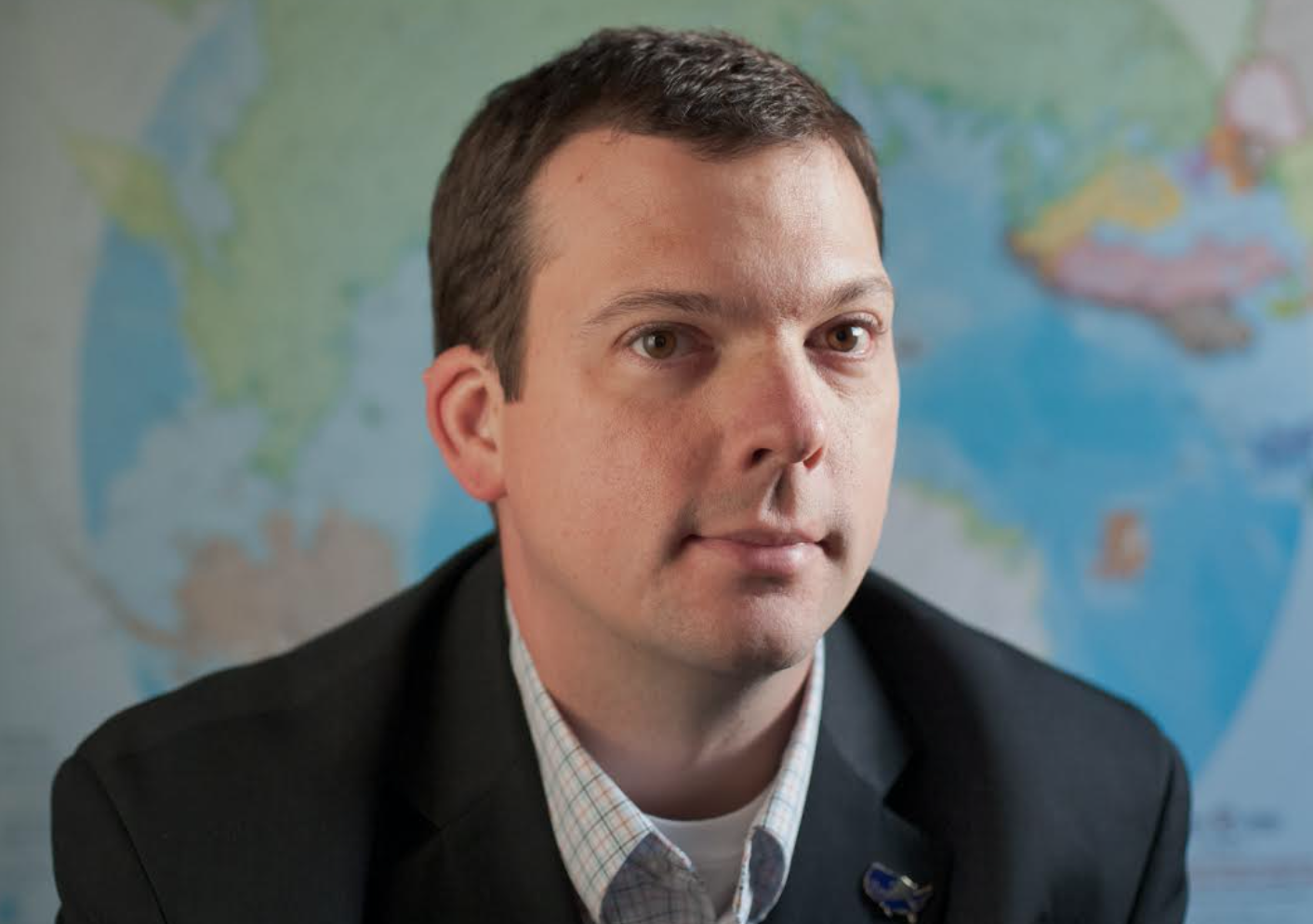
By NILS ANDREASSEN
Thank you for opening up a dialogue and inviting others to contribute.
[Read: This is the year for no PFD. Change my mind.]
What I really appreciated about your column on the State’s fiscal picture is that it really helps to lay out the situation the State finds itself in.
For as much as we’ve been facing a deficit for five years, this combination of oil and market drop, along with economic contraction as a result of the coronavirus, puts the State in a very challenging position.

I think you accurately and effectively describe what is a very likely scenario – that the State is very close to essentially being unable to pay for itself.
That scenario also includes a PFD that is essentially zero. In fact, it may be that even with no PFD, the State is still at a deficit. It’s a necessary conversation but difficult.
Part of the challenge, and maybe not articulated directly, is that while the fund source for the PFD is healthy and sustainable, it is how to fund government that remains questionable. This is essentially where Alaska Municipal League has called for new revenue, including in the form of broad-based taxes.
I can imagine there will always be at least two extremes. One, where no tax is a good tax. The other, where there has never been enough money for government. I can’t agree with you that AML lands at the latter.
What we struggle with is that the State does have some fundamental responsibilities, and that also there is increasing unmet need. For us, it is not that there has never been enough money for government, but that there has been insufficient funding at the State level to adequately fulfill Constitutional and statutory obligations.
That means that even during the salad days, the State was still not fully funding school construction and major maintenance. In fact, over the last decade, these needed projects have only been funded at 15% on average.
Even with a zero PFD, will the roof that is collapsing on the school in St. Paul be funded? It’s not in the budget. Nor are the dozens of other projects that are identified as priority by the Department of Education.
In terms of unmet need, we know that there is nearly $2 billion in State deferred maintenance, $1 billion in need for ports and harbors, $2.3 billion for school construction and maintenance, $5 billion in transportation projects, $3 billion in maintenance and construction needs for municipal governments, and $2 billion in need for water and wastewater.
It’s easy to look at that list and say that the State can’t be all things to everyone, or that someone else should pay for them, or that the State can’t subsidize one part of the state and not the other. Except that these are fundamentally government responsibilities – shared between federal, state and local – but the role of the State is to tackle issues that are systemic.
The question in front of us is not whether we can pay a PFD, but whether the State has sufficient resources to address not only its basic functions, and to chip away at unmet needs, but to fulfill essential roles during a crisis. The State has an FY20 Supplemental Budget that reflects a difficult fire season, and the year before that response to earthquake. Does the State have the resources necessary to respond in times of need?
There is definitely an argument to be made that the PFD distributed in full this year would act as an economic stimulus after a dismal travel and tourism season.
We know that Alaskans are going to be negatively impacted during this time, and that economists nationally are talking specifically about a cash infusion. I don’t know what the right answer is, and AML has not taken a position on a PFD amount.
That said, we do know that reducing or eliminating the PFD is a regressive action that affects our most vulnerable disproportionally. That, during a time when they may be most vulnerable.
Talking taxes isn’t out of line in this environment. In fact, the earlier we can discuss an appropriately designed broad-based tax, the better. We’re talking about a development and implementation time of as long as two years. We want that process to be driven by data, so that policy-makers know exactly what impacts look like. Tax doesn’t have to be emotional – many local governments are required by State law to tax, which may be why we’re more comfortable focusing on how to do it right.
I’m happy to be part of a difficult dialogue. I don’t think there are any easy answers. I do believe that our members and your readers benefit from a collaborative approach. How do we strike the right balance in meeting the State’s needs and the interests of Alaskans? How do we do that by working together?
Nils Adreassen is executive director of Alaska Municipal League, but is writing in his capacity as an Alaska.


