In a rainforest town where there are no cowboys, and few, if any, horses, high school kids dressing up in western wear has caused great offense to some in the neighboring Alaska Native town of Metlakatla, also a place bereft of horses, cows, and cowboys. Those offended took to social media to declare the Ketchikan students racist.
The pep club for the Ketchikan High School has explained that it had simply chosen “country” as its theme, and so everyone dressed up in whatever western wear could be found in a town that has more Uniroyal boots than residents, and where fishing, boat repair, and tourism are the main economies.
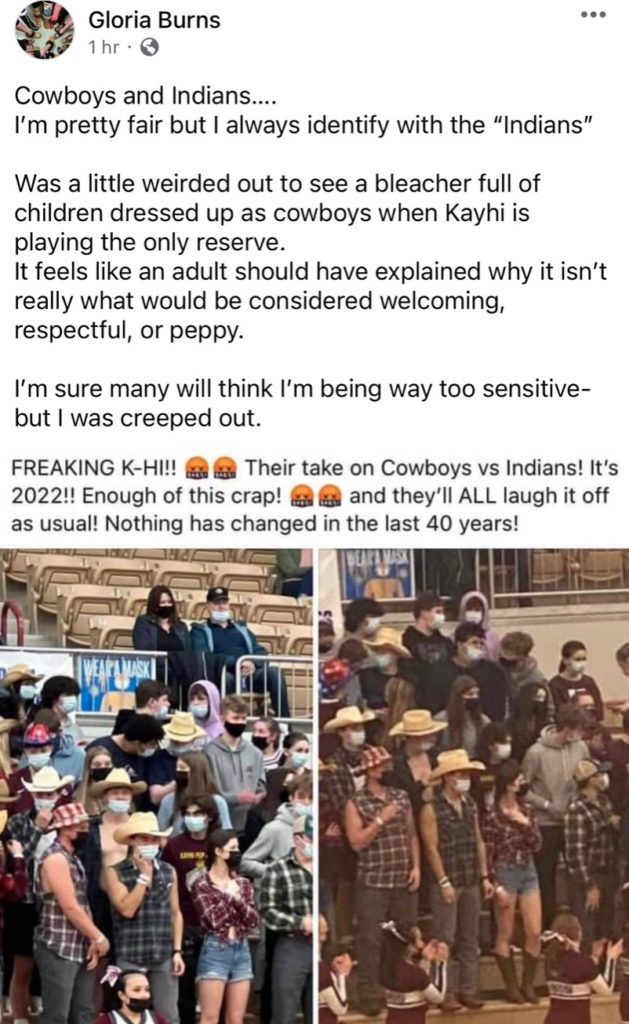
The Ketchikan High School Pep Club has now sent an apology to Metlakatla for wearing western gear at the recent high school basketball game between the two schools:

“On behalf of the Kayhi Pep Club and student body participating in the student section, we would like to apologize and discuss the incidents occurring this past weekend at the KHS I MHS boys basketball games. Our intentions were not malicious. In retrospect and upon reflection, there was an underlying offensive connection to historical atrocities. We fully acknowledge the cultural insensitivity of the theme and apologize for the harm that it has caused toward Metlakatla and in our own community.
“As we are working to understand your perspective, we humbly ask you to hear our perspective. The Pep Club theme, ‘Country’, was randomly selected with no intention of it being interpreted as ‘Cowboys v lndians’. The country theme is one that we’ve used repeatedly in the past including this October. To address the confusion around some of the ‘weird’ or odd noises that were heard by the crowd, embarrassingly, it is simply a habit that we’ve been doing every game this year to bark like dogs at the opposing team to try and distract them from shooting free throws.
“We can not go back in time and correct our misguided decisions, but we can move forward and learn from our mistakes. As a club, we have discussed our current practices related to decision-making regarding event themes and have outlined new approval processes which include checks for sensitivity relating to culture, race, and gender. We have identified a lack of cultural humility within our school and are committed to working with school administration, tribal leaders, and community stakeholders to identify meaningful opportunities to gain knowledge, understanding and rebuild trust among our student body, school staff, community, and neighbors. We regret our actions and look forward to discussing opportunities for growth, as individuals and a community, from this experience.”