
Contained on page 1,066 of the $1.1 trillion infrastructure bill that passed the Senate on Tuesday is a hidden price hike on new vehicles.
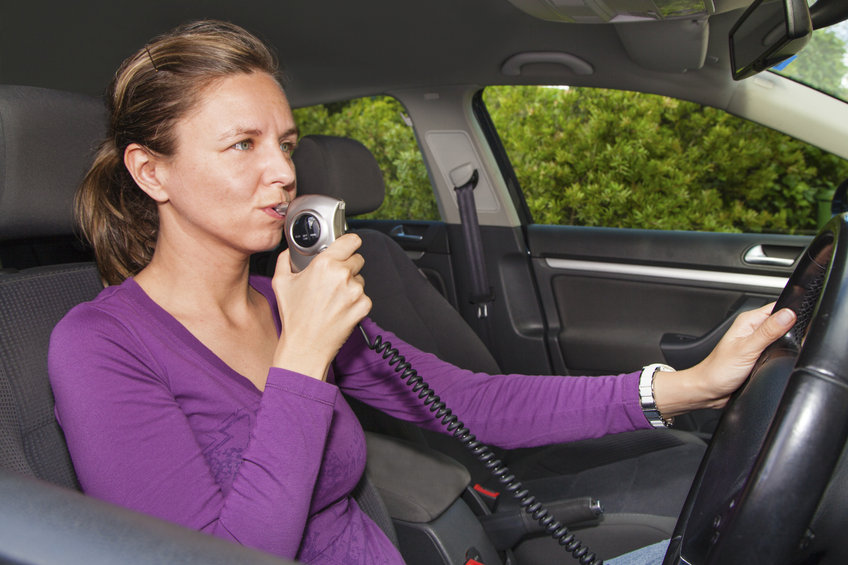
The price hike comes in the form of a mandate that all new vehicles, within six years, will be required to have passive monitoring devices to detect drug and alcohol overuse in the vehicle.
The bill, which is mainly to fix roads, bridges, dams, and broadband, doesn’t say “breathalyzer,” but refers to “passive” systems that monitor the performance of drivers. That is usually accomplished by measuring the alcohol in the air inside the vehicle. If a driver doesn’t pass the test, the car won’t start.
The new requirement has been talked about since before 2019, when Sens. Tom Udall, D-N.M., and Rick Scott, R-Fla., introduced the Reduce Impaired Driving for Everyone Act of 2019, which would have mandated the devices by 2024. A coalition of auto manufacturers is behind the bill, which is also supported by groups such as Mothers Against Drunk Driving.
The newly passed bill, which includes $550 billion in new spending and $450 billion in already approved funds, also requires automobile technology to measure impairment from prescription drugs or simple drowsiness.
Drunk driving fatalities have decreased nationally by 52 percent since 1982, according to Responsibility.org. Among persons under 21, drunk driving fatalities decreased 83 percent.
The National Highway Traffic Safety Administration reports drunk driving accounts for one-third of all traffic deaths, with 10,800 people killed in drunk driving incidents in 2019.
Also in the bill is Section 13002, titled “National motor vehicle per-mile user fee pilot,” a demonstration project to tax drivers based on their annual mileage, rather than at the fuel pump. This helps the federal government recover some lost revenues now that electric car owners don’t pay federal fuel taxes of 18.4 cents per gallon. But it also would allow the federal government to track the whereabouts of every private vehicle.
The infrastructure bill’s new spending includes $110 billion for roads and bridges, $66 billion for rail projects, $65 billion to expand access to broadband and includes a $30 monthly voucher for low-income households to pay for their internet service.
The bill also tackles climate change with $65 billion for the electrical grid, $50 billion for protection from cyberattacks and floods and forest fires, and about $7.5 billion to build charging stations for electric vehicles. Another $7.5 billion will help replace school buses and ferries with electric models.
The bill still must pass the House, and Speaker Nancy Pelosi made it clear she will use the infrastructure bill as leverage to get the massive $3.5 trillion Green New Deal bill through the Senate and over to the House. She will not allow her chamber to take up either bill until she has them both. President Biden has also stated he will not sign the infrastructure bill until he has the larger bill along with it.
Voting in favor of the infrastructure bill were both members of Alaska’s Senate delegation, Sen. Lisa Murkowski, who helped negotiate the package, and Sen. Dan Sullivan.
Read Three and a half trillion dollar bill revealed by Democrats.


