

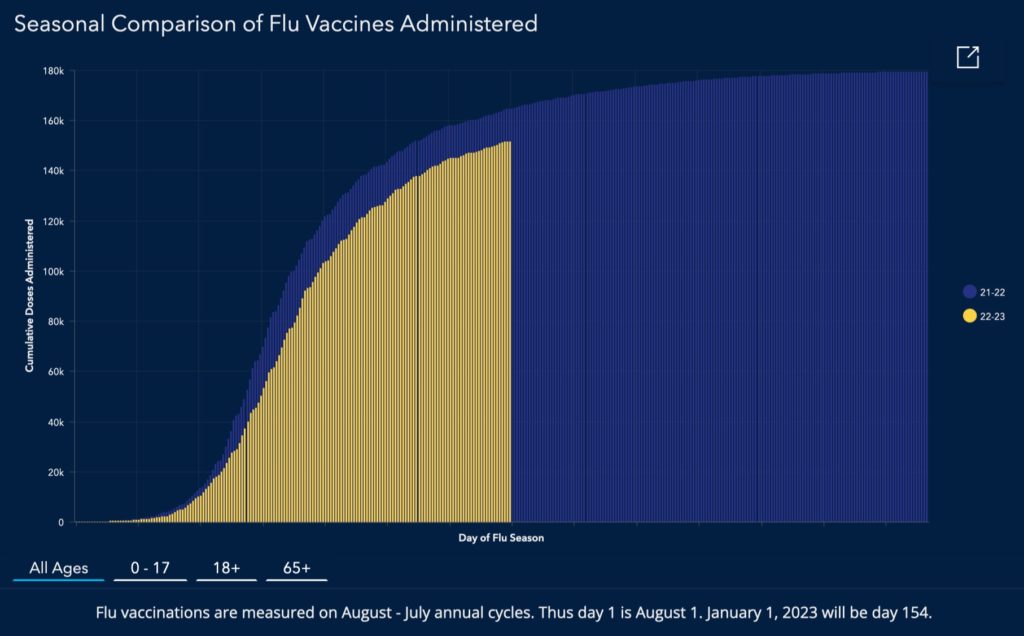
The Alaska Department of Health data dashboard shows an 8% drop in influenza vaccinations administered to Alaskans this flu season compared with the 2021-2022’s flu season.
The data shows a consistently lower number of vaccinations throughout the timeline measured, starting in August. To date, 151,600 Alaskans have been vaccinated, down from 154,600 last flu season. This, in spite of a robust public health campaign encouraging everyone to get the flu vaccination this year, and warnings in the fall about the harsh flu season expected.
Juneau has the highest number of overall residents vaccinated for the seasonal flu, at 32%, followed by the rest of Southeast at 29%. The lowest vaccinated borough in Alaska is the Matanuska Susitna Borough, at 14%, followed by Kenai at 17%, the Northwest Arctic at 17%, and Fairbanks North Star Borough at 18%.
Roughly 24% of Anchorage residents are vaccinated for flu.
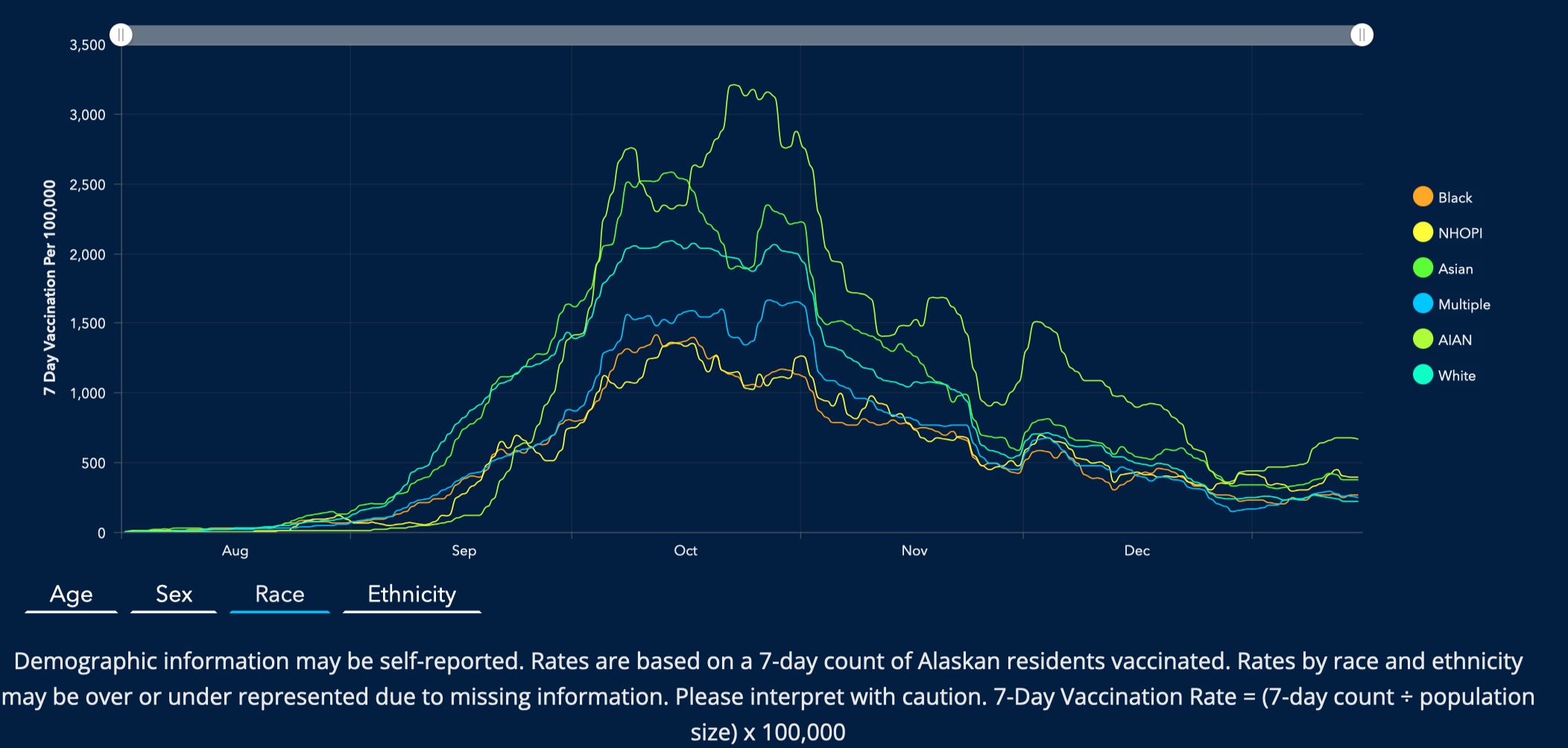
As for ethnic breakdown, Alaska Natives and Asian ethnicities were the most likely to get the flu vaccine, and Blacks and Pacific Islanders were least likely, according to the Department of health data. Whites fell into the middle of the chart.
While still not “all in” for the flu vaccine, older Alaskans are getting vaccinated the most this season, according to the data. In Juneau, 52% of those 65 or older are vaccinated, followed by the seniors of Anchorage, at 51%.
Mat-Su’s seniors are at the bottom of the flu vaccine chart at 36%.
A call to the Alaska Department of Health for an explanation for the drop in flu vaccine acceptance went unanswered.
The 2021-2022 flu season was relatively mild, possibly due to more people avoiding social situations that could expose them to the also-concerning Covid-19 virus. But with this change in social behavior, some Alaskans may have gauged their risk of catching the flu to be reduced. Others may believe that if they lived through Covid they can live through a bout with the seasonal flu.
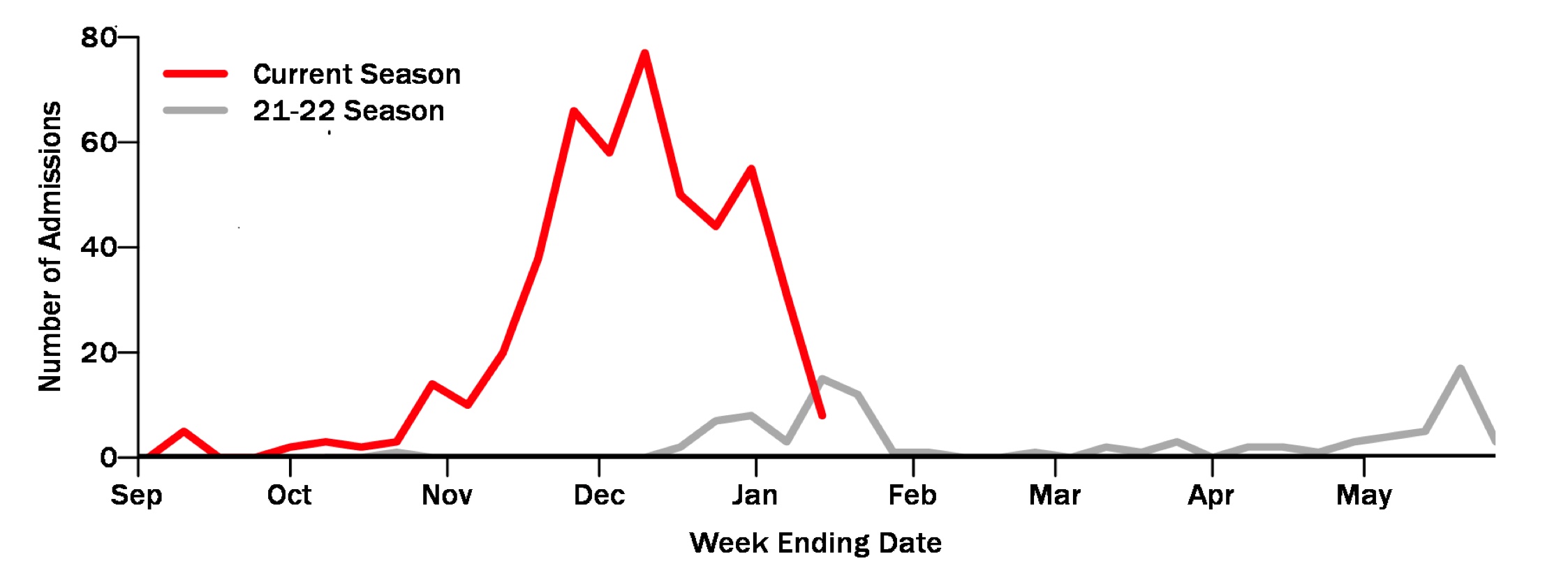
This year, there’s been a dramatic spike in people being admitted to the hospital for flu, compared with the 21-22 season.
There’s also the government trust factor: Some Americans feel they have been misled by the same health agencies and pharmaceutical companies that people previously felt had told them the truth on other important topics. The discovery that politics entered medicine and science may have shaken Americans’ confidence in medical advice.
In 2021, 29% of U.S. adults said they have a great deal of confidence in medical scientists to act in the best interests of the public, down from 40% who were surveyed the previous year, according to a poll conducted by Pew Research.
“Similarly, the share with a great deal of confidence in scientists to act in the public’s best interests is down by 10 percentage points (from 39% to 29%),” the group reported. “The new findings represent a shift in the recent trajectory of attitudes toward medical scientists and scientists. Public confidence in both groups had increased shortly after the start of the coronavirus outbreak, according to an April 2020 survey. Current ratings of medical scientists and scientists have now fallen below where they were in January 2019, before the emergence of the coronavirus.”
Gallup released a poll last summer with similar results, showing a growing mistrust by Americans in their basic institutions.
The release of the Twitter Files by Elon Musk revealed over recent weeks isn’t reversing that suspicion. Those files demonstrate how government pressured social media companies to suppress certain information about Covid and vaccinations.
Indeed, the official narrative on the Covid vaccines changed through time, with Americans told by their government that the vaccine would absolutely protect them from getting Covid. Later, the government promise was that people would at least get a less severe case of Covid if they got the vaccine and kept up with seasonal booster shots. Throughout the Covid vaccination rollout, Americans were promised the vaccine is safe and effective, although it is still considered an experimental treatment and adverse reactions are concerning.
The journal Clinical Advisor reported in October that fewer than half of all adults planned to get the flu vaccine this season:
“Although more than two-thirds of US adults believe that annual influenza (flu) vaccination is the best protection against infection, 41% said they are unsure or do not plan to get an influenza vaccine during the 2022-2023 season, according to results from a national survey by the National Foundation for Infectious Diseases (NFID). The key reason cited was the belief that flu vaccines do not work well, infectious disease experts said at a news conference,”
The Centers for Disease Control and Prevention has reported that during the 2021-2022 flu season, 51% of Americans 6 months and older received a flu vaccine, similar to coverage during the 2020-2021 season. But this flu season, 49% of surveyed Americans said they plan to get vaccinated against flu, according to the NFID findings. That is a 4% drop nationally.
Alaskans appear to be anchoring the more reluctant end of the spectrum, with an 8% drop in Alaskans going in for what used to be an annual flu shot.
More information about Alaska flu and the seasonal data is at this link.


