The American Civil Liberties Union of Alaska sued the Matanuska-Susitna Borough School District on Wednesday, alleging that a girl in the district who identifies as a boy and is called a “transgender boy” in the lawsuit, is being prevented from using boys bathrooms and locker rooms at school.
The ACLU of Alaska represents a “set of parents bringing the case on behalf of their transgender son. Under this policy, every day, their child faces mental and physical challenges because he is denied access to the boys’ bathrooms, even though he is a boy.”
The ACLU is arguing that if a child says he or she is something, the world must agree and accommodate.
The ACLU says that the child’s right to privacy has been violated because the policy “violates his fundamental right to make his own choices about his body, his name, his gender identity, and the appropriate bathroom for him to use. This policy also violates the Equal Protection Clause of the Alaska constitution because it treats transgender students differently than other students.”
The case was filed in Palmer District Superior Court.
“The MSBSD has forgotten its obligation to protect young people, as well as the constitutional rights that all students – regardless of their gender identity – are entitled to,” said Ruth Botstein, Legal Director for the ACLU of Alaska, in a statement. “The student just wants to be able to go to school like any other kid, to focus on learning and socializing with his peers, and not have constant stress and anxiety about where and when he is going to be able to use the bathroom.”
The lawsuit refers to the child as “X.A.” The child attends an elementary school in the Mat-Su Borough School District.
“X.A. is a transgender boy. This means that he was incorrectly assigned “female” at birth, although he is and identifies as male. X.A. knows that he is a boy and presents to the world as a boy. People who meet him know him as a boy,” the lawsuit reads.
“Gender dysphoria is a serious medical condition recognized in the American Psychiatric Association’s Diagnostic and Statistical Manual of Mental Disorders, Fifth Ed. (2013) (‘DSM-V’), and by the other leading medical and mental health professional groups, including the American Medical Association and the American Psychological Association. Gender dysphoria refers to clinically significant distress that can result when a person’s gender identity differs from the person’s sex assigned at birth. If left untreated, gender dysphoria may result in psychological distress, anxiety, depression, and even suicidal ideation or self-harm,” the lawsuit continues.
According to the ACLU, X.A. always thought of herself as a boy, cut off all of her hair when she was age 3, and renamed herself to a masculine name when she was 7 years old. She “threw fits if anyone tried to get him to wear anything stereotypically girly: pink, rainbows, sparkles, and the like,” according to the ACLU.
X.A.’s parents moved her to a school that they thought was more progressive in the district and would bend to her demands to be treated as a boy, but in 2022, a district policy was put into place to protect both boys and girls in the district from having opposite-sex intrusions into their private spaces.
From the narrative in the lawsuit, it appears that X.A. is biologically a girl who has a boyish personality.
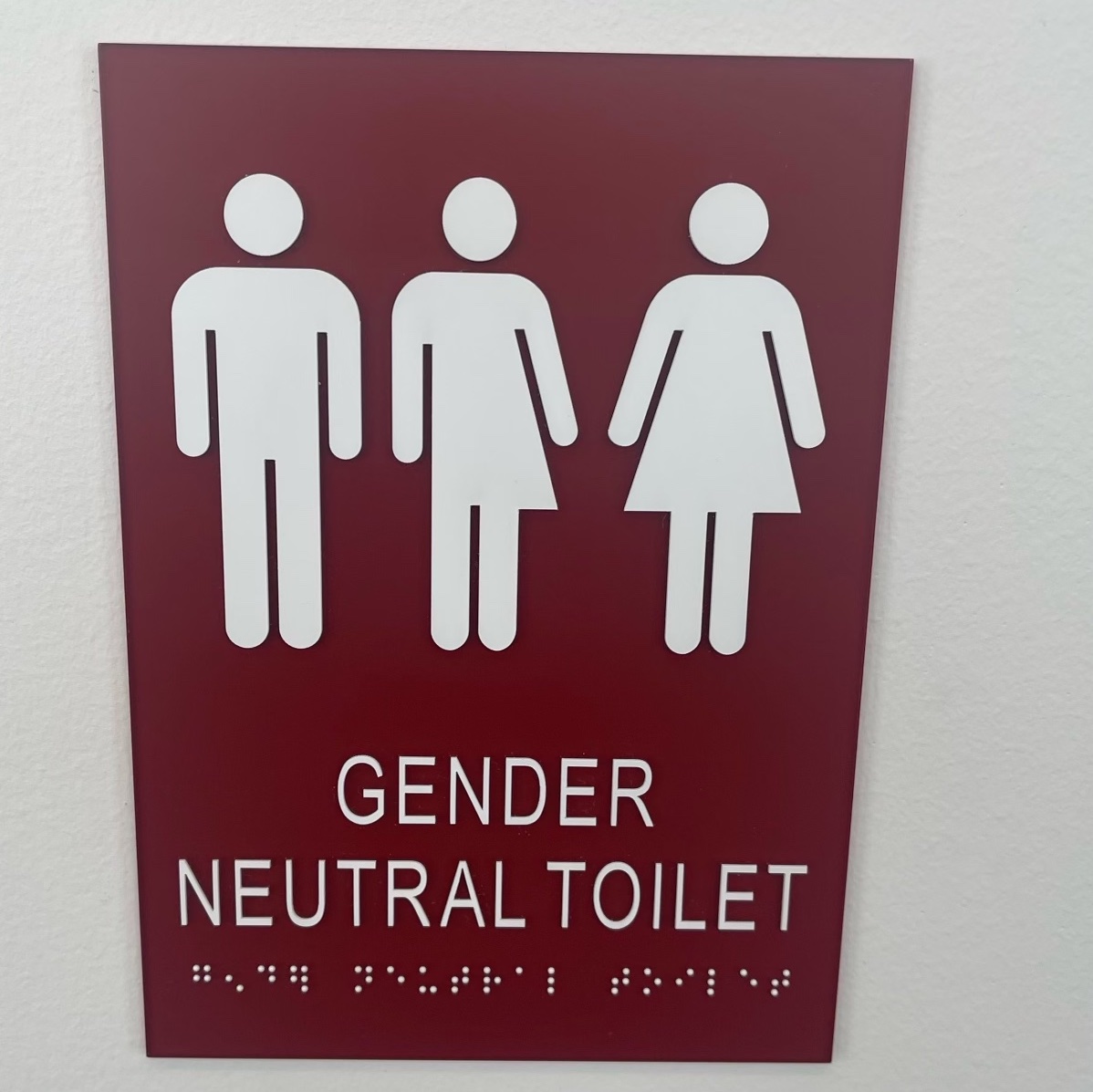
The lawsuit complains that providing a gender-neutral bathroom is not good enough, and that once a school nurse asked X.A. if she was a boy or a girl, making the child uncomfortable once again.
“X.A. was distraught from this interaction. The harmful question revealed that even the ‘gender- neutral’ option was not a safe or private one for X.A.,” the lawsuit contends.
“This incident also revealed that the nurse’s office bathroom accommodation is not sufficient to protect X.A.’s privacy, since using it singles him out, causing both other children and school employees to question his gender identity and to ask him uncomfortable personal questions about his bathroom use and gender identity,” according to the ACLU.
Obsessive habits have been identified with those who have gender confusion, but the lawsuit makes no effort to describe any other health or mental health factors that may be present, such as narcissistic personality disorder.
According to one study, narcissistic personality disorders are common among transgender individuals seeking gender surgery. “The frequency of personality disorders was 81.4%. The most frequent personality disorder was narcissistic personality disorder (57.1%) and the least was borderline personality disorder. The average number of diagnoses was 3.00 per patient,” according to the study published by the National Institutes of Health.
Read the entire ACLU lawsuit below:
The district has not issued a statement in response to the lawsuit.