
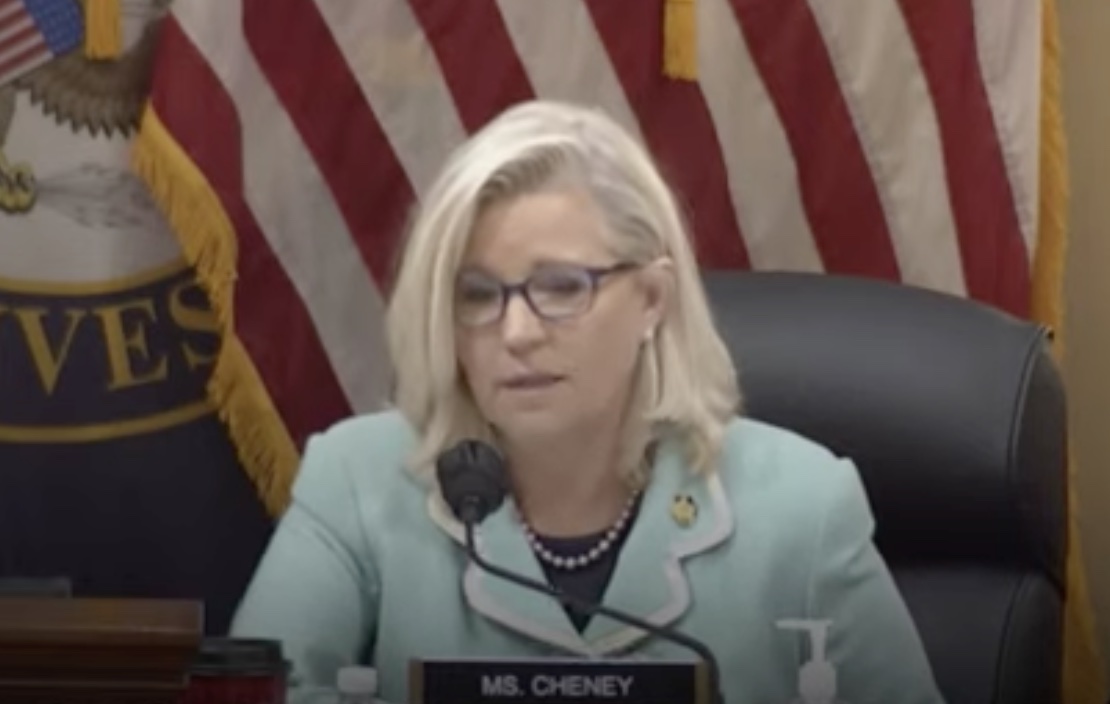
Alaskans can line up to hear former Rep. Liz Cheney on May 1 at the Atwood Concert Hall in Anchorage.
She, who vice-chaired the United States House Select Committee on the January 6 Attack, is being brought from Wyoming to Anchorage by the University of Alaska Anchorage as part of the College of Arts and Sciences Community Lecture Series.
Her 90-minute lecture is titled “Defending Democracy: A Conversation with Liz Cheney.”
The event has resulted in much debate, due in part to Cheney being a particularly polarizing political figure, intensely anti-Trump, and because she is being paid $151,000, as reported by The Alaska Landmine.
Cheney, who was a Republican representative for Wyoming and was a House GOP leader, was ousted in the Republican primary in 2022 after serving in Congress for just four years. She lost by a landslide.
Now, according to her booking agent, she makes between $75,000 and $150,000 for a single speaking engagement.
The university is paying the top end of Cheney’s range, but says the cost of the entire lecture series is recovered by ticket sales and sponsorships. Tickets are going for between $58 and $166.50, and it appears half of the approximately 2,000 seats are still available. If tickets average $75 apiece, the university will need a sell-out crowd to barely break even.
The venue at the Anchorage Performing Arts Center itself is not cheap and may cost the university as much as $10,000 for the evening. Plus, the university is paying for Cheney’s first-class travel and luxury accommodations. All that could push the cost of her visit up to $165,000. There are sponsorships, but those haven’t been made public yet.
Cheney, the daughter of former Vice President Dick Cheney, chaired the House Republican Conference, the third-highest position in the House Republican leadership, from 2019 to 2021, and served as the Vice Chair of the Select Committee to Investigate the January 6th Attack on the United States Capitol.
Cheney publicly blamed Trump for inciting what she called an insurrection on Jan. 6, 2021, and said that he “summoned this mob, assembled the mob, and lit the flame of this attack.”
Her father Dick Cheney called Trump the greatest threat to American democracy in 2020. Again in 2024, he said, “In our nation’s 248-year history, there has never been an individual who is a greater threat to our republic than Donald Trump.” Both Dick Cheney and his daughter Liz Cheney endorsed Kamala Harris for president, and Liz campaigned with Harris.
Her harsh criticism of Trump puts her at odds with much of her party, which largely sought to avoid directly confronting the former president. She is more in line with Rep. Lisa Murkowski than with most Alaska Republicans or conservatives.
Cheney is expected to speak about the need to not be aligned with a party. Indeed, she is not aligned with Republicans and in November 2021, the Wyoming Republican Party voted to no longer recognize her as a member of the GOP. It was a symbolic move by the state party, similar to the censure Alaska Republicans voted overwhelming for in censuring Murkowski on March 13, 2021, and does not affect Cheney’s official voter registration status.
During the second impeachment of Trump, which charged him with “incitement of insurrection,” Cheney was one of only 10 House Republicans who voted in favor of impeachment on Jan. 13, 2021. So did Murkowski, when the Senate voted on whether to convict Trump after the House impeachment process.
Cheney’s vote broke her away from most of the party; 197 House Republicans, including then-Congressman Don Young, voted against the article of impeachment. Congressman Young said publicly that Jan. 6 was not an insurrection.
Cheney served previously at the State Department as the Principal Deputy Assistant Secretary of State for Near Eastern Affairs, and worked in USAID.
In 2022, Cheney and Ukrainian President Volodymyr Zelensky received the John F. Kennedy Presidential Library’s prestigious Profile in Courage Award, with a commendation for her “consistent and courageous voice in defense of democracy.”
Her memoir, Oath and Honor, is her side of the story concerning her stance against Trump, in which she presents herself as a defender of democracy, something Democrats tend to believe about her, while Republicans say is a case of someone who appears too egocentric to be self-aware.
Her appearance is a risk for the university, both financially and in reputation management. But it fits with the liberal track the university is on.
The dean of the UAA College of Arts and Sciences is Jennifer McNulty, a registered Democrat. She books Democrats and leftists in general for the speaker series.
Speakers from the fall segment of the lecture series included NPR host Melissa Block and Seth Kantner, an author who lives in Kotzebue and who is a registered Democrat.
Another speaker was Patrick Flynn Sullivan, an ecologist and researcher with the university who signed the recall petition in 2019 to try to remove Gov. Mike Dunleavy, right after he became governor.
A speaker in the series from earlier this year was Mr. Whitekeys, an Alaska political and musical performer whose real name is Douglas Haggar. On stage he generally lampoons Republicans. He also signed the recall petition in 2019 to remove Gov. Dunleavy.
Gov. Dunleavy has the veto pen for the entire university system, and in 2025, there may be a need to trim the sails of a university that believes Liz Cheney brings any value at all to the Alaska intellectual ecosystem.


